europe

Russian Wagner Group chief claims extended gains in Bakhmut
The owner of Russia’s Wagner Group military company claimed on Wednesday that his troops have extended their gains in the key Ukrainian stronghold of Bakhmut as fierce fighting continues in the war’s longest battle.
Yevgeny Prigozhin said Wagner troops have taken full control of the eastern part of Bakhmut. He claimed that they now control all districts east of the Bakhmutka River that crosses the city in the eastern Donetsk region. The center of Bakhmut is located west of the river.
Neither Russian nor Ukrainian officials commented on Prigozhin’s claim. The Institute for the Study of War, a Washington-based think-tank that closely monitors the fighting in Ukraine, said in its latest analysis that “Russian forces have likely captured the eastern part of Bakhmut, east of the Bakhmutka River, following a controlled Ukrainian withdrawal from eastern Bakhmut as of March 7.”
The Wagner Group has spearheaded the Russian offensive in Bakhmut that has lasted for six months and reduced the city with a prewar population of more than 70,000 to a smoldering wasteland.
Russian troops have enveloped the city from three sides, leaving only a narrow corridor leading west. The only highway west has been targeted by Russian artillery fire, forcing Ukrainian forces defending the city to rely increasingly on country roads, which are hard to use before the muddy ground dries.
Ukrainian authorities have hailed the defenders of the “fortress Bakhmut,” and President Volodymyr Zelenskyy vowed Monday not to retreat from Bakhmut after chairing a meeting with his top generals.
For the Kremlin, capturing Bakhmut is essential for achieving its stated goal of taking control of the whole of Donetsk, one of the four Ukrainian regions that Moscow illegally annexed in September.
Russian Defense Minister Sergei Shoigu said Tuesday that the seizure of Bakhmut would allow Russia to press its offensive deeper into the region.
In a blustery video statement recorded near a landmark World War II T-34 tank monument from Bakhmut, Prigozhin said that the capture of the city would allow the Russian military to exploit the success and push deeper into the Donbas — the industrial region of eastern Ukraine that Russia claims — to make “the entire world shudder.”
But Western officials have emphasized that even if Ukrainian troops eventually retreat from Bakhmut, its capture will not have strategic significance or change the course of the conflict.
The Ukrainian military has already strengthened defensive lines west of Bakhmut to block the Russian advance, including in the nearby town of Chasiv Yar that sits on a hill a few kilometers west. Further west are Kramatorsk and Sloviansk, the heavily fortified Ukrainian strongholds in Donetsk.
The ISW observed that, in terms of the wider war, Russian forces are unlikely to capitalize on the possible capture of Bakhmut where they have relied on small units for urban combat.
“The continuing devolution of Russian force structure towards small assault detachments using simplified tactics, combined with mounting losses among the most effective Russian troops, will likely greatly limit the ability of Russian forces to properly exploit any paths of advance opened by the capture of Bakhmut,” the ISW said.
Russia is also likely short of the mechanized forces it would need to push on from Bakhmut, it added.
As the fighting raged in the east, United Nations Secretary-General Antonio Guterres arrived in the Ukrainian capital early Wednesday. The U.N. said that he is scheduled to meet with Zelenskyy later in the day “to discuss the continuation of the Black Sea Grain Initiative in all its aspects, as well as other pertinent issues.”
That deal allows Ukraine to export grain from its Black Sea ports and permits Russia to export food and fertilizers.
3 years ago

The flowers of war: Ukraine smith turns guns, ammo into art
A blacksmith in the Russian-controlled eastern Ukrainian city of Donetsk is practically beating swords into ploughshares, and turning one man’s trash into treasures. Viktor Mikhalev takes weapons and ammunition and produces what he calls the flowers of war.
Mikhalev, who trained as a welder, lives and works in a house whose fence and door are decorated with forged flowers and grapes. In his workshop are piles of half-burnt machine guns and shells from the war’s front line. Friends and acquaintances bring them as raw material for his art.
Donetsk, the center of Ukraine's industrial heartland of the Donbas, has been engulfed by fighting ever since the Moscow-backed separatist rebellion erupted in April 2014, weeks after Russia's illegal annexation of Ukraine's Crimean Peninsula.
The Kremlin has made capturing the entire region a key goal of its invasion that began a year ago, and it illegally annexed Donetsk along with three other regions in eastern and southern Ukraine in September, declaring them part of Russia.
Fierce fighting has focused on the city of Bakhmut in the Donetsk region, and the city of Donetsk itself also has been frequently hit by shelling.
The smell of iron and paint permeates Mikhalev's workshop, also decorated from floor to ceiling with dozens of religious icons. He makes the art as a keepsake, a souvenir of the war in eastern Ukraine.
“Real flowers will not last long, and my roses will become a reminder for a long memory,” the blacksmith says.
He began the project when a friend brought him broken machine guns. A month later, he exhibited his war art in a Donetsk museum. Since then, he’s constantly been making what he calls “flowers of war.” In addition, he constructs stands for writing pens from parts of a grenade launcher and a cartridge case.
3 years ago

Battle for Bakhmut takes center stage in war in Ukraine
The six-month battle for the Ukrainian city of Bakhmut has been the longest and bloodiest fight of the war so far.
Little known outside Ukraine before the Russian invasion, Bakhmut has become a symbol of the country’s fortitude and perseverance in the face of the Kremlin's onslaught.
The Ukrainian leadership vowed again this week to keep defending the city, but some observers have warned that holding on to it could be too dangerous and costly.
Here is a look at Bakhmut, the battle and its possible consequences.
WHAT KIND OF CITY IS BAKHMUT?
Bakhmut, which had a prewar population of more than 70,000, was an important center for salt and gypsum mining in the Donetsk region of the country’s industrial heartland known as the Donbas.
The city was also known for its sparkling wine production in historic underground caves. Its broad tree-lined avenues, lush parks and stately downtown with imposing late 19th century buildings made it a popular tourist attraction.
When a separatist rebellion engulfed the Donbas in April 2014, weeks after Moscow’s illegal annexation of Ukraine's Crimean Peninsula, Russia-backed separatists won control of the city but lost it a few months later.
HOW DID THE FIGHTING EVOLVE?
Russian troops first attempted to recapture Bakhmut in early August but were pushed back.
The fighting abated in the following months as the Russian military faced Ukrainian counteroffensives in the east and the south, but it resumed at full pace late last year. In January, the Russians captured the salt-mining town of Soledar just a few kilometers (miles) north of Bakhmut and advanced to the city's suburbs.
The relentless Russian bombardment has reduced Bakhmut to a smoldering wasteland with few buildings still standing. Russian and Ukrainian soldiers have fought ferocious house-to-house battles in the ruins.
Soldiers from Russia’s private Wagner Group contractor have spearheaded the offensive, marching on “the corpses of their own troops” as Ukrainian officials put it. By the end of February, the Russians approached the only highway leading out of the city and targeted it with artillery, forcing Ukrainian defenders to rely increasingly on country roads, which are hard to use before the ground dries.
WHAT DO UKRAINIAN AND RUSSIAN OFFICIALS SAY ABOUT THE BATTLE?
Ukrainian authorities have hailed the city as the invincible “fortress Bakhmut” that has destroyed waves of Russian assailants.
As Russian pincers were closing on the city, a presidential aide warned last week that the military could “strategically pull back” if needed. But on Monday, Ukrainian President Volodymyr Zelenskyy and his top generals decided that the army will keep defending Bakhmut and reinforce its troops there.
For the Kremlin, capturing Bakhmut is essential for achieving its stated goal of taking full control of Donetsk, one of the four Ukrainian regions that Moscow illegally annexed in September.
Russian Defense Minister Sergei Shoigu said Tuesday that the seizure of Bakhmut would allow Russia to press its offensive deeper into the region.
Yevgeny Prigozhin, the rogue millionaire who owns the Wagner Group, charged that his forces were destroying the best Ukrainian units in Bakhmut to prevent them from launching attacks elsewhere.
At the same time, he harshly criticized the Russian Defense Ministry for failing to provide Wagner with ammunition in comments that reflected his longtime tensions with the top military brass and exposed problems that could slow down the Russian offensive.
WHAT DO EXPERTS SAY?
Military experts note that Ukraine has turned Bakhmut into a meat grinder for Russia’s most capable forces.
“It has achieved its aim as effectively being the anvil on which so many Russian lives have been broken,” Lord Richard Dannatt, the former chief of the general staff of the British armed forces, said on Sky News.
Phillips P. O’Brien, professor of strategic studies at the University of St Andrews, said the battle for Bakhmut "confirms that the Russian army is still struggling with basic operations.”
He noted that the Kremlin's continuing emphasis on land grabs regardless of losses means that “Russian strategic aims are bleeding the Russian army greatly."
While Ukrainian and Western officials pointed out that Russian combat losses were much higher than Ukrainian, some observers argued that the defense of Bakhmut was distracting Ukrainian resources that could be used in a planned counteroffensive later in the spring.
Michael Kofman, director of Russia studies at CAN, a Washington-based think tank, observed that the Ukrainian defenders “achieved a great deal, expending Russian manpower and ammunition,” but added that it could be wise for Ukraine to save its forces for future offensive operations.
“Strategies can reach points of diminishing returns," and given that Ukraine "is trying to husband resources for an offensive, it could impede the success of a more important operation,” he said.
WHAT COULD HAPPEN NEXT?
Ukrainian and Western officials emphasize that a Ukrainian retreat from Bakhmut will not have strategic significance or change the course of the conflict.
The Ukrainian military has already strengthened defensive lines west of Bakhmut to block the Russian advance if Ukrainian troops finally retreat from the city. The nearby town of Chasiv Yar that sits on a hill just a few kilometers west could become the next bulwark against the Russians. Further west are Kramatorsk and Sloviansk, the heavily fortified Ukrainian strongholds in Donetsk.
And even as the Russian military tries to pursue its offensive in Donetsk, it needs to keep large contingents in other sections of the Donbas and in the southern Zaporizhzhia region where Ukrainian forces are widely expected to launch their next counteroffensive.
3 years ago
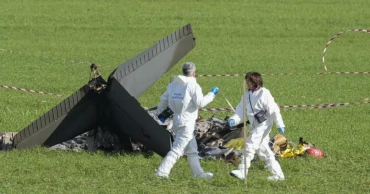
2 Italian air force planes collide mid-air, killing pilots
Two Italian air force pilots were killed Tuesday during an exercise when the light aircraft they were flying collided mid-air and crashed to the ground, Italy’s air force said in a statement.
The two U-208 aircraft crashed near the Guidonia military airport, located around 25 kilometers (15 miles) northeast of Rome. No injuries on the ground were reported.
Also Read: Philippine plane crash kills 2, another carrying 6 missing
One of the planes crashed into a car on a narrow residential street lined with apartment buildings; the other landed in a field.
Premier Giorgia Meloni expressed her condolences to the pilots’ families and colleagues.
3 years ago

Ukraine unyielding in Bakhmut as Russian troops close in
Ukrainian military leaders are determined to hold onto Bakhmut, Kyiv officials said Monday, even as Russian forces continued to encroach on the devastated eastern Ukrainian city that they have sought to capture for six months at the cost of thousands of lives.
Ukrainian President Volodymyr Zelenskyy’s office said he chaired a meeting with military officials during which the country’s top brass advocated strengthening Ukrainian positions there.
Intense Russian shelling targeted the Donetsk region city and nearby villages as Moscow deployed more resources there in an apparent bid to finish off Bakhmut’s resistance, according to local officials.
“Civilians are fleeing the region to escape Russian shelling continuing round the clock as additional Russian troops and weapons are being deployed there,” Donetsk Gov. Pavlo Kyrylenko said.
Russian forces that invaded Ukraine just over a year ago have been bearing down on Bakhmut for months, putting Kyiv’s troops on the defensive but unable to deliver a knockout blow.
More broadly, Russia continues to experience difficulty generating battlefield momentum. Moscow’s full-scale invasion on Feb. 24, 2022, soon stalled and then was pushed back by a Ukraine counteroffensive. Over the bitterly cold winter months, the fighting has largely been deadlocked.
Its importance has become psychological — for Russian President Vladimir Putin, prevailing there will finally deliver some good news from the battlefield, while for Kyiv the display of grit and defiance reinforces a message that Ukraine was holding on after a year of brutal attacks to cement support among its Western allies.
Read more: Russian shelling hits Ukrainian town; Bakhmut battle rages
U.S. Secretary of Defense Lloyd Austin endorsed that view Monday, saying during a visit to Jordan that Bakhmut has “more of a symbolic value than … strategic and operational value.”
He added that Moscow is “continuing to pour in a lot of ill-trained and ill-equipped troops” in Bakhmut, whereas Ukraine is patiently “building combat power” elsewhere with Western military support ahead of the launch of a possible spring offensive.
Even so, some analysts questioned the wisdom of the Ukrainian defenders holding out much longer, with others suggesting a tactical withdrawal may already be underway.
Michael Kofman, the director of Russia studies at the CAN think tank in Arlington, Virginia, said that Ukraine’s defense of Bakhmut has been effective because it has drained the Russian war effort, but that Kyiv should now look ahead.
“I think the tenacious defense of Bakhmut achieved a great deal, expending Russian manpower and ammunition,” Kofman tweeted late Sunday. “But strategies can reach points of diminishing returns, and given Ukraine is trying to husband resources for an offensive, it could impede the success of a more important operation.”
Ukrainian officials have previously raised the possibility of a tactical retreat.
The Institute for the Study of War, a Washington-based think tank, noted that urban warfare favors the defender but considered that the smartest option now for Kyiv may be to withdraw to positions that are easier to defend.
In recent days, Ukrainian units destroyed two key bridges just outside Bakhmut, including one linking it to the nearby hilltop town of Chasiv Yar along the last remaining Ukrainian resupply route, according to U.K. military intelligence officials and other Western analysts. Demolishing the bridges could be part of efforts to slow down the Russian offensive if Ukrainian forces start pulling back from the city.
“Ukrainian forces are unlikely to withdraw from Bakhmut all at once and may pursue a gradual fighting withdrawal to exhaust Russian forces through continued urban warfare,” the ISW said in an assessment published late Sunday.
The Bakhmut battle has also served to expose Russian military shortcomings and bitter divisions.
Yevgeny Prigozhin, the millionaire owner of the Wagner Group military company that spearheaded the Bakhmut offensive, has been at loggerheads with the Russian Defense Ministry and repeatedly accused it of failing to provide his forces with ammunition. On Sunday, he again criticized top military brass for moving slowly to deliver the promised ammunition, questioning whether the delay was caused “by red tape or treason.”
Putin’s stated ambition is to seize full control of the four provinces, including Donetsk, that Moscow illegally annexed last fall. Russia controls about half of Donetsk province, and to take the remaining half of that province its forces must go through Bakhmut.
The city is the only approach to bigger Ukrainian-held cities since Ukrainian troops took back Izium in Kharkiv province during a counteroffensive last September.
But taking at least six months to conquer Bakhmut, which had a prewar population of 80,000 and was once a popular vacation destination, speaks poorly of the Russian military’s offensive capabilities and may not bode well for the rest of its campaign.
“Russian forces currently do not have the manpower and equipment necessary to sustain offensive operations at scale for a renewed offensive toward (the nearby cities of) Kramatorsk and Slovyansk, let alone for a years-long campaign to capture all of Donetsk Oblast,” the ISW said.
Bakhmut has taken on almost mythic importance to its defenders. It has become like Mariupol — the port city in the same province that Russia captured after an 82-day siege that eventually came down to a mammoth steel mill where determined Ukrainian fighters held out along with civilians.
Moscow looked to cement its rule in the areas it has occupied and annexed. Russian Defense Minister Sergei Shoigu traveled to Mariupol and toured some of the city’s rebuilt infrastructure, the Defense Ministry reported Monday.
Shoigu was shown a newly built hospital, a rescue center of the Emergency Ministry and residential buildings, the ministry said.
3 years ago
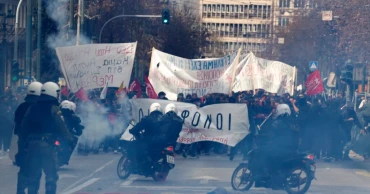
Stationmaster charged in Greece train crash that killed 57
A stationmaster accused of causing Greece's deadliest train disaster was charged with negligent homicide and jailed pending trial Sunday, while Prime Minister Kyriakos Mitsotakis apologized for any responsibility Greece's government may bear for the tragedy.
An examining magistrate and a prosecutor agreed that multiple counts of homicide as well as charges of causing bodily harm and endangering transportation safety should be brought against the railway employee.
At least 57 people, many of them in their teens and 20s, were killed when a northbound passenger train and a southbound freight train collided late Tuesday north of the city of Larissa, in central Greece.
Also Read: Bangladeshi killed in Greek train crash
The 59-year-old stationmaster allegedly directed the two trains traveling in opposite directions onto the same track. He spent 7 1/2 hours Sunday testifying about the events leading up to the crash before he was charged and ordered held.
“My client testified truthfully, without fearing if doing so would incriminate him,” Stephanos Pantzartzidis, the stationmaster's lawyer, told reporters. “The decision (to jail him) was expected, given the importance of the case."
Pantzartzidis implied that others besides his client share blame, saying that judges should investigate whether more than one stationmaster should have been working in Larissa at the time of the collision.
"For 20 minutes, he was in charge of (train) safety in all central Greece,” the lawyer said of his client.
Also Read: Death toll from Greece train crash rises to 57
Greek media have reported that the automated signaling system in the area of the crash was not functioning, making the stationmaster’s mistake possible. Stationmasters along that part of Greece’s main trunk line communicate with each other and with train drivers via two-way radios, and the switches are operated manually.
The prime minister promised a swift investigation of the collision and said the new Greek transportation minister would release a safety improvement plan. Once a new parliament is in place, a commission also will be named to investigate decades of mismanagement of the country’s railway system, Mitsotakis said.
In an initial statement Wednesday, Mitsotakis had said the crash resulted from a “tragic human error.” Opposition parties pounced on the remark, accusing the prime minister of trying to cover up the state's role and making the inexperienced stationmaster a scapegoat.
“I owe everyone, and especially the victims’ relatives, a big apology, both personal and on behalf of all who governed the country for many years," Mitsotakis wrote Sunday on Facebook. "In 2023, it is inconceivable that two trains move in different directions on the same track and no one notices. We cannot, we do not want to, and we must not hide behind the human error.”
Greece's railways long suffered from chronic mismanagement, including lavish spending on projects that were eventually abandoned or significantly delayed, Greek media have reported in several exposes. With state railway company Hellenic Railways billions of euros in debt, maintenance work was put off, according to news reports.
A retired railway union leader, Panayotis Paraskevopoulos, told Greek newspaper Kathimerini that the signaling system in the area monitored by the Larissa stationmaster malfunctioned six years ago and was never repaired.
Police and prosecutors have not identified the stationmaster, in line with Greek law. However, Hellenic Railways, also known as OSE, revealed the stationmaster's name Saturday, in an announcement suspending the company inspector who appointed him. The stationmaster also has been suspended.
Greek media have reported that the stationmaster, a former porter with the railway company, was transferred to a Ministry of Education desk job in 2011, when Greece's creditors demanded reductions in the number of public employees. The 59-year-old was transferred back to the railway company in mid-2022 and started a 5-month course to train as a stationmaster.
Upon completing the course, he was assigned to Larissa on Jan. 23, according to his own Facebook post. However, he spent the next month month rotating among other stations before returning to Larissa in late February, days before the Feb. 28 collision, Greek media reported.
On Sunday, railway unions organized a protest rally in central Athens attended by about 12,000 people according to authorities.
Five people were arrested and seven police officers were injured when a group of more than 200 masked, black-clad individuals started throwing pieces of marble, rocks, bottles and firebombs at officers, who gave chase along a central avenue in the city while using tear gas and stun grenades.
In Thessaloniki, about 3,000 people attended two protest rallies. Several of the crash victims were students at the city’s Aristotle University, Greece’s largest, with over 50,000 students..
The larger protest, organized by left-wing activists, marched to a government building. No incidents were reported at that event.
In the other, staged by Communist Party members at the White Tower, the city's signature monument, there was a brief scuffle with police when the protesters tried to place a banner on the monument.
“The Communist Party organized a symbolic protest today in front of the White Tower to denounce the crime in Tempe, because it is a premeditated crime, a crime committed by the company and the bourgeois state that supports these companies,” Giannis Delis, a communist lawmaker, told The Associated Press.
3 years ago

Party of Estonian PM, strong Ukraine backer, gains big win
Voters in Estonia elected a new parliament Sunday with initial results suggesting the center-right Reform Party of Prime Minister Kaja Kallas. one of Europe’s most outspoken supporters of Ukraine, had won overwhelmingly with nearly all votes counted.
Kallas faced a challenge from the far-right populist EKRE party, which seeks to limit the Baltic nation's exposure to the Ukraine crisis and blames the current government for Estonia's high inflation rate.
Nine political parties in all fielded candidates for Estonia’s 101-seat parliament, or Riigikogu. Over 900,000 people were eligible to vote in the general election, and nearly half voted in advance.
With 99% of votes counted, Reform Party had taken 31.4% of the votes, followed by EKRE with 16.1% percent and the Center Party, traditionally favored by Estonia’s sizable ethnic-Russian minority, 15%.
“This result, which is not final yet, will give us a strong mandate to put together a good government,” Kallas told her party colleagues and jubilant supporters at a hotel in the capital, Tallinn.
“I think that with such a strong mandate, the (aid to Ukraine) will not change because other parties, except EKRE and maybe Center, have chosen the same line,” she said.
Preliminary results suggested six parties passed the 5% threshold of support needed to be in parliament, including newcomer Eesti 200, a liberal centrist party. Voter turnout was 63.7%, according to initial information.
Also Read: Estonia to get 1st female PM as government deal clinched
The initial results mean the Reform Party is in a remarkably strong position to take a leading role in forming Estonia's next government; its support translates into 37 seats in the legislature. But it will need junior partners to form a coalition with a comfortable majority to govern.
Kallas has ruled out being in a government with EKRE due to ideological differences, and is likely to turn to former coalition partner the Center Party and outgoing coalition partners - the small conservative Fatherland party and the Social Democrats - for a pact.
Newcomer Eesti 200 is also likely to be included in government talks with Reform.
National security in the wake of neighboring Russia's invasion of Ukraine and socio-economic issues, particularly the rising cost of living, were main campaign themes.
Kallas, 45, became prime minister in 2021 and has emerged as one of Europe’s most outspoken supporters of Ukraine during the year-long war. She is seeking a second term, with her standing enhanced by her international appeals to impose sanctions on Moscow.
A Baltic nation of 1.3 million people that borders Russia to the east, Estonia broke away from the Soviet Union in 1991 and has taken a clear Western course, joining NATO and the European Union.
Kallas' center-right Reform Party, a key player in Estonian politics since the mid-1990s, continuously held the prime minister’s post during 2005-2016 and regained it in 2021.
EKRE party leader Martin Helme, the prime minister's main challenger, faulted Kallas for the country’s inflation rate of 18.6%, one of the EU’s highest, and accused her of undermining Estonia’s defenses by giving weapons to Ukraine.
“We’ve never questioned support for Ukraine. We’ve never questioned Estonia's membership in NATO," Helme said in an interview with The Associated Press. “That’s just crazy talk. But we have been very critical of the government because they have not assessed the risk to Estonia and to Estonian security and defense.”
"We have basically given away all our heavy weaponry to Ukraine, and the replacement comes within two or three years. Basically, that is an invitation of aggression,” he said.
The outspoken and polarizing EKRE entered into the mainstream of Estonian politics in the 2019 election, when it emerged as the third-largest party with nearly 18% of the vote. The euroskeptic party was co-founded by Martin Helme’s father, Mart Helme, and was part of a Center Party-led government during 2019-21.
Kallas argues it’s in her country’s interests to help Kyiv. The full-scale invasion of Ukraine sparked fears in Tallinn that a Russian victory could embolden Moscow to switch its attentions to other countries it controlled in Soviet times, including Baltic nations Estonia, Latvia and Lithuania.
She says that Estonia’s defenses remain strong as the United States and other NATO allies have supplied top-notch weapons like the HIMARS rocket system to Ukraine and also to Estonia.
3 years ago

Deadly shipwreck: How it happened, and unanswered questions
“Italy here we come!” cheered the young men, in Urdu and Pashto, as they filmed themselves standing on a boat sailing in bright blue waters.
They were among around 180 migrants — Afghans, Pakistanis, Syrians, Iranians, Palestinians, Somalis and others — who left Turkey hoping for a better, or simply safer, life in Europe.
Days later, dozens of them were dead. So far, 70 bodies have been recovered from the Feb. 26 shipwreck near the small beach town of Steccato di Cutro, but only 80 survivors have been found, indicating that the death toll was higher. On Sunday, firefighter divers spotted a further body in the Ionian Sea and were working to bring it ashore, state TV said.
The tragedy has highlighted the lesser-known migration route from Turkey to Italy. It also brought into focus hardening Italian and European migration policies, which have since 2015 shifted away from search and rescue, prioritizing instead border surveillance. Questions are also being asked of the Italian government about why the coast guard wasn’t deployed until it was too late.
Also Read: Migrant boat breaks up off Italian coast, killing nearly 60
Based on court documents, testimony from survivors and relatives and statements by authorities, the AP has reconstructed what is known of the events that led to the shipwreck and the questions left unanswered.
___
THE FATEFUL JOURNEY
In the early hours of Wednesday, Feb. 22, the migrants — including dozens of families with small children — boarded a leisure boat on a beach near Izmir following a truck journey from Istanbul and a forest crossing by foot.
They set out from the shore. But just three hours into their voyage, the vessel suffered an engine failure. Still in high seas, an old wooden gulet — a traditional Turkish style of boat — arrived as a replacement.
The smugglers and their assistants told the migrants to hide below deck as they continued on their journey west. Without life vests or seats, they crammed on the floor, going out for air, or to relieve themselves, only briefly. Survivors said the second boat also had engine problems, stopping several times along the way.
Three days later, on Saturday, Feb. 25, at 10:26 p.m. a European Union Border and Coast Guard plane patrolling the Ionian sea spotted a boat heading toward the Italian coast. The agency, known as Frontex, said the vessel “showed no signs of distress” and was navigating at 6 knots, with “good” buoyancy.
Frontex sent an email to Italian authorities at 11:03 p.m. reporting one person on the upper deck and possibly more people below, detected by thermal cameras. No lifejackets could be seen. The email also mentioned that a satellite phone call had been made from the boat to Turkey.
In response to the Frontex sighting, the case was classified as an “activity of the maritime police”. Italy’s Guardia di Finanza, or financial police, which also has a border and customs role, dispatched two patrols to “intercept the vessel.”
As the Turkish boat approached Italy’s Calabrian coast on Saturday evening, some of the migrants on the boat were allowed to message family, to inform them of their imminent arrival and release the 8,000-euro fee that had been agreed upon with the smugglers.
The men navigating the boat told the anxious passengers they needed to wait a few more hours for disembarkation, to avoid getting caught, according to survivors’ testimony to investigators.
At 3:48 a.m. on Sunday, Feb. 26, the financial police vessels returned to base, without having reached the boat due to bad weather. The police contacted the coast guard to ask if they had any vessels out at sea “in case there was a critical situation” according to communication obtained by the Italian ANSA agency and confirmed by AP. The coast guard replied they did not. “OK, it was just to inform you,” a police officer said before hanging up.
Just minutes later, at around 4 a.m., local fishermen on Italy’s southern coast spotted lights in the darkness. People were waving their cell phone flashlights desperately from atop a boat stuck on a sand bank.
The suspected smugglers grabbed black tubes, possibly life jackets, and jumped into the water to save themselves, according to survivors. Waves continued smashing into the vessel until it suddenly ripped apart. The sound was similar to that of an explosion, survivors said. People fell into the frigid water, trying to grab onto anything they could. Many could not swim.
Italian police arrived on the scene at 4:30 a.m., the same time that the coast guard says it received the first emergency calls related to the boat. It took the coast guard another hour to get there. By then, bodies were already being pulled out of the water with people screaming for help while others attempted to resuscitate the victims.
___
THE YOUNG VICTIMS
There were dozens of young children on board the boat. Almost none survived. The body of a 3-year-old was recovered Saturday.
Among those who lived was a Syrian father and his eldest child, but his wife and three other children did not. The body of his youngest, age 5, was still missing four days later.
Shahida Raza, an athlete from Pakistan, died in the tragedy. She had hoped to reach Europe so that she could eventually bring her disabled son for the medical treatment he could not access back home.
One Afghan man drove down from Germany, searching for his 15-year-old nephew who had contacted family saying he was in Italy. But the boy also died before setting foot on land.
The uncle asked that his name, and that of his nephew not be published as he had yet to inform the boy’s father.
The baby-faced teenager had shared a video with his family during his sea voyage, with apparently good weather.
His mother had died two years ago, and with the return of the Taliban to power, the family fled to Iran. The boy later continued to Turkey from where he tried multiple times to cross into the EU.
“Europe is the only place where at least you can be respected as a human being,” he said. “Everyone knows that it is 100% dangerous, but they gamble with their lives because they know if they make it they might be able to live.”
___
THE AFTERMATH
Prosecutors have launched two investigations — one into the suspected smugglers and another looking at whether there were delays by Italian authorities in responding to the migrant boat.
A Turkish man and two Pakistani men, among the 80 survivors, have been detained, suspected of being smugglers or their accomplices. A fourth suspect, a Turkish national, is on the run.
Particular attention has been focused on why the coast guard was never sent to check on the boat.
A day after the shipwreck, Frontex told AP it had spotted a “heavily overcrowded” boat and reported it to Italian authorities. In a second statement, though, Frontex clarified that only one person had been visible on deck but that its thermal cameras — “and other signs” — indicated there could be more people below.
In an interview with AP, retired coast guard admiral Vittorio Alessandro said the coast guard’s boats are made to withstand rough seas and that they should have gone out. “If not to rescue, at least to check whether the boat needed any assistance.”
Alessandro added that the photos released by Frontex showed the water level was high, suggesting the boat was heavy.
The coast guard said Frontex alerted Italian authorities in charge of “law enforcement,” copying the Italian Coast Guard “for their awareness” only. Frontex said it is up to national authorities to classify events as search and rescue.
“The issue is simple in its tragic nature: No emergency communication from Frontex reached our authorities. We were not warned that this boat was in danger of sinking,” Italian Premier Giorgia Meloni said on Saturday.
“I wonder if there is anyone in this nation who honestly believes that the government deliberately let over 60 people die, including some children,” she added.
Alessandro, however, lamented how over the years the coast guard’s activities — which previously occurred even far out in international waters — have been progressively curtailed by successive governments.
“Rescue operations at sea should not be replaced by police operations. Rescue must prevail,” he said.
In an interview with AP, Eugenio Ambrosi, chief of staff at the U.N.’s International Organization for Migration, stressed the need for a more proactive search and rescue strategy, on a European level.
“We can look and debate whether the (boat) was spotted, not spotted, whether the authorities were called and didn’t respond,” he said. “But we wouldn’t be asking this question if there was a mechanism of search and rescue in the Mediterranean.”
3 years ago

Germany warns of ‘consequences’ if China sends arms to Russia
German Chancellor Olaf Scholz says there would be “consequences” if China sent weapons to Russia for Moscow's war in Ukraine, but he's fairly optimistic that Beijing will refrain from doing so.
Scholz's comments came in an interview with CNN that aired Sunday, two days after he met U.S. President Joe Biden in Washington.
U.S. officials have warned recently that China could step off the sidelines and begin providing arms and ammunition to Moscow. Ahead of his trip, Scholz had urged Beijing to refrain from sending weapons and instead use its influence to press Russia to withdraw its troops from Ukraine.
Also Read: Germany expels 2 Iranian diplomats over death sentence
Asked by CNN if he could imagine sanctioning China if it did aid Russia, Scholz replied: “I think it would have consequences, but we are now in a stage where we are making clear that this should not happen, and I’m relatively optimistic that we will be successful with our request in this case, but we will have to look at (it) and we have to be very, very cautious.”
He didn't elaborate on the nature of the consequences. Germany has Europe's biggest economy, and China has been its single biggest trading partner in recent years.
Back in Germany on Sunday, Scholz was asked after his Cabinet met with European Commission President Ursula von der Leyen whether he had received concrete evidence from the U.S. that China was considering weapons deliveries and whether he would back sanctions against Beijing if it helped arm Russia.
Also Read: Ausbildung in Germany for Non-EU Students including Bangladesh
“We all agree that there must be no weapons deliveries, and the Chinese government has stated that it wouldn’t deliver any," the chancellor replied. “That is what we are demanding and we are watching it."
He didn't address the sanctions question.
Von der Leyen said that “we have no evidence for this so far, but we must observe it every day.”
She said that whether the European Union would sanction China for giving Russia military aid “is a hypothetical question that can only be answered if it were to become reality and fact.”
3 years ago

Russian shelling hits Ukrainian town; Bakhmut battle rages
Russian shelling destroyed homes and killed one person in northern Ukraine's Kharkiv province, the region's governor said Sunday, while fighting raged in the fiercely contested eastern city of Bakhmut.
The town of Kupiansk is about 30 kilometers (18 miles) from the Russian border; the region has come under frequent attacks even though Russian ground forces withdrew from the area nearly six months ago. Gov. Oleh Syniehubov said at least five homes were razed in the latest attack that left a 65-year-old man dead.
Two civilians were killed over the past day in Bakhmut, Donetsk province Gov. Pavlo Kyrylenko said. Russian forces have spent months trying to capture the city as part of their offensive in eastern Ukraine, and the area has seen some of the bloodiest ground fighting of the war.
In recent days, Ukrainian units destroyed two key bridges just outside Bakhmut, including one linking it to the nearby town of Chasiv Yar along the last remaining Ukrainian resupply route, according to U.K. military intelligence officials and other Western analysts.
Also Read: Biden, Scholz to huddle on Ukraine war at White House
Associated Press journalists near Bakhmut on Saturday saw a pontoon bridge set up by Ukrainian soldiers to help the few remaining residents reach the nearby village of Khromove. Later, the AP team saw at least five houses on fire as a result of attacks in Khromove, a nearby settlement.
The Institute for the Study of War, a Washington-based think tank, assessed last week that Kyiv’s actions may point to a looming pullout from parts of the city. It said Ukrainian troops may “conduct a limited and controlled withdrawal from particularly difficult sections of eastern Bakhmut,” while seeking to inhibit Russian movement there and limit exit routes to the west.
Capturing Bakhmut would not only give Russian fighters a rare battlefield gain after months of setbacks but might rupture Ukraine’s supply lines and allow the Kremlin’s forces to press on toward other Ukrainian strongholds in Donetsk province.
In southern Ukraine, a woman and two children were killed in a residential building in the Kherson region village of Poniativka, the Ukrainian president's office reported. A Russian artillery shell hit a car in Burdarky, another Kharkiv province village, killing a man and his wife, the regional prosecutor's office said.
Casualties increased from an attack earlier in the week. Ukraine’s emergency services reported Sunday that the death toll from a Russian missile strike that hit a five-story apartment building in southern Ukraine on Thursday rose to 13.
One of the few areas where Russia and Ukraine have cooperated during the war is grain shipments. On that front, Turkish Foreign Minister Mevlut Cavusoglu said Sunday his country is engaged in “intense efforts” to extend an agreement that allowed Ukraine to export grain from its Black Sea ports.
The deal, which the U.N. and Turkey brokered in July 2022 and was extended by four months in November, is set to expire March 18.
In a speech at the opening of the U.N. Conference on Least Developed Countries in Doha, Qatar, Cavusoglu said he had discussed another extension with U.N. Secretary-General Antonio Guterres.
The agreement, which also allows Russia to export food and fertilizers, has helped temper rising global food prices. However, Russian officials have complained that shipments of the country’s fertilizer were not being facilitated under the agreement, leaving the deal's renewal in question.
3 years ago