europe
Europe says Russia killed opposition leader Alexei Navalny using dart frog toxin
Five European nations have concluded that Russian opposition leader Alexei Navalny was poisoned with a rare toxin derived from poison dart frogs, escalating accusations against the Kremlin over his death.
Foreign ministries of the United Kingdom, France, Germany, Sweden and the Netherlands said laboratory analysis of samples taken from Navalny’s body found the presence of epibatidine, a potent neurotoxin naturally secreted by dart frogs in South America but also capable of being manufactured synthetically.
In a joint statement, the countries said Russia had the “means, motive and opportunity” to administer the poison and announced plans to report Moscow to the Organisation for the Prohibition of Chemical Weapons for an alleged breach of the Chemical Weapons Convention.
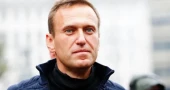
Navalny, President Vladimir Putin’s most prominent critic, died on Feb 16, 2024, in an Arctic penal colony while serving a 19-year sentence he said was politically motivated. Russian authorities have maintained that he died of natural causes, denying any involvement.
His widow, Yulia Navalnaya, speaking at the Munich Security Conference, said she had been convinced from the outset that her husband was poisoned and that new findings now provided proof. She again accused Putin of being responsible and called for accountability.
At least 6,000 killed over 3 days during RSF attack on Sudan’s el-Fasher, UN says
European officials said epibatidine affects the nervous system in a manner similar to nerve agents, causing breathing difficulties, seizures, slowed heart rate and potentially death. They expressed high confidence in the findings but acknowledged the investigation was complex and time-consuming.
Navalny survived a previous poisoning in 2020 involving a nerve agent attack he blamed on the Kremlin. He later returned to Russia after treatment in Germany and was immediately arrested, spending the final years of his life in prison.
The Kremlin has repeatedly rejected accusations of using chemical or biological weapons against political opponents.
20 days ago
UK to send warships, jets to Arctic in 2026
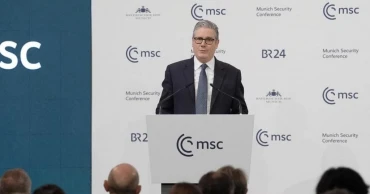
UK Prime Minister Keir Starmer has announced that Britain will deploy a fleet of warships and fighter jets to the Arctic in 2026 to strengthen security in the region.
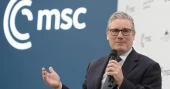
Speaking at the Munich Security Conference, Starmer said the operation will involve close cooperation with the United States, Canada and other NATO allies amid rising tensions and growing military activity in the Arctic.
Starmer said the move reflects the UK’s renewed role in European and transatlantic security. He also stressed the need for deeper ties with the European Union in areas such as defence, technology and the economy to face shared security challenges.
The announcement comes as Western leaders discuss Russia’s actions, Arctic security and the future of the transatlantic alliance at the Munich conference. Several leaders highlighted the importance of unity among European countries and allies to counter growing threats.
Danish Prime Minister Mette Frederiksen said Arctic security requires collective action and stressed that Greenland’s sovereignty must be respected. Ukraine’s President Volodymyr Zelensky said European unity remains the strongest defence against Russian aggression.
The planned Arctic deployment is expected to mark one of the UK’s most significant military commitments to the region in recent years.
With inputs from BBC
20 days ago
UK says Russia used rare poison to kill Navalny
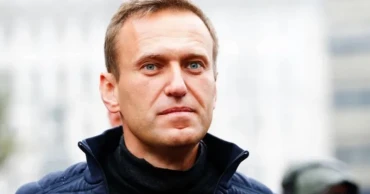
Britain and several European allies have said Russian opposition leader Alexei Navalny was killed using a rare poison made from a dart frog toxin, blaming the Russian state for his death.
In a joint statement issued two years after Navalny died in a Siberian penal colony, the UK, Sweden, France, Germany and the Netherlands said tests found traces of epibatidine in samples taken from his body. The toxin has no natural link to Russia and there is no innocent explanation for its presence, the UK Foreign Office said.
UK Foreign Secretary Yvette Cooper said only the Russian government had the means, motive and opportunity to use such a lethal substance against Navalny during his imprisonment. She made the remarks while speaking at the Munich Security Conference.
The allies said epibatidine is found naturally only in certain wild dart frogs in South America. It is not produced by frogs in captivity and does not occur naturally in Russia. They said the Russian state should be held responsible for Navalny’s death.
The UK has informed the Organisation for the Prohibition of Chemical Weapons about what it described as a possible breach of the Chemical Weapons Convention by Russia.
UK Prime Minister Keir Starmer praised Navalny’s courage and said his fight to expose the truth left a lasting legacy. France’s Foreign Minister Jean Noël Barrot also paid tribute, saying Navalny was killed for his struggle for a free and democratic Russia.
Navalny, a leading anti corruption campaigner and fierce critic of the Kremlin, died in custody on Feb 16, 2024, at the age of 47. He had been jailed for several years on charges widely seen by critics as politically motivated.
His wife, Yulia Navalnaya, has long said her husband was poisoned in prison. Reacting to the latest findings, she said she was convinced from the first day that he had been poisoned and thanked European states for uncovering the truth after detailed work.
The Kremlin has not commented on the allegations. Russian President Vladimir Putin previously avoided mentioning Navalny by name and gave only a brief remark after his death.
Experts say epibatidine is an extremely rare neurotoxin and far stronger than morphine. It can affect the nervous system and lead to paralysis, breathing failure and death.
With inputs from BBC
20 days ago
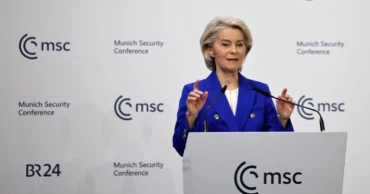
Leaders urge stronger defence as Munich security talks continue
World leaders on Saturday intensified calls for a stronger and more self-reliant Europe as the second day of the Munich Security Conference got underway, against the backdrop of deepening geopolitical tensions and the ongoing war in Ukraine.
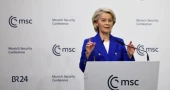
Addressing the conference, European Commission President Ursula von der Leyen said the European Union must fully activate its mutual defence commitments under its founding treaty, stressing that collective defence was not optional but a binding obligation. She said Europe had a duty to stand together in the face of aggression, calling it a defining principle of the bloc.
British Prime Minister Keir Starmer warned that Russia’s aggression extended far beyond Ukraine, threatening Europe’s security, social cohesion and economic stability through disinformation, cyberattacks and sabotage. He said Moscow was continuing to rearm even as the war dragged on, underscoring the need for Europe to strengthen its military capabilities.
Starmer said Europe must build credible hard power to deter aggression and, if necessary, be ready to fight to protect its people, values and way of life. He argued that the path ahead was clear and required greater investment, coordination and resolve in defence.
US Secretary of State Marco Rubio, speaking earlier, urged European allies to adapt to what he described as a new direction in the transatlantic relationship under the administration of US President Donald Trump. While expressing strong cultural and historical ties with Europe, Rubio said the United States wanted allies capable of defending themselves and called for a renewal of the partnership to meet current global realities.
Rubio was critical of the effectiveness of global institutions, saying the United Nations had played virtually no role in resolving major conflicts, including the war in Gaza. He said reforms were needed to ensure international bodies could respond more effectively to modern crises.
Dutch Foreign Minister David van Weel said Europe had been slow to recognise that the post-Cold War world order was already under strain, noting that the inability of the UN Security Council to resolve conflicts had exposed the system’s weaknesses. He said recent US statements had jolted Europe into confronting a harsher global reality and the need to take greater responsibility for its own defence.
On the opening day of the conference, French President Emmanuel Macron called for a strong and capable Europe, while German Chancellor Friedrich Merz acknowledged growing strains between Europe and the United States but said the alliance must adapt rather than fracture.
The 62nd edition of the conference, being held at the Bayerischer Hof in Munich, has brought together more than 60 heads of state and government, dozens of international organisation leaders and delegates from over 115 countries, with security in Europe, Ukraine and the future of the transatlantic alliance dominating discussions.
With inputs from ALJAZEERA
20 days ago
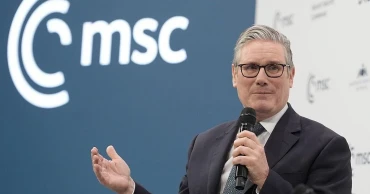
Starmer urges deeper UK-EU ties, vows stronger European defence
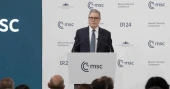
British Prime Minister Keir Starmer on Friday called for closer ties between the United Kingdom and the European Union, warning that Europe must be prepared to defend itself in an increasingly unstable world, as he addressed the Munich Security Conference.
Speaking on defence and security, Starmer said Europe could no longer rely on old assumptions and must be ready to use hard power if necessary to safeguard peace. He stressed that while Europe does not seek conflict, the reality of the age demands credible military strength.
Starmer announced that the UK would deploy a carrier strike group to the North Atlantic and the High North later this year, describing the move as a powerful demonstration of Britain’s commitment to Euro-Atlantic security. He said the deployment would be carried out alongside the United States, Canada and other Nato allies.
The British leader argued that Europe has underinvested in defence for years, sheltered by the US security umbrella, resulting in fragmented and inefficient capabilities. He said the war in Ukraine had exposed those weaknesses and created an urgent need for Europe to take greater responsibility for its own security.
Calling Europe a “sleeping giant” in defence terms, Starmer said the continent’s combined economic strength far outweighed that of Russia but had not been translated into effective military power. He urged European nations to spend more, coordinate better and strengthen a more European-focused Nato while maintaining strong transatlantic ties.
On relations with Washington, Starmer said the United States remained an indispensable ally and that the UK’s cooperation with the US on defence, security and intelligence was as strong as ever. He cautioned Europe against complacency or drifting away from the transatlantic partnership, saying it must be adapted to present-day challenges rather than weakened.
European Commission President Ursula von der Leyen, who also addressed the conference, said the European way of life was being challenged in new ways and that Europe had no choice but to strengthen its independence in defence, technology and security. She argued that a stronger Europe would ultimately reinforce, not undermine, the transatlantic alliance.
Earlier, US Secretary of State Marco Rubio told the conference that the United States and Europe belonged together, even as he criticised European approaches to climate policy and migration and questioned the effectiveness of the United Nations in resolving conflicts.
Despite clear differences between Europe and the United States, Starmer and other speakers emphasised the need to repair strains in the transatlantic relationship and to respond collectively to growing global security threats, with Ukraine remaining a central concern of the summit.
With inputs from BBC
20 days ago
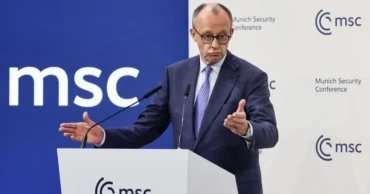
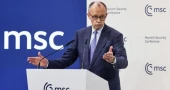
Rules-based global order collapsing, Europe must prepare for sacrifice: Germany’s Merz
German Chancellor Friedrich Merz on Friday warned that the rules-based global order has effectively collapsed, cautioning that Europe can no longer take its freedom and security for granted amid rising great-power politics.
Opening the annual Munich Security Conference, Merz told world leaders that the international system “no longer exists in that form,” urging Europeans to be ready to make sacrifices to defend their values and security.
He acknowledged that a “deep divide” has emerged between Europe and the United States, saying transatlantic relations have been strained by ideological and policy differences in recent years.
The conference is taking place against a backdrop of heightened tensions, including US President Donald Trump’s renewed threats to annex Greenland from Denmark and the imposition of tariffs on European imports, developments that have unsettled European allies.
US Secretary of State Marco Rubio, who is attending the conference and is scheduled to speak later, earlier described the current moment as a “new era in geopolitics,” calling for a reassessment of global roles and responsibilities.
Around 50 world leaders are attending the summit, where European defence, the future of the transatlantic relationship and the credibility of the North Atlantic Treaty Organization are high on the agenda. US commitments to Nato have come under scrutiny amid shifting American foreign policy priorities.
Merz said Europe does not share the “culture war” politics associated with the US MAGA movement, stressing that freedom of speech in Europe is bound by constitutional values and human dignity. He also rejected protectionism, reaffirming Europe’s commitment to free trade.
Despite the tensions, Merz appealed for renewed cooperation, urging Washington to help “repair and revive transatlantic trust.” He also revealed that confidential discussions are underway with French President Emmanuel Macron on the possibility of a joint European nuclear deterrent, though he did not provide details.
France and the UK are currently Europe’s only nuclear powers, while most European states, including Germany, rely on the US nuclear umbrella under Nato.
Addressing the conference later, Macron reiterated his call for Europe to become a geopolitical power, urging faster and more coordinated rearmament across the continent in response to Russia’s invasion of Ukraine. He described the war as Europe’s “existential challenge” and warned against yielding to Russian demands.
The Russia-Ukraine war, tensions between the West and China, and prospects of a renewed Iran-US nuclear deal are also being discussed at the high-profile gathering.
With inputs from BBC
21 days ago
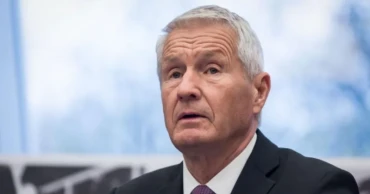
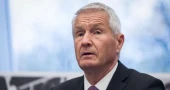
Former Norwegian PM charged with gross corruption over Epstein ties
Former Norwegian Prime Minister Thorbjørn Jagland has been charged with gross corruption over his links to convicted US sex offender Jeffrey Epstein, Norwegian police said.
The charge was filed after the Council of Europe lifted Jagland’s diplomatic immunity, which he held due to his former role as secretary general of the organisation. His lawyer said Jagland denies criminal liability and is ready to cooperate with investigators.
Norway’s economic crime unit Økokrim has searched three of Jagland’s properties and is expected to question him as part of the investigation.
Authorities launched the probe earlier this month into alleged acts of gross corruption said to have taken place between 2011 and 2018, during Jagland’s tenure at the Council of Europe.
Documents released by the US Department of Justice, often referred to as the Epstein files, suggest Epstein may have covered travel expenses for Jagland and his family to visit properties in Paris, New York and Palm Beach. A planned family trip to Epstein’s private Caribbean island in 2014 was later cancelled.
There are also allegations that Jagland sought Epstein’s help in securing a bank loan, although it remains unclear whether this occurred. Police have not confirmed whether that claim forms part of the charge.
Being named in the US files does not in itself indicate wrongdoing.
Jagland served as Norway’s prime minister from 1996 to 1997 and later chaired the Norwegian Nobel Committee. He was secretary general of the Council of Europe from 2009 to 2019.
The case comes amid wider scrutiny in Norway after US authorities released millions of emails, images and investigative records related to Epstein, who died in 2019 while awaiting trial on sex trafficking charges.
Several other Norwegian public figures have faced investigation or review over alleged links to Epstein, including diplomats and senior officials. Some have denied wrongdoing, while others have apologised for past associations.
The investigation into Jagland is ongoing.
With inputs from BBC
22 days ago
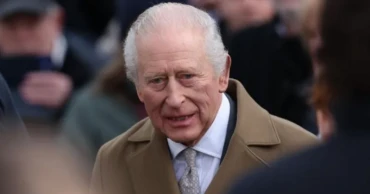
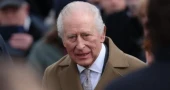
King voices deep concern as police review fresh claims against Andrew
Britain’s King Charles has expressed “profound concern” over new allegations linked to his brother Andrew Mountbatten-Windsor as police consider whether to open an investigation connected to the Jeffrey Epstein scandal.
In a statement issued on Monday, a Buckingham Palace spokesperson said the King has made clear, both in words and through unprecedented actions, his deep concern about allegations that continue to emerge regarding Andrew’s conduct. The Palace said that while the specific claims are for Andrew to address, it stands ready to support Thames Valley Police if approached, as would be expected.
Thames Valley Police confirmed it is assessing whether there are sufficient grounds to investigate a complaint lodged by the anti-monarchy group Republic. The group has reported Andrew for suspected misconduct in public office and an alleged breach of official secrets.
The police review follows the release of a large new batch of documents related to Epstein. Emails contained in the files appear to suggest that Andrew, during his time as a UK trade envoy, shared official reports and confidential information with Epstein.
According to the documents, Andrew is alleged to have forwarded official summaries of visits to Singapore, Hong Kong and Vietnam to Epstein on November 30, 2010, shortly after receiving them from his then special adviser. Separate emails also appear to reference confidential investment opportunities in Afghanistan that were shared with Epstein later that year.
Under official rules, trade envoys are required to maintain strict confidentiality over sensitive commercial, political and diplomatic information linked to their official duties.
The Buckingham Palace statement added that the King and Queen’s “thoughts and sympathies have been, and remain with, the victims of any and all forms of abuse”.
Earlier on Monday, while the King was carrying out engagements in Lancashire, a protester shouted a question about Andrew, which was met with disapproval from others in the crowd.
The Palace intervention followed an earlier statement from Kensington Palace, where a spokesperson for the Prince and Princess of Wales said they were “deeply concerned” by the latest Epstein-related revelations and that their thoughts remained with the victims.
Since the latest document release, pressure has intensified on Andrew, with renewed claims about his past links to Epstein. The disclosures have also caused embarrassment for his former wife Sarah Ferguson, after emails attributed to her appeared in the files.
Last week, Andrew was moved earlier than expected from Royal Lodge in Windsor to the King’s private Sandringham estate. In October 2025, following an earlier wave of Epstein-related revelations, he was stripped of his remaining royal titles.
Andrew has repeatedly denied any wrongdoing. Being named in the Epstein files does not, in itself, amount to evidence of misconduct.
With inputs from BBC
25 days ago
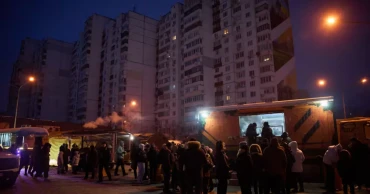
Russian airstrike kills 1 in eastern Ukraine as US sets June peace deadline
A Russian airstrike on a residential area in Kramatorsk, eastern Ukraine, killed one person and injured two on Sunday, officials said.
The attack caused a fire in a nine-story apartment building, the State Emergency Service of Ukraine reported.
Russia also targeted energy infrastructure in Poltava region overnight, Serhii Koretskyi, chief of state-owned gas company Naftogaz, said.
Since the war began nearly four years ago, Russia has frequently hit Ukraine’s power grid, especially during winter, in what Kyiv calls a strategy to weaken Ukrainian morale.
Ukrainian President Volodymyr Zelenskyy said the United States has given Ukraine and Russia a June deadline to reach a peace agreement. He added that if the deadline is missed, the U.S. is likely to pressure both sides to comply.
“The Americans are proposing the parties end the war by early summer and will probably put pressure on both sides according to this schedule,” Zelenskyy told reporters Friday. “They want everything done by June and a clear schedule of events.”
Zelenskyy also said the next round of U.S.-brokered trilateral talks is likely to take place in Miami next week. Ukraine has confirmed its participation.
Earlier U.S.-facilitated talks in Abu Dhabi produced no breakthrough, as Russia demands Ukraine withdraw from the Donbas region — a condition Kyiv refuses to accept.
26 days ago
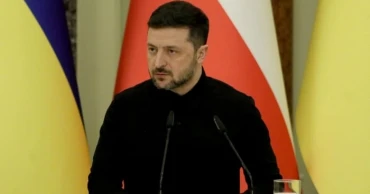
US sets June deadline for Russia-Ukraine deal to end war: Zelenskyy
The United States has given Russia and Ukraine a deadline until June to reach an agreement to end the nearly four-year-long war, Ukrainian President Volodymyr Zelenskyy said, as fresh Russian attacks hit Ukraine’s energy infrastructure.
Speaking to reporters on Friday, Zelenskyy said the Trump administration wants the war to end by early summer and is working according to a fixed schedule. He added that Washington would likely put pressure on both sides if the deadline is not met.
“The Americans want everything done by June and they will do everything to end the war,” Zelenskyy said, adding that the US seeks a clear timeline for the peace process.
He said the United States has proposed holding the next round of trilateral talks involving Ukraine, Russia and the US next week, possibly in Miami. Ukraine has already confirmed its participation.
Zelenskyy also revealed that Russia presented the US with a massive economic proposal worth about $12 trillion, dubbed the “Dmitriev package,” named after Russian envoy Kirill Dmitriev. Economic cooperation is part of the broader negotiations, he said.
Meanwhile, Russian forces continued large-scale attacks on Ukraine’s energy system. Zelenskyy said Russia launched more than 400 drones and around 40 missiles overnight on Saturday, targeting power grids and energy facilities.
Ukraine’s state energy operator Ukrenergo said the strikes forced all nuclear power plants under government control to reduce output, leading to a significant power shortage. As a result, electricity outages have been extended across the country.
Recent US-brokered talks in Abu Dhabi failed to produce a breakthrough, as both sides remain divided. Russia is demanding Ukraine withdraw from the Donbas region, a condition Kyiv has rejected outright.
Zelenskyy said no agreement was reached on the future of the Russian-occupied Zaporizhzhia nuclear plant and expressed doubt about a US proposal to turn parts of Donbas into a free economic zone.
He added that Ukraine is open to a US-backed ceasefire proposal banning strikes on energy infrastructure, but said Russia has previously violated similar agreements.
Russian attacks on power facilities have intensified in recent months, causing widespread blackouts and worsening living conditions during Ukraine’s harsh winter.
27 days ago