europe
Ukraine pursues joint weapons production with allies as US pauses some arms shipments
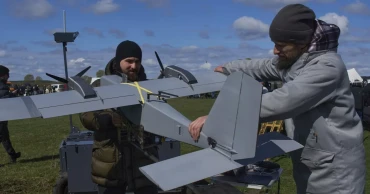
Ukraine is moving forward with early plans to jointly produce weapons with some of its international allies, officials confirmed, even as the United States announced a halt to certain promised arms shipments intended to support Ukraine’s defense against Russia.
The developments come at a critical stage in Russia’s full-scale invasion, now nearing three and a half years. A renewed Russian offensive aimed at seizing more Ukrainian territory is putting Ukraine’s overstretched defenses under extreme pressure, while Russian missiles and drones continue to pound Ukrainian cities. At the same time, U.S.-led diplomatic efforts to broker a peace deal have reached a standstill.
With the administration of U.S. President Donald Trump pulling back from support for Ukraine’s war effort, European nations are facing increased responsibility to pressure Russia.
French President Emmanuel Macron and Russian President Vladimir Putin spoke by phone on Tuesday for the first time in nearly three years. According to Macron’s office, during their two-hour conversation, Macron reaffirmed France’s “unwavering support for Ukraine’s sovereignty and territorial integrity” and called for a ceasefire.
Russian drone strike kills a married couple and injures 17 others, Ukraine says
Ukrainian President Volodymyr Zelenskyy said preparations are underway for upcoming meetings with European Union member states and other allies to discuss defense industry cooperation.
“One of the main topics will be weapons production — joint investments, joint projects,” Zelenskyy said in his nightly address on Tuesday.
Defense Minister Rustem Umerov announced that draft legislation enabling joint weapons production with international partners will be presented to Ukraine’s parliament later this month. Umerov stated that national defense companies reviewed the proposed laws on Tuesday.
The plan includes establishing special legal and tax measures to support Ukrainian defense manufacturers in expanding and modernizing production. This could involve building new weapons manufacturing facilities both inside Ukraine and abroad, according to Umerov.
Earlier this week, German Foreign Minister Johann Wadephul visited Kyiv, where he pledged Germany’s support to help Ukraine accelerate domestic weapons production. He was joined by representatives from Germany’s defense industry.
Meanwhile, U.S. officials confirmed Tuesday that certain weapons deliveries to Ukraine are being paused over concerns that U.S. stockpiles have fallen to dangerously low levels. These weapons were pledged under the previous Biden administration, but the Pentagon did not specify which systems are being withheld.
In response, Ukraine’s Foreign Ministry summoned the U.S. chargé d’affaires, John Hinkel, on Wednesday for discussions on defense cooperation. Deputy Foreign Minister Maryana Betsa expressed gratitude for U.S. assistance but underscored the “critical importance” of delivering the previously promised defense packages, particularly to strengthen Ukraine’s air defense.
Putin and Trump discussed Middle East tensions, Ukraine war in phone call
Kremlin spokesman Dmitry Peskov reacted by saying that the Pentagon’s move could bring a negotiated settlement closer, stating, “The fewer weapons supplied to Ukraine, the closer the end of the war is.”
The U.S. has been Ukraine’s largest military supporter since Russia launched its full-scale invasion on February 24, 2022. However, since Trump took office, Washington has announced no new military or weapons aid for Ukraine.
According to Germany’s Kiel Institute, which tracks global military support, the U.S. provided no new assistance to Ukraine between March and April this year. For the first time since June 2022, European nations surpassed the U.S. in total military aid, contributing 72 billion euros ($85 billion) compared to the U.S.’s 65 billion euros ($77 billion), the institute reported last month.
Washington’s latest decision could deprive Ukraine of some of its most advanced battlefield weaponry. Analysts say Europe can help fill some gaps by supplying artillery systems, but there are no European alternatives to key U.S.-made weapons like HIMARS missile launchers and Patriot air defense systems, both vital for protecting Ukrainian cities from Russian airstrikes.
Ukraine's current stockpile levels and its most urgent defense needs remain unclear.
11 months ago

Hurricane Flossie is now a Category 2 off the Pacific coast of Mexico
Hurricane Flossie intensified into a Category 2 storm off Mexico’s Pacific coastline on Tuesday morning, according to the National Hurricane Center (NHC).
The hurricane is packing maximum sustained winds of 100 mph (155 kph), with rainfall already affecting parts of Mexico’s coastal regions. As of the latest update, Flossie was located approximately 150 miles (245 kilometers) southwest of Manzanillo.
Russian drone strike kills a married couple and injures 17 others, Ukraine says
The storm is currently moving northwest at a speed of 10 mph (17 kph) and is expected to maintain this trajectory over the coming days. Forecasters predict the system will move away from southwestern Mexico by Tuesday night.
Further strengthening is anticipated, with Flossie likely to reach major hurricane status — defined as Category 3 or higher, with sustained winds of at least 111 mph (180 kph) — as early as Tuesday night or Wednesday morning.
11 months ago
Denmark arrests a man wanted in Germany for allegedly gathering information on Jews for Iran
A Danish national suspected of gathering intelligence on Jewish individuals and locations in Berlin on behalf of Iranian authorities has been arrested in Denmark, German prosecutors said Tuesday.
The suspect, identified only as Ali S. in accordance with German privacy laws, was detained last Thursday in the Danish city of Aarhus, according to a statement from federal prosecutors.
He is accused of working for an Iranian intelligence agency, which allegedly tasked him earlier this year with collecting information on “Jewish sites and specific Jewish individuals” in Berlin. Prosecutors say he conducted surveillance on three properties in June, which they believe may have been part of preparations for additional intelligence operations or potential attacks on Jewish targets in Germany.
"If these suspicions are confirmed, we are facing a deeply alarming operation," said German Justice Minister Stefanie Hubig, adding that the protection of Jewish communities remains a top priority for the German government.
Denmark reiterates support for 'peaceful, democratic, equitable' Bangladesh
Following a brief but intense conflict between Israel and Iran in June, German security agencies increased protective measures for Jewish and Israeli establishments across the country.
The suspect’s arrest followed intelligence shared by Germany’s domestic security service. He is expected to be extradited to Germany, where a judge will decide whether he remains in custody while formal charges are prepared. The exact timeline for his extradition remains unclear.
In response to the incident, Germany summoned Iranian Ambassador Majid Nili Ahmadabadi to its Foreign Ministry.
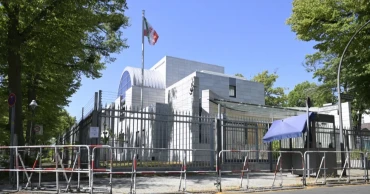
The Iranian Embassy in Berlin dismissed the allegations as “unfounded and dangerous,” claiming they are part of a deliberate attempt to distract from Israel’s recent military actions against Iran and the deaths of Iranian citizens.
Germany, a close ally of Israel, has long had strained relations with Tehran. Nevertheless, it remains one of the European nations engaged in diplomatic efforts regarding Iran’s nuclear program.
Relations worsened further in October, when Germany ordered the closure of all three Iranian consulates following Tehran’s announcement of the execution of Jamshid Sharmahd — an Iranian-German national living in the United States who was abducted by Iranian security forces in Dubai in 2020. Iran's embassy in Berlin now remains its only diplomatic mission in the country.
11 months ago
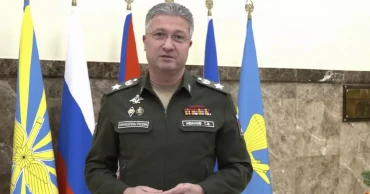
Russia's former deputy defense minister handed 13-year sentence on corruption
Russia’s former deputy defense minister, Timur Ivanov, was sentenced to 13 years in prison on Tuesday after being found guilty of embezzlement and money laundering in a high-profile corruption case that has highlighted deep-rooted graft within the Russian military — a factor many blame for Moscow’s failures on the battlefield in Ukraine.
Ivanov, 49, is the most prominent figure caught up in an extensive investigation into military corruption that has implicated several senior officials linked to former Defense Minister Sergei Shoigu. Despite the crackdown on his associates, Shoigu, a longtime ally of President Vladimir Putin, retained his political influence and was recently appointed as the head of Russia’s Security Council.
Appointed as deputy defense minister in 2016, Ivanov was responsible for overseeing military construction, property management, housing, and medical support for armed forces personnel. His extravagant lifestyle sparked public anger in Russia, particularly as the war in Ukraine revealed significant shortcomings in military logistics and organization that contributed to Russia’s military struggles.
Russian drone strike kills a married couple and injures 17 others, Ukraine says
Ivanov was arrested in April 2024 and has been in detention since. On Tuesday, Moscow City Court convicted him of embezzling 3.9 billion rubles — approximately $50 million — which he has denied. In addition to the prison sentence, the court ordered the seizure of his assets, which reportedly include luxury real estate and a valuable collection of vintage cars.
Ivanov’s legal team announced plans to appeal the verdict.
He has also been placed under sanctions by both the United States and the European Union for his involvement in Russia's military campaign in Ukraine.
11 months ago
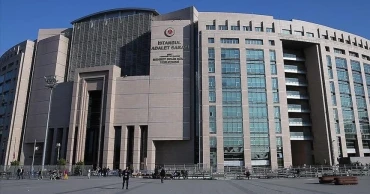
Four held in Istanbul over Prophet Muhammad cartoon, insult to religious values
Four people have been detained in Istanbul for publishing a cartoon of Prophet Muhammad, which authorities say insults religious values.
The arrests follow an investigation launched by Istanbul prosecutors into the alleged "public insult to religious values." The controversial cartoon appeared in the June 26 issue of satirical magazine Leman, referencing the ongoing Israel-Iran tensions and showing the Prophet Muhammad and Prophet Moses shaking hands over a devastated cityscape.
The cartoon triggered widespread anger. Videos shared on social media show large crowds demonstrating outside Leman's Istanbul office, with some protesters attempting to enter the building by force.
Fahrettin Altun, Türkiye's Communications Director, denounced the publication on social platform X, vowing that those who "shamelessly attack the sacred values of our nation" would face consequences.
“This insult to our Prophet, who is the ultimate guide for Muslims, cannot be justified under the guise of press freedom,” Altun stated, calling the cartoon the product of a "sick mentality" that will be brought to justice.
DU students protest BJP spokespersons’ derogatory remarks on Prophet Muhammad
He urged the public to act with restraint and warned against provocations. Altun also assured that all state institutions are taking appropriate steps to address what he described as "this despicable attack on our faith and values."
Additional security has been deployed around the magazine’s premises to prevent any untoward incidents, officials said.
Depictions of prophets, including Prophet Muhammad and Prophet Moses — both revered in Islam, Christianity, and Judaism — are strictly prohibited in Islamic tradition.
Source: Anadolu
11 months ago
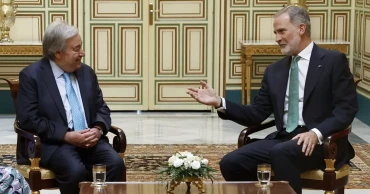
Nations meet in Spain to mobilise trillions without US support
Representatives from dozens of countries convened Monday in Spain for a major United Nations conference aimed at addressing widening global inequalities and generating the trillions of dollars required to close the development gap—without the participation of the United States, once a key contributor.
U.N. Secretary-General Antonio Guterres opened the four-day Financing for Development summit in Seville, highlighting the difficult context: rising debt, falling investments, dwindling foreign aid, and growing trade barriers.
“Development depends on financing, yet right now that engine is faltering,” Guterres warned in his opening remarks. “We have come to Seville to change direction—to fix and accelerate the engine of development so that investment flows at the scale and speed the world needs.”
Co-hosted by the U.N. and the Spanish government, the conference is seen as a critical moment to address the estimated $4 trillion annual shortfall in funding needed to tackle poverty, achieve the U.N.’s lagging 2030 Sustainable Development Goals, and lift millions out of hardship.
Despite ongoing global instability and heightened geopolitical tensions, conference organizers remain hopeful the international community can confront the pressing challenge of ensuring access to food, healthcare, education, and clean water for all.
Spanish Prime Minister Pedro Sánchez echoed that optimism, telling delegates the summit was an opportunity to reject the belief that global rivalry and competition should define humanity’s future.
Israeli airstrike on Iran’s Evin Prison raises fears for political prisoners
Ambitious Plan to Bridge the Financial Divide
Over 70 world leaders and thousands of officials from development banks, international financial bodies, philanthropies, businesses, and civil society groups are attending the Seville gathering, according to the U.N.
However, the absence of the United States has cast a shadow over proceedings. Washington withdrew from the summit earlier this month after objecting to a 38-page outcome document that had been under negotiation for months among the U.N.’s 193 member states.
Despite U.S. opposition, the other nations endorsed the agreement by consensus, paving the way for its formal adoption in Seville under the name The Seville Commitment (Compromiso de Sevilla).
The document outlines urgent reforms to bridge the $4 trillion financing gap, including proposals for countries to ensure tax revenues amount to at least 15% of GDP, a threefold increase in lending from multilateral development banks, and mechanisms to boost private investment in essential areas such as infrastructure. It also emphasizes reforms to help countries manage soaring debt burdens.
U.N. trade chief Rebeca Grynspan recently underscored the severity of the crisis, stating that “development is regressing” amid rising global debt. In 2024, 3.3 billion people lived in countries that spent more on debt interest than on health or education—a figure projected to reach 3.4 billion this year. Developing nations are expected to spend $947 billion servicing debts in 2025, up from $847 billion last year.
An expert panel appointed by Guterres has put forward 11 recommendations to address the debt crisis, strengthen borrower nations, and promote a fairer global financial system.
Israeli settlers attack military base in the West Bank
U.S. Pushback on Global Reform Efforts
American diplomat Jonathan Shrier explained Washington’s withdrawal, saying while the U.S. remains committed to global cooperation and economic development, the Seville agreement crossed several “red lines.” These included provisions seen as interfering with how international financial institutions are governed, expanding multilateral development bank lending, and granting the U.N. greater influence over global debt frameworks.
The U.S. also opposed certain trade, tax, and innovation proposals, including calls for a U.N. framework on international tax cooperation, which conflict with American policy.
The U.S., historically the world’s largest foreign aid donor, has scaled back significantly in recent years. Under President Donald Trump, the U.S. Agency for International Development (USAID) was dismantled and foreign assistance budgets slashed, with Trump calling such spending wasteful.
Other Western nations have also reduced international aid contributions.
U.N. Deputy Secretary-General Amina Mohammed called the U.S. exit from the Seville summit “regrettable,” emphasizing that many of the proposed actions cannot succeed without American involvement.
“We will continue engaging with the U.S. after Seville and hope to convince them to play a role in lifting millions out of poverty,” Mohammed said.
11 months ago
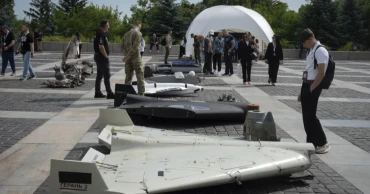
Russian drone strike kills a married couple and injures 17 others, Ukraine says
At least two people were killed and 17 others injured after Russian drones targeted the southern Ukrainian port city of Odesa overnight, Ukrainian officials said on Saturday.
Emergency services reported that a drone crashed into a residential high-rise, damaging three floors and trapping several residents. Regional Governor Oleh Kiper confirmed that the victims were a married couple, while three children were among the injured.
Russian Missile and Drone Strike Injures 20 in Kyiv
Russia has not yet commented on the incident. However, the Russian Defense Ministry claimed that its air defenses intercepted over 40 Ukrainian drones overnight and into Saturday morning across western Russia and Russian-occupied Crimea.
Drone strikes have become a defining feature of the war, now entering its fourth year. Both Russia and Ukraine have accelerated efforts to develop advanced and more lethal drones, turning the conflict into a battleground for testing new military technologies.
11 months ago
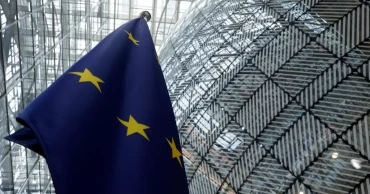
EU leaders to discuss tougher Russia sanctions, US tariffs and Mideast conflicts
The heads of the European Union’s 27 member nations will meet Thursday in Brussels to discuss tougher sanctions on Russia, ways to prevent painful new US tariffs and how to make their voices heard in the Middle East conflicts.
Most of the leaders will arrive from a brief but intense NATO summit where they pledged a big boost in defense spending, and papered over some of their differences with US President Donald Trump.
Ukrainian President Volodymyr Zelenskyy will join the EU summit by videoconference, after meeting Trump on Wednesday. US-led NATO downgraded Ukraine from a top priority to a side player this week, but Russia’s war in Ukraine remains of paramount concern for the EU.
Members will be discussing an 18th round of sanctions against Russia and whether to maintain a price cap on Russian oil, measures that some nations oppose because it could raise energy prices, reports AP.
Meanwhile, Trump’s threatened tariffs are weighing on the EU, which negotiates trade deals on behalf of all 27 member countries. He lashed out at Spain on Wednesday for not spending more on defence and suggested yet more tariffs. France’s president called Trump to task for starting a trade war with longtime allies.
World Bank approves over $1 billion for projects in Lebanon, Syria and Iraq
European leaders are also concerned about fallout from the wars in the Middle East, and the EU is pushing to revive diplomatic negotiations with Iran over its nuclear program.
EU members have internal disagreements to overcome. They are divided over what to do about European policy toward Israel because of its conduct in Gaza. And left-leaning parties are attacking European Commissioner Ursula von Der Leyen’s pivot away from the EU’s climate leadership in favour of military investment.
Defence and security are likely to top the agenda. The summit will end with a statement of conclusions that will set the agenda for the bloc for the next four months and can be seen as a bellwether for political sentiment in Europe on major regional and global issues.
11 months ago
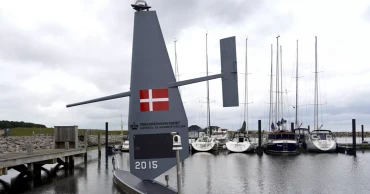
Danish military using robotic sailboats for surveillance in Baltic and North seas
At first glance, they resemble typical sailboats, their sails marked with Denmark’s red-and-white flag. But these 10-meter (30-foot) vessels carry no crew. Known as “Voyagers,” these robotic sailboats are designed for autonomous surveillance missions and have been deployed by the Danish Armed Forces for a three-month operational trial.
Built by U.S.-based Saildrone, headquartered in Alameda, California, the Voyagers will patrol both Danish and NATO-controlled waters in the Baltic and North Seas. This region has seen a surge in maritime tensions and suspected sabotage following Russia’s full-scale invasion of Ukraine on February 24, 2022.
Two of the four Voyagers began operations on Monday from Koge Marina, about 40 kilometers (25 miles) south of Copenhagen. The other two were deployed earlier, on June 6, to participate in a NATO patrol. Powered by a combination of wind and solar energy, the uncrewed vessels are capable of remaining at sea for months at a time without human intervention.
Each Voyager is equipped with sophisticated sensor technology, including radar, infrared and optical cameras, sonar, and acoustic monitoring systems. These tools allow the vessels to detect activity both above and below the ocean’s surface over a range of 20 to 30 miles (30 to 50 kilometers) in open waters.
What is Strait of Hormuz? Could it play a role in Israel-Iran conflict?
Saildrone’s founder and CEO, Richard Jenkins, likened the Voyager to a mobile sensor platform or “truck” that uses machine learning and artificial intelligence to provide a comprehensive view of maritime activity. He emphasized that critical threats — such as damage to undersea cables, illegal fishing, and smuggling of people, drugs, or weapons — often go unnoticed simply because no one is monitoring these remote regions.
“We’re going to places where we previously didn’t have eyes and ears,” Jenkins said.
According to Denmark’s Defense Ministry, the goal of the trial is to enhance surveillance in areas that have long been under-monitored, especially around key subsea infrastructure like fiber-optic cables and power lines.
“The security situation in the Baltic is tense,” said Lt. Gen. Kim Jørgensen, Director of Danish National Armaments. “They’re going to cruise Danish waters, and then later they’re going to join up with the two that are on (the) NATO exercise. And then they’ll move from area to area within the Danish waters.”
The trial comes at a critical time for NATO, which has been responding to a series of incidents involving damage to maritime infrastructure. These include the 2022 Nord Stream pipeline explosions and the rupture of at least 11 undersea cables since late 2023. The most recent disruption, in January, severed a fiber-optic connection between Latvia and Sweden’s Gotland Island.
The deployment also unfolds in the context of past tensions between Denmark and the U.S. — particularly during Donald Trump’s presidency, when his administration expressed interest in purchasing Greenland, a semiautonomous territory of Denmark. Trump even suggested he would not rule out military action to seize it.
Saildrone’s Jenkins said the company had already planned to establish operations in Denmark before Trump’s reelection and declined to comment on the Greenland issue, stating that Saildrone does not engage in politics.
Some maritime incidents have been linked to Russia’s so-called “shadow fleet” — aging oil tankers that operate under murky ownership structures to evade international sanctions. In one case, Finnish authorities seized the vessel Eagle S in December after it allegedly damaged an underwater power cable between Finland and Estonia using its anchor.
Western governments continue to accuse Russia of conducting hybrid warfare, targeting both land and maritime assets.
In response, NATO is developing a multi-layered maritime surveillance network. This system combines autonomous surface vessels like the Voyagers with conventional naval ships, satellites, and seabed sensors.
Pakistan rejects reports of missile supply to Iran
Peter Viggo Jakobsen of the Royal Danish Defense College said maintaining continuous maritime presence with traditional ships is prohibitively expensive. “It’s simply too expensive for us to have a warship trailing every single Russian ship, be it a warship or a civilian freighter of some kind,” he explained.
Jakobsen emphasized that the goal is to maintain constant monitoring of potential threats through a more cost-effective, layered approach.
11 months ago

Russian Missile and Drone Strike Injures 20 in Kyiv
At least 20 people were injured in a combined missile and drone attack on Kyiv overnight Tuesday, according to Ukrainian authorities, marking the latest in a series of intensified Russian assaults on the capital.
The strike coincided with the ongoing Group of Seven (G7) summit in Canada, which Ukrainian President Volodymyr Zelenskyy is attending. The summit, hosted by Canada as this year’s G7 chair, is scheduled to conclude Tuesday.
Kyiv Mayor Vitalii Klitschko reported that nine people were injured in the Sviatoshynskyi district, while 11 others were wounded in the Solomianskyi district. Six of the victims required hospitalization. Fires also broke out in two additional districts after debris from intercepted missiles fell, officials said.
Zelenskyy, invited to the G7 summit by Canada, is expected to hold bilateral meetings with several world leaders during his visit. He was also scheduled to meet U.S. President Donald Trump, though the White House later confirmed Trump would cut his trip short and return to Washington amid rising tensions in the Middle East.
Russia returns bodies of 1,200 Ukrainian soldiers under Istanbul agreement
Russia has ramped up its aerial bombardments in recent weeks, launching a record number of drones and missiles. The escalation follows a bold operation by Ukraine’s Security Service, which reportedly targeted Russian warplanes stationed at air bases deep within Russian territory.
Meanwhile, diplomatic efforts to end the conflict have seen little advancement. President Zelenskyy noted that direct negotiations in Istanbul have so far yielded only limited outcomes, with a prisoner swap expected to be finalized next week being one of the few tangible results.
11 months ago