latin-america
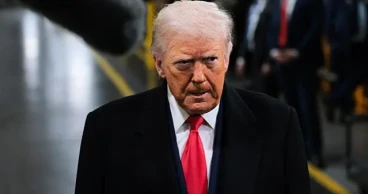
Trump open to ending war with Iran even if Hormuz remains closed
According to The Wall Street Journal, citing US officials, former President Donald Trump has indicated to his aides that he is prepared to conclude the war with Iran even if the Strait of Hormuz stays largely closed.
The WSJ reported that Trump and his team recently assessed that attempting to reopen the strategically vital waterway could prolong the conflict beyond his planned four-to-six-week timeline.
Instead, Trump has decided that the US should focus on its primary objectives: weakening Iran’s naval capabilities and missile stockpiles, then gradually winding down military operations. Following this, the US would apply diplomatic pressure on Iran to resume trade and encourage European and Gulf allies to take the lead in restoring normal shipping, the report added.
#From Al Jazeera
5 days ago
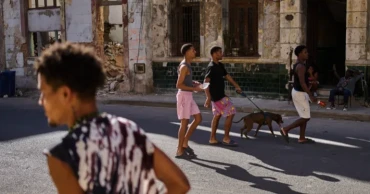
Missing Cuba-bound aid boats found safe, journey resumes
Two sailboats carrying humanitarian aid to Cuba have been located and their crews confirmed safe, a day after Mexican authorities launched a search operation for the missing vessels.
A spokesperson for the Nuestra America Convoy said the boats were found by the Mexican navy and are continuing their journey to Havana with urgently needed supplies.
The two vessels, carrying nine people, departed from Isla Mujeres in Mexico on March 20 and were expected to reach Cuba earlier this week.
The convoy, organised by the Nuestra America initiative, aims to deliver humanitarian assistance to Cuba amid worsening shortages of fuel and essential supplies. The group has criticised US policies, accusing Washington of restricting Cuba’s access to vital resources.
Cuban President Miguel Díaz-Canel had earlier expressed concern over the missing boats. Authorities, including the US Coast Guard, later confirmed that the vessels had been located.
The aid mission comes as Cuba faces a deepening energy crisis, worsened by reduced oil supplies since January. The country has recently experienced multiple nationwide blackouts, raising concerns over healthcare and essential services.
Mexico and other countries have stepped up humanitarian assistance, with shipments of food, medicine and energy supplies being sent to the island.
With inputs from ALJAZEERA
8 days ago
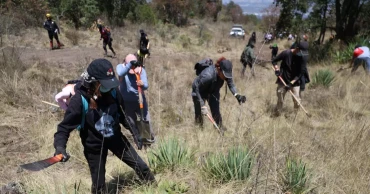
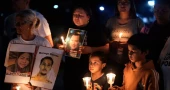
Mexico says a third of 130,000 missing may be alive, drawing criticism from families
The Mexican government reported Friday that around a third of the country’s 130,000 registered missing people may still be alive, citing government records showing signs of life.
The announcement drew swift criticism from families and search groups, who accused authorities of downplaying the scale of Mexico’s disappearance crisis.
Officials said cross-checking vaccination records, birth and marriage registries, and tax filings revealed 40,367 missing people — about 31% of the total — had activity in official records. Authorities confirmed 5,269 of them had been located and marked as “found.” Marcela Figueroa, a top security official, described some cases as voluntary absences, including men leaving partners or women fleeing abusive situations.
However, search groups like those led by Héctor Flores in Jalisco criticized the methodology as “misleading” and lacking transparency. Families argue such reports risk erasing real cases from official counts, undermining ongoing searches.
Officials acknowledged that 46,000 cases lacked sufficient data for tracking, while 43,128 showed no activity in records, with less than 10% under criminal investigation. Figueroa said the government is strengthening oversight of local prosecutor offices and improving case documentation.
Human rights advocates, including the Miguel Agustín Pro Juárez Center, welcomed efforts to improve data reliability but said the report minimized state responsibility and offered little practical help for families, who often continue searches at great personal risk.
Since the drug war began in 2006, disappearances have surged, fueled by cartel violence and, in some cases, state complicity, leaving families demanding transparent, effective measures to locate missing loved ones.
8 days ago
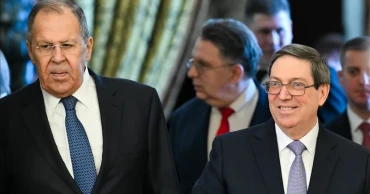
Russia expresses concern over U.S. pressure on Cuba, pledges support
The Russian Foreign Ministry on Tuesday expressed serious concern over escalating U.S. pressure on Cuba, pledging to provide necessary support for the Caribbean nation.
In a statement, the ministry condemned what it called deliberate attempts to interfere in Cuba’s domestic affairs, intimidate the country, and impose illegal unilateral restrictions. Russia reaffirmed its solidarity with the Cuban government and people, and said it would continue offering material and other assistance amid the challenges caused by longstanding U.S. trade, economic, and financial embargoes.
Cuba recently experienced a nationwide power outage, compounded by fuel shortages caused by a tightening U.S. oil blockade. U.S. President Donald Trump has warned that Cuba could “fall pretty soon” while focusing on the ongoing conflict with Iran.
18 days ago
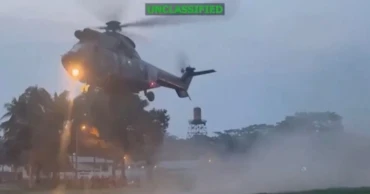
Trump administration launches military operation in Ecuador
The Trump administration has launched a joint military operation with Ecuador targeting what it calls “designated terrorist organizations,” opening a new front in its expanding anti-narcotics campaign in Latin America.
US Southern Command said Ecuadorian and American forces began operations on March 3, reports Al Jazeera. General Francis Donovan described the move as a demonstration of regional commitment to combating “narco-terrorism.” Video released by the US military showed helicopters taking off and aerial surveillance footage.
US officials indicated the operation is currently limited to logistical and intelligence support for Ecuadorian troops. White House Press Secretary Karoline Leavitt said the two countries were taking “decisive action” against criminal networks blamed for violence across the hemisphere.
President Donald Trump has increasingly labeled major drug cartels as “foreign terrorist organizations” and adopted a more militarized strategy, including aerial strikes on suspected smuggling vessels. Critics argue such actions blur the line between law enforcement and acts of war, raising concerns about civilian casualties and violations of international law.
Ecuadorian President Daniel Noboa, who has pursued a tough “iron fist” approach to crime, welcomed the cooperation, calling it a “new phase” in the fight against drug trafficking and illegal mining.
1 month ago
Bolivia military plane crash kills 15 in El Alto
At least 15 people were killed and dozens injured after a Bolivian air force cargo plane carrying banknotes crashed while landing in the western city of El Alto on Friday evening, authorities said.
The aircraft skidded off the runway at El Alto International Airport around 6:15 pm local time after arriving from Santa Cruz and struck nearby vehicles, aviation officials said. The defence ministry later confirmed that a C-130 Hercules of the air force was involved and that it was transporting banknotes to the central bank.
Air force commander Sergio Lora said there were eight people on board, including flight crew and cargo personnel.
Police fired tear gas to disperse crowds who attempted to seize banknotes scattered at the crash site, triggering clashes near the airport. Video footage showed damaged vehicles, people fleeing tear gas and police officers forming a cordon as some individuals threw stones.
The National Association of Journalists of Bolivia said reporters covering the incident were attacked while on duty. In a statement, it said a mobile television unit was directly targeted and several journalists were injured after being hit by stones.
State-run media reported that at least a dozen people were arrested on suspicion of stealing banknotes from the scene.
Defence Minister Marcelo Salinas warned that the money being transported had no legal value as it had not been issued by the Central Bank and lacked serial numbers, adding that attempting to use it would constitute a crime. He also urged the public to refrain from vandalism and respect the period of mourning.
Bolivia’s health ministry said 31 people were injured and issued an urgent appeal for blood donations. El Alto International Airport was temporarily closed following the crash.
Witnesses told news agencies that severe weather conditions, including heavy hail and lightning, were present at the time of the incident. The cause of the crash was not immediately known, and an investigation is under way.
The crash occurred in El Alto, one of the highest-altitude cities in the world, located near the capital La Paz in Bolivia.
With inputs from BBC
1 month ago
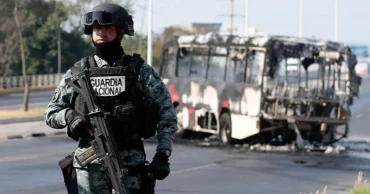
Mexico deploys troops after cartel violence erupts
Mexico has sent thousands of additional soldiers to western parts of the country after a wave of violence broke out following the death in custody of one of the nation’s most powerful drug lords, the government said on Monday.
Defence Secretary Ricardo Trevilla said an extra 2,500 troops were deployed to bolster security, taking the total number of soldiers and National Guard members sent to affected areas to about 9,500 since Sunday.
Unrest has been reported in at least 20 states since the death of Nemesio Oseguera Cervantes, widely known as El Mencho, the leader of the Jalisco New Generation Cartel. He died shortly after being captured by Mexican special forces in Jalisco state.
Security officials said El Mencho was seriously wounded during a firefight between his bodyguards and military commandos and later died while being transported from the town of Tapalpa to the capital. At least six of his guards were killed in the operation, while three soldiers were injured.
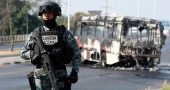
Since news of his death spread, cartel members have launched coordinated attacks in areas where the group is active, setting buses and vehicles on fire, blocking roads with spikes and nails, and torching banks and local businesses. Authorities said dozens of commercial properties were damaged.
Security Secretary Omar Garcia Harfuch said the violence has claimed the lives of a prison guard, a prosecutor’s office employee and about 30 suspected cartel members. At least 25 members of Mexico’s National Guard have also been killed in Jalisco since the unrest began.
President Claudia Sheinbaum praised the military operation and said restoring calm was her top priority. She said roadblocks had largely been cleared by Monday morning and stressed close coordination between the government and security forces.
Videos verified by media organisations showed burning buses, deserted streets and clashes between armed cartel members and the National Guard in several towns, including areas near Guadalajara and the coastal city of Puerto Vallarta. In some footage, tourists were seen watching smoke rise as military helicopters flew low over hotel zones.
The defence ministry said the operation to capture El Mencho was carried out by the Mexican army with support from the National Guard and Air Force. It added that intelligence shared by the United States Department of State helped locate the cartel leader, but confirmed that no US forces were involved in the raid that led to his death.
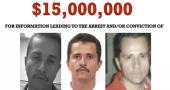
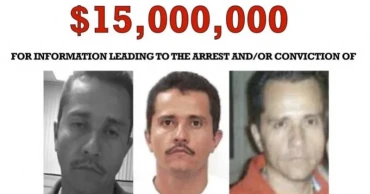
El Mencho had been Mexico’s most wanted fugitive, with the United States offering a reward of up to $15 million for information leading to his capture.
With inputs fro BBC
1 month ago
Mexico’s top drug lord ‘El Mencho’ killed in army operation
Mexico’s most wanted drug trafficker Nemesio Oseguera Cervantes, widely known as El Mencho, has been killed during a military operation aimed at arresting him, the defence ministry said.
El Mencho, leader of the powerful Jalisco New Generation Cartel (CJNG), died on Sunday while being transferred to the capital after sustaining critical injuries in clashes between cartel gunmen and the army, according to officials.
The operation triggered violent retaliation by the cartel, with vehicles set on fire, highways blocked and security forces attacked across at least eight states. Four CJNG members were killed in the town of Tapalpa in Jalisco state, while three soldiers were injured.
Mexico’s defence ministry said the operation was carried out by special forces with support from the air force and National Guard, adding that armoured vehicles, heavy weapons and rocket launchers were seized. The United States Department of State had provided intelligence support for the operation.
Following the unrest, the US issued shelter-in-place advisories for its citizens in several Mexican states, including Jalisco and Tamaulipas. Mexican President Claudia Sheinbaum Pardo urged people to remain calm, saying normal activities were continuing in most parts of the country.
El Mencho, a former police officer, headed a vast criminal network responsible for trafficking large quantities of cocaine, methamphetamine and fentanyl into the United States. Washington had offered a reward of $15 million for information leading to his capture.
Gun battles and arson were reported in multiple cities, including Guadalajara, while public transport was suspended across Jalisco under a red alert. Flights to tourist hubs such as Puerto Vallarta and Guadalajara were cancelled or diverted amid security concerns.
US and former Mexican officials described El Mencho as one of the most violent drug lords in modern history, saying his death marked a major blow to organised crime. Analysts said the development could strengthen cooperation between Mexico and the United States under President Donald Trump, though they warned that continued cartel violence could overshadow the government’s success.
The CJNG, which emerged in Jalisco in 2010, is considered by US authorities to rival the Sinaloa cartel and operates across much of Mexico and the United States, earning billions of dollars annually from the fentanyl trade.
With inputs from BBC
1 month ago
Venezuela unveils amnesty bill that could free political detainees
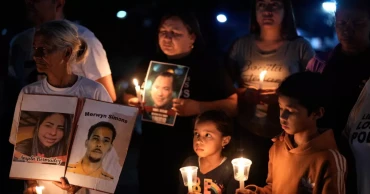
Venezuela’s acting President Delcy Rodríguez on Friday announced a proposed amnesty law that could pave the way for the release of hundreds of people jailed for political reasons, including opposition figures, journalists and human rights activists.
The long-demanded measure, backed by the United States-supported opposition, marks the latest concession by Rodríguez since she assumed control on Jan 3, following the dramatic removal of then president Nicolás Maduro in a US military operation in Caracas.
Addressing a gathering of judges, ministers, senior military officers and other officials in a prerecorded televised event, Rodríguez said the ruling party-dominated National Assembly would consider the bill on an urgent basis.
“May this law serve to heal the wounds left by the political confrontation fueled by violence and extremism,” she said. “May it serve to redirect justice in our country, and may it serve to redirect coexistence among Venezuelans.”
She also announced the closure of Helicoide, a notorious detention center in Caracas where independent organizations have repeatedly documented torture and other abuses. Rodríguez said the facility would be converted into a sports, social and cultural complex for police and nearby communities.
The announcement was made in the presence of several officials whom former detainees and rights groups have accused of ordering abuses at Helicoide and other prisons.
Outside Helicoide, relatives of detainees watched Rodríguez’s speech on mobile phones, some in tears as others chanted, “Freedom! Freedom!”
“God is good. God heard us,” said Johana Chirinos, an aunt of one prisoner, as she cried.
Opposition leader and Nobel Peace Prize laureate María Corina Machado said in a statement that the measures were not adopted “voluntarily, but rather in response to pressure from the US government.” She noted that people have been imprisoned for political activities for periods ranging from one month to 23 years.
“The regime’s repressive apparatus is brutal and has responded to the numerous criminal forces that answer to this regime, and it is all that remains,” Machado said. “When repression disappears and fear is lost, it will be the end of tyranny.”
According to the Venezuelan prisoners’ rights group Foro Penal, 711 people are currently detained nationwide for political reasons, including 183 who have already been sentenced.
Among those still imprisoned after the 2024 presidential election are former lawmaker Freddy Superlano, Machado’s lawyer Perkins Rocha, and Juan Pablo Guanipa, a former governor and close ally of Machado.
The government did not release the text of the proposed bill, leaving unclear how eligibility for amnesty will be determined. Rodríguez said the “general amnesty law” would apply to the entire period of political violence from 1999 to the present, but would exclude those convicted of murder, drug trafficking, corruption or human rights violations.
Earlier this month, Rodríguez’s administration announced plans to free a large number of detainees as a goodwill gesture, but families have criticised the slow pace of releases.
“A general amnesty is welcome as long as its elements and conditions include all of civil society, without discrimination, that it does not become a cloak of impunity, and that it contributes to dismantling the repressive apparatus of political persecution,” Foro Penal president Alfredo Romero said on social media.
The group said 302 detainees have been released since the Jan 8 announcement.
Human rights organization Provea also criticised the lack of transparency and the gradual nature of the releases, stressing that freeing those still detained is urgent. It said an amnesty should not be framed as a pardon or act of clemency by the state.
“We recall that these people were arbitrarily imprisoned for exercising rights protected by international human rights instruments, the National Constitution, and Venezuelan laws,” Provea said.
The US State Department confirmed on Friday that all known US citizens held in Venezuelan prisons had been released. It also said Laura Dogu, who will serve as Washington’s top diplomat in Venezuela, was due to arrive in Caracas on Saturday.
Outside another detention center in the capital, Edward Ocariz, who was jailed for more than five months after the 2024 election, joined families demanding the immediate release of detainees.
“We, Venezuelans, have all endured so much, all unjust, merciless and trampling on our dignity,” Ocariz said. “No one deserves this. And today, the guilty continue to govern Venezuela.”
2 months ago
Machado vows to lead Venezuela when time is right
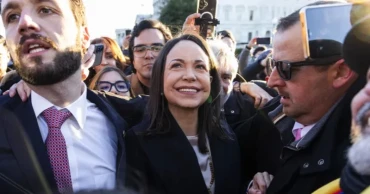
Venezuelan opposition leader María Corina Machado has said she will lead her country “when the right time comes” and expressed confidence that she will one day become Venezuela’s first woman president.
Speaking to Fox News, Machado said she believes she has a mission to rebuild Venezuela and turn it into a prosperous nation. “I believe I will be elected when the right time comes as president of Venezuela,” she said.
Her remarks came a day after she presented her Nobel Peace Prize medal to US President Donald Trump in Washington, calling it a recognition of his support for Venezuela’s freedom.
Earlier this month, the United States seized Venezuelan President Nicolás Maduro in Caracas and took him to New York to face drug and weapons charges. However, Trump has not endorsed Machado as Venezuela’s new leader, saying she lacks enough domestic support.
Trump has instead engaged with Venezuela’s interim president Delcy Rodríguez, who previously served as vice president under Maduro.
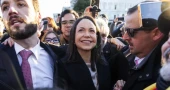
Machado said she has a mandate from the people and wants to serve her country in the most effective way. During her visit to Washington, she also met US senators at Congress as her supporters chanted “María, presidente” and waved Venezuelan flags.
Meanwhile, Rodríguez held talks in Caracas with the CIA director on improving relations between the two countries. She later said Venezuela would face the US through political dialogue and announced oil sector reforms to attract foreign investment.
With inputs from BBC
2 months ago