latin-america
Venezuela Mine Collapse Kills 14 After Heavy Rain
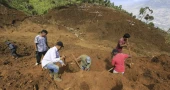
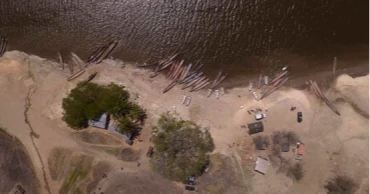
At least 14 people were killed when a gold mine collapsed in El Callao, southeastern Venezuela, following days of torrential rain, authorities said on Monday.
Officials said a command post has been established to coordinate recovery operations, led by Brig. Gen. Gregory González Acevedo, head of the regional disaster response unit in Bolívar state.
The fatalities occurred in three shafts of the Cuatro Esquinas de Caratal mine, located about 850 kilometers southeast of Caracas, according to a statement posted on the state agency’s Instagram account.
Rescue teams have begun pumping water from the flooded shafts to reduce water levels before attempting to recover the bodies and locate any survivors still trapped underground.
Authorities said the reported death toll was based on information provided by fellow miners. Local firefighters said flooding from heavy rains caused the collapse of the vertical mining tunnels, known locally as ravines.
El Callao is a gold-mining town where much of the 30,000-strong population depends on mining for their livelihood.
Venezuela has extensive deposits of gold, copper, diamonds and other precious minerals. However, mining operations across the country are often poorly regulated, with unsafe working conditions frequently leading to fatal accidents.
4 months ago
Bolsonaro Retains Strong Political Influence Despite Conviction in Brazil
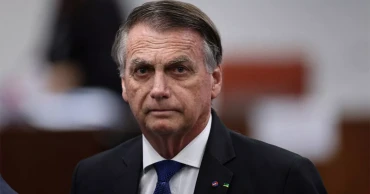
Former Brazilian President Jair Bolsonaro continues to wield significant political influence despite being convicted and sentenced to 27 years and three months in prison over attempted coup charges, experts and political observers say.
Bolsonaro, under house arrest and in poor health, did not attend the Supreme Court hearings. However, public support for the far-right leader remains strong, with opinion polls showing a deeply divided society. A Datafolha survey in August found 48% of Brazilians wanted him imprisoned, while 46% favored keeping him free.
Despite legal setbacks, Bolsonaro’s base remains active, with tens of thousands demonstrating across Brazil on Independence Day earlier this month. “Ideals are not killed, ideals are not arrested,” said Luiz Niemeyer, a Bolsonaro supporter in Rio de Janeiro. Analysts suggest that even behind bars, Bolsonaro could shape the 2026 presidential election by influencing which candidates carry his coalition’s banner.
Evangelical allies and lawmakers are advocating for amnesty to restore his political rights before 2030. Meanwhile, right-wing leaders such as Sao Paulo Governor Tarcísio de Freitas and Parana Governor Ratinho Junior are being considered as potential pro-Bolsonaro candidates. Bolsonaro’s inner circle, including his sons, remains central in deciding the movement’s future leadership.
Experts describe the situation as “Bolsonarism 2.0,” a phase in which the far-right movement consolidates and strengthens beyond Bolsonaro himself. Sociologist Esther Solano noted, “The movement is strong enough to outlive him, with emerging leaders preparing to continue his conservative agenda.”
Observers say that although President Luiz Inácio Lula da Silva is regaining popularity, Bolsonaro’s enduring influence underscores the deep polarization in Brazil and signals that his political ideology will continue to shape the country’s politics in the coming years.
5 months ago

Verdict, sentencing phase of Bolsonaro’s ‘historic’ election conspiracy trial begins
The trial of Brazil’s former President Jair Bolsonaro entered a decisive stage Tuesday as the verdict and sentencing phase began over accusations that he conspired to remain in power after losing the 2022 election.
A Supreme Court panel has scheduled sessions through Sept. 12 to determine whether the far-right leader is guilty of trying to overturn the vote that narrowly made Luiz Inácio Lula da Silva president.
Bolsonaro, who insists he is innocent, faces five charges connected to an alleged coup attempt. Currently under house arrest, he has repeatedly claimed the case is politically motivated.
That claim has drawn support from U.S. President Donald Trump, who linked a 50% tariff on Brazilian imports to Bolsonaro’s legal battle and described the proceedings as a “witch hunt” against his ally. The comment has sparked nationalist backlash among Brazilian politicians.
The ex-president is accused of plotting a coup, joining an armed criminal organization, attempting to violently undermine democracy, and committing two acts of state property destruction. A conviction on the coup charge alone could result in up to 12 years in prison.
Seven Bolsonaro allies are also on trial, including former running mate and defense minister Walter Braga Netto and ex-defense minister Paulo Sérgio Nogueira.
Brazil’s electoral court has already barred Bolsonaro from running for office until 2030 for abusing his presidential powers and spreading baseless claims against the country’s electronic voting system.
According to a federal police probe, the spread of disinformation about the voting system was part of a wider strategy to cling to power. Prosecutors allege that plan included assassination plots against Lula and a Supreme Court justice, as well as the Jan. 8 attack on government buildings that sought to trigger military intervention against Lula’s new administration.
The prosecution completed its case in July, followed by the defense in mid-August. Soon after, police accused Bolsonaro and his son Eduardo of obstructing justice in a separate case, saying the former president once considered fleeing to Argentina for asylum.
Eduardo Bolsonaro, who relocated to the U.S. earlier this year despite holding a congressional seat, has lobbied for sanctions against Justice Alexandre de Moraes, who oversees his father’s trial. Trump’s administration imposed such sanctions in late July.
Authorities consider Bolsonaro a flight risk. Ahead of the verdict phase, the Supreme Court imposed tighter security, including inspections of vehicles leaving his residence and constant monitoring of the area.
Observers have described the case as ‘historic,’ noting it is the first time top officials accused of attempting a coup face trial.
Brazil was ruled by a military dictatorship from 1964 to 1985, an era Bolsonaro has openly admired. While an Amnesty Law passed in 1979 shielded officials from prosecution for human rights abuses, experts say this trial signals a break with that legacy of impunity.
“History will tell whether it is 100% successful, but what we are seeing today is a movement that breaks with a tradition of military coups,” said Lucas Figueiredo, a writer on Brazil’s dictatorship era.
6 months ago
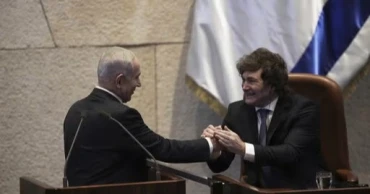
Argentine President Milei launches major initiative to deepen Israel-Latin America partnerships
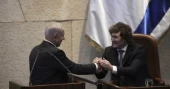
Argentine President Javier Milei is helping launch a $1 million project aimed at improving diplomatic relations between Israel and several Latin American countries, at a time when Israel is under heavy criticism for its actions in Gaza.
Called the Isaac Accords, the effort will be funded by the Genesis Prize money Milei received in Jerusalem two months ago. According to Tuesday’s announcement from the Genesis Prize organization, the initiative will boost ties between Israel, Uruguay, Panama, and Costa Rica.
Argentina already has strong relations with Israel under Milei, which is different from much of Latin America — where countries like Bolivia and Colombia have cut ties with Israel and others have pulled their ambassadors.
Argentina puts 7 healthcare workers on trial over Maradona’s death
The Isaac Accords are named after the Abraham Accords, a 2020 agreement under U.S. President Donald Trump that established formal relations between Israel and several Arab nations. Organizers say they plan to expand the Isaac Accords in 2026 to include Brazil, Colombia, Chile, and possibly El Salvador.
Milei received the Genesis Prize on June 12 for his strong support of Israel, even as many countries and international groups, including the United Nations, have condemned Israel’s military actions in Gaza. He is considered one of Prime Minister Benjamin Netanyahu’s staunchest allies among world leaders. Although Milei was raised Roman Catholic, he has shown a growing interest in Judaism and has said he plans to convert.
Source: Agency
6 months ago
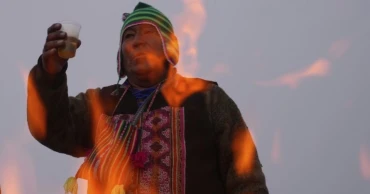
Burned offerings and mountain prayers: A look into Bolivians’ rituals honoring Mother Earth
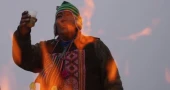
Neyza Hurtado was only 3 years old when lightning struck her. Now, 40 years later, sitting by a bonfire atop a 13,700-foot (4,175-meter) mountain, she wears the scar on her forehead with pride.
“I am the lightning,” Hurtado said. “When it hit me, I became wise and a seer. That’s what we masters are.”
Each August, hundreds in Bolivia turn to Andean spiritual guides like Hurtado to perform rituals honoring “Pachamama,” or Mother Earth, rooted in the Aymara Indigenous worldview.
Believers say Pachamama awakens hungry and thirsty after the dry season. To honor her and thank her for blessings, people offer gifts at home, in fields, and atop mountains.
Bolivia faces a shocking economic collapse
“We come here every August to follow our elders’ footsteps,” said Santos Monasterios, who hired Hurtado for a Pachamama ritual near La Cumbre, about 13 kilometers from La Paz. “We ask for good health and work.”
Offerings, known as “mesitas” or “little tables,” are crafted from wooden logs and topped with sweets, grains, coca leaves, and small items symbolizing wealth, protection, and health. Sometimes, llama or piglet fetuses are included.
The spiritual guide then sets the mesita ablaze while devotees pour wine or beer over the offerings to quench Pachamama’s thirst.
“Performing this ritual brings relief,” Monasterios said. “I believe in this, and I will keep sharing a drink with Pachamama.”
Burning the mesita can take up to three hours. After the offerings turn to ash, they are buried to become one with Mother Earth.
Carla Chumacero, 28, traveled with her family to La Cumbre and requested four mesitas from her spiritual guide. “Mother Earth demands this from us, so we provide,” she said. Chumacero explained that sensing Pachamama’s needs is difficult to describe—“it’s a feeling.” She noted that accidents and family troubles often signal the need for offerings.
For María Ceballos, 34, devotion to Pachamama came from co-workers at a gold mine where she works. “We make offerings because our work is risky,” she said. “We use heavy machinery and travel often, so we entrust ourselves to Pachamama.”
Anthropologist Milton Eyzaguirre traces Pachamama rituals back to 6,000 B.C., as early settlers faced unique soil and climate challenges in the Southern Hemisphere.
“In Bolivia, winter is cold and dry from June to September,” Eyzaguirre said. “This shapes our relationship with Pachamama.”
August marks a time when Pachamama is believed to be asleep; devotees hope to renew her strength to support the sowing season beginning in October. Harvest rituals follow months later in February.
“These dates reactivate the bond between humans and Pachamama,” Eyzaguirre said. “Unlike elsewhere where land is a commodity, here there is balance—you must honor Pachamama, and she will provide.”
The rituals also honor the “apus,” or mountains, seen as protective spirits by Aymara and Quechua people.
“Everything in nature has a soul,” Eyzaguirre said, referring to “Ajayu,” the spiritual essence of natural elements.
Spiritual guides like Rosendo Choque, a “yatiri” for 40 years, believe apus watch over the people. Becoming a master requires special skills and Pachamama’s permission.
“I gained my knowledge gradually, but now the coca leaves speak to me,” Choque said.
Hurtado inherited her wisdom from her grandmother, also a yatiri, who witnessed Hurtado’s survival of the lightning strike.
“She is the holiest person to me,” Hurtado said. “She made me who I am.”
Helping others find a good future brings Hurtado comfort, but her deep connection with Pachamama is her greatest joy.
“We respect her because she is Mother Earth,” she said. “We live in her.”
Source: Agency
7 months ago
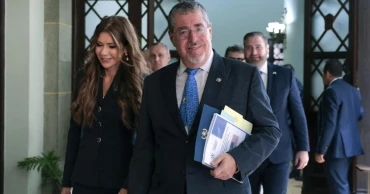
Guatemala's president ignores new asylum deal with US
Guatemalan President Bernardo Arévalo on Friday denied claims that his country has signed an agreement with the United States to accept asylum seekers from other nations, countering remarks made by U.S. Homeland Security Secretary Kristi Noem.
During her visit to Guatemala on Thursday, Noem and Arévalo signed a bilateral security agreement allowing U.S. Customs and Border Protection officers to work at Guatemala City’s airport, training local personnel to identify potential terrorism threats.
However, Noem later stated that she had also received a signed document she described as a "safe third country" agreement — a deal that would allow Guatemala to grant refugee status to individuals seeking asylum, similar to an agreement she said she reached with Honduras. Noem emphasized the importance of such agreements, stating, “The United States shouldn’t be the only option. Refugees deserve safety, but that doesn’t mean it has to be in the U.S.”
Massive crowds mourn Iranian military leaders, scientists killed in Israeli strikes
Arévalo, addressing the media on Friday, clarified that no new immigration-related agreement was signed. He explained that Guatemala continues to operate under an arrangement reached with U.S. Secretary of State Marco Rubio in February. That agreement covers the repatriation of Guatemalan citizens and, under certain conditions, the transit of other Central Americans returning to their home countries.
Arévalo acknowledged that safe third country arrangements were discussed during Rubio’s visit, referencing a similar deal Guatemala signed during Donald Trump’s presidency. “But we made it clear that our approach is different,” Arévalo stressed.
The president did note, however, that Guatemala is open to granting asylum to Nicaraguans unable to return home due to the political crisis in their country, as an act of solidarity.
Arévalo’s office further explained that Noem had received confirmation of the February agreement through diplomatic channels weeks before her visit.
During Trump’s administration, the U.S. signed safe third country deals with Honduras, El Salvador, and Guatemala. These agreements allowed the U.S. to deny certain asylum claims and redirect applicants to those countries deemed safe.
8 months ago
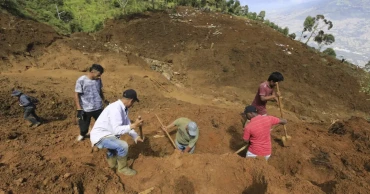
11 dead after landslide buries homes in Colombia
At least 11 people have died following a landslide in northwestern Colombia, local officials confirmed on Wednesday, a day after heavy rainfall triggered a wave of mud and debris that engulfed densely populated neighborhoods, burying around a dozen homes.
Rescue operations are ongoing as teams continue to search for survivors in Medellin, Colombia’s second-largest city, and the nearby mountainous town of Bello, where at least 15 people remain missing.
In Bello, authorities quickly converted schools, community centers, and even a swimming pool into temporary shelters, which now house over 1,300 people displaced or unable to return to their homes due to severe flooding, according to Mayor Lorena González Ospina.
The death toll rose to 11, Medellin Mayor Federico Gutiérrez confirmed, as search and rescue teams in Bello utilized dogs, drones, and other equipment to locate survivors. Meanwhile, officials in Medellin ordered the immediate evacuation of over 60 homes deemed structurally unsafe.
Youth-led protests erupt again in Kenya over police brutality and poor governance
Landslides frequently occur in this lush region of Colombia, particularly during the rainy season from April to November when heavy rains loosen the soil.
Tuesday morning, nearly two straight days of torrential rain caused rivers and streams to overflow, catching many residents off guard as they slept. The floodwaters swept through streets, carrying tons of debris, cars, and personal belongings.
The Colombian Weather Service forecasted light rain for Wednesday, significantly milder than the heavy downpours earlier in the week.
8 months ago
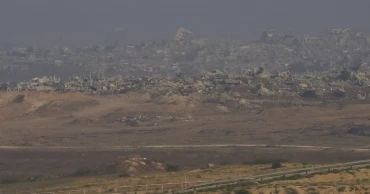
At least 21 Palestinians killed while heading to Gaza aid hub, hospital and witnesses say
At least 21 people were killed and scores wounded Sunday as they were on their way to receive food in the Gaza Strip, according to a Red Cross field hospital and multiple witnesses. The witnesses said Israeli forces fired on crowds around a kilometer (1,000 yards) from an aid site run by an Israeli-backed foundation.
The military did not immediately respond to requests for comment. The foundation said in a statement that it delivered aid “without incident" early Sunday and has denied previous accounts of chaos and gunfire around its sites, which are in Israeli military zones where independent access is limited.
Officials at the field hospital said at least 21 people were killed and another 175 people were wounded, without saying who opened fire on them. An Associated Press reporter saw dozens of people being treated at the hospital.
New aid system marred by chaos
The Gaza Humanitarian Foundation ’s distribution of aid has been marred by chaos, and multiple witnesses have said Israeli troops fired on crowds near the delivery sites. Before Sunday, at least six people had been killed and more than 50 wounded according to local health officials.
The foundation says the private security contractors guarding its sites have not fired on the crowds, while the Israeli military has acknowledged firing warning shots on previous occasions.
The foundation said in a statement that it distributed 16 truckloads of aid early Sunday “without incident,” and dismissed what it referred to as “false reporting about deaths, mass injuries and chaos.”
Shooting broke out near distribution hub
The gunfire on Sunday erupted at a roundabout around a kilometer (1,000 yards) from the distribution site, in an area that is controlled by Israeli forces, witnesses said.
Ibrahim Abu Saoud, an eyewitness, said Israeli forces opened fire at people moving toward the aid distribution center.
“There were many martyrs, including women,” the 40-year-old resident said. “We were about 300 meters (yards) away from the military.”
Abu Saoud said he saw many people with gunshot wounds, including a young man who he said had died at the scene. “We weren’t able to help him,” he said.
Gaza ceasefire talks gain momentum as Israel accepts a US proposal
Mohammed Abu Teaima, 33, said he saw Israeli forces open fire and kill his cousin and another woman as they were heading to the hub. He said his cousin was shot in his chest and died at the scene. Many others were wounded, including his brother-in-law, he said.
“They opened heavy fire directly toward us,” he said as he was waiting outside the Red Cross field hospital for word on his wounded relative.
The hub is part of a controversial new aid system
Israel and the United States say the new system is aimed at preventing Hamas from siphoning off assistance. Israel has not provided any evidence of systematic diversion, and the U.N. denies it has occurred.
U.N. agencies and major aid groups have refused to work with the new system, saying it violates humanitarian principles because it allows Israel to control who receives aid and forces people to relocate to distribution sites, risking yet more mass displacement in the territory.
The U.N. system has struggled to bring in aid after Israel slightly eased its total blockade of the territory last month. Those groups say Israeli restrictions, the breakdown of law and order, and widespread looting make it extremely difficult to deliver aid to Gaza's roughly 2 million Palestinians.
Experts have warned that the territory is at risk of famine if more aid is not brought in.
The war began when Hamas-led militants stormed into southern Israel on Oct. 7, 2023, killing some 1,200 people, mostly civilians, and abducting 251. They are still holding 58 hostages, around a third of them believed to be alive, after most of the rest were released in ceasefire agreements or other deals.
UN, Aid Agencies condemn US-Israel-Backed Gaza aid effort after fatal incident
Israel's military campaign has killed over 54,000 people, mostly women and children, according to Gaza's Health Ministry, which does not say how many of the dead were civilians or combatants. The offensive has destroyed vast areas of the territory, displaced around 90% of its population and left people almost completely reliant on international aid.
9 months ago
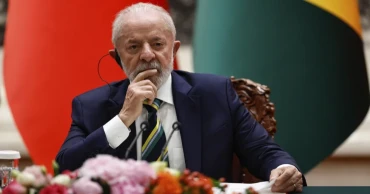
Brazilian leader Lula hospitalized with inner ear ailment, then released
Brazil's President Luiz Inácio Lula da Silva was diagnosed with labyrinthitis Monday after suffering from vertigo, hospital officials said. The 79-year-old leftist leader has already returned to the country's presidential residence, where he is resting.
The Sirio-Libanes Hospital said in a statement that Lula underwent imaging and blood tests, and its results came within normal limits. Labyrinthitis is an inflammation of the labyrinth in the inner ear, which is responsible for hearing and balance.
Sri Lanka and New Zealand discuss ways to deepen bilateral trade and investment ties
The health scare adds to Lula's recent medical worries, which are also part of his allies' concerns ahead of his likely bid for reelection next year.
The most serious is a fall he had in the bathroom of the presidential residence in Brasília on Oct. 19. Almost two months later, he was transferred to São Paulo for surgery after suffering headaches caused by new a bleeding in his head. He was discharged Dec. 15.
9 months ago

Cat found smuggling drugs into prison
Authorities in Costa Rica recently intercepted an unusual drug smuggler: a black-and-white cat with narcotics taped to its body.
The feline was captured on May 6 near the barbed wire fence of the Pococí Penitentiary after guards noticed suspicious gray patches on its fur.
Upon closer inspection, they found around 236 grams of marijuana, nearly 68 grams of heroin, and rolling papers strapped to the cat’s back.
The Ministry of Justice and Peace released a video of the incident on Facebook, stating that prison police officers managed to intercept the cat after a watchtower guard spotted it in a grassy area and raised the alarm. Officers quickly apprehended the animal and removed the drug packages before they could enter the prison.
Further examination revealed one package contained 235.65 grams of suspected marijuana, while the other held 67.76 grams of suspected crack paste, along with two sheets of rolling paper.
The cat was handed over to the National Animal Health Service for a medical checkup. Authorities are now investigating who was behind the smuggling attempt, and whether inmates may have coordinated the act with external accomplices. Surveillance footage is being reviewed to trace the cat’s movements and identify any suspects.
Officials noted that this case reflects a broader trend in which criminals use animals—particularly cats—for smuggling drugs into prisons. Their stealth and agility make them effective couriers for small quantities of contraband, often trained or lured inside prison grounds with food.
Costa Rica has faced rising drug trafficking in recent years, with authorities seizing 21.3 tons of cocaine in 2023 alone.
Source: NDTV
9 months ago