Middle-East
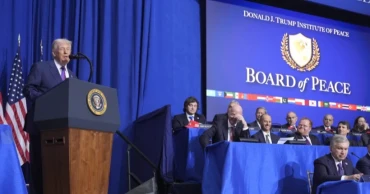
Trump warns of ‘bad things’ if Iran fails to reach deal as US carrier moves closer
President Donald Trump on Thursday warned that serious consequences could follow if Iran does not reach a nuclear deal soon, as a second US aircraft carrier moved closer to the Middle East and regional tensions continued to rise.
Trump said he believes 10 to 15 days is enough time for Tehran to make a deal, but talks have remained stalled for years. Iran has refused to discuss broader US and Israeli demands, including curbing its missile program and cutting ties with armed groups across the region.
Indirect negotiations held in recent weeks have shown little progress, raising concerns that both sides may be preparing for possible military confrontation.
Iran’s leadership is facing increased pressure following Israeli and US strikes on its nuclear and military facilities last year, along with mass protests in January that were violently suppressed by security forces.
In a letter to the UN Security Council, Iran’s ambassador Amir Saeid Iravani said Tehran does not seek war and will not initiate conflict. However, he warned that any US attack would be met with a decisive response and that American bases and assets in the region would be considered legitimate targets.
Earlier this week, Iran carried out live-fire military drills in the Strait of Hormuz, a vital waterway through which about one-fifth of the world’s traded oil passes. On Thursday, Iranian and Russian forces also held joint naval exercises in the Gulf of Oman and the Indian Ocean, according to Iranian state media.
US boosts military presence as Iran fortifies key site
Meanwhile, US military movements continue. The aircraft carrier USS Gerald R. Ford was tracked near the Atlantic coast of Morocco, positioning it to enter the Mediterranean. US officials said the full military force needed for potential action against Iran could be in place by mid-March.
Trump said reaching a meaningful agreement with Iran has never been easy, adding that failure to do so could lead to severe outcomes.
A senior regional official said private warnings have been delivered to Iranian leaders, stressing that Trump’s statements should be taken seriously. The official added that focusing first on nuclear issues could help secure short-term concessions from Tehran.
International concern is also growing. Polish Prime Minister Donald Tusk urged Polish citizens to leave Iran immediately, warning that evacuation could soon become impossible. Germany has begun relocating non-essential personnel from a base in northern Iraq due to rising regional risks.
Israel is also preparing for potential fallout. Prime Minister Benjamin Netanyahu said Israel is ready for any scenario and warned Iran against attacking Israeli territory.
Iran insists its nuclear program is peaceful and says current talks should focus only on nuclear issues. While Trump previously claimed US and Israeli strikes had destroyed Iran’s nuclear sites, the extent of the damage remains unclear as international inspectors have been barred from access.
The United States and its allies continue to suspect Iran’s program could eventually be used to develop nuclear weapons, a claim Tehran has consistently denied.
15 days ago
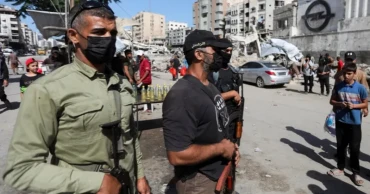
Hamas tightens grip on Gaza after ceasefire
Hamas has been steadily reasserting control over the Gaza Strip in the months following a ceasefire with Israel, despite suffering heavy losses during the war, according to residents, traders and activists in the territory.
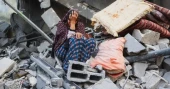
The ceasefire, brokered under a US-backed initiative last October, brought an end to nearly two years of fighting that devastated Gaza Strip. Much of Gaza’s infrastructure was destroyed, large parts of the population were displaced, and more than 72,000 Palestinians were killed in Israeli attacks, according to Gaza’s health authorities.
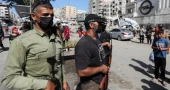
Since the fighting subsided, local residents say Hamas has gradually restored its authority over security, taxation and basic government services. Police and internal security forces have returned to the streets, resuming patrols, controlling markets and pursuing those accused of collaboration or dissent.
“Hamas has regained control over more than 90 percent of the areas where it operates,” said Gaza-based activist Mohammed Diab. He said residents are once again required to deal with Hamas-run institutions for identity documents, health services and legal matters, as the group moves to reassert influence over courts and the judiciary.
Traders in markets across Gaza described a renewed enforcement of municipal fees and taxes. Several said Hamas authorities were aggressively collecting rent and levies at a time when livelihoods remain shattered.
“They come every day with the same demands and threats,” said one displaced stallholder in Gaza City, speaking on condition of anonymity. “They say if we do not pay, they will throw us and our goods into the street. We cannot afford these payments.”
With the easing of restrictions after the ceasefire, food and basic goods have begun flowing more freely into Gaza. However, traders with licences to import goods from Israel say Hamas has reinstated strict controls over taxation, with levies varying by type and quantity of merchandise.
One importer said taxes could start from tens of thousands of shekels, adding that force or intimidation was used against those who refused to comply. Activists allege that payments are made in cash to avoid tracking and that Hamas has rebuilt a database of traders operating in the enclave.
Responding to the allegations, Hamas spokesman Hazem Qassem said Gaza was in a state of emergency and that “exceptional measures” were sometimes necessary. He argued that actions taken against traders were administrative and aimed at preventing profiteering, denying that they were linked to Hamas as a movement.
Gaza has been governed by Hamas since 2007, and analysts say revenue collection is central to the group’s ability to pay salaries and maintain influence. The Israel Defense Forces have accused Hamas of using the ceasefire period to regroup and rebuild its military capacity.
Israeli officials say attacks on their forces have continued since the truce began, while Gaza’s health authorities report hundreds of Palestinians killed in Israeli strikes during the same period.
The next phase of the US peace initiative for Gaza, led by President Donald Trump, hinges on the full disarmament of Hamas and the transfer of civilian authority to a Palestinian technocratic body. Negotiators are still grappling with how such disarmament would be implemented and verified.
Hamas has said it is prepared to hand over governance to a new technocratic council, but critics and local activists say there is little evidence the group is ready to relinquish real power. Recent appointments to government positions and the visible presence of Hamas officials at key crossings and evacuation points have fuelled doubts about its intentions.
As international plans for Gaza’s reconstruction move forward without Hamas’s formal involvement, analysts say the struggle for control is shifting from territory to people. After years of war over land and security, the contest for Gaza’s population — a key source of authority and revenue — appears to be entering a decisive phase.
With inputs from BBC
15 days ago

British couple sentenced to 10 years in Iran on espionage charges
A British couple, Lindsay and Craig Foreman, were sentenced to 10 years in prison in Iran on espionage charges, hours after Lindsay spoke to the BBC describing the physical and mental toll of their detention.
The couple, who deny the accusations, were arrested in January 2025 while passing through Iran on a round-the-world motorcycle trip. In a rare phone interview from Tehran’s Evin prison, Lindsay described their time in detention as “an endurance test for the mind” and said she had been trying to maintain her health by exercising in the cramped prison yard.
Her son, Joe Bennett, called the sentence “gut-wrenching” and said the Iranian authorities had presented no evidence of spying. He urged the UK government to take all available measures to secure their release, adding that the family had felt “abandoned” despite repeated appeals to the Foreign Office.
Foreign Secretary Yvette Cooper condemned the sentencing as “completely appalling and totally unjustifiable” and assured that the UK would continue to pursue the case and provide consular support.
The Foremans had entered Iran from Armenia in December 2024 with visas, a guide, and an approved itinerary, aiming to reach Pakistan by early January. Despite this, they were detained, denied bail, and were not allowed to defend themselves in court. They are currently held in separate wings of Evin prison, notorious for harsh conditions and allegations of torture, alongside journalists and political prisoners.
Human rights groups have previously warned that foreign nationals in Iran are often detained as diplomatic leverage. In recent years, several British-Iranian citizens and other foreign nationals have been released only after government negotiations or settlements.
Lindsay Foreman said she had tried to engage with Iran’s legal system, writing a letter to protest their treatment and seeking a fair hearing. She expressed hope that her physical health could recover once released, while acknowledging the challenges of staying positive in prison.
With inputs from BBC
15 days ago
‘I would scream in my sleep’: Alawite women recount abduction and rape in Syria
Women from Syria’s Alawite minority have described harrowing experiences of abduction, rape and intimidation following the fall of former president Bashar al-Assad, amid accusations of inaction and impunity by the country’s interim authorities.
Several women and families told BBC News Arabic that armed men, some claiming to be members of security forces, kidnapped teenage girls and adult women from villages in the western coastal province of Latakia. Most of those reported missing belong to the Alawite sect, a minority community long associated with the former ruling elite.
The Syrian Feminist Lobby said it has received reports of more than 80 missing women since early 2025, confirming at least 26 cases as kidnappings. It said 16 women, all Alawite, remain missing.
Victims said they were beaten, threatened and sexually assaulted while being held for days or weeks. Some described being interrogated about their villages and alleged links to the former regime, while others said they were told Alawite women were “captives” and deserving of abuse.
Families alleged that the interim government’s General Security Service failed to properly investigate complaints, with some women saying they were mocked or ignored when they sought help. The interior ministry said previously that most reported kidnappings were unfounded, but declined further comment when contacted again.
The reported abductions span periods before and after sectarian violence in March, when more than 1,400 people, mostly Alawite civilians, were killed in Syria’s western regions following clashes involving forces loyal to the new Sunni Islamist-led authorities.
Human rights groups warned of a climate of impunity. Amnesty International said it had documented multiple cases of Alawite women and girls being abducted, noting that families often received no meaningful updates from investigators.
A security source in the coastal region told the BBC that some kidnappings were carried out for extortion, revenge or personal motives, including by undisciplined members of the security services, adding that some officers had been dismissed.
Survivors and relatives said fear persists, both of retaliation and of social stigma linked to sexual violence. Many said they remain too afraid to seek justice, while women who have returned home continue to suffer severe psychological trauma.
Rights groups are calling on Syrian authorities to ensure independent investigations, protect survivors and take urgent steps to prevent further abuse against vulnerable minority communities.
With inputs from BBC
17 days ago

Oman announces February 19 as first day of Ramadan
Oman has officially declared Thursday (February )as the first day of the holy month of Ramadan after the crescent moon was not sighted on Tuesday evening.
The announcement followed the country’s traditional moon-sighting process conducted by the relevant religious authorities, reports Gulf News.
As the new moon could not be confirmed, authorities completed the current lunar month, paving the way for Ramadan to begin on Thursday.
Iran and US hold indirect talks in Oman as top American military commander joins discussions
Meanwhile, the Hilal Vision Committee in Japan also confirmed that Ramadan will commence on February 19 after failing to verify the sighting of the crescent moon.
Muslims around the world are now preparing to observe a month of fasting, prayer, reflection and charity. During Ramadan, the faithful fast from dawn to dusk, engage in increased worship and extend support to the needy.
Astronomical forecasts had earlier indicated that Ramadan could begin on February 18 or 19.
However, the official start of the Islamic holy month depends on local crescent moon sightings, which may vary from one country to another.
US and Iran hold talks in Oman amid rising conflict fears
17 days ago
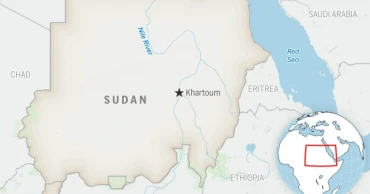
Drone strike on Sudan market kills at least 28, rights group says
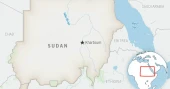
At least 28 people were killed and dozens more injured when a market in Sudan’s Kordofan region was struck by drones, a rights group reported Monday, as the conflict between the army and a paramilitary force nears its third year.
Emergency Lawyers, a group monitoring civilian casualties, said the attack occurred on Sunday in the Sudri locality of North Kordofan province, during peak market hours, worsening the humanitarian crisis. The group warned that the death toll could rise.
“The repeated use of drones against populated areas shows a serious disregard for civilian life and signals an escalation threatening daily life in the province. We call for an immediate stop to all drone attacks by both sides,” the group said in a statement.
Emergency Lawyers claimed that drones belonging to the army carried out the strike. However, two unnamed military officials told The Associated Press that the army does not target civilian sites and denied involvement.
The attack comes just over a week after a drone strike near Rahad city hit a vehicle carrying displaced families, killing at least 24 people, including eight children. The day before, a World Food Program aid convoy was also targeted.
Fighting between Sudan’s army and the Rapid Support Forces (RSF) erupted into full-scale war across the country in April 2023. According to the World Health Organization, the conflict has killed at least 40,000 people and displaced 12 million, though aid groups say the real toll could be much higher due to ongoing fighting in remote areas.
The United Nations High Commissioner for Human Rights has described Kordofan as “volatile and a focus of hostilities,” with both sides accused of committing atrocities. A recent U.N. report said that more than 6,000 people were killed over three days during an RSF offensive in Sudan’s Darfur region in late October, involving acts that may constitute war crimes or crimes against humanity.
18 days ago
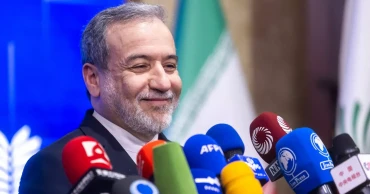
Iran’s top diplomat heads to Geneva for second round of nuclear talks with US
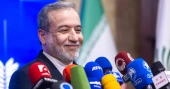
Iran’s top diplomat left Tehran on Sunday for Geneva, where a second round of nuclear negotiations with the United States is set to take place, Iranian state media reported.
Foreign Minister Abbas Araghchi departed for the Swiss city along with his delegation following an initial round of indirect talks held in Oman last week. According to Iran’s state-run IRNA, Oman will again serve as mediator during the Geneva discussions.
Similar negotiations last year collapsed after Israel launched a military campaign against Iran that escalated into a 12-day war, during which the United States bombed Iranian nuclear facilities.
US President Donald Trump has repeatedly warned that force could be used if Iran does not agree to restrict its nuclear programme. Iran has said it would retaliate if attacked. Trump has also threatened Tehran over its violent suppression of nationwide protests.
Gulf Arab nations have cautioned that any military action could trigger a wider regional conflict.
The Trump administration has maintained that Iran must not be allowed to enrich uranium under any agreement, a position Tehran has rejected. Iranian officials continue to insist their nuclear programme is for peaceful purposes, though they have increasingly warned they could pursue nuclear weapons capability.
11 killed in Israeli strikes across Gaza amid ceasefire violations
Before the conflict in June, Iran was enriching uranium to 60 percent purity, a level just short of weapons-grade material.
While in Geneva, Araghchi is also expected to meet with his Swiss and Omani counterparts and hold talks with the head of the International Atomic Energy Agency, the UN’s nuclear watchdog.
Earlier on Sunday, US Secretary of State Marco Rubio said Washington remained committed to a diplomatic solution. He said President Trump’s envoys Steve Witkoff and Jared Kushner were traveling for the upcoming talks.
Trump said on Friday that the USS Gerald R. Ford, the world’s largest aircraft carrier, was being deployed from the Caribbean to the Middle East to reinforce US military assets in the region. He also said a change in leadership in Iran “would be the best thing that could happen.”
Rubio said the recent US military deployments were defensive, aimed at protecting American facilities and interests. Iran has threatened to strike US bases in the region if Washington launches an attack. In June, Tehran targeted the Al Udeid Air Base in Qatar, though no US or Qatari casualties were reported.
Speaking in Bratislava after meeting Slovak Prime Minister Robert Fico, Rubio said the US was prioritising diplomacy. “No one has been able to reach a successful deal with Iran, but we are going to try,” he said.
While Trump has recently indicated that reducing Iran’s nuclear programme is his primary goal, Tehran has said the talks should focus solely on nuclear issues.
However, Israeli Prime Minister Benjamin Netanyahu, who met Trump in Washington earlier this week, has been urging a broader agreement that would also curb Iran’s ballistic missile programme and end its support for proxy groups such as Hamas in Gaza and Hezbollah in Lebanon.
19 days ago
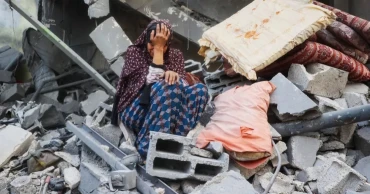
11 killed in Israeli strikes across Gaza amid ceasefire violations
Eleven Palestinians were killed in Israeli air strikes across Gaza on Sunday morning, Palestinian civil defence and health officials said.
The Israel Defense Forces said the strikes targeted what it described as “terror targets” in response to alleged ceasefire violations by Hamas. The military claimed militants were hit after emerging from a tunnel into an area of the strip under Israeli control.
According to the Palestinian Red Crescent, at least six people were killed when a tent encampment in northern Gaza was struck, while another attack in the south of the territory killed five.
Israel and Hamas have repeatedly accused each other of breaching a fragile ceasefire agreement almost daily since it came into force on October 10.
The Hamas-run Gaza health ministry said at least 600 people have been killed since the ceasefire began.
Earlier this month, local officials reported that at least 32 people were killed in a wave of Israeli air strikes across Gaza.
19 days ago

Israel approves plan to register large West Bank areas as ‘state property’
The Israeli government has approved a proposal to register extensive areas of the occupied West Bank as “state property,” marking the first such move since Israel occupied the territory in 1967.
Israeli public broadcaster KAN reported on Sunday that the proposal was put forward by far-right Finance Minister Bezalel Smotrich, Justice Minister Yariv Levin, and Defence Minister Israel Katz.
Smotrich said the move was part of what he described as a “settlement revolution,” adding, “We are continuing the settlement revolution to control all our lands.”
Most Palestinian land in the West Bank has remained unregistered due to a lengthy and complex process that Israel halted in 1967. Land registration establishes permanent ownership. Under international law, an occupying power is prohibited from confiscating land in occupied territories.
Hebron mayor warns Israel tightening grip on West Bank
The Palestinian Presidency strongly criticised the decision, calling it a “serious escalation” that effectively nullifies signed agreements and directly violates resolutions of the United Nations Security Council, according to the Palestinian news agency Wafa.
Katz defended the decision, describing it as an “essential security and governance measure” aimed at ensuring control, enforcement and full freedom of action for the Israel in the area, the Jerusalem Post reported.
The approval follows a decision last week by the Israeli Security Cabinet to endorse additional measures promoted by Smotrich and Katz, which further facilitate what critics describe as the unlawful seizure of Palestinian land in the occupied territory.
Meanwhile, Palestinian group Hamas condemned the move, saying it was an attempt to “steal and Judaise lands in the occupied West Bank by registering them as so-called ‘state lands’.”
In a statement, Hamas described the approval as a “null and void decision issued by an illegitimate occupying power,” adding that it represents an effort to impose settlement expansion and Judaisation in clear violation of international law and relevant UN resolutions.
Analysts have warned that the move amounts to a de facto annexation of Palestinian territory, saying it would significantly alter the civil and legal framework by removing what Israeli officials have termed long-standing “legal obstacles” to the expansion of illegal settlements.
Speaking from Ramallah, political analyst Xavier Abu Eid told that Israel was effectively carrying out annexation through bureaucratic means.
He said the International Court of Justice ruled in 2024 that Israeli actions in the West Bank amount to annexation.
“This is not just a step towards annexation. Annexation is already happening,” he said, adding that the Israeli government is implementing a political programme that has already been publicly declared.
#From Agencies
19 days ago
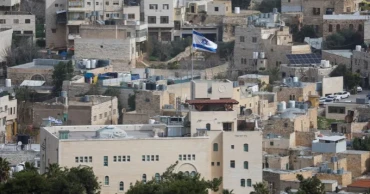
Hebron mayor warns Israel tightening grip on West Bank
The acting mayor of Hebron has warned that Israel’s latest legal and administrative measures in the occupied West Bank amount to the effective end of meaningful negotiations with the Palestinians, saying they leave local authorities powerless and unprotected.
Asma al-Sharabati said recent decisions approved by Israel’s security cabinet would sideline Palestinian institutions from urban planning and development, even in areas officially under Palestinian administration. She described the move as “the end of the road” for the peace process, arguing that Palestinians were being excluded from decisions shaping their own cities.
Hebron, a frequent flashpoint, is a deeply divided city where several hundred Israeli settlers live under heavy military protection among tens of thousands of Palestinians. Under arrangements set out in the Oslo Accords in the 1990s, parts of the city remain under Palestinian civil control, while others are overseen by Israel.
On Sunday, Israel approved sweeping changes that expand its authority beyond military occupation into civilian and municipal affairs in Palestinian-run areas. The measures also grant Israel broad powers over so-called heritage sites across the West Bank, citing the protection of water, environmental and archaeological resources.
Among the changes, Israel said it would assume planning authority at the Cave of the Patriarchs, one of Judaism’s holiest sites, which is located within Hebron’s Ibrahimi Mosque compound. Palestinian officials fear the new rules allow Israel to declare properties or land as historic sites and take control without Palestinian consent.
“Now they can simply declare any building ancient, and Palestinian authorities have no say at all in planning or development,” al-Sharabati said, adding that she learned of the details through Israeli media rather than formal notification.
Palestinian activist Issa Amro, who lives in the highly volatile H2 area of Hebron, said the measures marked a turning point. He argued that actions previously taken without a clear legal basis were now being formalised. “This is annexation without rights,” he said, warning that the status of the territory was being shifted from occupation to a unilateral legal claim.
Israel has also said it plans to provide municipal services directly to Jewish settlers in Hebron and to open up land ownership across the West Bank to private Israeli citizens. Palestinians are prohibited from selling property to non-Palestinians under both Jordanian-era and Palestinian laws, and activists warn that planned publication of land registry data could expose sellers to serious risks.
The West Bank, along with Israeli-annexed East Jerusalem, is home to more than 700,000 Israeli settlers. Palestinians seek the territory for a future independent state, together with the Gaza Strip. The settlements are considered illegal under international law.
Israeli Finance Minister Bezalel Smotrich, who oversees settlement policy, said the measures were intended to deepen Israel’s presence across what he calls Judea and Samaria, declaring openly that they would “bury the idea of a Palestinian state.”
Palestinian President Mahmoud Abbas has called for a firm response from the United States, saying the decisions violate international law and undermine regional peace efforts. US President Donald Trump has so far reiterated his opposition to Israel’s formal annexation of the West Bank but has not announced concrete steps.
The United Kingdom, which last year recognised a Palestinian state, said it strongly condemned the Israeli decision. UK Middle East minister Hamish Falconer said London expected the measures to be reversed, calling them a serious mistake that risked further destabilising the region.
Al-Sharabati said Palestinians felt abandoned by the international community. “We are living the ugly truth that we are not protected,” she said, adding that while global attention remains focused on Gaza, developments in Hebron and across the West Bank could have lasting consequences for any future peace efforts in the Middle East.
With inputs from BBC
20 days ago