Middle-East
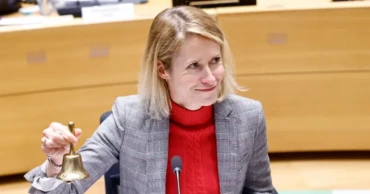
EU labels Iran’s IRGC terrorist as tensions with US and Tehran escalate
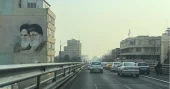
The European Union has officially designated Iran’s Islamic Revolutionary Guard Corps (IRGC) as a “terrorist organisation,” a move praised by EU officials and strongly condemned by Tehran amid rising US-Iran tensions.
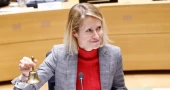
EU foreign policy chief Kaja Kallas announced that the decision followed a meeting of European foreign ministers, calling the designation “necessary” to hold the regime accountable for its violent suppression of domestic protests. European Commission President Ursula von der Leyen described the action as “long overdue” and expressed solidarity with the Iranian people’s struggle for freedom.
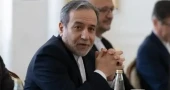
Iran reacted sharply. Foreign Minister Abbas Araghchi termed the EU’s decision a “publicity stunt” and a “strategic mistake,” accusing Europe of selective outrage by ignoring Israeli actions in Gaza while targeting Iran. The Iranian armed forces warned that the move violates international law and could have serious consequences for European policymakers.
Tehran also announced planned live-fire naval exercises in the Strait of Hormuz next week, signaling readiness for “immediate and powerful” response to any potential attack. Meanwhile, Pakistan’s Prime Minister Shehbaz Sharif and Iranian President Masoud Pezeshkian stressed dialogue and diplomatic engagement to maintain regional peace during a recent phone call.
The IRGC, founded after the 1979 Iranian Revolution, operates alongside Iran’s regular military under Supreme Leader Ayatollah Ali Khamenei, overseeing ballistic missile and nuclear programs, and supporting regional proxy groups. The US first designated the IRGC a foreign terrorist organisation in 2019. Analysts say the EU move intensifies Iran’s already high-stakes geopolitical position, as the country faces growing Western pressure and regional instability.
With inputs from ALJAZEERA
1 month ago
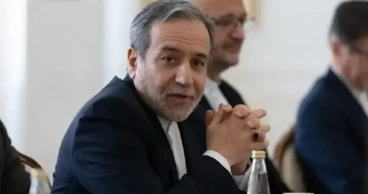
Iran dismisses Trump’s threats, vows swift response to any US attack
Iran has firmly rejected renewed military threats from US President Donald Trump, warning that its armed forces are fully prepared to respond immediately and forcefully to any American attack.
Iranian Foreign Minister Abbas Araghchi said on Wednesday that the country’s military was on high alert and ready to defend Iran’s land, air and sea against any aggression. Writing on social media, he said Iran had gained “valuable lessons” from last year’s days-long conflict with Israel and the subsequent US strikes on Iranian nuclear facilities.
According to Araghchi, those experiences have strengthened Iran’s ability to respond more quickly, powerfully and effectively to any future attack.
His comments came hours after President Trump revived threats of military action, claiming on social media that a “massive armada” was moving toward Iran and was prepared to act with speed and force if necessary.
Trump again urged Tehran to negotiate a nuclear deal, insisting Iran must not acquire nuclear weapons and warning that time was running out, reports Al Jazeera.
Despite repeatedly claiming that US strikes last year had destroyed Iran’s nuclear programme, Trump said any future attack would be far more severe if Iran failed to agree to a deal.
Tensions have risen again after the US deployed the aircraft carrier USS Abraham Lincoln to the region, fuelling fears of a possible confrontation. Analysts described the move as a show of force aimed at pressuring Iran into negotiations.
Earlier this month, Araghchi said Iran was ready for war if Washington chose to test it. Although tensions briefly eased after antigovernment protests in Iran subsided, the latest US military moves have reignited concerns across the region.
Iran maintains that its nuclear programme is strictly for civilian purposes and that it has the right to enrich uranium. Tehran has also said it will not enter negotiations while under military threat.
On Tuesday, Iranian President Masoud Pezeshkian criticised the latest US warnings, saying they would only undermine regional security and increase instability.
Meanwhile, diplomatic efforts appear to be continuing behind the scenes. Araghchi reiterated that Iran remains open to a fair and equitable nuclear agreement free from threats, one that guarantees peaceful nuclear technology without nuclear weapons.
The escalating rhetoric has raised regional alarm, with military drills announced near the Strait of Hormuz and warnings from Iran that neighbouring countries could be treated as hostile if they assist any US attack. Several regional states, including Saudi Arabia and the United Arab Emirates, have said they will not allow their airspace to be used for strikes on Iran.
1 month ago
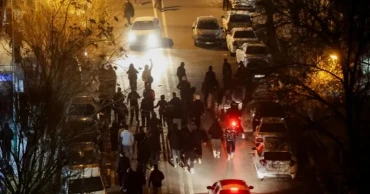
Iran protests: survivors tell of widespread killings amid security crackdown
Young Iranians who took part in recent nationwide protests have told the BBC that the security forces’ response marked one of the deadliest crackdowns in the history of the Islamic Republic, as human rights groups report thousands of deaths amid a near-total communications blackout.
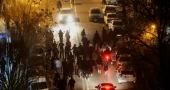
Several protesters from Tehran and other cities said the unrest, which began on Dec 28 over worsening economic conditions, rapidly escalated into mass demonstrations demanding political change. They said the authorities responded with overwhelming force as protests intensified on Jan 8 and 9.
A 29-year-old woman from Tehran said the scale of the killings was unprecedented compared with earlier protests. She claimed to personally know at least 13 people who had been killed during the unrest, adding that demonstrations in her area were peaceful before security forces opened fire.
Another protester, a 24-year-old man from Tehran, said he had never witnessed such large crowds or such levels of violence. He said many people continued to protest despite the deaths, believing they had nothing left to lose.
According to the US-based Human Rights Activists News Agency (Hrana), at least 6,159 people have been confirmed killed since the protests began, including protesters, children and individuals affiliated with the government. Hrana said it is investigating reports of thousands more deaths and warned that the confirmed toll is likely to rise.
Norway-based group Iran Human Rights has said the final death toll could exceed 25,000.
Iranian authorities, however, said more than 3,100 people were killed, claiming most were security personnel or bystanders targeted by what they described as “rioters”.
Due to restrictions on international media, foreign journalists have been unable to report freely inside Iran. However, videos verified by the BBC appear to show security forces using live ammunition and pellet guns against crowds.
Protesters also described widespread injuries, particularly to the face and eyes, and said hospitals were overwhelmed with wounded demonstrators. Some said they avoided public hospitals for fear of arrest.
Several activists and witnesses alleged that authorities pressured families of those killed, demanding large sums of money or requiring victims to be recorded as members of security forces in order to release bodies. Human rights groups say such practices may be intended to intimidate families and obscure the true scale of the killings.
The communications shutdown has further deepened fear and uncertainty, with protesters saying they struggled to obtain information about missing friends and relatives during the unrest.
Iran’s leadership has blamed foreign powers, particularly the United States, for fomenting the protests, a claim repeatedly rejected by protesters and rights groups.
With inputs from BBC
1 month ago
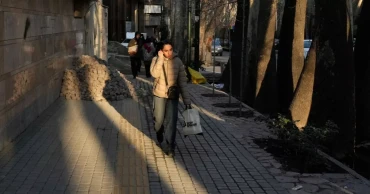
Worry spreads in Middle East over potential US strike on Iran
A month after nationwide protests erupted in Iran, fear and uncertainty are spreading across the Middle East over a possible U.S. military strike, as regional diplomacy intensifies to avert a crisis.
Iranian officials engaged with neighboring countries on Wednesday following signs that Washington may consider military action. Saudi Arabia and the United Arab Emirates have both ruled out allowing their airspace to be used for any such attack. Meanwhile, the U.S. has deployed the USS Abraham Lincoln and several guided missile destroyers to the region, capable of launching strikes from the sea.
U.S. President Donald Trump has not yet decided on using force, although he has warned against the killing of peaceful demonstrators and mass executions of detainees. Activists say at least 6,221 people have died in Iran’s crackdown on protests, with thousands more injured or arrested.
Amid internet restrictions, Iranians remain anxious, watching videos of shootings and fearing further escalation while the country’s economy deteriorates. “I feel my generation failed to teach the younger ones,” said Mohammad Heidari, a Tehran high school teacher.
Diplomatic contacts intensified this week. Egypt’s Foreign Minister Badr Abdelatty spoke with Iranian Foreign Minister Abbas Araghchi and U.S. Middle East envoy Steve Witkoff to “work toward achieving calm.” Saudi Crown Prince Mohammed bin Salman also spoke with Iranian President Masoud Pezeshkian, reiterating that Saudi airspace or territory would not be used for attacks against Iran, a position mirrored by the UAE.
Both countries host U.S. military assets but have faced attacks in recent years, including the 2019 strike that halved Saudi oil production and Houthi attacks on the UAE in 2022. Iran also targeted Qatar’s Al Udeid Air Base last year after U.S. airstrikes on Iranian nuclear sites.
Araghchi stressed that diplomacy must replace threats. “Negotiations must be conducted on an equal footing, based on mutual respect, and for mutual benefit,” he said.
Human Rights Activists News Agency reported at least 6,221 deaths, including protesters, children, and civilians, with over 42,300 arrests since the unrest began on Dec. 28 following a sharp fall in the Iranian rial. Iran’s official figures remain far lower, citing 3,117 deaths and labeling many victims as “terrorists.”
The current unrest, the deadliest in decades, recalls the turmoil of the 1979 Islamic Revolution.
1 month ago
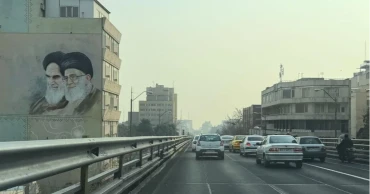
At least 6,126 killed in Iran protests, activists say
At least 6,126 people have died in Iran’s crackdown on nationwide protests, activists said Tuesday, while many more remain missing or feared dead.
The Human Rights Activists News Agency, based in the U.S., said the dead include 5,777 protesters, 214 government-affiliated forces, 86 children and 49 other civilians. Over 41,800 people have been arrested. Iran’s government reports a lower death toll of 3,117.
The protests began on Dec. 28 after the Iranian currency, the rial, fell sharply. Demonstrations quickly spread across the country and were met with a violent crackdown. Authorities have blocked the internet, making independent verification difficult.
Meanwhile, the U.S. has sent the USS Abraham Lincoln aircraft carrier and supporting warships to the Middle East, giving it the ability to respond militarily if needed. Some Iranian-backed militias have signaled readiness to act if Iran is attacked.
Iran has warned that any conflict could engulf the region, but its proxy forces in the Middle East appear disorganized after recent conflicts, including Israel’s 12-day war targeting Iran-backed groups.
The scale of the protests and the government’s response is the deadliest unrest in Iran in decades, drawing comparisons with the 1979 Islamic Revolution.
UN and U.S. officials have raised concerns about human rights violations, while Iran accuses foreign powers of encouraging the unrest.
The situation remains tense as both domestic protests and regional military threats continue.
1 month ago
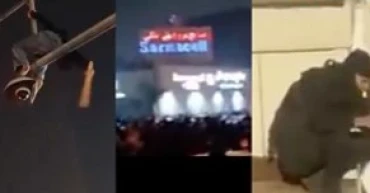
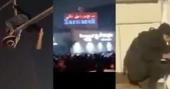
Videos show body piles, rooftop snipers in Iran protest crackdown
Newly verified videos from Iran show bodies stacked inside a hospital, armed men positioned on rooftops and surveillance cameras being destroyed, offering rare glimpses of a sweeping crackdown on anti-government protests as authorities enforce a near-total internet blackout.
BBC Verify said it has authenticated multiple videos filmed on January 8 and 9, believed to be among the deadliest days since nationwide unrest erupted in late December. The protests intensified after calls for mass demonstrations by Reza Pahlavi, the exiled son of Iran’s late shah.
Human rights groups have reported sharply differing death tolls. The US-based Human Rights Activists News Agency said it has confirmed nearly 6,000 deaths, most of them protesters, and is reviewing thousands more reports received despite the communications shutdown. Norway-based Iran Human Rights has warned the final toll could exceed 25,000. Iranian authorities have acknowledged more than 3,100 deaths, saying most were security personnel or bystanders harmed by what they described as rioters.
One verified clip shows dozens of bodies inside a mortuary at Tehranpars Hospital in east Tehran, with additional footage showing body bags outside the entrance. Other videos capture large crowds protesting on highways as gunfire is heard, and protesters attempting to disable CCTV cameras to evade surveillance.
Footage from cities including Kerman and Mashhad shows armed men in military attire firing weapons and individuals positioned on rooftops with rifles. BBC Verify said it has tracked protests across at least 71 towns and cities, though the actual number is likely higher.
Since January 8, most of the country has experienced an internet blackout, severely limiting independent reporting. Some Iranians have briefly accessed the internet using satellite services or virtual private networks, allowing videos to surface despite restrictions.
With inputs from BBC
1 month ago
‘Yellow line’, the unofficial Israeli buffer zone reshaping daily life in Gaza
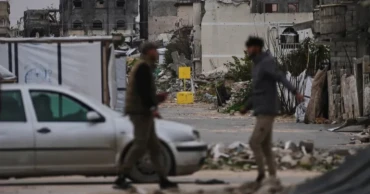
Just metres from the yellow painted concrete blocks marking the Israeli army’s most recent redeployment line in eastern Gaza City, displaced Palestinian Zaid Mohammed and his family of six are living in a small tent. The yellow line marks the area Israeli forces pulled back to under the first phase of the Gaza ceasefire that began in October and stretches up to 6.5km inside the enclave, covering about 58 percent of Gaza.
The line separates an eastern zone under Israeli control from a western area with fewer movement restrictions but continued risks of air strikes and displacement. Zaid’s shelter stands amid widespread destruction, with rubble from flattened neighbourhoods stretching for miles.
“Shelling and gunfire continue around the clock,” Zaid told Al Jazeera, noting the proximity of Israeli forces. Residents near the line report frequent gunfire, explosions and nights lit only by military flares amid total darkness.
The yellow line refers to Israeli-designated military zones and buffer areas inside the Gaza Strip that have repeatedly shifted during the war, according to UN agencies and humanitarian groups. These evolving zones function as de facto internal borders, shaping civilian movement, access and survival.
Read More: Gaza reports 14 dead after Israel says it killed two top Hamas figures
During a December visit, Israeli military chief Lieutenant General Eyal Zamir described the yellow line as “a new border line”, leaving Israel in control of nearly 60 percent of Gaza, including Rafah and Beit Hanoon. The line emerged through successive forced displacement orders, often issued amid active bombardment, giving civilians little time to flee.
UN officials say that at times more than 70 percent of Gaza was under evacuation orders or deemed unsafe. With few visible markers, Palestinians rely on memory and instinct as neighbourhoods shift rapidly from safe to dangerous. Aid agencies warn the uncertainty fuels trauma, disrupts livelihoods and normalises danger, especially for children, even during periods of calm.
With inputs from AL JAZEERA
1 month ago
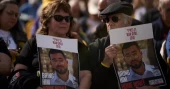
Israel launches major Gaza search for last hostage
Israel said on Sunday its military has launched a large-scale operation in Gaza to locate the last remaining hostage, as international mediators press Israel and Hamas to advance to the next phase of a ceasefire.
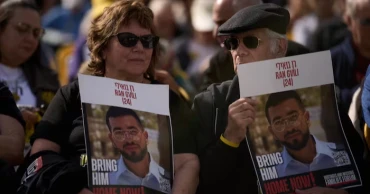
The announcement came as Israel’s Cabinet met to consider reopening the Rafah border crossing with Egypt, a key step tied to the recovery of the final hostage, Ran Gvili. The meeting followed talks a day earlier between Prime Minister Benjamin Netanyahu and senior US envoys on the ceasefire’s next stage.
Netanyahu’s office said late Sunday that Israel would open the Rafah crossing after the operation is completed, in line with understandings reached with the United States. Israeli media quoted military officials as saying the search could take several days.
The return of all remaining hostages, whether alive or dead, is a central requirement of the first phase of the ceasefire that began on Oct 10. The previous hostage was recovered in early December.
The military said it was searching a cemetery in northern Gaza near the Yellow Line, separating Israeli-controlled areas. An Israeli official, speaking anonymously, said Gvili may be buried in the Shijaiya-Tuffah area of Gaza City, with rabbis and forensic experts assisting search teams.
Gvili’s family has urged Israel not to proceed to the second ceasefire phase until his remains are returned, though the Trump administration has already said the next phase has begun.
Separately, the closed headquarters of the UN agency for Palestinian refugees in east Jerusalem was set on fire overnight. UN officials said settlers were seen looting the compound, while Israel’s fire service worked to contain the blaze. UNRWA accused Israel of undermining its operations, a charge Israel denies.
1 month ago
Syrian army announces 15-day extension of ceasefire with Kurdish-led forces
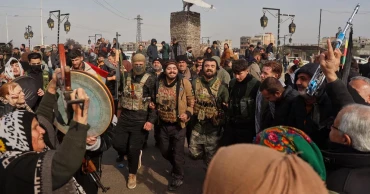
Syria’s defense ministry announced on Saturday that a ceasefire between government forces and Kurdish-led fighters has been extended by 15 days, just hours after a four-day truce expired.
In a statement, the ministry said the extension was intended to support a US-led operation to transfer suspected Islamic State militants from prisons in northeastern Syria to detention facilities in Iraq.
The Kurdish-led Syrian Democratic Forces confirmed the ceasefire extension, saying they remain committed to the agreement. “Our forces affirm their commitment to the agreement and their dedication to respecting it, which contributes to de-escalation, the protection of civilians, and the creation of the necessary conditions for stability,” the group said in a statement.
The ceasefire follows weeks of heavy fighting between government troops and the SDF, during which the Kurdish-led group lost large areas it had previously controlled. Earlier on Saturday, the SDF urged the international community to act to prevent further escalation.
Read More: Syrian troops move into northern towns after Kurdish fighters pull back
Tensions have remained high as government forces continue to send reinforcements to northeastern Syria. Talks aimed at merging SDF fighters into state forces stalled earlier this month, triggering renewed clashes, despite an earlier agreement signed in March.
State television reported that authorities released 126 boys under 18 from a prison near Raqqa on Saturday and returned them to their families. The prison also holds Islamic State detainees. The US military has said thousands of such prisoners are being transferred to Iraq, with 150 moved earlier this week.
1 month ago
Trump unveils Gaza redevelopment plan without consulting Palestinians
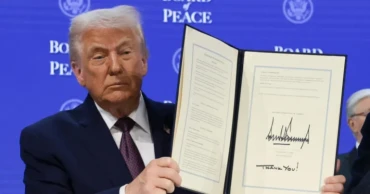
US President Donald Trump has unveiled a controversial plan to rebuild Gaza, promising coastal tourism, high-rise buildings, industrial zones, and 500,000 new jobs, without consulting Palestinians, at the World Economic Forum in Davos, Switzerland.
The so-called “Board of Peace”, chaired by Trump and including Jared Kushner, Israeli Prime Minister Benjamin Netanyahu, and former UK Prime Minister Tony Blair, is set to oversee the reconstruction. Membership requires a $1 billion fee for a permanent seat, and the board’s charter suggests ambitions beyond Gaza, potentially challenging the United Nations.
Trump and Kushner presented a four-phase development blueprint, starting from Rafah in the south to Gaza City in the north, featuring more than 100,000 housing units, 180 skyscrapers along the coastline, a new airport, and industrial zones. The plan claims to create $25 billion in investment and raise Gaza’s GDP to $10 billion by 2035.
The proposal conditions reconstruction on the full disarmament of Hamas and the withdrawal of Israeli forces. A Palestinian National Committee, led by technocrats, is to manage the territory, while cooperating Hamas members may be reintegrated into a new police force.
Critics, including Palestinian civil society leaders, have condemned the plan as “imperialist” and said it marginalises local populations, ignoring property rights, justice for war crimes, and the needs of displaced residents. Gaza, devastated by Israeli bombardments since October 2023, has seen over 80 percent of its infrastructure destroyed, leaving 2.3 million residents displaced and basic services in collapse.
Hamas rejected the plan, stating that Palestinians would not accept it, while Trump described it as a business-like and entrepreneurial approach to reconstruction.
With inputs from ALJAZEERA
1 month ago