Middle-East
Iran launches missiles toward Israel; drone shot down over Hamedan
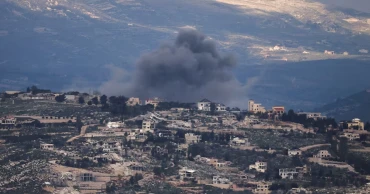
Iran launched several missiles toward Israel early Thursday, the Israel Defense Forces said, amid escalating tensions between the two countries.
According to Israel’s emergency service Magen David Adom, there were no immediate reports of casualties. Authorities issued three separate alerts within two hours, prompting residents in several areas to take shelter.
Reporters from Agence France-Presse said explosions were heard in Jerusalem during the alerts. The Israeli military later announced that the situation had stabilized and allowed residents to leave shelters.
Meanwhile, Iranian media reported that the country’s air defense systems shot down an Israeli drone over western Iran.
According to Tasnim News Agency, Iranian forces intercepted and destroyed an Israeli Hermes drone over Hamedan Province.
The report came shortly after Israel announced the launch of a new wave of attacks targeting sites across Iran, further intensifying the ongoing confrontation between the two regional rivals.
#From Agencies
1 day ago
How long can Israel stand a war with Iran?
Israel’s public support for its ongoing war against Iran remains strong, but analysts warn that a prolonged conflict could strain the country’s military and economy.
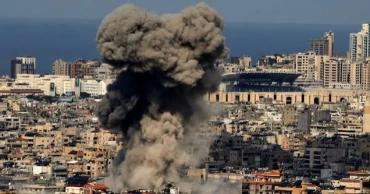
Since launching strikes on Iran on Saturday, Israel has faced repeated missile and drone attacks, prompting widespread air raid alerts, school closures, and the mobilisation of tens of thousands of reservists. Cities including Haifa and Tel Aviv have been under sustained attacks, stretching emergency services, reports Al Jazeera.
Despite these pressures, many Israelis remain supportive of the war. Interviews show strong public backing, with the majority rallying behind the government, driven by a perception of Iran as a long-standing existential threat.
Political economist Shir Hever noted that the current public mood contrasts with the June 2025 12-day war, which was marked more by fear than aggressive militarism. Analysts say ongoing hostilities could further radicalise society, entrenching far-right influence and prompting more young talent to emigrate.
From a military perspective, Israel’s ability to sustain high-intensity conflict depends heavily on external support. Defence analyst Hamze Attar said Iran launched more than 200 ballistic missiles in the first three days of fighting, forcing Israel to expend interceptors from the Iron Dome, David’s Sling, and Arrow systems. Limited stocks mean prolonged conflict could require rationing, focusing defence on key military and political targets and increasing risks to civilians.
Iran is reportedly producing around 100 missiles per month, but uncertainty remains over their types, numbers, and launchers. “If you don’t have the launchers, it doesn’t matter how many missiles you have,” Attar said.
Economically, two years of near-continuous conflict have drained Israel’s finances. Spending on Gaza and Lebanon in 2024 reached $31 billion, rising to $55 billion in 2025, contributing to a debt crisis and a sovereign credit downgrade. Hever warned of additional pressures on energy, transport, and health services.
However, experts argue that technology and US weapons support are likely to allow Israel to continue military operations despite economic strains. Hever said advanced weaponry, which can operate at long distances without putting soldiers at risk, diminishes the economic limits on the country’s military campaigns.
2 days ago
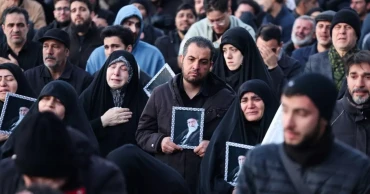
US will ‘rain missiles’, ‘death and destruction’ on Iran, Trump aides say
US officials on Wednesday claimed progress in their military campaign against Iran, vowing to crush Tehran’s government “without mercy” even as reports of civilian casualties continue to rise.
Pentagon chief Pete Hegseth said the US military is operating with “little restraint,” asserting that Iranian leaders face constant airstrikes from US and Israeli forces, according to Al Jazeera report.
“We are punching them while they’re down, which is exactly how it should be,” he said, describing jets “bringing death and destruction from the sky all day long.”
White House spokeswoman Karoline Leavitt echoed Hegseth, stating that the US will continue “raining missiles and weapons down on Iran” to hit targets deemed crucial by the Department of War.
Iranian officials condemned the remarks, with Foreign Ministry spokesperson Esmaeil Baghaei calling them an admission of war crimes and crimes against humanity. He detailed strikes on schools, hospitals, residential buildings, street markets and medical centres, including a February 28 attack on a girls’ school in Minab that killed 165 people.
US Senate backs Trump on expanding Iran war
Leavitt said the Pentagon is investigating the Minab incident and maintained that US forces “do not target civilians.”
Despite the strikes, the Iranian leadership, including Supreme Leader Ali Khamenei, has been largely neutralised, yet the Islamic Republic system remains intact. The war has sparked regional tensions, with missiles and drones reportedly targeting Gulf civilian infrastructure.
President Donald Trump hailed the campaign, rating its success “about 15” on a scale of 10, signalling continued US support for military operations in the region.
2 days ago
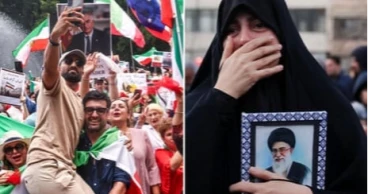
Iranians express mixed feelings after Khamenei’s death
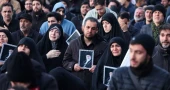
Amid internet blackouts in Iran, a resident in his forties, identified only as Amir, shared his reactions following the death of Supreme Leader Ayatollah Khamenei.
Amir left Tehran after the bombing and said he feels hopeful for the future, as he had lived “locked under Khamenei’s rule.” He also expressed concern about a potential prolonged conflict that could affect Iran’s infrastructure.
He noted that younger Iranians he spoke with worry about the Islamic regime surviving and fear a return to previous rule. “They want a revolution,” he said.
Older residents, meanwhile, are focused on stability and family responsibilities, hoping for a quick resolution. Amir added, “They hope for change, but they’re concerned about a long war.”
With inputs from BBC
2 days ago
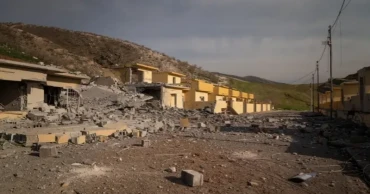
Iran strikes Kurdish opposition bases in northern Iraq
Iran has intensified attacks on Kurdish opposition groups in northern Iraq amid speculation that US President Donald Trump may want these groups to join the fight inside Iran.
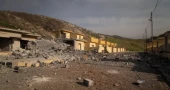
One base was hit by an Iranian ballistic missile around 11:00 local time, injuring four Kurdish Peshmerga fighters. One of them later died from his injuries. The missile left a large crater, crushed a building, and scattered rubble and twisted metal across the area.
At another base of the Democratic Party of Iranian Kurdistan (KDPI), a double drone strike yesterday left charred remains and reportedly injured one civilian.
A senior KDPI political leader said the Kurdish fighters could soon enter Iran, though he did not provide a timeline. A 25-year-old fighter, Hassan, told reporters he was ready to go to Iran to fight for freedom and his nation, saying, “We are closer than ever.”
With inputs from BBC
2 days ago

Iranian security chief asks Trump: “Is it America first or Israel?”
Iranian security chief Ali Larijani has warned US President Donald Trump that the death of Ayatollah Khamenei “will exact a heavy price,” following US-Israel strikes on Iran.
In a post on X, Larijani said Trump “has dragged the American people into an unjust war with Iran” after being influenced by Israeli Prime Minister Benjamin Netanyahu’s “clownish antics.” He asked, “Does America still come first – or Israel?”
The warning comes after US and Israeli strikes began on 28 February and have continued across Iran. US Secretary of State Marco Rubio said the US anticipated Israeli action and acted “pre-emptively” to protect American forces from potential Iranian attacks.
With inputs from BBC
2 days ago
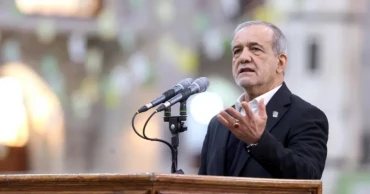
Iran says it had no choice but to respond to US-Israeli strikes
Iranian President Masoud Pezeshkian told neighbouring Gulf countries that Iran had “no choice” but to respond to recent US and Israeli attacks.
He said the attacks on 28 February forced Iran to fire hundreds of missiles and drones targeting US military bases and civilian infrastructure in Gulf states, including the United Arab Emirates, Qatar, and Oman.
In a post on X, Pezeshkian said Iran tried, “with your assistance,” to avoid a war. He added that the US-Israel strikes left Iran with no option but to defend itself.
The president emphasised that he respects the sovereignty of neighbouring countries and believes peace in the region “must be ensured by the countries of the region.”
With inputs from BBC
2 days ago
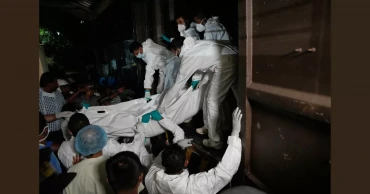
Iranian warship sunk by US submarine; 87 bodies recovered
A torpedo fired by a U.S. submarine sank an Iranian warship off the coast of Sri Lanka, whose navy said Wednesday it recovered 87 bodies and rescued 32 people.
The Iranian vessel sunk in the Indian Ocean was the Islamic Republic’s “prize ship,” U.S. Defense Secretary Pete Hegseth said. It was one of the few instances of a submarine sinking a ship since World War II.
The sinking of the IRIS Dena illustrates a U.S.-Israeli military operation against Iran that is stretching beyond its borders. U.S. President Donald Trump has said one of the key objectives of the war is to wipe out Iran's navy.
“An American submarine sunk an Iranian warship that thought it was safe in international waters,” Hegseth said at a Pentagon news briefing. “Instead, it was sunk by a torpedo.”
After Sri Lanka's navy received a distress signal from the IRIS Dena, which had 180 people on board, it sent ships and planes on a rescue mission, the country's foreign minister, Vijitha Herath, told Parliament.
But by time Sri Lanka's navy reached the location, there was no sign of the ship, “only some oil patches and life rafts," navy spokesman Commander Buddhika Sampath said. "We found people floating on the water.”
A video released by the U.S. Department of War on X showed the moment of the torpedo attack. The Iranian ship appears to be hit by an underwater explosion that causes it to break apart, as a large plume of water rises up in the air.
The 32 people rescued were admitted to a hospital in Galle, a town on Sri Lanka's southern coast, Sampath said. The bodies recovered were also being brought to land, he said.
At the National Hospital in Galle, Iranian sailors' bodies were arriving in trucks and being stored in a makeshift mortuary. The hospital was guarded by Sri Lankan police and naval personnel, as workers unloaded bodies away from view.
Dr. Anil Jasinghe, a top health ministry official, said one of those rescued is in critical condition, seven are receiving emergency treatment and others are being treated for minor injuries.
The IRIS Dena — one of Iran’s newest warships — patrolled in deep water, and was armed with heavy guns, surface-to-air missiles, anti-ship missiles and torpedoes. It carried one helicopter.
The ship had been sanctioned by the U.S. Treasury Department in February 2023, along with eight executives of an Iranian drone manufacturer that supplied weapons to Russia for use against civilian targets in Ukraine.
At least 17 Iranian naval vessels have been sunk during the ongoing war, said U.S. Adm. Brad Cooper, who leads the American military’s Central Command.
2 days ago
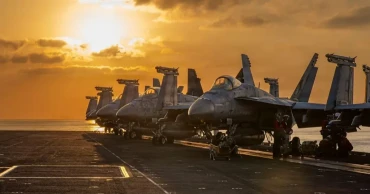
US submarine sinks Iranian warship as Middle East conflict intensifies
US Defense Secretary Pete Hegseth said on Wednesday that a US submarine sank an Iranian warship in the Indian Ocean using a torpedo, as the conflict involving the United States, Israel and Iran entered its fifth day.
Speaking at the Pentagon, Hegseth said the Iranian vessel “thought it was safe in international waters” but was destroyed by a US torpedo strike. He did not name the ship.
Earlier, Sri Lanka’s navy reported that an Iranian naval ship, identified as IRIS Dena, went down off the coast of Galle after issuing a distress call. Authorities said 32 people were rescued, while around 140 are believed to be missing. According to ship documentation, about 180 people were on board. Sri Lankan officials initially said the cause of the sinking was unknown and rejected reports of a submarine attack.
At the Pentagon briefing, Hegseth described the US campaign as decisive and warned of further military action. “More and larger waves are coming. We are just getting started,” he said, adding that the Iranian regime’s military capabilities were being systematically dismantled.
He also claimed that Iran had attempted to assassinate US President Donald Trump and said the US had killed the leader of the unit allegedly responsible. No further details were immediately provided.
When asked about reports of a strike on a girls’ school in Minab that Iran says killed at least 153 people, including children, Hegseth said the US was investigating and insisted that American forces do not target civilians.
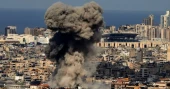
Meanwhile, Israel said it struck “security headquarters” and other regime-linked infrastructure across Tehran as joint US-Israeli air operations continued. Images from the Iranian capital showed extensive damage to residential and public buildings.
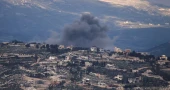
In Lebanon, the Israeli military ordered civilians south of the Litani River to evacuate immediately ahead of planned military operations against Hezbollah. Heavy gunfire was reported near the Israel-Lebanon border, and strikes were reported in Beirut’s outskirts.
Elsewhere in the region, Saudi Arabia reported an attempted drone attack on the Ras Tanura oil refinery, believed to be the country’s largest. Authorities said the drone caused no damage. Kuwait said it was intercepting a wave of incoming missiles and drones, while Turkey’s defence ministry said Nato air defences shot down an Iranian missile heading toward Turkish airspace.
The UK Maritime Trade Operations agency also said a container ship was hit by an “unknown projectile” in the Strait of Hormuz, causing a fire in its engine room. No environmental damage was reported.
Amid escalating violence and widespread flight disruptions, several countries are working to evacuate their citizens from the region. The UK confirmed that a government-arranged repatriation flight will depart from Muscat later on Wednesday night.
With missile exchanges, airstrikes and naval engagements unfolding across multiple fronts, concerns are growing that the conflict could expand further across the Middle East.
With inputs from BBC
2 days ago
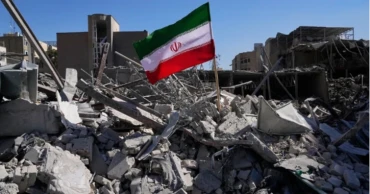
UN inquiry condemns US-Israel attacks on iran amid rising death toll of 1,045
The death toll from five days of US-Israeli attacks on Iran has surpassed 1,000, according to state media reports.
The strikes, which targeted multiple sites across the country, have drawn sharp international criticism. An independent UN investigation into human rights violations in Iran strongly condemned the attacks, saying they violate international law.
Country by country, here’s how the unfolding war is affecting the Middle East
“These attacks … run counter to the UN Charter, which prohibits the use of force against the territorial integrity or political independence of any State,” the UN Independent International Fact-Finding Mission on Iran said in a statement.
The report called for urgent measures to protect civilians and hold those responsible accountable, while warning that such military actions could have far-reaching consequences for regional stability.
2 days ago