Middle-East
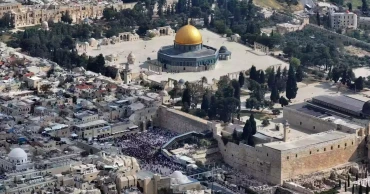
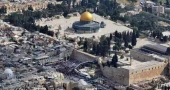
Israel closes Al Aqsa Mosque compound for Eid prayers
Al Aqsa Mosque compound has closed for Eid prayers for the first time in decades.
The compound in Jerusalem will be closed to worshippers for Friday’s Eid al-Fitr, the holiday on which Muslims mark the end of the holy month of Ramadan.
The full closure of the holy site marks the first since the 1967 Mideast war, when Israel captured East Jerusalem and the Old City.
The mosque sits on a hilltop compound that is sacred to Muslims and Jews, who believe it was the site of biblical temples. Access has been a flashpoint and historically sparked tensions between Israelis and Palestinians.
Israel has kept holy sites in the Old City closed to worshippers of all faiths throughout the Iran war citing security, though the restrictions have had the broadest effect on Muslims, tens of thousands who normally come for Friday prayer at Al Aqsa.
2 months ago
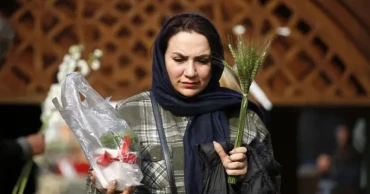
Iranians mark Persian New Year amid war fears and uncertainty
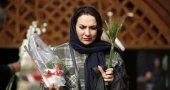
Iranians are preparing for the Persian New Year, Nowruz, under the shadow of ongoing conflict, dampening the usual festive spirit across the country.
In the days leading up to Nowruz — one of Iran’s most important celebrations — markets are typically filled with shoppers buying new clothes, sweets and snacks to welcome the occasion. The festival, meaning “new day,” marks the start of spring and has been observed in Iran and by Persian communities worldwide for more than 3,000 years.
However, this year’s preparations are markedly subdued.
Although markets remain open, many people are hesitant to return to the capital, Tehran, which has faced some of the heaviest bombardment in recent US and Israeli strikes.
“I wish everything could be erased from our memories, as if we just woke up from a bad dream,” said Mina, reflecting the anxiety felt by many amid the ongoing violence. #Taken from BBC
2 months ago
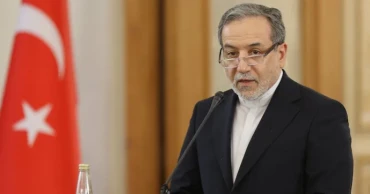
Iran warns UK over US base access, calls it ‘participation in aggression’
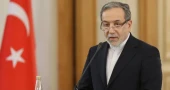
Iran has warned the United Kingdom that permitting the United States to use British military bases would amount to involvement in aggression against Iran, Foreign Minister Abbas Araqchi said.
In a phone conversation with UK Foreign Secretary Yvette Cooper, Araqchi said recent attacks by the United States and Israel on Iran violated international norms and legal principles, according to a statement shared on his Telegram channel.
He also criticised what he described as the “negative and biased” stance of the UK and some European countries toward what he called a clear breach of international law.
Referring to Article 51 of the United Nations Charter, Araqchi stressed Iran’s right to self-defence. He said Iran has respected the sovereignty of neighbouring countries and does not intend to target them, but noted that US military bases located in those countries had been used to launch attacks.
Such actions, he warned, would be viewed as participation in aggression and could affect future relations between Tehran and London.
“We reserve our inherent right to defend the country’s sovereignty and independence,” he added.
During the call, Cooper expressed concern about the political and economic consequences of the conflict, including rising tensions in the Strait of Hormuz. #Taken from Al Jazeera
2 months ago
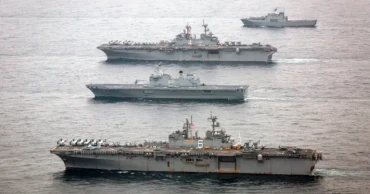
US sending more warships, troops to join war: Report
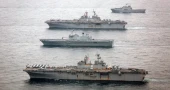
The United States is preparing to deploy additional warships along with around 4,000 Marines and sailors to reinforce its forces engaged against Iran, according to a report by Newsmax citing unnamed officials.
The report said the Boxer Amphibious Ready Group is being dispatched from the US West Coast.
The group is equipped with advanced military assets, including F-35 fighter jets, missiles and amphibious vehicles capable of supporting ground operations.
The reported deployment follows an earlier move by Washington to send about 2,500 Marines and the USS Tripoli to the Middle East, amid escalating regional tensions.
#From Al Jazeera
2 months ago
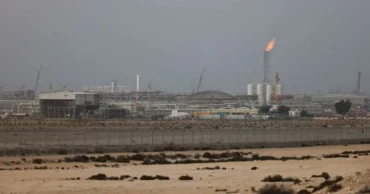
Qatar condemns Ras Laffan strike; Gulf states report attacks
Qatar has condemned an attack on its Ras Laffan Industrial City, calling it a “dangerous escalation” and an “unacceptable violation” that threatens regional stability.
In a statement, the Qatar Ministry of Foreign Affairs said the strike reflects ongoing attempts by Iran to drag the region into a broader conflict.
Prime Minister and Foreign Minister Mohammed bin Abdulrahman Al Thani warned that continued hostile actions and any expansion of the war would only lead to further escalation, stressing that regional security is a collective responsibility.
The development follows reported strikes by Israel on Iran’s South Pars Gas Field one of the world’s largest natural gas reserves earlier this week. Tehran subsequently retaliated by targeting the energy complex in Qatar, triggering a spike in global energy prices.
Qatari authorities said a large portion of the incoming attack was intercepted, although some facilities were hit. The extent of the damage is currently being assessed.
Meanwhile, tensions escalated across the Gulf, with multiple countries reporting missile and drone attacks within hours.
The United Arab Emirates said its air defence systems were responding to incoming threats from Iran, warning residents they might hear interception activity.
Kuwait also reported explosions linked to its air defence operations and urged citizens to follow official safety instructions.
In Saudi Arabia, authorities said five drones were intercepted and destroyed in the eastern region. Meanwhile, Bahrain activated emergency sirens, advising residents to move to safe locations.
Bahraini officials later said the incident was the result of “Iranian aggression,” adding that falling debris from intercepted objects caused a fire at a warehouse.
The latest developments underscore rapidly rising tensions in the Gulf, raising concerns over a wider regional conflict.
#From BBC
2 months ago
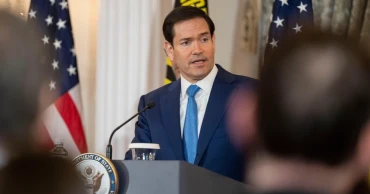
US State Department cuts Middle East expertise as Iran crisis escalates
As the war in Iran intensifies, the US State Department’s capacity to manage the crisis has been weakened by staffing cuts and leadership changes within its key Middle East bureau, according to current and former officials.
The Bureau of Near Eastern Affairs — typically central to coordinating US foreign policy across an 18-country region — is now operating with significantly reduced resources, even as tensions escalate across a region increasingly affected by drone and missile strikes linked to the conflict involving the United States, Israel and Iran.
The bureau, usually led by a seasoned diplomat, was for a period headed by Mora Namdar, a lawyer of Iranian descent with limited management experience. She was later reassigned. Her predecessor, confirmed by the Senate, was a veteran Middle East expert who had served in the State Department since 1984 and was formerly the US ambassador to the United Arab Emirates.
The Trump administration had proposed a 40% budget cut for the bureau, though Congress ultimately approved smaller reductions. It also eliminated the dedicated Iran office, merging it with the Iraq office as part of broader restructuring.
Officials say these personnel and management decisions — alongside President Donald Trump’s broader efforts to reduce the size of government and centralise decision-making — have limited the US government’s ability to respond effectively to a major international crisis.
Interviews with more than a dozen current and former US officials indicate that many experienced diplomats with decades of expertise in Middle East affairs have been dismissed, retired or reassigned. In their place, more junior officials and political appointees have taken on key roles.
More than 80 staff members in the Near Eastern Affairs bureau were cut, according to figures compiled by a State Department employee who was dismissed last year based on internal surveys. The State Department does not publicly release official staffing figures but has not disputed the estimate.
The changes come at a time when diplomatic coordination and regional expertise are seen as critical to managing the rapidly evolving Iran conflict.
2 months ago
Pentagon seeks additional $200bn for Iran war
The Pentagon is seeking an additional $200 billion in funding for the ongoing Iran war, according to a senior administration official.
The Defense Department has sent the request to the White House, the official said, speaking on condition of anonymity to discuss internal deliberations.
The proposed amount is considered extraordinarily high and comes on top of additional funding the Pentagon received last year under former president Donald Trump’s sweeping tax cuts legislation.
Lawmakers in Congress are bracing for a potential new spending request, though it remains unclear whether the White House has formally transmitted the proposal for congressional consideration.
It is also uncertain whether the request would garner sufficient political support.
2 months ago
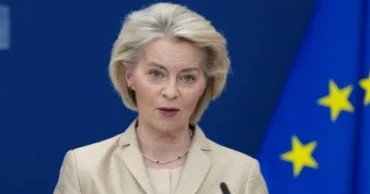
EU leaders rule out joining Middle East war, focus on energy crisis
European leaders on Thursday reiterated their refusal to join the United States and Israel in military operations in the Middle East, instead focusing on surging energy prices and potential economic fallout from the ongoing conflict.
Meeting in Brussels, leaders of the 27-member European Union expressed concern over rising oil and gas costs triggered by the war, warning of long-term economic risks. Belgian Prime Minister Bart De Wever said energy prices were already high before the conflict, but the war had caused a fresh spike that could create serious problems if it persists.
Despite pressure from US President Donald Trump, EU countries have declined to send military support to secure the Strait of Hormuz, a vital route for global energy supplies. EU foreign policy chief Kaja Kallas said there was “no appetite” among member states to expand military involvement in the region.
Several leaders stressed that Europe would not be drawn into the conflict. Austrian Chancellor Christian Stocker said the bloc would not allow itself to be “blackmailed” into joining the campaign, while German Chancellor Friedrich Merz noted that any involvement could only be considered after the fighting ends and under an international mandate.
However, divisions remain within the bloc. While some leaders backed stronger sanctions on Iran, others, including Spanish Prime Minister Pedro Sánchez, criticised the war as illegal and warned of its humanitarian and global economic consequences.
The conflict has shifted the focus of the EU summit, which was initially expected to address internal issues, including financial support for Ukraine. Leaders are now also concerned about the risk of a new refugee crisis.
The European Commission has предложed a range of measures to help member states manage rising energy costs, though officials acknowledge no single solution will suit all economies across the bloc.
EU leaders said strengthening energy independence, including investment in domestic and renewable sources, remains key to ensuring long-term security.
2 months ago
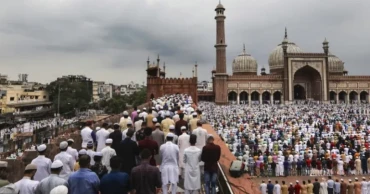
Which countries will celebrate Eid on Friday?
Several countries have announced that Eid Al Fitr will be observed on Friday, March 20, 2026, after completing 30 days of Ramadan and failing to sight the Shawwal crescent.
Among the nations confirming Friday for Eid are Saudi Arabia, the UAE, Bahrain, Qatar, Kuwait, Turkey and Australia, reports GulfNews.
How moon sightings and calculations determined Eid
Crescent not sighted
Saudi Arabia, UAE, Bahrain, Qatar, and Kuwait reported that the crescent was not sighted, setting Friday as Eid.
Calculations determine Eid
Turkey: Astronomical calculations determined Friday as Eid.
Australia: Calculations and moon observations confirmed Friday as Eid.
Official announcements
Yemen, Lebanon, Palestine and Iraq have officially announced that Friday, March 20, will be the day of Eid Al Fitr.
Meanwhile, Singapore has announced that Saturday, March 21, will be Eid Al Fitr in the country, due to the impossibility of sighting the crescent from Singapore on Thursday.
Which countries will sight the Shawwal crescent tomorrow?
While some countries will attempt to sight the crescent on Wednesday, March 18, others will hold moon-sighting moments on Thursday, March 19. In many nations, the 29th of Ramadan falls tomorrow, meaning Eid could be on Friday or Saturday, according to the Astronomy Centre.
Countries observing the crescent tomorrow include: Turkey, Indonesia, Malaysia, Brunei, Singapore, Saudi Arabia, India, Bangladesh, Pakistan, Iran, parts of Iraq, Oman, Jordan, Syria, Egypt, Libya, Tunisia, Algeria, Morocco, and Mauritania.
Residents are advised to follow official announcements for prayer timings and celebrations to ensure a safe and joyful start to Eid Al-Fitr.
2 months ago
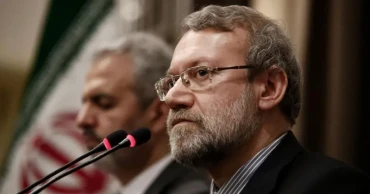
Larijani’s death deepens Iran leadership crisis
The killing of Iran’s security chief, Ali Larijani, in an Israeli air strike has intensified a leadership crisis in the Islamic Republic.
Larijani, one of Iran’s most experienced and influential policymakers, played a central role in shaping the country’s strategy on war, diplomacy, and national security as secretary of the Supreme National Security Council. His death comes amid a series of strikes that have targeted senior Iranian officials in recent weeks.
Known as a hardline pragmatist, Larijani managed three major crises: the ongoing war with the US and Israel, widespread domestic unrest, and stalled nuclear negotiations. His removal leaves these issues unresolved and transfers authority to an as-yet-unknown successor under highly fragile conditions.
The loss of Larijani could shift power toward the military, with armed forces given broader authority to act in case of leadership gaps. Iranian army chief Amir Hatami has warned of a “decisive” retaliation for Larijani’s death.
Analysts say the death not only removes a key official but also deepens systemic instability, threatening both the course of the war and the country’s internal governance.
With inputs from BBC
2 months ago