Middle-East
Israel frees Palestinian who developed schizophrenia in prison for attack at age 13
JERUSALEM, Apr 10 (AP/UNB) — Israel released Ahmad Manasra on Thursday, a Palestinian who was involved in an attack at 13 and later developed schizophrenia during his prison term.
Despite multiple requests for early release, they were denied.
Israel considers Manasra a terrorist for attempting to kill Jewish peers, while Palestinians argue that his harsh detention at such a young age caused long-term mental health issues.
Manasra's lawyer, Khaled Zabarqa, confirmed his release after serving a sentence of nine and a half years.
8 months ago
At least 60,000 children malnourished in Gaza as Israeli aid blockade continues
Gaza’s Ministry of Health says at least 60,000 children are now “at risk of serious health complications due to malnutrition” as Israel maintains a blockade on humanitarian aid, cutting off essential food and medical supplies since March 2.
The warning came on Wednesday, a day after UN Secretary-General Antonio Guterres rejected a new Israeli proposal for overseeing aid deliveries, stating it would risk “further controlling and callously limiting aid down to the last calorie and grain of flour.”
According to the Health Ministry, the lack of proper food and clean water is worsening health conditions, and the continuing ban on child vaccinations — including for polio — is deepening the crisis. With border crossings sealed, aid agencies have been unable to bring in life-saving supplies for over a month.
The UN reports that 21 nutrition centres in Gaza have been forced to shut down, disrupting care for roughly 350 children already suffering from severe malnutrition. The World Food Programme (WFP) previously warned that intensified Israeli military operations have severely disrupted food aid efforts, putting hundreds of thousands at risk of hunger and malnutrition.
“WFP and partners from the food security sector have been unable to bring new food supplies into Gaza for more than three weeks,” the agency said, adding that current stockpiles would only last up to two weeks.
For over 18 months, Israel has repeatedly used food and humanitarian aid as a form of pressure on the Palestinian population during its military campaign, which the Health Ministry says has killed more than 50,000 people.
‘Throwing a stone is not terrorism’: Rights group slams killing of Palestinian-American teen
Last week, COGAT — the Israeli military body overseeing civilian matters in occupied Palestinian territories — met with UN and international aid officials, proposing “a structured monitoring and aid entry mechanism” for Gaza. It claimed Hamas was diverting aid, though Jonathan Whittall, a senior UN official for Gaza and the occupied West Bank, said there was no evidence to support that claim.
Meanwhile, Israel has also halted the flow of water from the Mekorot company to Gaza, cutting off about 70% of the enclave’s water supply. Hosni Mehanna, spokesperson for Gaza municipality, said the main pipeline in eastern Gaza City’s Shujayea neighbourhood has been affected amid ongoing Israeli assaults.
“The reasons behind the interruption remain unclear, but we are coordinating with international organisations to inspect whether the pipeline was damaged due to the heavy Israeli bombardment in the area,” Mehanna said.
“Regardless of the cause, the consequences are dire. If the flow of water from Mekorot is not restored soon, Gaza will face a full-blown water crisis,” he added.
Source: Al Jazeera
8 months ago
Netanyahu-Trump meeting reveals unexpected gaps on key issues
Israeli Prime Minister Benjamin Netanyahu traveled to Washington for a hastily organized White House visit bringing a long list of concerns: Iran's nuclear program. President Donald Trump's tariffs. The surging influence of rival Turkey in Syria. And the 18-month war in Gaza.
Netanyahu appeared to leave Monday's meeting largely empty-handed — a stark contrast with his triumphant visit two months ago. During an hourlong Oval Office appearance, Trump appeared to slap down, contradict or complicate each of Netanyahu’s policy prerogatives.
On Tuesday, Netanyahu declared the meeting a success, calling it a “very good visit” and claiming successes on all fronts. But privately, the Israeli delegation felt it was a tough meeting, according to a person familiar with the matter who spoke on condition of anonymity in line with regulations.
Netanyahu “didn’t hear exactly what he wanted to hear, so he returns back home with very little,” said Nadav Eyal, a commentator with the Yediot Ahronot daily, who added that the visit was still friendly, despite the disagreements.
Netanyahu's second pilgrimage to Washington under Trump's second term was organized at short notice and billed as an attempt to address the new U.S. tariff regime. But it came at a pivotal time in Middle East geopolitics. Israel restarted the war in Gaza last month, ending a Trump-endorsed ceasefire, and tensions with Iran are rising over its nuclear program.
Netanyahu and his allies were thrilled with Trump's return to office given his strong support for Israel during his first term. This time around, Trump has not only nominated pro-Israel figures for key administration positions, he has abandoned the Biden administration's criticism of Israel's conduct in Gaza and the West Bank, and of Netanyahu's steps to weaken Israeli courts.
Monday's meeting showed that while Trump remains sympathetic to Israel, Netanyahu's relationship with the president during his second term is more complicated and unpredictable than he may have expected.
Here is a look at where Trump and Netanyahu appear to have diverged.
Netanyahu has long pushed for military pressure against Iran
Israeli strike on media tent outside Gaza Hospital kills reporter, injures journalists
With Netanyahu's strong encouragement, Trump in 2018 unilaterally withdrew the United States from the agreement between world powers and Iran over its nuclear program. That deal, negotiated by the Obama administration, put curbs on Iran's nuclear program. It was denigrated by Netanyahu because he said it did not go far enough to contain Iran or address Iran's support for regional militant groups.
Netanyahu has long maintained that military pressure was the best way to prevent Iran from obtaining nuclear weapons. Israel struck Iran last year in the countries' first direct conflict ever. But it did not target Iran's nuclear facilities, something Israel would likely need U.S. military assistance to do in order to strike targets buried deep underground.
Trump has suggested, including on Monday, that the U.S. could take military action if Iran doesn’t agree to negotiate. But his announcement Monday that talks would take place between the U.S. and Iran this weekend flew in the face of Netanyahu’s hawkish views.
Netanyahu gave a tepid endorsement, noting that both leaders agree that Iran cannot develop a nuclear weapon. He said he would would favor a diplomatic agreement similar to Libya's deal in 2003 to destroy its nuclear facilities and allow inspectors unfettered access. However, it is not clear if Trump will set such strict conditions.
Eyal said the announcement with Netanyahu by Trump's side was meant to show the transparency between the countries' leadership.
Netanyahu hoped for tariff relief and appeared to be rebuffed
A day before Trump's so-called Liberation Day unleashed global tariffs on the world last week, Israel preemptively announced that it would eliminate all levies on U.S. goods. But that didn't spare Israeli products from being slapped with a 17% tariff by its largest trading partner.
Netanyahu was summoned to Washington ostensibly to make Israel's case against the levy. He was the first international leader to do so, in an encounter that may have set the stage for how other world leaders approach the tariffs.
While Trump repeatedly praised the Israeli leader, he did not appear to budge on Israel's share of the burden. Asked if he might change his mind, he said “maybe not.” He cited the billions of dollars the U.S. gives Israel in military assistance each year — money that is seen as the bedrock of the U.S.-Israel relationship and an insurance policy for U.S. interests in the region.
“We give Israel $4 billion a year. That’s a lot,” he said, as though to suggest Israel was already getting enough from the U.S., and congratulated Netanyahu on that achievement.
Netanyahu was told to be reasonable on Turkey
Since the fall of the Assad dynasty in Syria late last year, Israel and Turkey have been competing in the country over their separate interests there. Israel fears that Syria's new leadership, which has an Islamist past, will pose a new threat along its border. It has since taken over a buffer zone in Syrian territory and said it will remain there indefinitely until new security arrangements are made.
Turkey has emerged as a key player in Syria, prompting concerns in Israel over the possibility of Turkey expanding its military presence inside the country. Netanyahu said Tuesday that Turkish bases in Syria would be a “danger to Israel.”
Once strong regional partners, ties between Israel and Turkey have long been frosty and deteriorated further over the war in Gaza. Turkish President Recep Tayyip Erdogan has been an outspoken critic of the war, prompting angry reactions from Israeli officials.
Netanyahu sought to hear support from his stalwart ally Trump on a country Israel perceives as increasingly hostile. Instead, Trump lavished praise on Erdogan for “taking over Syria,” positioned himself as a possible mediator between the countries and urged Netanyahu to be “reasonable” in his dealings with the country.
Hamas rocket attack injures 3 in Israel; Israel responds with strikes on central Gaza
“Israel is not provided with a blank check here,” said Udi Sommer, an expert on U.S.-Israel relations at Tel Aviv University. “There’s no unconditional love here. It is contingent. It is contingent on Israel behaving a certain way.”
Trump wants the war in Gaza to end
While both addressed the ongoing war in Gaza and the Israeli hostages who remain held there, the topic appeared to take a backseat to other issues.
Netanyahu spoke of the hostages' plight and an emerging deal to free them, as well as the need to end the “evil tyranny of Hamas.” Trump sympathized with the hostages and made another pitch for his plan to “own” Gaza and remove its Palestinian population, a once fringe idea in Israeli discourse that has now found acceptance among mainstream politicians, including Netanyahu.
However, there were signs of differences on the horizon.
Netanyahu broke the ceasefire last month and has been under major pressure from his governing allies to keep up the fighting until Hamas is crushed. He has appeared to be in no rush to end the war or bring home the remaining hostages.
Trump, however, made it clear that he'd like to see the hostages freed and for the war to end. “And I think the war will stop at some point that won’t be in the too distant future,” he said.
Source: With input from agency
8 months ago
Iran’s FM to hold indirect nuclear talks with US envoy in Oman
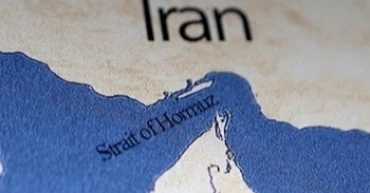
Iran 's foreign minister on Tuesday said that he'll meet with US envoy Steve Witkoff in Oman for the first negotiations under the Trump administration seeking to halt Tehran’s rapidly advancing nuclear program as tensions remain high in the Middle East.
Speaking to Iranian state television from Algeria, Abbas Araghchi maintained the talks would be indirect, likely with Omani mediators shuttling between the two parties. US President Donald Trump, in announcing the negotiations on Monday, described them as being direct talks.
Years of indirect talks under the Biden administration failed to reach any success, as Tehran now enriches uranium up to 60 per cent purity — a technical step away from weapons-grade levels.
Both the US and Israel have threatened Iran with military attack over the program, while officials in Tehran increasingly warn they could potentially pursue a nuclear bomb.
Macron urges Gaza ceasefire during Cairo visit
“Our main goal in the talks, is naturally restoring rights of people as well as lifting sanctions and if the other side has a real will, this is achievable, and it has no relation to the method, either direct or indirect," Araghchi said. “For the time being, indirect is our preference. And we have no plan to alter it to direct.”
Araghchi’s comments left space for Iran to potentially hold direct talks eventually with the Americans. Such talks aren’t known to have been held since the Obama administration.
There was no immediate acknowledgement from the US that Witkoff would lead the American delegation.
News of talks boosts Iran's ailing economy
After Trump's comments on the talks went public, Iran's ailing economy suddenly showed new signs of life. Its rial currency, which hit a record low of over 1 million rials to the dollar, rebounded Tuesday to 990,000 rials. The Tehran Stock Exchange separately rose some 2 per cent on the news.
Iran’s economy has been severely affected by international sanctions, particularly after Trump unilaterally withdrew America from Tehran’s nuclear deal with world powers in 2018. At the time of the 2015 deal, which saw Iran drastically limit its enrichment and stockpiling of uranium in exchange for lifting of international sanctions, the rial traded at 32,000 to the dollar.
Economic upheavals have evaporated the public’s savings, pushing average Iranians into holding onto hard currencies, gold, cars and other tangible wealth. Others pursue cryptocurrencies or fall into get-rich-quick schemes.
8 months ago
‘Throwing a stone is not terrorism’: Rights group slams killing of Palestinian-American teen
Dhaka, Apr 8 (UNB) – The Euro-Med Human Rights Monitor has strongly condemned the killing of a 14-year-old Palestinian-American boy by Israeli forces in the occupied West Bank.
The Geneva-based rights organisation dismissed Israel’s claim that the teenager, Omar Mohammad Rabea, was a “terrorist” because he had allegedly thrown stones. Two other children were also injured in the incident.
“They were unarmed children. This wasn’t self-defense. It was the deliberate execution of a child on occupied Palestinian land,” Euro-Med stated in a post on X.
“By calling stone-throwing children ‘terrorists’, Israel manufactures fake justifications for murder – and places itself above international law. This is part of a system of state violence and persecution designed to criminalize every Palestinian act of resistance – even from a child,” the organisation said.
“Executing children is not self-defense. Throwing a stone is not terrorism. This is apartheid backed by bullets – colonial violence unleashed with total impunity.”
Source: Al Jazeera
8 months ago
Israeli strike on media tent outside Gaza Hospital kills reporter, injures journalists
An Israeli airstrike hit a media tent positioned outside a hospital in the Gaza Strip early Monday, killing two individuals—including a local journalist—and injuring six other media workers, according to medical sources. The Israeli military said the target was a Hamas operative disguised as a journalist.
In separate incidents, at least 28 more people were killed, hospital officials reported.
Since ending its ceasefire with Hamas last month, Israel has launched repeated airstrikes across Gaza and expanded ground operations. It has also blocked the entry of food, fuel, medicine, and other humanitarian aid for over a month to pressure Hamas into agreeing to changes to a previously reached truce deal.
The attack near Nasser Hospital in Khan Younis occurred around 2 a.m., setting the media tent on fire. The hospital confirmed the deaths of Yousef al-Faqawi, a reporter for the Palestine Today website, and another man.
The Israeli military said it was targeting Hassan Eslaiah, described as a Hamas fighter who took part in the October 7, 2023 attack inside Israel. Eslaiah was one of the six journalists injured in the strike. He had occasionally submitted footage to The Associated Press and other international outlets, including during the October 7 attack, but has not worked with the AP in over a year.
Another Israeli strike hit tents near Al-Aqsa Martyrs Hospital in Deir al-Balah, wounding three people, hospital sources said.
Trump snaps at reporter when asked about abortion: 'Stop talking about it'
Nasser Hospital also reported receiving 20 bodies from separate overnight attacks, including eight women and five children. Meanwhile, Al-Aqsa Martyrs Hospital said two strikes on residential buildings in Deir al-Balah killed eight others, including three women and three children.
Thousands Take Shelter in Hospital Compounds
Tens of thousands have taken refuge in tents erected within hospital compounds throughout the 18-month conflict, hoping the facilities would be spared from strikes. However, Israel has raided hospitals multiple times, accusing Hamas of operating from within them—an allegation denied by medical staff.
The war began when Hamas-led militants launched a cross-border attack on October 7, killing about 1,200 people, mostly civilians, and abducting 251 others. Israel says 59 hostages remain in captivity, with 24 believed to be alive.
Israel has pledged to intensify military operations until Hamas surrenders, releases the remaining captives, and exits Gaza. Prime Minister Benjamin Netanyahu also intends to push forward with a proposal, originally suggested by former U.S. President Donald Trump, to relocate much of Gaza’s population abroad through what he calls “voluntary emigration.”
Palestinians have firmly rejected the idea of leaving their homeland, while human rights experts warn that such a move would likely constitute forced displacement, violating international law.
Protests in Israel Amid Netanyahu-Trump Meeting
As Netanyahu travels to Washington to meet Trump for discussions on Gaza and other topics, dozens of demonstrators gathered outside his Jerusalem residence. They urged him to secure a deal for the release of the remaining hostages, expressing concern that renewed fighting endangers those still held.
“The moment of truth has arrived,” said Varda Ben Baruch, grandmother of Israeli-American hostage Edan Alexander. “You’re in the U.S. now. Sit with President Trump and finalize a deal to bring them all home.”
Trump talks about reporters being shot and says he shouldn’t have left White House after 2020 loss
According to Gaza’s Health Ministry, Israel’s military campaign has killed over 50,000 Palestinians—mostly women and children. Israel claims it has eliminated about 20,000 Hamas fighters but has not presented supporting evidence. The war has devastated Gaza, displacing up to 90% of its population at its peak.
Source: With input from agency
8 months ago
Hamas rocket attack injures 3 in Israel; Israel responds with strikes on central Gaza
Three individuals sustained minor injuries on Sunday following a rocket barrage launched by Hamas on southern Israel, which led the Israeli military to conduct airstrikes in central Gaza later in the day, according to both Israeli and Palestinian reports.
Earlier, the Al-Qassam Brigades, Hamas' military arm, claimed responsibility for the rocket attack on Ashdod, stating in a brief announcement that it was retaliation for alleged Israeli "massacres" of Palestinian civilians.
Israeli military spokesperson Avichay Adraee confirmed that 10 rockets were launched from Gaza, with the majority intercepted.
As the rockets were fired, warning sirens sounded across Ashdod, Ashkelon, Yavne, and neighboring areas.
State-run Kan TV News later reported that one rocket landed in central Ashkelon, causing three people to suffer light injuries.
Man with who climbed Big Ben Tower with Palestine flag arrested
In response, the Israel Defense Forces (IDF) launched airstrikes on the city of Deir al-Balah in central Gaza, following a directive from Prime Minister Benjamin Netanyahu to deliver a "tough" retaliation against Hamas.
The IDF confirmed it had struck rocket launch sites in Gaza that were used in the earlier attack on Israeli territory.
Gaza residents told Xinhua that the Israeli military carried out several airstrikes on Sunday night across Deir al-Balah, with powerful explosions heard throughout the area. Fighter jets and surveillance aircraft were observed flying over the region during the operation.
So far, Gaza health officials have not reported any injuries from the latest strikes.
Israel resumed wide-scale air and ground operations in Gaza on March 18. Since then, 1,335 Palestinians have been killed and 3,297 injured, according to Gaza health authorities.
8 months ago
Israel ‘deliberately targeting’ journalists in Gaza
Israel has been deliberately targeting journalists in Gaza since the war escalated on 7 October 2023, according to journalist and author Antony Lowenstein, who points to a growing body of evidence documenting attacks on media workers in the occupied Palestinian territory.
Speaking to Al Jazeera, Lowenstein referenced recent findings from Brown University’s Cost of War project, which suggest that more journalists have been killed in Gaza in the past six months than in all global conflicts combined over the last 100 years.
“The number of journalists killed in Gaza is greater than that of all conflicts in the last 100 years combined,” he said, describing the figures as indicative of a “deliberate targeting of journalists”.
While countries such as China, Russia and Iran often face intense scrutiny from Western governments and media over press freedom violations, Lowenstein argued that Israel receives disproportionately less condemnation.
“Among Western countries, there is far more interest if China, Russia and Iran target journalists but far less if Israel does,” he noted.
The apparent double standard, according to Lowenstein, exposes a troubling bias within the international media landscape. “The lack of international outrage speaks volumes about how suddenly the press have a hierarchy of who is important, and Palestinians are not top of that list.”
International watchdogs and press freedom organisations have also raised alarm over the growing number of journalist casualties in Gaza. However, calls for accountability have yet to gain serious traction in diplomatic circles.
As the war in Gaza continues, concerns over media freedom, the safety of journalists, and the global response to such crises remain deeply contested.
8 months ago
Israel controls 50% of Gaza,squeezing Palestinians into shrinking wedges of land
TEL AVIV, Israel (AP/UNB) — Israel has significantly increased its presence in the Gaza Strip since resuming its military campaign against Hamas last month, now controlling more than half of the territory and forcing Palestinians into ever-smaller areas.
The largest continuous zone under Israeli control lies along the Gaza border, where soldiers and rights groups report that homes, farmland, and infrastructure have been systematically destroyed to render the area uninhabitable. In recent weeks, the size of this military buffer zone has doubled.
Israel says this intensified control is a temporary measure aimed at pressuring Hamas to free the hostages taken during the Oct. 7, 2023, attack that triggered the war. However, human rights groups and experts on Gaza warn that the territory now under Israeli control—including a corridor dividing Gaza’s north and south—could be used to maintain a long-term presence.
Prime Minister Benjamin Netanyahu stated last week that even after Hamas is defeated, Israel will maintain security control over Gaza and encourage Palestinian emigration.
According to five Israeli soldiers who spoke to The Associated Press, the destruction near the border and the expansion of the buffer zone have been ongoing since the war began 18 months ago.
“They destroyed everything they could, they shot everything that looks functioning ... (the Palestinians) will have nothing to come back, they will not come back, never,” said one soldier from a tank unit guarding demolition teams. He and four others spoke on condition of anonymity due to fear of repercussions.
Breaking The Silence, an anti-occupation group made up of Israeli military veterans, released a report Monday detailing testimonies from soldiers stationed in the buffer zone, including some who spoke to AP. They described the zone being transformed into a desolate wasteland.
“Through widespread, deliberate destruction, the military laid the groundwork for future Israeli control of the area,” the group stated.
The Israeli military, responding to the accounts, said its operations are designed to protect the country and especially southern communities that suffered in the Oct. 7 assault, which killed around 1,200 people and resulted in 251 hostages. The army emphasized it does not target civilians and follows international law.
Carving Gaza into sections
In the early stages of the war, Israeli forces displaced Palestinians living near the border and destroyed the land to create a buffer zone extending over a kilometer (0.62 miles) into Gaza, according to Breaking The Silence.
Israeli troops also took control of the Netzarim Corridor, a strip of land cutting off Gaza’s north, including Gaza City, from the rest of the densely populated coastal enclave.
Since resuming the offensive last month, Israel has further expanded the buffer zone, pushing it up to 3 kilometers (1.8 miles) into Gaza in certain areas, according to military-issued maps.
Combined, the buffer zone and the Netzarim Corridor now make up at least half of Gaza, according to Yaakov Garb, an environmental studies professor at Ben Gurion University who has long studied land use in the region.
Netanyahu also recently announced plans to establish another corridor in southern Gaza, isolating the city of Rafah. Israel's control extends even further when considering regions where civilians were ordered to evacuate ahead of military operations.
Neighborhoods turned into rubble
The buffer zone was once home to hundreds of thousands of Palestinians and served as a vital agricultural hub.
Satellite images reveal flattened neighborhoods and nearly a dozen new Israeli army outposts since the ceasefire ended.
Nidal Alzaanin, who returned to his home in Beit Hanoun during a ceasefire in January, found it destroyed. His land, greenhouse, and a 150-year-old sycamore tree planted by his great-grandfather were all gone. Only a few personal mementos remained amid the ruins.
The 55-year-old farmer set up a tent in the rubble, hoping to start over. But when Israel renewed its offensive and took control of his land, he was displaced again.
“It took 20 years to build a house and within five minutes they destroyed all my dreams and my children’s dreams,” he said from Gaza City, where he now seeks shelter.
While the war has led to destruction throughout Gaza, soldiers said the razing within the buffer zone has been especially systematic and extensive.
The five soldiers told AP that troops were instructed to destroy farmland, irrigation systems, crops, and thousands of buildings, including homes and public facilities, to eliminate any cover for militants.
Several soldiers described demolishing more structures than they could count, including factories. One recounted how a soda factory was flattened, leaving only shards of glass and broken solar panels.
Soldier alleges buffer zone was a ‘kill’ zone
According to the soldiers, there were no clear boundaries to the buffer zone, and any Palestinian entering it was at risk of being shot.
The tank unit soldier said an armored bulldozer cleared land to create a “kill zone” where anyone within 500 meters of the tanks—including civilians—was targeted.
Visibly distressed, he said many soldiers were motivated by revenge over the Oct. 7 attacks.
“I came there because they kill us and now we’re going to kill them. And I found out that we’re not only killing them. We’re killing them, we’re killing their wives, their children, their cats, their dogs, and we destroyed their houses,” he said.
The army stated its strikes are intelligence-based and that it strives to minimize civilian harm.
Long-term hold?
Israel has not clarified how long it intends to hold the buffer zone or other parts of Gaza.
Netanyahu said the new corridor in southern Gaza is intended to pressure Hamas into releasing the 59 remaining hostages, 35 of whom are believed to be dead. He added that the war would only end once Hamas is dismantled and its leadership leaves Gaza, after which Israel would maintain security control over the territory.
He also referenced former U.S. President Donald Trump’s proposal for “voluntary emigration” of Palestinians from Gaza.
Some Israeli analysts argue the buffer zone is not about occupying Gaza but about ensuring border security until Hamas is eradicated. “This is something that any sane country will do with regard to its borders when the state borders a hostile entity,” said Kobi Michael, a senior researcher at the Institute for National Security Studies and the Misgav Institute.
However, rights groups argue that forced displacement constitutes a potential war crime and a crime against humanity. Specifically in the buffer zones, such actions amount to “ethnic cleansing,” said Human Rights Watch researcher Nadia Hardman, since residents are unlikely to be allowed to return.
Israel has rejected these allegations, saying it evacuates civilians to protect them.
8 months ago
Israel bombs tent housing journalists in Gaza; kills 2 ,wounds 7
Dhaka, Apr 7 (UNB)-Israel has intensified its bombardment of Gaza, striking a tent sheltering journalists near Nasser Hospital in Khan Younis, leaving at least two people dead and injuring seven others.
This latest escalation follows a deadly offensive in which Israeli forces reportedly killed over 50 people and instructed residents in five neighborhoods of central Deir el-Balah to evacuate.
Families of Israeli captives protest outside Netanyahu’s residence
Relatives and supporters of Israelis held captive in Gaza gathered outside Prime Minister Benjamin Netanyahu’s residence in West Jerusalem, urging for an agreement to bring the captives home.
Demonstrators held up pictures of the 59 hostages still believed to be in Gaza.
The protest took place shortly before Netanyahu’s scheduled meeting with Trump at the White House.
Varda Ben Baruch, whose grandson Edan Alexander is among the captives, appealed to both leaders for immediate action.
“You are in the United States and you should sit there with President Trump and finish a deal for everyone to get home. We are expecting this,” she said.
Israeli authorities estimate that 24 of those still held in Gaza are alive.
Israel’s war on Gaza is ‘worst ever conflict for reporters’
The strike in Khan Younis, which claimed the lives of two individuals including a journalist, comes shortly after the Watson Institute for International and Public Affairs labeled Israel’s war on Gaza the deadliest ever for media personnel.
According to the US-based research organization’s report released on April 1, at least 232 journalists have been killed by Israeli forces since October 7, 2023.
This averages out to 13 journalist deaths per week.
The toll exceeds journalist casualties in both world wars, the Vietnam War, the Balkan conflicts, and the US invasion of Afghanistan combined.
Since the report’s release, at least two more journalists have died: Helmi al-Faqawi, killed today, and Islam Maqdad, who died yesterday along with her husband and child.
Families in Gaza ‘scavenging for basics every single day’
Sam Rose, acting director of UNRWA in Gaza, has warned of an alarming hunger crisis affecting Palestinians, exacerbated by over a month of complete blockade imposed by Israel.
Speaking to Al Jazeera after returning to the UK following a 16-month stay in Gaza, Rose described the worsening conditions.
“There are massive increases in malnourishment amongst children. People are scavenging around for the basics every single day and are facing sustained periods without enough food,” he said.
“Whether they are in a condition of famine or on the verge of famine, quite frankly, it doesn’t matter. They are in absolutely desperate conditions and they can do nothing about it,” he said.
Infants are especially at risk, he added, emphasizing the lasting impact of undernutrition during the early years.
“Their organs will begin to fail, their skin will start to shrivel, and they will die. And this is what we have been seeing in Gaza over the past 16 months,” he said.
Source: Al Jazeera
8 months ago