Middle-East
Rocket fire from Lebanon kills 7 in Israel
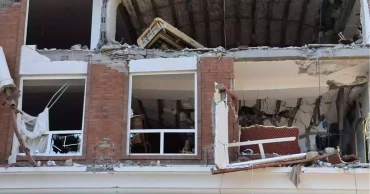
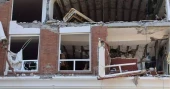
Rocket barrages from Lebanon into northern Israel killed four foreign workers and three Israelis on Thursday, Israeli medics said, the deadliest cross-border strikes in Israel since it invaded Lebanon. Israel kept up airstrikes it says targeted Hezbollah militants across Lebanon, where health authorities on Thursday reported 24 people killed.
U.S. diplomats were in the region pushing for cease-fires in both Lebanon and Gaza, hoping to wind down the wars in the Middle East as the Biden administration enters its final months. Pressure has been building ahead of the U.S. election next week.
In northern Gaza, Israeli forces struck one of the last functioning hospitals, according to the World Heath Organization said, destroying much-needed supplies that the U.N. agency had delivered to the facility. The strikes set off a fire that affected the dialysis unit, destroyed water tanks, damaged the surgery building and injured four medics trying to extinguish the blaze, said the hospital's director, Dr. Hussam Abu Safiya.
The Israeli military did not respond to a request for comment about a strike on the hospital, which it stormed last week after alleging it was harboring Hamas militants. Gaza's Health Ministry on Thursday condemned Israeli attacks on the hospital and called on the international community to safeguard medical facilities in Gaza.
Back-to-back deadly rocket attacks hit Israel
Projectiles from Lebanon crashed into an agricultural area in Metula, Israel’s northernmost town, killing four foreign workers and an Israeli farmer, local officials said Thursday.
Hours later, the Israeli military reported another volley of some 25 rockets from Lebanon, striking an olive grove in a suburb of the northern Israeli port city of Haifa. That strike killed a 30-year-old man and 60-year-old woman while wounding two others, said Magen David Adom, Israel’s main emergency medical organization.
Both Hezbollah and Hamas are backed by Iran, Israel’s regional adversary. Hezbollah did not immediately claim responsibility for Thursday’s rocket fire. Israel’s military said 90 projectiles were fired from Lebanon on Thursday.
Hezbollah has been firing thousands of rockets, drones and missiles into Israel —and drawing fierce Israeli retaliatory strikes — over the past year since Hamas’ Oct. 7, 2023, attack out of the Gaza Strip triggered Israel’s devastating war in the Palestinian enclave.
The residents of Metula evacuated in October 2023, and only security officials and agricultural workers remain. The Hotline for Refugees and Migrants, an Israeli organization that advocates for foreign workers, said authorities had put them in danger by allowing them to work along the border without proper protection.
Agricultural areas near Israel’s border are closed military zones that can only be entered with official permission. For the few remaining residents, the thump of interceptions by Israel’s Iron Dome missile defense system and wailing air raid sirens punctuate daily life.
Nonetheless, local officials largely support continuing a ground operation in southern Lebanon.
“If the Israeli government accedes to an agreement brought by (the Biden administration) ... we will not have it because for us this is rehabilitating Hezbollah again on our borders,” said Eitan Davidi, the mayor of the northern town of Margaliot.
Israeli bombs across Lebanon after evacuation warnings
Israeli strikes killed 24 people in Lebanon on Thursday, among them 13 people in the country’s eastern Bekaa Valley, according to Lebanon’s state-run National News agency, a day after the Israel’s military warned residents there to evacuate.
The warnings sent thousands of people fleeing and spread panic across the city, known for its colossal Roman ruins.
The Lebanese Health Ministry reported that over the last 24 hours, Israeli bombardments killed 45 people and wounded 110 in various parts of the country.
Jean Fakhry, a local official in the Deir al-Ahmar region in the Bekaa Valley, said Israeli airstrikes pummeling the area turned the main highway “a parking lot” of fleeing cars stuck in traffic.
Around 12,000 displaced people are staying in the area, he said, with most taking refuge in private homes. At one of the shelters in Deir al-Ahmar, families with luggage were still arriving Thursday.
“Our homes were destroyed,” said Zahraa Younis, from the village near Baalbek. “We came with nothing — no clothes or anything else.”
US officials are in the region seeking a cease-fire
Senior White House aides Brett McGurk and Amos Hochstein were in Israel Thursday for talks with Prime Minister Benjamin Netanyahu and senior officials about the conflicts with Hamas and Hezbollah.
The meetings focused on efforts to secure a cease-fire deal in Lebanon and to assess new proposals floated by mediators to free Israeli hostages being held in Gaza, according to a U.S. official familiar with planning for the talks who spoke on condition of anonymity because they were not authorized to comment publicly. The meetings were attended by Netanyahu as well as Yoav Gallant, the Israeli defense minister; David Barnea, the director of the Mossad, Israel’s foreign intelligence agency; and other officials.
But with the U.S. election on Tuesday, hopes for immediate progress appeared remote — particularly in Gaza where Israel has come under criticism for not letting more humanitarian aid into the besieged north.
The death toll from more than a year of war in Gaza passed 43,000 earlier this week, Palestinian health officials reported.
The Awda Hospital in central Gaza said late Thursday it had received 16 bodies of people killed by Israeli bombardment of two houses in Nuseirat refugee camp. The hospital said more than 30 others, including a medic and two journalists, were wounded.
Over the past year, the broadening Israeli campaign in Lebanon against Hezbollah has killed 2,865 people there, wounded over 13,000 and devastated Lebanese towns near the border.
Some 1.2 million people in Lebanon have been displaced since Israel escalated the conflict into a full-blown war last month, when it launched a wave of heavy airstrikes that killed Hezbollah’s top leader, Hassan Nasrallah, and most of his deputies.
A year of Hezbollah rocket attacks have also forced 60,000 Israelis to evacuate from near the border.
1 year ago
Rocket fire from Lebanon kills 5 in Israel
Rocket fire from Lebanon killed five people in northern Israel on Thursday, including four foreign workers, in the deadliest such attack since Israel's invasion earlier this month.
The attack came as senior U.S. diplomats were in the region to push for cease-fires in Lebanon and Gaza, hoping to wind down the wars in the Middle East in the Biden administration’s final months.
The Hezbollah militant group has been firing rockets, drones and missiles into Israel, and drawing retaliatory strikes, since Hamas' Oct. 7, 2023 attack out of the Gaza Strip triggered the war there. Hezbollah and Hamas are allies backed by Iran.
The conflict along the border escalated into a full-blown war last month, when Israel launched a wave of heavy airstrikes across Lebanon and killed Hezbollah's top leader, Hassan Nasrallah, and most of his deputies. Israeli ground forces pushed into Lebanon at the start of October.
The Metula regional council reported Thursday's attack, without detailing the number or type of projectiles used. The nationalities of the workers were also not immediately known.
Metula, Israel’s northernmost town which is surrounded by Lebanon on three sides, has suffered heavy damage from rockets. The town’s residents evacuated in October 2023, and only security officials and agricultural workers remain.
The Hotline for Refugees and Migrants, an organization that advocates for foreign workers, said authorities had put them in danger by allowing them to work along the border without proper protection.
Agricultural areas along Israel’s border, where much of the country’s orchards are located, are closed military areas that can only be entered with official permission.
Hezbollah's newly named top leader, Sheikh Naim Kassem, said in a video statement Wednesday that the militant group will keep fighting Israel until it is offered cease-fire terms it deems acceptable. He said it has recovered from a series of setbacks in recent months, including attacks using explosive pagers and walkie-talkies that was widely blamed on Israel.
“Hezbollah’s capabilities are still available and compatible with a long war,” he said.
Earlier on Thursday, the Israeli military warned people to evacuate from more areas of southern Lebanon, as airstrikes in different parts of the country killed eight people, according to Lebanon's state-run National News Agency.
Israel has warned people to evacuate from large areas of the country, including major cities in the south and east.
More than 2,800 people have been killed and nearly 13,000 wounded in Lebanon since the conflict began last year and some 1.2 million people have been displaced, according to the Lebanese government.
In Israel, rockets, missiles, and drones launched by Hezbollah have killed at least 68 people, about half of them soldiers. More than 60,000 Israelis from towns and cities along the border have been evacuated from their homes for more than a year.
1 year ago
In Lebanon, a family's memories are detonated along with their village
Ayman Jaber’s memories are rooted in every corner of Mhaibib, the village in southern Lebanon he refers to as his “habibti,” the Arabic word for “beloved.” The root of the village’s name means “the lover” or “the beloved.”
Reminiscing about his childhood sweetheart, the 45-year-old avionics technician talks about how the young pair would meet in a courtyard near his uncle's house.
“I used to wait for her there to see her,” Jaber recalls with a smile. "Half of the village knew about us.”
The fond memory contrasts sharply with recent images of his hometown.
Mhaibib, perched on a hill close to the Israeli border, was leveled by a series of explosions on Oct. 16. The Israeli army released a video showing blasts ripping through the village in the Marjayoun province, razing dozens of homes to dust.
The scene has been repeated in villages across southern Lebanon since Israel launched its invasion a month ago with the stated goal of pushing Hezbollah militants back from the border. On Oct. 26, massive explosions in and around Odaisseh sparked an earthquake alert in northern Israel.
Israel says it wants to destroy a massive network of Hezbollah tunnels in the border area. But for the people who have been displaced, the attacks are also destroying a lifetime of memories.
Mhaibib had endured sporadic targeting since Hezbollah and Israeli forces began exchanging fire on Oct. 8 last year.
Jaber was living in Aramoun, just south of Beirut, before the war, and the rest of his family evacuated from Mhaibib after the border skirmishes ignited. Some of them left their possessions behind and sought refuge in Syria. Jaber's father and two sisters, Zeinab and Fatima, moved in with him.
In the living room of their temporary home, the siblings sip Arabic coffee while their father chain-smokes.
“My father breaks my heart. He is 70 years old, frail and has been waiting for over a year to return to Mhaibib,” Zeinab said. “He left his five cows there. He keeps asking, ‘Do you think they’re still alive?’”
Mhaibib was a close-knit rural village, with about 70 historic stone homes lining its narrow streets. Families grew tobacco, wheat, mulukhiyah (jute mallow) and olives, planting them each spring and waking before dawn in the summer to harvest the crops.
The village was also known for an ancient shrine dedicated to Benjamin, the son of Jacob, an important figure in Judaism. In Islam, he is known as the prophet Benjamin Bin Yaacoub, believed to be the 12th son of prophet Yaacoub and the brother of prophet Yousef.
The shrine was damaged in the 2006 war between Israel and Hezbollah, then renovated. Pictures show the shrine enclosed in a golden cage adorned with intricate Arabic inscriptions beside an old stone mosque crowned by a minaret that overlooked the village. The mosque and the shrine are now gone.
Hisham Younes, who runs the environmental organization Green Southerners, says generations of southerners admired Mhaibib for its one-or two-story stone homes, some built by Jaber’s grandfather and his friends.
“Detonating an entire village is a form of collective punishment and war crime. What do they gain from destroying shrines, churches and old homes?” Younes asks.
Abdelmoe’m Shucair, the mayor of neighboring Mays el Jabal, told the Associated Press that the last few dozen families living in Mhaibib fled before the Israeli destruction began, as had residents of surrounding villages.
Jaber's sisters attended school in Mays al-Jabal. That school was also destroyed in a series of massive explosions.
After finishing her studies in Beirut, Zeinab worked in a pharmacy in the neighboring village of Blida. That pharmacy, too, is gone after the Israeli military detonated part of that village. Israeli forces even bulldozed their village cemetery where generations of family members are buried.
“I don’t belong to any political group,” Zeinab says. “Why did my home, my life, have to be taken from me?”
She says she can't bring herself to watch the video of her village’s destruction. “When my brother played it, I ran from the room.”
To process what’s happening, Fatima says she closes her eyes and takes herself back to Mhaibib. She sees the sun setting, vividly painting the sky stretching over their family gatherings on the upstairs patio, framed by their mother’s flowers.
The family painstakingly expanded their home over a decade.
“It took us 10 years to add just one room,” Fatima said. “First, my dad laid the flooring, then the walls, the roof and the glass windows. My mom sold a year’s worth of homemade preserves to furnish it.” She paused. “And it was gone in an instant.”
In the midst of war, Zeinab married quietly. Now she’s six months pregnant. She had hoped to be back in Mhaibib in time for the delivery.
Her brother was born when Mhaibib and other villages in southern Lebanon were under Israeli occupation. Jaber remembers traveling from Beirut to Mhaibib, passing through Israeli checkpoints and a final crossing before entering the village.
“There were security checks and interrogations. The process used to take a full or half a day,” he says. And inside the village, they always felt like they were “under surveillance.”
His family also fled the village during the war with Israel in 2006, and when they returned they found their homes vandalized but still standing. An uncle and a grandmother were among those killed in the 34-day conflict, but a loquat tree the matriarch had planted next to their home endured.
This time, there is no home to return to and even the loquat tree is gone.
Jaber worries Israel will again set up a permanent presence in southern Lebanon and that he won't be able to reconstruct the home he built over the last six years for himself, his wife and their two sons.
“When this war ends, we’ll go back,” Ayman says quietly. “We’ll pitch tents if we have to and stay until we rebuild our houses.”
1 year ago
Israel's move to ban a UN agency raises alarm about aid to Gaza even as the implications are unclear
Israeli legislation cutting ties with the U.N. agency for Palestinian refugees raised fears that the largest provider of aid to Gaza could be shut out of the war-ravaged territory, even as the implications of the new laws remained unclear Tuesday.
The agency known as UNRWA provides essential services to millions of Palestinians across the Middle East and has underpinned aid efforts in Gaza throughout the Israel-Hamas war. Legislation barring it from operating in Israel passed with an overwhelming majority Monday. Israel says UNRWA has allowed itself to be infiltrated by Hamas, with the militants siphoning off aid and using the agency’s facilities as shields. UNRWA denies the allegations, saying it is committed to neutrality and acts quickly to address any wrongdoing by its staff.
The two newly passed laws are all but certain to hamper UNRWA's work in Gaza and the occupied West Bank, as Israel controls access to both territories. But the details of how the legislation would be implemented, and potential workarounds, remain unclear. It could also face legal challenges.
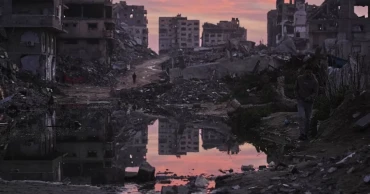
Either way, the laws could have major consequences for Palestinians in Gaza, who are heavily reliant on emergency food aid more than a year into a war that has killed tens of thousands, according to local officials who don't distinguish combatants from civilians; displaced 90% of the population of 2.3 million; and left much of the territory in ruins.
What do the laws say?
The first law prohibits UNRWA from “operating any mission, providing any service or conducting any activity, either directly or indirectly, within Israel’s sovereign territory,” according to a statement from parliament.
It's unclear whether UNRWA would still be able to operate inside Gaza and the West Bank, territories Israel captured in the 1967 Mideast war but has never formally annexed. The Palestinians want both to be part of a future state.
The second law prohibits Israeli state agencies from communicating with UNRWA and revokes an agreement dating to 1947, before Israel was created, under which it facilitated UNRWA’s work.
With Israel controlling all access to Gaza and the West Bank, it could be difficult for UNRWA staff to enter and leave the territories through Israeli checkpoints, and to bring in vital supplies for its schools, health centers and humanitarian programs.
UNRWA and its staff would also lose their tax exemptions and legal immunities.
How would the laws affect UNRWA’s operations?
UNRWA’s headquarters are in east Jerusalem, which Israel seized in the 1967 war and annexed in a move not recognized internationally.
Much of the agency’s supply lines to the territories run through Israel, and shutting them down could create even more obstacles to getting essential aid — everything from flour and canned vegetables to winter blankets and mattresses — into Gaza.
At present, all shipments of aid into Gaza must be coordinated with COGAT, the Israeli military body in charge of civilian affairs, which inspects all shipments. Aid groups say their work is already hampered by Israeli delays, ongoing fighting and the breakdown of law and order inside Gaza.
Aid levels plunged in the first half of October as Israel closed crossings into north Gaza, where hunger experts say the threat of starvation is most acute. COGAT attributed the decline to closures related to the Jewish holidays and troop movements for a large, ongoing offensive in northern Gaza.
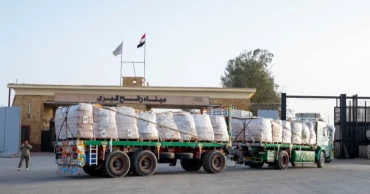
In the first 19 days of October, the U.N. says, 704 trucks of aid entered the Gaza Strip, down from over 3,018 trucks in September and August. COGAT’s own tracking dashboard shows aid deliveries in October plunging to under a third of their September and August levels.
The new laws would also likely bar UNRWA from banking in Israel, raising questions about how it would continue to pay thousands of Palestinian staff in Gaza and the West Bank. Its international staff would likely have to relocate to third countries like Jordan.
What could replace UNRWA?
Rights groups say Israel is obliged under international law to provide for the basic needs of people in the territories it occupies. Israel also faces increasing pressure from the Biden administration, which says it may have to reduce U.S. military support if there isn’t a dramatic increase in aid going into Gaza.
State Department spokesman Matthew Miller said the United States was “deeply troubled” by the legislation, which “poses risks for millions of Palestinians who rely on UNRWA for essential services.”
“We are going to engage with the government of Israel in the days ahead about how they plan to implement it” and see whether there are any legal challenges, he said.
Prime Minister Benjamin Netanyahu said in a statement Monday that Israel is“ready to work with our international partners to ensure Israel continues to facilitate humanitarian aid to civilians in Gaza in a way that does not threaten Israel’s security.”
But many of those partners insist there is no alternative to UNRWA.
A spokesperson for the U.N. children’s agency, which also provides aid to Gaza, denounced the new laws in unusually strong language, saying "a new way has been found to kill children.”
James Elder said the loss of UNRWA “would likely see the collapse of the humanitarian system in Gaza.” His agency, known as UNICEF, “would become effectively unable to distribute lifesaving supplies,” such as vaccines, winter clothes, water and food to combat malnutrition.
Israeli officials are considering the possibility of having the military or private contractors take over aid distribution, but have yet to develop a concrete plan, according to two officials who spoke on condition of anonymity to discuss the closed-door discussions.
COGAT referred all questions on the new legislation to the government.
At risk is not just UNRWA’s aid delivery to Gaza, where it is also the largest employer. UNRWA also operates schools in the occupied West Bank serving over 330,000 children, as well as health care centers and infrastructure projects.
Amy Pope — head of the International Organization for Migration, another U.N. body — said it would not be able to fill the gap left by UNRWA, which she described as “absolutely essential.”
“They provide education. They provide health care. They provide some of the most basic needs, for people who have been living there for decades,” she said.
1 year ago
Satellite photos show Israeli strike likely hit important Iran Revolutionary Guard missile base
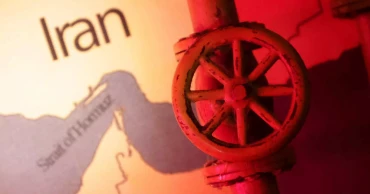
Israel’s attack on Iran likely damaged a base run by the paramilitary Revolutionary Guard that builds ballistic missiles and launches rockets as part of its own space program, satellite images analyzed by The Associated Press on Tuesday showed.
The damage at the base in Shahroud raises new questions about Israel’s attack early Saturday, particularly as it took place in an area previously unacknowledged by Tehran and involved the Guard, a powerful force within Iran’s theocracy that so far has remained silent about any possible damage it suffered from the assault. Iran only has identified Israeli attacks as taking place in Ilam, Khuzestan and Tehran provinces — not in rural Semnan province where the base is located.
It also potentially further restrains the Guard’s ability to manufacture the solid-fuel ballistic missiles it needs to stockpile as a deterrent against Israel. Tehran long has relied on that arsenal as it cannot purchase the advanced Western weapons that Israel and Tehran’s Gulf Arab neighbors have armed themselves with over the years, particularly from the United States.
Satellite photos earlier analyzed by the AP of two military bases near Tehran also targeted by Israel show that sites there that Iran uses in its ballistic missile manufacturing have been destroyed, further squeezing its program.
“We don’t know if Iranian production has been crippled as some people are saying or just damaged,” said Fabian Hinz, a missile expert and research fellow at the International Institute for Strategic Studies who studies Iran. “We’ve seen enough imagery to show there’s an impact.”
Iran’s mission to the United Nations did not immediately respond to a request for comment. The Israeli military declined to answer questions from the AP, but sent a previous statement acknowledging it targeted “missile manufacturing facilities” in the attack.
Images show major building at Shahroud base destroyed
High-resolution satellite images from Planet Labs PBC taken for and analyzed by the AP showed the damage at the Guard’s Shahroud Space Center in Semnan, some 370 kilometers (230 miles) northeast of the Iranian capital, Tehran. Semnan also hosts the Imam Khomeini Space Center, which is used by Iran’s civilian space program.
Hezbollah cleric Naim Kassem picked to lead the Lebanese militant group
The images showed a central, major building at the Shahroud Space Center had been destroyed, the shadow of its still-standing frame seen in the image taken Tuesday morning. Vehicles could be seen gathered around the site, likely from officials inspecting the damage, with more cars than normal parked at the site's main gate nearby.
Three small buildings just to the south of the main structure also appeared to be damaged. Iran has been constructing new buildings at the base in recent months. Another hangar to the northeast of the main building also appeared to have been damaged.
Iran has not acknowledged any attack at Shahroud. However, given the damage done to multiple structures, it suggested the Israeli attack included pinpoint strikes on the base. Low-resolution images since the attack showed signs of damage at the site not seen before the assault — further pointing to Israeli missile strikes as being the culprit.
“We can’t 100% exclude the possibility it’s something else, but it’s almost certain this building got damaged because of an Israeli attack,” Hinz said.
Given that the large building had been surrounded by earthen berms, that suggests it handled high explosives, said Hinz, who long has studied the site. That central site likely deals with solid propellant mixing and casting operations, he added.
Large boxes next to the building likely are missile motor crates as well, Hinz said. Their sizes suggest they could be used for Iran's Kheibar Shekan ballistic missile and the Fattah 1, a missile that Iran has claimed is able to reach Mach 15 — which is 15 times the speed of sound. Both have been used in Iran's attacks on Israel during the Israel-Hamas war and the later ground invasion of Lebanon.
The strike at Shahroud, coupled with others across the country, likely have put more pressure on Iran's theocracy, particularly as it assesses the damage to its main weapon arsenal and tries to downplay the attack.
Israel passes laws to restrict the work of a UN agency that is a lifeline for Gaza
“Due to preparedness and vigilance of the Islamic Republic of Iran’s armed forces, and timely reaction by the country’s air defense, limited damage was caused to some of the points hit," Iranian Foreign Minister Abbas Araghchi claimed in a meeting with foreign diplomats Tuesday in Tehran. "Necessary measures were taken immediately to restore the damaged equipment to operational state.”
US worries Guard's space program a cover for missile research
A short distance from the destroyed buildings sits a concrete launch pad used by the Guard, which has conducted a series of successful missions putting satellites into space using mobile launchers. The Guard, which answers only to 85-year-old Supreme Leader Ayatollah Ali Khamenei, revealed its secret space program back in 2020.
The U.S. intelligence community’s 2024 worldwide threat assessment said Iran's continued development of satellite launch vehicles “would shorten the timeline to produce” an intercontinental ballistic missile because it uses similar technology.
Intercontinental ballistic missiles can be used to deliver nuclear weapons. Iran is now producing uranium close to weapons-grade levels after the collapse of its nuclear deal with world powers. Tehran has enough enriched uranium for “several” nuclear weapons, if it chooses to produce them, the head of the International Atomic Energy Agency repeatedly has warned.
Iran has always denied seeking nuclear weapons and says its space program, like its nuclear activities, is for purely civilian purposes. However, U.S. intelligence agencies and the IAEA say Iran had an organized military nuclear program up until 2003. Parchin, one of the two military bases near Tehran targeted by Israel, saw a building linked to that program destroyed.
“Like with Iran's nuclear program, you don’t build the system itself, you build all the technology under cover of a civilian program,” Hinz said.
Then, Iran could make the decision to pursue the weapon — or use its knowledge as a bargaining chip with the West over international sanctions.
But for now, the satellite photos suggest Iran is still trying to assess the aftermath of Israel's attack.
“The picture that is emerging is one of significant damage to Iranian air defenses as well as missile launch facilities, both of which would be intended to show the Iranians that they are vulnerable to further strikes if they attempt retaliation,” an analysis published Monday by two experts at Britain’s Royal United Services Institute said.
1 year ago
Hezbollah cleric Naim Kassem picked to lead the Lebanese militant group
Hezbollah announced Tuesday it has chosen cleric Naim Kassem to lead the Lebanese militant group after the killing of its longtime leader Hassan Nasrallah in an Israeli airstrike on a Beirut suburb in late September.
The group said in a statement that Hezbollah’s decision-making Shura Council elected Kassem, 71, as its new secretary-general and vowed to continue Nasrallah’s policies “until victory is achieved.”
Since Nasrallah's death as part of an Israeli offensive that took out many of Hezbollah's senior officials, the white-turbaned cleric with a gray beard has often been the public face of the Lebanese militant group. He is one of its founding members but is widely seen by supporters as lacking his predecessor's oratory skills.
Israel's Defense Minister Yoav Gallant posted on X after the announcement about Kassem: “Temporary appointment. Not for long.” It was a clear threat that Israel will go after Kassem as it did earlier by assassinating top Hezbollah officials.
In a televised speech earlier this month, Kassem, who carries the clerical title of sheikh, claimed Hezbollah's military capabilities were intact after Nasrallah's assassination and warned Israelis they will only suffer further as fighting continues.
Kassem has been sanctioned by the United States, which considers Hezbollah a terrorist group. His appointment came as no surprise since he had served as Nasrallah's deputy for 32 years and had also long been Hezbollah’s public face, giving interviews to local and foreign media outlets.
“This is a message to Lebanon and abroad that Hezbollah has reorganized itself,” said Qassim Qassir, a Lebanese analyst close to Hezbollah.
Kassem's appointment shows Hezbollah is running its own affairs and not — as some have reported — that advisers from Iran’s paramilitary Revolutionary Guard are now in charge of the group, Qassir added.
In an interview with The Associated Press in July, Kassem said he didn’t believe that Israel had the capacity — or had yet made the decision — to launch a full-blown war with Hezbollah. But he warned that even if Israel intended to undertake a limited operation in Lebanon that stopped short of a full-scale war, it should not expect the fighting to remain limited.
A day after Hamas-led militants stormed into Israel on Oct. 7, 2023, killing some 1,200 people, mostly civilians, and abducting around 250 as hostages, Hezbollah began attacking Israeli military posts along the border with Lebanon, saying it was opening a backup front for its Hamas allies.
The attack triggered the yearlong Israel-Hamas war and Israel’s retaliatory offensive in Gaza has killed over 43,000 Palestinians, according to local health authorities. The count does not distinguish between civilians and combatants but more than half of the dead are said to be women and children.
“No one knows the consequences of igniting the war in Lebanon, regionally and even internationally,” Kassem said at the time, speaking from the group’s political headquarters in Beirut’s southern suburbs.
He said he was proud of Hezbollah's achievements in its “support front” for Hamas, saying it “required sacrifices on our part.”
Less than three months later, Israel expanded the war in Lebanon, leaving hundreds dead and more than 1.2 million people displaced. The invasion has caused wide destruction in southern and eastern Lebanon, as well as Beirut’s southern suburbs that are home to Hezbollah’s headquarters. Israeli troops engage in daily fierce clashes with Hezbollah in the border region as they try to push deeper into south Lebanon.
Hezbollah is still firing dozens of rockets and missiles into northern Israel and in recent days claimed an attack on an Israeli military base south of Tel Aviv. It also claimed responsibility for a drone attack that hit the home of Israeli Prime Minister Benjamin Netanyahu earlier this month. No one was hurt in that attack.
Born in 1953 in the town of Kfar Fila in southern Lebanon, Kassem studied chemistry at the Lebanese University before working for several years as a chemistry teacher. He simultaneously pursued religious studies and participated in founding the Lebanese Union for Muslim Students, an organization meant to promote religion.
In the 1970s, he joined the Movement of the Dispossessed, a political organization that pushed for greater representation for Lebanon’s historically overlooked and impoverished Shiite community.
The group morphed into the Amal movement, one of the main armed groups in Lebanon’s 1975-1990 civil war and now a powerful political party led by Parliament Speaker Nabih Berri. Kassem then joined the nascent Hezbollah, formed with support from Iran after Israel invaded Lebanon in 1982 and occupied the country’s southern region.
From 1991, Kassem served as the group's deputy, initially under Nasrallah’s predecessor, Abbas Mousawi, who was killed by an Israeli helicopter attack in 1992.
The choice of Kassem to take the helm of Hezbollah came a week after it confirmed that Hashem Safieddine — a top figure who had been widely expected to succeed Nasrallah — was killed in an Israeli airstrike on southern Beirut earlier this month.
Safieddine was Nasrallah's cousin and had close links to Iran, where he spent years of his life. Safieddine's son, Rida, is married to Zeinab Soleimani, the daughter of Gen. Qassem Soleimani, head of Iran’s elite Quds Force, who was killed in a U.S. airstrike in Iraq in 2020.
“We ask God to help him in the great mission in leading Hezbollah and the Islamic Resistance,” Hezbollah said in its statement about Kassem.
In another blow to Hezbollah, thousands of communication devices used by its members — both fighters and workers with the group's civilian institutions — exploded near-simultaneously in mid-September, killing 39 people and wounding nearly 3,000. Israel was blamed for the attack that left scores with permanent disabilities.
Choosing Kassem is "proof that Hezbollah is not scared regarding the developments,” Qassir also said.
1 year ago
Israel’s deeper strikes in Lebanon raise fear among displaced
Dany Alwan stood shaking as rescue workers pulled remains from piles of rubble where his brother’s building once stood.
An Israeli airstrike destroyed the three-story residential building in the quiet Christian village of Aito a day before. His brother, Elie, had rented out its apartments to a friend who'd fled here with relatives from their hometown in southern Lebanon under Israeli bombardment.
UN peacekeepers in southern Lebanon staying put despite Israeli warnings to move
Things were fine for a few weeks. But that day, minutes after visitors arrived and entered the building, it was struck. Almost two dozen people were killed, half of them women and children. Israel said it targeted a Hezbollah official, as it has insisted in other strikes with high civilian death tolls.
This strike — in northern Lebanon, deep in Christian heartland — was particularly unusual. Israel has concentrated its bombardment mostly in the country’s south and east and in Beirut's southern suburbs — Shiite-majority areas where the Hezbollah militant group has a strong presence.
Strikes in the traditionally “safe” areas where many displaced families have fled are raising fears among local residents. Many feel they have to choose between helping compatriots and protecting themselves.
“We can’t welcome people anymore,” Alwan said as rescue teams combed through the rubble in Aito. “The situation is very critical in the village, and this is the first time something like this has happened to us.”
The war brings out long-running tensionsAito is in the Zgharta province, which is split between Christian factions who are supporters and critics of Hezbollah.
Some Christian legislators critical of Hezbollah have warned of the security risks that could come with hosting displaced people, mostly from the Shia Muslim community. They worry that many may have familial and social ties to Hezbollah, which in addition to its armed wing has civilian services across southern and eastern Lebanon.
Some also worry that long-term displacement could create demographic changes and weaken the Christian share in Lebanon’s fragile sectarian power-sharing system. The tiny country has a troubled history of sectarian strife and violence, most notably in a 15-year civil war that ended in 1990.
Lebanon for decades has struggled to navigate tensions and political gridlock within its sectarian power-sharing government system. Parliament is deeply divided among factions that back and oppose Hezbollah and has been without a president for almost two years.
When Hezbollah fired rockets at northern Israel in solidarity with Palestinian ally Hamas in the war-torn Gaza Strip, the move was met with mixed feelings. Critics say it was a miscalculation that has brought the widespread devastation of Gaza here.
Many have been moved to helpAfter nearly a year of low-level fighting, the Israeli military escalated its attacks against Hezbollah a month ago, launching daily aerial bombardments and a ground invasion. Most of Lebanon’s estimated 1.2 million displaced people fled over the past month.
In late September, traffic jams stretching for miles clogged streets leading to Beirut as people left, some with nothing but the clothes on their backs.
For many, the violence has moved them to help their fellow residents, cutting across sectarian lines.
Michella Sfeir, who was safe in the north, said she wanted to take action after seeing a picture of a driver pouring water from his bottle into a nearby driver’s empty one.
“The first thing you can think of is: How can I help immediately?” she said.
She now helps prepare meals at a women’s art center that's become a community kitchen and donation dropoff center for blankets, clothes, and supplies in Aqaibe, a seaside town just north of Beirut. Displaced women who found shelter in surrounding neighborhoods regularly visit, while some people involved in other initiatives help deliver the hot meals to shelters around dinnertime.
“We get lots of questions like, ‘When you go to give the help, is there a member of Hezbollah waiting for you at the door?’” Sfeir said, citing blowback in the community from people who perceive the displaced as Hezbollah members, supporters and relatives.
“Some people ... would ask us ‘Why are you helping them? They don’t deserve it; this is because of them.'”
Anxiety rises far from the borderThough northern coastal cities such as Byblos and Batroun with pristine beaches and ancient ruins have not felt the direct pain of the conflict, anxiety is rising in surrounding areas.
On one coastal road — the busy Jounieh highway — an Israeli drone struck a car earlier this month, killing a man and his wife.
Such rare but increasing Israeli strikes have rattled residents in the north. Many feel torn: Should they risk their security by hosting displaced people, or compromise their morals and turn them away?
Zeinab Rihan fled north with family and relatives from the southern Nabatiyeh province when they couldn’t bear the airstrikes approaching closer to their homes.
But, Rihan said, they found many landlords quoting outlandish rent figures in an apparent attempt to turn them away.
Some might have been acting out of personal prejudice, Rihan said, but it's likely most were simply afraid.
“They were scared that they might rent their place to someone who turns out to be targeted,” Rihan said. “But this is our current reality, what can we do?”
For some, helping is a sense of dutyA resident of one northern town near the coast said the local government didn't want to welcome displaced people, but many residents pressured the municipality to change course.
He cited the town’s common sympathy and sense of duty to help others, despite the security risks. He spoke to The Associated Press on condition of anonymity for fear of stirring tension among residents.
Elsewhere, in the hilly village of Ebrine, a stone’s throw away from Batroun, residents have been regularly visiting dozens of displaced families sheltering in two modest schools. This month, an Israeli strike hit a village a short drive away, but that hasn't stopped some residents from hiring the displaced — for some, to work in olive groves during the harvest season.
Back in Aqaibe, some displaced women from nearby areas have joined Sfeir and others volunteering at the kitchen: chopping vegetables, cooking rice in vats, packaging meals in plastic containers, and having coffee together on the balcony.
“Just because we’re in an area that doesn’t have direct conflict or direct war doesn’t mean that we’re not worried about Beirut or the south,” said Flavia Bechara, who founded the center, as she took a break from chopping onions and potatoes. “We all used to eat the olives and olive oil of the south, and we used to go there to get fruits and vegetables.”
Bechara and several women finished packing dozens of meals for the day, and a group of women came to pick up winter clothes for their kids. Bechara said she isn’t phased by the criticism or questions she gets from some of her neighbors.
“There’s always anxiety," said Bechara, who just recently could hear strikes a short drive away, in Maisra. "There’s always (the fear) that what is happening there can happen here at any moment.”
1 year ago
Israel passes laws to restrict the work of a UN agency that is a lifeline for Gaza
Israeli lawmakers passed two laws on Monday that could threaten the work of the main U.N. agency providing aid to people in Gaza by barring it from operating on Israeli soil, severing ties with it and labeling it a terror organization.
The laws, which do not immediately take effect, signal a new low for a long-troubled relationship between Israel and the U.N. Israel’s international allies said they were deeply worried about their potential impact on Palestinians as the Gaza war’s humanitarian toll worsens.
Under the first law, the U.N. agency for Palestinian refugees, or UNRWA, would be banned from conducting “any activity” or providing any service inside Israel. The second law would sever Israel's diplomatic ties with the agency.
The laws risk collapsing the already fragile process for distributing aid in Gaza at a moment when Israel is under increased U.S. pressure to ramp up aid. UNRWA’s chief called them “a dangerous precedent.”
Israel has alleged that some of UNRWA’s thousands of staff members participated in the Hamas attacks last year that sparked the war in Gaza. It also has said hundreds of UNRWA staff have militant ties and that it has found Hamas military assets in or under the agency’s facilities.
Over 43,000 Palestinians killed in yearlong war in Gaza
The agency fired nine employees after an investigation but denied it knowingly aids armed groups and said it acts quickly to purge any suspected militants from its ranks. Some of Israel’s allegations prompted major international donors to cut funding to the agency, although some of it has been restored.
Israel has at times during the war raided or attacked UNRWA schools or other facilities, saying militants were operating there. UNRWA says more than 200 of its employees have been killed during the war.
“The law that we passed now is not just another bill. It is a call for justice and a wake up call,” said lawmaker Boaz Bismuth, who co-sponsored one of the bills. “UNRWA is not an aid agency for refugees. It is an aid agency for Hamas.”
The head of UNRWA, Philippe Lazzarini, said the new laws were part of an “ongoing campaign to discredit UNRWA.”
"These bills will only deepen the suffering of Palestinians, especially in Gaza,” he said on the social platform X.
The first vote passed 92-10 and followed a fiery debate between supporters of the law and its opponents, mostly members of Arab parliamentary parties. The second law was approved 87-9.
An English language account on X for Israeli Prime Minister Benjamin Netanyahu said Israel was ready to work with international partners to ensure it “continues to facilitate humanitarian aid to civilians in Gaza.” The post did not say how, and it was not clear how the flow of aid would be affected once these bills take effect.
Together, the laws would effectively sever ties with the U.N. agency, strip it of legal immunities and restrict its ability to support Palestinians in east Jerusalem and the West Bank. The legislation does not provide for alternative organizations to oversee its work.
U.N. Secretary-General Antonio Guterres said UNRWA would be prevented from doing U.N. General Assembly-mandated work if the laws are implemented. “There is no alternative to UNRWA,” he said in a statement issued Monday night.
Guterres called on Israel “to act consistently with its obligations” under the U.N. Charter and international law, as well as the privileges and immunities of the United Nations. “National legislation cannot alter those obligations,” Guterres stressed in a statement.
Egypt proposes 2-day Gaza cease-fire, release of 4 hostages
International allies of Israel’s have opposed the moves
The changes could be a serious blow to Palestinians in Gaza. More than 1.9 million Palestinians are displaced from their homes, and Gaza faces widespread shortages of food, water and medicine.
International aid groups and a handful of Israel’s Western allies, including the U.S., have voiced strong opposition.
U.S. State Department spokesperson Matthew Miller, speaking to reporters in Washington before the votes, said the administration was “deeply concerned” by the legislation. “There’s nobody that can replace them right now in the middle of the crisis,” he said.
UNRWA provides education, health care and other basic services to millions of Palestinian refugees across the region, including in the Israeli-occupied West Bank.
The laws would go into effect 60 to 90 days after Israel’s Foreign Ministry notifies the U.N., according to the spokesperson of lawmaker Dan Illouz, one of the co-sponsors of one of the laws.
Death toll in Gaza surpasses 43,000 as Israeli raids continue
The death toll from more than a year of fighting has passed 43,000, officials in Gaza reported Monday. The Palestinian Health Ministry’s count does not distinguish between civilians and combatants but says more than half of the dead are women and children.
The rising death toll comes as Israel refocuses its offensive on Gaza’s hard-hit north, including on a hospital from where the military says militants were operating.
Israeli forces raided Kamal Adwan Hospital on Friday. An Israeli military official, speaking Monday on condition of anonymity in keeping with regulations, said there was heavy fighting around the hospital, though not inside it, and that weapons were found inside the facility. The military said Monday the raid had ended.
Israel has raided several hospitals in Gaza over the course of the yearlong war, saying Hamas and other militants use them for military purposes. Palestinian medical officials deny those allegations and accuse the military of recklessly endangering civilians.
The Israeli military said it detained 100 suspected Hamas militants in the latest raid. The Israeli official said medical staff were detained and searched because some of the militants had disguised themselves as medics.
The World Health Organization accused Israel of detaining 44 male hospital staff. It was not immediately clear why there was a discrepancy in the figures. Palestinian medical officials said the hospital, which was treating some 200 patients, was heavily damaged in the raid.
The Israeli military has called on Palestinians to evacuate northern Gaza, where it has been waging a large offensive for more than three weeks. The official said the operation in the northern Gaza city of Jabaliya would last “several more weeks.”
The U.N. said earlier this month at least 400,000 people are in northern Gaza, an area that was an early target of Israel’s retaliatory war. Hunger there is rampant as the amount of humanitarian aid reaching the north has plummeted over the past month.
The Israel-Hamas war began after militants from Hamas and other groups stormed into Israel, killing some 1,200 people — mostly civilians — and abducting 250 others. The war has roiled the Middle East, setting off fighting between Israel and Hezbollah as well as between Israel and Iran, archenemies who had long kept their conflict a shadow war but are now engaging in open fighting.
International mediators renew efforts for a Gaza cease-fire
After collapsing in late summer, international mediators were trying to jump-start cease-fire efforts between Israel and Hamas. Israel said it would continue discussions on a halt in fighting after the head of the Mossad agency, David Barnea, returned from a meeting in Qatar with the head of the CIA, David Burns, and the Qatari prime minister.
Egyptian President Abdel Fattah el-Sissi has suggested a two-day cease-fire in exchange for the release of four hostages. Israel appeared responsive to the idea.
One Israeli official said Israel was discussing the proposal both internally and with Egyptian officials. A second official said Netanyahu expressed enthusiasm for the proposal in a meeting with his Likud party on Monday.
Both officials spoke on condition of anonymity because they were not authorized to discuss internal deliberations.
Hamas has yet to formally respond to the plan and Hamas officials were not reachable for comment on Monday.
1 year ago
Over 43,000 Palestinians killed in yearlong war in Gaza
The number of Palestinians killed in the yearlong war in Gaza has passed 43,000, more than half of them women and children, the Palestinian Health Ministry said Monday.
The tally includes 96 dead who arrived at hospitals in Gaza over the past two days, the ministry said.
Israeli troops have launched an ongoing operation in northern Gaza that included a raid on a hospital over the weekend. The military said it detained 100 suspected Hamas militants in a raid on Kamal Adwan Hospital in Beit Lahiya on Friday.
Egypt proposes 2-day Gaza cease-fire, release of 4 hostages
The World Health Organization accused Israel of detaining 44 male hospital staff. Palestinian medical officials said the hospital, which was treating some 200 patients, was heavily damaged in the raid.
Israel has raided several hospitals in Gaza over the course of the yearlong war, saying Hamas and other militants use them for military purposes. Palestinian medical officials deny those allegations and accuse the military of recklessly endangering civilians.
An Israeli military official, speaking on condition of anonymity in keeping with regulations, said there was heavy fighting around Kamal Adwan Hospital, though not inside it, and that weapons were found inside the facility.
The official said medical staff were detained and searched because some of the militants had disguised themselves as medics.
Palestinian officials say Israeli strikes have killed 22 people in northern Gaza
According to the official, the military had helped international organizations relocate 88 patients and medical staff to other hospitals in the weeks leading up to the raid, and that during the raid itself, troops had brought 30,000 liters of fuel and medical supplies from international organizations to help keep the facility running.
The Israeli military has called on Palestinians to evacuate northern Gaza, where it has been waging a large offensive for more than three weeks. The official said the operation in the northern Gaza city of Jabaliya would last “several more weeks.”
The U.N. said earlier this month at least 400,000 people are still in northern Gaza and hunger is rampant as the amount of humanitarian aid reaching the north has plummeted over the past month.
The Gaza Health Ministry said at least 43,020 people have been killed and 101,110 others wounded since the war started on Oct. 7, 2023. It did not differentiate between militants and civilians.
The Israel-Hamas war began after Hamas-led militants on Oct. 7, 2023, blew holes in Israel’s security fence and stormed in, killing some 1,200 people — mostly civilians — and abducting 250 others.
1 year ago
Egypt proposes 2-day Gaza cease-fire, release of 4 hostages
Egypt’s president announced Sunday his country has proposed a two-day cease-fire between Israel and Hamas during which four hostages held in Gaza would be freed. There was no immediate response from Israel or Hamas as the latest talks were expected in Qatar, another key mediator.
President Abdel Fattah el-Sissi said the proposal includes the release of some Palestinian prisoners and the delivery of humanitarian aid to besieged Gaza. It aims to “move the situation forward,” he said, adding that negotiations would continue to make the cease-fire permanent.
Talks in pursuit of a longer, phased cease-fire have repeatedly stalled. Hamas wants Israeli forces out of Gaza as a precondition, but Israeli Prime Minister Benjamin Netanyahu has said they will remain until destroying Hamas. There hasn’t been a cease-fire since November’s weeklong pause in fighting in the earliest weeks of the war.
Israel’s Mossad chief was traveling to Doha on Sunday for talks with Qatar's prime minister and the CIA chief in the latest attempt to end the fighting and ease regional tensions that have built since Hamas' Oct. 7, 2023 attack on southern Israel.
Those tensions now see Israel at war with both Hamas in Gaza and Hezbollah in Lebanon, and openly attacking Iran, their backer, for the first time this weekend. Iran’s supreme leader on Sunday said Israel's strikes — in response to Iran’s ballistic missile attack this month — “should not be exaggerated nor downplayed,” while stopping short of calling for retaliation.
During a government memorial for the Hebrew anniversary of the Oct. 7 attack, Israeli Defense Minister Yoav Gallant said that “not every goal can be achieved through only military operations," adding that “painful compromises will be required” to return the hostages.
At the same event, protesters disrupted Netanyahu's speech, shouting “Shame on you." Many Israelis blame him for the security failures that led to the attack and hold him responsible for not yet bringing hostages home.
Inside Gaza, the latest Israeli strikes in the north killed at least 33 people, mostly women and children, Palestinian officials said, as an offensive in the hard-hit and isolated area entered a third week. The U.N. secretary-general called the plight of Palestinians there “unbearable.” Israel said it targeted militants.
Netanyahu says strikes on Iran achieved Israel's goalsNetanyahu in his first public comments on the strikes said “we severely harmed Iran’s defense capabilities and its ability to produce missiles that are aimed toward us.”
Satellite images showed damage to two secretive Iranian military bases, one linked to work on nuclear weapons that Western intelligence agencies and nuclear inspectors say was discontinued in 2003. The other is linked to Iran's ballistic missile program. Iran said a civilian had been killed, with no details. It earlier said four people with the military air defense were killed.
Ayatollah Ali Khamenei, Iran’s 85-year-old supreme leader, said “it is up to the authorities to determine how to convey the power and will of the Iranian people to the Israeli regime.” Khamenei would make any final decision on how Iran responds.
The U.N. Security Council scheduled an emergency meeting Monday at Iran’s request. Switzerland, which holds the council’s rotating presidency, said Russia, China and Algeria, the council's Arab representative, supported the request.
Iran's most powerful proxy is Hezbollah, which has stepped up firing on Israel in response to Israel's ground invasion in southern Lebanon in recent weeks.
Two Israeli strikes killed eight people in Sidon in southern Lebanon, with 25 wounded, according to Lebanon’s health ministry.
The Israeli military said four soldiers, including a military rabbi, were killed in fighting in southern Lebanon, without providing details. An explosive drone and a projectile fired from Lebanon wounded five people in Israel, authorities said.
Truck ramming in Israel wounds dozensA truck rammed into a bus stop in Ramat Hasharon near Tel Aviv, killing one person and wounding more than 30. Israeli police said the attacker was an Arab citizen of Israel and had been “neutralized.” The ramming occurred outside a military base and near the headquarters of Israel’s Mossad spy agency.
Hamas and the smaller Islamic Jihad militant group praised the attack but did not claim it.
Tensions have soared since the war in Gaza began, and Israel has carried out regular military raids into the occupied West Bank that have left hundreds dead.
‘Harrowing levels of death’ in northern GazaThe Gaza Health Ministry’s emergency service said 11 women and two children were among 22 killed in strikes late Saturday in Beit Lahiya in the north. Israel's military said it carried out a strike on militants.
Ministry official Hussein Mohesin said 11 people were killed in an Israeli strike on a school-turned-shelter in the Shati refugee camp in the north, with many injured. “Most of the injuries are children and women, and most of them are in very serious condition," he said. Israel's military did not immediately comment.
Israel has waged a massive air and ground offensive in northern Gaza since early October, saying Hamas militants had regrouped there. Hundreds of people have been killed and tens of thousands of Palestinians have fled in the latest wave of displacement.
Aid groups have warned of a catastrophic situation. Israel has severely limited the entry of humanitarian aid in recent weeks, and the three remaining hospitals in the north say they have been overwhelmed. The U.N. secretary-general noted “harrowing levels of death.”
The war began when Hamas-led militants stormed into southern Israel on Oct. 7, 2023. They killed around 1,200 people, mostly civilians, and abducted around 250. Some 100 hostages remain in Gaza, around a third of whom thought to be dead.
Israel's retaliatory offensive has killed more than 42,000 Palestinians, according to Gaza's Health Ministry. It does not distinguish between civilians and combatants but says more than half of those killed were women and children. Israel says it has killed over 17,000 militants, without providing evidence.
The offensive has devastated much of Gaza and displaced around 90% of its population of 2.3 million, often multiple times.
1 year ago