Middle-East
Lebanon's army watches from sidelines as Hezbollah, Israel battle
Since Israel launched its ground invasion of Lebanon, Israeli forces and Hezbollah militants have clashed along the border while the Lebanese army has largely stood on the sidelines.
It's not the first time the national army has found itself watching war at home from the discomfiting position of bystander.
Lebanon's widely beloved army is one of the few institutions that bridge the country's sectarian and political divides. Several army commanders have become president, and the current commander, Gen. Joseph Aoun, is widely regarded as one of the front-runners to step in when the deadlocked parliament fills a two-year vacuum and names a president.
But with an aging arsenal and no air defenses, and battered by five years of economic crisis, the national army is ill-prepared to defend Lebanon against either aerial bombardment or a ground offensive by a well-equipped modern army like Israel’s.
The army is militarily overshadowed by Hezbollah. The Lebanese army has about 80,000 troops, with around 5,000 of them deployed in the south. Hezbollah has more than 100,000 fighters, according to the militant group’s late leader, Hassan Nasrallah. Its arsenal — built with support from Iran — is also more advanced.
A cautious initial responseIsraeli forces and Hezbollah fighters have been clashing since Oct. 8, 2023, when the Lebanese militant group began firing rockets over the border in support of its ally Hamas in Gaza.
In recent weeks, Israel has conducted a major aerial bombardment of Lebanon and a ground invasion that it says aims to push Hezbollah back from the border and allow displaced residents of northern Israel to return.
As Israeli troops made their first forays across the border and Hezbollah responded with rocket fire, Lebanese soldiers withdrew from observation posts along the frontier and repositioned about 5 kilometers (3 miles) back.
So far, Israeli forces have not advanced that far. The only direct clashes between the two national armies were on Oct. 3, when Israeli tank fire hit a Lebanese army position in the area of Bint Jbeil, killing a soldier, and on Friday, when two soldiers were killed in an airstrike in the same area. The Lebanese army said it returned fire both times.
Lebanon's army declined to comment on how it will react if Israeli ground forces advance farther.
Analysts familiar with the army’s workings said that, should the Israeli incursion reach the current army positions, Lebanese troops would put up a fight — but a limited one.
The army's “natural and automatic mission is to defend Lebanon against any army that may enter Lebanese territory,” said former Lebanese Army Gen. Hassan Jouni. “Of course, if the Israeli enemy enters, it will defend, but within the available capabilities … without going to the point of recklessness or suicide.”
Israeli and Lebanese armies are ‘a total overmatch’The current Israeli invasion of Lebanon is its fourth into the neighboring country in the past 50 years. In most of the previous invasions, the Lebanese army played a similarly peripheral role.
The one exception, said Aram Nerguizian, a senior associate with the Washington-based Center for Strategic and International Studies, was in 1972, when Israel attempted to create a 20-kilometer (12-mile) buffer zone to push back Palestinian Liberation Organization fighters.
At that time, Nerguizian said, the Lebanese army successfully slowed the pace of the Israeli advance and “bought time for political leadership in Beirut to seek the intervention of the international community to pressure Israel for a cease-fire.”
But the internal situation in Lebanon — and the army's capabilities — deteriorated with the outbreak of a 15-year civil war in 1975, during which both Israeli and Syrian forces occupied parts of the country.
Hezbollah was the only faction that was allowed to keep its weapons after the civil war, for the stated goal of resisting Israeli occupation of southern Lebanon — which ended in 2000.
By 2006, when Hezbollah and Israel fought a bruising monthlong war, the Lebanese army “had not been able to invest in any real-world post-war modernization, had no ability to deter Israeli air power" and “was left completely exposed,” Nerguizian said. “The few times that the (Lebanese army) and Israeli forces did engage militarily, there was total overmatch.”
International aid has been a mixed blessingAfter the 2011 outbreak of civil war in neighboring Syria and the rise of the Islamic State militant group there, the Lebanese army saw a new influx of military aid. It successfully battled against IS on Lebanon’s border in 2017, although not alone — Hezbollah was simultaneously attacking the group on the other side of the border.
When Lebanon’s financial system and currency collapsed in 2019, the army took a hit. It had no budget to buy weapons and maintain its existing supplies, vehicles and aircraft. An average soldier’s salary is now worth around $220 per month, and many resorted to working second jobs. At one point, the United States and Qatar both gave a monthly subsidy for soldiers’ salaries.
The U.S. had been a primary funder of the Lebanese army before the crisis. It has given some $3 billion in military aid since 2006, according to the State Department, which said in a statement that it aims “to enable the Lebanese military to be a stabilizing force against regional threats" and “strengthen Lebanon’s sovereignty, secure its borders, counter internal threats, and disrupt terrorist facilitation.”
President Joe Biden's administration has also touted the Lebanese army as a key part of any diplomatic solution to the current war, with hopes that an increased deployment of its forces would supplant Hezbollah in the border area.
But that support has limits. Aid to the Lebanese army has sometimes been politically controversial within the U.S., with some legislators arguing that it could fall into the hands of Hezbollah, although there is no evidence that has happened.
In Lebanon, many believe that the U.S. has blocked the army from obtaining more advanced weaponry that might allow it to defend against Israel — America’s strongest ally in the region and the recipient of at least $17.9 billion in U.S. military aid in the year since the war in Gaza began.
“It is my personal opinion that the United States does not allow the (Lebanese) military to have advanced air defense equipment, and this matter is related to Israel,” said Walid Aoun, a retired Lebanese army general and military analyst.
Nerguizian said the perception is “not some conspiracy or half-truth," noting that the U.S. has enacted a legal requirement to support Israel's qualitative military edge relative to all other militaries in the region.
1 year ago
At least 22 killed in airstrikes in central Beirut, with Israel also firing on UN peacekeepers
Israeli airstrikes on central Beirut Thursday left two neighborhoods smoldering, killing 22 people and wounding dozens, Lebanon’s health ministry said, as well as further escalating Israel’s bloody conflict with Iran-backed Hezbollah militants in Lebanon.
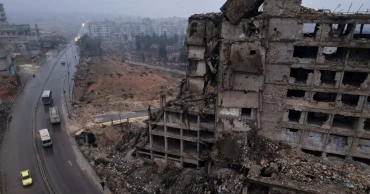
The air raid on central Beirut — the deadliest in over a year of war — apparently targeted two residential buildings in separate neighborhoods simultaneously, according to an AP photographer at the scene. It brought down one eight-story building and wiped out the lower floors of the other.
The Israeli military said it was looking into the reported strikes. Israeli airstrikes have been far more common in Beirut’s tightly packed southern suburbs, where Hezbollah bases many of its operations.
After the strikes, Hezbollah’s Al Manar TV reported that an attempt to kill Wafiq Safa, a top security official with the group, had failed. It said that Safa had not been inside of either of the targeted buildings.
Thursday's strikes followed a year of tit-for-tat exchanges between Hezbollah and Israel that boiled over into all-out war in recent weeks, with Israel carrying out waves of heavy strikes across Lebanon and launching a ground invasion. Hezbollah has expanded its rocket fire to more populated areas deeper inside Israel, causing few casualties but disrupting daily life.
The attack came the same day as Israeli forces fired on United Nations peacekeepers in southern Lebanon and wounded two of them, drawing widespread condemnation and prompting Italy's Defense Ministry to summon Israel’s ambassador in protest.
Israeli strikes hit central Beirut
Witnesses reported a large number of ambulances and people gathering in the rubble of two Beirut sites that were hit, in the Ras al-Nabaa neighborhood and Burj Abi Haidar area.
The Lebanese Health Ministry said 22 people were killed and 117 others wounded, without elaborating on their identities. Recent Israeli airstrikes in neighborhoods adjoining Beirut, in particular the densely populated southern suburbs, have killed Hezbollah’s leader, Hassan Nasrallah, and other senior commanders.
Hezbollah began firing rockets into Israel on Oct. 8, 2023, in support of Hamas and the Palestinians, drawing Israeli airstrikes in retaliation.
Hezbollah kept up rocket fire into Israel on Thursday, setting off air raid sirens in parts of northern Israel. Several drones heading toward Israel were intercepted, the military said.
Iran — which supports Hamas, Hezbollah and other armed groups across the region — launched some 180 ballistic missiles at Israel last week in retaliation for the killing of top Hamas and Hezbollah militants.
Read: Israeli strike on school-turned-shelterin Gaza kills 27
Israeli Defense Minister Yoav Gallant said Wednesday that its response to the Iranian missile attack will be “lethal” and “surprising,” without providing further details, as Prime Minister Benjamin Netanyahu spoke with President Joe Biden.
Asked about the latest airstrikes in Lebanon, U.S. Vice President Kamala Harris told reporters in Las Vegas, “We have got to reach a cease-fire, both as it relates to what’s happening in Lebanon, and of course Gaza. We are working around the clock in that regard, but we need these wars to end and we’ve got to definitely de-escalate what is happening in the region.”
Before the latest strikes, Lebanon’s crisis response unit said Israeli attacks over the past day had killed 28 people, bringing the total to 2,169 killed in Lebanon since the war erupted last October.
Hezbollah attacks have killed 28 civilians as well as 39 Israeli soldiers, both in northern Israel since October 2023 and southern Lebanon since Israel launched its ground invasion on Sept. 30. Israel says the invasion, so far focused on a narrow strip along the border, aims to push militants back so that tens of thousands of Israelis can return to their homes in the north.
UN peacekeepers caught in intensified fighting in Lebanon
The U.N. peacekeeping mission in Lebanon, known as UNIFIL, said in a statement that its headquarters and positions “have been repeatedly hit" by Israeli forces.
It said an Israeli tank “directly” fired on an observation tower at the force’s headquarters in the town of Naqoura, Lebanon, and that soldiers had attacked a bunker near where peacekeepers were sheltering, damaging vehicles and a communication system. It said an Israeli drone was seen flying to the bunker’s entrance.
The two UNIFIL troops wounded in the attacks and hospitalized are Indonesian, Italy’s Foreign Minister Antonio Tajani said.
The Israeli military acknowledged opening fire at a U.N. base in southern Lebanon on Thursday and said it had ordered the peacekeepers to “remain in protected spaces.”
Later Thursday, the U.N. peacekeeping chief said 300 peacekeepers in frontline positions on southern Lebanon’s border have been temporarily moved to larger bases, and plans to move another 200 will depend on security conditions as the conflict escalates. Jean-Pierre Lacroix told an emergency meeting of the U.N. Security Council that peacekeepers with UNIFIL are staying in their positions, but because of air and ground attacks they cannot conduct patrols.
UNIFIL, which has more than 10,000 peacekeepers from dozens of countries, was created to oversee the withdrawal of Israeli troops from southern Lebanon after Israel’s 1978 invasion. The United Nations expanded its mission following the 2006 war between Israel and Hezbollah, allowing peacekeepers to patrol a buffer zone set up along the border.
Israel accuses Hezbollah of establishing militant infrastructure along the border in violation of the U.N. Security Council resolution that ended the 2006 war.
Read more: Israeli defense minister warns an attack on Iran would be ‘lethal’ and ‘surprising’
The European Union’s top diplomat, Josep Borrell, sharply condemned Israeli strikes that hit UNIFIL positions as “an inadmissible act, for which there is no justification.”
From Italy, which has about 1,000 soldiers deployed as part of UNIFIL, Defense Minister Guido Crosetto went further, claimed Israel deliberately targeted the UNIFIL base in southern Lebanon in strikes that “could constitute war crimes.”
Several other countries, including France, Spain and Jordan, also denounced the Israeli attacks.
Aid group says staff killed in strike on school
Even as attention has shifted to Israel’s close combat with Hezbollah in Lebanon and rising tensions with Iran, Israel has continued to strike at what it says are Palestinian militant targets across the Gaza Strip.
Earlier on Thursday, an Israeli strike on a school sheltering displaced people in central Gaza killed at least 27 people, Palestinian medical officials said. The Israeli military said it targeted Palestinian militants, but people sheltering there said the strike hit a meeting of aid workers.
The dead included a child and seven women, according to the Al-Aqsa Martyrs Hospital, where the bodies were brought. An Associated Press reporter saw ambulances streaming into the hospital and counted the bodies, many of which arrived in pieces.
The Israeli military said it targeted a militant center inside the school, without providing evidence. Israel has repeatedly attacked schools that were turned into shelters in Gaza, accusing militants of taking cover in them.
“There were no militants. There was no Hamas,” said Iftikhar Hamouda, who had fled from northern Gaza earlier in the war.
“We headed to tents. They bombed the tents ... In the streets, they bombed us. In the markets, they bombed us. In the schools, they bombed us,” she said. “Where should we go?”
Israel's offensive in Gaza started after Hamas’ Oct. 7 attack, when militants stormed into Israel, killing some 1,200 people, mostly civilians, and abducting around 250 others.
Israel’s offensive has killed over 42,000 Palestinians, according to local health authorities, who do not specify between militants and civilians. The war has destroyed large areas of Gaza and displaced around 90% of its population of 2.3 million people, often multiple times.
1 year ago
Israeli strike on school-turned-shelterin Gaza kills 27
An Israeli strike on a school sheltering the displaced in the Gaza Strip killed at least 27 people on Thursday, Palestinian medical officials said. The Israeli military said it targeted militants hiding among civilians, without providing evidence.
Israel has continued to strike at what it says are militant targets across the Palestinian enclave even as attention has shifted to its war against Hezbollah in Lebanon and rising tensions with Iran. The military launched a large-scale air and ground operation against Hamas in northern Gaza earlier this week.
In a separate development, the U.N. peacekeeping force in southern Lebanon said an Israeli tank fired on its headquarters in the town of Naqoura, hitting an observation tower and wounding two peacekeepers, who were hospitalized.
UNIFIL said in a statement that its headquarters and nearby positions “have been repeatedly hit.” It said the army also fired on a nearby bunker where peacekeepers were sheltering, damaging vehicles and a communication system. It said an Israeli drone was seen flying to the bunker's entrance.
Strike on shelter appears to have targeted Hamas-run policeThe strike in the central Gaza city of Deir al-Balah killed 27 people, including a child and seven women, according to the Al-Aqsa Martyrs Hospital, where the bodies were brought. It said several other people were wounded.
An Associated Press reporter saw ambulances streaming into the hospital and counted the bodies, many of which arrived in pieces.
“We appeal to the world. We are dying!” one man screamed.
The Israeli military said it carried out a precise strike targeting a militant command and control center inside the school. Israel has repeatedly attacked schools that were turned into shelters in Gaza, accusing militants of hiding out in them.
Witnesses who spoke on condition of anonymity for security reasons said the strike occurred while school managers were meeting with representatives of an aid group in a room normally used by Hamas-run police who provide security. They said there were no police in the room at the time.
The Hamas-run government operated a civilian police force numbering in the tens of thousands. They largely vanished from the streets after the start of the war as Israel targeted them with airstrikes, but plainclothes Hamas security personnel still exert control over most areas.
Hamas has continued to launch attacks on Israeli forces and fire occasional rockets into Israel more than a year after its Oct. 7 attack ignited the war.
Hamas-led militants stormed into Israel and rampaged through army bases and farming communities in that attack, killing some 1,200 people, mostly civilians, and abducting around 250 others. They are still holding around 100 captives, a third of whom are believed to be dead.
Israel’s offensive has killed over 42,000 Palestinians, according to local health authorities, who do not say how many were fighters but say women and children make up more than half of the fatalities. The war has destroyed large areas of Gaza and displaced around 90% of its population of 2.3 million people, often multiple times.
UN peacekeepers caught in intensified fighting in LebanonThe Hezbollah militant group in Lebanon began firing rockets into Israel on Oct. 8, 2023, in support of Hamas and the Palestinians, drawing Israeli airstrikes in retaliation.
The fighting steadily escalated, and eventually boiled over into all-out war in recent weeks, with Israel carrying out waves of heavy strikes across Lebanon and launching a ground invasion. Hezbollah has expanded its rocket fire to more populated areas deeper inside Israel, causing few casualties but disrupting daily life.
Iran supports Hamas, Hezbollah and other armed groups across the region that refer to themselves as the Axis of Resistance against Israel. Iran launched some 180 ballistic missiles at Israel last week in retaliation for the killing of top Hamas and Hezbollah militants.
Israeli Defense Minister Yoav Gallant said Wednesday that its response to the Iranian missile attack will be “lethal” and “surprising,” without providing further details, as Prime Minister Benjamin Netanyahu spoke with U.S. President Joe Biden.
The U.N. peacekeepers in Lebanon were tasked with patroling a buffer zone set up after the monthlong Israel-Hezbollah war in 2006.
Israel accuses Hezbollah of ignoring the U.N. resolution that ended the war and establishing militant infrastructure right along the border. It says the ground invasion, which has so far focused on a narrow strip along the border, is aimed at pushing the militants back so tens of thousands of Israelis can return to their homes.
Israel has warned people to evacuate from dozens of communities in southern Lebanon, many of which are outside the buffer zone.
Lebanon accuses Israel of violating other provisions of the U.N. resolution that ended the last war. It has said it will dispatch its armed forces to help U.N. peacekeepers control the border area and implement the U.N. resolution, but neither is capable of imposing anything on Hezbollah by force.
1 year ago
UN agency for Palestinians warns Gaza aid work may 'disintegrate' if Israeli legislation passes
The head of the U.N. agency for Palestinian refugees warned Wednesday that if pending Israeli legislation is adopted, all humanitarian operations in Gaza and the West Bank may "disintegrate," leaving hundreds of thousands of people in dire need as war rages.
Philippe Lazzarini told the U.N. Security Council that senior Israeli officials are bent on destroying the U.N. body known as UNRWA, which is the main provider of humanitarian aid in Gaza, the Palestinian territory rocked by a year of war between Israel and Hamas.
An Israeli parliamentary committee approved a pair of bills this week that would ban UNRWA from operating in Israeli territory and end all contact between the government and the U.N. agency. The bill needs final approval from the Knesset, Israel's parliament.
Israeli offensive in hard-hit northern Gaza kills and wounds dozens and threatens hospitals
Lazzarini said in a video briefing that "legally, the Knesset legislation violates Israel's obligation under the United Nations Charter and international law.'
Israel has alleged that some of UNRWA's thousands of staff members participated in the Oct. 7, 2023, Hamas' attacks that sparked the war in Gaza. The U.N. has fired more than a dozen staffers after internal investigations found they may have participated in the attacks that killed 1,200 people in Israel.
Israeli U.N. Ambassador Danny Danon told the Security Council that UNRWA has allowed Hamas to infiltrate its ranks and that "this infiltration is so ingrained, so institutional, that the organization is simply beyond repair."
Danon noted that the head of Gaza's teachers union was recently killed in Lebanon and revealed as a Hamas commander, saying this showed that UNRWA has been infiltrated "to the point where terrorists are running classrooms, indoctrinating future generations and hiding in plain sight under the banner of the United Nations."
Israel intensifies bombardment of Gaza and southern Lebanon ahead of Oct. 7 anniversary
UNRWA had suspended the union leader in March when allegations of his ties to Hamas emerged and launched an investigation.
Lazzarini urged the Security Council to shield the agency "from efforts to end its mandate arbitrarily and prematurely in the absence of a long-promised political solution."
When UNRWA was created by the U.N. General Assembly in 1949, it was meant to provide health care, education and welfare services to about 700,000 Palestinian refugees from the 1948 conflict with Israel. Today, it provides such services to about 6 million Palestinian refugees and their descendants in the West Bank, Gaza, Jordan, Syria and Lebanon.
Lazzarini stressed that the entire humanitarian response in Gaza rests on UNRWA's infrastructure and that it "may disintegrate" if the Israeli legislation is adopted.
The halt to coordination with Israel, he said, would further disrupt the provision of shelter, food and health care to Palestinians as winter approaches. More than 650,000 children would lose any hope of resuming their education "and an entire generation would be sacrificed," Lazzarini said.
In the West Bank, he said, "the delivery of education, primary health care and emergency aid to hundreds of thousands of Palestinian refugees would grind to a halt."
U.N. Secretary-General Antonio Guterres told reporters Tuesday that he has written to Israeli Prime Minister Benjamin Netanyahu to express "profound concern" about the legislation.
Israel intensifies bombardment of Gaza and southern Lebanon ahead of Oct. 7 anniversary
Lisa Doughten, a director in the U.N. humanitarian office, told the council that "few times in recent history have we witnessed suffering and destruction of the size, scale and scope that we see in Gaza."
Israel's offensive has killed over 42,000 Palestinians, according to the Gaza Health Ministry, which does not say how many were fighters. It has said women and children make up over half of the dead.
Doughten said "nearly every one of the more than 2 million people in Gaza receives some form of aid or service provision from UNRWA."
U.S. Ambassador Linda Thomas-Greenfield expressed concern at recent Israeli government actions limiting the delivery of goods into Gaza. These restrictions, combined with new bureaucratic limits on humanitarian goods arriving from Jordan and the closure of most border crossings in recent weeks, will only intensify the suffering in Gaza, she said.
Thomas-Greenfield said the United States, a close ally of Israel, is following "with deep concern" Israel's proposed legislation, saying it reflects "the significant distrust between Israel and UNRWA."
1 year ago
Israeli defense minister warns an attack on Iran would be ‘lethal’ and ‘surprising’
Israel’s defense minister warned on Wednesday that his country’s retaliation for a recent Iranian missile attack will be “lethal” and “surprising,” while the Israeli military pushed ahead with a large-scale operation in northern Gaza and a ground offensive in Lebanon against Hezbollah militants.
On the diplomatic front, Israeli Prime Minister Benjamin Netanyahu and President Joe Biden held their first call in seven weeks, with a White House press secretary saying the call included discussions on Israel’s deliberations over how it will respond to Iran’s attack.
The continuing cycle of destruction and death in Gaza, unleashed by Hamas’ Oct. 7, 2023, attack on southern Israel, comes as Israel expands a weeklong ground offensive against Hezbollah in Lebanon and considers a major retaliatory strike on Iran following Iran’s Oct. 1 missile barrage.
“Our strike will be lethal, precise and above all, surprising. They won’t understand what happened and how. They will see the results,” Defense Minister Yoav Gallant said during a speech to troops. “Whoever strikes us will be harmed and pay a price.”
Iran fired dozens of missiles at Israel on Oct. 1 which the United States helped fend off. Biden has said he would not support a retaliatory strike on sites related to Tehran’s nuclear program.
On Wednesday, Hezbollah claimed a rocket attack that killed two people in the northern Israeli town of Kiryat Shmona. The town’s acting mayor, Ofir Yehezkeli, said the two killed were a couple walking their dogs.
Dozens killed in Gaza and survivors fear displacement
In northern Gaza, there was heavy fighting in Jabaliya, an urban refugee camp dating back to the 1948 war surrounding Israel’s creation, where Israeli forces have carried out several major operations over the course of the war and then returned as militants regroup. The entire north, including Gaza City, has suffered heavy destruction and has been largely isolated by Israeli forces since late last year.
In Gaza, Jabaliya residents said thousands of people have been trapped in their homes since the operation began Sunday, as Israeli jets and drones buzz overhead and troops battle militants in the streets.
Hezbollah steps up rocket fire as Israel sends more troops into Lebanon
“It’s like hell. We can’t get out,” said Mohamed Awda, who lives with his parents and six siblings. He said there were three bodies in the street outside his home that could not be retrieved because of the fighting.
“The quadcopters are everywhere, and they fire at anyone. You can’t even open the window,” he told The Associated Press by phone, speaking over the sound of explosions.
Gaza’s Health Ministry said it recovered 40 bodies from Jabaliya from Sunday until Tuesday, and another 14 from communities farther north. There are likely more bodies under rubble and in areas that can’t be accessed, it said.
Jabaliya residents fear Israel aims to depopulate the north and turn it into a closed military zone or a Jewish settlement. Israel has blocked all roads except for the main highway leading south from Jabaliya, according to residents.
“People here say clearly that they will die here in northern Gaza and won’t go to southern Gaza,” Ahmed Qamar, who lives in Jabaliya with his wife, children and parents, said in a text message.
Hospitals are under threatFadel Naeem, the director of Al-Ahly Hospital in Gaza City, said it had received dozens of wounded people and bodies from the north. “We declared a state of emergency, suspended scheduled surgeries, and discharged patients whose conditions are stable,” he told AP in a text message.
Israel’s offensive has gutted Gaza’s health sector, forcing most hospitals to shut down and leaving the rest only partially functioning.
Naeem said three hospitals farther north — Kamal Adwan, Awda and the Indonesian Hospital - have become almost inaccessible because of the fighting. The Gaza Health Ministry says the Israeli army has ordered all three to evacuate staff and patients. Meanwhile, no humanitarian aid has entered the north since Oct. 1, according to U.N. data.
Israel’s authority coordinating humanitarian affairs in Palestinian territories said Israel “has not halted the entry or coordination of humanitarian aid entering from its territory into the northern Gaza Strip.”
Israel says it only targets militants and blames civilian deaths on Hamas because it fights in residential areas.
Israel strikes Gaza and southern Beirut as attacks intensify
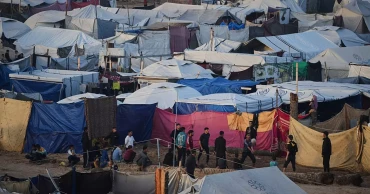
Israel ordered the wholesale evacuation of northern Gaza, including Gaza City, in the opening weeks of the war, but hundreds of thousands of people are believed to have remained there. Israel reiterated those instructions over the weekend, telling people to flee south to a humanitarian zone where hundreds of thousands are already crammed into squalid tent camps.
The war began just over a year ago, when Hamas-led militants stormed into southern Israel, killing some 1,200 people, mostly civilians, and abducting around 250. They still hold around 100 hostages, a third of whom are believed to be dead.
Israel’s offensive has killed over 42,000 Palestinians, according to the Gaza Health Ministry, which does not say how many were fighters. It has said women and children make up over half of the dead. The offensive has also caused staggering destruction across the territory and displaced around 90% of the population of 2.3 million people, often multiple times.
Israeli Prime Minister Benjamin Netanyahu has vowed to keep fighting until “total victory” over Hamas and the return of all hostages.
Israel warns Lebanon it could end up like GazaOn Tuesday, Netanyahu said Lebanon would meet the same fate as Gaza if its people did not rise up against Hezbollah.
In recent weeks Israel has waged a heavy air campaign across large parts of Lebanon, targeting what it says are Hezbollah rocket launchers and other militant sites. A series of strikes had killed Hezbollah leader Hassan Nasrallah and most of his top commanders.
An Israeli airstrike on Wednesday hit a Lebanese Civil Defense center in the town of Dardghaya in southern Lebanon, killing five members who were stationed there, civil defense spokesperson Elie Khairallah told The Associated Press. Among the victims was Abdullah Al-Moussawi, head of the Tyre Regional Center in the Lebanese Civil Defense, Khairallah said.
Just last week, Al-Moussawi spoke with the Associated Press, saying the Israeli airstrikes had made his team increasingly nervous, but that they were hopeful that the international protection guaranteed to medics will extend to them as well.
There was no immediate statement from the Israeli military. As of last Thursday, the Lebanese Health Ministry reported that over 100 paramedics had been killed by Israeli airstrikes.
Another strike on Wednesday killed four people and wounded another 10 at a hotel sheltering displaced people in the southern Lebanese town of Wardaniyeh, Lebanon’s Health Ministry said.
An Associated Press reporter in a nearby town heard two sonic booms from Israeli jets before the strike. Plumes of smoke rose from the building after the explosion.
The Israeli military said Wednesday that Hezbollah has fired more than 12,000 rockets, missiles and drones at Israel in the past year.
1 year ago
Israeli offensive in hard-hit northern Gaza kills and wounds dozens and threatens hospitals
A large-scale Israeli operation in northern Gaza has killed and wounded dozens of people and threatens to shut down three hospitals over a year into the war with Hamas, Palestinian officials and residents said Wednesday.
Heavy fighting is underway in Jabaliya, where Israeli forces carried out several major operations over the course of the war and then returned as militants regroup. The entire north, including Gaza City, has suffered heavy destruction and has been largely isolated by Israeli forces since late last year.
The continuing cycle of destruction and death in Gaza, unleashed by Hamas' Oct. 7, 2023, attack on southern Israel, comes as Israel expands a week-old ground offensive against Hezbollah in Lebanon and considers a major retaliatory strike on Iran.
Residents of Jabaliya, a refugee camp dating back to the 1948 war surrounding Israel's creation, say heavy airstrikes and evacuation warnings have driven hundreds of people from their homes. An airstrike early Wednesday killed at least nine people, including two women and two children, according to the Al-Ahly Hospital, which received the bodies.
Strikes in central Gaza killed another nine people, including three children, according to the Al-Aqsa Martyrs Hospital in Deir al-Balah. An Associated Press reporter counted the bodies.
The Gaza Health Ministry said Wednesday that the overall Palestinian death toll in Gaza since the start of the war has surpassed 42,000, with more than 97,000 others wounded.
Palestinians huddle inside as fighting rages
Residents of Jabaliya said thousands of people have been trapped in their homes since the operation began Sunday, as Israeli jets and drones buzz overhead and troops battle militants in the streets.
“It’s like hell. We can’t get out,” said Mohamed Awda, who lives in Jabaliya with his parents and six siblings. He said there were three bodies in the street outside his home that could not be retrieved because of the fighting.
“The quadcopters are everywhere, and they fire at anyone. You can’t even open the window,” he told The Associated Press by phone, speaking over the sound of explosions.
Read: Hezbollah steps up rocket fire as Israel sends more troops into Lebanon
He and other residents fear Israel’s aim is to depopulate the north and turn it into a closed military zone or a Jewish settlement. Israel has blocked all roads except for the main highway leading from Jabaliya to the south, according to residents.
“We are concerned about the displacement to the south,” Ahmed Qamar, who lives in Jabaliya with his wife, children and parents, said in a text message. "People here say clearly that they will die here in northern Gaza and and won’t go to southern Gaza.”
Hospitals are under threat
Fadel Naeem, director of the Al-Ahly Hospital in Gaza City, said it has received dozens of dead and wounded people from across the northern half of the Palestinian enclave since Israel launched its air and ground operation.
Israel's offensive has gutted Gaza's health sector, forcing most of its hospitals to shut down and leaving the rest only partially functioning.
“The situation is tense,” Naeem told The Associated Press in text message. “We declared a state of emergency, suspended scheduled surgeries, and discharged patients whose conditions are stable.”
He said three hospitals further north — Kamal Adwan, Awda and the Indonesian Hospital - have become almost inaccessible because of the fighting. The Gaza Health Ministry says the Israeli army has ordered all three to evacuate staff and patients. Meanwhile, no humanitarian aid has entered the north since Oct. 1, according to U.N. data.
The Israeli military did not immediately respond to requests for comment on the hospitals or the apparent suspension of aid delivery in the north.
Read more: Marcon calls for halt on arms deliveries to Israel for use in Gaza
Rear Adm. Daniel Hagari, the military spokesperson, said late Tuesday that Israeli forces were operating in Jabaliya “to prevent Hamas' regrouping efforts" and had killed around 100 militants, without providing evidence. Israel says it only targets militants and blames civilian deaths on Hamas because it fights in residential areas.
Israel ordered the wholesale evacuation of northern Gaza, including Gaza City, in the opening weeks of the war, but hundreds of thousands of people are believed to have remained there. Israel reiterated those instructions over the weekend, telling people to flee south to an expanded humanitarian zone where hundreds of thousands are already crammed into squalid tent camps.
The war began just over a year ago, when Hamas-led militants stormed into southern Israel, killing some 1,200 people, mostly civilians, and abducting around 250. They are still holding around 100 hostages, a third of whom are believed to be dead.
Israel's offensive has killed 42,010 Palestinians, according to the Gaza Health Ministry, which does not say how many were fighters. It has said women and children make up over half of the dead. The offensive has also caused staggering destruction across the territory and displaced around 90% of the population of 2.3 million people, often multiple times.
Israel warns Lebanon that it could end up like Gaza
Israeli Prime Minister Benjamin Netanyahu has vowed to keep fighting until “total victory” over Hamas and the return of all the captives.
On Tuesday, he warned that Lebanon would meet a similar fate if its people did not rise up against Hezbollah, which began firing rockets into Israel after the initial Hamas attack. That set in motion a cycle of escalation that ignited a full-scale war last month.
“You have an opportunity to save Lebanon before it falls into the abyss of a long war that will lead to destruction and suffering like we see in Gaza,” Netanyahu said, addressing the Lebanese people.
In recent weeks Israel has waged a punishing air campaign across large parts of Lebanon, targeting what it says are Hezbollah rocket launchers and other militant sites. In a matter of days, strikes killed Hezbollah leader Hassan Nasrallah and most of his top commanders.
Read more:Israel intensifies bombardment of Gaza and southern Lebanon ahead of Oct. 7 anniversary
So far, ground operations appear to be focused on a narrow strip along the border, but Israel has warned people to evacuate dozens of cities and towns across southern Lebanon, many of them north of a buffer zone declared by the United Nations after the last war between Israel and Hezbollah in 2006.
Hezbollah's acting leader, Sheikh Naim Kassem, said in a televised statement Tuesday that the group has replaced its slain commanders and was preventing Israeli ground forces from advancing. The militants have extended their rocket fire deeper into Israel, disrupting life but causing few casualties.
Israel is meanwhile considering options for a strike on Iran that could potentially escalate the war on yet another front. Iran, which supports Hezbollah and Hamas, launched a wave of some 180 ballistic missiles at Israel last week in retaliation for the killing of top militants from both groups.
1 year ago
Hezbollah steps up rocket fire as Israel sends more troops into Lebanon
Hezbollah fired another barrage of rockets into Israel on Tuesday, and the militant group’s acting leader vowed to keep up pressure that has forced tens of thousands of Israelis from their homes near the Lebanese border. The Israeli military said it sent more ground troops into southern Lebanon and that a senior Hezbollah commander was killed in an airstrike.
Dozens of rockets fired by Hezbollah were aimed as far south as Haifa, and the Israeli government warned residents north of the coastal city to limit activities, prompting the closure of more schools. The Israeli military said Hezbollah launched about 180 rockets across the border.
Sheikh Naim Kassem, Hezbollah's acting leader, said its military capabilities remain intact after weeks of heavy Israeli airstrikes across large parts of Lebanon, and attacks that killed its top commanders in a matter of days. He said Israeli forces have not been able to advance since launching a ground incursion into Lebanon last week.
Kassem, speaking by video from an undisclosed location, said Hezbollah will name a new leader to succeed longtime leader Hassan Nasrallah, “but the circumstances are difficult because of the war.”
In a statement addressed to the people of Lebanon, Israeli Prime Minister Benjamin Netanyahu called Hezbollah “weaker than it has been for many, many years.” He added: “We took out thousands of terrorists, including Nasrallah himself, and Nasrallah’s replacement, and the replacement of his replacement,” but without naming them.
Israel strikes Gaza and southern Beirut as attacks intensify
Nasrallah was killed in an Israeli airstrike in Beirut last month. Hashem Safieddine, a cousin of Nasrallah who oversees the group’s political affairs, was generally regarded as the heir apparent. But no announcement has been made on a successor, and Safieddine has not appeared in public or made any public statements since Nasrallah’s death.
Rear Adm. Daniel Hagari, an Israeli military spokesman, said Tuesday night that Israel was still checking the status of Safieddine, and accused Hezbollah of trying to hide details of a recent strike in Beirut on a location where he was believed to have been.
The Israeli military said it has dismantled militant infrastructure along the border and killed hundreds of Hezbollah fighters.
There was no way to confirm battlefield claims made by either side.
The Israeli military said it deployed a fourth division in southern Lebanon and that operations have expanded to the west, but its focus still appears to be a narrow strip along the border.
A day after marking a year of war in Gaza, Israeli forces fought heavy battles Tuesday with Palestinian militants in the north, where residents have been ordered to evacuate.
Hezbollah stresses support for Palestinians in Gaza
Hezbollah's acting leader said Hezbollah backs efforts by Lebanon’s Parliament Speaker Nabih Berri to reach a cease-fire. Berri, a close ally of Hezbollah, has been seen as the main interlocutor between the militant group and the United States, and has been trying to broker a cease-fire.
In a follow-up to Kassem’s speech, the group issued a statement saying it will “not abandon our support and backing for our steadfast Palestinian people in the Gaza Strip.”
Apparent Israeli airstrike on mosque in central Gaza kills at least 18 people
The statement came in apparent response to reports that interpreted Kassem’s speech as suggesting the group would agree to a cease-fire in Lebanon without a cease-fire in Gaza, contrary to Hezbollah’s public stance that the two fronts are linked.
Hezbollah began firing rockets into northern Israel the day after Hamas’ surprise attack into Israel on Oct. 7, 2023 ignited the war in Gaza. Hezbollah and Hamas are both allied with Iran. Most rockets have been intercepted or fallen in open areas.
The Israeli army on Tuesday said about 180 rockets were launched from Lebanon toward northern Israel, with most intercepted. A 70-year-old woman was wounded by shrapnel, and Israeli media aired footage of what appeared to be minor damage to buildings near Haifa.
The military said late Tuesday that Israeli strikes over the past 24 hours had killed 50 Hezbollah fighters, including six whom it described as senior commanders. Israel says it will keep fighting until tens of thousands of displaced Israeli citizens can return to their homes in the north.
More than 1,300 people have been killed in Lebanon and over a million displaced since the fighting escalated in mid-September.
Israel's response to Iran's missile barrage
Last week, Iran launched its own barrage of some 180 ballistic missiles at Israel, in what it said was a response to the killing of Nasrallah, along with an Iranian general who was with him at the time, and Ismail Haniyeh, the top leader of Hamas killed in an explosion in Tehran in July.
Israel has vowed to respond to the missile attack, without saying when or how.
Israeli Defense Minister Yoav Gallant was to meet in Washington with U.S. Defense Secretary Lloyd Austin, but Pentagon spokesperson Sabrina Singh said Tuesday the meeting, expected for the following day, had been postponed. Asked for the reason, she referred reporters to Israeli officials. Netanyahu’s office had no immediate comment.
The Biden administration says it is opposed to an Israeli attack on Iran's nuclear facilities, which could further escalate regional tensions.
Heavy fighting and evacuation orders in Gaza
Heavy fighting raged in northern Gaza, the first target of Israel’s ground offensive in the war. Entire neighborhoods have been reduced to rubble, and Israeli troops have largely isolated the region — which includes Gaza City — since last October, when up to a million people fled south following Israeli evacuation orders.
Gaza's Health Ministry said the Israeli military called for three hospitals in northern Gaza — Kamal Adwan, Awda and the Indonesian Hospital — to evacuate patients and medical staff.
Thousands join pro-Palestinian rallies around the globe as Oct. 7 anniversary nears
“The military contacted me directly and said in a threatening way, ‘tomorrow all the patients and staff in Kamal Adwan must be removed or they will be exposed to danger.’ Clearly, it’s a clear threat,” said the hospital's director, Hossam Abu Safiya.
“We have told all sides that the north is still crowded with people ... and we have the right to provide them services,” Abu Safiya said. "We are staying firm and will continue to provide services no matter what the cost.”
Israeli forces are also battling Hamas militants in Jabaliya, a densely populated urban refugee camp dating back to the 1948 war surrounding Israel’s creation. Palestinian residents said Israeli warplanes and artillery were pounding Jabaliya as well as Beit Hanoun and Beit Lahiya.
Earlier, Kamal Adwan Hospital said at least 15 people, including two women, four children and four people trying to retrieve bodies, were killed Tuesday in the fighting in Jabaliya.
“The situation is extremely difficult. The bombing and explosions haven’t stopped,” said Jabaliya resident Mahmoud Abu Shehatah. “It’s like the first days of the war.”
The war began when Hamas-led militants stormed into southern Israel, killing some 1,200 people, mostly civilians, and abducting around 250.
Israel’s retaliatory offensive has killed around 42,000 Palestinians, according to local health authorities. They do not say how many were fighters, but say women and children make up more than half of all fatalities.
1 year ago
Israel intensifies bombardment of Gaza and southern Lebanon ahead of Oct. 7 anniversary
A new round of airstrikes hit Beirut suburbs late Sunday as Israel intensified its bombardment of northern Gaza and southern Lebanon in a widening war with Iran-allied militant groups across the region. Palestinian officials said a strike on a mosque killed at least 19 people.
A year after Hamas' Oct. 7 attack, Israel has opened a new front in Lebanon against Hezbollah, which has traded fire with Israel since the war in Gaza began.
Israel’s military confirmed a Hezbollah attack on the northern city of Haifa, though it was not immediately clear whether shrapnel from “fallen projectiles” was from rockets or interceptors. Hezbollah said it tried to hit a nearby naval base. The Magen David Adom ambulance service said it treated 10 people, most of them hurt by shrapnel.
Israel also has vowed to strike Iran after a ballistic missile attack on Israel last week. The widening conflict risks further drawing in the United States, which has provided crucial military and diplomatic support to Israel. Iran-allied militant groups in Syria, Iraq and Yemen have joined in with long-distance strikes on Israel.
Israel is on high alert ahead of memorial events for the Oct. 7 attack, while rallies continue around the world marking the anniversary.
Israel bombards southern Beirut
Beirut’s skyline lit up again late Sunday with new airstrikes, a day after Israel’s heaviest bombardment of the southern suburbs known as the Dahiyeh since it escalated its air campaign on Sept. 23. It was not immediately clear if there were casualties.
Israel confirmed the strikes and says it targets Hezbollah. The militant group, the strongest armed force in Lebanon, has called its months of firing rockets into Israel a show of support for the Palestinians.
A separate Israeli strike earlier Sunday in the town of Qamatiyeh southeast of Beirut killed six people, including three children, Lebanon’s Health Ministry said.
Lebanon’s state-run National News Agency reported more than 30 strikes overnight into Sunday, while Israel’s military said about 130 projectiles had crossed from Lebanon into Israeli territory.
“It was very difficult. All of us in Beirut could hear everything,” resident Haytham Al-Darazi said. Another resident, Maxime Jawad, called it “a night of terror.”
Read: Pro-Palestinian and pro-Israeli crowds rally across the world on the eve of Oct. 7 anniversary
One strike killed three sisters and their aunt in the coastal village of Jiyyeh. “This is a civilian home, and the biggest evidence is those martyred are four women,” said a neighbor, Ali Al Hajj.
Last week, Israel launched what it called a limited ground operation into southern Lebanon after a series of attacks killed longtime Hezbollah leader Hassan Nasrallah and most of his top commanders. The fighting is the worst since Israel and Hezbollah fought a month-long war in 2006.
At least 1,400 Lebanese, including civilians, medics and Hezbollah fighters, have been killed and 1.2 million driven from their homes. Israel says it aims to drive the militant group from its border so tens of thousands of Israeli citizens can return home.
The Israeli military is now setting up a forward operating base close to a U.N. peacekeeping mission on the border in southern Lebanon, a U.N. official told The Associated Press. The base puts peacekeepers at risk, said the official, who spoke on condition of anonymity due to the sensitivity of the situation.
UNIFIL, created to oversee the withdrawal of Israeli troops from southern Lebanon after Israel’s 1978 invasion, refused the Israeli military’s request to vacate some of its positions ahead of the ground incursion.
New evacuation orders in northern Gaza
An Israeli strike hit a mosque where displaced people sheltered near the main hospital in the central Gaza town of Deir al-Balah. Another four were killed in a strike on a school-turned-shelter near the town. The military said both strikes targeted militants. An Associated Press journalist counted the bodies at the Al-Aqsa Martyrs Hospital morgue.
Israel's military announced a new air and ground offensive in Jabaliya in northern Gaza, home to a refugee camp dating to the 1948 war surrounding Israel's creation. Israel has carried out several operations there only to see militants regroup. The military said three soldiers were severely wounded in Sunday's fighting in northern Gaza.
Israel reiterated its call for the complete evacuation of heavily destroyed northern Gaza, where up to 300,000 people are estimated to have remained.
Read more: Israel strikes Gaza and southern Beirut as attacks intensify
“We are in a new phase of the war,” the military said in leaflets dropped over the area. “These areas are considered dangerous combat zones.” A later statement said three projectiles were identified crossing from northern Gaza into Israeli territory, with no injuries reported.
Frantic residents fled again. “Since Oct. 7 to the present day, this is the 12th time that I and my children, eight individuals, have been homeless and thrown into the streets and do not know where to go,” said one, Samia Khader.
The Civil Defense — first responders operating under the Hamas-run government — said it recovered three bodies, including a woman and a child, after a strike hit a home in the Shati refugee camp.
Residents mourned. Imad Alarabid said on Facebook an airstrike on his Jabaliya home killed a dozen family members, including his parents. Hassan Hamd, a freelance TV journalist whose footage had aired on Al Jazeera, was killed in shelling on his home in Jabaliya. Al Jazeera reporter Anas al-Sharif confirmed his death.
Nearly 42,000 Palestinians have been killed in Gaza since the war began, according to the Gaza Health Ministry. It does not say how many were fighters, but says a little over half were women and children.
Hamas-led militants killed some 1,200 people in the Oct. 7 attack and took another 250 hostage. They still hold around 100 captives, a third of whom are believed to be dead.
U.K. advises against travel while France seeks partial arms embargo on Israel
The United Kingdom on Sunday advised its citizens against non-essential travel to Israel due to the violent clashes in the Mideast. The Foreign, Commonwealth and Development Office also advised against all travel in parts of northern and southern Israel, most of the West Bank, and the Gaza Strip.
Last week the UK advised its citizens against all travel to Lebanon.
French President Emmanuel Macron on Sunday reiterated his call for a partial arms embargo on Israel, which had prompted an angry response from Israeli Prime Minister Benjamin Netanyahu.
Netanyahu had described such calls by Macron as a “disgrace.” Macron's office insisted that “France is Israel’s unfailing friend” and called Netanyahu's remarks “excessive."
Read more: Apparent Israeli airstrike on mosque in central Gaza kills at least 18 people
Later on Sunday, Netanyahu's office said the two leaders had spoken and agreed to promote “a dialogue” on the matter. Macron's office called the discussion “frank” and said both leaders “accepted their divergence of views.”
1 year ago
Israel strikes Gaza and southern Beirut as attacks intensify
An Israeli airstrike hit a mosque in central Gaza and Palestinian officials said at least 19 people were killed early Sunday. Israeli planes also lit up the skyline across the southern suburbs of Beirut, striking what the military said were Hezbollah targets.
The strike in Gaza hit a mosque where displaced people were sheltering near the main hospital in the central town of Deir al-Balah. Another four people were killed in a strike on a school sheltering displaced people near the town.
The Israeli military said both strikes targeted militants, without providing evidence.
Apparent Israeli airstrike on mosque in central Gaza kills at least 18 people
An Associated Press journalist counted the bodies at the Al-Aqsa Martyrs Hospital morgue. Hospital records showed that the dead from the strike on the mosque were all men, while another man was wounded.
In Beirut, the strikes reportedly targeted a building near a road leading to Lebanon's only international airport and another formerly used by the Hezbollah-run broadcaster Al-Manar.
Israel and Hezbollah have traded fire across the Lebanon border almost daily since the day after Hamas' cross-border attack on Oct. 7, 2023, which killed 1,200 Israelis and took 250 others hostage. Israel declared war on the Hamas militant group in the Gaza Strip in response. As the Israel-Hamas war reaches the one-year mark, nearly 42,000 Palestinians have been killed in the territory, and just over half the dead have been women and children, according to local health officials.
Nearly 2,000 people have been killed in Lebanon in the latest conflict, most of them since Sept. 23, according to the Lebanese Health Ministry.
Israel expands its bombardment in Lebanon as thousands flee widening war
1 year ago
Apparent Israeli airstrike on mosque in central Gaza kills at least 18 people
An apparent Israeli airstrike early Sunday killed at least 18 people in central Gaza, Palestinian medical officials said.
The strike hit a mosque sheltering displaced people near the al-Aqsa Martyrs hospital in the town of Deir al-Balah, the hospital said in a statement.
An Associated Press journalist counted the bodies at the hospital morgue. Hospital records showed that the dead were all men. Another two men were critically wounded, the hospital said.
The Israeli military did not immediately comment about the strike on the mosque.
The latest strikes add to the mounting Palestinian death toll in Gaza, which is nearing 42,000, according to the Palestinian Health Ministry. The ministry does not differentiate between civilian and militant deaths, but many of the dead were women and children.
The attack early Sunday came after Israel bombarded Lebanon on Saturday as it targeted both Hezbollah and Hamas fighters.
Thousands of people in Lebanon, including Palestinian refugees, continued to flee the widening conflict in the region, while rallies were held around the world marking the approaching anniversary of the start of the war in Gaza.
The strong explosions Saturday began near midnight and continued into Sunday after Israel’s military urged residents to evacuate areas in Dahiyeh, the predominantly Shiite collection of suburbs on Beirut’s southern edge. AP video showed the blasts illuminating the densely populated suburbs, where Hezbollah has a strong presence. They followed a day of sporadic strikes and the nearly continuous buzz of reconnaissance drones.
What to know about fighting in Lebanon and Gaza
Israel’s military confirmed it was striking targets near Beirut and said about 30 projectiles had crossed from Lebanon into Israeli territory, with some intercepted.
The strikes reportedly targeted a building near a road leading to Lebanon’s only international airport, and another building formerly used by the Hezbollah-run broadcaster Al-Manar. Social media reports claimed that one of the strikes hit an oxygen tank storage facility, but this was later denied by the owner of the company.
Shortly thereafter, Hezbollah claimed in a statement that it successfully targeted a group of Israeli soldiers near the Manara settlement in northern Israel “with a large rocket salvo, hitting them accurately.”
On Saturday, Israel’s attack on the northern Beddawi camp killed an official with Hamas’ military wing along with his wife and two young daughters, the Palestinian militant group said. Hamas later said another military wing member was killed in Israeli strikes in Lebanon’s eastern Bekaa Valley. The aftermath showed smashed buildings, scattered bricks and stairways to nowhere.
Israel has killed several Hamas officials in Lebanon since the Israel-Hamas war began , in addition to most of the top leadership of the Lebanon-based Hezbollah as fighting has sharply escalated.
An Israeli airstrike cuts a major highway linking Lebanon with Syria
At least 1,400 Lebanese, including civilians, medics and Hezbollah fighters, have been killed and 1.2 million driven from their homes in less than two weeks. Israel says it aims to drive the militant group away from shared borders so displaced Israelis can return to their homes.
Iranian-backed Hezbollah, the strongest armed force in Lebanon, began firing rockets into Israel almost immediately after Hamas’ Oct. 7 attack, calling it a show of support for the Palestinians. Hezbollah and Israel’s military have traded fire almost daily.
Last week, Israel launched what it called a limited ground operation into southern Lebanon after a series of attacks killed longtime Hezbollah leader Hassan Nasrallah and others. The fighting is the worst since Israel and Hezbollah fought a brief war in 2006. Nine Israeli soldiers have been killed in the ground clashes that Israel says have killed 440 Hezbollah fighters.
Iran’s foreign minister, Abbas Araghchi, told reporters in Damascus that “we are trying to reach a cease-fire in Gaza and in Lebanon.” The minister said the unnamed countries putting forward initiatives include regional states and some outside the Middle East.
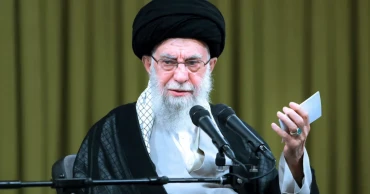
Araghchi spoke a day after the supreme leader of Iran praised its recent missile strikes on Israel and said it was ready to do it again if necessary.
On Saturday evening, Israeli Prime Minister Benjamin Netanyahu said “Israel has the duty and the right to defend itself and respond to these attacks, and it will do so.” On Lebanon, he said ”we are not done yet.”
1 year ago