Middle-East
Deaths in Iran top 500 amid escalating crackdown, activists say
The death toll in the crackdown on nationwide protests in Iran spiked Sunday to at least 538 people, activists said.
Over 10,600 people have been detained, said the U.S.-based Human Rights Activists News Agency.
Of those killed, 490 are protesters and 48 are members of the security forces, it said, warning the toll is likely to go up.
With the internet down in Iran and phone lines cut off, gauging the demonstrations from abroad has grown more difficult.
The activist group, which relies on activists in Iran crosschecking information, has offered accurate tolls in previous rounds of unrest in the Islamic Republic.
The Iranian government has not offered any overall casualty figures for the demonstrations. The Associated Press has been unable to independently assess the toll, given that internet and international phone calls are now being blocked in Iran.
Parliament rallies
Iranian state television broadcast the parliament session live. Qalibaf, a hard-liner who has run for the presidency in the past, gave a speech applauding police and Iran's paramilitary Revolutionary Guard, particularly its all-volunteer Basij, for having “stood firm” during the protests.
He went on to directly threaten Israel, “the occupied territory” as he referred to it, and the U.S. military, possibly with a preemptive strike.
“In the event of an attack on Iran, both the occupied territory and all American military centers, bases and ships in the region will be our legitimate targets,” Qalibaf said. “We do not consider ourselves limited to reacting after the action and will act based on any objective signs of a threat.”
Lawmakers rushed the dais in the Iranian parliament, shouting: “Death to America!”
It remains unclear just how serious Iran is about launching a strike, particularly after its air defenses were destroyed during the 12-day war in June with Israel. Any decision to go to war would rest with Iran's 86-year-old Supreme Leader Ayatollah Ali Khamenei.
The U.S. military has said in the Mideast it is “postured with forces that span the full range of combat capability to defend our forces, our partners and allies and U.S. interests.” Iran targeted U.S. forces at Al Udeid Air Base in Qatar back in June, while the U.S. Navy's Mideast-based 5th Fleet is stationed in the island kingdom of Bahrain.
Israel, meanwhile, is “watching closely” the situation between the U.S. and Iran, said an Israeli official, who spoke on condition of anonymity due to not being authorized to speak to journalists. Israeli Prime Minister Benjamin Netanyahu spoke with U.S. Secretary of State Marco Rubio overnight on topics including Iran, the official added.
“The people of Israel, the entire world, are in awe of the tremendous heroism of the citizens of Iran,” said Netanyahu, a longtime Iran hawk.
The U.S.-based Human Rights Activists News Agency, which relies on activists in Iran cross-checking information, offered the new death toll of 203 on Sunday, a large jump. Of those killed, 162 are protesters and 41 are members of the security forces, it said. The agency also acknowledged receiving claims of far more deaths that it was still assessing as over 3,280 others have been arrested.
The group has offered accurate tolls in previous rounds of unrest in the Islamic Republic. The Iranian government has not offered any overall casualty figures for the demonstrations.
The Associated Press has been unable to independently assess the toll, as communications with Iran have been cut.
At the Vatican, Pope Leo XIV mentioned Iran as a place "where ongoing tensions continue to claim many lives."
“I hope and pray that dialogue and peace may be patiently nurtured in pursuit of the common good of the whole of society,” he said.
Protests in Tehran and Mashhad
Online videos sent out of Iran, likely using Starlink satellite transmitters, purportedly showed demonstrators gathering in northern Tehran's Punak neighborhood. There, it appeared authorities shut off streets, with protesters waving their lit mobile phones. Others banged metal while fireworks went off.
“The pattern of protests in the capital has largely taken the form of scattered, short-lived, and fluid gatherings, an approach shaped in response to the heavy presence of security forces and increased field pressure,” the Human Rights Activists News Agency said. “Reports were received of surveillance drones flying overhead and movements by security forces around protest locations, indicating ongoing monitoring and security control.”
In Mashhad, Iran's second-largest city some 725 kilometers (450 miles) northeast of Tehran, footage purported to show protesters confronting security forces. Protests also appeared to happen in Kerman, 800 kilometers (500 miles) southeast of Tehran.
Iranian state television on Sunday morning had their correspondents appear on the streets in several cities to show calm areas with a date stamp shown on screen. Tehran and Mashhad were not included.
Government rhetoric also ratcheted up Sunday. Ali Larijani, a top security official, accused some demonstrators of “killing people or burning some people, which is very similar to what ISIS does,” referring to the Islamic State group by an acronym.
State TV aired funerals of slain security force members while reporting another six had been killed in Kermanshah. In Fars province, violence killed 13 people, and seven security forces were killed in North Khorasan province, it added. It also showed a pickup truck full of bodies in body bags and later a morgue.
Even Iran's reformist President Masoud Pezeshkian, who had been trying to ease anger before the demonstrations exploded in recent days, offered a hardening tone in an interview aired Sunday.
“People have concerns, we should sit with them and if it is our duty, we should resolve their concerns,” Pezeshkian said. “But the higher duty is not to allow a group of rioters to come and destroy the entire society.”
More demonstrations planned Sunday
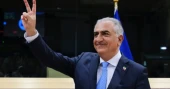
Iran’s exiled Crown Prince Reza Pahlavi asked in his latest message for demonstrators to take to the streets Sunday.
Demonstrators have shouted in support of the shah in some protests, but it isn’t clear whether that’s support for Pahlavi himself or a desire to return to a time before the 1979 Islamic Revolution. Pahlavi’s support of and from Israel has drawn criticism in the past, particularly after the 12-day war.
The demonstrations began Dec. 28 over the collapse of the Iranian rial currency, which trades at over 1.4 million to $1, as the country’s economy is squeezed by international sanctions in part levied over its nuclear program. The protests intensified and grew into calls directly challenging Iran’s theocracy.
4 months ago
Mosque, police station set on fire as Iran protests turn deadly
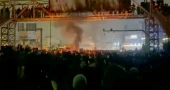
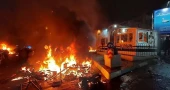
A mosque and a police station were set on fire in Iran as nationwide protests over economic hardship turned increasingly violent, with state media reporting that more than 100 members of the police and security forces have been killed since the unrest began.
Iran’s state television said on Sunday that 30 police and security personnel were killed in Isfahan province and six others in Kermanshah in the latest clashes. The semi official Tasnim news agency reported that a total of 109 security officers have died across the country during the protests.
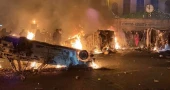
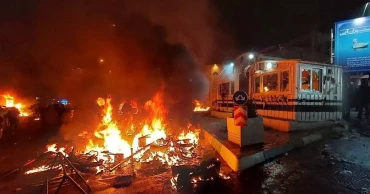
State media also said a mosque was set on fire in the northeastern city of Mashhad on Saturday night, while a police station was torched during clashes in Tehran, according to videos circulating on social media. Burning vehicles and debris were seen blocking roads in several cities as protesters confronted security forces.
The Iranian Red Crescent Society said one of its staff members was killed during an attack on a relief building in Gorgan city in northern Iran.
The protests, which began in late December after a sharp fall in the value of Iran’s currency, have spread to many cities as people took to the streets over rising prices, inflation and worsening living conditions under Western sanctions. What started as economic protests has increasingly taken on an antigovernment tone.
Interior Ministry officials said the riots are now gradually subsiding, while the attorney general warned that those involved in violence could face severe punishment.
Speaking in parliament on Sunday, Speaker Mohammad Baqer Qalibaf warned the United States against any military action after US President Donald Trump threatened strikes if Iranian authorities kill protesters.
He said any attack on Iran would make Israel and all US bases and ships in the region legitimate targets.
Trump said on Saturday that the United States is ready to help Iranian protesters and again warned of possible military action.
President Masoud Pezeshkian, in a televised interview, pledged to overhaul Iran’s struggling economy and said his government is ready to listen to the people’s demands. At the same time, he accused the United States and Israel of trying to create chaos in Iran and called on citizens to stay away from violence.
Human rights groups have urged restraint, saying dozens of protesters have been killed and many more arrested during the crackdown.
With inputs from agencies
4 months ago
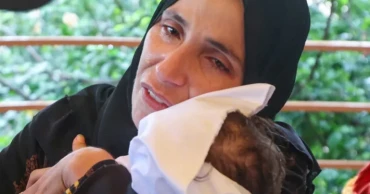
Fourth Palestinian baby freezes to death in Gaza amid winter crisis
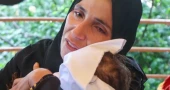
A two-month-old Palestinian baby has died from severe cold in Gaza, becoming the fourth child to freeze to death since November, health officials said on Sunday.
Zaher al-Wahidi, director of health information at Gaza’s Health Ministry, said the infant, Mohammed Abu Harbid, died of hypothermia at al-Rantisi Children’s Hospital.
His death brings the number of babies who have frozen to death in Gaza since November 2025 to four, and 12 since the war began in October 2023, according to local health officials.
As winter storms, heavy rain and freezing winds hit the coastal enclave, thousands of displaced families are living in tents and makeshift shelters with little protection from the cold. Many homes have been destroyed, leaving families without proper shelter, heating or electricity.
Hospitals are also struggling to keep premature babies alive. Medical staff at al-Awda Hospital in the Nuseirat refugee camp said incubators often stop working due to frequent power cuts and lack of backup batteries.
Doctors said many premature babies are now suffering from hypothermia, while shortages of medicine and baby formula have made the situation worse.
Displaced families living in flooded tent camps said water enters their shelters during storms and children are falling sick from cold and damp conditions.
Aid agencies and human rights groups have warned of a growing humanitarian disaster in Gaza, calling for urgent delivery of winter supplies, tents and medical support to protect vulnerable children.
With inputs from ALJAZEERA
4 months ago
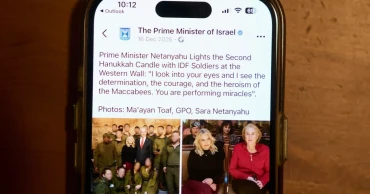
Heavily edited images of Sara Netanyahu spark debate over official Israeli archives
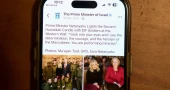
Heavily retouched photos of Israel’s First Lady Sara Netanyahu, shared in official government announcements, have raised concerns about transparency, ethics, and the integrity of Israel’s state archives, officials and experts said.
The edited images show Sara Netanyahu with flawless skin, defined eyes, and perfectly styled hair while lighting Hanukkah candles at the Western Wall alongside Prime Minister Benjamin Netanyahu, U.S. Ambassador Mike Huckabee, and Israeli soldiers. Critics said that while photo editing is common on social media, its use in official releases distorts reality and risks compromising archival records.
Veteran journalist Shabi Gatenio, who reported the story for The Seventh Eye, said the images, if included in official archives, “will forever infect it with a virtual reality that never existed.” In response, the government has begun crediting Sara Netanyahu in press releases that feature retouched images, though it remains unclear if all edited photos from last year will be archived.
Government Press Office Director Nitzan Chen said the prime minister’s photos are never altered, but images of the first lady appear to have been digitally enhanced. Forensic experts noted modifications to smooth her skin, lighten her complexion, and remove wrinkles in photos taken during visits to Washington, D.C., and New York.
The controversy has prompted debate about the broader implications of AI and photo manipulation in politics. Netanyahu’s official Instagram has posted AI-generated or altered content, including images with U.S. President Donald Trump. Experts warned that the practice reflects a growing trend among world leaders and raises questions about public trust and historical record-keeping.
“This is about something bigger than making someone look younger,” said digital forensics expert Hany Farid. “It’s about trust. Why should I trust any official photo coming out of that administration?”
Israel’s Justice Ministry and Government Press Office are reviewing guidelines for identifying and labeling edited images, while some media outlets, including the Times of Israel, have refused to publish manipulated state photos. Analysts say the case highlights the challenge of maintaining accurate government archives in the digital age.
4 months ago
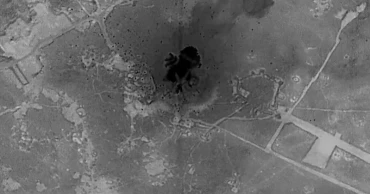
US forces strike Islamic State targets in Syria
The United States and its partner forces have carried out extensive airstrikes against Islamic State (IS) group targets in Syria, US officials said, describing the operation as a response to a deadly attack on American forces last month.
According to US Central Command (Centcom), the strikes were ordered by President Donald Trump on Saturday under Operation Hawkeye Strike, launched after an IS ambush on Dec. 13 in Palmyra that killed two US soldiers and a civilian interpreter. Centcom said the operation aims to degrade IS capabilities and protect US and allied troops in the region.
An official told US media that more than 90 precision-guided munitions were used against over 35 targets, with more than 20 aircraft involved. The aircraft reportedly included F-15E and A-10 fighter jets, AC-130J gunships, MQ-9 drones and Jordanian F-16s. Details about the exact locations of the strikes and possible casualties were not immediately available.
Centcom said the message to militant groups was clear, warning that any attack on US personnel would be met with decisive action. US Defense Secretary Pete Hegseth echoed that stance, saying Washington would not relent in pursuing those who target American forces.
Operation Hawkeye Strike was first announced in December. Since then, US forces have killed or captured nearly 25 IS members in multiple missions, Centcom said. The initial phase included large-scale strikes on dozens of IS sites across central Syria.
Although IS has been significantly weakened in Syria, it remains active, particularly in attacks against Kurdish-led forces in the northeast, amid ongoing instability following the collapse of Bashar al-Assad’s government late last year.
With inputs from BBC
4 months ago
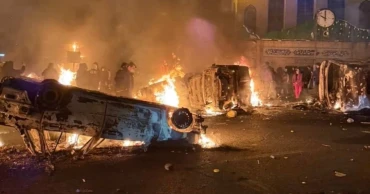
Death toll in Iran protest violence rises to 116 as unrest enters third week
Violence linked to nationwide protests challenging Iran’s theocratic rule has left at least 116 people dead, rights activists said, as demonstrations entered their third week amid an escalating government crackdown.
With internet access and phone lines largely cut, assessing the scale of unrest has become difficult. However, the U.S.-based Human Rights Activists News Agency reported that more than 2,600 people have been detained, a figure the group says is based on verified sources and past tracking of unrest in Iran.
State television has focused on security force casualties and portrayed the situation as under control, while avoiding acknowledgment of civilian deaths and increasingly labeling protesters as “terrorists.” Still, authorities admitted that protests continued into Sunday, including in Tehran and the holy city of Mashhad.
Supreme Leader Ayatollah Ali Khamenei has signaled a tougher response despite warnings from Washington. Iran’s Attorney General Mohammad Movahedi Azad warned that participation in protests could lead to charges of being an “enemy of God,” a crime punishable by death. He also cautioned that anyone assisting demonstrators would face the same charge.
U.S. President Donald Trump publicly voiced support for the protesters, while U.S. officials warned Tehran against testing his resolve.
Despite heavy restrictions, videos verified by the Associated Press showed large crowds protesting in parts of Tehran, chanting slogans against the supreme leader. Iranian media close to the Revolutionary Guard claimed demonstrators used firearms and firebombs, while also reporting deaths among security personnel.
The protests began on Dec. 28, triggered by the collapse of the Iranian rial amid sanctions pressure, but quickly evolved into a broader challenge to Iran’s political system. Rights advocates warn that the communications blackout could pave the way for a deadly crackdown, recalling past protests where hundreds were killed.
4 months ago
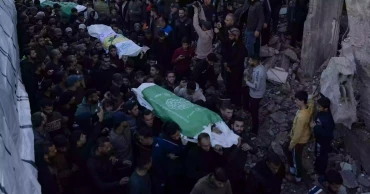
Gaza reports 14 dead after Israel says it killed two top Hamas figures
The Israel Defense Forces gives a statement Friday that it killed two top Hamas figures in Thursday's airstrikes, but Gaza health officials reported 14 deaths in 24 hours.
IDF gives a statement that the military killed Kamal Abd al-Rahman Muhammad Awad, identifying him as the head of Hamas' anti-tank missile unit. The military also reported the death of Ahmad Thabet, whom it identified as a central figure in Hamas’ weapons production unit.
The military identified a failed rocket launch from Gaza on Thursday toward an area of Gaza City then Israeli troops were operating the mission.
WAFA, the official Palestinian news agency, confirmed Awad's death but characterized him as a civilian.
The IDF also reported targeting a command-and-control compound in northern Gaza on Thursday, killing four militants it said were using the site to store weapons and plan attacks.
Hamas yet gives any official statement about the specific deaths, but Spokesman Hazem Qassem said the attacks “demonstrate the Israeli occupation’s abandonment of its commitment to the ceasefire.”
Read More: JU students hold 'March for Palestine' on International Solidarity Day
Separately, Gaza health authorities said 14 Palestinians, including five children, were killed and 17 wounded in Israeli attacks over the past day.
Since a ceasefire took effect on Oct. 10, 2025, Gaza's death toll has risen to 439 with 1,223 injuries, according to local health authorities. Rescue teams have recovered 688 bodies during that period. In the broader conflict, at least 71,409 Palestinians have been killed and 171,304 wounded since Israel's military campaign in Gaza began in October 2023.
4 months ago
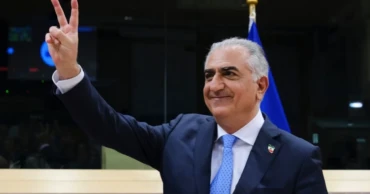
Reza Pahlavi returns to spotlight as protests shake Iran
Iran’s exiled crown prince Reza Pahlavi, whose father was overthrown nearly five decades ago, is once again seeking a role in shaping Iran’s future as nationwide protests challenge the country’s Islamic rulers.
Pahlavi, 65, has lived in exile in the United States since the 1979 Islamic Revolution forced his father, Shah Mohammad Reza Pahlavi, from power after mass uprisings across the country. Though the monarchy was widely despised for corruption, repression and deep inequality, Pahlavi is now trying to position himself as an alternative to Iran’s struggling theocracy.
Iran’s supreme leader warns of harsh response as protests continue
He recently called on Iranians to return to the streets, helping trigger large demonstrations that began over economic hardship but have evolved into a broader challenge to the Islamic Republic. The protests come after years of unrest and a recent 12-day conflict with Israel that included U.S. strikes on Iranian nuclear facilities.
It remains unclear how much genuine support Pahlavi commands inside Iran. Some protesters may favor a return to monarchy, while others simply want an end to clerical rule. Iranian state media dismissed the unrest as the work of “monarchist terrorists” and accused Pahlavi’s supporters of violence.
Born into privilege in 1960, Pahlavi grew up in Tehran’s royal palaces and was educated at a private school inside Niavaran Palace. His father’s rule, strengthened by a 1953 CIA-backed coup, relied heavily on U.S. support and a feared intelligence service known for torturing dissidents. Rising oil wealth in the 1970s failed to prevent widening inequality, and millions eventually took to the streets against the monarchy.
As protests intensified, Pahlavi left Iran in 1978 for flight training in the United States. A year later, the shah fled the country and Shiite clerics consolidated power, establishing the Islamic Republic and executing thousands of opponents. After his father’s death in 1980, royalists in exile declared Reza Pahlavi the new shah.
Since then, Pahlavi has spent decades abroad, mainly in the U.S., trying to maintain influence. His efforts included a brief clandestine television broadcast into Iran in the 1980s. However, memories of his father’s rule, repression inside Iran and perceptions that he is disconnected from everyday life in the country have limited his appeal.
Younger Iranians, born long after the revolution, have grown up under strict social controls, economic crisis, corruption and sanctions. Pahlavi has sought to reach them through social media and foreign-based Persian-language media.
In recent years, he has spoken of a possible constitutional monarchy or another system chosen by Iranians themselves. He has also drawn criticism for his ties to Israel and for meeting Prime Minister Benjamin Netanyahu.
Iran protests intensify as citizens call for political change
Pahlavi argues the Islamic Republic is beyond reform and says only fundamental change can save Iran. Whether he can become a central figure in that transformation remains uncertain.
4 months ago
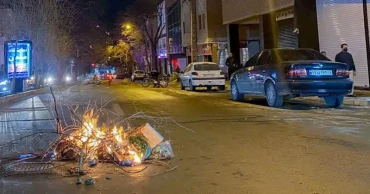
Iran protests intensify as citizens call for political change
Tens of thousands of Iranians took to the streets across Tehran and other cities, demanding an end to the Islamic Republic and, in some places, calling for the return of the monarchy.
The protests, ongoing since late December, have drawn people from all walks of life—young and old, rich and poor—angry at the clerical government that has ruled the country for nearly 50 years.
Many protesters expressed frustration over economic hardship, corruption, and lack of political freedoms. A shopkeepers’ strike at Tehran’s grand bazaar on December 28, triggered by the falling value of the Iranian currency, sparked the latest wave of demonstrations. University protests followed, despite authorities ordering closures.
Chants such as “Death to the Dictator” and “Freedom, Freedom” echoed through the streets. New chants called for the return of Reza Pahlavi, son of the late Shah of Iran. Observers say the support for the monarchy reflects anger at the current regime and a desire for change.
Independent reporting is limited because of heavy restrictions on media and internet access. Social media videos show clashes and protests spreading to hundreds of towns and cities, particularly in western Iran.
Many participants said they were determined and angry, unlike earlier protests in 2022 following the death of Mahsa Amini. Some even said young people from families connected to the regime were joining secretly.
It is unclear how the protests will evolve, but they mark one of the most widespread public demonstrations in Iran in recent years.
With inputs from BBC
4 months ago
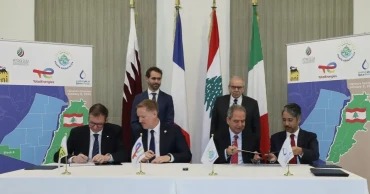
Lebanon signs offshore gas exploration deal with international consortium
Lebanon’s government on Friday signed an agreement with an international consortium to explore natural gas in an offshore block near its maritime border with Israel, in a fresh bid to tap energy resources and ease its deepening economic crisis.
The deal covers exploration of the so-called Block 8, located off the southern coast of Lebanon, following a 2022 agreement between Lebanon and Israel that settled their long-running maritime border dispute. It is the latest licence granted by Lebanon to foreign companies to search for gas in its territorial waters.
Cash-strapped Lebanon is hoping that potential gas discoveries could help the country recover from the worst financial and economic collapse in its modern history.
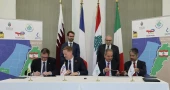
The agreement was signed at government headquarters in central Beirut by Energy Minister Joe Saddi on behalf of Lebanon and representatives of the consortium made up of France’s TotalEnergies, Italy’s ENI and Qatar’s state-owned oil and gas company QatarEnergy.
In a statement, TotalEnergies said the consortium plans to begin with a 3D seismic survey covering about 1,200 square kilometres to assess the exploration potential of the area.
Lebanon first awarded offshore exploration licences in 2017 to TotalEnergies, ENI and Russia’s Novatek for two of its 10 Mediterranean blocks, including one that was then partly disputed with Israel. Drilling in the southern block was repeatedly delayed due to the border dispute, while no commercially viable oil or gas was found in a northern block.
Following the 2022 maritime agreement with Israel, offshore drilling resumed in August 2023 but did not yield positive results.
Despite the setback, TotalEnergies Chairman and CEO Patrick Pouyanné said the company remains committed to exploration in Lebanon.
“We remain committed to pursue our exploration activities in Lebanon. We will now focus our efforts on Block 8, together with our partners Eni and QatarEnergy and in close cooperation with Lebanese authorities,” he said.
In January 2023, QatarEnergy joined the consortium after replacing Novatek, taking over its 20 percent stake and acquiring an additional 10 percent from TotalEnergies and ENI, giving the Qatari firm a total stake of 30 percent. TotalEnergies and ENI each hold 35 percent.
Lebanon’s offshore energy plans have also been affected by regional tensions, including the 14-month conflict that began in October 2023 when Hezbollah started firing rockets toward Israeli positions along the border following Hamas’ attack on southern Israel.
4 months ago