Middle-East
Hezbollah fires missile at Tel Aviv in deepest strike yet after Israel bombardment in Lebanon
Hezbollah launched a missile at Tel Aviv early Wednesday in its deepest strike yet into Israel, marking a further escalation after Israeli strikes on Lebanon killed hundreds of people.
The Israeli military said it intercepted the surface-to-surface missile, which set off air raid sirens in Tel Aviv and across central Israel, and there were no reports of casualties or damage. The military said it struck the site in southern Lebanon from which the missile was launched.
Hezbollah said it fired a Qader 1 ballistic missile targeting the headquarters of Israel's Mossad intelligence agency, which it blames for a recent string of targeted killings of its top commanders and for an attack last week in which explosives hidden in pagers and walkie-talkies killed dozens of people and wounded thousands, including many Hezbollah members.
The Israeli military said it was the first time a projectile fired from Lebanon had reached central Israel. Hezbollah claimed to have targeted an intelligence base near Tel Aviv last month in an aerial attack, but there was no confirmation. The Palestinian Hamas militant group in Gaza repeatedly targeted Tel Aviv in the opening months of the war.
The launch ratcheted up tensions as the region appears to be teetering toward another all-out war, even as Israel continues to battle Hamas in the Gaza Strip. A wave of Israeli strikes on Monday and Tuesday killed at least 560 people in Lebanon and forced thousands to seek refuge.
Families have fled southern Lebanon, flocking to Beirut and the coastal city of Sidon, sleeping in schools turned into shelters, as well as in cars, parks and along the beach. Some sought to leave the country, causing a traffic jam at the border with Syria.
Israel said late Tuesday that fighter jets carried out “extensive strikes” on Hezbollah weapons and rocket launchers across southern Lebanon and in the Bekaa region to the north. The military has said it has no immediate plans for a ground invasion but has declined to give a timetable for the air campaign.
Tensions between Israel and the Lebanese militant group have steadily escalated over the last 11 months. Hezbollah has been firing rockets, missiles and drones into northern Israel in solidarity with Palestinians in Gaza and its ally Hamas, a fellow Iran-backed militant group.
Israel has responded with increasingly heavy airstrikes and the targeted killing of Hezbollah commanders while threatening a wider operation.
The U.N. Security Council scheduled an emergency meeting on Lebanon for Wednesday at the request of France.
Nearly a year of fighting between Hezbollah and Israel had already displaced tens of thousands of people on both sides of the border before this week’s escalation. Israel has vowed to do whatever it takes to ensure its citizens can return to their homes in the north, while Hezbollah has said it will keep up its rocket attacks until there is a cease-fire in Gaza, something which appears increasingly remote.
The rocket fire over the past week has disrupted life for over 1 million people across northern Israel, with schools closed and restrictions on public gatherings. Many restaurants and other businesses are shut in the coastal city of Haifa, and there are fewer people on the streets. Some who fled south from communities near the border are coming under rocket fire again.
Israel has moved thousands of troops who had been serving in Gaza to the northern border. It says Hezbollah has some 150,000 rockets and missiles, including some capable of striking anywhere in Israel, and that the group has fired some 9,000 rockets and drones since last October.
Lt. Col. Nadav Shoshani, an Israeli military spokesperson, said the missile fired Wednesday had a “heavy warhead” but declined to elaborate or confirm it was the type described by Hezbollah. He dismissed Hezbollah's claim of targeting the Mossad headquarters, located just north of Tel Aviv, as “psychological warfare.”
The Iranian-made Qader is a medium-range surface-to-surface ballistic missile with multiple types and payloads. It can carry an explosive payload of up to 800 kilograms (1,760 pounds), according to the Washington-based Center for Strategic and International Studies. Iranian officials have described the liquid-fueled missile as having a range of 2,000 kilometers (1,240 miles).
Cross-border weapons firing began ramping up on Sunday in the wake of the pager and walkie-talkie bombings, which killed 39 people and wounded nearly 3,000, many of them civilians. Lebanon blamed Israel, but Israel did not confirm or deny responsibility.
On Sunday, Hezbollah launched around 150 rockets, missiles and drones into northern Israel.
The next day, Israel said its warplanes struck 1,600 Hezbollah targets, destroying cruise missiles, long- and short-range rockets and attack drones, including weapons concealed in private homes. The strikes racked up the highest one-day death toll in Lebanon since Israel and Hezbollah fought a bruising monthlong war in 2006.
An Israeli airstrike in Beirut on Tuesday killed Ibrahim Kobeisi, whom Israel described as a top Hezbollah commander with the group’s rocket and missile unit. Military officials said Kobeisi was responsible for launches toward Israel and planned a 2000 attack in which three Israeli soldiers were kidnapped and killed. Hezbollah later confirmed his death.
It was the latest in a string of assassinations and other setbacks for Hezbollah, which is Lebanon's strongest political and military actor and is widely considered the top paramilitary force in the Arab world.
Lebanon’s Health Ministry said six people were killed and 15 were wounded in the strike in a southern Beirut suburb, an area where Hezbollah has a strong presence. The country’s National News Agency said the attack destroyed three floors of a six-story apartment building.
The U.N.’s High Commissioner for Refugees in Lebanon said one of its staffers and her young son were among those killed Monday in the Bekaa region, while a cleaner under contract was killed in a strike in the south.
Hezbollah fired 300 rockets on Tuesday, injuring six Israeli soldiers and civilians, most of them lightly, according to the Israeli military.
The Lebanese Health Ministry said at least 564 people have been killed in Israeli strikes since Monday, including 50 children and 94 women, and that more than 1,800 have been wounded, a staggering toll for a country still reeling from the deadly pager and walkie-talkie bombings last week.
1 year ago
What to know about the growing conflict between Israel and Lebanon's Hezbollah
The past week has seen a rapid escalation in the nearly yearlong conflict between Israel and Lebanon's Hezbollah. First came two days of exploding pagers and walkie-talkies used by Hezbollah — deadly attacks pinned on Israel that also maimed civilians across Lebanon.
Hezbollah's leader vowed to retaliate, and on Friday the militant group launched a wave of rockets into northern Israel. Later in the day, the commander of Hezbollah's most elite unit was killed in a strike in Beirut that killed dozens more people.
The cross-border attacks ramped up early Sunday, with Hezbollah, an Iranian-backed Shiite group that is Lebanon's most powerful armed force, launching more than 100 rockets deeper into northern Israel, with some landing near the city of Haifa. Israel launched hundreds of strikes on Lebanon.
Then, on Monday, Israel launched a series of strikes that killed more than 490 Lebanese, the deadliest attack since the 2006 Israel-Hezbollah war. Israel warned residents in southern and eastern Lebanon to leave their homes ahead of a spreading air campaign against Hezbollah.
Many fear the escalating violence could lead to an all-out war between Israel and Hezbollah, which would further destabilize a region already shaken by the fighting in Gaza. Both sides have said they don't want that to happen, even as they have defiantly warned of heavier attacks.
Israel and Hezbollah have launched repeated strikes against each other since the Gaza war began, but both sides have pulled back when the spiral of reprisals appeared on the verge of getting out of control, under heavy pressure from the U.S. and its allies. But in recent weeks, Israeli leaders have warned of a possible bigger military operation to stop attacks from Lebanon to allow hundreds of thousands of Israelis displaced by the fighting to return to homes near the border.
Here are some things to know about the situation:
What were the latest strikes?
More than 1,600 Lebanese were injured in Monday's deadly strikes and thousands more fled southern Lebanon. Israel said it was targeting Hezbollah weapons sites, and had hit some 1,600 targets. Lebanon's health minister said hospitals, medical centers and ambulances had been struck.
The Israeli military warned residents to immediately leave areas where Hezbollah is storing weapons. The Lebanese media said the evacuation warning was repeated in text messages.
Hezbollah said it had fired dozens of rockets toward Israel, including at military bases, and officials said a series of air-raid sirens were ringing out in northern Israel warning of rocket attacks.
On Friday, an Israeli airstrike brought down a high-rise building in Beirut's southern suburbs, killing Ibrahim Akil, the commander of Hezbollah's elite Radwan unit, and other top unit leaders. Israel said Akil led the group's campaign of rocket, drone and other fire into northern Israel. At least 45 people were killed in that attack and more than 60 wounded.
That strike came after the shock of the electronic device bombings, in which thousands of pagers and walkie-talkies used by Hezbollah detonated on Tuesday and Wednesday. At least 37 people were killed, including two children, and around 3,000 were wounded. Israel has neither confirmed nor denied its involvement.
Analysts say that attack had little effect on Hezbollah's manpower, but could disrupt its communications and force it to take tighter security measures.
What is the situation on the border?
The Israel-Lebanon border has seen almost daily exchanges since the Israel-Hamas war began on Oct. 7. Before Monday, the exchanges had killed around 600 people in Lebanon – mostly fighters but also about 100 civilians — and about 50 soldiers and civilians in Israel. It has also forced hundreds of thousands of people to evacuate homes near the border in both Israel and Lebanon.
Hezbollah leader Hassan Nasrallah promised to retaliate for the electronic device bombings. But Hezbollah also has proved wary of further stoking the crisis. The group faces a difficult balance of stretching the rules of engagement by hitting deeper into Israel in response to its brazen attacks, while at the same time trying to avoid the kind of large-scale attacks on civilian areas that can trigger a full-scale war that it could be blamed for.
Hezbollah says its attacks against Israel are in support of Hamas. Last week, Nasrallah said the barrages won't end — and Israelis won't be able to return to homes in the north — until Israel's campaign in Gaza ends.
What is Israel planning?
Israeli officials say they haven't yet made an official decision to expand military operations against Hezbollah – and haven't said publicly what those operations might be. Last week, though, the head of Israel's Northern Command was quoted in local media as advocating for a ground invasion of Lebanon.
Meanwhile, as fighting in Gaza has slowed, Israel has increased its forces along the Lebanese border, including the arrival of a powerful army division believed to include thousands of troops.
Israeli Defense Minister Yoav Gallant last week declared the start of a "new phase" of the war as Israel turns its focus toward Hezbollah.
"The center of gravity is shifting to the north," he said.
A U.N.-brokered truce to the 2006 war called on Hezbollah to pull back 29 kilometers (18 miles) from the border, but it has refused, accusing Israel of also failing to carry out some provisions. Israel is now demanding Hezbollah withdraw eight to 10 kilometers (five to six miles) from the border – the range of Hezbollah's anti-tank guided missiles.
The monthlong 2006 war, triggered when Hezbollah fighters kidnapped two Israeli soldiers, included heavy Israeli bombardment of southern Lebanon and Beirut and a ground invasion into the south. The strategy, Israeli commanders later said, was to inflict maximum damage in areas where Hezbollah operated to deter them from launching attacks.
But Israel could have a more ambitious goal this time: to seize a buffer zone in south Lebanon to push back Hezbollah fighters from the border. A fight to hold territory threatens a longer, even more destructive and destabilizing war – recalling Israel's 1982-2000 occupation of southern Lebanon.
What would be the impact of a full-blown war?
The fear is that a new war could be even worse than the one in 2006, which was traumatic enough for both sides to serve as a deterrent ever since.
The fighting then killed hundreds of Hezbollah fighters and an estimated 1,100 Lebanese civilians and left large swaths of the south and even parts of Beirut in ruins. More than 120 Israeli soldiers were killed and hundreds wounded. Hezbollah missile fire on Israeli cities killed dozens of civilians.
Israel estimates that Hezbollah now possesses about 150,000 rockets and missiles, some of which are precision-guided, putting the entire country within range. Israel has beefed up air defenses, but it's unclear whether it can defend against the intense barrages of a new war.
Israel has vowed it could turn all of southern Lebanon into a battle zone, saying Hezbollah has embedded rockets, weapons and forces along the border. And in the heightened rhetoric of the past months, Israeli politicians have spoken of inflicting the same damage in Lebanon that the military has wreaked in Gaza.
1 year ago
Thousands flee southern Lebanon in search of safety and shelter
Thousands of families from southern Lebanon packed cars and minivans with suitcases, mattresses, blankets and carpets and jammed the highway heading north toward Beirut on Monday to flee the deadliest Israeli bombardment since 2006.
Some 100,000 people living near the border had already been displaced since October, when the Lebanese militant group Hezbollah and Israeli forces began exchanging near-daily fire against the backdrop of the war in Gaza. As the fighting intensifies, the number of evacuees is expected to rise.
In Beirut and beyond, schools were quickly repurposed to receive the newly displaced as volunteers scrambled to gather water, medicine and mattresses.
In the coastal city of Sidon, people seeking shelter streamed into schools that had no mattresses to sleep on yet. Many waited on sidewalks outside.
Ramzieh Dawi had arrived with her husband and daughter after hastily evacuating the village of Yarine, carrying just a few essential items as airstrikes boomed nearby.
"These are the only things I brought," she said, gesturing at the three tote bags she carried.
Fatima Chehab, who came with her three daughters from the area of Nabatieh, said her family had been displaced twice in quick succession.
"We first fled to stay with my brother in a nearby area, and then they bombed three places next to his house," she said.
Some people waited for hours in gridlocked traffic to get to what they hoped would be safety.
The Israeli military warned residents in eastern and southern Lebanon to evacuate ahead of a widening air campaign against what it said were Hezbollah weapons sites. More than 490 people were killed in Lebanon on Monday, officials said, and more than 1,240 people were wounded — a staggering toll for a country still reeling from a deadly attack on communication devices last week.
That attack was widely blamed on Israel, which has not confirmed or denied responsibility.
Israeli officials have said they are ramping up pressure against Hezbollah in an attempt to force it to stop firing rockets into northern Israel so that tens of thousands of displaced Israelis can return home. Hezbollah has said it will only stop when there is a cease-fire in Gaza.
At a public high school in the capital's Ras al-Nabaa neighborhood, a few dozen men, women and children were milling around as volunteers registered them.
Yahya Abu Ali, who fled with his family from the village of Doueir in Lebanon's Nabatieh district, struck a defiant tone.
"Don't think that an airplane or a missile will defeat us, or that a wounded person or a martyr on the ground will weaken us," he said. "On the contrary, it gives us strength, determination, and resilience."
But Abu Ali also admitted that he was worried about his four siblings and their families who remained behind in southern Lebanon.
"God willing, I hope they will make it out," he said.
Minar al-Natour, a volunteer at the school, said the team on the ground was still in "early stages" of preparations to host the larger numbers expected to arrive.
"We're securing medicine, water, and of course all the essential supplies," she said.
In Beirut's Aisha Bakkar neighborhood — where some residents had received messages instructing them to evacuate — shop owner Mazen al-Hakeem said most had not heeded the call.
"There is no fear but there is anticipation," he said. "People are filling their tanks with fuel, storing food and groceries. They are taking their precautions."
Imran Riza, the U.N.'s humanitarian coordinator for Lebanon, said in a statement the international body had allocated $24 million in emergency funding for people affected by the fighting.
With its economy in shambles and Beirut still recovering from a massive port explosion in 2020, Lebanon is "grappling with multiple crises, which have overwhelmed the country's capacity to cope," Riza said.
"As the escalation of hostilities in south Lebanon drags on longer than we had hoped, it has led to further displacement and deepened the already critical needs," Riza said.
1 year ago
Death toll from two days of Israeli strikes in Lebanon reaches 558, Lebanon’s Health Ministry says
Israel and Hezbollah traded strikes again Tuesday as the death toll from a massive Israeli bombardment climbed to nearly 560 people and thousands fled from southern Lebanon with the two sides on the brink of all-out war.
Displaced families slept in shelters hastily set up in schools in Beirut and the coastal city of Sidon. With hotels quickly booked to capacity or rooms priced beyond the means of many families, those who did not find shelter slept in their cars, in parks or along the seaside.
Issa Baydoun fled the village of Shihine in southern Lebanon when it came under bombing and came to Beirut in a convoy of cars with his extended family. They slept in the vehicles on the side of the road after discovering that the shelters were full.
"We struggled a lot on the road just to get here," he said.
Baydoun rejected Israel's contention that it hit only military targets.
"We evacuated our homes because Israel is targeting civilians and attacking them," he said. "That's why we left our homes, to protect our children."
Well-wishers offered up empty apartments or rooms in their houses in social media posts, while volunteers set up a kitchen at an empty gas station in Beirut to cook meals for the displaced.
In the eastern city of Baalbek, the state-run National News Agency reported that lines formed at bakeries and gas stations as residents rushed to stock up on essential supplies in anticipation of another round of strikes on Tuesday.
Meanwhile, the border crossing with Syria saw massive traffic jams as a result of people escaping from Lebanon to the neighboring country.
The Lebanese militant group Hezbollah said it launched missiles overnight at eight sites in Israel, including an explosives factory in Zichron, 60 kilometers (37 miles) from the border.
The Israeli military said Tuesday morning that 55 rockets were fired from Lebanon into northern Israel, setting fires and damaging buildings. Military officials said they carried out dozens of airstrikes on Hezbollah targets, including on a cell that fired rockets overnight, and that tanks and artillery struck targets near the border.
Galilee Medical Center, a northern Israel hospital, said that two patients arrived with minor head injuries from a rocket falling near their car. Several others were being treated for light wounds from running to shelters and traffic accidents when alarms sounded.
The renewed exchange came after Monday's barrages racked up the highest death toll in any single day in Lebanon since Israel and Hezbollah fought a bruising monthlong war in 2006.
Israel said it targeted sites where Hezbollah had stored weapons. Data from American fire-tracking satellites analyzed Tuesday by The Associated Press showed the wide range of Israeli airstrikes aimed at southern Lebanon, covering an area of over 1,700 square kilometers (650 square miles).
NASA's Fire Information for Resource Management System typically is used to track wildfires across rural areas of the U.S. However, it can also be used to track the flashes and burning that follow airstrikes. That's particularly true when an airstrike ignites flammable material on the ground, such as munitions or fuel.
Data from Monday showed significant fires breaking out across southern Lebanon and in the Bekaa Valley. Several areas showed intense, multiple fires, including near the southern coastal town of Naqoura, which hosts a base for the U.N. peacekeeping mission in southern Lebanon known as UNIFIL. Others were in mountainous rural areas or villages.
The sides appear on the verge of war again after tensions have steadily escalated over the last 11 months. Hezbollah has been firing rockets, missiles and drones into northern Israel in solidarity with the Palestinians and its ally Hamas, a fellow Iran-backed militant group, in Gaza.
Israel has responded with increasingly heavy airstrikes and the targeted killing of Hezbollah commanders while threatening a wider operation.
Thousands of Lebanese fled the southern part of the country on Monday after the Israeli military ordered people to evacuate areas where it accuses Hezbollah of positioning rocket launchers and other weapons, in the biggest exodus since the monthlong war waged 18 years ago.
The Lebanese Health Ministry said the strikes since Monday killed at least 558 people, including 50 children and 94 women, and wounded more than 1,800 people — a staggering one-day toll for a country still reeling from a deadly attack on communication devices last week.
Nearly a year of cross-border fire had already emptied out communities near the border, displacing tens of thousands of people on both sides. Israel has vowed to do whatever it takes to ensure its citizens can return to their homes in the north, while Hezbollah has said it will keep up its rocket attacks until there is a cease-fire in Gaza, which appears increasingly remote.
The Israeli military says it has no immediate plans for a ground invasion but is prepared for one, after moving thousands of troops who had been serving in Gaza to the northern border. It says Hezbollah has launched some 9,000 rockets and drones into Israel since last October, including 250 on Monday alone.
The military said Israeli warplanes struck 1,600 Hezbollah targets Monday, destroying cruise missiles, long- and short-range rockets and attack drones, including weapons concealed in private homes. Lebanese officials have said many of the victims were civilians, including more than 90 women and children killed.
Israel estimates Hezbollah has some 150,000 rockets and missiles, including guided missiles and long-range projectiles capable of striking anywhere in Israel.
Monday's escalation came after a particularly heavy exchange of fire Sunday. Hezbollah launched around 150 rockets, missiles and drones into northern Israel in retaliation for strikes that killed a top commander and dozens of fighters.
Last week, thousands of communications devices, used mainly by Hezbollah members, exploded in different parts of Lebanon, killing 39 people and wounding nearly 3,000, many of them civilians. Lebanon blamed Israel, but Israel did not confirm or deny responsibility.
1 year ago
Is this war? The Israeli-Hezbollah conflict is hard to define — or predict
Israel is bombing targets across many parts of Lebanon, striking senior militants in Beirut and apparently hiding bombs in pagers and walkie-talkies. Hezbollah is firing rockets and drones deep into northern Israel, setting buildings and cars alight.
But no one is calling it a war — not yet.
Israeli officials say they are not seeking war with Hezbollah and that it can be avoided if the militant group halts its attacks and backs away from the border. Hezbollah also says it doesn’t want a war but is prepared for one — and that it will keep up the strikes on Israel that it began in the wake of ally Hamas’ Oct. 7 attack until there is a cease-fire in Gaza.
Israel and Hezbollah have repeatedly traded fire since then — but the intensity rose to another level Monday, when Israeli airstrikes killed more than 270 people, according to Lebanese officials. That would make it the deadliest day in Lebanon since Israel and Hezbollah last went to war in 2006.
“If someone had told me or most analysts in summer 2023 that Hezbollah is striking Israeli bases in Israel, and Israel is striking southern Lebanon and parts of southern Beirut, I would have said, okay, that’s an all-out war,” said Andreas Krieg, a military analyst at King’s College London.
The term hasn’t yet been applied to the current conflict because “there haven’t been any boots on the ground,” but that might be “the wrong metric,” he added.
Is there any agreed definition of war?Merriam-Webster defines war as “a state of usually open and declared armed hostile conflict between states or nations.” Scholars generally expand that definition to cover large-scale violence involving insurgents, militias and extremist groups.
But any attempt at greater precision is difficult since armed conflicts run the gamut from states clashing with tanks and fighter jets to lower-level fighting.
Sometimes states officially declare war, as Israel did after Hamas’ attack last year.
It has not made a similar declaration with regard to Hezbollah, but it has linked its strikes against the group to the war in Gaza, saying last week that allowing tens of thousands of residents to safely return to the north is an objective in that conflict. Israel’s defense minister, Yoav Gallant, also frequently talks about an ongoing war with Iran and its allies along “seven fronts,” including Lebanon.
States often refrain from declaring war even when they are plainly engaged in one. Russia officially refers to its invasion of Ukraine as a “special military operation” and has banned public references to it as a war. The United States has not formally declared war since World War II, even as it took part in major conflicts in Korea, Vietnam, Iraq and Afghanistan.
Why does neither side want to call it a war?Part of the reason neither Israel nor Hezbollah is using the word “war” is because they both hope to achieve their aims without setting off a more severe conflict — or being blamed for one.
“Though tensions are flaring, the situation in southern Lebanon is not that of a full-scale war as both Hezbollah and Israel hope to use limited means to pressure one another,” said Lina Khatib, a Middle East expert at Chatham House.
With its rocket and drone attacks, Hezbollah hopes to pressure Israel to agree to a cease-fire with Hamas — a fellow Iran-backed militant group — and to avoid being seen as bowing to Israeli pressure.
Hezbollah has said it would cease the attacks if there were a truce in Gaza, but the prospects for such a deal appear remote.
Israeli Prime Minister Benjamin Netanyahu has vowed to do whatever is necessary to halt the attacks so that displaced Israelis can return to their homes.
“I think the Israelis are trying to either tell Hezbollah, you come to the negotiation table and we’ll settle this through diplomacy, or we’ll push you into a corner until you overreact,” Krieg said. “And that will be the all-out war.”
What might a full-scale war look like?Until recently, experts generally agreed that any future war between Israel and Hezbollah would look like the war they fought in 2006 — but much, much worse.
For years, Israeli officials warned that in any future war with Hezbollah, the army would exact a punishing toll on Lebanon itself, destroying critical infrastructure and flattening Hezbollah strongholds. It came to be known as the Dahiyeh Doctrine, named for the crowded southern Beirut district where the militant group is headquartered, and that suffered heavy destruction in 2006.
Hezbollah, meanwhile, spent years expanding and improving its arsenal, and is believed to have some 150,000 rockets and missiles capable of hitting all parts of Israel.
The military build-up and threats created a situation of mutual deterrence that kept the border largely quiet from 2006 until October of last year. For most of the past year, the region has been braced for the worst, but both sides have showed restraint, and the talk of “all-out war” has been hypothetical.
That could change at any time.
“We’ve gone up a step, but we haven’t yet made it to the penthouse floor,” said Uzi Rabi, the director of the Moshe Dayan Center for Middle Eastern and African Studies at Tel Aviv University. “At the end, I don’t see there’s going to be any alternative to a ground operation.”
Is it definitely a war if there’s a ground invasion?Any Israeli decision to send tanks and troops into southern Lebanon would mark a major escalation and lead many to categorize the conflict as a war. But the two don’t necessarily always go hand in hand.
Israel officially declared war in Gaza nearly three weeks before it sent any ground troops in. Israeli ground forces have been operating in the occupied West Bank for decades, and in recent months have routinely launched airstrikes against militants, without anyone suggesting it’s a war.
A limited Israeli ground incursion might still leave room for both sides to back down.
Of course, Lebanon would likely see a ground invasion as a blatant violation of its sovereignty and an act of war. But Beirut already accuses Israel of routinely violating its airspace and of occupying disputed territory along the border.
In fact, the two countries are already officially in a state of war, and have been since 1948.
1 year ago
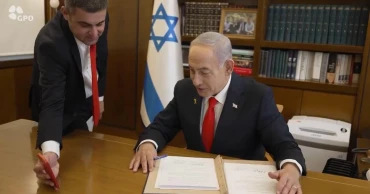
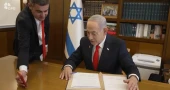
Israel’s Netanyahu to Lebanese civilians: ‘Take this warning seriously’
Israel’s prime minister urged Lebanese civilians to heed Israeli calls to evacuate their homes, saying “take this warning seriously.”
Benjamin Netanyahu issued the warning Monday in a videotaped message his office said was aimed at Lebanese civilians. He spoke as Israeli warplanes continued to strike alleged Hezbollah targets in southern and eastern Lebanon.
Earlier Monday, Israel ordered residents in the targeted areas to leave ahead of the airstrikes. Israeli officials say Hezbollah uses civilian areas to hide weapons.
“Please get out of harm’s way now,” Netanyahu said. “Once our operation is finished, you can come back safely to your homes.”
1 year ago
Death toll from Israeli airstrike on Beirut suburb rises to 31
Lebanon’s health minister said on Saturday the death toll from an Israeli airstrike on a Beirut suburb the day before has risen to 31, including seven women and three children.
Firass Abiad told reporters that 68 people were also wounded of whom 15 remain in hospital, in the deadliest Israeli airstrike on Beirut since the summer 2006 Israel-Hezbollah war.
The casualties included Ibrahim Akil, a Hezbollah commander who was in charge of the group’s elite Radwan Forces, as well as about a dozen members of the militant group who were meeting in the basement of the building that was destroyed. Three Syrian nationals were among the dead, Abiad said.
Late Friday, the Israeli military said the strike killed 11 Hezbollah operatives, including Akil.
Israel launched the rare airstrike in the densely populated southern Beirut neighborhood on Friday afternoon during rush hour as people returned home from work and students from schools. On Saturday morning, Hezbollah’s media office took journalists on a tour of the scene of the airstrike where workers were still digging through the rubble.
Lebanese troops cordoned off the area preventing people from reaching the building that was knocked down as members of the Lebanese Red Cross stood nearby to take any recovered body from under the rubble.
Friday's deadly strike came hours after Hezbollah launched one of its most intense bombardments of northern Israel in nearly a year of fighting, largely targeting Israeli military sites. Israel’s Iron Dome missile defense system intercepted most of the Katyusha rockets.
The militant group said its latest wave of rocket salvos was a response to past Israeli strikes on southern Lebanon. However, it came days after mass explosions of Hezbollah pagers and walkie-talkies killed at least 37 people — including two children. Some 2,900 others were wounded in the assault which has been widely attributed to Israel.
Israel has neither confirmed nor denied involvement in the attack which marked a major escalation in the past 11 months of simmering conflict along the Israel-Lebanon border.
Israel and Hezbollah have traded fire regularly since Hamas’ Oct. 7 assault on southern Israel ignited the Israeli military’s devastating offensive in Gaza. But previous cross-border attacks have largely struck areas in northern Israel that had been evacuated and less-populated parts of southern Lebanon.
Earlier this week, Israel’s security cabinet said stopping Hezbollah’s attacks in the country’s north to allow residents to return to their homes is now an official war goal, as it considers a wider military operation in Lebanon that could spark an all-out conflict.
The tit-for-tat strikes have forced tens of thousands of people to evacuate their homes in both southern Lebanon and northern Israel.
1 year ago
What to know about the growing conflict between Israel and Lebanon's Hezbollah
This week saw a dizzying escalation in the 11-month-old conflict between Israel and Lebanon's Hezbollah.
First came two days of exploding pagers and walkie-talkies used by Hezbollah — deadly attacks pinned on Israel that also maimed civilians around Lebanon.
Hezbollah's leader vowed to retaliate, and on Friday the militant group launched dozens of rockets into northern Israel. Later in the day, Israel said it killed the commander of Hezbollah's most elite unit with a strike in Beirut that left at least 14 dead.
Many fear the events are the prelude to an all-out war between Israel and Hezbollah, the Iranian-backed Shiite group that is Lebanon's most powerful armed force. A war threatens to bring devastation in Lebanon, heavy missile fire into Israeli cities and further destabilization to a region already shaken by the Gaza war.
During 11 months of exchanges of fire over the Lebanese-Israeli border, both sides have repeatedly pulled back when the spiral of reprisals appeared on the verge of going out of control, under heavy pressure from the U.S. and its allies.
But in recent weeks, Israeli leaders have warned of a possible bigger military operation with the goal of stopping attacks from Lebanon to allow tens of thousands of Israelis displaced by the fighting to return to homes near the border.
Here are some things to know about the situation:
What were the latest strikes?
An Israeli airstrike Friday brought down a high-rise building in Beirut's southern suburbs, a Shiite-majority area known as Dahiyeh where Hezbollah has a strong presence. At least 14 people were killed and more than 60 wounded, the deadliest Israeli strike in the Lebanese capital since the 2006 Israel-Hezbollah war.
The Israeli military said the strike killed Ibrahim Akil, the commander of Hezbollah's elite Radwan unit, as well as other top leaders of the unit.
Hezbollah later confirmed Akil was killed, a heavy blow to Hezbollah's most effective fighters. Israel said Akil led the group's campaign of rocket, drone and other fire into northern Israel.
The strike came after the shock of the electronic device bombings, in which hundreds of pagers and walkie-talkies used by Hezbollah detonated on Tuesday and Wednesday. At least 37 people were killed, including two children, and some 3,000 wounded. Israel has neither confirmed nor denied its involvement.
The casualties included some fighters from the group, but many of the wounded were civilians connected to Hezbollah's social branches. Analysts say the attack has little effect on Hezbollah's manpower, but could disrupt its communications and force it to take tighter security measures.
What is the situation on the border?
Hezbollah fired 140 rockets into northern Israel on Friday, saying it was targeting military sites in retaliation for overnight Israeli strikes into southern Lebanon. There was no immediate report of casualties.
It was a continuation of the near daily drumbeat of exchanges over the border since the Gaza war began in October. The exchanges have killed some 600 people in Lebanon – mostly fighters but including around 100 civilians — and some 50 soldiers and civilians in Israel. It has also forced tens of thousands of people to evacuate homes near the border in both Israel and Lebanon.
Hezbollah leader Hassan Nasrallah has promised retaliation for the electronic device bombings, raising fears of an escalation from the group. But Hezbollah has also proved wary of further stoking the crisis – it has not carried out its vows of revenge from Israel's killing of a top commander, Fouad Shukur, in July.
Hezbollah says its attacks against Israel are in support of Hamas. This week, Nasrallah said the barrages won't end – and Israelis won't be able to return to homes in the north – until Israel's campaign in Gaza ends.
As fighting in Gaza has slowed, Israel has fortified forces along the border with Lebanon, including the arrival this week of a powerful army division that took part in some of the heaviest fighting in Gaza. It is believed to include thousands of troops, including paratrooper infantry units and artillery and elite commando forces specially trained for operations behind enemy lines.
Defense Minister Yoav Gallant this week declared the start of a "new phase" of the war as Israel turns its focus toward Hezbollah. "The center of gravity is shifting to the north by diverting resources and forces," he said.
What is Israel planning?
Israeli officials say they have not yet made an official decision to expand military operations against Hezbollah – and have not said publicly what those operations might be. This week, the head of Israel's Northern Command was quoted in local media as advocating for a ground invasion of Lebanon.
A U.N.-brokered truce to their 2006 war called on Hezbollah to pull back 29 kilometers (18 miles) from the border, but it has refused to, accusing Israel of also failing to carry out some provisions. Israel is now demanding Hezbollah withdraw eight to 10 kilometers (five to six miles) from the border – the range of Hezbollah's anti-tank guided missiles.
Israel and Hezbollah's 2006 war was a devastating monthlong fight triggered when Hezbollah fighters kidnapped two Israeli soldiers in a cross-border raid.
In that war, Israel heavily bombarded southern Lebanon and Beirut and sent a ground invasion into the south. The strategy, later explained by Israeli commanders, was to inflict the maximum damage possible in towns and neighborhoods where Hezbollah operated to deter them from launching attacks.
It became known as the "Dahiyeh Doctrine," named after Beirut suburbs where large areas were levelled during the war.
But Israel could have a more ambitious and controversial goal this time: to seize a buffer zone in south Lebanon to push back Hezbollah fighters from the border.
A fight to hold territory threatens a longer, even more destructive and destabilizing war – recalling Israel's 1982-2000 occupation of southern Lebanon.
What would be the impact of a full-blown war?
The fear is that it could turn out even worse than the 2006 war, which was traumatic enough for both sides to serve as a deterrent ever since.
The 2006 fighting killed hundreds of Hezbollah fighters and an estimated 1,100 Lebanese civilians and left large swaths of the south and even parts of Beirut in ruins. More than 120 Israeli soldiers were killed and hundreds wounded. Hezbollah missile fire on Israeli cities brought the war to the public, killing dozens of civilians.
Now, Israel estimates that Hezbollah possesses some 150,000 rockets and missiles, some of which are precision-guided, putting the entire country within range of Hezbollah fire. Israel has beefed up air defenses, but it is unclear whether it can defend against the intense barrages expected in a new war.
Israel has vowed it could turn all of southern Lebanon into a battle zone, saying Hezbollah has embedded rockets, weapons and forces along the border. And in the heightened rhetoric of the past months, Israeli politicians have spoken of inflicting the same damage in Lebanon that the military has wreaked in Gaza.
1 year ago
Israeli soldiers pushed 4 apparently lifeless bodies from roofs during a West Bank raid
Israeli soldiers pushed four apparently lifeless bodies from rooftops during a raid in the occupied West Bank on Thursday, according to an Associated Press journalist at the scene and videos obtained by AP.
The soldiers' behavior in the town of Qabatiya was the latest in a series of suspected violations by Israeli forces since the start of the Israel-Hamas war. Human rights groups say the videos provide fresh evidence of how Israel routinely uses excessive force against Palestinians.
The Israeli military said in a statement to AP that the incident, which it said would be reviewed, "does not coincide with (its) values and the expectations from (its) soldiers."
A White House spokesperson called it "deeply disturbing," and said Israel has pledged to investigate.
Residents of Qabatiya told AP the military later took custody of the four bodies, claims the military did not immediately comment on. One of the people dropped from a roof was identified by a relative and Israel as Shadi Zakarneh, who the military said was a militant leader in the town.
Since the war in Gaza began over 11 months ago, hundreds of Palestinians have been killed, shot and arrested in the West Bank, where the Israeli military has waged a crackdown on militants linked to Hamas and other militant groups. Many of those killed have been civilians caught up in the raids.
In one video obtained by AP, three soldiers can be seen picking up what appears to be a stiff body and then dragging it toward the edge of a multi-story roof as troops stand on the ground below. The soldiers on the roof peer over the edge before heaving the body off.
On an adjacent rooftop, another video obtained by AP shows soldiers pushing three bodies from the roof. A soldier holds a body by its leg over the edge before dropping it to the ground. Soldiers then swung another body over the edge before kicking the third one off.
Photos captured by AP during Thursday's raid show an Israeli army bulldozer moving near the buildings where the bodies were dropped. Residents said military bulldozers lifted the remains of the bodies and that soldiers then took the four bodies with them when they left.
"The bulldozer carried them and they took them without letting us say goodbye to them or to do a funeral for them," said Amjad Abu al-Roub, a resident of Qabatiya who witnessed the raid.
Al-Roub, who witnessed the attack, said Israeli forces stormed the town around 11:30 a.m., prompting a gunfight between Palestinians and the forces that killed four. He said the soldiers threw the four bodies from rooftops in the evening.
Israel said its troops had killed seven militants in total on Thursday. As of Friday, no militant group had claimed any of the dead as its fighters.
At a funeral for three Palestinian men killed in the raid — those whose bodies were not taken by the military — gunmen wearing caps bearing the insignia of Islamic Jihad's Qabatiya brigade could be seen alongside crowds of mourners. At least one body was wrapped in the flag of Islamic Jihad, a radical Islamist militant group that operates in Gaza and the West Bank.
Hussein Zakarneh, 62, said one of the people pushed off of a roof was his nephew, Shadi Zakarneh, who he said was wanted by Israel and had previously spent time in an Israeli prison.
"He wanted to become a martyr," Zakarneh said of his nephew.
Other journalists at the scene also witnessed the bodies being pushed off the rooftops.
Under international law, soldiers are supposed to ensure dead bodies, including those of enemy combatants, are treated decently. When withdrawing from raids, the Israeli army usually leaves behind any Palestinians killed by gunfire. Occasionally the army brings dead bodies into Israel.
"There is no military need to do this. It's just a savage way of treating Palestinian bodies," said Shawan Jabarin, the director of Palestinian rights group Al-Haq, after watching the footage.
Jabarin said the treatment of the bodies was shocking but not surprising, and he was doubtful Israel would properly investigate the incident. The Israeli military rarely prosecutes soldiers in cases of reported harm to Palestinians, rights groups say.
"The most that will happen is that soldiers will be disciplined, but there will be no real investigation and no real prosecution," said Jabarin.
The AP reporter who witnessed the raid saw a blindfolded and shirtless Palestinian man kneeling before an Israeli army jeep and armed soldiers. Smoke billowed from several buildings that appeared damaged.
Later that night, the military said it struck a car in Qabatiya, killing three militants. The military released a grainy aerial video appearing to show a group of four men exiting a car, one firing two shots. The car is then struck from the air, prompting a large blast. The military said the car was carrying explosive devices and weapons. It said it confiscated the weapons and arrested seven people suspected of militant activity.
The Palestinian Health Ministry in Ramallah said that Israeli gunfire during the raid sent 10 Palestinians to the hospital, but all were in stable condition.
At least 716 Palestinians in the West Bank have been killed by Israeli fire since the war erupted on Oct. 7, according to the Palestinian Health Ministry. The northern West Bank, where Qabatiya is located, has seen some of the worst violence since the war's outbreak.
Israel says the raids are necessary to stamp out militancy, which has flared since Oct. 7. In that time, Palestinian gunmen have attacked Israelis at checkpoints and staged several attacks within Israel.
Earlier this month, Israel staged its deadliest raid into the northern West Bank since the war began, killing at least 33 people.
1 year ago
US warplanes, ships and troops ready in the Middle East if the conflict expands
The U.S. has kept an increased military presence in the Middle East throughout much of the past year, with about 40,000 forces, at least a dozen warships and four Air Force fighter jet squadrons spread across the region both to protect allies and to serve as a deterrent against attacks, several U.S. officials said.
As attacks between Israel and Hezbollah sharply spiked this week, worries are growing that the conflict could escalate into an all-out war, even as Tel Aviv keeps up its nearly yearlong fight against Hamas militants in Gaza.
Hezbollah says Israel crossed a “red line” with explosive attacks on its communications devices and vowed to keep up the missile strikes it’s launched since fellow Iranian-backed militant group Hamas attacked Israel on Oct. 7, setting off the war in Gaza.
Israeli Defense Minister Yoav Gallant — who has spoken repeatedly this week to U.S. Defense Secretary Lloyd Austin — has declared the start of a “new phase” of the war, shifting its focus to the northern front against Hezbollah in Lebanon.
So far, the U.S. hasn't signaled a troop increase or change as a result of the latest attacks, and there is already a beefed-up force in the region.
“We’re confident in the ability that we have there right now to protect our forces and should we need to come to the defense of Israel as well," Pentagon spokeswoman Sabrina Singh said Thursday.
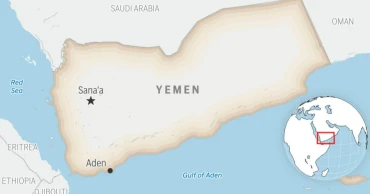
A military official said the additional resources have helped as the U.S. patrols various conflict areas, including operations targeting the Islamic State group in Iraq and Syria, defending Israel and countering threats from Iranian-backed Houthi rebels in Yemen, who have targeted commercial ships in the Red Sea and launched ballistic missiles at Israel.
The officials spoke on condition of anonymity to describe U.S. troop movements and locations.
Here’s a look at the U.S. military presence in the Middle East:
Troops
Normally, about 34,000 U.S. forces are deployed to U.S. Central Command, which covers the entire Middle East. That troop level grew in the early months of the Israel-Hamas war to about 40,000 as additional ships and aircraft were sent in.
Several weeks ago, the total spiked to nearly 50,000 when Austin ordered two aircraft carriers and their accompanying warships to stay in the region as tensions roiled between Israel and Lebanon. One carrier strike group has since left and moved into the Asia-Pacific.
The beefed-up presence is designed both to help defend Israel and protect U.S. and allied personnel and assets.
Navy warships are scattered across the region, from the eastern Mediterranean Sea to the Gulf of Oman, and both Air Force and Navy fighter jets are strategically based at several locations to be better prepared to respond to any attacks.
Warships
The U.S. is back to one aircraft carrier in the region. Austin has extended the deployment of carriers several times in the past year so that on a few occasions, there has been the rare presence of two at once.
American military commanders have long argued that the presence of a formidable aircraft carrier — with its array of fighter jets and surveillance aircraft and sophisticated missiles — is a strong deterrent against Iran.
The USS Abraham Lincoln and its three destroyers are in the Gulf of Oman, while two U.S. Navy destroyers are in the Red Sea. The USS Georgia guided missile submarine, which Austin ordered to the region last month, had been in the Red Sea and remains in U.S. Central Command, but officials declined to say where.
There are six U.S. warships in the eastern Mediterranean Sea, including the USS Wasp amphibious assault ship with the 26th Marine Expeditionary Unit aboard. And three Navy destroyers are in that area.
About a half dozen of the F/A-18 fighter jets from the USS Abraham Lincoln have been moved to a land base in the region. Officials declined to say where.
Aircraft
The Air Force sent in an additional squadron of advanced F-22 fighter jets last month, bringing the total number of land-based fighter squadrons in the Middle East to four.
That force also includes a squadron of A-10 Thunderbolt II ground attack aircraft, F-15E Strike Eagles and F-16 fighter jets. The Air Force is not identifying what countries the planes are operating from.
The addition of the F-22 fighter jets gives U.S. forces a hard-to-detect aircraft that has a sophisticated suite of sensors to suppress enemy air defenses and carry out electronic attacks. The F-22 also can act as a “quarterback,” organizing other warplanes in an operation.
But the U.S. also showed in February that it doesn’t have to have planes based in the Middle East to attack targets. In February, a pair of B-1 bombers took off from Dyess Air Force Base in Texas and flew more than 30 hours in a roundtrip mission in which they struck 85 Islamic Revolutionary Guards Corps Quds Force targets in Iraq and Syria in response to an attack by IRGC-backed militias that killed three U.S. service members.
1 year ago