middle-east
Gaza’s Rafah crossing set to resume limited movement as ceasefire holds
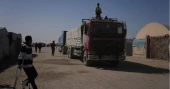
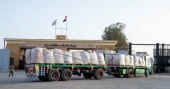
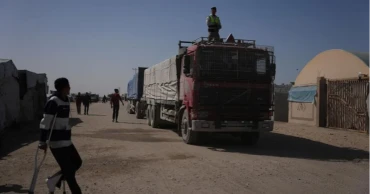
Palestinians in Gaza on Sunday watched with cautious hope as preparations got underway to reopen the Rafah border crossing with Egypt, the territory’s main gateway to the outside world, with Israel saying limited travel would resume from Monday under the ongoing ceasefire with Hamas.
Workers were seen readying the crossing, which has been largely shut since Israel seized control of it in May 2024. Many Gazans welcomed the move but voiced frustration over strict limits on the number of people allowed to cross.
“Opening the crossing is a good step, but setting a cap on how many people can pass through is a real problem,” said Ghalia Abu Mustafa from Khan Younis. Others stressed the urgent need for medical travel. Suhaila Al-Astal, displaced from Rafah, said her sick daughter required treatment abroad and called for the crossing to be opened permanently and in both directions.
Israel said the crossing had been opened on a trial basis and that Gaza residents would be allowed to begin crossing from Monday, though only in small numbers initially. Prime Minister Benjamin Netanyahu has said Israel will allow 50 medical patients to leave Gaza each day. According to an official familiar with the talks, each patient will be permitted to travel with two relatives, while up to 50 Palestinians who left Gaza during the war will be allowed to return daily.
Zaher al-Wahidi, head of documentation at Gaza’s Health Ministry, said the ministry had not yet been officially informed about the start of medical evacuations. Around 20,000 Palestinians in need of medical care are hoping to leave Gaza via Rafah, while thousands more outside the enclave are seeking to return.
Under the new arrangement, Israel and Egypt will vet those entering and leaving through the crossing, which will be overseen by European Union border monitors. Israeli officials say the number of travelers could increase gradually if the system functions smoothly.
The announcement came a day after Israeli airstrikes killed at least 30 Palestinians, including several children, according to hospital officials, marking one of the deadliest days since the ceasefire began on Oct. 10. Israel accused Hamas of violating the truce.
Nicolay Mladenov, head of US President Donald Trump’s newly established Gaza peace board, urged all sides to exercise restraint and said efforts were under way with a newly selected Palestinian committee to prevent further incidents.
Meanwhile, Israel’s Diaspora Ministry said it was moving to end the operations of Doctors Without Borders in Gaza by Feb. 28. Israel had suspended the medical charity’s activities in December after it declined to comply with new registration rules requiring aid groups to submit lists of local staff, arguing the measures could put Palestinian employees at risk.
Doctors Without Borders warned that the decision would have a devastating impact on health services in Gaza, where it supports six hospitals, runs two field hospitals, eight primary health centers and clinics, and operates two of the enclave’s five stabilization centers for severely malnourished children. Israel has suspended more than two dozen humanitarian organizations under the new rules, saying they are needed to prevent militant infiltration, while aid groups say the restrictions harm civilians in desperate need.
Palestinian security officers crossed through the Egyptian side of Rafah on Sunday to join the EU mission supervising the crossing, according to an Egyptian official. Ambulances were also seen passing through the Egyptian gate.
Before the war, Rafah was Gaza’s primary crossing for people traveling in and out of the territory. Israel says its takeover of the crossing last year was aimed at stopping weapons smuggling by Hamas. The crossing was briefly opened for medical evacuations during a temporary ceasefire in early 2025 but remained closed afterward until recent developments, including the recovery of the remains of the last hostage in Gaza.
Under the ceasefire terms, Israeli forces continue to control the area between the Rafah crossing and densely populated parts of Gaza. Egypt has repeatedly said the crossing must operate in both directions, amid concerns it could otherwise be used to force Palestinians out of the enclave.
The ceasefire paused more than two years of fighting that began with the Hamas-led attack on southern Israel on Oct. 7, 2023, which killed about 1,200 people and led to the capture of 251 hostages. Israel’s subsequent offensive has killed 71,795 Palestinians, according to Gaza’s Health Ministry, including 523 since the ceasefire began.
The first phase of the truce includes hostage and prisoner exchanges, increased humanitarian aid and a partial Israeli troop withdrawal. A more complex second phase envisions new governance arrangements for Gaza, the deployment of an international security force, the disarmament of Hamas and steps toward reconstruction.
1 month ago
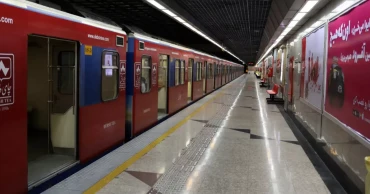
82 metro stations, 300 parking lots in Tehran designated as shelters amid US tensions
As tensions rise between Iran and the United States, Tehran authorities have moved to strengthen civil defense measures, designating 82 metro stations and over 300 underground spaces as emergency shelters.
Ali Nasiri, head of the Tehran Crisis Management Organization, told media on Saturday that the Passive Defense Committee of Tehran Municipality surveyed existing shelters and identified around 518 older shelters in schools, though only 20% are currently restorable, reports reports Anadolu Ajansi.
The 82 metro stations are being equipped with essential facilities, including restrooms, water, and food supplies. Shelter signs and labels are expected to be completed soon. Additional underground locations, such as parking lots and public complexes, have also been earmarked as emergency shelters, which once operational could accommodate around 2.5 million residents. Tehran’s population ranges from 10–12 million, rising to 15–16 million including the greater metropolitan area.
Read More: Iran dismisses Trump’s threats, vows swift response to any US attack
During the June 2025 confrontation between Iran and Israel, residents had previously taken refuge in metro stations. Since that 12-day conflict, officials have upgraded shelters to enhance safety in the capital.
In recent weeks, fears of renewed conflict have grown after U.S. President Donald Trump announced a naval fleet en route to Iran. The Iranian government has warned it will respond forcefully to any military attack, prompting authorities to accelerate preparations for potential emergencies.
1 month ago
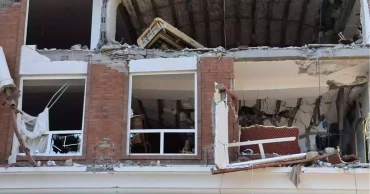
Blast in Iran port city kills 1, wounds 14 before Strait of Hormuz naval drill
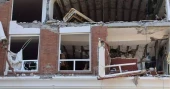
An explosion ripped through an apartment building in Iran’s southern port city of Bandar Abbas on Saturday, killing a four-year-old girl and injuring at least 14 others, just a day before Iran is set to hold a naval drill in the strategically vital Strait of Hormuz.
Iranian state television quoted a local fire official as saying the blast was caused by a gas leak. Footage aired by local media showed rescuers carrying out an injured man wearing a green security force uniform on a stretcher, though officials did not confirm his identity. Iran’s paramilitary Revolutionary Guard denied reports that any of its naval commanders were wounded.
Bandar Abbas lies along the Strait of Hormuz, the narrow waterway linking the Persian Gulf to the Gulf of Oman, through which about one-fifth of the world’s traded oil passes. The incident comes amid heightened tensions, with the US military warning Iran against any actions that could endanger American warships or commercial vessels during the planned drill.
In a separate incident the same day, another explosion, also blamed on a gas leak, killed five people in the southwestern city of Ahvaz, according to Iranian media.
Regional tensions remain high following threats by US President Donald Trump to consider military action against Iran over its violent crackdown on protests and the possible mass execution of detainees. Tehran has warned it could respond by targeting US interests and allies in the region.
Iranian security official Ali Larijani said on social media that “structural arrangements for negotiations are progressing,” though no formal talks with Washington have been announced. Supreme Leader Ayatollah Ali Khamenei has repeatedly ruled out negotiations with the US.
Meanwhile, Egyptian President Abdel-Fattah el-Sissi called for de-escalation during a phone call with Iranian President Masoud Pezeshkian, saying Cairo is working to bring Tehran and Washington back to the negotiating table over Iran’s nuclear program. Qatar also said its prime minister visited Tehran to discuss efforts to reduce regional tensions.
1 month ago
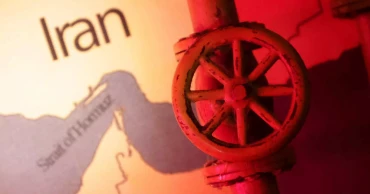
Tensions rise in Strait of Hormuz as Iran plans military drill
The Strait of Hormuz, a strategic chokepoint at the mouth of the Persian Gulf, has once again become a flashpoint as Iran plans a military drill that could intersect a key international shipping lane.
Iran has warned vessels that a live-fire exercise will take place Sunday and Monday in the strait, through which about one-fifth of the world’s oil supply passes. The U.S. Central Command issued a warning, cautioning Tehran that “unsafe and unprofessional behavior” near American forces, regional partners, or commercial ships could raise the risk of collisions, escalation, and destabilization.
The strait, just 33 kilometers (21 miles) at its narrowest point, links the Persian Gulf to the Gulf of Oman. While Iran and Oman control portions of its waters, it is considered an international waterway. Historically, it has been vital for trade and today carries the majority of Persian Gulf oil to Asian markets. Although pipelines in Saudi Arabia and the UAE can bypass it, most volumes have no alternative route. Past threats to the strait have spiked global energy prices, including during Israel’s 12-day war against Iran in June.
Iran’s notice to mariners indicated the drill may enter the Traffic Separation Scheme, a two-lane system guiding ships in and out of the Gulf. It is expected to involve the paramilitary Revolutionary Guard, whose small fast-attack vessels frequently confront U.S. Navy ships.
Tensions are heightened by U.S. concerns over Iran’s violent crackdown on nationwide protests and its nuclear program. President Donald Trump has threatened military action if Iran crosses red lines, including killing protesters or executing detainees. The USS Abraham Lincoln and supporting vessels are in the Arabian Sea, ready to respond if ordered. Iran has warned of possible retaliatory strikes against U.S. interests and Israel.
The situation underscores the Strait of Hormuz’s continuing strategic importance and the potential risks to global energy supplies as both sides maintain a show of force in the region.
1 month ago
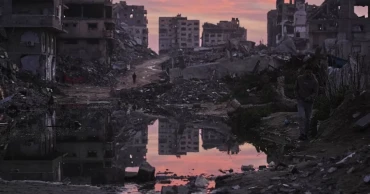
Israeli strikes kill 12 in Gaza as ceasefire advances
Israeli airstrikes killed at least 12 Palestinians, including women and children, across the Gaza Strip on Saturday, hospital officials said, marking one of the deadliest days since an October ceasefire aimed at halting the fighting.
The strikes hit sites in both northern and southern Gaza, including an apartment building in Gaza City and a tent camp sheltering displaced people in Khan Younis, according to hospitals that received the bodies. Among the victims were two women and six children from two separate families.
The latest violence came a day before the Rafah border crossing with Egypt is due to reopen in Gaza’s southernmost city. All border crossings into the territory have remained closed since the war began.
The limited reopening of Rafah is seen as the first significant move in the second phase of the US-brokered ceasefire now taking shape. Key and contentious issues in this phase include reopening borders, demilitarising the Gaza Strip after nearly two decades of Hamas rule and setting up a new governing authority to oversee reconstruction.
For Palestinians, Rafah is considered a vital lifeline, particularly for tens of thousands of patients seeking medical treatment outside Gaza, where most health facilities have been damaged or destroyed.
Despite the ceasefire progress, Saturday’s strikes underscored that fatalities continue to mount. Shifa Hospital said an early morning strike in Gaza City killed three children along with their aunt and grandmother, while the children’s mother survived.
In the south, Nasser Hospital reported that a strike on a tent camp triggered a fire, killing seven people, including a father, his three children and three grandchildren.
Gaza’s Health Ministry said more than 500 Palestinians have been killed by Israeli fire since the ceasefire took effect on Oct 10. The ministry, which operates under the Hamas-led administration, keeps detailed casualty records that are generally regarded as reliable by UN agencies and independent experts.
The Israeli military did not immediately comment on the reported strikes.
1 month ago
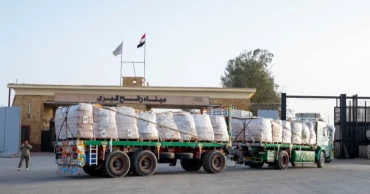
Israel to reopen Gaza-Egypt crossing after nearly two years
Israel will reopen Gaza’s Rafah border crossing with Egypt on Sunday, allowing limited movement of people after almost two years of closure.
The Israeli military unit COGAT, which coordinates aid to Gaza, said on Friday that only people will be allowed to pass through the crossing.
The Rafah crossing, Gaza’s main link to the outside world, has been mostly closed since May 2024. Israel and Egypt will screen individuals for entry and exit, with European Union border patrol agents overseeing the process.
Palestinians who left Gaza during the recent conflict will be allowed to return if they get Israeli security clearance.
Israel had previously resisted reopening the crossing, but the return of the last hostage from Gaza earlier this week cleared the way for the move, seen as a key step in U.S. President Donald Trump’s Gaza ceasefire plan.
1 month ago
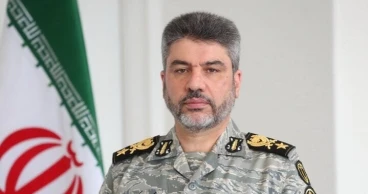
Iran warns of swift retaliation as tensions rise with US
Iran has warned it would respond immediately and forcefully to any attack by the United States, as tensions escalated following fresh warnings from US President Donald Trump over Tehran’s nuclear programme and the European Union’s decision to designate Iran’s Islamic Revolutionary Guard Corps as a terrorist organisation.
Iranian military spokesman Brigadier General Mohammad Akraminia said US military assets in the region, including aircraft carriers in the Gulf, are within the range of Iran’s medium-range missiles and have what he described as serious vulnerabilities. He said any hostile action would prompt an instant response.
The warning came after President Trump said time was running out for Iran to reach a nuclear agreement with Washington. The EU’s move to blacklist the IRGC further added to pressure on Tehran, drawing strong criticism from Iranian officials.
Ali Shamkhani, a senior security official and representative of Supreme Leader Ayatollah Ali Khamenei, said Iran would take immediate countermeasures in response to the EU decision. In a social media post, he accused Western countries of applying double standards by supporting Israel’s war in Gaza while labelling the IRGC’s actions against extremist groups as terrorism.
Meanwhile, regional diplomacy intensified amid fears of a wider conflict. Turkish President Recep Tayyip Erdogan said Turkiye was ready to help de-escalate tensions between Iran and the US, holding a phone call with Iranian President Masoud Pezeshkian and offering to play a facilitating role.
Iran’s Foreign Minister Abbas Araghchi arrived in Istanbul on Friday for talks with Turkish leaders, focusing on bilateral relations and growing regional and international challenges. He criticised the EU’s decision on the IRGC, calling it a strategic mistake.
Oil markets reacted to the rising tensions, with prices easing after recent gains as investors reassessed the likelihood of imminent military action. Analysts said any potential conflict was likely to be limited, reducing fears of major supply disruptions.
Iran has also reported arrests linked to recent antigovernment protests in southern Tehran, as authorities continue a crackdown that began late last year.
Despite diplomatic contacts, analysts say Washington and Tehran remain far apart on key issues, including Iran’s nuclear activities and missile programme, raising concerns that the standoff could further intensify.
With inputs from ALJAZEERA
1 month ago
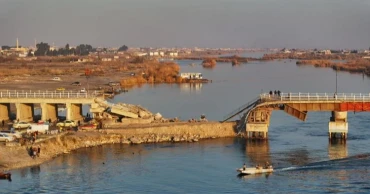
SDF, Syrian government strike deal to solidify truce
The Kurdish-led Syrian Democratic Forces on Friday announced a fresh agreement with Syria’s central government aimed at reinforcing a ceasefire that ended weeks of clashes and setting out a roadmap for integration between the two sides.
Under the deal, security forces affiliated with Syria’s Interior Ministry will deploy to the cities of al-Hassakeh and Qamishli in the Kurdish heartland, areas they were previously barred from entering, the SDF said in a statement. The agreement also initiates the process of merging SDF forces with government troops.
As part of the integration, a new military formation will be created, comprising three brigades drawn from the SDF. In addition, a separate brigade of SDF fighters will be incorporated within an existing government brigade in Aleppo province.
The agreement also provides for the integration of local institutions of the Kurdish-led administration in northeast Syria and their employees into state institutions. The region has operated as a de facto autonomous zone for several years.
The SDF said the deal includes provisions for civil and educational rights for Kurdish people and guarantees the return of displaced residents to their home areas.
According to the statement, the agreement seeks to unify Syrian territory and complete the integration process through enhanced cooperation and joint efforts to rebuild the war-torn country.
There was no immediate official comment from Damascus, though Syrian state television quoted an unnamed official as confirming the agreement.
The SDF lost much of its territory in northeast Syria during a government offensive after heavy fighting erupted in Aleppo on Jan 6, following months of stalled talks over a previous integration arrangement.
Since the ouster of former President Bashar Assad in December 2024, Syria’s new leadership has struggled to fully assert control over a country devastated by nearly 14 years of civil war. A deal reached in March to merge the SDF with Damascus failed to gain momentum.
The United States, a longtime backer of the SDF in the fight against Islamic State militants, has recently moved closer to Damascus under interim President Ahmad al-Sharaa. While Washington did not intervene militarily in the latest clashes, it pressed both sides to reach an agreement.
A ceasefire brokered last week has largely held, and Friday’s announcement is seen as a step toward consolidating that truce.
1 month ago
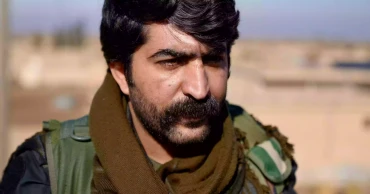
Syria’s Kurds vow to ‘fight until last breath’ despite government advance
Syrian Kurdish fighters have vowed to resist government forces “until the last breath,” even as Damascus moves to reclaim control over the Kurdish autonomous region in the country’s northeast.
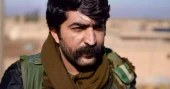
Commander Azad, a veteran Kurdish fighter whose nom-de-guerre means “freedom,” bears the physical scars of years of conflict. He lost a leg in a Turkish airstrike in 2018 and carries injuries from multiple attacks by the Islamic State group (IS), including shrapnel wounds to his arm, back, and abdomen.
Syrian army announces 15-day extension of ceasefire with Kurdish-led forces
Beyond the battlefield, Azad says his deepest wound is political. He feels betrayed by the United States, which previously collaborated closely with Kurdish forces to defeat IS after it seized large parts of Syria and Iraq in 2014. “History will hold them accountable,” he says. “Morally it’s not right. But we will keep fighting until our last breath. We are not cry-babies.”
The Kurdish-led Syrian Democratic Forces (SDF) now face a new struggle against government troops, who in recent weeks have recaptured resource-rich territories held by the Kurds for over a decade following the defeat of IS.
#With inputs from BBC
1 month ago
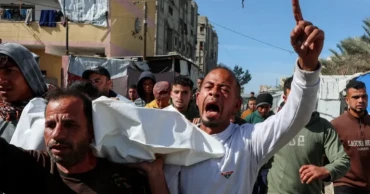
Israel returns 15 Palestinian bodies in final Gaza prisoner swap
Israel handed over the bodies of 15 Palestinians to the International Committee of the Red Cross (ICRC) on Thursday in exchange for the last Israeli captive, whose remains were recovered earlier this week, marking the completion of one phase of the ongoing conflict in Gaza.
Palestinian authorities are assessing whether the bodies will be released at Nasser Hospital in Khan Younis or al-Shifa Hospital in Gaza City. (Al Jazeera)
The transfer comes more than two years after hostilities escalated, including the Hamas-led attacks on southern Israel on October 7, 2023, which left 251 Israelis, including policeman Ran Gvili, captured. Gvili’s remains were the last to be held by Palestinian groups. At his funeral on Wednesday, Israeli Prime Minister Benjamin Netanyahu hailed him as a “hero” and warned Israel’s adversaries of severe consequences for future attacks.
The return of captives and bodies unfolded through ceasefire arrangements, prisoner-swap deals, and limited military rescue attempts. While all Israeli captives have now been repatriated, thousands of Palestinians remain imprisoned in Israel, often without formal charges or trial. According to a July 2024 UN Human Rights Office report, Israel holds approximately 9,400 Palestinians as “security detainees,” with documented cases of torture, sexual assault, and other abuses. Human rights group Physicians for Human Rights–Israel reported that at least 94 Palestinian prisoners have died in custody due to mistreatment, medical neglect, or malnutrition. (Al Jazeera)
Meanwhile, violence continues in Gaza. On Thursday, Israeli forces killed two Palestinians and injured dozens near Makki roundabout in the central Maghazi camp. Since the ceasefire took effect on October 10, at least 490 Palestinians have been killed due to airstrikes, tank shelling, and gunfire, according to Gaza’s Health Ministry. (Al Jazeera)
The prisoner exchange also paves the way for a political transition in Gaza. Hamas has agreed to transfer governance to a committee of Palestinian technocrats, which will oversee daily administration under the supervision of a U.S.-led Board of Peace. Hamas spokesman Hazem Qassem said protocols and committees are in place to ensure a full handover. Gaza’s Civil Defence spokesman Mahmoud Basal warned that the territory faces an “unprecedented catastrophe” due to shortages of food, shelter, and medical supplies caused by the ongoing blockade.
With inputs from ALJAZEERA
1 month ago