middle-east
Israeli airstrike targets area near Syrian presidential palace
Israel carried out an airstrike early Friday near Syria’s presidential palace, delivering what it called a “clear message” to Damascus after warning authorities not to advance on villages inhabited by members of the Druze minority in the country’s south.
The strike followed several days of fierce clashes between pro-government gunmen and Druze fighters in areas close to the capital, leaving dozens dead or injured, according to Associated Press.
Syria’s presidency condemned the Israeli action, describing it as a “dangerous escalation against state institutions and the sovereignty of the state.” In a statement, it urged the international community to support Syria, stating the attack “target Syria national security and the unity of the Syrian people.”
This marks Israel’s second strike in Syria within a week. The latest strike, near the People’s Palace — a hilltop residence in Damascus — is widely interpreted as a pointed warning to Syria’s new leadership, now reportedly dominated by Islamist groups including Hayat Tahrir al-Sham.
The Israeli military confirmed that fighter jets had struck an area near the Palace of President Ahmad al-Sharaa in Damascus, without providing further details.
Israeli Prime Minister Benjamin Netanyahu and Defence Minister Israel Katz said in a joint statement that the strike was intended as “a clear message” to Syrian authorities.
“We will not allow the deployment of forces south of Damascus or any threat to the Druze community,” they said.
Israel committing ‘Livestreamed Genocide’ in Gaza: Amnesty
Tensions had flared in recent days in southern Syria, particularly in the Sweida province and Druze-majority suburbs of Damascus. On Thursday, the community’s top spiritual leader, Sheikh Hikmat Al-Hijri, delivered a harsh rebuke to the Syrian government, accusing it of carrying out an “unjustified genocidal attack” on the minority group.
Despite the mounting violence, the Druze leadership affirmed their national loyalty, stating early Friday that they remain part of Syria and reject any separatist aspirations.
The statement called on the government to restore its authority in Sweida and secure the vital highway connecting the province with Damascus.
The recent fighting was triggered by the circulation of an audio clip on social media late Monday. The clip, allegedly of a Druze cleric, criticised Islam’s Prophet Muhammad (PBUH), sparking outrage among Sunni Muslims.
However, the cleric in question, Marwan Kiwan, denied any involvement in a video message.
Syria’s Information Ministry reported that 11 members of the security forces were killed in two separate attacks. Meanwhile, the UK-based Syrian Observatory for Human Rights said the death toll from four days of clashes had reached 99, including 51 killed in the Sahnaya area and the Druze-majority suburb of Jaramana. The dead included local gunmen and government forces.
The Druze are a small religious sect that emerged in the 10th century as an offshoot of Ismaili Shiite Islam. Of the estimated 1 million Druze globally, more than half reside in Syria, particularly in Sweida and surrounding regions.
Other significant communities live in Lebanon and Israel, including the Golan Heights, which Israel seized from Syria in the 1967 war and annexed in 1981.
7 months ago
Israel committing ‘Livestreamed Genocide’ in Gaza: Amnesty
Amnesty International has accused Israel of conducting a "live-streamed genocide" in Gaza, asserting that the country is committing unlawful acts aimed at eliminating the Palestinian population. In its annual report released Monday, Amnesty stated that Israeli actions in Gaza breach the UN Genocide Convention, including inflicting serious physical and psychological harm on civilians and imposing living conditions intended to cause their destruction.
The report highlights that Israel has consistently blocked humanitarian aid to Gaza and proceeded with an assault on Rafah, despite warnings from the global community and the International Court of Justice about its catastrophic impact on civilians. Amnesty also noted that Israeli airstrikes frequently target civilians who comply with evacuation directives, and that Israeli forces have continued arbitrary arrests and, in some instances, forced disappearances of Palestinians.
Agnes Callamard, Amnesty's secretary-general, described the situation as a genocide broadcast to the world since Hamas's October 7, 2023, attacks on Israel, which killed around 1,200 people and resulted in over 250 hostages being taken. In response, Callamard said, Israel has killed tens of thousands of Palestinians, obliterated homes and critical infrastructure, and devastated families—all under the apparent indifference of the international community.
Callamard also criticized Israel and its allies, particularly the United States, for acting as if international laws do not apply to them. Israel has rejected the genocide allegations, claiming its military actions are in self-defense against Hamas and that it strives to minimize civilian casualties.
According to Palestinian health officials, more than 51,300 people in Gaza, including at least 17,400 children, have been killed by Israeli forces since October 7, 2023.
Amnesty’s report also flagged growing threats to global human rights, including actions by U.S. President Donald Trump’s administration. Callamard condemned what she called a series of attacks during Trump’s first 100 days in 2025 on international law, the United Nations, and efforts to address poverty and systemic discrimination.
The report further raised concerns about human rights abuses by Russia in Ukraine and the suppression of women’s rights in Afghanistan and Iran. Amnesty highlighted that the Taliban criminalized women's public presence and denied them work and education, while in Iran, harsher veiling laws led to brutal penalties and impunity for those enforcing them.
8 months ago
Israeli airstrikes kill at least 17 Palestinians in northern Gaza
DEIR AL-BALAH, Gaza Strip (AP) — Israeli airstrikes early Monday on northern Gaza killed at least 17 Palestinians, local health authorities reported.
Israel has been launching daily attacks on Gaza since breaking its ceasefire with Hamas last month. Since early March, it has also blocked all imports, including food and medical supplies, into the territory's 2 million-strong population, aiming to pressure Hamas into releasing hostages.
The ongoing bombardment and severe shortages are devastating Gaza’s most vulnerable, particularly pregnant women and children.
In Beit Lahiya, an airstrike struck a house, killing 10 people, including Abdel-Fattah Abu Mahadi, a Palestinian recently freed under the previous truce. His wife, two children, and a grandchild were among the victims, according to the Indonesian Hospital, which received the bodies.
Separately, another airstrike on a home in Gaza City killed seven people, including two women, according to the Gaza Health Ministry’s emergency services. Two others were injured.
The Israeli military did not immediately comment. Israel maintains it tries to minimize civilian casualties and holds Hamas responsible for deaths by operating from densely populated areas.
The conflict erupted on October 7, 2023, when Hamas-led militants attacked southern Israel, killing around 1,200 people, mostly civilians, and abducting 251 others. Hamas continues to hold 59 hostages, 24 of whom are believed to be alive, after most captives were released during truce agreements.
Israel’s counteroffensive has so far claimed more than 52,000 Palestinian lives, predominantly women and children, according to Gaza’s Health Ministry, though it does not distinguish between fighters and civilians. The Israeli assault has also devastated large parts of Gaza, displacing the majority of its residents.
Prime Minister Benjamin Netanyahu has pledged to continue the military campaign until all hostages are freed and Hamas is eliminated or disarmed. He also supports a plan proposed by former U.S. President Donald Trump to resettle much of Gaza's population abroad through what he calls "voluntary emigration."
Palestinians reject the plan, viewing it as forced displacement, while human rights groups warn it would likely violate international law.
Hamas insists it will only free the remaining hostages if Israel agrees to release more Palestinian prisoners, enact a permanent ceasefire, and fully withdraw from Gaza, as outlined in the now-collapsed ceasefire terms.
8 months ago
Mahmoud Abbas appoints new deputy as successor
Palestinian President Mahmoud Abbas on Saturday named a veteran aide and confidant as his new vice president. It’s a major step by the aging leader to designate a successor.
The appointment of Hussein al-Sheikh as vice president of the Palestine Liberation Organization does not guarantee he will be the next Palestinian president. But it makes him the front-runner among longtime politicians in the dominant Fatah party who hope to succeed the 89-year-old Abbas.
The move is unlikely to boost the image among many Palestinians of Fatah as a closed and corrupt movement out of touch with the general public.
Abbas hopes to play a major role in postwar Gaza. He has been under pressure from Western and Arab allies to rehabilitate the Palestinian Authority, which has limited autonomy in parts of the Israeli-occupied West Bank. He has announced a series of reforms in recent months, and last week his Fatah movement approved the new position of PLO vice president.
The PLO is the internationally recognized representative of the Palestinian people and oversees the Western-backed Palestinian Authority. Abbas has led both entities for two decades.
Under last week’s decision, the new vice president, coming from the PLO’s 16-member executive committee, would succeed Abbas in a caretaker capacity if the president dies or becomes incapacitated.
That would make him the front-runner to replace Abbas on a permanent basis, though not guarantee it. The PLO’s executive committee would need to approve that appointment, and the body is filled with veteran politicians who see themselves as worthy contenders.
At least 45 Palestinians killed in Israeli airstrikes across Gaza: Civil Defense
The Palestinian Authority, meanwhile, would have a separate caretaker leader, Rawhi Fattouh, the speaker of the Palestinians’ non-functioning parliament. But within 90 days, it would have to hold elections. If that is not possible, the new PLO president would likely take over the position.
Al-Sheikh, 64, is a veteran politician who has held a series of top positions over decades, most recently as the secretary-general of the PLO’s executive committee for the past three years. He spent 11 years in Israeli prisons in his youth and is a veteran of the Palestinian security forces — experiences that could give him credibility with Palestinian security figures and the broader public.
Now he finds himself in a strong position to shore up his power.
He is Abbas’ closest aide and, most critically, maintains good working relations with Israel and the Palestinians’ Arab allies, including wealthy Gulf countries. As Abbas’ point man with Israel, al-Sheikh is responsible for arranging coveted travel permits for Palestinians, including VIP leaders, giving him an important lever of power over his rivals.
However, polls show al-Sheikh, like most of Fatah’s leadership, to be deeply unpopular with the general public. This week’s decision behind closed doors by the PLO’s aging leadership is likely to reinforce its image as being stodgy and out of touch.
In a 2022 interview with The Associated Press, al-Sheikh defended his unpopular coordination with Israel, saying there was no choice under the difficult circumstances of the occupation.
“I am not a representative for Israel in the Palestinian territories,” he said at the time. “We undertake the coordination because this is the prelude to a political solution for ending the occupation.”
The most popular Palestinian, Marwan Barghouti, is serving multiple life sentences in an Israeli prison, and Israel has ruled out releasing him as part of any swap for Israeli hostages held in Gaza by the Hamas militant group.
US airstrikes targeting a Yemeni oil port killed 20 people, Houthis say
As Israel’s war with Hamas drags on, with talk by U.S. President Donald Trump and Israeli Prime Minister Benjamin Netanyahu of uprooting Palestinians in Gaza to relocate them elsewhere, al-Sheikh will be under mounting pressure to unite the Palestinian leadership.
The PLO is a rival for Hamas, which won the last national elections in 2006 and is not in the PLO. Hamas seized control of Gaza from Abbas’ forces in 2007, and reconciliation attempts have repeatedly failed.
Abbas is still seen internationally as the leader of the Palestinians and a partner in any effort to revive the peace process, which ground to a halt when Netanyahu returned to office in 2009. The chain-smoking political veteran has clung to power since his mandate expired in 2009.
8 months ago
A massive explosion at an Iranian port linked to missile fuel shipment kills 14, injures some 750
A massive explosion and fire rocked a port Saturday in southern Iran purportedly linked to a shipment of a chemical ingredient used to make missile propellant, killing 14 people and injuring around 750 others.
Helicopters and aircraft dumped water from the air on the raging fire through the night into Sunday morning at the Shahid Rajaei port. The explosion occurred just as Iran and the United States met Saturday in Oman for the third round of negotiations over Tehran’s rapidly advancing nuclear program.
No one in Iran outright suggested that the explosion came from an attack. However, even Iranian Foreign Minister Abbas Araghchi, who led the talks, on Wednesday acknowledged that “our security services are on high alert given past instances of attempted sabotage and assassination operations designed to provoke a legitimate response.”
State media offered the casualty figures. But there were few details on what sparked the blaze just outside of Bandar Abbas, causing other containers to reportedly explode.
Security firm says port received chemical for missile fuel
The port took in a shipment of the missile fuel chemical in March, the private security firm Ambrey said. The fuel is part of a shipment of ammonium perchlorate from China by two vessels to Iran first reported in January by the Financial Times. The chemical used to make solid propellant for rockets was going to be used to replenish Iran's missile stocks, which had been depleted by its direct attacks on Israel during the war with Hamas in the Gaza Strip.
"The fire was reportedly the result of improper handling of a shipment of solid fuel intended for use in Iranian ballistic missiles," Ambrey said.
Ship-tracking data analyzed by The Associated Press put one of the vessels believed to be carrying the chemical in the vicinity in March, as Ambrey said. Iran hasn't acknowledged taking the shipment. The Iranian mission to the United Nations didn't respond to a request for comment on Saturday.
8 dead in India's Maharashtra ordnance factory explosion
It's unclear why Iran wouldn't have moved the chemicals from the port, particularly after the Beirut port blast in 2020. That explosion, caused by the ignition of hundreds of tons of highly explosive ammonium nitrate, killed more than 200 people and injured more than 6,000 others. However, Israel did target Iranian missile sites where Tehran uses industrial mixers to create solid fuel.
Social media footage of the explosion on Saturday at Shahid Rajaei saw reddish-hued smoke rising from the fire just before the detonation. That suggests a chemical compound being involved in the blast — like in the Beirut explosion.
“Get back get back! Tell the gas (truck) to go!" a man in one video shouted just before the blast. "Tell him to go, it’s going to blow up! Oh God, this is blowing up! Everybody evacuate! Get back! Get back!”
On Saturday night, the state-run IRNA news agency said that the Customs Administration of Iran blamed a “stockpile of hazardous goods and chemical materials stored in the port area" for the blast, without elaborating.
An aerial shot released by Iranian media after the blast showed fires burning at multiple locations in the port, with authorities later warning about air pollution from chemicals such as ammonia, sulfur dioxide and nitrogen dioxide in the air. Schools and offices in Bandar Abbas will be closed Sunday as well.
Port a major destination for Iranian cargo
Shahid Rajaei has been a target before. A 2020 cyberattack attributed to Israel targeted the port. It came after Israel said that it thwarted a cyberattack targeting its water infrastructure, which it attributed to Iran. Israeli officials didn't respond to requests for comment regarding Saturday's explosion.
Social media videos showed black billowing smoke after the blast. Others showed glass blown out of buildings kilometers, or miles, away from the epicenter of the explosion. State media footage showed the injured crowding into at least one hospital, with ambulances arriving as medics rushed one person by on a stretcher.
Hasanzadeh, the provincial disaster management official, earlier told state television that the blast came from containers at Shahid Rajaei port in the city, without elaborating. State television also reported that there had been a building collapse caused by the explosion, though no further details were offered.
The Interior Ministry said that it launched an investigation into the blast. Iranian President Masoud Pezeshkian also offered his condolences for those affected in the blast.
Nigerian gasoline tanker explosion kills 70 people
Shahid Rajaei port in Hormozgan province is about 1,050 kilometers (650 miles) southeast of Iran's capital, Tehran, on the Strait of Hormuz, the narrow mouth of the Persian Gulf through which 20% of all oil traded passes.
8 months ago
Iran and the US hold hours of expert talks in Oman over Tehran's rapidly advancing nuclear program
Iran and the United States held in-depth negotiations in Oman over Tehran's rapidly advancing nuclear program on Saturday, ending the discussions with a promise for more talks and perhaps another high-level meeting next weekend.
The talks ran for several hours in Muscat, the mountain-wrapped capital of this sultanate on the eastern edge of the Arabian Peninsula.
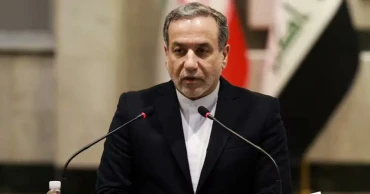
Iranian Foreign Minister Abbas Araghchi told state television after the talks that the parties exchanged written points throughout the day in discussions that he described as “very serious and work-focused.”
“This time, the negotiations were much more serious than in the past, and we gradually entered into deeper and more detailed discussions," he said. “We have moved somewhat away from broader, general discussions — though it is not the case that all disagreements have been resolved. Differences still exist both on major issues and on the details.”
A senior U.S. administration official said that the talks were “positive and productive.”
“This latest round of direct and indirect discussions lasted over four hours,” the official said on condition of anonymity to discuss the talks. “There is still much to do, but further progress was made on getting to a deal. We agreed to meet again soon, in Europe, and we thank our Omani partners for facilitating these talks.”
Omani Foreign Minister Badr al-Busaidi, who has mediated the two previous round of talks in Muscat and Rome, offered a positive note at the end of Saturday's negotiations.
Iran, US envoys arrive in Oman for first round talks over nuclear
Iran and the U.S. “identified a shared aspiration to reach agreement based on mutual respect and enduring commitments,” al-Busaidi posted on X. “Core principles, objectives and technical concerns were all addressed. Talks will continue next week with a further high level meeting provisionally scheduled for May 3.”
Araghchi arrived Friday in Oman on the eve of the talks and visited the Muscat International Book Fair, surrounded by television cameras and photojournalists. Witkoff was in Moscow on Friday to meet with Russian President Vladimir Putin, and arrived on Saturday to Oman.
Meanwhile on Saturday, a major explosion rocked a port in southern Iran just after the talks began, killing 14 people and injuring some 750 others. Authorities offered no immediate cause for the blast, which appeared to have been caused by a highly combustible material — though officials ruled out its oil and gas industry. The private security firm also linked to a shipment of a chemical ingredient used to make missile propellant to the port as well.
Nuclear talks come after decades of tensions
The talks seek to limit Iran’s nuclear program in exchange for the lifting of some of the crushing economic sanctions the U.S. has imposed on the Islamic Republic closing in on a half-century of enmity.
U.S. President Donald Trump has repeatedly threatened to unleash airstrikes targeting Iran’s program if a deal isn’t reached. Iranian officials increasingly warn that they could pursue a nuclear weapon with their stockpile of uranium enriched to near weapons-grade levels.
Iran's 2015 nuclear deal with world powers did limit Tehran's program. However, Trump unilaterally withdrew from it in 2018, setting in motion years of attacks and tensions. The wider Middle East also remains on edge over the Israel-Hamas war in the Gaza Strip.
Trump, traveling to Rome for the funeral of Pope Francis, again said that he hoped negotiations would lead to a new nuclear deal. However, he still held out the possibility of a military strike if they didn't.
“The Iran situation is coming out very well,” Trump said on Air Force One. “We've had a lot of talks with them and I think we're going to have a deal. I'd much rather have a deal than the other alternative. That would be good for humanity."
He added: “There are some people that want to make a different kind of a deal — a much nastier deal — and I don’t want that to happen to Iran if we can avoid it.”
Talks turn to experts
From the Iranian side, Iranian Deputy Foreign Minister Majid Takht-e Ravanchi headed up Tehran’s expert team, said Mohammad Golzari, an Iranian government official. Takht-e Ravanchi took part in the 2015 nuclear talks.
Iran’s president pledges no nuclear bomb, invites U.S. investment talks
The U.S. technical team was led by Michael Anton, the director of U.S. Secretary of State Marco Rubio’s policy planning staff. Anton doesn't have the nuclear policy experience of those who led Washington’s efforts in the 2015 talks.
Iran has insisted that keeping its enrichment is key. But Witkoff has muddied the issue by first suggesting in a television interview that Iran could enrich uranium at 3.67%, then later saying that all enrichment must stop. The demand that all enrichment stop also has been repeated by Rubio.
However, Iranians remain hopeful that the talks could be successful, as the Iranian rial has rebounded from historic lows during which it took more than 1 million rials to buy $1.
“It’s OK to negotiate, to make the nuclear program smaller or bigger, and reach a deal,” Tehran resident Farzin Keivan said. “Of course we shouldn’t give them everything. After all, we’ve suffered a lot for this program.”
8 months ago
UN food agency says its food stocks in Gaza run out
The World Food Program says its food stocks in the Gaza Strip have run out under Israel’s nearly 8-week-old blockade, ending a main source of sustenance for hundreds of thousands of Palestinians in the territory.
The WFP said in a statement that it delivered the last of its stocks to charity kitchens that it supports around Gaza. It said those kitchens are expected to run out of food in the coming days, reports AP.
Some 80% of Gaza’s population of more than 2 million relies primarily on charity kitchens for food, because other sources have shut down under Israel’s blockade, according to the UN.
The WFP has been supporting 47 kitchens that distribute 644,000 hot meals a day, said WFP spokesperson Abeer Etefa.
At least 39 people killed in Israeli strikes across Gaza, Palestinians say
It was not immediately clear how many kitchens would still be operating in Gaza if those shut down. But Etefa said the WFP-backed kitchens are the major ones in Gaza.
Israel cut off entry of all food, fuel, medicine and other supplies to Gaza on March 2 and then resumed its bombardment and ground offensives two weeks later, shattering a two-month ceasefire with Hamas.
8 months ago
At least 39 people killed in Israeli strikes across Gaza, Palestinians say
Israeli strikes across the Gaza Strip have killed at least 39 people, mostly women and children, the territory’s Health Ministry said Thursday.
Eleven people were killed when an airstrike struck a home in Gaza City on Thursday afternoon, adding to a toll of 28 announced by health officials earlier Thursday.
Israel ended its ceasefire with Hamas and renewed its air and ground war over a month ago. It has sealed off Gaza’s 2 million Palestinians from all food and other imports since the beginning of March to pressure Hamas to release hostages.
Hamas has said it will only release the remaining 59 captives, 24 of whom are believed to be alive, in exchange for the release of Palestinian prisoners, a lasting ceasefire and a full Israeli withdrawal. Israel has vowed to destroy Hamas.
The war began when Hamas-led militants stormed into southern Israel on Oct. 7, 2023, killing some 1,200 people, mostly civilians, and abducting 251 hostages. Most have since been released in ceasefire agreements or other deals. Israel’s offensive has killed over 51,000 Palestinians, mostly women and children, according to Gaza’s Health Ministry, which does not say how many of the dead were civilians or combatants. Israel says it has killed around 20,000 militants, without providing evidence.
At least 45 Palestinians killed in Israeli airstrikes across Gaza: Civil Defense
Israeli military says it was responsible for death of UN staffer last month
The military initially denied it was responsible for the March 19 strike on a U.N. guesthouse in Gaza, which also wounded five other U.N. employees. Afterward, the U.N. concluded that an Israeli tank had struck the compound and said it had informed the military a day earlier that the location was a U.N facility.
Releasing its initial findings on Wednesday, the military said one of its tanks targeted the building “due to assessed enemy presence” and that the structure “was not identified by the forces as a U.N. facility” at the time.
The attack prompted the United Nations to reduce its presence in the Gaza Strip, citing safety concerns.
Israel marks Holocaust Remembrance Day
A somber siren wailed across the country for two minutes of silence at 10 am Thursday. Cars stopped along the highway and people paused in their daily errands as they stood in silence.
Yom Hashoah, the day Israel observes as a memorial for the 6 million Jews killed by Nazi Germany and its allies in the Holocaust, is one of the most solemn dates on the country’s calendar.
Official observances began after sundown on Wednesday with a ceremony at the Yad Vashem Holocaust memorial in Jerusalem. At the ceremony, Israeli Prime Minister Benjamin Netanyahu vowed to prevent Iran from obtaining a nuclear weapon as “the main lesson of the Holocaust."
“On this Holocaust Day, I promise: The military pressure on Hamas will continue. We will destroy all its capabilities. We will return all our hostages. We will defeat Hamas, and we will prevent Iran from obtaining nuclear weapons,” Netanyahu said.
Israel’s president Isaac Herzog is in Poland for the annual March of the Living in the Auschwitz-Birkenau death camp. He was joined by some 80 Holocaust survivors and 10 survivors of Hamas captivity in Gaza.
Far-right Israeli minister booed at Yale
Protesters booed and threw water bottles at Israeli Security Minister Itamar Ben-Gvir, who was invited to speak at Yale University
The minister, who has been convicted eight times for offenses including racism and supporting a terrorist organization, is in America on a week-long trip to meet with politicians, business leaders, and the Jewish community in the U.S.
Israeli airstrikes kill senior Hamas leader, 18 others; Houthis launch missile toward Israel
According to the Yale student newspaper, Ben-Gvir was invited to speak with a Jewish group that is not formally affiliated with the university.
Ben-Gvir said he spoke to students and professors about the lessons of the Holocaust in honor of Holocaust Remembrance Day, which Israel marks from Wednesday evening to Thursday. “The antisemitic rioters will not intimidate me. I am continuing my important journey in the United States,” he said.
Ben-Gvir oversees the country’s police force and has encouraged Netanyahu to press ahead with the war in Gaza and stop all humanitarian aid.
At least 28 dead as Israel pounds Gaza
Israeli strikes across the Gaza Strip have killed at least 28 people, mostly women and children, according to the territory’s Health Ministry.
At least nine people were killed in a strike on a police station in the northern Jabaliya area, the ministry said. The Israeli military said it targeted a command and control center for Hamas and the smaller Islamic Jihad militant group.
At least seven people were killed, including a mother and her two children, and another two children, in three strikes on the southern city of Khan Younis. Strikes in central Gaza killed six people, including two women and two children. An airstrike on a home in Gaza City killed four children and their parents, the Health Ministry said.
8 months ago
Dubai’s viral pistachio chocolate sparks global nut shortage
A luxurious chocolate bar from Dubai, bursting with pistachio-flavored Kunafa-inspired filling, has taken the internet by storm—so much so that it’s now blamed for a global pistachio shortage.
The chocolate, called Can’t Get Knafeh of It, was created by boutique Emirati chocolatier FIX in 2021, but its popularity skyrocketed after a TikTok video went viral in December 2023, racking up over 120 million views. The craze sparked a worldwide hunt for the creamy, nutty treat, pushing chocolate makers everywhere to create copycats to meet the soaring demand.
This viral phenomenon, however, has had an unexpected consequence—sending pistachio prices soaring. According to Financial Times, the cost of pistachio kernels has jumped from $7.65 to around $10.30 per pound over the past year. Nut trader Giles Hacking of CG Hacking noted that global pistachio supply is “basically tapped out.”
The U.S., the world’s top pistachio exporter, saw a lower-than-expected harvest last year, exacerbating the crunch. While the crop was of high quality, there were fewer shelled pistachios—the kind typically used in chocolate production. Iran, the second-largest exporter, has increased shipments to the UAE by 40% in the last six months to meet demand.
Even premium prices haven’t dampened cravings. Swiss chocolatier Lindt, for instance, sells its version of the viral bar in the UK for £10—more than twice the cost of its regular products. Some retailers have even resorted to rationing sales.
Meanwhile, FIX, the original creator, remains fiercely protective of its brand. The company only sells the bar within the UAE and limits availability to just two hours a day. Calling the surge in global interest “a movement in chocolate,” FIX has voiced concerns about imitation products and consumer confusion.
For now, the pistachio craze shows no sign of slowing—though nut lovers and chocolatiers alike are feeling the crunch.
Source: Hindustan Times
8 months ago
Yemen's Houthi rebels fire a missile toward northern Israel, a rare target for the group
Yemen's Houthi rebels launched a missile early Wednesday toward northern Israel, a rare target for the group as a monthlong intense U.S. airstrike campaign continues to target them. The Houthis separately claimed shooting down another MQ-9 Reaper drone over Yemen.
Sirens sounded in Haifa, Krayot and other areas west of the Sea of Galilee, the Israeli military said.
“An interceptor was launched toward the missile, and the missile was most likely successfully intercepted,” the Israeli military said.
Those in the area could here booms in the predawn darkness.
The Houthis did not immediately claim the attack, though it can take them hours or even days to acknowledge their assaults.
American airstrikes, meanwhile, continued targeting the Houthis on Wednesday morning, part of a campaign that began on March 15. The Houthis reported strikes on Hodeida, Marib and Saada governorates. In Marib, the Houthis described a strike hitting telecommunication equipment, which has previously been a target of the Americans.
Houthis claim downing another US drone
The Houthis in response have stepped up their targeting of American drones flying over the country. Late Tuesday, Houthi military spokesman Brig. Gen. Yahya Saree said the rebels shot down an MQ-9 Reaper drone over Yemen's Hajjah governorate.
US airstrikes killed 12 people in Yemen’s capital, the Houthi rebels say
The U.S. military acknowledged the report of the drone being downed, but said it could not comment further.
Saree said the rebels targeted the drone with “a locally manufactured missile.” The Houthis have surface-to-air missiles — such as the Iranian missile known as the 358 — capable of downing aircraft. The Houthis claim they downed 26 MQ-9s over the last decade of the Yemen war.
Iran denies arming the rebels, though Tehran-manufactured weaponry has been found on the battlefield and in sea shipments heading to Yemen for the Shiite Houthi rebels despite a United Nations arms embargo.
General Atomics Reapers, which cost around $30 million apiece, can fly at altitudes over 40,000 feet (12,100 meters) and remain in the air for over 30 hours. They have been flown by both the U.S. military and the CIA for years over Afghanistan, Iraq and now Yemen.
New US airstrike campaign began March 15
The U.S. is targeting the Houthis because of the group’s attacks on shipping in the Red Sea, a crucial global trade route, and on Israel. The Houthis are the last militant group in Iran’s self-described “Axis of Resistance” that is capable of regularly attacking Israel.
The new U.S. operation against the Houthis under President Donald Trump is more extensive than attacks on the group were under President Joe Biden, an AP review found. The new campaign started after the rebels threatened to begin targeting “Israeli” ships again over Israel blocking aid from entering the Gaza Strip.
From November 2023 until this January, the Houthis targeted more than 100 merchant vessels with missiles and drones, sinking two of them and killing four sailors. That has greatly reduced the flow of trade through the Red Sea corridor, which typically sees $1 trillion of goods move through it annually. The Houthis also launched attacks targeting American warships without success.
Houthis say US strikes on a Yemeni oil port kill 74 people
Assessing the toll of the month-old U.S. airstrike campaign has been difficult because the military hasn’t released information about the attacks, including what was targeted and how many people were killed. The Houthis, meanwhile, strictly control access to attacked areas and don’t publish complete information on the strikes, many of which likely have targeted military and security sites.
Last week, a strike on the Ras Isa fuel port killed at least 74 people and wounded 171 others in the deadliest-known attack of the American campaign.
8 months ago