
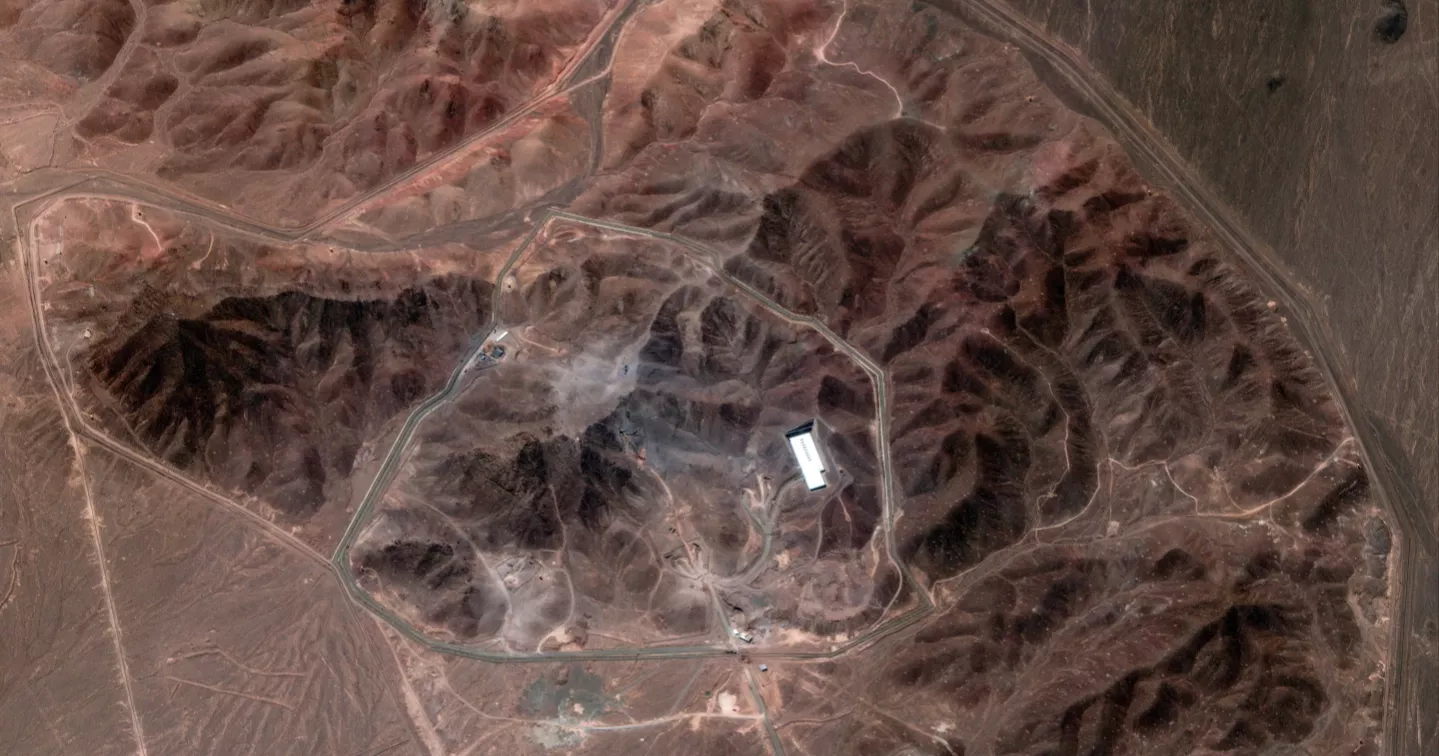
Iran on Tuesday acknowledged significant damage to several key nuclear sites following Israeli and US airstrikes, though Tehran left the door open for possible talks with Washington over its nuclear program.
Government spokesperson Fatemeh Mohajerani confirmed that Iran’s Fordo, Isfahan, and Natanz nuclear facilities were “seriously damaged” in the strikes, according to state news agency IRNA. Her remarks mark a rare public admission from Iranian authorities, as the scale of destruction from the 12-day conflict with Israel continues to emerge.
Despite the damage, Mohajerani suggested Tehran has not ruled out diplomacy with the United States.
“No date has been set for US talks, and it probably won’t be very soon, but no final decision has been made,” she told reporters.
The conflict, which erupted on June 13, saw Israeli fighter jets repeatedly strike Iran, including its ballistic missile stockpiles and upper ranks of the Revolutionary Guard. Israel claimed the attacks targeted nuclear facilities to prevent Tehran from developing atomic weapons — a claim Iran denies.
US intelligence and the International Atomic Energy Agency (IAEA) have said Iran halted its organized nuclear weapons program in 2003. However, Tehran continues to enrich uranium up to 60%, just below the 90% weapons-grade threshold.
Israeli airstrike on Iran’s Evin Prison raises fears for political prisoners
Iran revises death toll, claims ‘victory’
Iranian officials also sharply increased the reported death toll from the conflict. Judiciary spokesperson Asghar Jahangir said 935 Iranians were killed, including 38 children and 102 women, according to IRNA.
Jahangir accused Israel of trying to destabilize Iran by assassinating military leaders and scientists, but insisted the country emerged victorious, echoing similar claims by Supreme Leader Ayatollah Ali Khamenei.
Independent groups have provided higher casualty estimates. The US-based Human Rights Activists group reported at least 1,190 deaths, including 436 civilians and 435 security personnel, with more than 4,400 others wounded.
Nuclear facility assessments underway
Meanwhile, satellite images indicate Iran is assessing the aftermath of the June 22 US strikes on its nuclear sites. Planet Labs imagery shows trucks, cranes, and excavation equipment at Fordo, a heavily fortified facility built under a mountain southwest of Tehran.
Images suggest Iranian officials may have taken steps to protect or remove sensitive materials before the attack, though Tehran has not provided full details. The IAEA has previously warned that its inspectors lost “continuity of knowledge” regarding Iran's nuclear activities, raising concerns about undisclosed materials or sites.
Iran says its Atomic Energy Organization is preparing to release a full damage report.
Internal divisions grow over possible US talks
Foreign Minister Abbas Araghchi has also left the door open for dialogue with Washington, but the idea faces strong opposition from hard-liners within Iran.
Iran could resume uranium enrichment within months: IAEA
Hossein Shariatmadari, managing editor of Iran's hard-line Kayhan newspaper and a close ally of Khamenei, dismissed any suggestion of negotiations, saying, “Being a traitor or being foolish are two sides of the same coin.”
Kayhan has also sparked international condemnation for suggesting IAEA chief Rafael Mariano Grossi should face trial and execution if he visits Iran.
Source: Agency