middle-east
Israeli strikes kill 14 Palestinians in Gaza
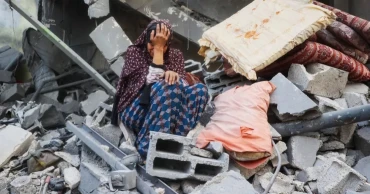
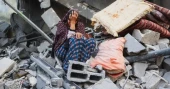
Israeli airstrikes hit a cafeteria and a home in Gaza, killing at least 14 people, medical officials said. In Lebanon, warplanes struck the capital Beirut’s southern suburbs on Tuesday after the military ordered a number of houses there to evacuate.
The new bombardment on both fronts comes on the verge of a deadline set by the United States for Israel to dramatically ramp up humanitarian aid allowed in Gaza or risk possible restrictions on U.S. military funding. A group of eight international aid agencies said in a report on Tuesday that Israel has failed to meet the U.S. demands.
In Lebanon, large explosions shook Beirut’s southern suburbs — an area known as Dahiyeh where Hezbollah has a significant presence — soon after the Israeli military issued evacuation orders for 11 houses there.
There was no immediate word on casualties. The military said the houses contained Hezbollah installations, but the claim could not be independently confirmed.
Late Monday night, a strike hit the village of Ain Yaacoub in northern Lebanon, killing at least 16 people, the Lebanese civil defense said. Four of the killed were Syrian refugees, and there were another 10 people wounded. There was no immediate Israeli military comment on the strike.
Israel has been carrying out intensified bombardment of Lebanon since late September, vowing to cripple Hezbollah and put a stop to more than year of cross-border fire by the Lebanese militant group onto northern Israel.
At the same time, Israel has continued its campaign in Gaza, now more than 13 months old, triggered by Hamas’ Oct. 7, 2023 attack on southern Israel.
An Israeli strike late Monday hit a makeshift cafeteria used by displaced people in Muwasi, the center of a “humanitarian zone” that Israel’s military declared earlier in the war.
At least 11 people were killed, including two children, according to officials at Nasser Hospital, where the casualties were taken. Video from the scene showed men pulling bloodied wounded from among tables and chairs set up in the sand in an enclosure made of corrugated metal sheets.
Another strike early Tuesday hit a house in the urban Nuseirat refugee camp in central Gaza, killing three people including a woman, according to al-Awda Hospital, which received the casualties. The strike also wounded 11 others, it said.
The Israeli military had no immediate comment on the strikes.
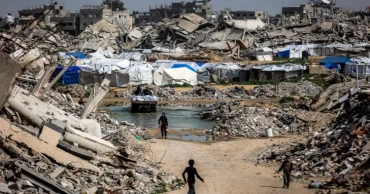
Hours earlier, the Israeli military announced a small expansion of the humanitarian zone, where it has told Palestinians evacuating from other parts of Gaza to take refuge. Hundreds of thousands of displaced Palestinians are sheltering in sprawling tent camps in and around Muwasi, a largely desolate area of dunes and agricultural fields with few facilities or services along the Mediterranean coast of southern Gaza.
Israeli forces have also been besieging the northernmost part of Gaza since the beginning of October, battling Hamas fighters it says regrouped there.
With virtually no food or aid allowed in for more than a month, the siege has raised fears of famine among the tens of thousands of Palestinians believed still sheltering there.
An Oct. 13 letter signed by U.S. Secretary of State Antony Blinken and Defense Secretary Lloyd Austin gave Israeli 30 days to, among other things, allow a minimum of 350 truckloads of goods to enter Gaza each day.
So far, Israel has fallen short. In October, 57 trucks a day entered Gaza on average, and 70 a day in the 10 days of November, according to Israeli figures. The U.N. puts the number lower, at 37 trucks daily since the beginning of October.
Israel has announced a flurry of measures in recent days to increase aid, including opening a new crossing into central Gaza. But so far the impact is unclear.
The military said Tuesday it had allowed hundreds of packages of food and water into Jabaliya and Beit Hanoun, two areas under siege in the far north of Gaza. The Palestinian civil defense agency said three trucks carrying flour, canned food and water reached Beit Hanoun.
It was only the second delivery allowed into the area since the beginning of October; a smaller cargo was let in last week, though not all of it reached shelters in the north, according to the U.N.
The military announced Tuesday that four soldiers were killed in Jabaliya, bringing to 24 the number of soldiers killed in the assault there since it began. Palestinian health officials say hundreds of Palestinians have been killed, though the true numbers are unknown as rescue workers are unable to reach buildings destroyed in strikes. Israel has ordered residents in the area to evacuate. But the U.N. has estimated some 70,000 people remain.
Many Palestinians there fear Israel aims to permanently depopulate the area to more easily keep control of it. On Tuesday, witnesses told The Associated Press that Israeli troops had encircled at least three schools in Beit Hanoun, forcing hundreds of displaced people sheltering inside to leave.
Drones blared announcements demanding people move south to Gaza City, said Mahmoud al-Kafarnah, speaking from one of the schools as sounds of gunfire could be heard. “The tanks are outside,” he said. “We don’t know where to go.”
Hashim Afanah, sheltering with at least 20 other people in his family home, said the forces were evicting people from houses and shelters.
Israel’s campaign in Gaza has killed more than 43,000 Palestinians, according to local health authorities that do not distinguish between civilians and militants in their count but say more than half the dead are women and children. Israel says it targets Hamas militants and blames the militant group for civilian deaths, saying it operates in residential areas and infrastructure, and among displaced people.
The war in Gaza began when Hamas-led militants stormed into southern Israel on Oct. 7, 2023, killed around 1,200 people, mostly civilians, and abducted about 250 as hostages. Around 100 hostages are still inside Gaza, about a third of them believed to be dead.
1 year ago
Saudi Crown Prince demands immediate end to Israel’s war in Gaza, Lebanon
Saudi Crown Prince Mohammed bin Salman has condemned Israel’s actions in Gaza as “genocide” and called for a total Israeli withdrawal from the West Bank and Gaza.
The prince also criticised Israeli attacks on Lebanon and Iran at a summit of Muslim and Arab leaders.
In a sign of improving ties between rivals Riyadh and Tehran, he warned Israel against launching attacks on Iranian soil, reports BBC.
Meanwhile, Saudi Arabia's foreign minister said it was a “failing of the international community” that the war in Gaza had not been stopped, accusing Israel of causing starvation in the territory
Prince Faisal Bin Farhan Al-Saud said: "Where the international community primarily has failed is ending the immediate conflict and putting an end to Israel’s aggression.”
The war in Gaza was triggered by Hamas's 7 October 2023 attack, which saw hundreds of gunmen enter southern Israel. About 1,200 people were killed and 251 others taken hostage.
Israel retaliated by launching a military campaign to destroy Hamas, during which more than 43,400 people have been killed in Gaza, according to the Hamas-run health ministry.
Read more: Traumatized by war, hundreds of Lebanon's children struggle with wounds both physical and emotional
A report by the UN’s Human Rights Office found that close to 70% of verified victims over a six-month period in Gaza were women and children.
Leaders at the summit also condemned what they described as Israel's “continuous attacks” against UN staff and facilities in Gaza.
In the backdrop of the well-attended summit, is Donald Trump’s return to the White House.
Gulf leaders are aware of his closeness to Israel, but they also have good relations with him, and want him to use his influence and his fondness for deal-making to secure an end to conflicts in this region.
In Saudi Arabia, Trump is viewed much more favourably than Joe Biden, but his track record in the Middle East is mixed.
He pleased Israel and angered the Muslim world by recognising Jerusalem as Israel’s capital as well as the annexation of the occupied Golan Heights.
1 year ago
Traumatized by war, hundreds of Lebanon's children struggle with wounds both physical and emotional
Curled up in his father’s lap, clinging to his chest, Hussein Mikdad cried his heart out. The 4-year-old kicked his doctor with his intact foot and pushed him away with the arm that was not in a cast.
“Make him leave me alone!” he cried. His father reassured him and pulled him closer, his eyes tearing in grief – and gratitude that his son was healing.
Hussein and his father, Hassan, were the only survivors from their family when an Israeli strike last month collapsed their home in Beirut, killing 18 people – including Hussein’s mother, his two sisters and his brother.
Doctors at the American University of Beirut Medical Center repaired Hussein's fractured thigh and the torn tendons in his arm. Hussein should be able to walk again in two months, albeit with a lingering limp, they say.
A prognosis for Hussein’s invisible wounds is much harder. He is back in diapers and has begun wetting his bed. He hardly speaks. He hasn't asked about his mother and siblings, his father said.
The Israeli military said the Oct. 21 strike hit a Hezbollah target, without elaborating.
Children have often been the victims as Israel has escalated its bombardment in Lebanon since late September. More than 100 have been killed and hundreds wounded in the past six weeks, according to the Lebanese Health Ministry. Of the 14,000 wounded by Israeli fire the past year, around 10% are children.
Israel has vowed to cripple Hezbollah to stop the Lebanese militant group's fire on northern Israel, which began just after Hamas’ Oct. 7 attack triggered the war in Gaza. It says Hezbollah hides its fighters and infrastructure in residential areas.
Increasingly, strikes have been hitting homes and killing families.
“It leaves us with a generation of physically wounded children, children who are psychologically and emotionally wounded,” said Ghassan Abu Sittah, a renowned British-Palestinian reconstructive surgeon who is also treating Hussein.
‘What do they want from us?’
Beirut’s Lebanon Hospital Geitaoui has nearly tripled the capacity of its burns center – already one of Lebanon’s largest – since September to accommodate war wounded, said its medical director Naji Abirached.
About a fifth of newly admitted patients are children.
Ivana Skakye turned 2 last week in one of burns center ICU units. The tiny girl remains wrapped in gauze around her head, arms and lower body — six weeks after an Israeli strike left her with third-degree burns over 40% of her body.
Fatima Zayoun, her mother, was in the kitchen when the Sept. 23 strike hit outside their home in a southern village. The house was damaged and a fire broke out.
Zayoun rushed to grab her two daughters, who were playing on the terrace. They were covered with black ash, she said.
Ivana was unrecognizable, her hair burned away. “I told myself, `That is not her,’” Zayoun said.
Ivana’s 7-year-old sister Rahaf had burns to her face and hands and has recovered more quickly. Ivana could be discharged in a few days, said her doctor, Ziad Sleiman. But the family has no home to return to, and Zayoun worries Ivana could suffer infections in the crowded displaced shelters.
Zayoun was 17 last time Israel and Hezbollah were at war, in 2006. Displaced with her family then, she said she almost enjoyed the experience, riding out of their village in a truck, mixing with new people, learning new things. They returned home after the war.
“But this war is hard. They are hitting everywhere,” she said. “What do they want from us? Do they want to hurt our children? We are not what they are looking for.”
Attacks on homes rob kids of security
Abu Sittah, the surgeon, said that for children, an attack on their home can have lasting effects.
They "for the first time lose that sense of security — that their parents are keeping them safe, that their homes are invincible,” he said.
Parents in displaced shelters report increased anxiety, hostility and aggression among kids, said Maria Elizabeth Haddad, a psychosocial worker. The children talk back and ignore rules. Some become clingy. Others develop speech impediments. She cited one with early signs of psychosis.
One recent morning, children played in a school-turned-shelter north of Beirut, where nearly 3,000 people displaced from the south live.
The kids — ranging from 6 to 12 and hailing from different villages — split into two teams, competing to grab a handkerchief. As they played, a tiny girl clung to a visiting AP reporter, holding her hand. Finally deciding she could trust her, she whispered a secret in her ear: “I am from Lebanon. Don’t tell anyone.”
The game fell apart when two girls got into a fist fight. Pushing and shoving were followed by tears and tantrums.
Symptoms of anxiety will last as they grow – a craving for greater stability, difficulties with attachment -- said Haddad, manager of psychosocial support programs in the Beirut area for the U.S.-based International Medical Corps.
“It is a generational trauma. We have experienced it before with our parents,” she said. “This is not going to be easy to overcome.”
New phases of life begin
The night the strike hit, Hassan Mikdad had stepped out for coffee. He watched his building crumble.
His friend, Hussein Hammoud, rushed to help search. In the darkness, Hammoud spotted some fingers in the rubble. He thought they were severed – until the boy screamed. It was Hussein.
When he dug him out, Hussein had a metal bar embedded in his shoulder, glass lodged in his leg. Hammoud held the child’s almost-severed wrist in place.
Hussein’ two sisters — Celine, 10, and Cila, 14 — were pulled out of the rubble the next day. His mother, Mona, was found locked in an embrace with her 6-year-old son, Ali.
Hassan Mikdad lost nearly all evidence of his 16 years of family life – his family, his shop, his motorcycles and car, all destroyed.
Only Hussein remains. They must start together from scratch, he said. In the hospital, he buys the boy a new toy every day.
“What I am living through seems like a big lie. ... The mind can’t comprehend,” he said. “I thank God for the blessing that is Hussein.”
1 year ago
War leaves Lebanon's children scarred, with physical, emotional wounds
Curled up in his father ’s lap, clinging to his chest, Hussein Mikdad cried his heart out. The 4-year-old kicked his doctor with his intact foot and pushed him away with the arm that was not in a cast. “My Dad! My Dad!" Hussein said. "Make him leave me alone!” With eyes tearing up in relief and pain, the father reassured his son and pulled him closer.
Hussein and his father, Hassan, are the only survivors of their family after an Israeli airstrike last month on their Beirut neighborhood. The strike killed 18 people, including his mother, three siblings and six relatives.
“Can he now shower?” the father asked the doctor.
Ten days after surgery, doctors examining Hussein's wounds said the boy is healing properly. He has rods in his fractured right thigh and stitches that assembled his torn tendons back in place on the right arm. The pain has subsided, and Hussein should be able to walk again in two months — albeit with a lingering limp.
A prognosis for Hussein's invisible wounds is much harder to give. He is back in diapers and has begun wetting his bed. He hardly speaks and has not said a word about his mother, two sisters and brother.
“The trauma is not just on the muscular skeletal aspect. But he is also mentally hurt,” Imad Nahle, one of Hussein’s orthopedic surgeons, said.
Israel said, without elaborating, that the strike on the Mikdad neighborhood struck a Hezbollah target. In the war that has escalated since September, Israeli airstrikes have increasingly hit residential areas around Lebanon. Israel accuses the Lebanese militant group of hiding its capabilities and fighters among civilians. It vows to cripple Hezbollah, which began firing into northern Israel after Hamas’ Oct. 7 attack triggered the war in Gaza.
But children have been caught in the midst.
With more strikes on homes and in residential areas, doctors are seeing more children affected by the violence. More than 100 children have been killed in Lebanon in the past six weeks and hundreds injured. And of the 14,000 wounded since last year, around 10% are children. Many have been left with severed limbs, burned bodies, and broken families — scars that could last for a lifetime.
Ghassan Abu Sittah, a renowned British-Palestinian surgeon who is also treating Hussein, sees that long road ahead. This is his worry: “It leaves us with a generation of physically wounded children, children who are psychologically and emotionally wounded."
‘What do they want from us?’
At the American University of Beirut Medical Center, which is receiving limited cases of war casualties, Nahle said he operated on five children in the past five weeks — up from no cases before. Most were referred from south and eastern Lebanon.
A few miles away, at the Lebanese Hospital Geitaoui, one of the country’s largest burns centers increased its capacity by nearly 180% since September so it could accommodate more war wounded, its medical director Naji Abirached said. About a fifth of the newly admitted patients are children.
In one of the burn center’s ICU units lies Ivana Skakye. She turned 2 in the hospital ward last week. Ivana has been healing from burns she sustained following an Israeli airstrike outside their home in southern Lebanon on Sept. 23. Israel launched hundreds of airstrikes that day in different parts of Lebanon, making it the deadliest day of the war so far. More than 500 people were killed.
Six weeks later, the tiny Ivana remains wrapped in white gauze from head to toe except her torso. She sustained third-degree burns over 40 percent of her body. Her hair and head, her left side all the way to her legs, both her arms and her chest were burned. Her family home was damaged, its ceiling set afire. The family’s valuables, packed in their car as they prepared to leave, were also torched. Ivana’s older sister, Rahaf, 7, has recovered faster from burns to her face and hands.
Fatima Zayoun, their mother, was in the kitchen when the explosion hit. Zayoun jumped up to grab the girls, who were playing on the terrace.
It was, Zayoun said, "as if something lifted me up so that I can grab my kids. I have no idea how I managed to pull them in and throw them out of the window. She spoke from the ICU burns unit. “They were not on fire, but they were burned. Black ash covered them. ... (Ivana) was without any hair. I told myself, `That is not her.'”
Now, Ivana's wound dressings are changed every two days. Her doctor, Ziad Sleiman, said she could be discharged in a few days. She’s back again to saying “Mama” and “Bye — shorthand for wanting to go out.
Like Hussein, though, Ivana has no home to return to. Her parents fear collective shelters could cause an infection to return.
After seeing her kids “sizzling on the floor,” Zayoun, 35, said that even if their home is repaired, she wouldn’t want to return. “I saw death with my own eyes,” she said.
Zayoun was 17 last time Israel and Hezbollah were at war, in 2006. Displaced with her family then, she said she almost enjoyed the experience, riding out of their village in a truck full of their belongings, mixing with new people, learning new things. They returned home when the war was over.
“But this war is hard. They are hitting everywhere,” she said. “What do they want from us? Do they want to hurt our children? We are not what they are looking for."
Attacks at home can be hard for kids to deal with
Abu Sittah, the reconstructive surgeon, said most of the children's injuries are from blasts or collapsing rubble. That attack on a space they expect to be inviolable can have lingering effects.
“Children feel safe at home," he said. "The injury makes them for the first time lose that sense of security — that their parents are keeping them safe, that their homes are invincible, and suddenly their homes become not so.”
One recent morning, children were playing in the courtyard of a vocational school-turned-shelter in Dekwaneh, north of Beirut, where nearly 3,000 people displaced from the south are now living. The parents were busy with an overflowing bathroom that serves one floor in a building that houses nearly 700 people.
Only playtime brings the children, from different villages in the south, together. They were divided in two teams, ages ranging between 6 and 12, competing to get the handkerchief first. A tiny girl hugged and held hands with strangers visiting the shelter. “I am from Lebanon. Don't tell anyone,” she whispered in their ears.
The game turned rowdy when two girls in their early teens got into a fist fight. Pushing and shoving began. Tears and tantrums followed. The tiny girl walked away in a daze.
Maria Elizabeth Haddad, manager of the psychosocial support programs in Beirut and neighboring areas for the U.S.-based International Medical Corps, said parents in shelters reported signs of increased anxiety, hostility and aggression among kids. They talk back to parents and ignore rules. Some have developed speech impediments and clinginess. One is showing early signs of psychosis.
“There are going to be residual symptoms when they grow up, especially related to attachment ties, to feeling of security,” Haddad said. “It is a generational trauma. We have experienced it before with our parents. ... They don’t have stability or search for (extra) stability. This is not going to be easy to overcome.”
New phases of life begin
Children represent more than a third of over 1 million people displaced by the war in Lebanon and following Israeli evacuation notices, according to U.N. and government estimates (more than 60,000 people have been displaced from northern Israel). That leaves hundreds of thousands in Lebanon without schooling, either because their schools were inaccessible or have been turned into shelters.
Hussein's father says he and his son must start together from scratch. With help from relatives, the two have found a temporary shelter in a home — and, for the father, a brief sense of relief. “I thank God he is not asking for or about his mother and his siblings,” said Hassan Mikdad, the 40-year-old father.
He has no explanation for his son, who watched their family die in their home. His two sisters — Celine, 10, and Cila, 14 — were pulled out of the rubble the following day. His mother, Mona, was pulled out three days later. She was locked in an embrace with her 6-year-old son, Ali.
The strike on Oct. 21 also caused damage across the street, to one of Beirut’s main public hospitals, breaking solar panels and windows in the pharmacy and the dialysis unit. The father survived because he had stepped out for coffee. He watched his building crumble in the late-night airstrike. He also lost his shop, his motorcycles and car — all the evidence of his 16 years of family life.
His friend, Hussein Hammoudeh, arrived on the scene to help sift through rubble. Hammoudeh spotted young Hussein Mikdad’s fingers in the darkness in an alley behind their home. At first he thought they were severed limbs — until he heard the boy’s screams. He dug out Hussein with glass lodged in his leg and a metal bar in his shoulder. Hammoudeh said he didn’t recognize the boy. He held the child's almost-severed wrist in place.
In the hospital now, Hussein Mikdad sipped a juice as he listened to his father and his friend. His father turned to him, asking if he wanted a Spider-Man toy — an effort to forestall a new outburst of tears. He said he buys Hussein a toy each day.
“What I am living through seems like a big lie. ...The mind can’t comprehend,” he said. “I thank God for the blessing that is Hussein.”
1 year ago
Israeli strike kills 3 people in central Gaza
Palestinian medical officials say an Israeli strike hit a tent sheltering a displaced family in the central Gaza Strip, killing at least three people, including the parents of twins.
The strike late Sunday in the urban Nuseirat refugee camp wounded the two children, aged 10, who were being treated for serious injuries at the Al-Aqsa Martyrs Hospital in the nearby city of Deir al-Balah.
The details of the casualties were listed in hospital records and an Associated Press reporter saw two of the bodies.
The Israeli military says it only targets militants and accuses them of hiding among civilians.
Palestinians reported heavy bombing late Sunday in the western areas of Nuseirat camp, which dates back to the 1948 war surrounding Israel’s creation.
At least 24 people were wounded and taken to the Awda hospital in Nuseirat, said Mohamed Muhareb, head of the hospital’s ambulance service.
The Israel-Hamas war began after militants stormed into Israel on Oct. 7, 2023, killing some 1,200 people — mostly civilians — and abducting 250 others. Israel’s military response in Gaza has killed more than 43,000 people, Palestinian health officials say. They do not distinguish between civilians and combatants, but say more than half of those killed were women and children.
Hezbollah began firing into Israel on Oct. 8, 2023, in solidarity with Hamas in the Gaza Strip. Since the conflict erupted, more than 3,100 people have been killed and nearly 13,900 wounded in Lebanon, the health ministry reported.
1 year ago
UN climate talks to focus on money to help poor nations cut carbon pollution
A complex international two-week-long game of climate change poker is convening. The stakes? Just the fate of an ever-warming world.
Curbing and coping with climate change's worsening heat, floods, droughts and storms will cost trillions of dollars and poor nations just don't have it, numerous reports and experts calculate. As United Nations climate negotiations started Monday in Baku, Azerbaijan, the chief issue is who must ante up to help poor nations and especially how much.
The numbers are enormous. The floor in negotiations is the $100 billion a year that poor nations — based on a categorization made in the 1990s — now get as part of a 2009 agreement that was barely met. Several experts and poorer nations say the need is $1 trillion a year or more.
“It's a game with high stakes,” said Climate Analytics CEO Bill Hare, a physicist. “Right now the fate of the planet depends very much on what we're able to pull off in the next five or 10 years.”
But this year's talks, known as COP29, won't be as high-profile as last year's, with 48 fewer heads of state scheduled to speak. The leaders of the top two carbon polluting countries — China and the United States — will be absent. But if money negotiations fail in Baku, it will handicap 2025’s make-or-break climate negotiations, experts say.
Not only is dealing with money always a touchy subject, but two of the rich countries that are expected to donate money to poor nations — the United States and Germany — are in the midst of dramatic government changes. Even though the United States delegation will be from Biden Administration, the reelection of Donald Trump, who downplays climate change and dislikes foreign aid, makes U.S. pledges unlikely to be fulfilled.
The overarching issue is climate finance. Without it, experts say the world can't get a handle on fighting warming, nor can most of the nations achieve their current carbon pollution-cutting goals or the new ones they will submit next year.
“If we don't solve the finance problem, then definitely we will not solve the climate problem,” said former Colombian deputy climate minister Pablo Vieira, who heads the support unit at NDC Partnership, which helps nations with emissions-cutting goals.
Nations can't cut carbon pollution if they can't afford to eliminate coal, oil and gas, Vieira and several other experts said. Poor nations are frustrated that they are being told to do more to fight climate change when they cannot afford it, he said. And the 47 poorest nations only created 4% of the heat-trapping gases in the air, according to the U.N.
About 77% of the heat-trapping gas in the atmosphere now comes from the G20 rich nations, many of whom are now cutting back on their pollution, something that is not happening in most poor nations or China.
“The countries that are rich today have become rich by polluting the Earth,” said Ani Dasgupta, president of World Resources Institute.
The money being discussed is for three things: Helping poor nations switch from dirty fossil fuels to clean energy; helping them adapt to the impacts of a warming world such as sea level rise and worsening storms; and compensating vulnerable poor nations for climate change damage.
“Should the global community fail to reach a (finance) goal, this is really just signing the death warrant of many developing countries," said Chukwumerije Okereke, director of the Center for Climate Change and Development in Nigeria.
Michael Wilkins, a business professor who heads Imperial College's Centre for Climate Finance and Investment in the U.K., said since 2022 total climate finance has been nearly $1.5 trillion. But only 3% of that is actually geared toward the least developed countries, he said.
“The Global South has been repeatedly let down by unmet pledges and commitments,” said Sunita Narain, director general of New Delhi-based Centre for Science and Environment.
“Finance is really the key component that compels all types of climate action,” said Bahamian climate scientist Adelle Thomas, adaptation director at the Natural Resources Defense Council. “Without that finance, there's simply not much that developing countries in particular can do.”
It's an issue of both self-interest and justice, Thomas and others said. It's not charity to help poor nations decarbonize because rich nations benefit when all countries cut emissions. After all, a warming world hurts everyone.
Compensating for climate damage and helping nations prepare for future harm is a matter of justice, Thomas said. Even though they didn't create the problem, poor nations — especially small island nations — are particularly vulnerable to climate change's rising seas and extreme weather. Thomas mentioned how 2019's Hurricane Dorian smacked her grandparents home and “the only thing left standing was one toilet.”
The trillion-dollar figure on the table is about half of what the world spends annually on the military. Others say global fossil fuel subsidies could be redirected to climate finance; estimates of those subsidies range from the International Energy Agency’s $616 billion a year to the International Monetary Fund’s $7 trillion a year.
“When we need more for other things, including conflict, we seem to find it,” United Nations Environment Programme Executive Director Inger Andersen said. “Well, this is probably the largest conflict of all.”
A U.N. climate finance committee report looked at the need from 98 countries and estimated it as ranging from $455 billion to $584 billion per year.
The money isn't just direct government aid from one nation to another. Some of it comes from multinational development finance banks, like the World Bank. There's also private investment that will be considered a large chunk. Developing nations are seeking relief from their $29 trillion global debt.
Andersen said at least a sixfold increase in investment would be required to get on the path to limit future warming to just another two-tenths of a degree Celsius (0.4 degrees Fahrenheit) from now, which is the overarching goal the world adopted in 2015.
Andersen's agency calculated that with nations' current emissions-curbing targets, the difference between well-financed and current efforts translates to half a degree Celsius (0.9 degrees Fahrenheit) less future warming. Experts say stepped-up efforts that could reduce future warming even more also costs more.
Who will pay is another sticking point. Climate talks for decades have used 1992 standards to categorize two groups of nations, essentially rich and poor, deciding that rich nations like the U.S. are the ones to financially help poor ones. Financial circumstances have changed. China, the world’s top carbon polluter, has increased its per capita GDP by more than 30 times since then. But neither China nor some rich oil nations are obligated to help in climate finance.
Developed nations want those countries that couldn't afford to give before, but now can, included in the next round of donors. But those nations don't want those obligations, said E3G analyst Alden Meyer, a climate negotiations veteran.
“It’s a very fraught landscape to think about huge scale-up of existing climate finance,” Meyer said.
1 year ago
Israeli strikes kill dozens in Lebanon and isolated northern Gaza while Netanyahu and Trump speak
Israeli strikes killed dozens of people including children on Sunday in Lebanon and isolated northern Gaza, as the world watched for signs of how the U.S. election might affect the wars between Israel and Iranian-backed militant groups Hamas and Hezbollah.
Israeli Prime Minister Benjamin Netanyahu said that he has spoken three times with Donald Trump since Tuesday’s election and they “see eye-to-eye regarding the Iranian threat and all of its components.” Israeli President Isaac Herzog is scheduled to meet with U.S. President Joe Biden on Tuesday.
The Israeli airstrike in Lebanon killed at least 23 people, including seven children, in Aalmat village north of Beirut, far from the areas in the east and south where Hezbollah has a major presence. There was no Israeli evacuation warning. Israel’s military said that it hit a Hezbollah site used to store weapons, and the strike was under review.
Hezbollah began firing rockets, drones and missiles into Israel after war broke out in Gaza, in solidarity with the Palestinians and Hamas. Israel retaliated, and a series of escalations have led to all-out war.
In northern Gaza, an Israeli strike on a home sheltering displaced people in the urban refugee camp of Jabaliya killed at least 17 people, including nine women, according to Dr. Fadel Naim, director of Al-Ahly Hospital in Gaza City.
Israel's military said that it targeted a site where militants were operating, without providing evidence. It said the details of the strike were under review.
A separate strike hit a house in Gaza City, killing Wael al-Khour, a minister in the Hamas-run government, as well as his wife and three children, according to the Civil Defense first responders who operate under the government.
Israel strikes deeper into Lebanon
Israel has struck deeper inside Lebanon since September, when it killed Hezbollah leader Hassan Nasrallah and most of his top commanders. Hezbollah has expanded its rocket fire from northern to central Israel. The fighting has killed more than 3,100 people in Lebanon, according to the Health Ministry, and more than 70 people in Israel.
After Israel's strike in Aalmat, around 40 kilometers (25 miles) north of Beirut, legislator Raed Berro denied that any Hezbollah personnel or assets were in the building hit.
“Everyone can see, in front of cameras, that what is being pulled from under the rubble are women, children and elderly people who have nothing to do with weapons or rocket warehouses," Berro said.
Hassan Ghaddaf, who lived next door and was slightly wounded while heading to his balcony with morning coffee, said displaced people were in the building.
“I had seen them and got to know them the other day,” Ghaddaf said. “They were peaceful. On the contrary, they had someone from the Lebanese Internal Security Forces that works for the state, and we saw their garb and clothes in the rubble.”
In Syria, an Israeli airstrike hit a residential building in the Damascus suburb of Sayyida Zeinab, and the Defense Ministry said that seven civilians were killed, state news agency SANA reported. Britain-based opposition war monitor The Syrian Observatory for Human Rights suggested that Hezbollah was targeted. Israel didn't immediately comment.
Fears of famine in northern Gaza
The mid-month deadline is approaching for the Biden administration's ultimatum for Israel: Allow more aid into Gaza or risk possible restrictions on U.S. military funding.
Israeli forces have encircled and largely isolated Jabaliya and the nearby northern Gaza towns of Beit Lahiya and Beit Hanoun for the past month, allowing only a trickle of humanitarian aid. Experts from a panel that monitors food security say famine is imminent or may already be happening.
The northern third of Gaza, including Gaza City, has suffered the heaviest destruction of the 13-month war. Israel has sent forces back in, saying Hamas has regrouped.
Israeli strikes often kill women and children. The military says it only targets militants, whom it accuses of hiding among civilians.
Also on Sunday, Israel's military released what it called footage of Hamas abusing detainees. The soundless footage, dated from 2018 to 2020, appears to show hooded detainees chained in stress positions. In some clips, men beat or poke them with batons. It wasn't possible to independently verify the videos, which the military said that it recovered during operations in Gaza.
Rights groups have long accused the Hamas-run government in Gaza and the Western-backed Palestinian Authority in the occupied West Bank of abusing detainees and violently quashing dissent. Israel has been accused of similar abuses, especially since the start of the war. Israeli prison authorities say they follow relevant laws and investigate allegations of wrongdoing.
The toll of war
The war in Gaza began when Hamas-led militants stormed into southern Israel on Oct. 7, 2023 and killed around 1,200 people, mostly civilians, and abducted about 250. Around 100 hostages are still inside Gaza, about a third believed to be dead.
Israel's offensive has killed more than 43,000 Palestinians, according to local health authorities who don't distinguish between civilians and militants in their count, but say more than half the dead were women and children.
Israeli bombardment and ground invasions have left vast areas of Gaza in ruins and displaced around 90% of the population of 2.3 million people, often multiple times. Hundreds of thousands live in tent camps with few if any services.
Cease-fire talks mediated by the United States, Qatar and Egypt have repeatedly stalled, as have parallel efforts by the U.S. and others to halt the fighting between Israel and Hezbollah.
Qatar, a key mediator with Hamas, said Saturday that it had suspended its efforts and would resume them when “the parties show their willingness and seriousness to end the brutal war.”
Some Palestinians in Gaza responded with frustration.
“The Arab silence that controls the Arab capitals, that’s because of the fear of the American administration and Israel,” said Akram Jarada, displaced from Gaza City.
1 year ago
17 killed in Israeli strike on northern Gaza
DEIR AL-BALAH, Gaza Strip (AP/UNB) — An Israeli strike early Sunday on a home sheltering displaced people in the northern Gaza Strip killed at least 17 people, according to the director of a nearby hospital that received the bodies.
Dr. Fadel Naim, director of the Al-Ahly Hospital in Gaza City, said the dead include nine women, and that the toll was likely to rise as rescue efforts continue. He said they were killed in a strike on a home in the urban refugee camp of Jabaliya, where Israel has been carrying out an offensive for over a month.
The military said it targeted a site where militants were operating, without providing evidence. It said the details of the strike are under review.
Separately, Lebanon’s Health Ministry says an Israeli airstrike on Sunday killed at least 20 people in the village of Aalmat — north of Beirut and far from the areas in the south and east where the Hezbollah militant group has a major presence.
Israeli forces have encircled and largely isolated Jabaliya and the nearby towns of Beit Lahiya and Beit Hanoun for the past month, allowing in only a trickle of humanitarian aid. Hundreds of people have been killed since the offensive began on Oct. 6, and tens of thousands of people have fled to nearby Gaza City.
On Friday, experts from a panel that monitors food security said famine is imminent in the north or may already be happening. The growing desperation comes as the deadline approaches for an ultimatum the Biden administration gave Israel to raise the level of humanitarian assistance allowed into Gaza or risk possible restrictions on U.S. military funding.
The northern third of Gaza, including Gaza City, was the first target of Israel's ground invasion and has suffered the heaviest destruction of the 13-month-old war, which was triggered by Hamas' attack into southern Israel. As in other areas of Gaza, Israel has sent forces back in after repeated operations, saying Hamas has regrouped.
The military says it only targets militants, whom it accuses of hiding among civilians in homes and shelters. Israeli strikes often kill women and children.
The war began when Hamas-led militants blew holes in the border fence and stormed into southern Israel on Oct. 7, 2023. They killed some 1,200 people, mostly civilians, and abducted around 250. Some 100 hostages are still inside Gaza, about a third of whom are believed to be dead.
Israel's offensive has killed over 43,000 Palestinians, according to local health authorities who do not distinguish between civilians and militants in their count but say over half the fatalities were women and children.
Israeli bombardment and ground invasions have left vast areas of Gaza in ruins and displaced around 90% of the population of 2.3 million people, often multiple times. Hundreds of thousands of people are living in crowded tent camps with few if any public services and no idea of when they might return to their homes or rebuild.
Cease-fire talks mediated by the United States, Qatar and Egypt have repeatedly stalled since the start of the year.
Qatar, which has served as a key mediator with Hamas, said over the weekend that it had suspended its efforts and would only resume them when “the parties show their willingness and seriousness to end the brutal war and the ongoing suffering of civilians.”
1 year ago
Qatar suspends its mediation efforts on Gaza and the Hamas office there may have to leave
Qatar has suspended its key mediation efforts between Hamas and Israel, it said Saturday, after growing frustration with the lack of progress on a cease-fire deal for Gaza.
It wasn't immediately clear whether the remaining Hamas leadership hosted by Qatar must leave, or where it would go. Hamas has good relations with Iran and Turkey, and some of its leaders are now in Lebanon.
However, Qatar is highly likely to return to mediation efforts if both sides show “serious political willingness” to reach a deal, according to an official with Egypt, the other key mediator.
Qatar told Israel and Hamas it can't continue to mediate “as long as there is a refusal to negotiate a deal in good faith” and "as a consequence, the Hamas political office no longer serves its purpose” in Qatar, a diplomatic source briefed on the matter said. Qatar told Hamas it will have to leave if it isn't ready to engage in serious negotiations, the source said.
In Washington, a U.S. official said the Biden administration informed Qatar two weeks ago that the Hamas office's continued operation in Doha was no longer useful and the Hamas delegation should be expelled.
A senior U.S. official said that after Hamas rejected the last proposal for a cease-fire, Qatar accepted the advice and informed the Hamas delegation of the decision 10 days ago.
A senior Hamas official said they were aware of Qatar’s decision to suspend mediation efforts, “but no one told us to leave.” Hamas has repeatedly called for an end to the war and a full withdrawal of Israeli forces from Gaza as a condition for any cease-fire deal. Israel seeks the return of all hostages taken in Hamas' Oct. 7, 2023, attack on Israel and insists on a presence in Gaza.
The officials spoke on condition of anonymity because of the sensitivity of the issue. The Israeli prime minister’s office had no comment.
Late Saturday, the state-run Qatar News Agency published comments attributed to Majed bin Mohammed al-Ansari, a Foreign Ministry spokesman, confirming that Doha informed parties in the talks 10 days ago that it “would stall its efforts to mediate between Hamas and Israel if an agreement was not reached in that round.”
“Qatar will resume those efforts with its partners when the parties show their willingness and seriousness to end the brutal war and the ongoing suffering of civilians," the report said.
There continued to be no end in sight to the Israel-Hamas war in Gaza and the Israel-Hezbollah war in Lebanon, where Israel’s military said it struck command centers and other militant infrastructure in Beirut’s southern suburbs and elsewhere. An Israeli airstrike on the southern port city of Tyre late Friday killed at least seven, officials and a resident said.
Hezbollah “should continue (the fight) and we will continue to back them up even if we lose our families, our homes, and end up in the dirt,” said one Beirut resident, Mohammed Mekdad, as people searched the smoking rubble.
In Gaza, Israeli strikes killed at least 16 people on Saturday, Palestinian medical officials said, while Israel announced the first delivery of humanitarian aid in weeks to the territory's hungry, devastated north.
One strike hit a school-turned-shelter in Gaza City’s eastern Tufah neighborhood, killing at least six people, the territory's Health Ministry said. Two local journalists, a pregnant woman and a child were among the dead, it said. Israel's army said the strike targeted a militant belonging to the Palestinian Islamic Jihad group, offering no evidence.
Another Israeli strike killed seven people, including two women and a child in the southern city of Khan Younis, according to Nasser Hospital. Israel's army didn't respond to a request for comment.
And an Israeli strike hit tents in the courtyard of central Gaza’s main hospital, killing at least three people and wounding a local journalist, Al-Aqsa Martyrs hospital in Deir al-Balah said. It was the eighth Israeli attack on the compound since March.
Israel says aid trucks reach northern Gaza
The Israeli military body in charge of humanitarian aid to Gaza, COGAT, said 11 aid trucks containing food, water and medical equipment reached the enclave's far north on Thursday. It's the first time any aid has reached there since Israel began a new military campaign last month.
But not all the aid reached the agreed drop-off points, according to the the U.N. World Food Program. In the urban refugee camp of Jabaliya, Israeli troops stopped one convoy bound for nearby Beit Lahiya and ordered the supplies to be offloaded, WFP spokesperson Alia Zaki said.
Israel’s offensive has focused on Jabaliya, where Israel says Hamas had regrouped. Other areas affected include Beit Lahiya and Beit Hanoun just north of Gaza City.
U.S. deadline is looming for Israel
The aid announcement came days before a U.S. deadline demanding that Israel improve aid deliveries across Gaza or risk losing access to U.S. weapons funding. The U.S. says Israel must allow a minimum of 350 trucks a day carrying food and other supplies.
A report by the Integrated Food Security Phase Classification, or IPC, issued Thursday said there's a strong likelihood that famine is imminent in parts of northern Gaza, the territory's most isolated area.
COGAT rejected those findings and said the report relied “on partial, biased data and superficial sources with vested interests.”
No emergency services functioning north of Gaza City
The U.N. estimates that tens of thousands of people remain in northern Gaza. Earlier this week, the Health Ministry said there were no ambulances or emergency crews operating north of Gaza City.
The conflict has left 90% of Palestinians in Gaza displaced, according to U.N. figures.
More than a year of war in Gaza has killed more than 43,000 people, Palestinian health officials say. They don't distinguish between civilians and combatants, but say more than half of those killed were women and children.
The war began after Palestinian militants stormed into Israel on Oct. 7, 2023, killing around 1,200 people — mostly civilians — and abducting 250 others. Some 100 hostages are still inside Gaza, about a third believed to be dead.
“It has been 400 days and the hostages are still in Gaza. There is a war without a direction. It’s so sad,” said Eial Tiskim, who attended the latest protest in Tel Aviv on Saturday night to demand a cease-fire deal.
1 year ago
70 pc of Gaza casualties are women and children: OHCHR report
Geneva, Nov 9 (Xinhua/UNB) -- The United Nations Office of the High Commissioner for Human Rights (OHCHR) has reported that about 70 percent of the casualties in Gaza since Oct. 7, 2023 have been women and children.
Highlighting the severe humanitarian crisis unfolding in Gaza and other areas, the OHCHR report on Friday confirmed that, as of Sept. 2, 2024, it had verified the identities of 8,119 Palestinians killed in Gaza, including 2,036 women and 3,588 children, who together account for approximately 70 percent of the total fatalities.
The report condemns the brutal targeting of civilians in Gaza and the severe breaches of international law, noting that many of these acts may qualify as war crimes.
It emphasizes that if these acts are part of a large-scale or systematic attack against civilians tied to state or organizational policy, they could amount to crimes against humanity. Furthermore, the report warns that if the intent of these acts is to partially or entirely destroy a national, ethnic, racial, or religious group, they may constitute genocide.
United Nations High Commissioner for Human Rights Volker Turk stated in the report that the International Court of Justice has repeatedly stressed Israel's international obligation to prevent and punish acts of genocide, urging Israel to fulfill these obligations fully and immediately.
He noted that this is especially urgent in light of the recent military operations in northern Gaza and Israeli legislation affecting the activities of the United Nations Relief and Works Agency for Palestine Refugees in the Near East (UNRWA).
Israel has yet to respond to the report's findings.
The report also condemns violent actions by Hamas and other Palestinian armed groups targeting Israeli and foreign civilians. It calls for an immediate ceasefire, the release of all hostages, and a focused effort to deliver humanitarian aid to Gaza.
1 year ago