middle-east
Israel's first open attack on Iran spares oil and nuclear ones
Israel attacked military targets in Iran with pre-dawn airstrikes Saturday in retaliation for the barrage of ballistic missiles the Islamic Republic fired on Israel earlier this month. It was the first time Israel’s military has openly attacked Iran.
The Israeli military said its aircraft targeted facilities that Iran used to make the missiles fired at Israel as well as surface-to-air missile sites.
Crucially, there was no indication that Iran’s oil or nuclear sites were struck. Iran insisted the strikes caused only “limited damage,” and Iranian state-run media downplayed them. Taken together, the moves suggested at least for now that both countries are trying to avoid a more serious escalation.
Still, the strikes risk pushing the archenemies closer to all-out war at a time of spiraling violence across the Middle East, where militant groups backed by Iran — including Hamas in Gaza and Hezbollah in Lebanon — are already at war with Israel.
Following the airstrikes, Iran’s Foreign Ministry issued a statement saying it “considers itself entitled and obligated to defend against foreign acts of aggression." Foreign Minister Abbas Araghchi said Iran has “no limits” in defending its interests and called for the U.N. Security Council to condemn Israel for the attacks.
But late Saturday, Iran's military issued a carefully worded statement suggesting any cease-fire in Israel's ground offensives in Gaza and Lebanon would trump any possible retaliatory strike.
Iran's state-run IRNA news agency said four people were killed, all with the military air defense. Iran’s military said the strikes targeted military bases in Ilam, Khuzestan and Tehran provinces. But the powerful paramilitary Revolutionary Guard, which oversees Iran’s vast ballistic missile arsenal, was silent, raising questions about whether anything had been hit at its bases.
Iranian President Masoud Pezeshkian, in a statement posted to X, gave his condolences to the families of the dead and warned against future attacks.
“Enemies of Iran should know these brave people are standing fearlessly in defense of their land and will respond to any stupidity with tact and intelligence,” he wrote.
U.S. President Joe Biden told reporters Israel gave him a heads-up before the strikes and said it looked like “they didn’t hit anything but military targets.” His administration won assurances from Israel in mid-October that it would not hit nuclear facilities and oil installations. The head of the International Atomic Energy Agency said Iran’s nuclear facilities were not impacted.
“I hope this is the end,” Biden said.
Israel's first open attack on Iran
Iran hadn’t faced a sustained barrage of fire from a foreign enemy since its 1980s war with Iraq. Explosions could be heard in Tehran until sunrise.
Israel is also widely thought to be behind a limited airstrike in April near a major air base in Iran that hit the radar system for a Russian-made air defense battery. Iran had earlier fired a wave of missiles and drones at Israel, causing minimal damage, after two Iranian generals were killed in an apparent Israeli airstrike on an Iranian diplomatic post in Syria.
On Oct. 1, Iran launched at least 180 missiles into Israel in retaliation for devastating blows Israel landed against Hezbollah. They caused minimal damage and a few injuries. Prime Minister Benjamin Netanyahu said Iran “made a big mistake.”
“If the regime in Iran were to make the mistake of beginning a new round of escalation, we will be obligated to respond," Israeli military spokesperson Rear Adm. Daniel Hagari said.
Images released by Israel’s military showed members preparing to depart for the strikes in American-made F-15 and F-16 warplanes.
The Iranian military statement described Israel's warplanes as firing lightweight missiles at a distance of 100 kilometers (62 miles) from the Iranian border. The missiles struck air defense radar stations, the military said, some of which were already under repair.
Iran’s mission to the United Nations accused the U.S. of complicity in the attack, asserting that the U.S. controls Iraqi airspace.
Israel’s attack did not take out highly visible or symbolic facilities that could prompt a significant response from Iran, said Yoel Guzansky, a researcher at Tel Aviv’s Institute for National Security Studies who formerly worked for Israel’s National Security Council.
It also gives Israel room for escalation if needed, and targeting air defense systems weakens Iran’s capabilities to defend against future attacks, he said, adding that if there is Iranian retaliation, it should be limited.
U.S. Defense Secretary Lloyd Austin told Yoav Gallant, the Israeli defense minister, that “Iran should not make the mistake of responding to Israel’s strikes, which should mark the end of this exchange,” according to Maj. Gen. Pat Ryder, Pentagon press secretary. The pair spoke Friday and Saturday.
On the campaign trail this weekend, Vice President Kamala Harris and former President Donald Trump briefly addressed the airstrikes.
“Israel is attacking -- we’ve got a war going on and she’s out partying,” Trump said at a rally in Michigan on Friday as Harris was holding an event with Beyoncé in Texas.
Meanwhile, Harris on Saturday called for “de-escalation and not an escalation of activities in that region.”
“I feel very strongly, we as the United States feel very strongly that Iran must stop what it is doing in terms of the threat that it presents to the region and we will always defend Israel against any attacks by Iran in that way,” she told reporters in Michigan.
Sanam Vakil, the director of the Middle East and North Africa program at the London-based think tank Chatham House, said Israel sent a signal by what it attacked.
“By targeting military sites and missile facilities over nuclear and energy infrastructure, Israel is also messaging that it seeks no further escalation for now," Vakil said.
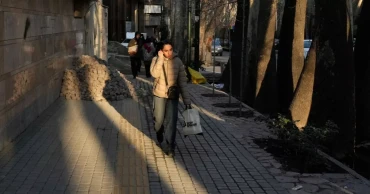
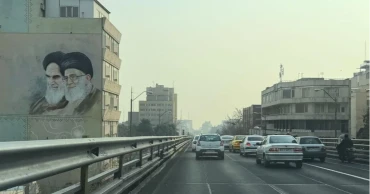
After the strikes, the streets in Iran's capital were calm, with schools and shops open. There were long lines at the gas stations — a regular occurrence when military violence flares. But some residents seemed anxious and avoided conversations with an Associated Press reporter.
Mixed reactions at home and abroad
Israeli opposition leader Yair Lapid criticized the decision to avoid “strategic and economic targets," saying on X that “we could and should have exacted a much heavier price from Iran.”
The United States warned against further retaliation, and Britain and Germany said Iran should not respond. “All acts of escalation are condemnable and must stop,” the spokesman for the U.N. secretary-general said.
Saudi Arabia was one of multiple countries in the region condemning the strike, calling it a violation of Iran's “sovereignty and a violation of international laws and norms.” Hezbollah and Hamas condemned Israel's attack.
Regional tensions have been soaring.
In Lebanon, dozens were killed and thousands wounded in September when pagers and walkie-talkies used by Hezbollah exploded in attacks attributed to Israel. A massive Israel airstrike the following week outside Beirut killed Hezbollah’s longtime leader, Hassan Nasrallah.
Israel launched a ground invasion into southern Lebanon. More than a million Lebanese people have been displaced, and the death toll has risen sharply as airstrikes hit in and around Beirut.
Hezbollah warned 25 communities in northern Israel to evacuate Saturday, calling them “legitimate military targets" because Israel was attacking the militant group from there.
Enemies for decades
Israel and Iran have been bitter foes since the 1979 Islamic Revolution. Israel considers Iran its greatest threat, citing its leaders’ calls for Israel’s destruction, their support for anti-Israel militant groups and the country’s nuclear program.
During their yearslong shadow war, a suspected Israeli assassination campaign has killed top Iranian nuclear scientists, and Iranian nuclear installations have been hacked or sabotaged. Meanwhile, Iran has been blamed for attacks on shipping in the Middle East.
The shadow war has increasingly moved into the light since Oct. 7, 2023, when Hamas and other militants attacked Israel. They killed 1,200 people, mostly civilians, and took some 250 hostages into Gaza. In response, Israel launched a devastating air and ground offensive against Hamas. Some 100 remain, about a third believed to be dead.
More than 42,000 Palestinians have been killed in largely devastated Gaza, according to local health officials, who don’t differentiate between civilians and combatants but say more than half have been women and children.
“Those who were not killed by the bombing are dying from starvation. This is life,” said one woman displaced from northern Gaza, Madallah Abu Zaid.
1 year ago
US says Israeli strikes on Iran should complete exchange of fire and warns against retaliation
The White House indicated that Israel's strikes on Iran should end direct exchange of fire between the two enemy countries, while warning Tehran of “consequences” should it respond.
A senior White House official said the administration believed the Israeli operation should “close out” the direct military exchange between Israel and Iran, and said other allies were in agreement.
United States President Joe Biden was updated throughout the day on Friday as the operation was developing and by his national security adviser, Jake Sullivan, as the operation was carried out by the Israelis, the official said.
Israel launches strikes on Iran, risking escalation in Mideast wars
The official, who briefed reporters on the condition of anonymity under ground rules set by the White House, said the Israeli operation “was extensive, it was targeted, it was precise.” The official underscored that the U.S. had no involvement in the strike.
1 year ago
Iran prepares for huge military response amid Israeli tensions
Iran has reportedly placed its armed forces on high alert, preparing for potential conflict yet seeking to avoid escalation, according to a report in The New York Times, cited by Times of Israel.
This move follows direct instructions from Supreme Leader Ayatollah Ali Khamenei, who has ordered Iran’s military to formulate a range of defensive and retaliatory plans in the event of an Israeli strike.
The report quotes four senior Iranian officials, including two members of the Islamic Revolutionary Guard Corps, who indicated that Iran would retaliate if any significant harm or casualties were inflicted in Israeli attacks.
However, they specified that if Israel targets only limited military sites or weapon depots, Tehran’s response may differ.
Besides, Iranian officials clarified that any direct assault on critical assets – including oil facilities, nuclear inst.
1 year ago
Israeli airstrike kills 3 TV staffers in Lebanese journalist compound
An Israeli airstrike on a compound housing journalists in southeast Lebanon has killed three media staffers, Lebanon’s state-run National News Agency said Friday.
The Beirut-based pan-Arab Al-Mayadeen TV said two of its staffers were among the journalists killed early Friday. Al-Manar TV of Lebanon’s Hezbollah group said its camera operator Wissam Qassim was killed in the airstrike on the Hasbaya region, that has been spared much of the fighting along the border so far.
UN peacekeepers in southern Lebanon staying put despite Israeli warnings to move
Al-Mayadeen said camera operator Ghassan Najar and broadcast technician Mohammed Rida died.
Local news station Al Jadeed aired footage from the scene — a collection of chalets that had been rented by various media outlets — showing collapsed buildings and cars marked PRESS covered in dust and rubble. The Israeli army did not issue a warning prior to the strike.
Earlier in the week, a strike hit an office belonging to Al-Mayadeen on the outskirts of Beirut’s southern suburbs, according to Lebanon’s Health Ministry.
Several journalists have been killed since near-daily exchange of fire began along the Lebanon-Israel border on Oct. 8, 2023.
In November 2023, two journalists for Al-Mayadeen TV were killed in a drone strike. A month earlier, Israeli shelling in southern Lebanon killed Reuters videographer Issam Abdallah and wounded other journalists from France’s international news agency, Agence France-Presse, and Qatar’s Al-Jazeera TV.
1 year ago
17 killed in Israeli strike on school-turned-shelter in Gaza
An Israeli strike on a school where displaced people were sheltering in the central Gaza Strip killed at least 17 people on Thursday, nearly all women and children, Palestinian medical officials said.
Another 42 people were wounded in the strike in the built-up Nuseirat refugee camp, according to the Awda Hospital, which received the casualties. Among the dead were 13 children under the age of 18 and three women, according to the hospital's records.
The Israeli military said it targeted Hamas militants in a command and control center inside the school, without providing evidence.
Israel has carried out several strikes on schools-turned-shelters in recent months, saying it precisely targets Hamas militants hiding out among civilians. The strikes often kill women and children.
Health workers in besieged northern Gaza meanwhile warned of a catastrophic situation there, where Israel has been waging an air and ground offensive for more than two weeks. The director of a hospital said it is running short on supplies and first responders said they can no longer rescue people.
In a separate development, Secretary of State Antony Blinken announced another $135 million in aid to the Palestinians. He spoke in Qatar on his 11th visit to the region since the outbreak of the war in Gaza. The United States has pressed Israel to allow more aid into the war-ravaged Palestinian territory.
The United States hopes to renew the negotiations after Israeli forces killed top Hamas leader Yahya Sinwar in Gaza last week, but neither side has shown any sign of moderating its demands.
Hospital director in northern Gaza says supplies are running outHundreds of people have been killed and tens of thousands have fled their homes in northern Gaza in recent days. The military says it is battling Hamas fighters who regrouped in the north, which was one of the first targets of the ground offensive at the start of the war.
Dr. Hossam Abu Safiyeh, the director of the Kamal Adwan Hospital in the north, said in a video message released Wednesday that some 150 wounded people were being treated there, including 14 children in intensive care or the neonatal department.
“There is a very large number of wounded people, and we lose at least one person every hour because of the lack of medical supplies and medical staff,” he said.
“Our ambulances can’t transfer wounded people,” he said. “Those who can arrive by themselves to the hospital receive care, but those who don’t just die in the streets.”
Footage shared with The Associated Press shows medical staff tending to premature babies and several older children in hospital beds, some with severe burns. One child is seen attached to a breathing machine, with bandages on her face and flies hovering over her.
Gaza could take 350 years to rebuild if it remains under blockade: report
“We are providing the bare minimum to patients. Everyone is paying the price of what is happening now in northern Gaza,” Abu Safiyeh said.
Kamal Adwan is one of three hospitals in the north left largely inaccessible because of the fighting. The war has gutted the health system across Gaza, with only 16 of 39 hospitals even partially functioning, according to the World Health Organization.
First responders halt operations after saying Israel fired on themThe Civil Defense, first responders who operate under the Hamas-run government, said they had suspended operations in the north. They said Israeli forces fired on one of their teams in the town of Beit Lahiya after ordering them to relocate to the Indonesian Hospital, where troops are stationed.
Three Civil Defense members were wounded in the strike, and a firetruck was destroyed, it said. It said another five of its personnel were detained by Israeli forces at the hospital.
“As a result, we declare that Civil Defense operations in the northern Gaza Strip have been completely halted, leaving these areas without any firefighting, rescue, or emergency medical services,” it said in a statement.
The war began when Hamas-led militants stormed into southern Israel on Oct. 7, 2023, killing some 1,200 people, mostly civilians, and abducting another 250. Around 100 hostages are still inside Gaza, a third of whom are believed to be dead.
Israel's retaliatory offensive has killed over 42,000 Palestinians, according to Gaza's Health Ministry, which does not say how many were combatants but says women and children make up more than half the fatalities. The Israeli military says it has killed over 17,000 fighters, without providing evidence.
The war has displaced around 90% of Gaza's population of 2.3 million, often multiple times. Hundreds of thousands of people are crammed into tent camps along the coast after entire neighborhoods in many areas were pounded to rubble.
Months of cease-fire negotiations brokered by the United States, Egypt and Qatar sputtered to a halt over the summer. The war has meanwhile expanded to Lebanon, where Israel launched a ground invasion more than three weeks ago after trading fire with the Hezbollah militant group for much of the past year.
1 year ago
Israel accuses 6 Al Jazeera journalists of being Palestinian militants
The Israeli army on Wednesday accused six Al Jazeera journalists covering the war in Gaza of also being current or former paid fighters for Palestinian militant groups. Al Jazeera rejected the claims.
Israel cited documents it purportedly found in Gaza, and other intelligence it gathered, in making the accusations against the journalists, all of whom are Palestinian men. It said four are or have been affiliated with Hamas, and two with Palestinian Islamic Jihad.
Al Jazeera said the accusations were “fabricated” and “part of a wider pattern of hostility” toward the pan-Arab network. It said the claims were “a blatant attempt to silence the few remaining journalists in the region, thereby obscuring the harsh realities of the war from audiences worldwide.”
The Associated Press has been unable to independently verify the authenticity of the documents Israel posted online to support its claims.
Al Jazeera is based in the energy-rich nation of Qatar, where many senior Hamas officials are based. The Gulf Arab country, which funds Al Jazeera, also has been a key player in Gaza cease-fire negotiations, along with the U.S. and Egypt.
Al Jazeera journalists Anas al-Sharif, Hossam Shabat, Ismael Abu Omar, and Talal Arrouki were accused by Israel of ties to Hamas. Ashraf Saraj and Alaa Salameh were accused of ties to Islamic Jihad.
The men have held various roles, according to documents Israel cited -- sniper, infantry soldier, fighter, captain, training coordinator and “propaganda.”
The Committee to Protect Journalists released a statement on Wednesday that was critical of Israel, which it said “has repeatedly made similar unproven claims without producing credible evidence.”
In July, after an Israeli airstrike in Gaza City killed two Al Jazeera journalists, including Ismail Al Ghoul, Israel “produced a similar document, which contained contradictory information, showing that Al Ghoul, born in 1997, received a Hamas military ranking in 2007 – when he would have been 10 years old,” the committee said in its statement.
Militants from Hamas and Islamic Jihad led last year's attack on Israel that killed some 1,200 people, mostly civilians, and took some 250 hostages into Gaza. They have been fighting alongside each other against Israeli troops in Gaza for the past year.
In January, Israel detailed allegations against 12 employees of a United Nations agency that it says were involved in the Hamas attack on Israel last year that ignited the war in Gaza. The U.N. agency for Palestinian refugees, or UNRWA, subsequently fired at least 21 staffers for their roles in the attack. UNRWA has been the main supplier of food, water and shelter to civilians in Gaza during the war.
Four Al Jazeera journalists have been killed by Israeli strikes in Gaza over the past 12 months, according to the network. Several of the dead later have been accused by Israel of being members of either Hamas or Islamic Jihad, accusations rejected by the Qatari outlet.
In May, after an Israeli court ordered the closure of Al Jazeera's operations and broadcasts within Israel, police raided a hotel room in East Jerusalem from where the network had been broadcasting live images.
It was the first time Israel had ever shuttered a foreign news outlet. Four months later, Israel raided Al Jazeera's office in the Palestinian-governed West Bank city of Ramallah, shutting down the bureau there.
Several of those named by Israel on Wednesday, including al-Sharif, have become mainstay figures of the outlet's 24-hour live coverage of Gaza. They have acquired celebrity-like status among Palestinians and in other countries across the Middle East.
Al Jazeera is one of a handful of news organizations still broadcasting daily from the besieged enclave.
The documents and intelligence Israel released Wednesday purportedly show the rank, role, enlistment date, and battalion of each of the six Al Jazeera journalists.
At least 128 journalists have been killed in Gaza, the West Bank, Israel, and Lebanon since last October, according to the Committee to Protect Journalists. They include 123 Palestinians, two Israelis and three Lebanese.
Israel has killed more than 42,000 Palestinians in Gaza since the war began, according to the local health ministry, which does not distinguish between civilians and militants but says more than half of the dead are women and children.
Even before the war, tensions between Al Jazeera and Israel ran high. Israeli forces shot and killed Shireen Abu Akleh, a Palestinian-American journalist, in May 2022 as she reported on a story in the West Bank.
Israel isn't the only critic of Al Jazeera. The U.S. singled out the broadcaster during its occupation of Iraq after its 2003 invasion toppled dictator Saddam Hussein, and for airing videos of the late al-Qaida chief Osama bin Laden, who orchestrated the Sept. 11, 2001 attack against the U.S.
Al Jazeera has been closed or blocked by other governments in the Middle East. In 2013, Egyptian authorities seeking to crush mass protests against President Mohammed Morsi raided a luxury hotel used by Al Jazeera.
1 year ago
Gaza could take 350 years to rebuild if it remains under blockade: report
United Nations agencies have long warned that it could take decades to rebuild Gaza after Israel's offensive against Hamas, one of the deadliest and most destructive military campaigns since World War II.
Now, more than a year into the war, a new report speaks in terms of centuries.
The U.N. Conference on Trade and Development said in a report released Monday that if the war ends tomorrow and Gaza returns to the status quo before Hamas' Oct. 7, 2023, attack on Israel, it could take 350 years for its battered economy to return to its precarious prewar level.
Before the war, Gaza was under an Israeli and Egyptian blockade imposed after Hamas seized power in 2007. Four previous wars and divisions between Hamas and the Western-backed Palestinian Authority in the West Bank also took a toll on Gaza's economy.
The current war has caused staggering destruction across the territory, with entire neighborhoods obliterated and roads and critical infrastructure in ruins. Mountains of rubble laced with decomposing bodies and unexploded ordnance would have to be cleared before rebuilding could begin.
“Once a ceasefire is reached, a return to the pre-October 2023 status quo would not put Gaza on the path needed for recovery and sustainable development,” the report said. “If the 2007–2022 growth trend returns, with an average growth rate of 0.4 percent, it will take Gaza 350 years just to restore the GDP levels of 2022.”
Even then, GDP per capita would decline “continuously and precipitously” as the population grows, it said.
Israel says the blockade is needed to prevent Hamas from importing arms and blames the militant group for Gaza's plight. “There is no future for the people of Gaza as long as their people continue to be occupied by Hamas,” Israel's ambassador to the U.N., Danny Danon, said in response to the report.
350 years is more of a calculation than a prediction
Three hundred and fifty years is a long time. It would be as though England and the Netherlands were only now recovering from the wars they fought against each other in the late 1600s.
Rami Alazzeh, author of the report, said he based the calculation on the decimation of the economy during the first seven months of the war, and how long it would take to restore it at the GDP growth rate Gaza averaged from 2007 until 2022. Gross domestic product, or GDP, is the sum total of all goods and services produced in a country or territory.
“The message is the recovery in Gaza depends on the conditions in which the recovery would happen,” he said. “We’re not saying that it will take Gaza 350 years to recover because that means that Gaza will never recover.”
At the end of January, the World Bank estimated $18.5 billion of damage — nearly the combined economic output of the West Bank and Gaza in 2022. That was before some intensely destructive Israeli ground operations, including in the southern border city of Rafah.
A U.N. assessment in September based on satellite footage found roughly a quarter of all structures in Gaza had been destroyed or severely damaged. It said around 66% of structures, including more than 227,000 housing units, had sustained at least some damage.
The Shelter Cluster, an international coalition of aid providers led by the Norwegian Refugee Council, calculated how long it would take to rebuild all the destroyed homes under what was known as the Gaza Reconstruction Mechanism. That process was established after the 2014 war to facilitate some reconstruction under heavy Israeli surveillance.
It found that under that setup, it would take 40 years to rebuild all the homes.
Even in best-case circumstances, recovery could take decades
The report says that even under the most optimistic scenario, with a projected growth rate of 10%, Gaza’s recovery would still take decades.
“Assuming no military operation, and freedom of movement of goods and people and a significant level of investment, and population growth of 2.8 percent per year, UNCTAD estimates that Gaza’s GDP per capita will return to its 2022 level by 2050," it said.
A separate report released Tuesday by the U.N. Development Program said that with major investment and the lifting of economic restrictions, the Palestinian economy as a whole, including the West Bank, could be back on track by 2034. In the absence of both, its predictions align with those of UNCTAD.
The more positive scenarios appear unlikely.
Hamas-led militants killed some 1,200 people, mostly civilians, and abducted another 250 when they stormed into southern Israel on Oct. 7, 2023. Around 100 hostages are still inside Gaza, a third of whom are believed to be dead.
Israel's offensive has killed over 42,000 Palestinians, according to local health officials, who don't distinguish combatants from civilians but say more than half the dead are women and children. It has displaced around 90% of Gaza's population of 2.3 million, forcing hundreds of thousands into squalid tent camps.
Israel is unlikely to lift the blockade as long as Hamas has a presence inside Gaza. Prime Minister Benjamin Netanyahu has said Israel will maintain open-ended security control over the territory.
Since May, Israel has controlled all of Gaza's border crossings. U.N. agencies and humanitarian groups say they have struggled to bring in food and emergency aid because of Israeli restrictions, ongoing fighting and the breakdown of law and order inside Gaza.
There's also no indication that international donors are willing to fund the rebuilding of Gaza as long as it remains in the grip of war or under Israeli occupation. Arab Gulf states like Saudi Arabia and the United Arab Emirates have said they will only do so if there is a pathway to a Palestinian state, something to which Netanyahu is deeply opposed.
Meanwhile, the war rages with no end in sight.
Earlier in the month, Israel launched another major operation in northern Gaza — the most heavily destroyed part of the territory — saying Hamas had regrouped there.
“Everybody now calls for a cease-fire, but people forget that once the cease-fire is done, the 2.2 million Palestinians will wake up having no homes, children having no schools, no universities, no hospitals, no roads," Alazzeh said.
All that will take a long time to rebuild, and could prove impossible under the blockade.
“If we go back to where it was before, and we shouldn’t go back to the way it was before,” he said, "then I think it means that Gaza’s done.”
1 year ago
Desperation grows in search for survivors of Beirut airstrike
Nearly 16 hours after an Israeli airstrike hit across the street from Beirut’s main public hospital, rescuers were still removing debris Tuesday from the overcrowded slum area. An excavator was digging at one of the destroyed buildings, picking out twisted metal and bricks in search for bodies.
Residents standing on mounds of debris said an entire family remained missing under the rubble.
Mohammad Ibrahim, a Sudanese national, came looking for his brother. “His mobile phone is still ringing. We are trying to search for him,” he said. “I don’t know if he is dead or alive.”
Hours later, health officials said five bodies had been recovered from under the rubble. At least 18 people were killed, including four children, and at least 60 wounded in the strike that also caused damage across the street at the Rafik Hariri University Hospital, the capital’s main public medical facility.
Jihad Saadeh, director of the Rafik Hariri Hospital, said the strike broke several glass windows and the solar panels of the medical facility, which continued to operate despite the damage and the panic. None of the staff was injured.
Saadeh said the hospital received no warning of the impending strike, just a few meters (yards) across the street. Neither did the residents of the slum area, where several buildings were crammed and which houses several migrant workers as well as working class Lebanese.
The Israeli military said it struck a Hezbollah target, without elaborating. It added had not targeted the hospital itself.
It was hard for rescue equipment to reach the area of clustered settlements and dusty narrow roads.
Nizar, one of the rescuers, said he had been at the site of the explosion since Monday night. “It was too dark and there was so much panic,” he said, giving only his first name in line with the rescue team’s regulations. “People didn’t understand yet what had happened.”
The overcrowded slum was covered in debris, furniture and remains of life poking out of the twisted metal and broken bricks. Residents who survived the massive explosion were still in shock, some still searching through the debris with their hands for their relatives or what is left of their lives. Gunmen stood guard at the site. The Lebanese Civil Defense said Tuesday five buildings were destroyed and 12 sustained severe damage. The dead included one Sudanese and at least one Syrian.
“This is a very crowded area; buildings are very close. The destruction is massive,” Nizar said, explaining that the scale of the damage made their rescue effort harder.
Across the street, the hospital was still treating a few of the injured. The morgue had received 13 bodies.
Hussein al-Ali, a nurse who was there when the attack happened, said it took him a few minutes to realize it was not the hospital that was hit. Dust and smoke covered the hospital lobby. The glass in the dialysis unit, the pharmacy and other rooms in the hospital was shattered. The false roof fell over his and his colleagues' heads.
“We were terrified. This is a crime,” said al-Ali. “It felt like judgement day.”
It took only minutes for the injured from across the street to start streaming in. Al-Ali said he had little time to breathe or reassure his terrified colleagues and the rattled patients.
“Staff and patients thought the strike was here. We fled outside as the injured were coming in,” he said. And when he was done admitting the injured, “we came out to carry our (killed) neighbors. They are our neighbors.”
Ola Eid survived the strike. She helped dig out her neighbors’ children from under the rubble, before realizing she herself was injured.
“The problem is we didn’t feel it. They didn’t inform us. We heard they want to strike al-Sahel hospital,” said Eid, bandaged and still in shock sitting at the hospital gate. Israel had hinted another hospital miles away could possibly be a target, alleging it is housing tunnels used by the Hezbollah militant group.
Eid, an actor, said she was playing with her neighbor’s kids when the first explosion hit. It knocked her to the floor and scattered the candy she was handing out to the kids. She stood up, not believing she was still alive, to find her neighbor’s kid soaked in blood. One was killed immediately; the other remained in intensive care.
At least 22 killed in airstrikes in central Beirut, with Israel also firing on UN peacekeepers
“I looked ahead and saw the kids torn apart and hurt,” she said. “The gas canisters were on fire. I didn’t know what to do — put out the fire or remove the kids.”
1 year ago
Israel kills Hezbollah official set to be next leader
Israel said Tuesday that one of its airstrikes outside Beirut earlier this month killed a Hezbollah official widely expected to have replaced the militant group's longtime leader, who was killed by an Israeli airstrike last month.
There was no immediate confirmation from Hezbollah about the fate of Hashem Safieddine, a powerful cleric who was expected to succeed Hassan Nasrallah, one of the group’s founders.
Safieddine was killed in early October in a strike that also killed 25 other Hezbollah leaders, according to Israel, whose airstrikes in southern Lebanon in recent months have killed many of Hezbollah’s top leaders, leaving the group in disarray.
Last week, Israel killed the top leader of Hamas, Yahya Sinwar, during a battle in Gaza.
U.S. Secretary of State Antony Blinken said during a trip to Israel that leaders there should “capitalize” on Sinwar's death as an opportunity to end the war in Gaza and secure the release of hostages taken during the deadly Hamas attack that started the war. Blinken also stressed the need for Israel to do more to help increase the flow of humanitarian aid to Palestinians.
Prime Minister Benjamin Netanyahu’s office called his meeting with Blinken, which lasted more than two hours, “friendly and productive.”
The Beirut suburb where Safieddine was killed was pummeled by fresh airstrikes Tuesday, including one that leveled a building Israel said housed Hezbollah facilities. The collapse sent smoke and debris flying into the air a few hundred meters (yards) from where a spokesperson for Hezbollah had just briefed journalists about a weekend drone attack that damaged Netanyahu's house.
Tuesday's airstrikes came 40 minutes after Israel issued an evacuation warning for two buildings in the area that it said were used by Hezbollah. The Hezbollah news conference nearby was cut short, and an Associated Press photographer captured an image of a missile heading towards the building moments before it was destroyed. There were no immediate reports of casualties.
Hezbollah’s chief spokesman, Mohammed Afif, said the group was behind the Saturday drone attack on Netanyahu’s home in the coastal town of Caesarea. Israel has said neither the prime minister nor his wife were home at the time.
Blinken's meetings with Netanyahu and other Israeli leaders was part of his 11th visit to the region since the outbreak of the Israel-Hamas war. He landed hours after Hezbollah launched a barrage of rockets into central Israel, setting off air raid sirens in populated areas and at its international airport, but causing no apparent damage or injuries.
Hospitals in Lebanon fear being targeted by Israel
An Israeli airstrike late Monday in Beirut destroyed several buildings across the street from the country’s largest public hospital, killing 18 people and wounding at least 60 others. The Israeli military said it struck a Hezbollah target, without elaborating, and said that it hadn’t targeted the hospital itself.
AP reporters visited the Rafik Hariri University Hospital on Tuesday. They saw broken windows in the hospital’s pharmacy and dialysis center, which was full of patients at the time.
Staff at another Beirut hospital feared it would be targeted after Israel alleged that Hezbollah had stashed hundreds of millions of dollars in cash and gold in its basement, without providing evidence.
The director of the Sahel General Hospital denied the allegations and invited journalists to visit the hospital and its two underground floors on Tuesday. AP reporters saw no sign of militants or anything out of the ordinary.
The few remaining patients had been evacuated after the Israeli military's announcement the night before.
“We have been living in terror for the last 24 hours,” hospital director Mazen Alame said. “There is nothing under the hospital.”
Many in Lebanon fear Israel could target its hospitals in the same way it has raided medical facilities across Gaza. The Israeli military has accused Hamas and other militants of using hospitals for military purposes, allegations denied by medical staff.
Lebanon’s Health Ministry said Tuesday that 63 people have been killed over the past 24 hours, raising the death toll over the past year of conflict between Israel and Hezbollah to 2,546. Three Israeli soldiers were killed on Tuesday, one in Gaza, one in Lebanon, and one in a rocket attack in northern Israel, according to the military.
Blinken trying to restart efforts to reach a cease-fire in Gaza
During his meeting with Netanyahu and other Israeli leaders, Blinken underscored the need for a dramatic increase in the amount of humanitarian aid reaching Gaza, according to U.S. State Department spokesperson Matthew Miller. The need for more aid in Gaza is something Blinken and U.S. Defense Secretary Lloyd Austin made clear in a letter to Israeli officials last week.
Miller said Blinken also stressed the importance of ending the fighting between Israel and Hezbollah, which escalated earlier this month when Israel began a ground invasion of southern Lebanon.
The United States, Egypt and Qatar have brokered months of talks between Israel and Hamas, trying to strike a deal in which the militants would release dozens of hostages in return for an end to the war, a lasting cease-fire and the release of Palestinian prisoners.
But both Israel and Hamas accused each other of making new and unacceptable demands over the summer, and the talks halted in August. Hamas says its demands haven't changed following the killing of Sinwar.
Israel said it invaded Lebanon to try to stop near daily rocket attacks from Hezbollah since the start of the war in Gaza. Israel has said it plans to strike Iran — which backs both Hamas and Hezbollah — in response to its ballistic missile attack on Israel earlier this month.
War rages in Lebanon and northern Gaza
The U.S. has also tried to broker a cease-fire between Israel and Hezbollah, but those efforts fell apart as tensions spiked last month with a series of Israeli strikes that killed Nasrallah and most of his senior commanders.
Israel has carried out waves of heavy airstrikes across southern Beirut and the country’s south and east, areas where Hezbollah has a strong presence. Hezbollah has fired thousands of rockets, missiles and drones into Israel over the past year, including some that have reached the country’s populous center.
On Oct. 7, 2023, Hamas-led militants killed around 1,200 people in Israel, mostly civilians, and took another 250 hostage. Around 100 of the captives are still held in Gaza, a third of whom are believed to be dead.
Israel says more strikes coming against Hezbollah-run financial institution
Israel’s retaliatory offensive has killed more than 42,000 Palestinians in Gaza and wounded tens of thousands, according to local health authorities, who don't say how many were combatants but say more than half were women and children. It has also caused major devastation and displaced around 90% of Gaza's population of 2.3 million.
1 year ago
Blinken arrives in Israel as US looks to renew cease-fire efforts after the killing of Hamas leader
U.S. Secretary of State Antony Blinken arrived in Israel on Tuesday on his 11th visit to the region since the outbreak of the Israel-Hamas war. Washington hopes to revive cease-fire efforts after the killing of top Hamas leader Yahya Sinwar, but so far all the warring parties appear to be digging in.
Israel is still at war with Hamas more than a year after the militant group’s Oct. 7 attack, and with Hezbollah in Lebanon, where it launched a ground invasion earlier this month. Israel is also expected to strike Iran in response to its ballistic missile attack on Oct. 1.
Blinken landed just hours after Hezbollah launched a barrage of rockets into central Israel, setting off air raid sirens in the country’s most populated areas and its international airport, but causing no apparent damage or injuries. His meeting with Israeli Prime Minister Benjamin Netanyahu stretched for more two hours on Tuesday afternoon. He is also expected to meet with President Isaac Herzog, Defense Minister Yoav Gallant, and strategic affairs minister Ron Dermer.
The Israeli military said that it intercepted most of the five projectiles, with one landing in an open area. Another 15 projectiles were fired from Lebanon into northern Israel at around the same time, it said.
Hospitals in Lebanon fear being targeted by Israel
The death toll from Israeli airstrikes late Monday that destroyed several buildings facing one of Beirut’s main hospitals climbed to 13. Lebanon's Health Ministry said that 57 others were wounded, including seven who were in critical condition.
The Israeli military said that it struck a Hezbollah target, without elaborating, and said that it hadn't targeted the hospital itself.
Associated Press reporters visited the Rafik Hariri University Hospital, the country’s largest public hospital, on Tuesday. They saw broken windows in the hospital’s pharmacy and dialysis center, which was full of patients at the time.
The force of the explosions also destroyed some of the hospital’s solar panels. Staff said that in the midst of their own panic, they had to deal with wounded patients streaming into the hospital in the aftermath of the strikes across the street.
Staff at another Beirut hospital feared it would be targeted after Israel alleged that Hezbollah had stashed hundreds of millions of dollars in cash and gold in its basement, without providing evidence.
The director of the Sahel General Hospital denied the allegations and invited journalists to visit the hospital and its two underground floors on Tuesday. AP reporters saw no sign of militants or anything out of the ordinary.
The few remaining patients had been evacuated after the Israeli military's announcement the night before. The rest had left earlier because of repeated airstrikes in the surrounding neighborhood.
“We have been living in terror for the last 24 hours,” hospital director Mazen Alame said. “There is nothing under the hospital.”
Many in Lebanon fear Israel could target its hospitals in the same way it has raided medical facilities across Gaza. The Israeli military has accused Hamas and other militants of using hospitals for military purposes, allegations denied by medical staff.
Hospitals can lose their protection under international law if they are used for military purposes.
Blinken expected to focus on Gaza
The U.S. State Department said ahead of the visit that Blinken would focus on ending the war in Gaza, securing the release of hostages held by Hamas and alleviating the suffering of Palestinian civilians.
U.S. State Department spokesman Matthew Miller said that Blinken would underscore the need for a dramatic increase in the amount of humanitarian aid reaching Gaza, something that Blinken and U.S. Defense Secretary Lloyd Austin made clear in a letter to Israeli officials last week.
That letter reminded Israel that the Biden administration could be forced by U.S. law to curtail some forms of military aid should the delivery of humanitarian aid continue to be hindered.
Blinken's previous trips have yielded little in the way of ending hostilities, but he has managed to increase aid deliveries to Gaza in the past.
The United States, Egypt and Qatar have brokered months of talks between Israel and Hamas, trying to strike a deal in which the militants would release dozens of hostages in return for an end to the war, a lasting cease-fire and the release of Palestinian prisoners.
But both Israel and Hamas accused each other of making new and unacceptable demands over the summer, and the talks ground to a halt in August. Hamas says its demands haven't changed following the killing of Sinwar.
US and Iran both step up outreach before expected Israeli strike
Blinken is expected to meet with Netanyahu and other top officials, and to visit a number of Arab countries, likely to include Jordan, Saudi Arabia, Qatar and the United Arab Emirates.
Iranian Foreign Minister Abbas Araghchi has been crisscrossing the region in recent days to try and built support before Israel’s threatened retaliatory strike. Speaking in Kuwait on Tuesday, he said that Gulf Arab countries had assured him that they wouldn't allow their territory to be used for any Israeli strike.
“All the neighbors assured us that they will not allow their lands and air to be used against Iran,” Araghchi said, according to the state-run IRNA news agency.
The Arab Gulf countries haven't publicly offered such assurances.
Gulf Arab nations like the UAE and Qatar host major military installations, and there are concerns that an all-out regional war could draw them in. Iran has repeatedly vowed to respond to any Israeli strike.
War rages in Lebanon and northern Gaza
The U.S. has also tried to broker a cease-fire between Israel and Hezbollah, but those efforts fell apart as tensions spiked last month with a series of Israeli strikes that killed the militant group’s top leader, Hassan Nasrallah, and most of his senior commanders.
Israel is waging another major operation in already-devastated northern Gaza, which has killed hundreds of Palestinians over the last two weeks, according to local health authorities.
In Lebanon, Israel has carried out waves of heavy airstrikes across southern Beirut and the country’s south and east, areas where Hezbollah has a strong presence. Hezbollah has fired hundreds of rockets, missiles and drones into Israel, including some that have reached the country’s populous center.
Hamas-led militants stormed into southern Israel on Oct. 7, 2023, killing around 1,200 people, mostly civilians, and taking another 250 hostage. Around 100 of the captives are still held in Gaza, a third of whom are believed to be dead.
Hezbollah began attacking Israel the day after the Hamas attack. Both groups are backed by Iran.
Israel’s offensive has killed more than 42,000 Palestinians in Gaza and wounded tens of thousands, according to local health authorities, who don't say how many were combatants but say more than half were women and children. It has also caused major devastation across the territory and displaced around 90% of its population of 2.3 million.
1 year ago