Tech-News
TikTok’s algorithm to be licensed to US Joint venture led by Oracle and Silver Lake
Under a deal backed by the Trump administration, Oracle will take the lead in overseeing TikTok’s algorithm and security in the U.S., as part of a newly formed American joint venture.
Final terms are still being finalized between several partners, including Oracle, investment firm Silver Lake, and possibly billionaires Rupert Murdoch and Michael Dell. The U.S. government will not have ownership or a board seat in the new venture, according to a senior White House official.
President Trump is expected to sign an executive order confirming that the agreement addresses national security concerns. China must also approve the framework, and regulatory review is still required.
This proposal is part of a long-standing push to separate TikTok’s U.S. operations from its Chinese parent company, ByteDance, due to fears of data misuse and manipulation. The issue has been a key point in ongoing trade tensions between the U.S. and China.
According to the Trump administration’s timeline, a group led by Oracle and Silver Lake will take over U.S. operations of TikTok — a process that may extend into early next year. This means the divestiture could occur nearly a year after the app was originally slated to be banned under bipartisan legislation that Trump repeatedly postponed.
The new U.S.-based entity will be granted a licensed version of TikTok’s core recommendation algorithm, which keeps users engaged by curating personalized video feeds. Oracle will be tasked with overseeing and securing the data of U.S. users.
U.S. officials have raised concerns that the original algorithm, developed by ByteDance, could be influenced by the Chinese government to manipulate content in subtle, hard-to-detect ways.
A House Select Committee on China spokesperson emphasized that any shared algorithm with ByteDance would violate U.S. regulations. The bipartisan law requires TikTok to sever algorithmic ties with its Chinese parent to be compliant.
A U.S. official noted that the licensed algorithm will be retrained using American data to ensure it operates safely and ethically — though it’s unclear how different the U.S. version will be from TikTok elsewhere. Significant changes could risk alienating users, said Jasmine Enberg, an analyst with eMarketer, who noted that cultural dynamics are just as critical as technology in social media.
However, White House Press Secretary Karoline Leavitt assured that users will still be able to access global content. “TikTok users in the U.S. will be able to view videos from international users and vice versa,” she stated.
The situation is reminiscent of Elon Musk’s controversial $44 billion acquisition of Twitter, which led to major changes, including its rebranding to “X.” Any changes to TikTok under the new arrangement, however, are expected to be more gradual and less visible.
What’s clear is that Oracle and Silver Lake are poised to play a major role in TikTok’s U.S. operations. Oracle, known for its database and enterprise software, has since expanded into AI and cloud infrastructure. Larry Ellison, Oracle’s co-founder and now chairman, remains a key figure, with a net worth estimated at $390 billion. He also played a financial role in Skydance’s $8 billion merger with Paramount, a deal orchestrated by his son, David.
Silver Lake has a history of major tech investments, including Dell and Skype. Michael Dell, the founder of Dell Technologies, may become one of the investors in the new TikTok venture, as suggested by Trump in a recent interview with Fox News. Trump also mentioned Rupert Murdoch as a potential investor.
There are also reports that venture capitalist Marc Andreessen is seeking to join the investor group. Andreessen was involved in Silver Lake’s 2009 acquisition of Skype.
ByteDance is expected to retain a minority stake of no more than 20% in the U.S. entity, which will be governed by a board dominated by American investors. ByteDance will be allowed one board member, though that individual will not be involved in security matters.
8 months ago
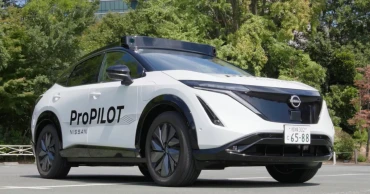
Japanese automaker Nissan developing self-driving vehicles
Japanese automaker Nissan is developing vehicles with self-driving technology as it works to turn around its struggling auto business.
In a recent demonstration of the technology developed by British company Wayve, a Nissan Ariya sedan outfitted with 11 cameras, five radars and a next-generation sensor called LiDAR maneuvered its way through downtown Tokyo, braking for red lights as well as pedestrians and other cars at intersections.
It's set to be available in 2027, although Nissan did not give the models or other details.
It's an already-crowded field. The self-driving car market is estimated to reach $2 trillion by 2030, according to market researcher IndustryARC, riding on the back of advances in AI, sensor technologies and data processing capabilities.
Japan’s top automaker, Toyota Motor Corp., has a partnership deal with Waymo, another self-driving technology developed by Google. Waymo has also arrived in Japan, in partnership with a cab company, but it’s still in the testing stage.
Other automakers are also working on autonomous driving technology, including Honda Motor Co., General Motors and Mercedes-Benz, as well as companies outside the auto industry like Amazon and its subsidiary Zoox.
Nissan's push comes at a time when the overall Japanese auto market is facing serious challenges because of President Donald Trump's tariffs. Nissan especially is struggling. It has slashed jobs and appointed a new chief executive, Ivan Espinosa, to attempt a turnaround. The maker of the March subcompact, Leaf electric cars and Infiniti luxury brand posted losses for the April-June period, following a fiscal year of red ink.
8 months ago
Emerging TikTok deal with China to give US control over board, algorithm: White House
The White House on Saturday said that an emerging agreement with China over TikTok will ensure U.S. oversight of the app’s operations, with Americans holding a majority on a new governing board and U.S. companies taking control of its closely guarded algorithm.
The development comes amid long-running tensions between Washington and Beijing over whether TikTok, owned by Chinese parent company ByteDance, would retain control of the algorithm that determines what users see on the platform.
Although Congress passed legislation mandating a TikTok ban set to take effect in January, President Donald Trump has repeatedly issued extensions, allowing the app to continue operating while negotiations proceed over a potential sale of its U.S. operations.
White House Press Secretary Karoline Leavitt told Fox News that Oracle would handle TikTok’s data and security, while six of the seven board seats overseeing U.S. operations would be held by Americans. “The algorithm will also be controlled by America,” she added. Oracle did not comment on the matter.
Speaking to reporters after a phone call with Chinese President Xi Jinping on Friday, Trump said: “We have great American patriots that are buying it — very, very substantial people, people that love our country. And they’re very smart technologically, and they will not let anything bad happen to TikTok.”
The algorithm, which drives TikTok’s content feed, has been at the center of U.S. concerns. Officials have warned it could be manipulated by Chinese authorities to shape narratives in subtle ways that are difficult to trace.
Leavitt said the administration is “100% confident that a deal is done,” with only the signing remaining. “The president’s team is working with their Chinese counterparts to do just that,” she said.
While Trump praised Xi as “a gentleman” in the talks, he remained vague on the critical issue of China’s role in the algorithm. “It’s all being worked out,” he said. “We’re going to have very good control.” A statement from Beijing following the call did not clarify whether China had agreed to ByteDance selling a controlling stake.
Leavitt said Trump recognized the need to “protect Americans’ privacy and data while also keeping this app open,” noting that “TikTok is a vital part of our democratic process.”
Public opinion on TikTok remains divided. A Pew Research Center survey found that one-third of Americans currently support a ban, down from 50 percent in March 2023. Another one-third oppose it, while the rest remain undecided. Among those favoring a ban, 8 in 10 cited concerns over user data security as their primary reason.
Leavitt expressed optimism that the deal would soon be finalized. “Now we just need this deal to be signed,” she said. “And that will be happening, I anticipate, in the coming days.”
8 months ago
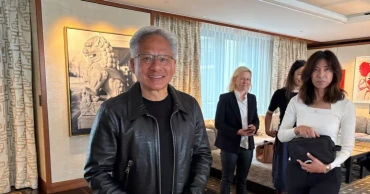
Nvidia invests $5 billion in Intel to boost AI and PC collaboration
Nvidia, the world’s leading chipmaker, announced Thursday that it will invest $5 billion in Intel and collaborate with the struggling semiconductor giant on products for artificial intelligence (AI) and personal computers.
Under the agreement, Nvidia will buy Intel common stock at $23.28 per share, pending regulatory approval. The two companies will work together on custom data center chips forming the backbone of AI infrastructure and on PC chips integrating Nvidia technology.
“This historic collaboration tightly couples Nvidia’s AI and accelerated computing stack with Intel’s CPUs and the vast x86 ecosystem — a fusion of two world-class platforms,” Nvidia CEO Jensen Huang said. “Together, we will expand our ecosystems and lay the foundation for the next era of computing.”
Intel will produce custom chips for Nvidia’s AI platforms, while for PCs, it will build chips that incorporate Nvidia technology. The partnership aims to “seamlessly connect” both companies’ architectures.
The deal provides a much-needed boost for Intel, once a Silicon Valley pioneer that dominated the personal computer era but fell behind after missing the mobile computing revolution triggered by the iPhone in 2007. Intel has struggled amid the AI boom that has propelled Nvidia to the world’s most valuable company, reporting nearly $19 billion in losses last year and $3.7 billion in the first half of 2025. The company also plans to cut a quarter of its workforce by year-end.
Meanwhile, Nvidia has surged as demand for its specialized graphics processing units (GPUs) grows, powering advanced AI systems.
Following the announcement, Intel shares rose 30% in premarket trading, while Nvidia added 3%.
8 months ago
Trump extends TikTok shutdown deadline for fourth time after framework deal with China
President Donald Trump has once again extended the deadline to keep TikTok operational in the United States, pushing it back to December 16 to allow time for finalizing a framework deal reached with China.
The executive order, signed on Tuesday, marked the fourth time Trump has bypassed federal law to prolong the deadline for TikTok’s China-based parent company, ByteDance, to sell its U.S. assets or face a ban. Congress had initially set the deadline for January 19 this year, one day before Trump began his second presidential term.
Speaking to reporters on Tuesday, Trump reiterated that he would discuss the framework with Chinese President Xi Jinping on Friday. He also noted that several companies are interested in acquiring TikTok’s U.S. operations, with details expected to be revealed soon. “I hate to see value like that thrown out the window,” Trump remarked before leaving the White House for a state visit to the United Kingdom with First Lady Melania Trump.
The framework deal emerged after high-level talks in Madrid between U.S. Treasury Secretary Scott Bessent and Chinese Vice Premier He Lifeng. Bessent said the goal was to transfer TikTok’s American operations to U.S. ownership but declined to elaborate on the details.
China’s international trade representative Li Chenggang told reporters that both sides had reached a “basic framework consensus” to resolve TikTok-related issues, reduce investment barriers and expand trade cooperation.
Trump has warmed to the idea of keeping TikTok alive, believing it helped him appeal to younger voters in the 2024 election. However, U.S. lawmakers remain concerned about the app’s potential security risks stemming from its data collection practices.
Analysts caution that the prolonged negotiations may ultimately have limited impact. “The U.S.–China deal on TikTok may look like a breakthrough, but it risks being a Pyrrhic victory,” said Dimitar Gueorguiev, a political science professor at Syracuse University. He noted that TikTok’s once-vaunted algorithm has lost much of its mystique as rivals replicate its features. “Any U.S. buyer is therefore purchasing market share and user base, not transformative technology.”
8 months ago

New York moves forward with rules to curb addictive social media use among minors
New York's Attorney General unveiled proposed regulations on Monday aimed at enforcing a new state law that targets addictive social media content for children and teens, including guidelines for age verification and parental consent.
The Stop Addictive Feeds Exploitation (SAFE) for Kids Act, passed last year, prohibits social media platforms from showing algorithmically curated content to users under 18 without parental approval. Instead, young users would only see posts from accounts they follow.
The law also restricts platforms from sending notifications to minors between 12 a.m. and 6 a.m., a measure intended to reduce late-night screen time.
The proposed rules detail how companies should determine users’ ages and obtain valid parental consent. The Attorney General’s Office said platforms may choose from existing methods of age verification, provided they are both effective and privacy-conscious.
To verify age, companies could request users to upload a photo or confirm an email address or phone number through cross-referencing with existing data, according to the proposed guidelines.
Minors who wish to receive algorithm-driven content or overnight notifications must first allow the platform to seek consent from a parent or guardian.
Supporters argue that personalized feeds, powered by user data and engagement algorithms, contribute to increased social media usage among youth and are linked to rising rates of anxiety and depression.
“Children and teenagers are facing alarming levels of mental health issues, driven in part by addictive social media features,” said Attorney General Letitia James in a statement announcing the proposed rules, which are now open for a 60-day public comment period.
While similar age-verification laws are gaining momentum across the U.S., they have faced pushback from digital rights advocates who raise concerns about user privacy and free expression. Over 20 states have passed such laws, with several currently facing legal challenges.
James’ office acknowledged that platforms like Instagram have already introduced some form of age verification, a development it called encouraging. However, it added that voluntary efforts alone have been insufficient to meet the protective standards set by the SAFE Act.
Once the rules are finalized, social media companies will have 180 days to comply with the new regulations.
8 months ago
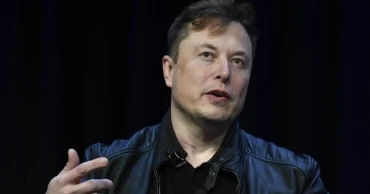
Tesla shares jump as Musk buys $1B stake ahead of shareholder vote on record pay package
Tesla’s stock surged more than 7% in premarket trading on Monday as CEO Elon Musk disclosed the purchase of over 2.5 million shares worth about $1 billion.
According to a regulatory filing, Musk bought the shares on Friday at varying prices, a move analysts say signals his confidence in the company’s future.
The development comes as Tesla prepares for a crucial shareholder vote on a proposed pay package for Musk, which could potentially make him the world’s first trillionaire if a series of highly ambitious performance targets are met over the next decade.
Under the plan, Musk would be awarded shares equal to up to 12% of Tesla in 12 separate tranches if the company achieves milestones including sharp increases in car production, share price and operating profit. The payout, entirely in stock rather than cash, would represent one of the most outsized executive compensation deals in U.S. history.
To unlock the first tranche — equal to 1% of Tesla — Musk would need to lift the company’s valuation to $2 trillion, roughly double its current market capitalization, while meeting other operational goals. Securing the full package would require Tesla to reach a market value of $8.5 trillion, more than twice the worth of Nvidia, the world’s most valuable company today.
The ambitious proposal comes amid mounting challenges for Tesla. Sales have plunged this year, partly due to backlash over Musk’s close alignment with President Donald Trump, while competition from Detroit automakers and Chinese electric vehicle producers has intensified.
Investors have also expressed concern about Musk’s frequent involvement in Washington politics, where he has emerged as one of the most visible members of the Trump administration, particularly in efforts to reduce the size of the federal government.
Tesla’s annual shareholder meeting is scheduled for November 6, when the pay package will be put to a vote.
8 months ago

China launches semiconductor probes ahead of US trade talks in Madrid
China on Saturday announced two investigations targeting the U.S. semiconductor sector, ahead of upcoming trade talks in Spain addressing trade, national security, and TikTok ownership.
China’s Ministry of Commerce said it has opened an anti-dumping probe into certain analog IC chips imported from the U.S., including commodity interface IC chips and gate driver IC chips, typically produced by firms like Texas Instruments and ON Semiconductor. Separately, the ministry announced an anti-discrimination investigation into U.S. actions affecting China’s chip industry.
The move comes ahead of U.S. Treasury Secretary Scott Bessent’s meeting with Chinese Vice Premier He Lifeng in Madrid between Sunday and Wednesday. A Chinese commerce spokesperson said U.S. measures such as export restrictions and tariffs aim to “contain and suppress China’s development” in high-tech industries, including advanced chips and artificial intelligence.
Read: Semiconductor industry creating jobs for Bangladeshi graduates
The announcement follows the U.S. adding 23 Chinese firms to its “entity list” on Friday for alleged threats to national security and foreign policy, including two accused of acquiring chipmaking equipment for SMIC.
The Madrid talks continue a series of negotiations in Geneva, London, and Stockholm this year, aimed at easing trade tensions and delaying higher tariffs.
Source: Agency
8 months ago

Nepal’s internet crackdown reflects global trend of restricting online freedoms
Nepal’s recent ban on major social media platforms — which triggered widespread protests and led to the deaths of at least 19 people — is part of a broader global pattern of declining internet freedom, even in democratic nations, as governments attempt to tighten control over digital spaces.
The Nepalese government blocked access to platforms like Facebook, X (formerly Twitter), and YouTube last week, citing the companies’ failure to register locally as required by new rules. Though the ban was reversed on Tuesday following deadly unrest, the move reflects a growing global strategy to regulate — and in many cases suppress — online expression.
Aditya Vashistha, a Cornell University assistant professor specializing in information science, said the situation in Nepal is consistent with broader efforts seen across South Asia, including in India, Pakistan, and Bangladesh. “Governments are increasingly trying to control narratives and restrict the flow of information,” he noted. “This is a well-worn playbook.”
Push for Local Oversight
Like its neighbors, Nepal has demanded that tech companies set up local representatives and comply with national laws meant to monitor and regulate online content. Officials argue these measures promote accountability, but critics say they’re designed to silence dissent and censor opposition voices online.
Kian Vesteinsson of Freedom House, a U.S.-based nonprofit focused on democracy and human rights, acknowledged that governments have a legitimate interest in setting rules for digital platforms. “It’s reasonable to want regulation,” he said. “But broad shutdowns like Nepal’s cause massive harm — cutting off millions of people from essential tools used for communication, education, business, and healthcare.”
A Global Pattern of Declining Internet Freedom
According to Freedom House, 2024 marked the 14th consecutive year of worsening internet freedom globally. Authoritarian measures are rising, and more people are being arrested simply for sharing political or religious views online. China remains the most restrictive environment for internet use, with Myanmar also ranked at the bottom. While Nepal wasn't specifically analyzed, similar trends are emerging there.
In India, a 2023 telecommunications law granted the government wide-reaching powers to monitor and restrict online communication. Previous laws also brought digital platforms under direct government oversight, officially to combat misinformation and hate speech. However, critics argue these laws are used to suppress dissent.
Pakistan’s parliament passed a bill in early 2024 that gives the government even greater control over social media, including the ability to imprison users for spreading so-called disinformation.
Internet Freedom as a Democratic Pillar
Freedom House emphasizes that unrestricted online access is vital for modern democracy. The ability to share and receive information freely underpins democratic engagement. Yet, more and more governments are using regulations — often justified as efforts to combat crime, protect children, or prevent fraud — to limit freedom of expression.
Vesteinsson pointed out contradictions within the proposed Nepali regulations. For instance, while the law targets serious issues like human trafficking, it also includes provisions to ban anonymous posting, a critical tool for activists and whistleblowers.
The Committee to Protect Journalists condemned Nepal’s social media ban, saying it not only undermines free speech but also obstructs journalists’ work and the public’s right to access information.
VPN Usage Soars, But It’s No Cure-All
In response to the restrictions, use of VPNs (virtual private networks) has surged in Nepal. According to encrypted services provider Proton, VPN signups in Nepal rose by 8,000% since September 3. VPNs allow users to bypass geographic restrictions by masking their location.
However, Vashistha cautioned that VPNs are not a perfect solution. They can be costly, reduce internet speed, and may not be accessible to everyone, especially in low-income areas.
Major tech companies — including Google (YouTube), Meta (Facebook, Instagram, WhatsApp), and X — have not commented on the Nepal situation. TikTok, which registered with the government, remains operational.
Vesteinsson urged these platforms to take stronger measures to protect user data, particularly for human rights activists and others vulnerable to government surveillance.
“It’s critical that these platforms prioritize user safety, especially in repressive environments,” he said.
8 months ago