Tech-News
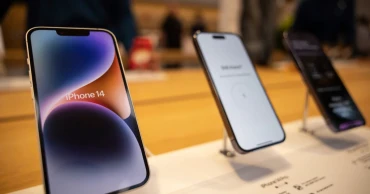
Trump administration excludes smartphones, laptops from tariffs
The Trump administration announced Friday that it will exempt certain electronics—such as smartphones, laptops, hard drives, and flat-panel monitors—from its reciprocal tariffs. The move aims to prevent a spike in consumer prices and could trigger a tech stock rebound, benefiting major tech firms like Apple, Samsung, and Nvidia.
U.S. Customs and Border Protection confirmed the exemptions, which also apply to some semiconductor chips and manufacturing equipment. These items will not be subject to the steep 145% tariffs on Chinese imports or the 10% baseline tariffs on goods from other countries.
This marks a shift in Trump’s broader tariff policy, which has seen several reversals. Speaking aboard Air Force One Saturday night, Trump said he would reveal more details Monday, asserting the U.S. is now gaining economically after years of losing out—especially to China.
The exemption indicates a recognition that U.S. manufacturing of smartphones and other electronics is unlikely to ramp up anytime soon, despite earlier predictions. Apple, for instance, has spent decades building an efficient supply chain in China. Moving production stateside would be costly and time-consuming, potentially tripling iPhone prices and hurting sales.
This move mirrors a similar exemption Trump granted during his first term. However, in his second term, he initially took a harder stance, imposing broader tariffs that sent tech stocks tumbling. Earlier this week, the market value of tech’s "Magnificent Seven"—Apple, Microsoft, Nvidia, Amazon, Tesla, Alphabet, and Meta—had dropped $2.1 trillion. That loss narrowed to $644 billion after Trump paused tariffs on countries outside China.
With the latest exemption, analysts expect a tech stock rally when U.S. markets reopen, led by Apple. It may also ease consumer fears of rising electronics prices.
This favorable move aligns with Big Tech’s support for Trump, symbolized by key CEOs—Tim Cook, Elon Musk, Sundar Pichai, Mark Zuckerberg, and Jeff Bezos—standing with him at his January 20 inauguration.
Apple received praise in February for pledging $500 billion in U.S. investments and 20,000 new jobs over four years—echoing a similar commitment during Trump’s first term.
“This removes a major overhang from the tech sector,” said Wedbush analyst Dan Ives.
While the White House didn’t directly address the exemptions, Press Secretary Karoline Leavitt said Trump remains committed to reducing reliance on China for essential tech products. She cited ongoing U.S. investments by companies like Apple, TSMC, and Nvidia as evidence that tech firms are accelerating efforts to move manufacturing back to the U.S.
Apple and Samsung did not comment, while Nvidia declined to respond.
10 months ago
Americans remain sceptical of generative AI in journalism, study reveals
Leading US newsrooms are experimenting with generative artificial intelligence (AI) tools to enhance reader experience but a research reveals a significant gap between newsroom innovation and audience readiness.
A wide-ranging study by the Poynter Institute and the University of Minnesota indicates nearly half of Americans are not comfortable receiving news from generative AI, while one in five believe publishers should avoid AI entirely.
Dozens of America’s most well-known newsrooms including the San Francisco Chronicle,the Texas Tribune, Time magazine and the Washington Post are experimenting with chatbots to help readers pick restaurants, learn more about political candidates and dive deeper into articles.
However, researchers suggest that public hesitation remains a key challenge.
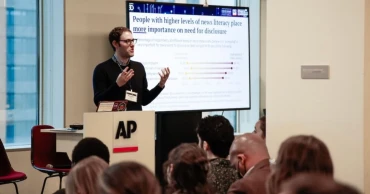
Benjamin Toff, associate professor at the Hubbard School of Journalism and director of the Minnesota Journalism Center, presented the findings at the second Summit on AI, Ethics and Journalism, organised by Poynter and The Associated Press in New York City last week.
“The data suggests if you build it, do not expect overwhelming demand for it,” said Toff, who has been studying news audiences — and avoiders — for nearly a decade.
According to the Poynter Institute and the University of Minnesota, the survey found that 49.1% of respondents had no interest in using AI-based tools for information. Meanwhile, 39.3% said they would only use such a tool if editors verified its responses for factual accuracy, and just 9.9% expressed willingness to use the tools even if they occasionally misinterpreted published reporting.
Meredith Broussard, data journalist and associate professor at the Arthur L. Carter Journalism Institute of New York University, delivered a keynote at the summit where she spoke bluntly about user experiences with chatbots.
“Anybody really like using a chatbot? No. I can’t stand it. So, guess what? Your users feel like that, too,” she said. “They’re not excited about interacting with a chatbot on your site.”
The findings also revealed that many people have yet to interact with generative AI beyond customer service settings, making their scepticism about AI in journalism even more pronounced.
Furthermore, younger audiences, often perceived as early adopters of technology, are not as engaged with AI as expected. Nearly half of those aged 18 to 29 reported they hadn’t used or even heard of tools like ChatGPT.
Despite these reservations, some media organisations are pushing ahead with innovation. Hearst Newspapers launched the “Chowbot” in early 2024, an AI chatbot recommending restaurants based on decades of reporting.
Irish privacy regulator probes X over use of user data to train Grok AI
Ryan Serpico, deputy director of newsroom AI and automation at Hearst, defended the strategy, saying: “We are basing this off of 30 years of high-quality reporting, high-quality editing, that Google might push to the side or not value in their model.”
Christina Bruno, digital growth strategist at Spotlight PA, echoed the importance of exploring new formats. “We need to be experimenting with more formats of information delivery. I think chatbots are one way of doing that,” she said.
Internationally, audience-facing AI tools have gained more traction. In Sweden, publisher Aftonbladet’s EU election chatbot answered over 150,000 questions, while in Poland, a virtual assistant from Ringier Axel Springer helped generate 33,000 unique travel plans to promote German tourism.
“Experiments are great,” Broussard noted. “But you’ve got to pay attention to the results of the experiment.”
The study also showed a disconnect between public perception and newsroom practices. Respondents were asked, “Thinking about news media in general in the US right now, how often, if at all, do you think they currently use AI to do any of the following?” Of the 1,128 surveyed, 31.6% said AI is often used to make charts and infographics, and 6.2% said always.
For image creation when photographs are unavailable, 25.2% said often, and 6.2% said always. Meanwhile, 29.2% believed AI was often used to convert articles into audio or video, with 5.8% responding always.
Despite these assumptions, trust remains a pressing issue. More than half of respondents reported little or no confidence in newsrooms using AI to write articles or create imagery. For those with high news literacy, over 90% demanded clear disclosures when AI tools were used to generate text or edit photos.
Zuri Berry, digital strategy editor at The Baltimore Banner, sees this as a validation of their cautious approach. “It also serves as a confirmation of our current approach to AI, which entails disclosures, human review and verification and limitations on some tools that undermine our trust and credibility with readers,” he said.
10 months ago

Apple unlikely to make iPhones in US despite Trump’s China tariffs
Despite the Trump administration’s hopes, Apple is unlikely to begin producing iPhones in the United States, even with tariffs on Chinese-made goods now as high as 145%.
Since launching the iPhone 18 years ago, Apple has relied heavily on its manufacturing base in China, where it built an intricate supply chain dating back to the 1990s. Moving production to the U.S. would require billions in investment, take years to establish, and significantly raise costs — potentially tripling the retail price of an iPhone and hurting demand for its flagship product.
Wedbush Securities analyst Dan Ives dismissed the idea, saying an iPhone currently selling for $1,000 could cost over $3,000 if produced in the U.S. He suggested the earliest Apple could feasibly make such a shift would be around 2028. “The price jump would be staggering,” he noted.
Apple declined to comment on the matter. However, CEO Tim Cook may address the issue during the company’s earnings call on May 1. The tariffs, which have coincided with a 15% drop in Apple’s share price and a $500 billion loss in market value since April 2, are expected to be a major discussion point.
Given the heavy dependence on overseas manufacturing, analysts expect Apple may eventually pass on some of the tariff-related costs to consumers. For now, Apple can afford to hold the line on prices thanks to its booming services business — which earned $96 billion last year and remains unaffected by the tariffs — according to Forrester analyst Dipanjan Chatterjee.
While Apple pledged in February to invest $500 billion and hire 20,000 workers in the U.S. by 2028, none of that commitment includes domestic iPhone production. Instead, the company is focusing on AI infrastructure, including a data center in Houston.
China, ASEAN media and think tanks urged to embrace AI, address its challenges
White House Press Secretary Karoline Leavitt pointed to Apple’s investment as a sign of potential manufacturing in the U.S., saying, “If Apple didn’t think it was possible, they wouldn’t have invested so much.” U.S. Commerce Secretary Howard Lutnick echoed that belief, predicting that the tariffs would push assembly jobs to American soil.
However, Apple CEO Tim Cook has long expressed doubts about the U.S. labor force’s readiness for iPhone manufacturing, citing a shortage of skilled tooling engineers. “In China, you could fill multiple football fields. In the U.S., I’m not sure we could fill a room,” Cook said during a 2017 event in China.
Despite Trump's earlier attempts during his presidency to bring iPhone production to the U.S., his administration eventually exempted iPhones from the tariffs. During that period, Apple began diversifying its manufacturing by shifting some iPhone production to India and moving parts of other operations to Vietnam.
In 2019, Trump toured a Texas plant assembling Mac computers — a facility actually opened under the Obama administration. He later took credit for the site, tweeting, “Today I opened a major Apple Manufacturing plant in Texas that will bring high paying jobs back to America.”
10 months ago

Irish privacy regulator probes X over use of user data to train Grok AI
Ireland’s data protection authority has launched an investigation into Elon Musk’s social media platform X, focusing on how it uses personal data from European users to train its AI chatbot, Grok.
The Data Protection Commission announced Friday that it’s examining whether X legally processed publicly available user posts from European residents to help develop the Grok large language models (LLMs).
“The goal of this inquiry is to assess if the personal data was lawfully used for training Grok’s LLMs in line with EU data protection rules,” the commission said in an online statement.
Large language models are trained on massive datasets, including online content such as blogs, articles, and essays, to develop the capabilities of generative AI systems.
Since X’s European headquarters is located in Dublin, the Irish commission serves as the lead regulator under the European Union’s General Data Protection Regulation (GDPR). The GDPR gives regulators the authority to issue fines of up to €20 million or 4% of a company’s global annual revenue for serious breaches.
X has not responded to a request for comment.
10 months ago

Hackers breach Morocco's social security database in an unprecedented cyberattack
Morocco's social security agency said troves of data were stolen from its systems in a cyberattack this week that resulted in personal information being leaked on the messaging app Telegram.
The North African kingdom’s social security fund administers pensions and insurance benefits to millions of private sector workers, from assembly line laborers to corporate executives. It said in a statement Wednesday that preliminary investigations suggest the leak resulted from hackers bypassing its security systems, AP reports.
The agency did not say who was thought to be responsible for the leak while also claiming that many of the documents posted were “misleading, inaccurate, or incomplete.”
The hackers who posted the documents on Telegram said the attack was in response to alleged Moroccan “harassment” of Algeria on social media platforms, pledging additional cyberattacks if Algerian sites were targeted.
Moroccan media have attributed the attack to Algerian hackers, describing it as an episode in a larger cyberwar between the two countries.
Relations between Algeria and Morocco have recently deteriorated to historic lows. The countries have withdrawn their ambassadors, closed their embassies and respective airspaces. Algeria's support for the Polisario Front, a pro-independence movement fighting Morocco over the disputed Western Sahara, is among the roots of the tensions.
A machine using ultrasound and AI can gauge the fattiness of a tuna fish
Some of the leaked information touches on deeply sensitive issues in Morocco. Among the leaked documents is salary information that, if accurate, would reflect vast inequalities that continue to plague Morocco despite its strides in economic development. The trove includes unverified financial data on executives of state-owned companies, political parties, figures associated with the royal family's holding company and charity fund, and the Israeli liaison office in Rabat.
Morocco's National Commission for the Protection of Personal Data said on Thursday that it stood ready to investigate complaints from people targeted in the leak.
Mustapha Baitas, Morocco’s government spokesperson, linked the attack to what he said was growing support for Morocco in the conflict from the international community — something he said “disturbs the enemies of our country to the point of attempting to harm it through these hostile actions.”
US Secretary of State Marco Rubio said earlier this week said he supported Morocco’s plan for the disputed territory, a statement Algeria criticized on Thursday.
During his first term in office, President Donald Trump shifted Washington's longstanding position in 2020 to back Morocco’s sovereignty over the territory. President Joe Biden’s administration neither reversed nor openly supported the policy.
10 months ago

A machine using ultrasound and AI can gauge the fattiness of a tuna fish
Seafood lovers know the fatty marbling is what makes tuna sashimi and sushi so tasty, so for the industry, it's the fish's level of fattiness that's used to judge its quality and pricing.
Usually, several people assess how fatty a tuna is by cutting the tail with a giant saw-like knife, an operation that takes about 60 seconds per fish.
But now a machine called Sonofai uses ultrasound waves to do the job in 12 seconds, operated by a person without prior knowledge of how to carve fish.
Fujitsu, the Japanese company behind the technology, invited reporters this week for a demonstration of Sonofai, a word blended from “sono” referring to “sound,” “f” for Fujitsu, and “ai,” or artificial intelligence. The name refers to its components but also stands for “son of AI.”
A conveyor belt transports a whole frozen tuna fish, about a meter (3 feet) in size, into a machine that beams ultrasound waves. Sensors pick up the waves to draw a zigzagging diagram on a screen to indicate the fish’s fattiness.
Fatty meat absorbs fewer sound waves than lean meat and AI sorts real data from misleading “noise,” or irregularities.
Trump's Social Media ‘Buy’ tip pays off as markets rally following tariff delay
Hisashi Ishida, president of Sonofai, the startup behind the technology, who also heads Ishida Tec Co., which makes food-manufacturing equipment, says it’s safer, more sanitary and efficient.
“Fatty fish tastes good, feels better on your tongue and is called ‘toro,’ ” he said. “Overseas needs are growing because sushi culture is now appreciated around the world.”
Beef has a grading system for fat and expected flavor, but being able to gauge the quality of tuna is new, according to Hideto Okada, who oversees AI at Fujitsu.
Sonofai uses the same technology as medical ultrasound scans where high-frequency inaudible sound waves are absorbed or bounced back to create video-like images of things that aren’t visible, like a fetus inside a mother’s womb. Unlike the CT scan or X-ray, it doesn’t use radiation, which can harm tissue.
Chris Edwards, a medical doctor and professor at Queensland University of Technology, who trains sonographers, or health-care professionals who specialize in ultrasound, has studied how ultrasound can be used to see the fattiness of a human liver, linked to diabetes and other health problems.
“They can look at one fish and compare it to another and say ‘Oh, that one’s definitely got more fat than that one,’” he told The Associated Press in an interview.
But Sonofai won't be at your neighborhood sushi chef.
Microsoft hits pause on some AI data centre projects, including $1b Ohio site
Fish-processing outfits and fishing organizations are the likely buyers. The machine is set to go on sale in June for about 30 million yen ($207,000) each, at first in Japan but expanding to the U.S. and other places later. They'll also work on future upgrades to test for freshness, firmness and other characteristics of tuna and other fish varieties.
10 months ago

Microsoft hits pause on some AI data centre projects, including $1b Ohio site
Microsoft has announced it is “slowing or pausing” certain data centre construction projects, including a $1 billion development in Ohio, amid signals that the surge in demand for artificial intelligence (AI) infrastructure may be levelling off.
The company confirmed it is halting early-phase work on rural sites it owns in Licking County, near Columbus, Ohio. Two of the three properties will now be retained for agricultural use, AP reports.
“In recent years, demand for our cloud and AI services grew more than we could have ever anticipated and to meet this opportunity, we began executing the largest and most ambitious infrastructure scaling project in our history,” said Noelle Walsh, Microsoft’s president of cloud operations, in a LinkedIn post.
Walsh added, “Any significant new endeavour at this size and scale requires agility and refinement as we learn and grow with our customers. What this means is that we are slowing or pausing some early-stage projects.”
While the tech giant has not disclosed details of other affected sites beyond Ohio, it had already paused later phases of a major data centre development in Wisconsin last December.
Earlier this year, analysts at TD Cowen noted Microsoft had been scaling back some international expansion and cancelling data centre leases in the US. Industry watchers have linked these adjustments to shifts in Microsoft’s partnership with OpenAI, the maker of ChatGPT.
Microsoft fires employees protesting AI technology contracts with Israel
“OpenAI was moving in one direction” by focusing on more powerful AI systems requiring vast computing capacity, while “Microsoft may not have been moving that same direction,” said Craig Ellis, research director at B Riley Securities.
In January, Microsoft and OpenAI revised their agreement, which had made Microsoft the exclusive provider of OpenAI’s computing infrastructure. The updated deal allows OpenAI to develop its own capacity, primarily for training and research.
Despite the pause, Microsoft still intends to spend over $80 billion globally on AI infrastructure in this fiscal year, which ends in June. The company says it has already doubled its data centre footprint in the past three years.
“While we may strategically pace our plans, we will continue to grow strongly and allocate investments that stay aligned with business priorities and customer demand,” said Walsh.
The decision disappointed some local officials in Licking County, which has also drawn investment from Google, Meta, and chipmaker Intel — although Intel has delayed its planned factory to 2030.
10 months ago
Kids under 16 will no longer be allowed to livestream on Instagram without parental consent
Instagram users under 16 won't be able to livestream or unblur nudity in direct messages they've received without parental approval, owner Meta Platforms said Tuesday as it widened its safety measures for teenagers.
The social media company also said it was extending safeguards for users under 18 to Facebook and Messenger.
Microsoft fires employees protesting AI technology contracts with Israel
Meta launched its teen account program for Instagram in September to give parents more options to supervise their children's online activity amid a growing backlash against how social media affects the lives of young people.
The latest changes will roll out first to users in the United States, Britain, Canada and Australia, before going out to global users in the following months.
Under the changes, teens under 16 are blocked from using Instagram Live unless parents give permission. They also need permission to “turn off our feature that blurs images containing suspected nudity” in direct messages, Meta said in a blog post.
In another major update, Meta said it's extending the teen account safeguards to its Facebook and Messenger platforms.
China’s schools to teach AI to children as young as six
These will include protections already in place for teen Instagram users, including setting teen accounts to private by default, blocking private messages from strangers, strict limits on sensitive content like fight videos, reminders to get off the app after 60 minutes and notifications that are halted during bedtime hours.
“Teen Accounts on Facebook and Messenger will offer similar, automatic protections to limit inappropriate content and unwanted contact, as well as ways to ensure teens’ time is well spent,” Meta said.
The company said at least 54 million teen accounts have been set up since the program launched in September.
Source: With input from agency
10 months ago
China’s schools to teach AI to children as young as six
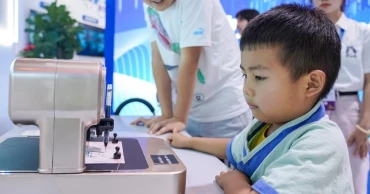
China is introducing artificial intelligence (AI) education to children as young as six in a bold move to nurture the next wave of tech innovators.
Starting this September, primary and secondary schools in Beijing will offer at least eight hours of AI lessons each academic year, according to a Fortune report. Young students will learn about chatbots, basic AI tools, the technology’s fundamentals, and its ethical implications.
The Beijing Municipal Education Commission announced that schools may integrate AI lessons with existing subjects such as science or IT, or teach them as standalone courses. The city also plans to establish a comprehensive AI curriculum, build a supporting education and training framework, and promote the subject nationwide.
This initiative follows China's increasing investment in AI, especially after the rapid rise of DeepSeek, co-founded by Zhejiang University graduate Liang Wenfeng. The eastern university also produced Unitree’s founder Wang Xingxing, reinforcing hopes that early exposure to AI will yield a new generation of tech giants.
Instagram bans livestreaming for under-16s without parental consent
Beijing’s efforts are part of a broader national strategy. In December, the Ministry of Education selected 184 schools to pilot AI-focused programmes, aiming to set a model for wider implementation. Education Minister Huai Jinpeng called AI the “golden key” to advancing China’s education system.
10 months ago

Instagram bans livestreaming for under-16s without parental consent
Instagram users under 16 won't be able to livestream or unblur nudity in direct messages they've received without parental approval, owner Meta Platforms said Tuesday as it widened its safety measures for teenagers.
The social media company also said it was extending safeguards for users under 18 to Facebook and Messenger.
Meta launched its teen account program for Instagram in September to give parents more options to supervise their children's online activity amid a growing backlash against how social media affects the lives of young people.
The latest changes will roll out first to users in the United States, Britain, Canada and Australia, before going out to global users in the following months.
Under the changes, teens under 16 are blocked from using Instagram Live unless parents give permission. They also need permission to “turn off our feature that blurs images containing suspected nudity” in direct messages, Meta said in a blog post.
In another major update, Meta said it's extending the teen account safeguards to its Facebook and Messenger platforms,
Microsoft fires employees protesting AI technology contracts with Israel
These will include protections already in place for teen Instagram users, including setting teen accounts to private by default, blocking private messages from strangers, strict limits on sensitive content like fight videos, reminders to get off the app after 60 minutes and notifications that are halted during bedtime hours.
“Teen Accounts on Facebook and Messenger will offer similar, automatic protections to limit inappropriate content and unwanted contact, as well as ways to ensure teens’ time is well spent,” Meta said.
The company said at least 54 million teen accounts have been set up since the program launched in September.
10 months ago