tech-news

Japan launches new cargo spacecraft on first ISS supply mission
Japan’s space agency on Sunday successfully launched its new flagship H3 rocket, carrying an unmanned cargo spacecraft on its first mission to deliver supplies to the International Space Station (ISS).
The HTV-X1 supply ship lifted off aboard the No. 7 H3 rocket from the Tanegashima Space Center in southern Japan, the Japan Aerospace Exploration Agency (JAXA) confirmed. The spacecraft later separated from the rocket and entered its intended orbit.
If the mission proceeds as planned, the craft will reach the ISS within the next few days. Japanese astronaut Kimiya Yui, currently stationed on the orbiting laboratory, is expected to capture the cargo ship using the station’s robotic arm early Thursday.
The HTV-X is the successor to JAXA’s previous H-II Transfer Vehicle, known as Kounotori (or “stork” in Japanese), which completed nine ISS resupply missions between 2009 and 2020.
The upgraded spacecraft can carry larger payloads and provide power during transit, allowing safe transport of cell cultures and other sensitive laboratory materials requiring cold storage. Once docked, the HTV-X can remain attached to the ISS for up to six months to deliver supplies and collect waste. After departure, it will conduct additional technical missions for around three months while in orbit.
Pakistan announces ‘Army Rocket Force’ after operation Sindoor
The H3 rocket replaces Japan’s long-running H-2A as the country’s main launch vehicle. Designed to be more cost competitive in the expanding global space industry, the H-2A made its final flight in June.
Japan considers a reliable and commercially viable launch capability vital to its space strategy and national security. The H3 has now completed six straight successful flights, following a failed first launch in 2023 when the rocket was destroyed along with its payload.
Source: AP
4 months ago

Anti-abortion pregnancy centers expanding into wider health services
Anti-abortion pregnancy centers across the United States are rapidly broadening their medical offerings, aiming to become an alternative source of care for women who might otherwise seek abortion services.
The shift, which includes adding sexually transmitted infection testing, treatment and even primary health care, has been underway for years. It accelerated after the U.S. Supreme Court overturned Roe v. Wade, enabling states to impose abortion bans.
That growth may gain further traction as Planned Parenthood closes clinics and considers shutting more due to Medicaid funding changes. Planned Parenthood, the country’s largest abortion provider, also delivers a wide range of reproductive health care, including cancer screenings and STI services.
“We ultimately want to replace Planned Parenthood with the services we offer,” said Heather Lawless, founder and director of the Reliance Center in Lewiston, Idaho. She noted that about 40% of their patients visit for non-pregnancy reasons, and some rely on the center’s nurse practitioner for primary care.
Pregnant farmworkers face rising health risks as heat intensifies in the US
Abortion-rights groups have sharply criticized the trend, arguing the centers lack proper oversight and rarely provide contraception. They caution that most centers only conduct limited ultrasounds that cannot detect fetal anomalies and are increasingly offering the medically unproven “abortion-pill reversal” treatment.
Because most facilities do not accept insurance, they are not bound by federal patient-privacy laws such as HIPAA, though some say they voluntarily comply. Meeting broader care standards required by insurers or Medicaid is also not mandatory, but those offering specific medical procedures generally employ licensed medical directors.
“There are really bedrock questions,” said Jennifer McKenna of Reproductive Health and Freedom Watch, “about whether this industry has the clinical infrastructure to provide the medical services it’s currently advertising.”
Post-Roe environment fuels expansion
Often linked to religious organizations and historically known as “crisis pregnancy centers,” many expanded services such as baby supplies and counseling even before the 2022 Dobbs decision.
“These centers are preparing to support their communities for the long-term,” said Moira Gaul of the Charlotte Lozier Institute, the research arm of SBA Pro-Life America.
In Sacramento, California, Alternatives Pregnancy Center has added primary care physicians, a radiologist and a high-risk pregnancy specialist over the past two years. For some patients, it has become their exclusive health provider.
One patient, Jessica Rose, who detransitioned after years of hormone therapy and surgery, said the center was the only place offering care aligned with her values. “APC provided me a space that aligned with my beliefs as well as seeing me as a woman,” she said.
Clinic closures heighten reliance
As of 2024, more than 2,600 anti-abortion pregnancy centers operate nationwide, according to data from University of Georgia researchers. Guttmacher Institute figures show only 765 clinics offered abortions last year, a decline of over 40 from 2023.
At the same time, Republican-led states have boosted public funding for pregnancy centers. Texas allocated $70 million to them this fiscal year, while Florida provided more than $29 million.
This comes as Republicans have blocked Planned Parenthood from Medicaid reimbursements under the tax and spending law signed by President Donald Trump in July. Planned Parenthood has warned that up to 200 clinics could be shut.
Already, some affiliates have halted abortions in Wisconsin or dropped Medicaid services in Arizona. Independent providers in Maine have stopped primary care altogether, raising concerns about growing healthcare deserts.
Kaitlyn Joshua of the group Abortion in America said closures leave many women with only pregnancy centers as an option. “Those centers should be regulated,” she said, adding that patients deserve accurate information rather than “just getting a sermon that they didn’t ask for.”
However, Thomas Glessner of the National Institute of Family and Life Advocates insisted that oversight is in place through medical directors. “Their criticism,” he said, “comes from a political agenda.”
Limited services remain a point of contention
Choices Medical Services in Joplin, Missouri, which expanded into STI treatment two decades ago, now devotes much of its work to non-pregnancy care, according to director Karolyn Schrage.
The center does not provide contraception, instead promoting what it calls “sexual risk elimination,” a stance public health experts say conflicts with accepted best practices.
Still, supporters like Hayley Kelly, who sought care there in the past and later continued to use its services during difficult circumstances, describe the organization as invaluable. “It’s amazing place,” she said. “I tell everybody I know, ‘You can go there.’”
Source: AP
4 months ago
EU finds Meta and TikTok in breach of transparency rules
The European Union on Friday announced that Meta and TikTok have violated transparency obligations under the Digital Services Act (DSA), following an investigation that could lead to fines totaling billions of dollars.
The probe, launched in 2024, found both companies failed to provide adequate access to data for researchers. Meta’s Instagram and Facebook also reportedly made it difficult for users to flag illegal content or challenge moderation decisions effectively. The EU noted that Meta used “dark patterns” — deceptive interface designs — that obscured reporting processes for content such as child sexual abuse or terrorist material.
Henna Virkunnen, EU executive vice president for tech sovereignty, security, and democracy, said on X that the DSA makes it mandatory for platforms to empower users, respect rights, and allow scrutiny. “Our democracies depend on trust,” she said.
AI will replace all jobs, humans can choose to grow vegetables: Elon Musk
Meta said it disagrees with the findings but will continue discussions with the EU, emphasizing recent updates to reporting tools and data access. TikTok said it will review the report, noting potential conflicts between DSA transparency rules and EU privacy regulations under the GDPR.
The companies may respond to the EU inquiry, after which the bloc could impose fines of up to 6% of their annual profits.
Source: AP
4 months ago

Microsoft introduces ‘Mico,’ a friendlier AI face after Clippy’s failure
Nearly three decades after the animated paperclip “Clippy” annoyed users of Microsoft Office, the tech giant is trying again — this time with “Mico,” an artificial intelligence companion designed to be more helpful, expressive and user-friendly.
Microsoft unveiled Mico (pronounced MEE-koh) on Thursday, describing it as a floating, animated face shaped like a flame or blob. Mico will represent the company’s Copilot virtual assistant and marks Microsoft’s latest effort to add personality to AI tools while avoiding the missteps of the past.
“When you talk about something sad, you can see Mico’s face change. You can see it move as it gets excited with you,” said Jacob Andreou, corporate vice president of product and growth for Microsoft AI, in an interview with the Associated Press. “It’s about creating an AI companion you can actually feel.”
For now, the character is available only to U.S. users of Copilot on laptops and mobile apps. Mico changes color, spins, and even puts on glasses in “study” mode. Unlike Clippy — which appeared in 1997 and became notorious for interrupting users — Mico can be easily turned off.
Experts say users today may be more open to such digital companions. Bryan Reimer, a research scientist at the Massachusetts Institute of Technology and co-author of How to Make AI Useful, said, “Microsoft pushed Clippy, we resisted it and they got rid of it. I think we’re much more ready for things like that today.”
Reimer noted that developers now carefully balance how much “personality” to give AI assistants. “Tech-savvy users may want it to act like a machine, but others are better supported by technology that feels a little more human,” he said.
Microsoft says its approach differs from other AI developers — some of whom have avoided giving AI any physical presence, while others, such as Elon Musk’s xAI, have leaned into lifelike, flirtatious avatars. “Those two paths don’t really resonate with us,” said Andreou, stressing that Mico is meant to be “genuinely useful,” not manipulative or attention-seeking.
The company also announced new features, including the ability to invite Copilot into group chats — similar to AI integrations in Snapchat, WhatsApp, and Instagram — and a “voice-enabled, Socratic tutor” mode to help students with their studies.
Microsoft’s launch comes amid growing scrutiny over how AI tools affect children and teens. The U.S. Federal Trade Commission recently opened inquiries into several social media and AI firms over concerns that chatbots could harm young users, though Microsoft was not among those investigated.
Some chatbots have faced lawsuits after allegedly giving harmful or inappropriate advice to minors, prompting companies to rethink how human-like their AI systems should be.
OpenAI CEO Sam Altman, for example, has promised a new version of ChatGPT that restores some of its “personality,” saying the company had previously toned it down to address mental health concerns.
As Microsoft reimagines Clippy’s legacy through Mico, the challenge remains the same: how to make AI feel friendly — without crossing the line into intrusive or unsafe.
Source: AP
4 months ago
Indonesia’s clean energy path becomes a new battleground for U.S. and China influence
A growing contest between the United States and China is shaping Indonesia’s shift from coal to cleaner energy, with both powers vying to dominate the future of energy in the developing world.
As the world’s largest coal exporter, Indonesia stands at a crossroads — between Washington’s push for energy partnerships anchored in natural gas and Beijing’s rapid expansion across solar, battery, and electric vehicle supply chains.
In 2023, Chinese companies struck more than $54 billion worth of deals with Indonesia’s state utility PLN, while President Prabowo Subianto’s visit to Beijing in 2024 brought another $10 billion in commitments. China is now deeply embedded in Indonesia’s clean-energy infrastructure — from critical mineral extraction to EV production.
By contrast, the $20 billion Just Energy Transition Partnership (JETP) launched in 2022 with wealthy nations to help Indonesia move away from coal has struggled to make progress. Coal remains crucial to the national economy, contributing 3.6% of GDP.
Before the formal U.S. withdrawal from the JETP in March under President Donald Trump, only $1.2 billion — around 6% of the pledged funds — had been disbursed. Indonesia estimates it will need over $97 billion to complete its energy transition.
While Washington promotes its liquefied natural gas (LNG) exports as a cleaner alternative to coal, China is betting on renewable technologies to secure its dominance in the global clean energy market.
“The two countries are promoting very different visions of the future,” said Putra Adhiguna of the Energy Shift Institute.
U.S. exit shakes confidence, not investmentsAnalysts say the U.S. pullout affected political leadership but not the overall momentum of the JETP. U.S. climate envoy John Kerry had initially helped launch the program, but the Trump administration’s rollback of climate policies led Indonesian officials to question Washington’s commitment.
“The early discussions created overly high expectations,” Adhiguna said, noting that the targets were difficult to achieve even without U.S. policy shifts.
According to Jordan Lee of the Tony Blair Institute for Global Change in Jakarta, the U.S. pledged $2 billion to the JETP, about half of which remains available through loan guarantees. The program was only meant to support a fraction of Indonesia’s $97 billion clean-energy needs, given the country’s small solar and wind sectors — just 0.24% of its total power generation, compared to 3.8% in the Philippines and 13% in Vietnam.
Still, Lee said JETP helped attract new partners such as the UAE and Saudi Arabia and created a shared platform for energy reform.
China’s model: fast and far-reachingBeijing, meanwhile, has presented a different version of energy security — one centered on self-sufficiency through renewables.
OpenAI partners with Walmart to enable ChatGPT shopping
Chinese companies have moved quickly: battery giant CATL announced a $6 billion supply chain venture in 2022, while BYD began building a $1 billion EV plant in 2024 that will produce 150,000 cars a year and create 18,000 jobs. BTR New Material Group launched a $478 million battery materials factory in 2024, and LONGi is set to open a 1.6-gigawatt solar panel plant in 2025.
“It’s a system-wide transformation,” said Dinita Setyawati, an energy analyst at Ember. “Countries can now use Chinese solar power to charge Chinese-made electric vehicles.”
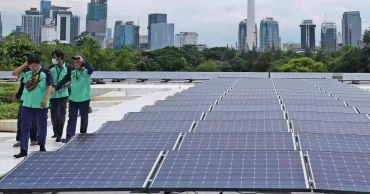
Chinese firms also deliver projects rapidly — an advantage in Indonesia’s short political cycles. For instance, POWERCHINA completed a 100-megawatt solar park in just seven months in 2024.
“If a U.S. firm spends four years on feasibility studies, Chinese companies will already have broken ground,” Adhiguna added.
However, environmental concerns shadow China’s investments. Most of Indonesia’s nickel — a key EV battery mineral — is mined by Chinese companies using coal-powered plants. A 2024 study by the Centre for Research on Energy and Clean Air estimated pollution from smelters could cost Indonesia $2.6 billion and cause nearly 3,800 deaths in 2025, rising further by 2030.
U.S. gas deals may deepen fossil fuel dependenceIn April, Indonesia’s energy minister Bahlil Lahadalia said the country plans to import an additional $10 billion worth of U.S. LNG as part of trade talks. While LNG emits less carbon than coal, experts warn such deals could lock Indonesia into long-term fossil fuel dependence just as renewables become cheaper and more scalable.
“If Indonesia moves too slowly, it could miss out on renewable investments — like data centers seeking green power,” Setyawati said. “And once that realization hits, it might be too late.”
Coal, however, still dominates Indonesia’s power mix. The country ranked third globally in new coal capacity in 2024, with 80% of the 1.9 gigawatts built that year dedicated to smelters processing nickel and cobalt for EVs, according to Global Energy Monitor.
“The government must recognize where the world is heading — toward renewables, whether they like it or not,” Setyawati said.
Source: AP
4 months ago

AI will replace all jobs, humans can choose to grow vegetables: Elon Musk
Tech billionaire Elon Musk has said Artificial Intelligence (AI) and robots will eventually take over every job but humans will no longer be required to work and can spend their time on activities like growing vegetables.
Responding to a post on X about Amazon’s plan to replace over 1,60,000 workers with AI and robots by 2027, Musk wrote, “AI and robots will replace all jobs.”
While the statement might sound alarming, Musk sees it as an opportunity for humans to gain more freedom.
“Working will be optional, like growing your own vegetables, instead of buying them from the store,” he added.
Musk is leading xAI to develop an AI-only software company named Macrohard, while Tesla is also advancing its Optimus robot project. He believes AI will allow humans to work only if they want to.
He further predicted a world with “universal high income,” where people can maintain their lifestyles without needing jobs. Musk has previously outlined such a vision, noting at the VivaTech 2024 conference in Paris an “80 percent chance” of a future with no shortage of goods and services.
Musk has also suggested that personal robots could make this lifestyle possible. In August 2024, he stated that every human may have “their own personal R2-D2 and C-3PO,” referencing the famous robots from the Star Wars series.
4 months ago
OpenAI unveils Atlas browser, taking aim at Google Chrome
OpenAI has entered the web browser market with the launch of Atlas, a new browser designed to integrate artificial intelligence directly into the online search experience — setting up a major showdown with Google’s dominant Chrome browser.
The San Francisco-based company behind ChatGPT hopes Atlas will turn its chatbot into a central gateway for browsing the web, potentially drawing more users and digital ad revenue. However, analysts warn it could further reduce traffic to traditional news outlets if users rely on ChatGPT’s summaries instead of visiting external websites.
ChatGPT currently has over 800 million users, though most use it for free. Despite paid subscriptions, OpenAI continues to operate at a loss and is seeking new sources of revenue. Atlas is initially available on Apple laptops, with versions for Windows, iOS, and Android to follow soon.
OpenAI CEO Sam Altman described Atlas as “a once-in-a-decade opportunity to rethink what a browser can be.” But Forrester analyst Paddy Harrington cautioned that going up against Google, which holds a massive market share with Chrome’s 3 billion users, will be an enormous challenge.
Atlas includes a premium “agent mode” allowing the AI to browse autonomously, using a person’s search history to find and explain information — what Altman called “using the internet for you.”
Amazon Cloud outage highlights internet’s hidden weak spots
However, critics warn this could make users overly dependent on algorithms. “It’s taking personality away from you,” Harrington said, questioning how personalized or ad-free such browsing could remain.
With AI-powered search growing rapidly — used by nearly 60% of Americans, according to an AP-NORC survey — OpenAI’s Atlas could mark a major shift in how people interact with the internet.
Source: AP
4 months ago

FBS launches AI Assistant to help traders cut through market noise, stay strategic
Global brokerage firm FBS has unveiled its latest innovation — the FBS AI Assistant — a smart feature within the FBS app designed to help traders filter out market noise and focus on meaningful insights that drive better trading decisions.
Navigating financial markets can be overwhelming, with constantly changing charts, shifting trends, and differing analyses. The FBS AI Assistant simplifies this process by transforming complex data into concise, actionable information. Powered by OpenAI technology, it enables traders to analyze markets faster, spot emerging patterns, and make confident decisions in real time.
Microsoft warns Russia, China using AI to intensify cyberattacks on US
With just a few taps, the AI Assistant studies charts, timeframes, and indicators to produce clear summaries that save traders valuable time. The tool helps users:
Streamline technical analysis;Identify clear market trends and trading opportunities;Make informed, data-backed decisions; andMaintain composure during volatile conditions.“The FBS AI Assistant replaces chaos with clarity,” said an FBS spokesperson. “It turns data overload into structured insights, helping traders act with confidence and strategy.”
Each AI-generated report includes key trend analyses, indicator readings, price patterns, and trade ideas based on both historical and real-time data. Users can access up to five reports daily, while accounts with balances above $20 can generate as many as 15 reports per day.
FBS emphasizes that the AI Assistant is not a signal provider, but rather a strategic companion designed to guide traders toward better decision-making. By prioritizing clarity and discipline, it encourages users to trade with awareness instead of emotion.
Through tools like the AI Assistant, FBS continues to support traders in cutting through the noise, identifying clear trends, and trading with greater confidence.
Source: AP
4 months ago

People turning to AI for divine conversations
Artificial intelligence is no longer confined to classrooms or offices — it’s now entering temples, churches, and mosques. Around the world, worshippers are beginning to use AI chatbots for prayer, guidance, and even confession, blurring the line between technology and spirituality.
In Rajasthan, 25-year-old student Vijay Meel found comfort in GitaGPT, an AI program trained on the Bhagavad Gita. When he failed his banking exams, he turned to the chatbot for advice. Its message — “Focus on your actions and let go of the worry for its fruit” — rekindled his motivation. “It felt like hearing Krishna’s voice directly,” Meel said.
Microsoft warns Russia, China using AI to intensify cyberattacks on US
AI-powered tools like Text With Jesus and QuranGPT are drawing millions seeking spiritual insight through digital means. Experts say the trend reflects a growing sense of disconnection from traditional institutions.
“Talking to AI about God isn’t just about faith — it’s about belonging,” says anthropologist Holly Walters. “AI has already become our new spiritual mediator.”
Source: BBC
4 months ago

South Koreans tied to online scams in Cambodia return home for investigation
A group of South Koreans suspected of participating in online scam operations in Cambodia arrived back in South Korea on Saturday aboard a chartered flight to face criminal inquiries.
Their return comes in the wake of the death of a South Korean student who was allegedly forced to work at a scam center in Cambodia, sparking outrage at home. In response, the South Korean government sent officials to Phnom Penh to coordinate efforts with Cambodian authorities.
Cambodian Interior Ministry spokesperson Touch Sokhak had earlier confirmed that 64 South Koreans were being sent back late Friday. Upon arrival at Incheon International Airport, the returnees—wearing handcuffs and flanked by police—were taken to waiting security vehicles for transport.
Most of those repatriated were arrested during Cambodian crackdowns on online fraud hubs. They now face police investigations in South Korea, said national security director Wi Sung-lac. Authorities are working to determine whether the individuals voluntarily joined the scam operations or were coerced under false pretenses, such as fake job offers.
South Korean officials estimate that roughly 200,000 people are working in scam centers across Cambodia, including around 1,000 South Koreans.
Since the COVID-19 pandemic, online fraud schemes have surged. Victims include not only those deceived by fake investments, gambling sites, and romance scams, but also people forced to carry out the scams under threat of violence. Watchdog groups say international crime networks earn billions annually through these operations.
South Korea recently imposed a travel ban on parts of Cambodia, including Bokor Mountain in Kampot province, where the deceased student was found. Cambodia’s Prime Minister Hun Manet has urged Seoul to reconsider the restrictions, according to South Korea’s Foreign Ministry.
President Lee Jae Myung has instructed authorities to take swift action to crack down on illegal job advertisements targeting vulnerable individuals — not just in Cambodia, but throughout Southeast Asia.
Online scam networks were once mainly concentrated in Southeast Asia, particularly in Cambodia and Myanmar. However, a June Interpol report noted that in the past three years, victims have also been trafficked from regions such as South America, Western Europe, and Eastern Africa. Scam centers have also been identified in areas like the Middle East, West Africa, and Central America.
4 months ago