tech-news

Google to invest $15 billion in India for first AI hub
Google on Tuesday announced a $15 billion investment in India over the next five years to establish its first artificial intelligence hub in the country.
The hub, located in Visakhapatnam in southern India, will be one of Google’s largest globally, featuring gigawatt-scale data centers, advanced energy infrastructure, and an expanded fiber-optic network, the company said.
The investment highlights India’s role as a key technology and talent base in the global AI race. Google said the project will also include a new international subsea gateway connecting to its existing terrestrial and undersea cables spanning over 2 million miles.
“The initiative creates substantial economic and societal opportunities for both India and the United States, while pioneering a generational shift in AI capability,” the company said.
CEO Sundar Pichai told Indian Prime Minister Narendra Modi that the hub will accelerate AI innovation and drive growth across India. Modi welcomed the investment, saying it aligns with India’s vision of becoming a developed nation and will help democratize technology.
The Adani Group confirmed its partnership with Google for developing the AI hub.
7 months ago
Salesforce launches trusted AI foundation to build secure, explainable enterprise systems
Global CRM leader Salesforce has unveiled a new Trusted AI foundation designed to help businesses scale accurate, explainable, and secure AI across all workflows.
The announcement, made on Monday, introduces a unified framework called the “Agentic Enterprise,” where humans and AI collaborate seamlessly in decision-making and operations.
Salesforce said the new system will ensure AI outputs are grounded in unified business data, embedding transparency, governance, and compliance into every process.
Among the key innovations are Data Cloud Context Indexing, which allows AI agents to interpret complex documents; Data Cloud Clean Rooms, enabling secure data collaboration without exposing raw data; and Tableau Semantics, which translates raw data into business language for consistent insights.
The company is partnering with Databricks, dbt Labs, and Snowflake to standardize semantics across platforms. It also plans to acquire Informatica by early FY27 to strengthen metadata management and data governance.
Salesforce’s MuleSoft Agent Fabric will act as a central hub to register and orchestrate AI agents, supported by integrations with CrowdStrike and Okta for security and risk management.
Rahul Auradkar, Salesforce’s EVP and GM of Unified Data Services, said the foundation aims to harmonize structured and unstructured data to unlock intelligent automation and actionable insights.
“AI must be grounded in a deep business context to deliver true transformation,” Auradkar said. “With this foundation, we’re enabling our customers to scale responsibly and unlock the full potential of the Agentic Enterprise.”
7 months ago

VIVANT unveils AI-powered Wine App to bring sommelier expertise to wine lovers
Wine technology innovator VIVANT has launched its new Wine App, an AI-driven platform that offers personalised guidance, expert insights, and precision control to enhance the wine experience for enthusiasts and professionals alike.
Paired with VIVANT’s award-winning Titan Portable Electronic Decanter Chiller, the app combines artificial intelligence with sommelier-level knowledge to create a seamless “smart wine ecosystem” that helps users explore, serve, and enjoy wine with professional precision.
The app provides instant recommendations on grape varieties, regions, vintages, ideal serving temperatures, decanting times, and food pairings. It also includes a wine label scanner, precise serving guides, and remote connectivity with VIVANT devices—making expert wine service as simple as using a smartphone.
“VIVANT has built this app to make professional wine expertise available to everyone, regardless of their experience level,” said Daniel Fu, Founder of VIVANT. “Whether it’s temperature recommendations, a wine’s story, or perfect food pairings, this app helps unlock every wine’s full potential.”
VIVANT’s brand ambassador Reeze Choi, the ASI Best Sommelier of Asia and Pacific 2025, added: “Temperature control is non-negotiable in professional wine service. VIVANT makes such expertise accessible through a simple app, enriching wine education and appreciation in Singapore’s vibrant culinary scene—from fine dining to boutique bars and home settings.”
The Wine App’s debut marks the beginning of VIVANT’s digital transformation. Future updates will include social features, interactive learning tools, and new product integrations aimed at making wine enjoyment more engaging and community-driven.
iPhone users can now screen unknown calls with iOS 26 update
Seamless integration with the Titan decanter chillerThe VIVANT Wine App works hand in hand with the company’s flagship Titan Portable Electronic Decanter Chiller, recently honoured with the SMART LABEL 2025 Award for Product Performance and an iF Design Award.The Titan features a cooling range of 8–20°C, a portable battery life of up to four hours, and now connects directly with the app for precise control over wine temperature and decanting—anytime, anywhere.
VIVANT plans to expand its smart wine ecosystem with new digital experiences, including social sharing, wine-related games, and enhanced hospitality integrations, bridging technology, design, and culture to make expert-level wine service accessible to all.
The VIVANT Wine App is now available for free download on iOS, with an Android version set to launch soon. Premium features and expanded device integrations will be rolled out in the coming months.
Source: AP
7 months ago

U.N. experts say Taliban’s internet and social media curbs violate Afghan rights
The Taliban’s growing restrictions on internet and social media platforms are infringing upon the rights of Afghans, United Nations experts said Friday, after the country faced severe disruption to telecom services in recent weeks.
Afghanistan suffered a 48-hour internet blackout from September 29, coinciding with a new “morality drive” introduced by Taliban leader Hibatullah Akhundzada, who had earlier ordered the suspension of fiber-optic services in several provinces.
Authorities confirmed the fiber-optic shutdown but offered no explanation for the two-day nationwide outage.
Although connectivity was largely restored by October 1, U.N. experts — including Richard Bennett, the Special Rapporteur on human rights in Afghanistan — said the Taliban have since imposed restrictions on access to major social media platforms starting October 7.
According to the internet monitoring group NetBlocks, Instagram, Facebook, and Snapchat have been blocked across multiple service providers in Afghanistan.
“These new restrictions, though not yet total, appear to form part of a broader and deliberate effort to control public discourse and regulate social behavior,” the U.N. team of experts said in a statement.
They urged the Taliban authorities to immediately restore full access and refrain from further curbs that violate Afghans’ civil, political, economic, social, and cultural rights.
The experts warned that such shutdowns further isolate the Afghan people from the international community and sever communication with relatives abroad, who often provide vital financial support through remittances.
The U.N. experts, appointed by the Human Rights Council in Geneva, serve independently and on a voluntary basis.
The Taliban government has not yet commented on the U.N. statement. Source:AP
7 months ago

iPhone users can now screen unknown calls with iOS 26 update
Apple’s latest iOS 26 update brings a new feature designed to help users block spam and unwanted calls — a built-in call screening tool that acts as a virtual assistant between users and unknown callers.
The feature, available on iPhone 11 and later models, can be activated by going to Settings → Apps → Phone, where users will find a new option titled Screen Unknown Callers. Choosing the “Ask Reason for Calling” option allows Siri to ask unknown callers for their name and purpose before deciding whether to connect the call.
When a call is screened, users receive a live transcription of the caller’s response in message-style bubbles. They can then choose to answer, ignore, or reply with preset or custom messages that Siri reads aloud to the caller.
While the feature offers an alternative to completely silencing unknown numbers, some users have reported mixed results. Many say it effectively filters robocalls and spam, but others note that legitimate callers—like delivery drivers or service technicians—sometimes hang up, mistaking the AI prompt for an answering machine.
OpenAI, AMD sign partnership to build next-generation AI infrastructure
If users find the feature inconvenient, it can be turned off anytime through the same settings menu.
Apple’s move brings it in line with Android, where Google introduced automatic call screening for Pixel phones several years ago. The tool has since expanded to users in Australia, Canada, and Ireland. Samsung’s Galaxy devices also provide a similar option using its Bixby text call assistant.
With spam and robocalls continuing to rise globally, Apple’s new screening function offers iPhone users a much-needed digital filter against the daily flood of unwanted calls.
Source: AP
7 months ago

Is an AI investment bubble forming? Financial institutions raise alarms
Growing doubts over the economic benefits of artificial intelligence are drawing the attention of financial institutions, with warnings emerging this week about a possible AI investment bubble.
Officials at the Bank of England on Wednesday highlighted the increasing risk that tech stock prices, inflated by the AI boom, could sharply correct.
The U.K. central bank said, The risk of a sharp market correction has increased.
Hours later, the head of the International Monetary Fund echoed the concern. Global stock prices have been surging amid optimism about AI's productivity-boosting potential, IMF Managing Director Kristalina Georgieva said. But she warned that financial conditions could turn abruptly, ahead of the IMF’s annual meeting next week in Washington.
Signs of a potential bubble
Bubbles are notoriously difficult to pinpoint, but there are signs that a bubble may be forming in AI, according to Adam Slater, lead economist at Oxford Economics. He cited rapid growth in tech stock prices, technology stocks now representing about 40% of the S&P 500, market valuations appearing stretched, and widespread optimism about AI’s future despite significant uncertainties.
Optimistic projections suggest generative AI could transform the global economy, producing annual productivity gains unseen since post-World War II Europe. On the other hand, MIT economist Daron Acemoglu projects a more modest U.S. productivity gain of just 0.7% over the next decade. Slater said, You’ve got this incredibly wide range of possibilities. Nobody really knows where it’s going to land.
Investor caution
Investors have closely monitored a string of deals between top AI developers, such as OpenAI, and companies producing the expensive chips and data centers that power these technologies.
Privately held OpenAI, maker of ChatGPT, does not yet turn a profit but is now valued at $500 billion, making it the world’s most valuable startup. It recently signed major deals with chipmakers Nvidia and AMD, and a $300 billion agreement with Oracle for future data center development.
The Bank of England did not single out companies by name but said equity valuations appear stretched, particularly for AI-focused tech firms, and are comparable to the peak of the 2000 dotcom bubble. With tech stocks comprising an ever-larger share of market indexes, the bank warned that markets are vulnerable if AI-related expectations turn less optimistic.
Downside risks include potential shortages of electricity, data, or chips that could slow AI progress, or technological shifts that reduce demand for existing AI infrastructure.
Georgieva added, Current stock valuations are heading toward levels we saw during the internet boom 25 years ago. If a sharp correction occurs, tighter financial conditions could drag down global growth.
Tech leaders push back
Tech executives, however, have downplayed fears of a financial bubble, describing the current AI surge as an industrial rather than a financial phenomenon. Amazon founder Jeff Bezos said the AI boom could benefit society even if some companies fail, comparing it to the biotech bubble of the 1990s that produced life-saving drugs.
Bezos noted that the surge in funding is creating both opportunities and confusion for investors, who struggle to distinguish good ideas from bad in the midst of excitement.
OpenAI CEO Sam Altman warned of short-term misallocations of capital and fluctuations in investment levels but expressed confidence that AI will drive unprecedented economic growth, scientific breakthroughs, and improvements in quality of life.
Nvidia CEO Jensen Huang acknowledged that OpenAI currently lacks the funds to purchase all the chips it needs but expects the company to raise money through revenue growth, equity, or debt. He emphasized that leading AI systems are now moving beyond basic chatbots to higher-level reasoning, capable of accessing online information, analyzing documents, and providing useful outputs.
Future of AI tools
AI developers have been promoting AI agents that go beyond chatbots by performing tasks like coding on behalf of users. However, Forrester analyst Sudha Maheshwari noted that businesses are increasingly scrutinizing whether these tools deliver adequate returns. She warned, Every bubble inevitably bursts, and in 2026, AI will lose its sheen, trading its tiara for a hard hat.
The debate continues over whether the AI boom represents transformative technological progress or a financial bubble poised for correction.
Source: AP
7 months ago

OpenAI, AMD sign partnership to build next-generation AI infrastructure
Artificial intelligence firm OpenAI has signed a chip supply and infrastructure partnership with semiconductor maker AMD, marking a major step toward expanding its computing capacity to meet surging global AI demand, the companies announced Monday.
Under the agreement, OpenAI will purchase AMD’s latest high-performance graphics chips, the upcoming Instinct MI450, which is set to debut next year. The partnership will deliver 6 gigawatts of computing power for OpenAI’s next-generation AI infrastructure, with the first batch—worth 1 gigawatt—scheduled for deployment in the second half of 2026.
As part of the deal, AMD granted OpenAI a warrant to purchase up to 160 million shares, or about 10% of AMD’s common stock, based on the company’s 1.6 billion outstanding shares. The warrant will vest upon meeting milestones tied to the amount of computing power deployed and certain share price targets.
The agreement also gives OpenAI the option to acquire as much as a 10% stake in AMD, according to a joint statement.
Following the announcement, AMD’s shares surged nearly 24% on Monday, while Nvidia’s shares slipped 1% after months of record highs.
“This partnership is a major step in building the compute capacity needed to realize AI’s full potential,” OpenAI CEO Sam Altman said in a statement. “AMD’s leadership in high-performance chips will enable us to accelerate progress and bring the benefits of advanced AI to everyone faster.”
The deal represents a major boost for Santa Clara, California-based AMD, which has trailed its rival Nvidia amid the ongoing AI chip boom. It also reflects OpenAI’s strategy to diversify its chip supply chain and reduce reliance on Nvidia, whose dominance in the AI computing sector has made it the world’s most valuable company.
Last month, OpenAI and Nvidia announced a $100 billion partnership to expand data center capacity by at least 10 gigawatts. Hundreds of Nvidia’s high-powered GB200 systems are already being installed at OpenAI’s flagship Stargate data center under construction in Abilene, Texas.
Analysts at Barclays said the AMD deal underscores the sheer scale of AI’s computing needs rather than competition between chipmakers.
“The infrastructure required to meet AI demand largely doesn’t exist today,” Barclays analyst Tom O’Malley wrote in a note to investors. “But this is further proof that the ecosystem is desperate for more compute.”
Source: AP
7 months ago

Google faces major changes to play store after Supreme Court declines to delay antitrust order
The U.S. Supreme Court on Monday declined to block a lower court ruling that forces Google to significantly revamp its Android Play Store, following a jury decision that found the tech giant had operated an illegal monopoly.
In a brief, one-line order, the Supreme Court rejected Google’s request to pause a mandate issued nearly a year ago by U.S. District Judge James Donato. The judge's ruling requires Google to make sweeping changes to how it operates its app marketplace on Android devices — which dominate the smartphone market outside of Apple’s iPhones.
Key among the changes: Google must open up its entire catalog of Android apps to competing app stores, and allow these rivals to be accessed and downloaded directly through the Play Store.
Google warned in a recent filing that this requirement would put over 100 million U.S. Play Store users at risk, claiming it could open the door to malicious or pirated apps. The company also said it would be forced to begin complying with the order by October 22 unless the Supreme Court intervened.
Despite its objections, Google said it will begin implementing the required changes while continuing to challenge the ruling. “We believe the District Court's order compromises user safety,” the company stated.
Google had previously managed to avoid implementing the changes while it appealed both the monopoly verdict and the judge’s order. But that strategy hit a wall two months ago when the Ninth Circuit Court of Appeals rejected Google’s bid for a stay.
In its Supreme Court petition, Google argued the ruling unfairly compels it to act as a distribution platform for its competitors. However, Judge Donato said Google's exclusive grip on the Play Store — and particularly its control of in-app payments — gave it an unfair advantage and resulted in billions of dollars in annual profits.
At the heart of the legal battle is the 15–30% commission Google collects on in-app transactions. This fee structure was a central issue in a 2020 antitrust lawsuit brought by Epic Games, creator of Fortnite. That case led to a month-long trial in federal court and ultimately a jury verdict against Google.
While Epic lost a similar legal fight against Apple — with a judge ruling that the iPhone App Store was not a monopoly — Apple was still ordered to permit developers to link to other payment methods. That move led to further legal conflict, including Apple being held in contempt of court earlier this year.
Epic CEO Tim Sweeney praised the Supreme Court's decision on Monday, saying it would give consumers the freedom to choose different payment options “without fees, scare screens, and friction.”
Though the changes may reduce Play Store revenue, Google’s primary earnings come from its massive digital advertising business, built around its dominant search engine. That part of its empire is also under pressure: the U.S. Justice Department has declared both Google Search and segments of its ad tech operations illegal monopolies.
In one DOJ case, a judge earlier this year rejected a proposal to break up Google’s search business — a decision widely seen as a temporary win for the company. Meanwhile, a separate case focused on Google's ad tech is ongoing, with final arguments set for November 17 in Alexandria, Virginia.
7 months ago
Heidi raises $65 million in Series B to expand AI care partner for clinicians
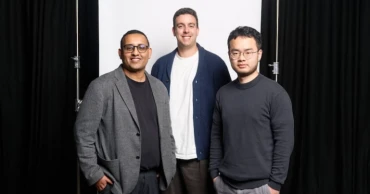
Healthcare AI startup Heidi has raised $65 million in a Series B funding round led by Point72 Private Investments, with participation from existing investors Blackbird, Headline, and Latitude, the growth fund of Phoenix Court. The new investment values the company at $465 million, bringing its total funding to nearly $100 million.
The funds will accelerate Heidi’s goal of building an AI Care Partner designed to support clinicians by automating time-consuming administrative tasks such as clinical documentation, evidence searches, and patient follow-ups. According to research, clinicians currently spend almost as much time on administrative work as on direct patient care. In just 18 months, Heidi’s tools have saved over 18 million clinician hours by streamlining these processes.
Dr. Thomas Kelly, CEO and co-founder of Heidi and a former vascular surgery resident, said: “It is untenable that healthcare demand continues to rise while clinical time continues to shrink. Building a sustainable healthcare system requires expanding clinical capacity without compromising clinician wellbeing or patient safety. That’s why I founded Heidi — to build an AI Care Partner that stands alongside clinicians, empowering them to deliver the care to which they have dedicated their lives.”
Heidi now supports tens of thousands of clinicians across 200 specialties, helping facilitate more than 73 million patient consults globally. The platform currently handles over two million consults weekly in 110 languages across 116 countries.
With the new investment, Heidi plans to expand its workforce and strengthen operations in the US, UK, and Canada, while deepening adoption in France, Spain, Germany, Ireland, South Africa, Singapore, and Hong Kong.
Snapchat to charge users for storing old photos and videos
The company is working with several major healthcare systems worldwide, including the UK’s Modality Partnership — in what is described as the largest deployment of ambient AI in British healthcare — and pilot programs with NHS Trusts in London and Lancashire. In the US, Heidi is collaborating with Beth Israel Lahey Health in Massachusetts and MaineGeneral in Maine. It is also the official AI partner of the Yukon Government in Canada, and is working with Australia’s Monash Health and Queensland Health Children’s Hospital. New Zealand’s Health Ministry has endorsed Heidi as one of two AI providers approved for public health trials.
Sri Chandrasekar, Managing Partner at Point72 Private Investments, said: “We believe administrative burden is contributing to clinician burnout and capacity challenges across healthcare systems. Heidi’s platform has the potential to meaningfully improve how clinicians manage their administrative workflows. We’re impressed by their adoption rates and are excited to support their vision of expanding healthcare capacity while preserving the human touch in patient care.”
Heidi also announced new leadership appointments: Paul Williamson, former Head of Revenue at Plaid, joins as Chief Revenue Officer, and Dr. Simon Kos, former Chief Medical Officer at Microsoft, becomes Chief Medical Officer.
Williamson said: “During my career, I’ve worked with companies that have transformed their industries — from Salesforce to Plaid. Today, I join Heidi’s mission to redefine healthcare in the age of AI.”
Dr. Kos added: “With Heidi by their side, clinicians not only improve their experience of delivering care but also enhance the patient experience. Heidi’s vision extends beyond ambient voice technology to a future where every clinician can use AI to expand their capacity while protecting the human touch in healthcare.”
7 months ago

Unexplained drone incursions rattle NATO airspace across Europe
A series of mysterious drone flights across the airspace of several European Union nations in recent weeks has sparked widespread concern among citizens and political leaders.
The unprecedented number of airspace intrusions — many suspected to be linked to Russia — has raised alarm about NATO’s readiness to respond to potential threats from Moscow. Some European officials believe the incidents could be deliberate attempts by Russia to test the alliance’s defenses.
On September 10, a swarm of Russian drones reportedly entered Polish airspace, prompting NATO fighter jets to scramble and intercept the unmanned aircraft, shooting some of them down. It marked the first direct confrontation between NATO and Russia since Moscow launched its full-scale invasion of Ukraine on February 24, 2022.
A few days later, NATO jets escorted three Russian warplanes out of Estonian airspace. Since then, drone sightings have been reported near airports, military installations, and critical infrastructure across Europe, prompting EU defense ministers to propose building a “drone wall” to improve detection and interception of unauthorized flights.
While Russia has been accused of involvement, it has denied any deliberate actions. European authorities have released limited details about the incidents, and in several cases, governments delayed acknowledging the overflights. In Denmark, authorities received around 500 reports of drone sightings within a single day — some of which later turned out to be false alarms, such as stars mistaken for drones.
Governments across Europe are still determining how to respond to such intrusions, including whether to authorize shooting down drones in real time.
Airport disruptions across EuropeGermany’s Munich Airport reopened on Saturday morning after being closed twice in less than 24 hours due to drone sightings. The shutdown caused delays affecting at least 6,500 passengers.
In Denmark, drone activity over Copenhagen Airport on September 22 disrupted air traffic at Scandinavia’s busiest hub. Danish Prime Minister Mette Frederiksen called it “the most serious attack on Danish critical infrastructure to date,” adding that Russian involvement could not be ruled out.
Confusion over Afghan internet outage after purported Taliban statement found false
That same evening, drone activity was reported at Norway’s Oslo Airport, forcing operations to be restricted to a single runway. Authorities are investigating whether the incidents at the two major airports were connected.
Drones over Danish military basesBetween September 24 and 25, drones were seen over four smaller Danish airports, including two military bases. Danish Defense Minister Troels Lund Poulsen described the flights as “systematic” and likely conducted by a “professional” actor.
Local media also reported drone sightings above or near Karup Air Base, Denmark’s largest military facility. However, the Defense Ministry declined to confirm the reports, citing operational security and ongoing investigations.
Critical sites targeted in GermanyIn Germany, authorities are probing reports of unidentified drones flying over critical infrastructure in the northern state of Schleswig-Holstein. According to Der Spiegel, several drones were sighted on September 25 above a power plant in Kiel, as well as near a university hospital, a shipyard, and the premises of TKMS — a defense technology company.
Regional Interior Minister Sabine Sütterlin-Waack confirmed that “flying objects of various types and sizes” had been detected, and prosecutors have launched an investigation.
The report also mentioned drones spotted over government buildings, a refinery in Heide, and a military base in Sanitz, Mecklenburg-Western Pomerania.
Source: AP
8 months ago