tech-news
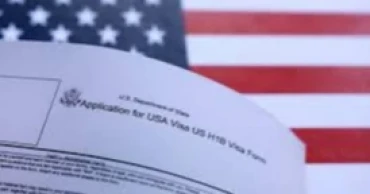
Lawsuit challenges Trump's $100,000 H-1B visa fee
A coalition made up of healthcare providers, religious organizations, professors, and other groups has filed a federal lawsuit to block a newly imposed $100,000 fee for H-1B visa applications. They argue the fee has caused confusion and disruption for employers, foreign workers, and government agencies.
President Donald Trump signed the order on September 19, claiming the H-1B program had been misused to replace American workers with cheaper foreign labor. The policy was set to take effect just 36 hours later, leading many employers to urgently call their foreign employees back to the U.S.
Filed in U.S. District Court in San Francisco, the lawsuit states that the H-1B program plays a vital role in hiring skilled workers in healthcare and education, contributing to U.S. innovation and economic development.
“If the court doesn’t intervene, hospitals could lose doctors and nurses, churches may be left without pastors, schools could face teacher shortages, and key industries may lose critical talent,” said the Democracy Forward Foundation and Justice Action Center in a joint statement. The suit demands an immediate block of the order to stabilize the situation.
The groups criticized the new fee as "Trump’s latest anti-immigration power grab."
The Department of Homeland Security and U.S. Customs and Border Protection — named in the lawsuit along with Trump and the State Department — have not responded to requests for comment.
Congress originally created the H-1B visa to attract skilled foreign professionals for jobs that are hard to fill locally, particularly in the tech sector. According to the lawsuit, about one-third of H-1B recipients are in fields like healthcare, education, and religious services.
Opponents of the program argue it is often used to hire cheaper foreign labor, with some workers earning as little as $60,000 a year — far below the six-figure salaries paid to many U.S.-based tech employees.
H-1B visas are typically awarded through a lottery system. This year, Amazon led all companies with over 10,000 approvals, followed by firms like Tata Consultancy, Microsoft, Apple, and Google. California remains the state with the highest concentration of H-1B workers.
Todd Wolfson, president of the American Association of University Professors, warned that the high fee would discourage top global researchers from coming to the U.S.
Mike Miller of the United Auto Workers union criticized the policy as one that “favors the wealthy and well-connected over talent and hard work.”
Skye Perryman, president of Democracy Forward, argued that the steep fee is illegal, calling it a form of taxation that Trump has no authority to impose without congressional approval. The lawsuit contends that such a major policy change cannot be enacted by executive order alone.
8 months ago
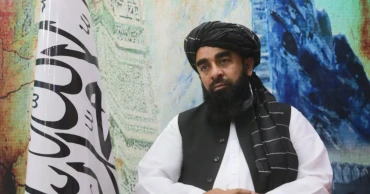
Confusion over Afghan internet outage after purported Taliban statement found false
Uncertainty persists over Afghanistan’s internet connectivity after some networks were partially restored on Wednesday following a nationwide outage that began Monday.
Earlier reports cited a statement allegedly from the Taliban denying that the blackout was deliberate, claiming worn-out fiber optic cables were being replaced. However, the statement was later confirmed as false. It had been forwarded individually to members of an official Taliban WhatsApp media group by an Afghan user whose name resembled the group’s official account. The sender’s identity remains unverified, and the same message appeared on X from a Taliban sympathizer, not the group itself.
Hours later, the official Taliban WhatsApp group issued a genuine statement, saying cellphone services are gradually being restored. Officials from the telecommunications technical department said teams are working continuously to fully restore connectivity.
UN urges Taliban to restore internet across Afghanistan
Internet watchdog Netblocks reported partial restoration on Wednesday, noting that the blackout had disrupted banking, commerce, aviation, and humanitarian operations. Afghan carrier Kam Air halted flights since Monday but may resume later Wednesday. Aid groups, including Save the Children, urged authorities to restore reliable communications for critical operations.
U.N. spokesman Stephane Dujarric said the Taliban implemented the cut “without clear explanation” and reversed it similarly without explanation, warning that such actions negatively affect economic stability, access to information, and the rights of Afghan citizens, particularly women and girls.
Source: AP
8 months ago

Shaping Singapore’s hybrid office future with Raw Design Consultants
The growing shift to hybrid work is transforming how offices in Singapore are designed and used. Workplaces are no longer just desks and meeting rooms but spaces that support collaboration, individual focus and flexibility.
Raw Design Consultants, a Singapore-based interior design studio, has been at the forefront of this change, developing office projects that balance practical needs with cultural shifts.
Rethinking the role of the officeSingapore ranks among the top adopters of hybrid work in Asia Pacific. With high rental costs and limited space, businesses must make careful choices in planning offices. A basic fit-out costs between $60 and $75 per square foot (psf), mid-range $75–100 psf, and premium $100–150 psf. Designers now focus on efficiency, flexibility and cost control while ensuring the workplace remains relevant and collaborative.
Raw Design’s approachFounded over a decade ago, Raw Design Consultants set out to streamline office design by avoiding unnecessary delays. “We wanted to deliver inspiring spaces on schedule. Being self-funded gives us flexibility to act quickly and prioritise clients’ needs,” said founder Gary Teo.
Nvidia invests $5 billion in Intel to boost AI and PC collaboration
The studio focuses on employee well-being, using natural light, better acoustics and ergonomic layouts. Space efficiency is a key priority in Singapore’s costly property market. The firm also stresses budget transparency—directing more resources to collaborative and client-facing zones while keeping back-end areas practical.
A case in practiceAt Monks Singapore’s APAC headquarters, Raw Design created a workplace around a central “social sanctuary”—a hub for seminars, team sessions and informal gatherings. Surrounding it are open workstations and enclosed rooms for brainstorming, video calls and hybrid meetings, supported by integrated technology.
Looking aheadRaw Design believes Singapore’s offices will continue to evolve as hybrid models take hold. Future workplaces will blend local character with global connectivity, acting as cultural as well as functional anchors.
“Every office tells a story, but it begins with the people who use the space,” said Teo. “What matters to them shapes every space we create.”
Source: AP
8 months ago

YouTube to pay $24.5 million to settle lawsuit over Trump account suspension after Capitol riot
Google-owned YouTube has agreed to a $24.5 million settlement to resolve a lawsuit filed by former President Donald Trump. The suit stemmed from YouTube’s decision to suspend Trump’s account following the January 6, 2021 Capitol riot, which occurred shortly after his loss in the 2020 presidential election.
According to court documents filed Monday, $22 million of the settlement will go toward Trump's contributions to the Trust for the National Mall and the construction of a White House ballroom. The remaining $2.5 million will be distributed to other plaintiffs, including author Naomi Wolf and the American Conservative Union.
YouTube is now the third major tech company to settle with Trump after similar lawsuits against Meta (Facebook’s parent company) and Twitter, now known as X following its acquisition by Elon Musk in 2022. Meta agreed to a $25 million settlement, while X settled for $10 million.
Legal experts had initially predicted Trump was unlikely to win any of the cases. However, after Musk acquired Twitter and supported Trump’s successful 2024 re-election campaign, the dynamics shifted. Musk also later clashed with Trump after assisting in cutting down government payroll costs during the early months of Trump’s second term.
Notably, both Alphabet CEO Sundar Pichai and Meta CEO Mark Zuckerberg attended Trump’s second inauguration in January, signaling a more collaborative stance from Big Tech compared to his first term.
In addition to the YouTube case, Trump has reached other high-profile settlements:
ABC News paid $15 million in December 2024 to help fund Trump’s presidential library, settling a defamation suit over anchor George Stephanopoulos’ false claim that Trump had been found liable for raping E. Jean Carroll.
In July, Paramount agreed to a $16 million settlement over editing disputes involving CBS’ “60 Minutes.”
The settlement with YouTube does not admit any wrongdoing, according to the filing. Google confirmed the agreement but declined to provide further comment. Trump’s YouTube account was reinstated in 2023.
Despite the sizable payout, the settlement is minor for Alphabet, whose market value has soared to nearly $3 trillion, a $600 billion increase since Trump returned to office.
Details of the settlement surfaced just a week before a scheduled October 6 court hearing before U.S. District Judge Yvonne Gonzalez-Rogers in Oakland, California.
8 months ago
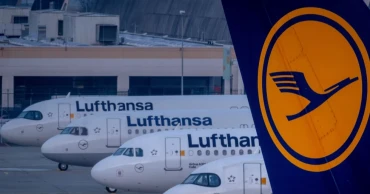
Lufthansa to cut 4,000 jobs by 2030 in AI-driven restructuring
Lufthansa Group announced Monday that it will eliminate 4,000 jobs by 2030 as part of a restructuring plan driven by artificial intelligence, digitalization, and greater integration across its member airlines.
The company said most of the cuts would take place in Germany, primarily in administrative roles rather than operational functions.
Lufthansa noted that it is assessing “which activities will no longer be necessary in the future, for instance due to duplication of work,” as it seeks closer cooperation among its carriers, which include Austrian Airlines, Swiss, Brussels Airlines, and Eurowings.
The group said the “profound changes brought about by digitalization and artificial intelligence” will help improve efficiency across its business operations.
The announcement came during an investor presentation in Munich, where the company highlighted strong passenger demand despite supply chain constraints affecting new aircraft and engine availability. Lufthansa said the tight market was supporting high load factors and revenue growth.
Looking ahead, the airline group projected “significantly increased profitability” by the end of the decade and confirmed plans for the largest fleet modernization in its history. More than 230 new aircraft, including 100 long-haul planes, are set to join the fleet by 2030.
In 2024, Lufthansa employed 101,709 people and reported revenue of 37.6 billion euros ($44 billion). The aviation group, headquartered in Cologne with operational offices in Frankfurt, runs both network airlines and point-to-point carrier Eurowings alongside other aviation services.
8 months ago
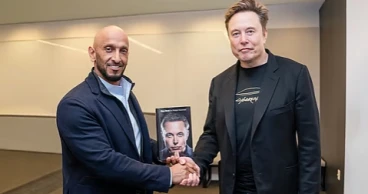
Elon Musk meets BRIDGE UAE leadership to discuss future of media, technology and AI
Elon Musk, CEO of X, SpaceX, Tesla and Starlink, met with the leadership of the BRIDGE Summit at Tesla’s headquarters in Palo Alto, California, to explore collaboration on the future of technology, media and artificial intelligence.
During the meeting, Musk was formally invited to participate in the inaugural BRIDGE Summit, set to be held in Abu Dhabi from December 8-10, which is billed as the world’s largest debut gathering for media, content and entertainment.
The delegation was led by H.E. Abdulla bin Mohammed bin Butti Al Hamed, Chairman of the UAE National Media Office, the UAE Media Council and BRIDGE. The discussions focused on AI, data centres and content integrity as key drivers of transformation.
Musk underscored that the success of innovation will hinge on countries’ ability to provide clean and affordable energy for data centres, noting the UAE’s strong positioning in this field. Al Hamed affirmed that the UAE’s low-cost, large-scale clean energy capabilities underline its readiness to lead in AI and advanced technologies.
Musk praised the UAE’s forward-looking vision under President His Highness Sheikh Mohamed bin Zayed Al Nahyan, and acknowledged the role of His Highness Sheikh Tahnoun bin Zayed Al Nahyan and the Mohamed bin Zayed University of Artificial Intelligence in strengthening the country’s global standing as an innovation hub.
Tesla shares jump as Musk buys $1B stake ahead of shareholder vote on record pay package
During a tour of Tesla’s Optimus robotics lab, both sides discussed balancing innovation with ethical frameworks and stressed the importance of a global framework for responsible AI use in content creation, regulation and distribution.
The talks also explored opportunities for cooperation in media and technology, including youth-focused educational content, green tech-driven narratives, and initiatives linking AI innovation with media ecosystems.
“The UAE believes that media is a powerful force capable of reshaping knowledge and building awareness,” said Al Hamed. “Collaboration with leading institutions accelerates innovation, fosters expertise exchange and ensures sustainable impact.”
Organizers said the BRIDGE Summit will provide “an exceptional platform for testing bold and unconventional solutions” to rebuild trust in media and shape a shared future.
Source: Agency
8 months ago
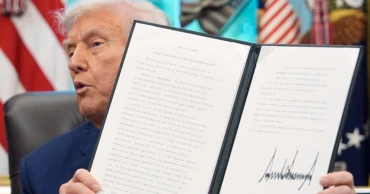
Trump signs executive order backing US-led deal for TikTok ownership
President Donald Trump on Thursday signed an executive order supporting a proposed deal that would place TikTok under majority U.S. ownership, a move he said addresses national security concerns while allowing the app to keep operating in the United States.
The order gives American investors — including Oracle, Silver Lake Partners and others — a controlling stake of around 80% in a new U.S.-based venture, with ByteDance holding less than 20%. The arrangement still requires Beijing’s approval and final negotiations. The order also grants a 120-day reprieve for TikTok to continue operating.
At a White House signing ceremony, Trump said Chinese President Xi Jinping had agreed to move forward with the deal. Vice President JD Vance added that the agreement ensures “Americans’ data privacy is protected” and that U.S. investors will control TikTok’s powerful recommendation algorithm.
TikTok’s new board will be controlled by U.S. investors, though ByteDance will hold one seat, excluded from security matters. Notable investors include Oracle co-founder Larry Ellison, Rupert Murdoch and Michael Dell, raising questions over potential political influence.
TikTok’s algorithm to be licensed to US Joint venture led by Oracle and Silver Lake
Trump’s order specifies that a licensed copy of ByteDance’s algorithm will be “retrained” exclusively with U.S. data to prevent Chinese interference. Analysts caution that even subtle changes could affect how TikTok operates and how its users — especially young people — engage with content.
The app’s fate has been closely watched, with about 43% of U.S. adults under 30 relying on TikTok for news, according to a new Pew Research Center report.
Beijing had initially denounced U.S. demands for TikTok’s divestment as “robbery,” but analysts say Chinese officials are now willing to compromise amid broader trade talks.
Source: Agency
8 months ago

Microsoft restricts Israeli military’s use of cloud, AI tools amid Gaza surveillance concerns
Microsoft has blocked access to some of its artificial intelligence and cloud services for a unit of the Israeli military after finding evidence that its technology was being used in widescale surveillance of Palestinians.
The move follows reports by The Associated Press and The Guardian earlier this year detailing how Israel’s Defense Ministry had deployed Microsoft’s Azure platform to support its military operations in Gaza and the West Bank.
Brad Smith, Microsoft’s vice chair and president, said in a blog post Thursday that the company was acting to enforce its terms of service. An AP investigation in February revealed a surge in Israel’s use of Microsoft products after the Oct. 7 Hamas attack, including large-scale AI translation and data storage services.
Tesla shares jump as Musk buys $1B stake ahead of shareholder vote on record pay package
The Guardian, in partnership with +972 Magazine and Local Call, later reported that Israel’s Unit 8200 developed an AI-driven mass surveillance system with Microsoft tools, analyzing millions of Palestinian phone calls daily.
Microsoft has not confirmed which military unit is losing access but acknowledged the violations. Israeli officials downplayed the impact, while activists urged the company to cut broader ties with the military.
Source: Agency
8 months ago

YouTube to reinstate creators banned under COVID-19, election content
YouTube will allow creators who were banned for violating its now-defunct COVID-19 and election misinformation policies to return to the platform, parent company Alphabet said Tuesday.
In a letter to the House Judiciary Committee, Alphabet attorneys said the decision reflects YouTube’s commitment to free speech, noting that the company values conservative voices and their role in civic debate.
“No matter the political atmosphere, YouTube will continue to enable free expression on its platform, particularly on issues subject to political debate,” the letter stated.
The move comes as major tech companies continue rolling back content moderation rules initially imposed during the pandemic and after the 2020 U.S. election. These restrictions, once aimed at curbing misinformation, have since drawn criticism from President Donald Trump and other conservatives who argue such measures unfairly silenced right-leaning voices.
YouTube ended its policy against claims of widespread fraud in past U.S. presidential elections in 2023, and in 2024 retired its standalone COVID-19 misinformation rules, folding them into its broader medical misinformation policy.
Prominent conservative influencers — among them Dan Bongino, now deputy director of the FBI — were previously banned under those rules. For creators, reinstatement also means regaining access to YouTube monetization, a major source of income through advertising.
Alphabet’s lawyers alleged that senior officials in the Biden administration pressured the company to remove pandemic-related videos, even when they did not breach YouTube’s policies. “It is unacceptable and wrong when any government, including the Biden Administration, attempts to dictate how the Company moderates content,” the letter said, adding that YouTube consistently defended its practices on First Amendment grounds.
Other tech leaders have echoed similar concerns. Meta CEO Mark Zuckerberg accused the Biden administration of exerting pressure on his company during the pandemic, while Elon Musk claimed Twitter was coerced by the FBI before his ownership to suppress reporting on Hunter Biden.
The U.S. Supreme Court last year sided with the Biden administration in a case challenging the government’s authority to counter misinformation on social media, particularly concerning COVID-19 and election security.
YouTube has not yet provided details on how the reinstatement process will work.
8 months ago

AI added to global challenges on agenda for UN gathering
Artificial intelligence has joined the list of pressing global challenges world leaders and diplomats will address this week at the United Nations’ annual high-level meeting.
Since the launch of ChatGPT about three years ago, AI’s rapid progress has stunned the world. Tech firms continue to race ahead with more advanced systems, even as experts warn of dangers ranging from engineered pandemics to mass disinformation and urge stronger safeguards.
The U.N.’s recent adoption of a new governance structure marks its most significant attempt yet to rein in AI. Earlier international efforts — including three summits hosted by Britain, South Korea, and France — produced only non-binding pledges.
Last month, the General Assembly approved the creation of two bodies: a global forum and an independent scientific expert panel. The move is seen as a milestone in shaping international AI governance.
On Wednesday, the U.N. Security Council will hold an open debate on the responsible use of AI, including compliance with international law and its role in peace processes and conflict prevention. The following day, Secretary-General António Guterres will launch the Global Dialogue on AI Governance during the annual meeting. The forum will serve as a platform for governments and stakeholders to share ideas and strengthen cooperation. It is scheduled to convene formally in Geneva in 2026 and in New York in 2027.
Trump reveals Murdochs and Dell could be part of TikTok deal
Meanwhile, recruitment will begin for 40 experts — including two co-chairs from developed and developing nations — to join the new scientific panel. The body is being compared to the U.N.’s Intergovernmental Panel on Climate Change, which oversees the annual COP climate conferences.
Chatham House researcher Isabella Wilkinson called the creation of the new bodies “a symbolic triumph” and “the world’s most globally inclusive approach to governing AI.” But she cautioned that the mechanisms might remain “mostly powerless,” pointing to the U.N.’s slow bureaucracy compared with the speed of AI’s development.
Ahead of the gathering, a group of prominent AI specialists urged governments to establish “red lines” for the technology by the end of next year, setting minimum global safeguards against the most serious risks. The group includes senior staff from OpenAI, Google DeepMind, and Anthropic. They are pushing for a binding international agreement, noting past treaties banning nuclear tests and biological weapons.
“The idea is simple,” said Stuart Russell, an AI professor at the University of California, Berkeley. “As with medicines and nuclear plants, developers should be required to prove safety before gaining market access.”
Russell suggested U.N. oversight could mirror the International Civil Aviation Organization, which coordinates global safety standards among national regulators. Rather than fixed rules, he argued for a flexible “framework convention” that can adapt to rapid advances in AI.
Source: Agency
8 months ago