tech-news
TikTok challenges Canada's order to close its operations in the country
TikTok has challenged a Canadian government order to shut down the Chinese video-sharing app's business operations in the country that was imposed over national security concerns.
The company said Tuesday that it filed an application for a judicial review with the Federal Court in Vancouver on Dec. 5, which seeks to set aside the order for TikTok to wind-up and cease its business in Canada.
The Canadian federal government last month announced it was ordering the dissolution of TikTok Technology Canada Inc. after a national security review of its Chinese parent company ByteDance Ltd.
TikTok faces possible US ban, what’s next?
The government is not blocking access to the TikTok app, which will continue to be available to Canadians. TikTok said it has 14 million users in Canada, which is about a third of the population. It has offices in Toronto and Vancouver.
The wildly popular platform is owned by ByteDance, a Chinese company that moved its headquarters to Singapore in 2020, but is under increasing pressure in the West. It's facing a possible ban in the U.S. and intensifying scrutiny in Europe over issues including election influence campaigns allegedly coordinated by Moscow.
TikTok argues in its court application, which was posted online, that Industry Minister François-Philippe Champagne's decision was “unreasonable” and “driven by improper purposes.” It says the order is “grossly disproportionate” and the the national security review was “procedurally unfair.”
The review was carried out through the Investment Canada Act, which allows the government to investigate foreign investment with potential to harm national security.
Champagne said in a statement at the time that the government was taking action to address “specific national security risks,” but did not elaborate. His office said in response to the filling that the government’s decision was informed by a “thorough national security review and advice from Canada’s security and intelligence community.”
TikTok defends handling of Romania election content in grilling by EU lawmakers
TikTok said Champagne “failed to engage with TikTok Canada on the purported substance of the concerns" that led to the order.
It argues the government ordered “measures that bear no rational connection to the national security risks it identifies" and that the reasons for the order “are unintelligible, fail to reveal a rational chain of analysis and are rife with logical fallacies.”
The platform says there were “less onerous” options than shutting down its Canadian business, which it said would eliminate hundreds of jobs, threaten business contracts and “cause the destruction of significant economic opportunities
Trump promised to 'save TikTok'. What happens next is less clear
1 year ago

What did you search for in 2024? Google reveals top trends from elections to Copa América
Do you recall your 2024 searches? Google does.
On Tuesday, Google unveiled its annual “Year in Search,” compiling the top trending queries made on its search engine this year. The data highlights terms that experienced the most significant increase in traffic compared to 2023, covering major news events, global elections, popular songs, athletes, and unforgettable moments in pop culture.
Sports, especially soccer and cricket, were at the forefront of Google’s trending searches in 2024. Copa América ranked as the top global search trend, followed by the UEFA European Championship and the ICC Men’s T20 World Cup.
In the realm of news, the U.S. election led worldwide search queries. Searches for excessive heat and the Olympic Games also gained significant attention.
In the "people" category, U.S. President-elect Donald Trump topped the charts, followed by Catherine, Princess of Wales, U.S. Vice President Kamala Harris, and Algerian boxer Imane Khelif, who also led athlete-related searches. Among notable figures who passed away in 2024, Liam Payne, Toby Keith, and O.J. Simpson led the search trends.
On the entertainment front, Disney and Pixar's Inside Out 2 was the year’s most searched movie, while Netflix's Baby Reindeer led the TV show searches. Kendrick Lamar's "Not Like Us" was the top song.
Additionally, quirky search trends included inquiries about the Olympic village's chocolate muffin, which became famous through Norwegian swimmer Henrik Christiansen during the summer games, and the New York Times’ Connections puzzle, which topped game searches. In the U.S., searches also included online trends like the terms "demure" and "mob wife aesthetic."
US considers breaking up Google
For more insights into country-specific trends and past year data, check out Google’s “Year in Search” online. The company gathered search data from January 1 to November 23, 2024.
Google isn't the only platform reflecting on 2024. Spotify Wrapped, Collins Dictionary, and Merriam-Webster's words of the year also offered their annual recaps.
1 year ago
IAEA Chief: Iran set to significantly boost stockpile of near-weapons-grade uranium
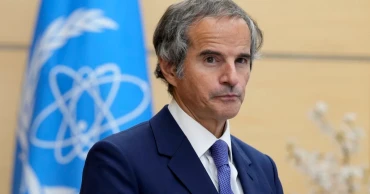
Iran is on the verge of dramatically increasing its stockpile of near-weapons-grade uranium, as it has activated cascades of advanced centrifuges, warned Rafael Mariano Grossi, the head of the International Atomic Energy Agency (IAEA), on Friday.
His remarks came shortly after Iran claimed a successful space launch, marking its heaviest payload to date, a development that the West believes enhances Tehran's ballistic missile capabilities.
The launch of the Simorgh rocket coincides with Iran's uranium enrichment at 60%, a step away from weapons-grade levels of 90%. While Iran asserts that its nuclear program is peaceful, officials are increasingly hinting at the potential development of nuclear weapons and intercontinental ballistic missiles to target distant adversaries, including the United States.
These actions are likely to escalate tensions in the broader Middle East, especially with the ongoing conflict between Israel and Hamas in Gaza and an uneasy ceasefire in Lebanon. However, Iran might also be positioning itself for possible negotiations with President-elect Donald Trump’s administration, following the U.S. withdrawal from the nuclear deal during his first term.
Bitcoin tops $100,000 as big rally sparked by Trump election win rolls on
A recent U.S. intelligence report stated that while Iran is not actively building a nuclear weapon, it is undertaking activities that would enable it to do so if it chooses. The report also warned that the debate within Iran over pursuing nuclear weapons could strengthen advocates for such a course, potentially influencing future Iranian leadership.
Grossi, speaking to journalists at the Manama Dialogue in Bahrain, said that IAEA inspectors planned to verify how many centrifuges Iran is operating after the country informed the agency of its plans. He expressed concern, noting that Iran had kept many facilities in reserve, now activating them, which could lead to a significant increase in uranium enrichment.
An IAEA statement confirmed that Iran had begun feeding uranium, enriched to 20%, into two cascades of advanced IR-6 centrifuges at its underground Fordo facility. The advanced IR-6 centrifuges enrich uranium faster than the IR-1 centrifuges, and using uranium enriched to 20% will expedite the process further.
Govt appoints administrator for BASIS
The IAEA also noted that Iran would begin feeding natural uranium into eight additional IR-6 cascades at Fordo to produce 5%-enriched uranium.
In late November, the IAEA had warned that Iran was preparing to use advanced centrifuges to enrich uranium, a move triggered by its failure to fully cooperate with the agency. Iran did not comment on the preparations.
Meanwhile, Iran’s successful Simorgh rocket launch took place at the Imam Khomeini Spaceport in Semnan province. The rocket carried an orbital propulsion system and the Fakhr-1 military satellite, marking the first time a military payload was included in Iran’s civilian space program.
The U.S. military referred questions about the launch to Space Command, which did not respond. Experts confirmed the successful insertion of the payload into orbit.
The United States has criticized Iran’s satellite launches, arguing they violate a U.N. Security Council resolution that bans activities related to ballistic missiles capable of carrying nuclear warheads. U.N. sanctions on Iran’s missile program expired in October 2023.
The U.S. intelligence community noted that Iran's space-launch vehicles, including the Simorgh, could accelerate the development of intercontinental ballistic missiles due to their shared technological similarities.
Despite Iran's denials of seeking nuclear weapons, U.S. and IAEA reports indicate that Iran had a military nuclear program until 2003. Under former President Hassan Rouhani, Iran had slowed its space program to avoid escalating tensions with the West. However, the late President Ebrahim Raisi, who took office in 2021, pushed the program forward. His successor, President Masoud Pezeshkian, has yet to announce a clear strategy on space ambitions, while the Revolutionary Guard also conducted a successful launch in September.
1 year ago
Bitcoin tops $100,000 as big rally sparked by Trump election win rolls on
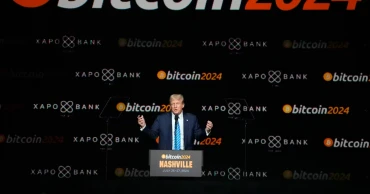
Bitcoin has surpassed the $100,000 milestone as its value continues to surge, spurred by the election of Donald Trump and his crypto-friendly policies. This development follows Trump’s announcement of plans to nominate cryptocurrency advocate Paul Atkins as the next chair of the Securities and Exchange Commission (SEC), signaling a shift toward lighter regulation in the industry.
The cryptocurrency’s meteoric rise began on Election Day, climbing from $69,374 to a peak of $103,713, according to CoinDesk data. This rally comes just two years after Bitcoin plummeted below $17,000 following the collapse of the FTX exchange. However, its sustainability at the $100,000 mark remains uncertain, as the price briefly dipped to under $102,000 on Thursday.
FBI urges telecom firms to enhance security after chinese hacking campaign
Cryptocurrency Basics
Cryptocurrencies are digital currencies that operate on decentralized networks, typically without backing from governments or banks. Bitcoin, the first and largest cryptocurrency, is recorded on a blockchain and is known for its high volatility. Other cryptocurrencies like Ethereum, Tether, and Dogecoin have also gained popularity, though traditional fiat currencies dominate daily transactions.
Factors Behind Bitcoin’s Surge
Trump’s election win has played a significant role in Bitcoin’s recent performance. The President-elect has pledged to make the U.S. a global hub for cryptocurrency and establish a “strategic reserve” of Bitcoin. His campaign embraced cryptocurrency donations, and he has launched a family venture for crypto trading.
The crypto community has welcomed Trump’s victory, anticipating regulatory reforms that could bring legitimacy while reducing red tape. His choice of Paul Atkins, known for opposing heavy market regulation, to lead the SEC aligns with these expectations. This marks a departure from the outgoing SEC chair Gary Gensler’s stricter regulatory approach, which faced criticism from industry stakeholders despite approving spot Bitcoin ETFs earlier this year.
Risks and Challenges
Cryptocurrency remains a high-risk investment due to its volatility. Bitcoin's history includes dramatic price swings, such as its rise to nearly $69,000 in 2021 before crashing below $17,000 amid rate hikes and the FTX collapse. While investor interest has rebounded, experts urge caution, particularly for those with limited resources. The anticipated lighter regulations under Trump may also reduce protective measures.
Generative AI product user base in China reaches 230mln
Environmental Concerns
Bitcoin mining is energy-intensive and has drawn criticism for its environmental impact. Research indicates that mining emissions in 2020-2021 equaled those from burning 84 billion pounds of coal. While the industry has gradually shifted toward cleaner energy, fossil fuels still dominate its electricity supply.
The future of Bitcoin remains uncertain, with potential for further gains or losses, but its recent surge highlights the growing influence of political and regulatory factors on the crypto market.
1 year ago

Govt appoints administrator for BASIS
The government has appointed Dr Muhammad Mehedi Hasan, additional secretary of the Information and Technology Division, as the administrator of the Bangladesh Association of Software and Information Services (BASIS).
An office order was issued in this regard by the Ministry of Commerce on Wednesday.
Read: BASIS welcomes new members at induction, networking event
Mehedi Hasan is tasked with organising a fair and impartial election within 120 days to form a new committee for BASIS.
Upon completion of the election, the administrator will hand over responsibilities to the elected committee and report the transition to the ministry, said the office order.
1 year ago

FBI urges telecom firms to enhance security after chinese hacking campaign
U.S. federal authorities have called on telecommunications companies to strengthen network defenses following a widespread hacking campaign by Chinese operatives that compromised the private communications of an unspecified number of Americans.
The FBI and the Cybersecurity and Infrastructure Security Agency (CISA) issued guidance on Tuesday to help identify and block the hackers, aiming to prevent future cyberespionage. Officials, however, admitted they are still uncertain about the full extent of the breach or whether Chinese hackers retain access to U.S. networks.
Highlighting the global impact of the operation, the U.S. collaborated with security agencies from New Zealand, Australia, and Canada—members of the Five Eyes intelligence alliance, which also includes the UK.
The hacking campaign, referred to as Salt Typhoon, was uncovered earlier this year. Hackers targeted telecommunications networks to access metadata such as call and text logs, including timestamps and recipients. In fewer cases, they intercepted audio files and text content. Victims included government and political officials, and the FBI has reached out to this group. However, the responsibility of notifying affected customers from the larger pool rests with telecom companies.
Despite months of investigations, the true scale of the breach remains unknown. Some of the data targeted by the hackers involved U.S. law enforcement investigations and court orders, potentially linked to programs under the Foreign Intelligence Surveillance Act (FISA). However, officials believe the hackers aimed for broader access to Americans' information by embedding themselves deeply into the nation's telecom systems.
The FBI's recommendations for telecom companies include technical measures like encryption, network centralization, and continuous monitoring. If adopted, these steps could help disrupt ongoing operations like Salt Typhoon and strengthen defenses against similar future attacks, according to Jeff Greene, CISA's executive assistant director for cybersecurity.
TikTok defends handling of Romania election content in grilling by EU lawmakers
“We’re not under any illusion that these actors won’t try to return,” Greene said.
China has been linked to several high-profile cyberattacks in recent months. In September, the FBI disrupted a Chinese operation that infected over 200,000 consumer devices with malware, creating a botnet capable of launching large-scale cybercrimes. In October, hackers associated with China targeted phones belonging to political figures, including then-presidential candidate Donald Trump and his running mate, JD Vance, as well as individuals tied to Democratic candidate Kamala Harris.
China has denied the allegations, with a spokesperson for its embassy in Washington dismissing them as “disinformation.” The statement emphasized China’s opposition to all forms of cyberattacks and accused the U.S. of engaging in its own cyber operations against other nations.
1 year ago

TikTok defends handling of Romania election content in grilling by EU lawmakers
TikTok executives have revealed that the platform dismantled multiple networks attempting to interfere in Romania's elections. The disclosure came as company officials defended their election integrity measures before European Union lawmakers on Tuesday.
The popular video-sharing app has faced scrutiny in Romania after far-right candidate Calin Georgescu, previously an obscure independent, unexpectedly emerged as the frontrunner in the election. His victory in the first round of voting has triggered political unrest, with allegations of electoral violations and Russian influence.
Brie Pegum, TikTok’s global head of product, authenticity, and transparency, stated that the platform disrupted two networks targeting Romanian users just days after the first round of voting. One network, with 1,781 followers, supported Georgescu, while the other backed various candidates. Georgescu’s TikTok presence, boasting 527,000 followers and 5.8 million likes, has been a focal point of his campaign. Critics allege that his online popularity may have been artificially enhanced, with some officials suggesting TikTok provided him preferential treatment.
Speakers demand recognising internet as fundamental right in Bangladesh
This controversy underscores TikTok's growing role in shaping elections in Romania, a NATO and EU member bordering Ukraine. Caroline Greer, TikTok's top EU lobbyist, highlighted the platform’s localized efforts during the election, which included 95 Romanian language content moderators, collaborations with fact-checkers, and consultations with the country’s electoral authority.
Despite these efforts, EU lawmakers expressed dissatisfaction, questioning the effectiveness of TikTok’s measures. Dutch Member of the European Parliament Dirk Gotink criticized the platform for allowing misinformation to spread unchecked before acting, likening their response to firefighting after significant damage.
Bezos denies Musk’s claim on Tesla stock advice as rivals clash again
According to a report by Romania’s Expert Forum, Georgescu’s TikTok account surged to 92.8 million views in recent months, with an additional 52 million views in the week leading up to the first-round vote. Another account sharing exclusively Georgescu-related content, which gained 1.7 million likes, was removed shortly after the polls closed. TikTok stated it has taken down over 150 accounts impersonating Georgescu and 650 similar accounts for other candidates.
Georgescu will compete in a runoff against reformist Elena Lasconi from the Save Romania Union party this Sunday.
1 year ago

Generative AI product user base in China reaches 230mln
By June 2024, the user base of generative artificial intelligence (AI) products in China had grown to 230 million, demonstrating the country's broad adoption of AI-driven innovations across various sectors, according to a report released on December 1.
China has developed a robust AI industry ecosystem, with over 4,500 companies involved in the sector, as outlined in a report from the China Internet Network Information Center (CNNIC).
The generative AI industry in China is thriving, with the core sector valued at nearly 600 billion yuan (approximately 82.84 billion U.S. dollars). The ecosystem covers critical areas such as chips, algorithms, data, platforms, and applications.
Australia imposes world’s first ban on social media for under-16
As of July 2024, more than 190 generative AI models were operational and available online, providing users with a wide array of options and personalized experiences.
In July 2023, China introduced a set of provisional regulations for generative AI services, the first of its kind globally. Additionally, a key policy resolution adopted in July 2024 highlighted the country’s plans to enhance mechanisms for the development and management of generative AI.
1 year ago

Canadian news publishers sue OpenAI over alleged copyright infringement
A coalition of Canadian news publishers, including The Canadian Press, Torstar, Globe and Mail, Postmedia and CBC/Radio-Canada, has filed a lawsuit against OpenAI for using news content to train its ChatGPT generative artificial intelligence system.
The outlets said in a joint statement on Friday that OpenAI regularly breaches copyright by scraping large amounts of content from Canadian media.
“OpenAI is capitalizing and profiting from the use of this content, without getting permission or compensating content owners,” the statement said.
The publishers argue that OpenAI practices undermine the hundreds of millions of dollars invested in journalism, and that content is protected by copyright.
Teletalk launches trial online SIM service
“News media companies welcome technological innovations. However, all participants must follow the law, and any use of intellectual property must be on fair terms,” the statement said.
Generative AI can create text, images, videos and computer code based on a simple prompt, but the systems must first study vast amounts of existing content.
OpenAI said in a statement that its models are trained on publicly available data. It said they are “grounded in fair use and related international copyright principles that are fair for creators and support innovation.”
The company said it collaborates “closely with news publishers, including in the display, attribution and links to their content in ChatGPT search” and offers outlets “easy ways to opt-out should they so desire.”
This is the first such case in Canada, though numerous lawsuits are underway in the United States, including a case by the New York Times against OpenAI and Microsoft.
Some news organizations have chosen to collaborate rather than fight with OpenAI by signing deals to get compensated for sharing news content that can be used to train its AI systems.
The Associated Press is among the news organizations that have made licensing deals over the past year with OpenAI. Others include The Wall Street Journal and New York Post publisher News Corp., The Atlantic, Axel Springer in Germany and Prisa Media in Spain, France’s Le Monde newspaper and the London-based Financial Times.
Elon Musk's wealth hits all-time high
Canada has passed a law requiring Google and Meta to compensate news publishers for the use of their content, but has previously declined to say whether the Online News Act should apply to use by AI systems.
In response to that legislation, Meta pulled news from its platforms in Canada, while Google has reached a deal to pay $100 million Canadian (US$ 71 million) to Canadian news outlets.
1 year ago

Teletalk launches trial online SIM service
Teletalk Bangladesh Limited, the country’s sole state-owned mobile operator, has launched its trial online SIM service.
The service started on Wednesday as part of a commercial pilot programme in 11 post offices in Rajshahi, Naogaon, and Chapainawabganj districts under Rajshahi division.
Plans are underway to expand the service to post offices nationwide.
India attempting to further provoke Chinmoy incident: Nahid
The trial service was inaugurated in Dhaka where Information and Braodcasting adviser Mohammad Nahid Islam attended as the chief guest.
The initiative integrates Teletalk’s SIM distribution with the Bangladesh Postal Department's extensive network, allowing customers to order their preferred SIM numbers online and collect them from designated post offices or opt for home delivery.
Govt expects constructive criticism from media: Adviser Nahid
Under the new service, customers can collect their SIMs for at Tk 250 from post offices or at Tk 300 via home delivery.
1 year ago