tech-news
Internet users to face slower speed for 4 hrs early Sunday: Here's what to expect
Internet users in Bangladesh may experience slow speed or disruption for four hours due to maintenance work on the submarine cable system at Patuakhali’s Kuakata station.
Bangladesh Submarine Cables PLC (SCPLC) issued a notice in this regard, apologizing for the inconvenience.
According to a statement from the company’s General Manager of Operations and Maintenance, Saidur Rahman, the SEA-ME-WE 5 (SMW5) consortium will install a lighting filter in the country’s second submarine cable system at Kuakata from 2am to 6am on Sunday.
During this time, all circuits connected to the Kuakata landing station via the SMW5 cable will be affected.
However, circuits connected through the SEA-ME-WE-4 (SMW4) submarine cable at Cox's Bazar landing station will remain operational.
Users may experience slow connectivity or temporary disruptions during the maintenance period, according to the statement.
1 year ago
One Tech Tip: Using Instagram's new teen account settings to supervise young users
Worried about your teen's Instagram use? Faced with growing pressure to do more to stop online harm, the social media platform has rolled out a major new update to protect young people and give parents more control.
With many teens spending almost all of their time online, parents are concerned that social media is exposing them to harmful content like cyberbullying, eating disorders and suicidal thoughts. Prominent profile figures including U.S. Surgeon General Vivek Murthy and Prince Harry have warned about the risks.
Critics say Instagram's changes are a step in the right direction but they still put the onus on parents and children instead of the company to deal with the problem.
Here’s a guide to Instagram’s new teen accounts:
What limits will young users have?
Instagram already prohibits anyone under 13 from signing up.
Now, teen accounts will automatically be set to private. That means they'll have to accept or reject requests from new followers. Other users won't be able to see a teen user's posts and videos, or tag the account.
Teens will also face messaging restrictions. They can only receive direct messages from people they're following or who follow them. But they can still send messages to other accounts.
And they'll be subject to the strictest content settings, and won't be shown content involving sensitive topics like fighting videos and posts about cosmetic procedures. Instagram's anti-bullying feature will be set to the highest level to screen out offensive words and phrases in comments and direct message requests.
To cut down their screen time, teens will get a notification to stop using the app after it's been open for more than an hour — which they can ignore.
Sleep mode will kick in from 10 p.m. to 7 a.m., which mutes notifications and sends auto-replies to direct messages at a time when they're supposed to be sleeping. However, they can still scroll through Instagram and even respond to messages if they want to.
Are there workarounds?
These limits will be turned on automatically for all teens, but 16 and 17-year-olds will have the authority to turn them off. Kids under 16 will need permission to do so and parents can make changes and approve or deny any requests in the family center.
Teens might lie about their age, but it’s getting harder to fool the platform. Instagram has previously started requiring users to verify their ages — by uploading an ID or doing a video selfie — if they try to change their birthdates to show they’re over 18.
Now, Instagram says it will start testing artificial intelligence technology early next year to detect if a user is a teen even if the account lists an adult birthday.
Of course, teens don’t have to agree to be supervised in the first place. Instagram says they and their parents both have to opt in. And either side can revoke supervision at any time.
What if the parent isn't on Instagram? If you want to use the teen controls, you’ll need an account even if you don’t want it. A spokeswoman said it’s important for parents to be familiar with the platform so they can effectively supervise their teens.
New controls for parents
If you don't think the limits on your teen's account are strict enough, you can add supervisory controls.
This feature allows parents to see who their teen has traded messages with within the past seven days, but not what's in those messages.
Not happy that your teen can ignore reminders to stop using the app? There are controls to let parents limit the amount of time their teen spends on Instagram each day. Once the limit is hit, they are cut off. You can also block your teen from using Instagram during specific times of the day, and monitor the topics of content that they're seeing.
How to set up parental controls
First, you’ll need your teen to set up family supervision on his or her account. On the mobile app, go to settings and scroll down to the family center to activate this feature.
Next, the teen account will have to invite a parent. It will be in the form of a link the teen can send by text message to the parent.
After accepting the invite, the teen user has 48 hours to review and confirm the parent's response.
Can I use the teen settings right away?
Anyone under 18 who now signs up for Instagram in the U.S., U.K., Canada and Australia will be automatically enrolled into a restricted teen account. Existing accounts will be transferred by mid-November. Teens in the European Union’s 27 countries will be migrated later this year.
The rest of the world will get teen accounts in January and they will roll out to other Meta services like Facebook next year.
1 year ago
Meta unveils cheaper VR headset, AI updates and shows off prototype for holographic AR glasses
Meta unveiled updates to the company's virtual reality headset and Ray Ban smart glasses on Wednesday along with AI advances as it tries demonstrate its artificial intelligence prowess and the next generation of computing platforms beyond smartphones and computers.
CEO Mark Zuckerberg also showed off Orion, a prototype he called “the most advanced glasses the world has ever seen.”
“The technical challenges to make them are insane,” he told a crowd of developers and journalists at Meta's Menlo Park, California headquarters. These holographic augmented reality glasses, for one, needed to be glasses — not a bulky headset. There are no wires and it has to weigh less than 100 grams (3.53 ounces), among other things. And the beyond interacting with your voice, typing or hand gestures, Orion has a “neural interface” — it lets you send a signal from your brain to the device.
There is no release date for Orion — Zuckerberg called it a “glimpse of the future.”
Seemingly in his element speaking to a cheering and clapping crowd, Zuckerberg said Meta is working to “bring the future to everyone” with its headsets, glasses and AI system. As part of an update to its Llama model, people will now be able to interact with Meta AI by speaking, with voices from celebrities such as John Cena, Judi Dench and Awkwafina.
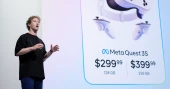
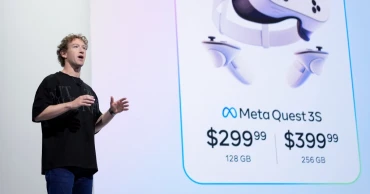
Meta, which introduced the Quest 3 last year, showed off a cheaper version, the 3S, that will cost $299. The regular Quest 3 costs $499. The S3 will start shipping on Oct. 15.
While VR goggles have grabbed more headlines, the augmented reality Ray Bans turned out to be a sleeper hit for Meta. The company hasn't disclosed sales numbers, but Zuckerberg said during Meta's July earnings call that the glasses “continue to be a bigger hit sooner than we expected -- thanks in part to AI.” Zuckerberg said on Wednesday that Meta seems to have gotten past the supply issues that plagued the Ray Bans a few months ago due to high demand.
“They are kind of the perfect form factor for AI,” Zuckerberg said. The glasses, he added, let an AI assistant “see what you see, hear what you hear” and help you go about your day.
For instance, you can ask the glasses to remind you where you parked or to pick up groceries, look at a pile of fruit and come up with a smoothie recipe, or help you pick out a party outfit.
Meta — which renamed itself from Facebook in 2021, still makes nearly all of its money from advertising. In its most recent quarter, 98% of its more than $39 billion in revenue came from ads. At the same time, the company is investing heavily in AI and what Zuckerberg sees as the next generation of computing platforms such as VR headsets and augmented reality glasses.
1 year ago
FAA wants to fine SpaceX $633,000 for alleged safety violations during 2 Florida launches
SpaceX faces $633,000 in fines for alleged safety violations during two Florida launches last year.
The Federal Aviation Administration said Tuesday it’s proposing the civil penalties because of the company's alleged failure to follow licensing requirements.
During a satellite launch in June 2023, SpaceX used a new launch control room without prior approval and also did not conduct the required readiness poll two hours in advance, according to the FAA.
One month later, SpaceX launched another communication satellite using a new rocket fuel facility yet to be approved, said federal regulators.
“Safety drives everything we do at the FAA" including oversight of commercial space, FAA's Marc Nichols said in a statement. “Failure of a company to comply with the safety requirements will result in consequences.”
SpaceX has 30 days to respond to the FAA. It did not immediately return a request for comment.
1 year ago

Edmunds: 5 game-changing vehicles you'll want to know about
If you’re thinking about buying a new car but don’t need one right away, now is a great time to show a little patience. Generally, waiting until the fall of winter can create an opportunity to purchase an all-new or significantly updated vehicle. The 2025 model year is jam-packed with big updates for some of the most popular vehicles. To give you an inside scoop on what’s coming down the pike in the next few months, the automotive experts at Edmunds have picked five vehicles that promise to be well worth the wait.
Cadillac Optiq
Cadillac’s Optiq SUV will be a new option for electric SUV shoppers who might have otherwise considered an Audi Q4 e-tron, Genesis GV60 or Tesla Model Y. A follow-up to the larger Lyriq luxury SUV, the smaller, less expensive Optiq targets the mainstream in a big way. Considering the standard all-wheel drive, 300 horsepower and estimated 300 miles of range, it should be compelling. Another reason to be excited is that Cadillac’s hands-free Super Cruise driving feature is standard equipment. Edmunds has found Super Cruise to be beneficial in making driving in heavy traffic less fatiguing.
Estimated on-sale date: Late 2024
Starting price: $54,390, including destination
Mazda CX-50 Hybrid
Mazda’s CX-50 is Edmunds top-ranked small SUV. It boasts a classy interior, sporty handling and a decent off-road capability. For 2025, the CX-50 will add hybrid fuel efficiency to the mix as well. The new hybrid version will borrow its powertrain from the Toyota RAV4 Hybrid. While there is not an official EPA figure yet, Mazda estimates it will get 38 mpg in combined city/highway driving. That’s 10 mpg better than the CX-50’s most efficient base engine. With 219 horsepower, the hybrid is more powerful, too.
Estimated on-sale date: Late 2024
Starting price: $35,390, including destination
Ram 1500 REV
The Ram 1500 REV will be the automaker’s first electric truck. Its dual electric motors will produce up to 654 horsepower and allow a max tow rating of 14,000 pounds. That’s significantly more than the 10,000-pound maximum towing capacities of the electric Ford F-150 Lightning and Chevrolet Silverado EV. Two battery options will be available. The standard pack should propel the 1500 REV to an estimated 350 miles while the bigger battery will be good for an estimated 500 miles of range. Ram also says the 1500 EV will have multiple household-style power outlets to power tools and equipment for recreational use, job sites and more.
Estimated on-sale date: Late 2024
Estimated starting price: $65,000
Porsche 911
A new 911 is always a big deal, but this one is particularly special. For 2025, the 911 is going hybrid. However, Porsche didn’t hybridize its iconic sports car just for better fuel economy. Here, the hybrid is about performance. The powertrain exclusive to the 911 GTS combines a turbocharged flat-six engine with a hybrid system to produce an impressive 532 horsepower. Besides the extra oomph, the hybrid system also helps to improve responsiveness at low rpm. Other changes for all 2025 911s include standard rear-axle steering and a fully digital dashboard.
On-sale date: Available now
911 GTS starting price: $166,895, including destination
Toyota 4Runner
Toyota’s 4Runner is getting a much-needed overall for 2025. This midsize SUV is thoroughly modern but still has all the qualities that made prior editions so popular. Toyota has dropped the old V6 in favor of a new turbocharged four-cylinder good for 278 horsepower. A 326-horsepower hybrid version will also be available. Inside, the new 4Runner sports an available 14-inch center touchscreen and chunky control knobs and switches. Of course, the latest 4Runner won’t skimp on off-road capability. The new Trailhunter version, for example, will have additional ground clearance, 33-inch off-road tires, a locking rear differential and more.
Estimated on-sale date: Fall 2024
Estimated starting price: $42,000
Edmunds Says
The 2025 model year is jam-packed with big updates for some of the most popular vehicles on the market. These models we listed above will have some significant advantages over a vehicle in the here and now. Buyers shopping for new wheels will have a lot of exciting options to choose from in the next few months.
1 year ago
Google and Apple have to pay billions in fines and back taxes after EU rejects their final appeals
Google lost its last bid to overturn a European Union antitrust penalty, after the bloc's top court ruled against it Tuesday on a case that came with a whopping fine and helped jumpstart an era of intensifying scrutiny for Big Tech companies.
The European Union’s top court rejected Google's appeal against the 2.4 billion euro ($2.7 billion) penalty from the European Commission, the 27-nation bloc’s top antitrust enforcer, for violating antitrust rules with its comparison shopping service.
Also Tuesday, Apple lost its challenge against an order to repay 13 billion euros ($14.34 billion) in back taxes to Ireland, after the European Court of Justice issued a separate decision siding with the commission in a case targeting unlawful state aid for global corporations.
Both companies have now exhausted their appeals in the cases that date back to the previous decade. Together, the court decisions are a victory for European Commissioner Margrethe Vestager, who's expected to step down next month after 10 years as the commission's top official overseeing competition .
The shopping fine was one of three huge antitrust penalties that the commission hit Google with, which together ushered in the current wave of stepped-up efforts to regulate tech companies.
"By today’s judgment, the Court of Justice dismisses the appeal and thus upholds the judgment of the General Court," the court said in a press release summarizing its decision.
The commission punished the Silicon Valley giant in 2017 for unfairly directing visitors to its own Google Shopping service to the detriment of competitors.
“We are disappointed with the decision of the Court, which relates to a very specific set of facts,” Google said in a brief statement.
The company said it made changes to comply with the commission’s decision requiring it to treat competitors equally. It started holding auctions for shopping search listings that it would bid for alongside other comparison shopping services.
“Our approach has worked successfully for more than seven years, generating billions of clicks for more than 800 comparison shopping services,” Google said.
Google had already lost an earlier appeal to the EU General Court, the tribunal's lower section. The Court of Justice’s adviser also recommended rejecting the appeal earlier this year.
European consumer group BEUC hailed the court's decision, saying it shows how the bloc's competition law “remains highly relevant" in digital markets.
“It is a good outcome for all European consumers at the end of the day,” Director General Agustín Reyna said in an interview. “It means that many smaller companies or rivals will be able to go to different comparison shopping sites. They don’t need to depend on Google to reach out to customers."
Google is still appealing its two other EU antitrust cases: a 2018 fine of 4.125 billion euros involving its Android operating system and a 2019 penalty of 1.49 billion euros over its AdSense advertising platform.
Those three cases foreshadowed expanded efforts by regulators worldwide to crack down on the tech industry. The EU has since opened more investigations into Big Tech companies and drew up a new law to prevent them from cornering online markets, known as the Digital Markets Act.
European Commissioner and Executive Vice President Margrethe Vestager said that the shopping case was one of the first attempts to regulate a digital company and inspired similar efforts worldwide.
"The case was symbolic because it demonstrated even the most powerful tech companies could be held accountable. No one is above the law,” Vestager told a press briefing in Brussels.
Vestager said the commission will continue to open competition cases even as it enforces the Digital Markets Act. The DMA is a sweeping rulebook that forces Google and other tech giants to give consumers more choice by following a set of dos and don'ts.
Google is also now facing particular pressure over its lucrative digital advertising business from the EU and Britain, which are carrying out separate investigations, and the United States, where the Department of Justice is taking the company to federal court over its alleged dominance in ad tech.
Also Tuesday, Apple failed in its last bid to avoid repaying its Irish taxes after the Court of Justice upheld a lower court ruling against the company, in the dispute that dates back to 2016.
Vestager, who said she had been braced for defeat, hailed it as a landmark victory for “tax justice.”
It was a surprise win for the commission, which has previously targeted Amazon, Starbucks and Fiat with tax rulings that were later overturned on appeal. They were part of the EU's efforts to stamp out sweetheart deals that let companies pay little to no taxes, in a fight that highlighted the debate over whether multinational corporations are paying their fair share around the world.
The case drew outrage from Apple when it was opened in 2016, with CEO Tim Cook calling it “total political crap.” Then-U.S. President Donald Trump slammed Vestager, who spearheaded the campaign to root out special tax deals and crack down on big U.S. tech companies, as the “tax lady” who “really hates the U.S.”
1 year ago

Best Free Bangladeshi Online Doctor Apps for Android, iOS in 2024
Taking advice from a registered doctor, seeking medical help during an emergency, and getting free regular health tips have become easier as healthcare providers and doctors are providing such services via mobile apps. Online doctor apps are among the most essential applications that should be on everyone’s phones. Let’s learn about a few of the best free Bangladeshi doctor apps for android and iOS phones.
Top Bangladeshi Online Doctor Mobile Apps
Sebaghar
Sebaghar is a highly-rated telemedicine app developed by BDTask, offering convenient and affordable healthcare services in Bangladesh. With a content rating of 3+ and over 500,000 downloads, this app is free to download and works on Android devices with version 5.0 and up. It has a 4.4-star rating on Google Play.
The app size varies from 44 MB to 51 MB depending on the device. Sebaghar allows users to connect with over 1000 doctors through video calls, online chat, and phone consultations. Key features include private consultations, appointment scheduling, pill reminders, and secure handling of personal health data, making it an essential tool for remote healthcare access.
Read more: 10 Best eBook Reader Apps for Android, iOS in 2024
DocTime
DocTime is a well-rated healthcare app developed by Doctime Limited. It has over 1,000,000 downloads and requires Android 6.0 or higher. The app is free to download and offers various healthcare services, including online doctor consultations, medicine delivery, and diagnostic test bookings.
DocTime allows users to consult doctors via video, audio, or chat within minutes. The app also features digitized health records, medication reminders, and follow-up consultation alerts, making it a comprehensive and convenient tool for managing your health and well-being. This app has currently scored a 4.4-star rating on Google Play.
LifePlus Bangladesh
LifePlus Bangladesh is a digital healthcare app developed by Life Plus Bangladesh Limited, offering a range of health services to users. With a content rating of 3+, the app has over 50,000 downloads and requires Android 7.0 or higher. It is free to download and has a size of 91 MB.
Read more: Best Free Personal Safety Android, iOS Apps for Women in 2024
LifePlus BD allows users to book doctor appointments, order medicines, schedule diagnostic tests, and access ambulance services- all from the comfort of their homes. The app ensures quick medication delivery within 4-6 hours in Dhaka City, making health care more accessible and convenient.
Zaynax Health
Zaynax Health is a top-rated healthcare app developed by Zaynax Health Limited, boasting a 5.0-star rating on Google Play. The app has over 10,000 downloads and is compatible with Android devices running version 7.0 and up. It is free to download, with a size ranging from 88 MB to 113 MB depending on the device.
Zaynax Health offers personalized, technology-enabled healthcare solutions, providing quick and convenient access to medical services. The app aims to bridge the gap between healthcare providers and patients, ensuring that proper healthcare is always within reach whenever needed.
Read more: Best Video Editing Apps for Android, IOS in 2024
Praava Partner
The Praava Partner App is a specialized B2B tool developed by Praava Health for use by phlebotomists, runners, and drop-off points as part of Praava Ghore Lab services. It has over 1,000 downloads and is compatible with Android 5.1 and up, with a download size of about 17-18 MB.
The app facilitates the collection of blood samples from patients' homes or designated locations, ensuring these samples are analyzed at Praava's ISO 15189-2012 certified and ILAC-accredited laboratory. The app is free to download and offers a streamlined process for managing diagnostic services, making healthcare more accessible.
Telemedi
Telemedi is a user-friendly app by Telmedicin sp. z o.o. that enables you to easily arrange and pay for teleconsultations with doctors. With over 50,000 downloads, the app works on Android 6.0 and up, with a download size of 37-38 MB. It allows you to consult specialists via chat or video, attach examination results, and receive recommendations, referrals, and e-prescriptions.
Read more: Best and Worst Android OS Considering Bloatware in 2024
The app is rated for users aged 3 and above, offering in-app purchases for a seamless healthcare experience from the comfort of your home. The current rating of this app on Google Play is about 4.4 stars.
MetLife 360Health
MetLife 360Health is a wellness app by The CareVoice, designed to enhance your overall health and well-being. The app offers features like activity monitoring, diet tracking, brain games, and guided meditation programs. It also includes an AI-powered symptom checker and a unique face scan to assess health parameters.
Users can enjoy discounts on dental, optical, and pharmaceutical services with the MetLife Discount Card. The app has over 5,000 downloads, works on Android 8.1 and up, and is rated for users aged 3 and above. Participate in challenges, earn coins, and redeem them for rewards.
Read more: 7 Food Delivery Apps for Dhaka
Conclusion
These free Bangladeshi online healthcare apps for mobile offer a wide range of digital services, making healthcare more accessible and convenient. Sebaghar and DocTime excel in telemedicine, providing access to numerous doctors and healthcare services.
LifePlus Bangladesh and Zaynax Health offer personalized care and quick service delivery, particularly within Dhaka. Praava Partner focuses on facilitating diagnostic services, while Telemedi and MetLife 360Health provide specialized consultations and wellness tracking.
Together, these apps demonstrate the growing trend of integrating technology into healthcare for better accessibility and management.
Read more: Top 10 Free Online Screen Recorder Software
1 year ago
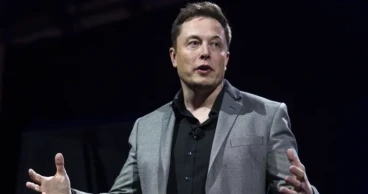
Brazil blocks Musk’s X amid feud with judge
Brazil started blocking Elon Musk’s social media platform X early Saturday, making it largely inaccessible on both the web and through its mobile app after the company refused to comply with a judge’s order.
X missed a deadline imposed by Supreme Court Justice Alexandre de Moraes to name a legal representative in Brazil, triggering the suspension. It marks an escalation in the monthslong feud between Musk and de Moraes over free speech, far-right accounts and misinformation.
To block X, Brazil’s telecommunications regulator, Anatel, told internet service providers to suspend users’ access to the social media platform. As of Saturday at midnight local time, major operators began doing so.
De Moraes had warned Musk on Wednesday night that X could be blocked in Brazil if he failed to comply with his order to name a representative, and established a 24-hour deadline. The company hasn’t had a representative in the country since earlier this month.
“Elon Musk showed his total disrespect for Brazilian sovereignty and, in particular, for the judiciary, setting himself up as a true supranational entity and immune to the laws of each country,” de Moraes wrote in his decision on Friday.
The justice said the platform will stay suspended until it complies with his orders, and also set a daily fine of 50,000 reais ($8,900) for people or companies using VPNs to access it.
In a later ruling, he backtracked on his initial decision to establish a 5-day deadline for internet service providers themselves — and not just the telecommunications regulator — to block access to X, as well as his directive for app stores to remove virtual private networks, or VPNs.
The dispute also led to the freezing this week of the bank accounts in Brazil of Musk's satellite internet provider Starlink.
Brazil is one of the biggest markets for X, which has struggled with the loss of advertisers since Musk purchased the former Twitter in 2022. Market research group Emarketer says some 40 million Brazilians, roughly one-fifth of the population, access X at least once per month.
“This is a sad day for X users around the world, especially those in Brazil, who are being denied access to our platform. I wish it did not have to come to this – it breaks my heart,” X’s CEO Linda Yaccarino said Friday night, adding that Brazil is failing to uphold its constitution’s pledge to forbid censorship.
X had posted on its official Global Government Affairs page late Thursday that it expected X to be shut down by de Moraes, “simply because we would not comply with his illegal orders to censor his political opponents.”
“When we attempted to defend ourselves in court, Judge de Moraes threatened our Brazilian legal representative with imprisonment. Even after she resigned, he froze all of her bank accounts,” the company wrote.
X has clashed with de Moraes over its reluctance to comply with orders to block users.
Accounts that the platform previously has shut down on Brazilian orders include lawmakers affiliated with former President Jair Bolsonaro’s right-wing party and activists accused of undermining Brazilian democracy. X’s lawyers in April sent a document to the Supreme Court in April, saying that since 2019 it had suspended or blocked 226 users.
In his decision Friday, de Moraes' cited Musk's statements as evidence that X's conduct “clearly intends to continue to encourage posts with extremism, hate speech and anti-democratic discourse, and to try to withdraw them from jurisdictional control.”
In April, de Moraes included Musk as a target in an ongoing investigation over the dissemination of fake news and opened a separate investigation into the executive for alleged obstruction.
Musk, a self-proclaimed “free speech absolutist," has repeatedly claimed the justice’s actions amount to censorship, and his argument has been echoed by Brazil’s political right. He has often insulted de Moraes on his platform, characterizing him as a dictator and tyrant.
De Moraes’ defenders have said his actions aimed at X have been lawful, supported by most of the court’s full bench and have served to protect democracy at a time it is imperiled. He wrote Friday that his ruling is based on Brazilian law requiring internet services companies to have representation in the country so they can be notified when there are relevant court decisions and take requisite action — specifying the takedown of illicit content posted by users, and an anticipated churn of misinformation during October municipal elections.
The looming shutdown is not unprecedented in Brazil.
Lone Brazilian judges shut down Meta’s WhatsApp, the nation’s most widely used messaging app, several times in 2015 and 2016 due to the company’s refusal to comply with police requests for user data. In 2022, de Moraes threatened the messaging app Telegram with a nationwide shutdown, arguing it had repeatedly ignored Brazilian authorities’ requests to block profiles and provide information. He ordered Telegram to appoint a local representative; the company ultimately complied and stayed online.
X and its former incarnation, Twitter, have been banned in several countries — mostly authoritarian regimes such as Russia, China, Iran, Myanmar, North Korea, Venezuela and Turkmenistan. Other countries, such as Pakistan, Turkey and Egypt, have also temporarily suspended X before, usually to quell dissent and unrest. Twitter was banned in Egypt after the Arab Spring uprisings, which some dubbed the “Twitter revolution,” but it has since been restored.
A search Friday on X showed hundreds of Brazilian users inquiring about VPNs that could potentially enable them to continue using the platform by making it appear they were logging on from outside the country. It was not immediately clear how Brazilian authorities would police this practice and impose fines cited by de Moraes.
“This is an unusual measure, but its main objective is to ensure that the court order to suspend the platform's operation is, in fact, effective," Filipe Medon, a specialist in digital law and professor at the law school of Getulio Vargas Foundation, a university in Rio de Janeiro, told The Associated Press.
Mariana de Souza Alves Lima, known by her handle MariMoon, showed her 1.4 million followers on X where she intends to go, posting a screenshot of rival social network BlueSky.
On Thursday evening, Starlink, said on X that de Moraes this week froze its finances, preventing it from doing any transactions in the country where it has more than 250,000 customers.
“This order is based on an unfounded determination that Starlink should be responsible for the fines levied—unconstitutionally—against X. It was issued in secret and without affording Starlink any of the due process of law guaranteed by the Constitution of Brazil. We intend to address the matter legally,” Starlink said in its statement. The law firm representing Starlink told the AP that the company appealed, but wouldn’t make further comment.
Musk replied to people sharing the reports of the freeze, adding insults directed at de Moraes. “This guy @Alexandre is an outright criminal of the worst kind, masquerading as a judge,” he wrote.
Musk later posted on X that SpaceX, which runs Starlink, will provide free internet service in Brazil “until the matter is resolved” since “we cannot receive payment, but don’t want to cut anyone off.”
In his decision, de Moraes said he ordered the freezing of Starlink’s assets, as X didn't have enough money in its accounts to cover mounting fines, and reasoning that the two companies are part of the same economic group.
While ordering X’s suspension followed warnings and fines and so was appropriate, taking action against Starlink seems “highly questionable,” said Luca Belli, coordinator of the Getulio Vargas Foundation’s Technology and Society Center.
“Yes, of course, they have the same owner, Elon Musk, but it is discretionary to consider Starlink as part of the same economic group as Twitter (X). They have no connection, they have no integration,” Belli said.
1 year ago
416 mobile towers still out of order in 11 flood-hit districts: BTRC
A total of 416 mobile towers out of 14,551 in eleven flood affected district have remained out of order due to flood, according to the Bangladesh Telecommunication and Regulatory Commission (BTRC).
The districts include Noakhali, Laxmipur, Feni, Cumilla, Brahmanbaria, Chattogram, Khagrachhari, Habiganj, Moulvibazar, Cox’s Bazar and Sylhet, said a press release of BTRC issued on Thursday.
Already the Bangladesh Army has provided all out necessary assistance including water vessels, trucks and speedboats to carry the equipment, fuel and generators to the mobile operators and tower operators.
1 year ago
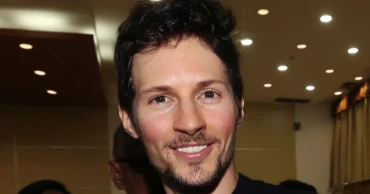
French authorities arrest Telegram CEO Pavel Durov at a Paris airport, French media report
The founder and CEO of the messaging service Telegram was detained at a Paris airport on an arrest warrant alleging his platform has been used for money laundering, drug trafficking and other offenses, French media reported Sunday.
Pavel Durov, a dual citizen of France and Russia, was taken into custody at Paris-Le Bourget Airport on Saturday evening after landing in France from Azerbaijan, according to broadcasters LCI and TF1.
Investigators from the National Anti-Fraud Office, attached to the French customs department, notified Durov, 39, that he was being placed in police custody, the broadcasters said.
Durov’s representatives couldn’t be immediately reached for comment.
French prosecutors declined to comment on Durov's arrest when contacted by The Associated Press on Sunday, in line with regulations during an ongoing investigation.
French media reported that the warrant for Durov was issued by France at the request of the special unit at the country's interior ministry in charge of investigating crimes against minors. Those include online sexual exploitation, such as possession and distribution of child sexual abuse content and grooming for sexual purposes.
Telegram was founded by Durov and his brother in the wake of the Russian government’s crackdown after mass pro-democracy protests that rocked Moscow at the end of 2011 and 2012.
The demonstrations prompted Russian authorities to clamp down on the digital space, adopting regulations that forced internet providers to block websites and cellphone operators to store call records and messages that could be shared with security services.
In the increasingly repressive environment, Telegram and its pro-privacy rhetoric offered a convenient way for Russians to communicate and share news. In 2018, Russian media watchdog Roskomnadzor moved to block Telegram over its refusal to hand over encryption keys, but ultimately failed to fully restrict access to the app.
Telegram continued to be widely used — including by government institutions — and the ban was dropped two years later. In March 2024, Roskomnadzor said that Telegram was working with the Russian government to a certain extent and had removed more than 256,000 posts with prohibited content at Roskomnadzor’s request.
Telegram also continues to be a popular source of news in Ukraine, where both media outlets and officials use it to share information on the war, and deliver missile and air raid alerts.
In a statement posted on its platform, Telegram said it abides by EU laws including the digital services act, and its moderation is “within industry standards and constantly improving."
Durov, the company added, “has nothing to hide and travels frequently in Europe.”
“It is absurd to claim that a platform or its owner are responsible for abuse of that platform," Telegram’s post said. “Almost a billion users globally use Telegram as means of communication and as a source of vital information. We’re awaiting a prompt resolution of this situation. Telegram is with you all.”
A French judicial official suggested that Durov could appear before a judge later Sunday to determine whether he will remain in custody. The official wasn’t authorized to be named publicly during an ongoing investigation.
“If the person concerned is to be brought before a judge today, it is only in the context of the possible extension of his police custody measure — a decision that must be taken and notified by an investigating judge,” the official said.
Western governments have often criticized Telegram for lack of content moderating on the messaging service, which experts say opens up the messaging platform for potential use in money laundering, drug trafficking and allowing the sharing of content linked to sexual exploitation of minors.
Compared to other messaging platforms, Telegram is “less secure (and) more lax in terms of policy and detection of illegal content,” said David Thiel, a Stanford University researcher, who has investigated the use of online platforms for child exploitation, at its Internet Observatory.
In addition, Telegram “appears basically unresponsive to law enforcement,” Thiel said, adding that messaging service WhatsApp “submitted over 1.3 million CyberTipline reports in 2023 (and) Telegram submits none.”
In 2022, Germany issued fines of 5.125 million euros ($5 million) against the operators of Telegram for failing to comply with German law. The Federal Office of Justice said that Telegram FZ-LLC hasn’t established a lawful way for reporting illegal content or named an entity in Germany to receive official communication.
Both are required under German laws that regulate large online platforms.
Last year, Brazil temporarily suspended Telegram over its failure to surrender data on neo-Nazi activity related to a police inquiry into school shootings in November.
Elon Musk, the billionaire owner of social media site X who’s called himself a “free speech absolutist” in the past, posted ”#freePavel” in support of Durov following the arrest.
Russian government officials expressed outrage at Durov’s arrest, with some highlighting what they said was the West's double standard on freedom of speech.
“In 2018, a group of 26 NGOs, including Human Rights Watch, Amnesty International, Freedom House, Reporters Without Borders, the Committee to Protect Journalists, and others, condemned the Russian court’s decision to block Telegram,” Russian Foreign Ministry spokeswoman Maria Zakharova said.
“Do you think this time they’ll appeal to Paris and demand Durov’s release?” Zakharova said in a post on her personal Telegram account.
Officials at the Russian Embassy in Paris had requested access to Durov, Zakharova told Russian state news outlet RIA Novosti, but she added that French authorities view Durov’s French citizenship as his primary one.
In a statement to the AP earlier this month, Telegram said that it actively combats misuse of its platform.
“Moderators use a combination of proactive monitoring and user reports in order to remove content that breaches Telegram’s terms of service. Each day, millions of pieces of harmful content are removed,” the company said.
1 year ago