tech-news
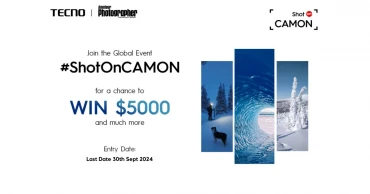
TECNO launches ‘Shot On CAMON Contest’ globally
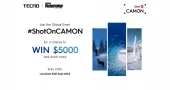
After impressing with the advanced imaging capabilities of the CAMON 30 series, innovative smartphone brand TECNO has now introduced the 'Shot On CAMON Contest', marking its inaugural global photography competition.
Anyone worldwide can participate in this contest, showcasing their creativity for a chance to win attractive prizes. The contest has secured Amateur Photographer, the UK's top-selling photography magazine, as its exclusive official media partner.
To participate in the contest TECNO users must capture life's beautiful moments using TECNO phones. They should then share their images or videos (Instagram Reels) on Instagram, using the hashtags #ShotOnCAMON and #TECNOCAMON30Series.
Top Home Skincare Devices in Bangladesh: Transform Your Beauty Routine
Participants are also required to submit a high-quality version of their entries to the official competition via email at '[email protected]', according to a press release issued on Thursday.
The organizers emphasized that the photography contest provides TECNO users with an opportunity to showcase their photographic talents.
There are five categories in the contest for smartphone users interested in participating: Colorful Discovery, Super Night, Poetic Portrait, Creative Perspective, and Life in Motion (for short video works). Participants can select any of these categories, capture life's rich artistry through the innovative lens of the CAMON 30 series, and have the chance to win attractive prizes, including cash awards.
Awards will be distributed across various categories, including TECNO Photography Master, Gold Prize, Silver Prize, Bronze Prize, TECNO Friend, and the London Photography Tour Award. A standout opportunity includes a cash prize of US$5,000 for the global winner of the TECNO Photography Master category.
realme GT 6 5G Review: Is It a Flagship Killer?
Besides, other winners will receive cash prizes, in addition to the opportunity for a photography tour in London.
The winners of the Gold Prize, Silver Prize and Bronze Prize will be rewarded with attractive cash prizes of US$3,000, US$2,000 and US$1,000 respectively. Also, the top entries under the ‘London Photography Tour Award’ will win a chance to embark on a 3-day photography tour in London to explore London’s beauty.
The competition also offers non-TECNO users a chance to win a new CAMON 30 Series smartphone and become a 'TECNO Friend'.
1 year ago
OpenAI founder Sutskever sets up new AI company devoted to “safe superintelligence”
Ilya Sutskever, one of the founders of OpenAI who was involved in a failed effort to push out CEO Sam Altman, said he’s starting a safety-focused artificial intelligence company.
Sutskever, a respected AI researcher who left the ChatGPT maker last month, said in a social media post Wednesday that he’s created Safe Superintelligence Inc. with two co-founders. The company’s only goal and focus is safely developing “superintelligence” - a reference to AI systems that are smarter than humans.
The company vowed not to be distracted by “management overhead or product cycles,” and under its business model, work on safety and security would be “insulated from short-term commercial pressures,” Sutskever and his co-founders Daniel Gross and Daniel Levy said in a prepared statement.
The three said Safe Superintelligence is an American company with roots in Palo Alto, California, and Tel Aviv, “where we have deep roots and the ability to recruit top technical talent.”
Sutskever was part of a group that made an unsuccessful attempt last year to oust Altman. The boardroom shakeup, which Sutskever later said he regretted, also led to a period of internal turmoil centered on whether leaders at OpenAI were prioritizing business opportunities over AI safety.
At OpenAI, Sutskever jointly led a team focused on safely developing better-than-human AI known as artificial general intelligence, or AGI. When he left OpenAI, he said that he had plans for a “very personally meaningful” project, but offered no details.
Sutskever said that it was his choice to leave OpenAI.
Days after his departure, his team co-leader Jan Leike also resigned and leveled criticism at OpenAI for letting safety “take a backseat to shiny products.” OpenAI later announced the formation of a safety and security committee, but it’s been filled mainly with company insiders.
1 year ago

Future of Elon Musk and Tesla are on the line as shareholders vote on massive pay package
If Tesla shareholders approve an all-stock compensation package for CEO Elon Musk that was thrown out this year by a Delaware judge, it would almost guarantee he would remain at the company he grew to be the world leader in electric vehicles, shifting to AI and robotics including autonomous vehicles, which Musk says is Tesla's future.
If Tesla shareholders vote against restoring Elon Musk’s $44.9 billion pay package Thursday, the CEO could deliver on threats to take artificial intelligence research to one of his other companies. Or he could even walk away.
Late Wednesday, Musk said on his social media platform X that early voting results indicated shareholders back his pay package and other company initiatives like re-incorporating Tesla in Texas by “wide margins.”
Musk has run into trouble with statements about Tesla that he's made on X before he owned it and on Thursday, the company filed Musk's comments on preliminary results with the U.S. Securities and Exchange Commission.
Shares of Tesla Inc., down 30% this year, rose sharply before the opening bell.
Even if shareholders do officially approve his compensation package at Tesla's annual shareholders' meeting Thursday, which many analysts have said is likely, there would be uncertainty. Musk has threatened on X, his social media platform, to develop AI elsewhere if he doesn't get a 25% stake in Tesla (He owns about 13% now). Musk's xAI recently received $6 billion in funding to develop artificial intelligence.
Wedbush Analyst Dan Ives said he expects the package to be overwhelmingly reapproved, ending a lot of uncertainty with Musk. “This issue has been an overhang on Tesla’s stock, and this will be important to move this distraction in the rearview mirror,” Ives wrote in a note to investors.
Shares of Tesla Inc. have slumped this year with the company warning of “notably lower” sales growth in 2024.
According to Musk, early indications suggest that shareholders also back the relocation of Tesla's legal home to Texas, and out of Delaware.
The move is designed to escape from the Delaware court's oversight and possibly a ruling from Chancellor Kathaleen St. Jude McCormick that invalidated Musk's pay package. In a January opinion on a shareholder lawsuit, the judge determined that Musk controlled the Tesla board and is not entitled to the landmark package once worth nearly $56 billion.
Multiple institutional investors have come out against that sizeable payout, some citing falling vehicle sales, price cuts and the tumbling Tesla stock price. But Tesla's top five institutional shareholders, Vanguard, BlackRock, State Street, Geode Capital, and Capital Research either said they don't announce their votes or wouldn't comment. They control about 17% of the votes.
Erik Gordon, a business and law professor at the University of Michigan, said individual shareholders are likely to vote for the package, and they own more than half of Tesla's shares.
One institutional investor who came out against the package is California's State Teachers Retirement System. The large pension fund said Tuesday that it would vote against Musk's pay "based on its sheer magnitude, and because the award would be extremely dilutive to shareholders. We also have concerns with the lack of focus on profitability for the company.”
In May, two big shareholder advisory firms, ISS and Glass Lewis, recommended voting against the package.
But Tesla and Musk have unleashed a furious lobbying effort to get the package approved, in posts on X, television appearances and in proxy filings with the U.S. Securities and Exchange Commission.
“Only 2 days left to protect & help grow the value of your investment in $TSLA by voting FOR ratification of the 2018 CEO Performance Award,” Tesla posted on X early Tuesday.
Tesla Chairwoman Robyn Denholm, in a letter to shareholders, wrote that the package was approved by 73% of the vote six years ago. “Because the Delaware Court second-guessed your decision, Elon has not been paid for any of his work for Tesla for the past six years that has helped to generate significant growth and stockholder value. That strikes us — and the many stockholders from whom we already have heard — as fundamentally unfair, and inconsistent with the will of the stockholders who voted for it,” she wrote.
Tesla has said the 2018 award incentivized Musk to create over $735 billion in value for shareholders in the six years since it was approved.
If Tesla finalizes the vote on moving the company's legal home to Texas before the vote on Musk’s pay package, and it manages to file the paperwork in Austin and get approval of the move, then the effect of the Delaware court ruling could be in doubt. Reapproval of the pay package would then be done as a Texas corporation and could fall under the purview of Texas courts.
Anticipating a quick move by Tesla, lawyers for the shareholder who filed the lawsuit seeking to block Musk’s pay deal, Richard Tornetta, filed motions in Delaware last month seeking an order stopping Tesla from trying to move the case. Tesla responded in letters to the judge that there is no cause for such concerns because they won’t seek a move. Besides, Tesla would still be a Delaware corporation at the time of this week's shareholder vote, they wrote.
In an order denying Tornetta’s motions, Chancellor McCormick wrote that she interprets Tesla’s letters to mean it has no intention of relocating the case to Texas. “The defendants’ statements give me great comfort,” she wrote.
Eric Talley, a Columbia University law professor, said the lawyers are unlikely to try to move the case because their livelihood is handling business cases in Delaware courts.
But it’s also possible that the unpredictable Musk could change lawyers.
McCormick, Talley said, is telling the lawyers “OK, I’m going to believe you, but I’m going to be really irritated if this is a big send up for these things that you said you’re not going to do.”
Talley, who also is a Tesla shareholder and said at present he plans to vote against Musk’s pay, expects Tesla to follow through with appealing McCormick’s ruling to the Delaware Supreme Court.
1 year ago
Fired SpaceX employees sue the company for wrongfully terminating critics of CEO Elon Musk
Eight former employees sued SpaceX and its CEO Elon Musk, alleging that Musk ordered them fired after they challenged what they called rampant sexual harassment and a hostile “Animal House”-style work environment at the company.
The employees, who filed suit in a California state court, detailed their complaints in a 2022 open letter to management they shared via a company intranet. The next day, four of the plaintiffs were fired, they alleged; others were terminated later after an internal investigation.
In January, the federal National Labor Relations Board filed its own complaint against SpaceX based on issues raised by nine fired employees.
Among other workplace concerns, the open letter called on executives to condemn Musk’s public behavior on X — the platform then known as Twitter — and to hold all employees accountable for unacceptable conduct. Musk’s actions included making light of sexual harassment allegations against him — charges that the billionaire denied.
“As our CEO and most prominent spokesperson, Elon is seen as the face of SpaceX — every tweet that Elon sends is a de facto public statement by the company,” the open letter said at the time. The letter also referred to Musk’s actions as a ”frequent source of distraction and embarrassment.”
The plaintiffs are seeking unspecified monetary damages.
The complaint drew connections between Musk’s behavior — in particular, his often lewd posts on Twitter — and the working environment at SpaceX. It states that one of the plaintiffs, Yaman Abdulhak, noted that many of the inappropriate examples cited in a 2021 “appropriate behavior” employee training “closely resembled the contents of Musk’s tweets.” Abdulhak sent examples of those tweets to the SpaceX human resources director, who took no action, the complaint stated.
SpaceX did not immediately reply to an emailed request for comment.
1 year ago
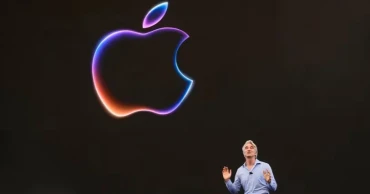
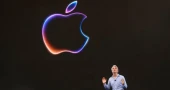
Apple embraces AI: New iPhone features and ChatGPT deal announced
Apple has jumped into the race to bring generative artificial intelligence to the masses, spotlighting a slew of features Monday designed to soup up the iPhone, iPad and Mac.
And in a move befitting a company known for its marketing prowess, the AI technology coming as part of free software updates later this year is being billed as “Apple Intelligence.”
Even as it tried to put its own stamp on technology's hottest area, Apple tacitly acknowledged during its World Wide Developers Conference that it needs help catching up with companies like Microsoft and Google, which have emerged as the early leaders in AI. Apple is leaning on ChatGPT, made by the San Francisco startup OpenAI, to make its often-bumbling virtual assistant Siri smarter and more helpful.
“All of this goes beyond artificial intelligence, it's personal intelligence, and it is the next big step for Apple,” CEO Tim Cook said.
Apple expected to enter AI race with ambitions to overtake the early leaders
Siri's optional gateway to ChatGPT will be free to all iPhone users and made available on other Apple products once the option is baked into the next generation of Apple's operating systems. ChatGPT subscribers are supposed to be able to easily sync their existing accounts when using the iPhone, and should get more advanced features than free users would.
To herald the alliance with Apple, OpenAI CEO Sam Altman sat in the front row of the packed conference, which was attended by developers from more than 60 countries.
"Together with Apple, we’re making it easier for people to benefit from what AI can offer," Altman said in a statement.
Beyond allowing Siri to tap into ChatGPT's storehouse of knowledge, Apple is giving its 13-year-old virtual assistant an extensive makeover designed to make it more personable and versatile, even as it currently fields about 1.5 billion queries a day.
When Apple releases free updates to the software powering the iPhone and its other products this fall, Siri will signal its presence with flashing lights along the edges of the display screen. It will be able to handle hundreds of more tasks — including chores that may require tapping into third-party devices — than it can now, based on Monday's presentations.
Apple's full suite of upcoming features will only work on more recent models of the iPhone, iPad and Mac because the devices require advanced processors. For instance, consumers will need last year's iPhone 15 Pro or buy the next model coming out later this year to take full advantage of Apple's AI package, although all the tools will work on Macs dating back to 2020 after that computer's next operating system is installed.
The AI-packed updates coming to the next versions of Apple software are meant to enable the billions of people who use the company's devices to get more done in less time, while also giving them access to creative tools that could liven things up. For instance, Apple will deploy AI to allow people to create emojis, dubbed “Genmojis” on the fly to fit the vibe they are trying to convey.
Apple's goal with AI “is not to replace users, but empower them,” Craig Federighi, Apple’s senior vice president of software engineering, told reporters. Users will also have the option of going into the device settings to turn off any AI tools they don't want.
Monday's showcase seemed aimed at allaying concerns Apple might be losing its edge with the advent of AI, a technology expected to be as revolutionary as the 2007 introduction of the Phone. Both Google and Samsung have already released smartphone models touting AI features as their main attractions, while Apple has been stuck in an uncharacteristically extended sales slump.
Thousands around the world report ChatGPT outage
AI mania is the main reason that Nvidia, the dominant maker of the chips underlying the technology, has seen its market value rocket from about $300 billion at the end of 2022 to about $3 trillion. The meteoric rise allowed Nvidia to surpass Apple as the second most valuable company in the U.S. Earlier this year, Microsoft also eclipsed the iPhone maker on the strength of its so-far successful push into AI.
Investors didn't seem as impressed with Apple's AI presentation as the crowd that came to the company's Cupertino, California, headquarters to see it. Apple's stock price dipped nearly 2% Monday.
Despite that negative reaction, Wedbush Securities analyst Dan Ives asserted in a research note that Apple is “taking the right path.” He hailed the presentation as a “historical” day for a company that already has reshaped the tech industry and society.
Besides pulling AI tricks out of its bag, Apple also used the conference to confirm that it will be rolling out a technology called Rich Communications Service, or RCS, to its iMessage app. The technology should improve the quality and security of texting between iPhones and devices powered by Android software, such as the Samsung Galaxy and Google Pixel.
The change, due out with the next version of iPhone's operating software, won't eliminate the blue bubbles denoting texts originating from iPhones and the green bubbles marking text sent from Android devices — a distinction that has become a source of social stigma.
In another upcoming twist to the iPhone's messaging app, users will be able to write a text (or have an AI tool compose it) in advance and schedule a specific time to automatically send it.
Monday's presentation marked the second straight year that Apple has created a stir at its developers conference by using it to usher in a trendy form of technology that other companies already had employed.
Last year, Apple provided an early look at its mixed-reality headset, the Vision Pro, which wasn't released until early 2024. Nevertheless, Apple's push into mixed reality — with a twist that it bills as “spatial computing” — has raised hopes that there will be more consumer interest in this niche technology.
Part of that optimism stems from Apple's history of releasing technology later than others, then using sleek designs and slick marketing campaigns to overcome its tardy start.
Bringing more AI to the iPhone will likely raise privacy concerns — a topic that Apple has gone to great lengths to assure its loyal customers it can be trusted not to peer too deeply into their personal lives. Apple did talk extensively Monday about its efforts to build strong privacy protections and controls around its AI technology.
One way Apple is trying to convince consumers that the iPhone won't be used to spy on them is harnessing its chip technology so most of its AI-powered features are handled on the device itself instead of at remote data centers, often called “the cloud.” Going down this route would also help protect Apple's profit margins because AI processing through the cloud is far more expensive than when it is run solely on a device.
When Apple users make AI demands that requiring computing power beyond what's available on the device, the tasks will be handled by what the company is calling a “private cloud” that is supposed to shield their personal data.
Apple's AI “will be aware of your personal data without collecting your personal data,” Federighi said.
1 year ago

Apple expected to enter AI race with ambitions to overtake the early leaders
Apple's annual World Wide Developers Conference on Monday is expected to herald the company's move into generative artificial intelligence, marking its late arrival to a technological frontier that's expected to be as revolutionary as the invention of the iPhone.
The widely anticipated display of AI to be embedded in the iPhone and other Apple products will be the marquee moment at an event that traditionally previews the next version of software that powers the company's hardware lineup.
And Apple's next generation of software is expected to be packed with an array of AI features likely to make its often-bumbling virtual assistant Siri smarter, and make photos, music, texting — and possibly even creating emojis on the fly — a more productive and entertaining experience.
True to its secretive nature, Apple hasn't provided any advance details about Monday's event being held at the company's Cupertino, California, headquarters.
But CEO Tim Cook has dropped strong hints during the first few months of this that Apple is poised to reveal its grand plans to enter a space that has been fueling an industry boom during the past 18 months.
AI mania is the main reason that Nvidia, the dominant maker of the chips underlying the technology, has seen its market value rocket from about $300 billion at the end of 2022 to about $3 trillion. The meteoric ride allowed Nvidia to briefly surpass Apple last week as the second most valuable company in the U.S. Microsoft earlier this year also eclipsed the iPhone maker on the strength of its so-far successful push into AI.
But analysts have been have been getting increasingly worried that Apple may be falling too far behind in the rapidly changing AI space, a concern that has been compounded by an uncharacteristically extended slump in the company's sales. Both Google and Samsung already have released smartphone models touting AI features as their main attractions.
That's why analysts such as Dan Ives of Wedbush Securities view Monday's conference as a potential springboard that catapults Apple into another robust phase of growth. Ives believes infusing more AI into the iPhone, iPad and Mac computer will translate into an additional $450 billon to $600 billion in market value for Apple.
Monday's conference “represents the most important event for Apple in over a decade as the pressure to bring a generative AI stack of technology for developers and consumers is front and center,” Ives wrote in a research note.
Apple definitely could use the boost that AI may be able to provide, particularly for its 13-year-old assistant Siri, which Forrester Research Dipanjan Chatterjee now calls an “oddly unhelpful helper.”
Meanwhile, OpenAI's ChatGPT is getting increasingly conversational — so much so that it recently sparked accusations of intentionally copying a piece of AI software voiced by Scarlett Johansson — and Google last month previewed an AI “agent” dubbed Astra that can seemingly see and remember things.
Besides using AI to spruce up Siri, Apple may also team up with OpenAI to bring some elements of ChatGPT to the iPhone, according to a wide range of unconfirmed reports leading up to Monday's conference.
This will be the second straight year that Apple has created a stir at its developers conference by using it to usher in its entrance into a trendy form of technology that other companies already had been making inroads.
Last year, Apple provided an early look at its mixed-reality headset, the Vision Pro, which wasn't released until early this year carrying a $3,500 price tag that has been a major impediment to gaining much traction. Nevertheless, Apple's push into mixed reality, tweaked with a twist that it bills as “spatial computing,” has raised hopes that what is currently a niche technology will turn into a huge market.
Part of the optimism stems from Apple's history of releasing technology later than others and then using sleek designs and services combined with slick marketing campaigns to overcome its tardy start to unleash new trends.
“Apple’s early reticence toward AI was entirely on brand,” Forrester's Chatterjee wrote in a preview of the developers conference. “The company has always been famously obsessed with what its offerings did for its customers rather than how it did it.”
Bringing more AI into the iPhone, in particular, will likely raise privacy issues — a topic where Apple has gone to great lengths to assure its loyal customer base that it can be trusted not to peer too deeply into their personal lives.
One way Apple could reassure consumers that the iPhone won't be used to spy on them is to leverage its own chip technology so most AI-powered features are handled on the device itself instead of remote data centers, often called “the cloud.” Going that route also would help protect Apple's profit margins because AI technology through the cloud is far more expensive than when it is run solely on a device.
1 year ago

Building a “Smart Bangladesh”: Digital skills and IDs for all by 2041
The government has unveiled an ambitious vision to transform the nation into “Smart Bangladesh” by 2041, emphasizing digital skills and digital IDs for its citizens.
Central to this vision are four key pillars: Smart Citizens, Smart Economy, Smart Government, and Smart Society. By focusing on these areas, the government aims to ensure that at least 90 percent of citizens are digitally literate and 95 percent possess digital IDs.
In a recent document submitted to the Parliament, the government detailed its strategy, giving top priority to the skill development of citizens. “Digital literacy of at least 90 percent of citizens will be ensured by 2041 by developing digital skills at all levels of society through the introduction of a digital curriculum,” the document stated.
To support this transformation, the government plans to provide high-speed reliable broadband internet connectivity and ensure every citizen has access to at least one digital device. By 2041, 95 percent of citizens will be able to access services through their digital IDs.
The document highlights the role of informed citizens in creating public-private services through e-participation. “Together, citizens and the government will create necessary policies,” it added. This initiative also includes campaigns to foster a digital and equitable mindset across the nation.
By 2041, the government aims for at least one member of every family to have access to smart employment and entrepreneurship development facilities. Additionally, the goal is to increase smart device usage to 80 percent by 2031 and 100 percent by 2041.
A key component of this plan is the universal use of Smart IDs for receiving citizen services, with a gradual increase in usage to 100 percent by 2041. The document also mentioned the acceleration of activities by the 12 sub-committees under the National Task Force on Blended Education to implement a comprehensive Blended Education and Skill Master Plan.
Awami League’s manifesto for the 12th National Parliamentary Election outlined this comprehensive plan to build a “Smart Bangladesh,” placing significant emphasis on the youth and detailing both immediate and future plans for the nation’s progress. The manifesto underscores the commitment to leveraging the potential of the youth to drive the country towards a technologically advanced and economically prosperous future.
1 year ago

Thousands around the world report ChatGPT outage
Thousands of ChatGPT users around the world were left frustrated earlier today after the popular AI chatbot experienced a major outage.
According to DownDetector, a website that tracks online service outages, over 3,000 users reported issues with ChatGPT, reports The Sun.
Many users took to social media to express their frustration, with one user on X (formerly Twitter) stating: “Hey ChatGPT - wasn't expecting you to be down when I chose you. Make it quick.”
Read more: AI tool capable of classifying brain tumors within hours: Australian researchers
OpenAI, the developers of ChatGPT, acknowledged the outage and released a statement saying: “We are currently investigating this issue.”
The outage appears to have been resolved as of this time. However, it highlights the growing reliance on AI-powered services and the disruption that can occur when these services go offline, added the report.
2 years ago
Nissan warns owners of older vehicles not to drive them due to risk of exploding air bag inflators
Nissan is urging the owners of about 84,000 older vehicles to stop driving them because their Takata air bag inflators have an increased risk of exploding in a crash and hurling dangerous metal fragments.
Wednesday's urgent request comes after one person in a Nissan was killed by an exploding front-passenger inflator, and as many as 58 people were injured since 2015.
“Due to the age of the vehicles equipped with defective Takata air bag inflators, there is an increased risk the inflator could explode during an air bag deployment, propelling sharp metal fragments which can cause serious injury or death,” Nissan said in a statement.
Nissan said the “do not drive” warning covers certain 2002 through 2006 Sentra small cars, as well as some 2002 through 2004 Pathfinder SUVs, and 2002 and 2003 Infiniti QX4 SUVs. Owners can find out if their vehicles are affected by going to nissanusa.com/takata-airbag-recall or infinitiusa.com/takata-airbag-recall and keying in their 17-digit vehicle identification number.
The company says owners should contact their dealer to set up an appointment to have inflators replaced for free. Nissan also is offering free towing to dealers, and in some locations mobile service and loaner cars are available.
“Even minor crashes can result in exploding Takata air bags that can kill or produce life-altering, gruesome injuries," the U.S. National Highway Traffic Safety Administration said in a statement. “Older model year vehicles put their occupants at higher risk, as the age of the air bag is one of the contributing factors.”
Nissan originally recalled 736,422 of the vehicles in 2020 to replace the Takata inflators. The company said around 84,000 remain unrepaired and are believed to still be in use.
Nissan said it has made numerous attempts to reach the owners with unrepaired Takata inflators.
The death was reported to NHTSA in 2018, the company said. The person killed was in a 2006 Sentra, according to Nissan.
The death is one of 27 in the U.S. caused by the faulty inflators, which used volatile ammonium nitrate to create a small explosion to inflate air bags in a crash. The chemical can deteriorate over time when exposed to high temperatures and humidity. It can explode with too much force, blowing apart a metal canister and spewing shrapnel. More than 400 people in the U.S. have been hurt.
Worldwide at least 35 people have been killed by Takata inflators in Malaysia, Australia and the U.S.
Potential for a dangerous malfunction led to the largest series of auto recalls in U.S. history, with at least 67 million Takata inflators involved. The U.S. government says many have not been repaired. About 100 million inflators have been recalled worldwide. The exploding air bags sent Takata into bankruptcy.
Honda, Ford, BMW, Toyota and Stellantis and Mazda have issued similar “do not drive” warnings for some of their vehicles equipped with Takata inflators.
2 years ago

Four students win prestigious Honda Young Engineer & Scientist’s Award 2023
Four Bangladeshi students from engineering and science fields have won Honda Young Engineer & Scientist’s (Y-E-S) Award – 2023.
The awards from Japan’s Honda Foundation were handed to the winners at a ceremony held on Sunday night in Dhaka.
Japanese Ambassador to Bangladesh IWAMA Kiminori was the chief guest at the ceremony while chief evaluator of Honda Y-E-S Award programme in Bangladesh, Dr. Ainun Nishat; Chairman of International Committee and Director of Honda Foundation Akira Kiminori; Secretary of Honda Foundation Norie Arai; Managing Director and CEO of Bangladesh Honda Private Limited Shigeru Matsuzaki; actor, writer and civil engineer Abul Hayat; Chief Marketing Officer of Bangladesh Honda Private Limited Shah Muhammad Ashequr Rahman, and representatives of respective universities were present.
CIPFA awards 63 OCAG officials with professional accounting certificates
The winners of Honda Y-E-S Award – 2023 are: Labiba Islam Salsabil, Farsia Kawsar Chowdhury, Md. Toki Tahmid and S.M. Sakeef Sani from Bangladesh University of Engineering & Technology (BUET).
The objective of this award is to “foster future leaders of science and technology fields to spearhead the growth of Asian countries.”
The Y-E-S Award program aims to identify and encourage students who would become future leaders to develop and implement innovative technologies that help to realize a truly humane civilization, maintaining harmony with environment.
The program initially kicked off in Vietnam in 2006 and it has been also implemented in India, Laos, Cambodia and Myanmar. It was introduced in Bangladesh in 2019 to support the development and promotion of young leaders to spearhead the growth of these countries in the future.
Digital Media Forum to announce awards for excellence in journalism
The organisers informed that the program is annually selecting up to four undergraduate students of the designated universities in Bangladesh to award USD 3,000 to each student. The awardees can receive as additional award/grant up to USD 10,000 under the Honda Y-E-S Award Plus programme if they continue their study and training within four years after the receipt of the Honda Y-E-S Award either via masters, doctoral or study abroad programs in Japanese universities, or via internship programs in Japanese research organizations or private companies as approved by the Honda Foundation.
2 years ago