Social-Media

Snap settles social media addiction lawsuit ahead of trial
Snapchat’s parent company, Snap, has reached a settlement in a high-profile social media addiction lawsuit just days before the case was set to go to trial in Los Angeles.
The settlement terms were not disclosed. At a California Superior Court hearing, lawyers confirmed the resolution, and Snap told the BBC that both parties were “pleased to have been able to resolve this matter in an amicable manner.”
Other tech giants named in the lawsuit, including Instagram owner Meta, TikTok parent ByteDance, and YouTube owner Alphabet, have not settled.
The lawsuit was filed by a 19-year-old woman, identified only by her initials K.G.M., who claimed that the platforms’ algorithmic designs left her addicted and negatively impacted her mental health.
UK to consult on possible social media ban for under-16s
With Snap now settled, the trial will proceed against Meta, TikTok, and Alphabet, with jury selection scheduled for 27 January. Meta CEO Mark Zuckerberg is expected to testify, while Snap CEO Evan Spiegel was slated to appear before the settlement.
Meta, TikTok, and Alphabet did not respond to BBC requests for comment regarding Snap’s settlement.
Snap remains a defendant in other consolidated social media addiction lawsuits. Legal experts say the cases could test a long-standing defense used by social media companies, which relies on Section 230 of the Communications Decency Act of 1996 to avoid liability for content posted by third parties.
Australia cracks down on child social media use, 4.7 million accounts taken down
Plaintiffs argue that the platforms are intentionally designed to foster addictive behavior through algorithms and notifications, contributing to mental health issues such as depression and eating disorders. Social media companies maintain that the evidence presented so far does not establish responsibility for these alleged harms.
#With inputs from BBC
1 month ago

UK to consult on possible social media ban for under-16s
The UK government has announced plans to consult on whether social media use should be banned for children under 16, alongside steps to tighten controls on mobile phone use in schools.
As part of “immediate action”, Ofsted will be given authority to review schools’ phone-use policies during inspections, with schools expected to become “phone-free by default”. Staff may also be advised not to use personal devices in front of students.
The move follows growing political and public pressure, including a letter from more than 60 Labour MPs and calls from Esther Ghey, the mother of murdered teenager Brianna Ghey. “Some argue that vulnerable children need access to social media to find their community,” she wrote. “As the parent of an extremely vulnerable and trans child, I strongly disagree. In Brianna's case, social media limited her ability to engage in real-world social interactions.”
The Department of Science, Innovation and Technology said the consultation will “seek views from parents, young people and civil society” and assess stronger age-verification measures. It will also consider limiting features that “drive compulsive use of social media”. The government is expected to respond in the summer.
Technology Secretary Liz Kendall said existing online safety laws were “never meant to be the end point”, adding: “We are determined to ensure technology enriches children's lives, not harms them and to give every child the childhood they deserve.”
Opposition parties and education unions offered mixed reactions. Conservative leader Kemi Badenoch criticised the move as “more dither and delay”, while Liberal Democrats warned the consultation could slow action. Teaching unions broadly welcomed the shift but raised concerns about Ofsted’s role and the wider impact of screen time.
Read More: Australia cracks down on child social media use, 4.7 million accounts taken down
The issue is also being debated in the House of Lords, though experts and child safety organisations remain divided on whether age-based bans are effective.
1 month ago

Australia cracks down on child social media use, 4.7 million accounts taken down
Social media platforms have taken down about 4.7 million accounts identified as belonging to children in Australia since the country enforced a ban on under-16s using major platforms, officials said.
Communications Minister Anika Wells said the government had proven critics wrong by compelling some of the world’s biggest tech companies to comply. “Now Australian parents can be confident their kids can have their childhoods back,” she told reporters on Friday.
The figures, submitted to the government by 10 platforms, offer the first indication of the impact of the landmark law, which came into force in December amid concerns about harmful online environments for young people. The move triggered heated debate over technology use, privacy, child safety and mental health and has prompted other countries to consider similar measures.
Under the law, Facebook, Instagram, Kick, Reddit, Snapchat, Threads, TikTok, X, YouTube and Twitch can be fined up to A$49.5 million ($33.2 million) if they fail to take reasonable steps to remove accounts of Australian users under 16. Messaging services such as WhatsApp and Facebook Messenger are exempt.
Platforms can verify age by requesting identification, using third-party facial age-estimation tools, or drawing inferences from existing account data, such as how long an account has been active.
Australia’s eSafety Commissioner Julie Inman Grant said about 2.5 million Australians are aged 8 to 15 and previous estimates showed 84% of 8- to 12-year-olds had social media accounts. While it is unclear how many accounts existed across the 10 platforms, she said the 4.7 million “deactivated or restricted” accounts was an encouraging sign.
“We’re preventing predatory social media companies from accessing our children,” Inman Grant said, adding that the companies covered by the ban had complied and reported removal figures on time. She said enforcement would now focus on stopping children from creating new accounts or evading the restrictions.
Read more: Wikipedia turns 25, announces AI partnerships with tech giants
Australian officials did not release platform-by-platform numbers. However, Meta, which owns Facebook, Instagram and Threads, said it removed nearly 550,000 accounts believed to belong to under-16s by the day after the ban took effect. In a blog post, Meta criticised the policy and warned that smaller platforms not covered by the ban might not prioritise safety.
The law has been widely backed by parents and child-safety advocates, though privacy groups and some youth organisations oppose it, arguing that vulnerable or geographically isolated teenagers find support online. Some young users say they have bypassed age checks with help from parents or older siblings.
1 month ago

Meta acquires AI Startup Manus to strengthen artificial intelligence push
Meta has acquired artificial intelligence startup Manus as the Facebook and Instagram parent intensifies efforts to expand AI capabilities across its platforms.
The California-based tech company did not reveal the financial terms of the deal, though The Wall Street Journal reported that the acquisition was valued at more than $2 billion.
Manus, headquartered in Singapore with links to China, introduced its first general-purpose AI agent earlier this year. The platform provides paid subscription services that allow users to deploy its AI tools for research, coding and other professional tasks.
In a statement issued Monday, Meta said Manus already supports millions of users and businesses globally and that the company plans to scale the technology across its consumer and business products, including Meta AI.
Manus CEO Xiao Hong said the acquisition would help the company grow on a stronger and more sustainable footing without altering how the platform operates or how decisions are made. He confirmed that Manus will continue offering subscriptions through its own app and website.
The startup has seen rapid growth, announcing earlier this month that it had surpassed $100 million in annual recurring revenue just eight months after its launch.
Manus previously received backing from investors including China’s Tencent Holdings, ZhenFund and HSG. The platform was initially launched by Butterfly Effect, also known as monica.im, a company founded in China before relocating to Singapore.
Meta said there will be no remaining Chinese ownership in Manus following the transaction, and that the platform will shut down its services and operations in China. Manus confirmed it will continue operating in Singapore, where the majority of its workforce is based.
Meta CEO Mark Zuckerberg has been seeking to reinvigorate the company’s AI strategy amid stiff competition from rivals such as Google and OpenAI, the developer of ChatGPT. In June, Meta invested $14.3 billion in AI data firm Scale and brought in its CEO, Alexandr Wang, to help lead efforts to develop advanced artificial intelligence systems.
2 months ago

Social media ban for children under 16 starts in Australia
Australia has implemented a world-first law banning children under 16 from accessing social media platforms, a move Prime Minister Anthony Albanese described as empowering families and curbing the influence of tech giants.
The ban, effective Wednesday, affects platforms including Facebook, Instagram, TikTok, Snapchat, Reddit, YouTube, X, Threads, Kick, and Twitch. Companies failing to comply face fines of up to 49.5 million Australian dollars ($32.9 million). Parents reported some children were upset upon being locked out, and a few attempted to bypass age restrictions using virtual private networks or facial modifications.
The law will be enforced by eSafety Commissioner Julie Inman Grant, who said platforms already have the data and technology to implement the rules. Notices will be sent Thursday requiring details on account closures and age verification, with public updates expected before Christmas.
Albanese acknowledged the rollout would be challenging and “won’t be perfect,” emphasizing social responsibility for tech companies. Communications Minister Anika Wells said over 200,000 TikTok accounts had already been deactivated, warning children trying to evade detection would eventually be caught.
Australia to proceed with under-16 social media ban despite court challenge
Advocates hailed the move as a vital step for child safety online. Wayne Holdsworth, whose son died in an online sextortion scam, called the law “a start” to protect children. Twelve-year-old Flossie Brodribb said the ban would help kids grow up “healthier, safer and more connected to the real world.”
Some families, however, warned of financial impacts. Simone Clements said the law affects her 15-year-old twins, who rely on social media for their careers as actors, models, and influencers.
Source: AP
2 months ago

New X feature reveals foreign locations of prominent U.S. political accounts, sparking concerns
Popular political accounts on X with names like @TRUMP_ARMY and @MAGANationX often appear to be run by passionate American supporters of former President Donald Trump. Their profiles feature Trump’s image, U.S. flags and rally scenes — and they post relentlessly about U.S. politics.
But a new update to X has shown that many of these high-profile accounts are actually operated from regions including South Asia, Africa and Eastern Europe.
Over the weekend, X introduced a feature allowing users to see the region an account is based in. Researchers and online investigators quickly discovered that numerous influential pro-MAGA accounts with large followings are administered outside the United States, renewing worries about potential foreign involvement in American political discourse.
NewsGuard, a misinformation-monitoring group, found that several accounts that appeared to be run by politically engaged Americans were instead based overseas. Many of these accounts had spread misleading or divisive narratives, such as unsubstantiated claims that Democrats bribed moderators at a 2024 presidential debate.
How the new feature works
Nikita Bier, X’s head of product, announced the launch of an “About This Account” tool that shows the region or country associated with an account. Users can see this information by clicking on the signup date. Some users in countries with restrictive speech environments can opt to show only a broader region, such as “South Asia” instead of a specific country.
Bier said the tool would soon be “99.99% accurate,” though this has not been independently verified. VPNs and proxy servers can still obscure a user’s true location, and some profiles carry disclaimers indicating that the displayed location may be unreliable.
Experts say the tool is useful but not foolproof. “Location data will always need to be used cautiously,” said Alexios Mantzarlis of Cornell Tech, noting that misinformation persists across platforms despite similar features elsewhere.
Mobile internet shutdowns spark rising public frustration across Russia
Accounts drawing attention
Several of the accounts identified had supported conservative figures such as the late activist Charlie Kirk and members of the Trump family. One account, @BarronTNews_, appears to be based in “Eastern Europe (Non-EU),” despite listing “Mar A Lago” as its location. It has more than 580,000 followers and claims to be an independent fan account.
NewsGuard also reported cases of misinformation circulating about the feature itself — including fake screenshots falsely suggesting that certain American users were posting from abroad.
Motives behind the accounts vary. Some might be linked to state-backed influence efforts, but experts say many are likely financially driven, using viral political content to generate engagement.
Mixed reactions
The new transparency tool has drawn a divided response from users. Some welcomed the added insight, while others argued it infringes on privacy.
“Isn’t this kind of an invasion of privacy?” one user asked. “No one needs to see this info.”
Source: AP
3 months ago

Meta removes Facebook page tracking ICE agents
Meta has removed a Facebook page used to track the presence of immigration agents at the request of the Department of Justice, the company confirmed on Tuesday.
Attorney General Pam Bondi said in a post on X that “following outreach” from the DOJ, Facebook removed a “large group page” that was being used to target ICE officials.
Meta said in a statement that the group "was removed for violating our policies against coordinated harm.”
Meta is the latest tech company to restrict tools used to track ICE agents on its platform. Earlier this month, Apple and Google blocked downloads of phone apps that flag sightings of U.S. immigration agents, just hours after the Trump administration demanded that one particularly popular iPhone app be taken down.
Bondi has said that such tracking puts Immigration and Customs Enforcement officers at risk. But users and developers of the apps say it’s their First Amendment right to capture what ICE is doing in their neighborhoods — and maintain that most users turn to these platforms in an effort to protect their own safety as President Donald Trump steps up aggressive immigration enforcement across the country.
While a Facebook group for ICE sightings in Chicago does appear to have been taken down, as of Tuesday evening, dozens of other groups, some with thousands of members, remained visible on Facebook.
4 months ago

Instagram to restrict teens to PG-13 content, parental approval required for changes
Meta announced on Tuesday that teenagers using Instagram will now be limited to PG-13 content by default, and they won’t be able to change the setting without parental consent.
The new restriction means teens will only see photos and videos similar to what would be allowed in a PG-13 movie — excluding sex, drugs, strong language, or dangerous stunts. “This includes hiding or not recommending posts with strong language, risky stunts, or content that promotes harmful behavior,” Meta said in a blog post, calling the change its biggest update since launching teen accounts last year.
Parents will also be able to apply an even stricter “limited content” mode that further blocks sensitive posts and restricts interactions such as comments and messages.
The move follows mounting criticism over Instagram’s impact on young users’ mental health. Despite Meta’s previous promises to protect teens from harmful content, reports found that teen accounts were still being recommended sexual or self-harm-related material.
Under the new system, teens won’t be able to follow or interact with accounts that share explicit or inappropriate content, including those linked to adult platforms like OnlyFans. Meta will also expand its list of blocked search terms to include words such as “alcohol” or “gore,” even if misspelled.
4 months ago
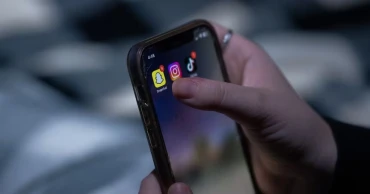
Snapchat to charge users for storing old photos and videos
Snapchat will start charging users to store older photos and videos, prompting backlash from those with large archives of past posts.
Since the introduction of its Memories feature in 2016, the app has allowed users to save content previously shared for 24 hours or less. Under the new rules, users with more than 5GB of saved Memories will need to pay to retain them.
Snap, the parent company, has not disclosed UK pricing but said the change will be implemented as part of a “gradual global rollout.” The company said the move will help it continue investing in the Memories feature, which has seen users save over one trillion items to date.
Users exceeding the limit will be offered a 100GB storage plan, with higher tiers available through Snapchat+ or Snapchat Premium subscriptions. Existing content can be downloaded, and Snap will provide 12 months of temporary storage for those affected. In the US, the 100GB plan is priced at $1.99 per month, with 250GB included in the $3.99 Snapchat+ subscription.
Most users, who have less than 5GB of Memories, will not be affected. However, some longtime users expressed frustration on social media, calling the move “unfair” and “greedy,” as they now face additional costs to preserve years of saved content.
Snapchat has over 900 million monthly active users, while competitors such as Instagram and TikTok have billions. Drew Benvie, CEO of social media consultancy Battenhall, said charging for storage is an “inevitable” evolution as platforms adapt to changing user behavior, where people save more content for longer periods.
Source: BBC
5 months ago

Balancing online trends with real-life budgets
Did you buy a new pink dress to watch the Barbie movie, only to never wear it again? An Oura ring because your favorite TikTok influencer had it? A new pair of baggy jeans because '90s fashion is making a comeback?
Niche trends fueled by social media can influence your shopping decisions. Participating often brings some happiness and a sense of community, but the problem comes when you do it so often that you’re not using your money to achieve your financial goals, or worse, you get into debt, said Erika Rasure, chief financial wellness advisor for Beyond Finance, a financial services company.
Whether it’s coastal grandma or clean girl aesthetic, microtrends can take a significant toll on already-strained budgets as prices rise and Gen Z struggles to pay off debt.
If you find yourself overspending to participate in microtrends, here are some expert recommendations:
Pause before purchasing
Before you click “buy” on TikTok Shop, it’s best if you take some time to reflect, said Jennifer Seitz, head of education for Greenlight, a financial literacy app for families. Pausing before a purchase can help you discern if the item is something you really want or a fleeting craving.
“Think if you want to put it in a schedule pause, whether it’s 24 hours or even a couple of days if it’s a larger expense,″ Seitz said.
Participating in personal challenges can be a good way to get in the habit of making purchases more deliberate. Back in 2022, Alyssa Barber participated in the no-buy year challenge, where she pledged to stop buying non-essential items for a year.
Barber shares sustainable practices with over 370,000 followers on TikTok, where one of her recurrent themes is how to stop impulse buying. Barber said the challenge gave her perspective on how much she was spending on things she didn’t need. Since then, she has changed her spending habits, focusing mainly on experiences.
Know your spending values
Taking a value-based spending approach can help you decide if you should participate in a trend you see online, Rasure said.
If, for example, you want to build an emergency fund, having this goal in mind while shopping can help avoid unnecessary spending.
Quynh Van, a 27-year-old UX designer from Minneapolis, was surprised by the number of ads on TikTok when she created an account after a four-year break from social media. And while being influenced by the ads is inevitable, she believes overspending comes in part from users not having defined goals.
“When you don’t know who you are or what you like, you’re so driven by over-consumerism and lifestyle creep because you don’t have your values in order,″ Van said.
Rasure recommends using your financial values as a guiding principle for your spending decisions. If you’re not sure of your values, allocate some time to map them out according to your life goals.
Create barriers to spending
If a purchase is one click away, it can make it easier to spend large amounts of money. If you consciously make it a little harder to pay for an item, you can spend more mindfully, Seitz said.
“Just that action of needing to input your payment information rather than just that simple click can help you give to really stop and think about purchases before moving ahead with them," she added.
To add barriers, you can remove your credit card details from your computer browser or social media and disable Apple Pay on your phone.
Think of it as an act of self-care
Finances are closely tied to emotions, and often, they evoke negative feelings such as shame or guilt. However, reframing them as an act of self-care can help you spend mindfully, Rasure said.
“It can help you create boundaries around what you value spending money on, helps you choose intentionally and it feels more like freedom instead of restriction,″ she said.
Your spending habits in the present can help your future financial situation. This mindset can inspire you when you’re tempted to overspend on the newest trending electronic or fashion item.
Engage with trends with moderation
It can be OK to engage with trends if they bring you positive feelings, Rasure said.
Van decided to participate in the matcha trend, but with moderation. For Barber, physical media, such as old records, DVDs, and cassettes, is on her list of non-negotiable expenses, as she loves collecting these items.
“Trends and engaging them, engaging in them really should spark that happiness or contentment, not the debt that can go with them,” Rasure said.
5 months ago