Arts-&-Culture
Sleeping on sacred ground; The hidden history beneath Australia’s Rottnest Island
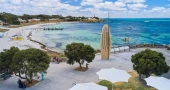
From the coast of Perth, a striking blue rise appears on the horizon, sometimes vivid, sometimes obscured by mist or ships at sea. To Glen Stasiuk, a lecturer at Murdoch University and director of the documentary Wadjemup: Black Prison — White Playground, the island feels alive. “Sometimes it wants to be seen, sometimes it wants to hide,” he says. “It has a heartbeat.”
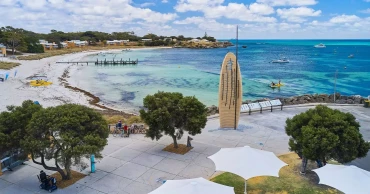
That island is Rottnest Island, known to the Noongar people as Wadjemup, located about 19 kilometres off the coast of Fremantle. Today, more than 800,000 visitors flock there each year for its white beaches, turquoise waters and quokkas, the small marsupials that have become global social media stars.
For the Noongar people, however, Wadjemup is a deeply spiritual place. Len Collard, emeritus professor at the University of Western Australia, explains that in Noongar belief, spirits travel west to the islands after death. “It was always a place of spirits,” he says, “but it became even more so after colonisation, when it turned into a site of immense suffering.”
A prison island
Wadjemup became a prison for Aboriginal boys and men in 1838. Britain had claimed Australia in the late 18th century, and violent clashes between colonisers and Indigenous peoples followed. Aboriginal prisoners were transported to the island, often in chains, accused mainly of stealing livestock or food rations.
Many inmates came from far-flung regions such as the Kimberley, more than 2,000 kilometres away. Some had never seen the ocean before arriving. They were forced into hard labour, quarrying limestone and constructing much of the island’s infrastructure, including jetties, cottages and government buildings.
‘Fabled knights of old’: the real story behind Japan’s samurai
Conditions were brutal. Cells were overcrowded, disease was widespread, and punishment was severe. One superintendent, Henry Vincent, was notorious for his cruelty, yet was never convicted. By the time the prison closed in 1902, nearly 4,000 Indigenous men and boys had been incarcerated there. At least 373 died, most of them buried in unmarked graves.
From prison to playground
After the prison shut down, Wadjemup was quickly reimagined as a leisure destination. In 1911, the main cell block was converted into holiday accommodation, stripping away much of its historical fabric. Even more disturbing, the burial ground of deceased prisoners was turned into a campground known as Tentland.
For nearly 90 years, holidaymakers unknowingly slept just metres above one of Australia’s largest Indigenous burial sites. Although human remains were discovered in 1970, the campground was not closed until 2007. The former prison itself continued operating as tourist lodging until 2018.
Reckoning with the past
For Noongar communities, the island remains both painful and powerful. Collard describes Wadjemup as a sentinel or lighthouse, signalling a truth that must not be ignored.
In 2020, the Rottnest Island Authority launched the Wadjemup Project to formally acknowledge the island’s history of Aboriginal incarceration and deaths in custody. The initiative focuses on truth-telling, memorialisation and healing.
As part of this effort, the Wadjemup Wirin Bidi or Spirit Trail was held in 2024, bringing together around 200 Aboriginal people from across Australia to honour those buried on the island and help lay their spirits to rest.
Today, visitors can also take Aboriginal cultural tours that explore both the beauty of the island and its traumatic history. Local Noongar guide Casey Kickett, who runs Koordas Crew, works with children through art and nature-based activities to introduce them gently to Wadjemup’s cultural significance before confronting its darker chapters later in life.
Road to Heaven: Gujarat’s surreal highway flanked by water and salt pans
Despite everything, Collard says he still loves visiting the island. “My people are buried there,” he says. “I go over and say hello to them.”
Kickett offers visitors a simple gesture of respect: when stepping off the jetty, throw a handful of sand into the water and introduce yourself to the land and its ancestors. It is a small act, she says, but one that acknowledges the deep, complex history beneath this island paradise.
9 days ago
‘Fabled knights of old’: the real story behind Japan’s samurai
From medieval beginnings, the samurai have captured imaginations across centuries, inspiring art, literature, and films—from Shōgun to Star Wars. Yet their true history is far more complex and nuanced than the myths suggest.
The samurai’s legacy is unique in world culture. Few medieval social groups have been celebrated and mythologized as relentlessly as they have—from 18th-century ukiyo-e prints to contemporary video games, TV shows, and films. Over time, however, fame often bends toward exaggeration, and the samurai are no exception.
Were they truly fearless, loyal, self-sacrificial, disciplined, and uniquely Japanese? The British Museum’s new Samurai exhibition seeks to cut through the myth, presenting a more accurate and fascinating history of these enigmatic warriors.
Origins and evolutionThe samurai did not constitute a uniform group across history. “The perception in the West is that samurai are warriors—and they certainly were,” says Rosina Buckland, the exhibition’s curator. “That’s how they rose to power in the Middle Ages. But that’s not the full story.”
Samurai origins trace back to the 10th Century, when they were recruited as mercenaries for the imperial courts. Over time, they evolved into rural gentry, but contrary to popular belief, they were not idealized crusaders bound by codes of chivalry. In battle, they often employed ambushes, deception, and opportunistic tactics, motivated more by land and status than honor or duty.
The samurai were adaptable, embracing foreign technology and multicultural influences. For instance, a samurai cuirass in the exhibition shows a Portuguese-inspired design, with a pointed front and angled sides to deflect musket bullets—a necessity after European firearms arrived in Japan in 1543.
Power, culture, and governanceThe samurai rose to political power amid imperial succession disputes, with the Minamoto clan eventually establishing a government parallel to the imperial court in 1185. Buckland emphasizes that even early on, culture was central to power: “Culture is power.” Military leaders, or Shōguns, complemented their battlefield might with cultural sophistication to consolidate authority. They drew on Neo-Confucian philosophy, balancing military force with cultural skill.
Alongside warfare, samurai mastered refined arts such as painting, poetry, music, theatre, and tea ceremonies. One notable exhibit features a 19th-century fan painted with orchids by a samurai artist.
The Disney/FX series Shōgun fictionalizes one turning point: in the 1500s, Tokugawa Ieyasu (represented by the fictional Yoshii Toranaga) established a government that lasted 250 years. With peace established, samurai shifted roles from warriors to bureaucrats: ministers, lawmakers, tax collectors, and guards in castle gates.
Role of womenDuring the Tokugawa Shogunate, Daimyo families were relocated to Edo (modern Tokyo) to ensure loyalty, placing women in charge of households. Buckland explains that women oversaw large households—sometimes 40–50 people—managing staff, tradespeople, children’s education, and hosting guests according to strict rituals. Exhibition items, including robes and etiquette manuals, reveal the crucial role of samurai women.
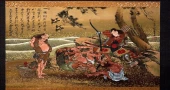
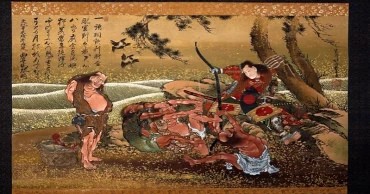
The era also saw the rise of legendary portrayals in plays, poems, and artworks, often celebrating male heroism but sometimes highlighting female warriors. An 1852 ukiyo-e print depicts Tomoe Gozen, wife of a Minamoto general, who reportedly fought at the Battle of Awazu in 1184, defeating enemy warriors with her bare hands.
Demise and legacyDuring the Meiji era (1868–1912), Japan modernized politically, socially, and militarily, officially abolishing the samurai class in 1869. “At this point, the samurai image becomes pure fiction,” Buckland says, noting that nostalgia revived the image about 25 years later.
International fascination grew, including Nitobe Inazō’s Bushido: The Soul of Japan (1899), which explained Japan’s success in the wake of the Sino-Japanese War and victory over Russia. The samurai image was later used domestically as military propaganda and a national symbol.
Samurai culture also influenced global media: Akira Kurosawa’s The Hidden Fortress (1958) inspired Star Wars: A New Hope (1977), and the costumes drew on samurai armor, with Darth Vader’s iconic outfit on display in the exhibition.
The true story of the samurai is one of evolution—from medieval mercenaries to gentrified bureaucrats and patrons of the arts. Yet their legend continues to captivate through art, film, video games, and fiction. Buckland hopes the British Museum exhibition will inspire new representations of these fascinating warriors.
The Samurai exhibition is open at the British Museum until May 4.
10 days ago
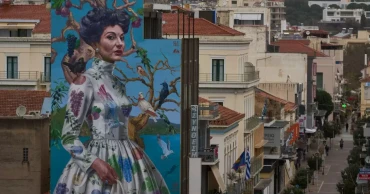
Olives, opera and climate vision: Greek mural named world’s best
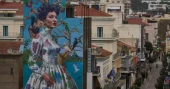
A towering mural in the southern Greek city of Kalamata, inspired by legendary soprano Maria Callas, has been named the “Best Mural of the World” for 2025 by Street Art Cities, placing the olive-growing coastal town firmly in the global spotlight.
Created by artist Kleomenis Kostopoulos, the artwork reimagines Callas as an allegorical figure representing Kalamata’s identity, culture and agricultural heritage. The mural incorporates local elements such as olives, figs, grapes, native birds and tree branches, symbolising the region’s fertile land and deep-rooted traditions.
City officials said the project was designed to make abstract ideas like sustainable development, agri-food initiatives and economic growth more tangible for residents. Kalamata, about 240 kilometers southwest of Athens, is among a small group of Greek cities aiming to become climate-neutral by 2030.
Deputy mayor Vassilis Papaefstathiou said combining the city’s humble agricultural products with high art aimed to strengthen civic pride and identity. Recent heatwaves, droughts and wildfires have underscored the importance of sustainability for the olive-dependent local economy.
Although Callas was born in New York, her father hailed from a village south of Kalamata, and she remains a revered cultural symbol in Greece. The mural, titled “Kalamata,” took about two weeks of work spread over a month due to bad weather, using brushes, spray paint and a cherry-picker.
Officials say the artwork has boosted tourism promotion and sparked wider interest in public art, with more building owners expressing interest in hosting murals.
16 days ago
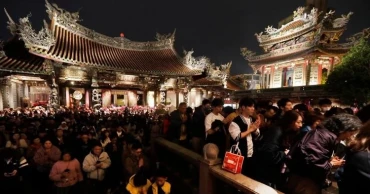
Prayers, performances mark start of Lunar New Year celebrations
People across China and many parts of the world welcomed the Lunar New Year on Tuesday with prayers, fireworks and colourful festivities, ushering in the Year of the Horse, the seventh sign in the Chinese zodiac, which follows the Year of the Snake.
The Lunar New Year is the most significant annual festival in China and is also widely observed in other East Asian countries and overseas communities.
In China, the celebrations featured the traditional CCTV Spring Festival Gala, where humanoid robots again drew major attention. During Monday night’s show, robots from Unitree Robotics joined children in a martial arts display, performing choreographed moves and even wielding swords, highlighting China’s rapid progress in AI-powered robotics.
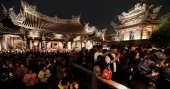
In Hong Kong, large crowds gathered at temples just before midnight to pray for good fortune. Worshippers held bundles of incense, bowed repeatedly and placed them in urns outside temple halls as smoke filled the air.
Vietnam also marked the occasion known locally as Tet with outdoor countdown concerts followed by fireworks displays in several cities. Light shows illuminated bridges and high-rise buildings while crowds cheered to live pop performances.
Festivities extended beyond Asia as well. In Moscow, visitors enjoyed Chinese street fairs featuring traditional foods, red lantern decorations and dragon motifs during a two-week celebration across the Russian capital, reflecting growing cultural exchanges between China and Russia.
In Taiwan, devotees flocked to Taipei’s Baoan Temple where a ceremonial bell rang 108 times, a number considered auspicious. People offered flowers and incense while praying for blessings in the new year.
Tech-themed fair showcases dancing robots for Lunar New Year
Meanwhile, thousands gathered in Buenos Aires’ Chinatown to join dragon and lion dances and martial arts demonstrations on the main stage. Argentina’s Chinese community, numbering more than 180,000, played a key role in organising the celebrations.
Overall, prayers, performances and fireworks across different continents reflected the global spirit of the Lunar New Year festival.
18 days ago
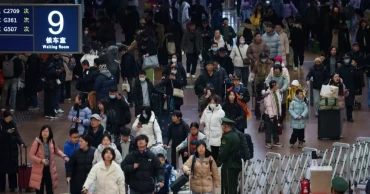
China’s Lunar New Year travel rush begins, 9.5 billion trips expected
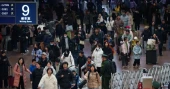
China’s annual Lunar New Year travel season has begun, with authorities expecting a record 9.5 billion trips during the 40-day period surrounding the country’s biggest festival.
The mass migration, known as “chunyun,” is considered the largest yearly movement of people in the world. Millions are heading back to their hometowns ahead of the Lunar New Year, which falls on Feb. 17.
Among them is Liu Zhiquan, who works in construction in Beijing and was preparing for a train ride of more than 30 hours to Chengdu, the capital of Sichuan province, about 2,000 kilometers away. He said economic conditions feel worse than last year.
“The economy is bad and it’s getting harder to make money,” Liu said.
To cut costs, he chose a slower train. A high-speed train would take about nine hours but costs more than twice as much. Despite the long journey, he said returning home for the holiday is important, as it is often the only time workers across the country can reunite with their families.
According to the National Development and Reform Commission, around 540 million trips will be made by train and 95 million by air during the travel period. The majority of journeys will be by road.
In China, where many employees work long hours, including weekends, and receive limited annual leave, the Lunar New Year holiday is especially valued.
At Beijing railway stations, large crowds filled waiting halls, carrying heavy bags and suitcases. Many passengers ate instant noodles while waiting, taking advantage of free hot water provided at stations.
Tian Duofu, who recently began working full-time in Beijing, said she is looking forward to the nine-day holiday starting Feb. 15. She said it has become harder for extended families to gather, and long holidays are rare.
“After I started working, I realized such a long break is uncommon, and we meet in person less often, which makes the Spring Festival more meaningful,” she said.
Tian Yunxia, originally from Henan province and now running a breakfast stall in Beijing, said she is eager to return home to see her children, grandchildren and husband.
“The new year is the most important festival. If we don’t go back home, we cannot truly feel the festive atmosphere,” she said.
24 days ago
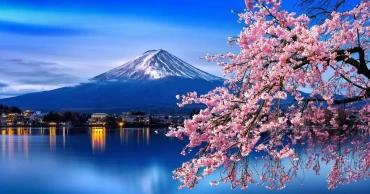
How cherry blossoms became central to Japan’s cultural identity
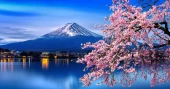
Japan’s decision to cancel a cherry blossom festival near Mount Fuji has drawn wide attention, highlighting the deep cultural significance of sakura in the country.
Authorities scrapped the event, launched in 2016, citing overtourism and disruptive behaviour by visitors. Announcing the move, Fujiyoshida Mayor Shigeru Horiuchi said the step was necessary to protect residents’ dignity and living environment.
The cancellation struck a chord because cherry blossoms are far more than seasonal flowers in Japan. They are woven into the nation’s history, identity and collective memory, making the loss of any sakura celebration feel deeply symbolic.
Although cherry blossoms bloom in many parts of the world, Japan’s long-standing traditions of sakura matsuri and hanami set it apart. References to Japan almost inevitably evoke images of cherry blossoms in full bloom.
26 days ago
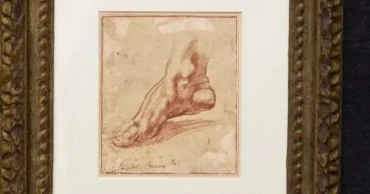
Newly identified Michelangelo foot sketch fetches £16.9m at auction
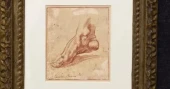
A previously unknown sketch by Renaissance master Michelangelo, depicting a foot, has been sold at auction for $23 million (£16.9 million), more than ten times its initial estimate.
Christie’s auction house said experts have identified the red chalk drawing as a study of the foot of the Libyan Sibyl, a figure later painted by Michelangelo on the ceiling of the Sistine Chapel. The work is believed to date back to around 1511–1512, when the artist was preparing the second phase of the iconic ceiling fresco.
According to Christie’s, the discovery came after the artwork’s unsuspecting owner submitted a photograph of the drawing simply to obtain an auction estimate, only to learn of its extraordinary value. Andrew Fletcher, global head of Christie’s Old Masters Department, called the find “one of the most memorable moments” of his career.
The anonymous seller, who lives on the west coast of the United States, told Christie’s that he inherited the drawing from his grandmother. He said the artwork had remained in his family in Europe since the late 18th century.
The dark truth behind historic anatomical art
Giada Damen, a specialist in Christie’s Old Master Drawings Department, carried out detailed analysis using infrared reflectography. The examination revealed additional sketches on the reverse side of the sheet, also consistent with Michelangelo’s style. Damen then compared the drawing with an authenticated Michelangelo work held at the Metropolitan Museum of Art, concluding that the sketch was indeed an original.
While multimillion-dollar art sales are not uncommon, the result places the sketch among notable recent auction highlights. In 2017, a 500-year-old painting of Christ attributed to Leonardo da Vinci sold in New York for a record $450 million.
In November 2025, a portrait of Elisabeth Lederer by Austrian artist Gustav Klimt fetched $236.4 million, while a surrealist painting by Mexican artist Frida Kahlo sold for $54.7 million, setting a new auction record for an artwork by a woman. #With inputs from BBC
1 month ago
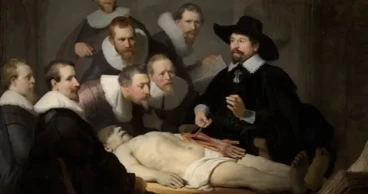
The dark truth behind historic anatomical art
A new exhibition at the Thackray Museum of Medicine in Leeds exposes the grim history behind centuries of anatomical art and illustrations. Beneath the Sheets: Anatomy, Art and Power explores how executed criminals, the poor, women, and other marginalized people were dissected without consent and became subjects for medical textbooks and artworks.
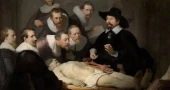
Rembrandt’s 1632 painting The Anatomy Lesson of Dr Nicolaes Tulp, which depicts the dissection of a man executed for theft, exemplifies the practice. Across Europe, anatomists relied on bodies from prisons, workhouses, or even stolen graves. In notorious cases like Burke and Hare in Scotland, murder was committed specifically to supply anatomy schools.
The exhibition also shows how many illustrations idealized the human form, reflecting the cultural, gender, and racial biases of their time. Some works blurred the line between science and erotica, revealing how societal tastes influenced supposedly objective studies.
Curators emphasize that while anatomical knowledge has advanced, ethical questions remain. As Jamie Taylor, museum director of collections, says, the exhibition challenges visitors to consider “whose bodies feature in anatomical textbooks, who was drawing them, and why.”
The display spans five centuries of anatomical illustration, tracing the complex relationship between art, power, and medical science.
Source: BBC
1 month ago
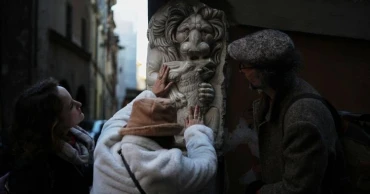
Italy uses creative ways to make art more accessible for blind people
Italy is finding new and creative ways to make its rich art and history accessible to blind and visually impaired people, allowing them to experience famous landmarks and artworks through touch, sound and imagination rather than sight.
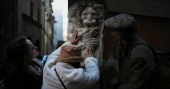
On a recent evening, after tourists had left Rome’s Colosseum, a small group gathered outside the ancient structure for a special tour designed for people with little or no vision. Instead of looking, they listened carefully and used their hands to understand the monument’s shape and history.
Among them was 54-year-old Michela Marcato, who has been blind since birth. As the guide spoke, she explored a small model of the Colosseum with her fingers. Feeling its arches and curves helped her realize something she had never known before — the building’s oval shape.
“Walking around it, I would never have understood that,” she said. “But holding the model makes it clear.”
Italy’s popular tourist sites have long posed challenges for people with disabilities, from narrow entrances to uneven paths. But since 2021, the country has stepped up efforts to improve access, using European Union recovery funds to remove physical barriers and introduce inclusive visitor experiences.
AI-powered apps reshape self-perception for blind users
At Pompeii, new braille signs, audio guides, tactile models and raised replicas of artifacts now help blind visitors explore the vast ruins. Florence has also published detailed guides explaining which routes and museums are accessible and what assistance may be needed.
Experts say inclusive tourism is not only about rights but also about economic sense. According to the World Tourism Organization, many older travelers have disabilities, and they often travel with companions.
Tour guide Giorgio Guardi, who leads accessible tours in Rome, said the goal is to create meaningful experiences for everyone. His group often holds nighttime tours to reduce noise and crowds. When touching monuments isn’t possible, guides use creative methods such as asking visitors to physically recreate the pose of a famous statue to understand its form and emotion.
Italy is also home to the Museo Omero in Ancona, the country’s only publicly funded tactile museum, where visitors are encouraged to touch the artworks. Founded by two blind art lovers, the museum features replicas of famous sculptures and modern works by blind artists.
For Marcato, art is about memory and sensation. Though she cannot see a large painting of the sea in her home, it reminds her of ocean sounds, smells and walks along the shore.
“It’s a way of feeling art,” she said, “that has nothing to do with seeing.”
1 month ago
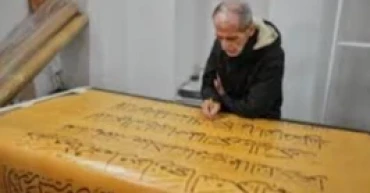
Iraqi calligrapher completes massive handwritten Quran after six years
Iraqi calligrapher Ali Zaman has completed an extraordinary handwritten copy of the Holy Quran after six years of tireless work, marking the end of a deeply personal artistic journey.
Standing beside his creation at a mosque in Istanbul, the 54-year-old artist said finishing the manuscript filled him with pride and gratitude. “Whenever I think about this Quran, I feel very happy. God gave me the life and strength to complete it, and that makes me proud,” he told The Associated Press.
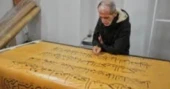
The manuscript is monumental in size and scope. It is made up of 302 double-sided scrolls, each about four metres (13 feet) long and 1.5 metres wide. The sheets, similar to thick parchment, were specially produced using traditional materials such as eggs, corn starch and alum.
Islamic calligraphy is one of the most respected art forms in the Muslim world. For centuries, it has been used not only to preserve the Quran but also to decorate mosques, palaces and manuscripts. In Turkey, the art flourished during the Ottoman period with strong state support, leading to the development of unique styles. Today, Istanbul remains a major centre for calligraphy, known locally as hat.
Art expert Umit Coskunsu said calligraphy became especially important in Islamic culture because of restrictions on depicting human figures. He described hat as more than just art. “It is seen as a form of worship, a way of getting closer to God,” he said.
Zaman was born in Ranya, in Iraq’s northern Kurdish region, and developed an interest in calligraphy at the age of 12. “I was drawn to it immediately. I felt I could find my soul in this art,” he recalled.
In 2017, he moved with his family to Istanbul to focus on the Quran project and improve his skills, saying calligraphy is more appreciated in Turkey than in his home country. For six years, he worked from dawn until dusk in a small room at the Mihrimah Sultan Mosque, carefully handwriting every sheet.
Although the manuscript is being described as the world’s largest handwritten Quran, it has not been officially recognised. Guinness World Records lists the largest printed Quran, produced in Mecca in 2025.
Zaman’s son, Rekar, remembers how rarely he saw his father during those years. “We mostly saw him when we brought food or when he came home to sleep,” he said. “Now, thankfully, we see him more.”
Read More: Three-flippered sea turtle Pyari released in Florida, now tracked by satellite
The scrolls are now safely stored and covered at the mosque. Zaman hopes the Quran will one day be displayed publicly in a museum or special cultural space where people can truly appreciate it.
1 month ago