Others
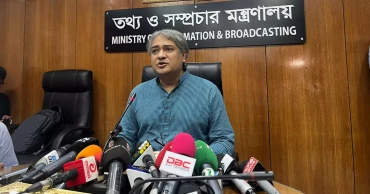
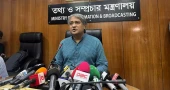
Legal action will only affect miscreants, not innocent students: Arafat
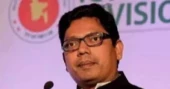
State Minister for Information and Broadcasting, Mohammad Ali Arafat, has said that legal action will be strictly limited to those involved in violence and will not target innocent students.He made this comment during a press briefing on Thursday, addressing the recent quota reform movement.Arafat emphasised that only those with clear evidence of criminal activity will face legal action, ensuring no ordinary students are harassed. He assured that the government respects the emotions of all students involved in the movement and that no student or their families will be unjustly treated.The minister also acknowledged the unfortunate incidents and casualties that have occurred, expressing the government's deep regret. He mentioned that a judicial inquiry commission has been established to investigate each incident, and those responsible will be brought to justice. The government is committed to transparency and accountability in this process, even seeking foreign expertise if necessary.Arafat urged students to act responsibly, warning against the exploitation of their movement by third parties with malicious intent. He reiterated that law enforcement agencies were instructed to operate within constitutional and legal boundaries, and any violations by individuals in the field will be investigated and addressed.He reaffirmed the government's support for the students, distinguishing between their legitimate protests and the actions of those with destructive agendas. The government, he said, will ensure the protection of students and hold accountable those responsible for any harm caused during the unrest.
1 year ago
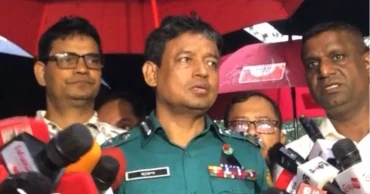
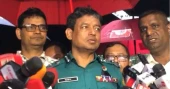
‘Have tried to earn public trust for DB’: Harun
Dhaka Metropolitan Police’s (DMP) Additional Commissioner Harun-or-Rashid, who has been transferred from Detective Branch (DB) to Crime and Operations (C&O), has asserted that no arrests will be made of individuals not involved in violence and killings related to the quota movement.
In a statement made to reporters at the DB office gate on Minto Road on Thursday evening, Harun emphasized, “Only those who are genuinely involved in incidents such as arson, vandalism on the metro rail, setting fire to government and private buildings, and the killing of police officers will be prosecuted. None of the culprits will be spared.”
Reflecting on his tenure, Harun said, “During my three years and three months with the DB, I have strived to follow the directives of senior officials and earn public trust. Throughout my tenure, I have aimed to establish the DB as a reliable institution for the general public.”
He noted that he has been reassigned to a new position within the Dhaka Metropolitan Police, where he will continue to work towards making police stations a trusted resource for the public. “The police station is the final point of hope for people. My goal is to ensure that people receive services when they come to the station, whether for filing a general diary or a case. I will work to enhance public trust in police stations.”
When asked about his perspective on the numerous cases filed in connection with the quota movement-related violence, Harun remarked, “During my time at the DB, we handled many significant incidents. From the murder of Awami League leader Tipu in Motijheel to the assassination case of MP Anar, we conducted meticulous investigations to uncover the truth. We did not arrest any innocent people, and regardless of the influence of the individuals involved, we ensured that those guilty faced justice.”
1 year ago
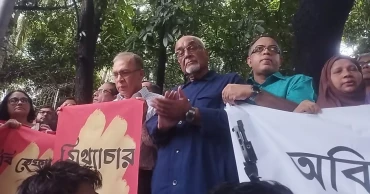
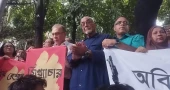
Bikkhubdho Nagorik Shomaj gives 24hr ultimatum to release detained students, others
‘Bikkhubdho Nagorik Shomaj,’ a citizens’ platform, gave a 24-hour ultimatum to authorities to release all students and general people arrested over the recent protests.
The platform came up with the ultimatum from a human-chain programme in front of the Detective Branch (DB) office in Dhaka around 3pm on Thursday.
Debapriya Bhattacharya, renowned economist and distinguished fellow at the Centre for Policy Dialogue (CPD), said that all students and general people, who were arrested in Dhaka and other parts of the country, should be released within 24 hours.
Six quota protest coordinators released from DB custody
Referring to the release of the six coordinators of the quota reform movement, Debapriya said, “We are happy but not satisfied as many students, teachers, and others are still under custody across the country.”
Assistant Professor Samina Lutfa of Social Science Department, Dhaka University, said, “We have heard that the six coordinators of the quota reform movement were released but we do not know whether they were safe or not. So many boys and girls were arrested through block raids!”
She for releasing all students and general people arrested across the country over the quota reform issue.
Solidarity with student protests: Musicians, bands say they won’t perform at Joy Bangla Concert
She also urged the government to lift the curfew and withdraw the members of the law enforcing agencies from all educational institutions including Dhaka University and open those.
Noting that many students are under police custody, Prof. Mirza Taslima Sultana, head of the Department of Anthropology of Jahangirnagar University, said the detained students must be freed.
Prof. Asif Nazrul of Law Department of Dhaka University threatened to go for a movement if the detained students are not be released immediately and if justice is not ensured for the killings.
“Our programme will continue and a rally will be held at 3pm in front of the National Press Club on Friday,” said Prof. Rushad Faridi of the Economic Department of Dhaka University.
Among others at the rally were rights activist Shirin Haque, TIB Executive Director Dr Iftekharuzzaman, Prof. Gitiara Nasreen, among others, present there.
1 year ago
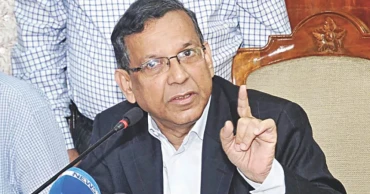
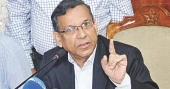
Govt prepared to counter Jamaat-Shibir if they ‘go underground’: Law Minister
The government is ready to confront any covert activities by the just-banned Bangladesh Jamaat-e-Islami and its student wing, Islami Chhatra Shibir, Law, Justice, and Parliamentary Affairs Minister Anisul Huq said on Thursday.
He made this statement in response to questions from journalists at the Secretariat.
When asked whether Jamaat-Shibir would go underground once banned, the minister acknowledged the possibility. “They may go underground. Many parties have done so in the past, and you know what happened to those parties. However, we are prepared to handle such a situation,” he said.
Govt bans Jamaat-Shibir on allegations of terrorism
The minister also mentioned that the government has taken steps to amend the International Crimes Tribunal Act. “It is not that banned party members cannot be punished. The ban may not directly lead to penalties, but they can still be prosecuted for any crimes committed under Bangladeshi law,” he explained.
In response to a question about the fate of the party’s assets post-ban, he assured that measures are in place.
Jamaat, Shibir, BNP unleashed terrorism using students in quota movement: PM Hasina
Regarding punitive actions against party members, the law minister clarified that they cannot engage in politics under the banner of the banned party. “If they commit any crime under any law of Bangladesh, they will be prosecuted. However, there will not be mass trials for new Jamaat-e-Islami activists who were born after 1971,” he said.
1 year ago
Telecom, ICT sector suffered Tk 18,000 crore loss during violence: Palak
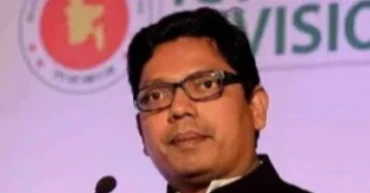
Posts and Telecommunication Division, Information and Communication Technology Division and private sector suffered a loss of Tk 18,000 crore during violence over quota reform protests, State Minister for Posts, Telecommunications, and Information Technology Zunaid Ahmed Palak said on Thursday.
The government has taken an initiative to provide intensive support to the affected entrepreneurs in the private sector, he said while talking to reporters at the ministry.
Decision on mobile internet restoration after meeting with AMTOB: Palak
In the wake of violence amid students’ demonstrations for quota reform, the government halted mobile internet and broadband internet services on July 18, disconnecting Bangladesh with the rest of the world online and disrupting various services.
1 year ago
Govt forms judicial inquiry commission over recent violence, deaths
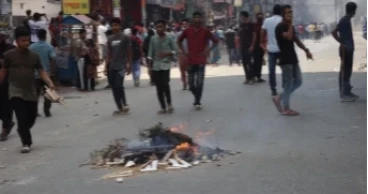
The government has formed a three-member judicial inquiry commission to probe the deaths, violence, sabotage, arson attack, looting, criminal activities and damages during the violence in the name of quota reform movement across the country from July 16 to 21.
Headed by Justice Khandaker Diliruzzaman, the other members of the committee are--Justice KM Zahid Sarwar and Justice Mohammad Showkat Ali Chowdhury.
Miscreants exploiting student protests to attack key establishments, says Home Ministry
The Cabinet division issued a notification in this regard on Thursday saying that the government formed the judicial inquiry commission through power bestowed upon it under section 3 of the Commission of Inquiry Act-1956.
The committee has been asked to identify the reason behind the deaths of the people and identify the people responsible for it during the period, said the notification.
It also asked to identify those involved in carrying out sabotage activities, violence, arson attacks, looting and criminal activities during this period.
Fakhrul demands impartial, international probe into killings during quota protests
The committee was also asked to assess the damage in different state-owned establishments and private organisations during the violence.
The committee was asked to submit its report within 45 days.
According to the Home Minister a total of 150 people died during the violence surrounding the quota reform protests.
1 year ago
Six quota protest coordinators released from DB custody
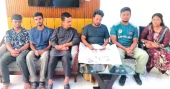
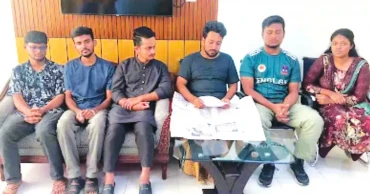
The six coordinators of Anti-Discrimination Student Movement who were taken into DB custody have been released.
The six coordinators were freed from DB custody around 1:30 pm on Thursday.
Rifat Rashid, one of the coordinators, confirmed their release in a Facebook post.
Law Minister Anisul Huq told reporters at the secretariat today that the quota protest coordinators left DB office this afternoon.
"It is also true that they had sought security from us. A GD was also filed in this regard. Now they say they don't need security anymore, when they expressed their desire to leave, we did not obstruct them. They have gone. “
The DB took six key coordinators-Nahid Islam, Asif Mahmud, Abu Bakar Mojumdar, Sarjess Alam, Hasnat Abdullah, and Nusrat Tabassum- into custody on July 27,28 and 29.
On Sunday afternoon, Dhaka Metropolitan Police (DMP) Additional Deputy Commissioner Harun or Rashid, who was transferred from DB on Wednesday, said the coordinators were detained for "security reasons."
UN experts are welcome to probe every incident of quota violence: PM Hasina
In a video message released while under police custody, Nahid Islam, a coordinator of the quota reform movement, announced the withdrawal of their protest programme on Sunday night.
Coordinators not under police custody moved quickly to assure the movement's supporters that this was to be expected, and they agreed beforehand to reject or disregard any statement they or their fellow coordinators made while under police custody. Effectively accused was coerced into making this statement under duress.
Later, a photo of the coordinators at a dining table was posted on Harunur Rashid's Facebook page, followed shortly by the release of Nahid Islam’s video message.
Hearing on writ petition seeking quota coordinators release not held
Despite this announcement, other coordinator of the quota movement from different universities including Dhaka University issued statements vowing to continue their protests until their nine-point demands are met.
1 year ago

Commuter train services on short distance routes resumed
After fourteen days of suspension, commuter train services on short distance routes resumed on Thursday with security.
Dewanganj commuter train left for the Kamalapur Rail Station around 7 am, said sources at Bangladesh Railway.
Railway security forces were on the trains to ensure security to the trains and the passengers.
According to the decision of Bangladesh Railway, the trains on short distance will operate when curfew remains relaxed.
Earlier, the fuel- carrying train movement resumed with the escort of Border Guard Bangladesh (BGB) and Police on July 26.
Commuter trains to run on short routes from Aug 1: Railway DG
Rail communications were suspended on July 18 in the wake of violence during the quota reform movement across the country.
1 year ago
UN experts are welcome to probe every incident of quota violence: PM Hasina
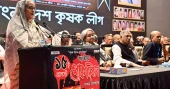
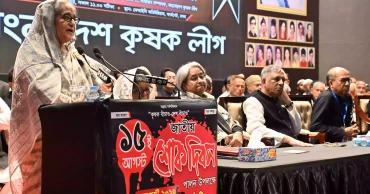
Prime Minister Sheikh Hasina on Thursday (August 01, 2024) said the United Nations and any country can send their experts for the proper investigation of every incident of the recent violence related to the quota reform movement.
“I want everything to be investigated. Because, it needs to be found out what happened behind it and how these happened. I’ve appealed to the United Nations to send their experts. If any other country wants, they can send their experts too,” she said.
The premier said this while addressing a voluntary blood donation programme, discussion and doa mahfil, arranged by Bangladesh Krishak League at the auditorium of Krishibid Institution Bangladesh in the city's Farmgate, on the occasion of the National Mourning Day.
She said, “I want these incidents to be investigated properly. We’ll have to take action against the culprits no matter who they are.”
The Awami League President, Sheikh Hasina, said she formed a one-member judicial enquiry committee, without waiting for any demand in this regard, in a bid to investigate the killings of six people in the violence initially.
Later she upgraded it to a three-member committee to expand its scope when a larger number of incidents occurred, said the PM.
She said her government has brought the status of a developing country for Bangladesh.
“But today the image of Bangladesh worldwide is being tarnished by carrying out false propaganda and such militant acts. I’m leaving it to the people to judge it,” she added.
PM Hasina visits Kurmitola Hospital to see the injured of recent violence
Hasina, the eldest daughter of Bangabandhu, said the father of the nation is no more today but her government has built the country following his ideals. But these developments were destroyed and the lives of people were snatched.
"They (the perpetrators) would be tried one day. This is why I want it to be investigated internationally and a fair trial to be held,” she said.
The prime minister said not a single militant incident occurred after the Holey Artisan attack in Bangladesh due to the vigilance of the law enforcement agencies. The law enforcers sacrificed their lives but freed Bangladesh from militancy, she said.
“But today they showed ugly teeths of militancy in the banner of the quota movement,” she said.
PM seeks public help to resist Jamaat-Shibir as militant organisation:
The premier said there should be no place for militancy and terrorism in Bangladesh and their main strength is Jamaat-e Islami and Shibir.
“They (Jamaat-Shibir) will be banned under the clause 18 of Anti-Terrorism Act, 2009 so that they won’t have any social dignity,” she said.
She said they would try to carry out destruction again as militants. “At that time, all will have to try to resist them as a militant organisation and save the people (from their hands). All will have to do it in unison,” she said.
“There would be no room for militants in the land of Bangladesh. We all will have to stay vigilant in this regard. I seek cooperation from the people of the country to stay vigilant in this matter,” she went on.
PM blasts intellectuals for supporting movement:
It was like a terrorist attack to topple the govt: PM Hasina tells Indian envoy on quota violence
Sheikh Hasina questioned what the rationale was for the continuation of movement when 100 percent demand was fulfilled.
Noting different brutal incidents carried out in the name of movement, she also questioned what type of mayhem and movement it was.
She criticised a section of intellectuals for supporting the movement.
“Many of our knowleagble personalities, dignitaries and intellectuals continue giving their support to this movement. What support are they giving? The demand has already been fulfilled completely,” she said.
She said conducting sabotages in this way in the name of a quota movement is nothing but acts of militancy.
At the outset of the programme, one-minute silence was observed in memory of the departed souls of Father of the Nation Bangabanddhu Sheikh Mujibur Rahman and other martyrs of the 15th August 1975 carnage.
In the event, a special prayer was conducted praying for the salvation of the departed souls of the martyrs of the 15th August 1975 carnage and the people who were killed in the recent mayhem centring the movement for quota reform in the public service jobs.
AL advisory council member Advocate Yousuf Hossain Humaiyun and
AL agriculture and cooperatives secretary Faridun Nahar Laily MP spoke on the occasion.
Bangladesh Krishak League President Samir Chanda delivered the welcome speech in the event moderated by its general secretary Umme Kulsum.
Six quota protest coordinators released from DB custody
1 year ago

Gas supply in several Dhaka areas to remain off for 9 hours on Friday
Gas supply will remain suspended for 9 hours, from 6am to 9pm, on Friday in different Dhaka areas due to emergency relocation of gas pipelines.
According to Titas Gas Transmission and Distribution Company, the areas where gas supply will remain halted include Mugda, Ahmedbagh, Bashabo, and Santibagh.
Titas regretted the temporary inconvenience to consumers saying that the adjacent areas may experience low pressure in gas supply for the same reason.
LPG autogas station operators demand raising sales commission
1 year ago