Others
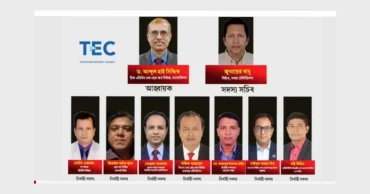
'Television Editors Council' convening committee formed
A convening committee has been formed to launch the “Television Editors Council” with the aim of improving professional standards of television journalism in the country, ensuring editorial independence, promoting ethical journalism and strengthening unity among senior news leaders.
The proposed constitution along with the goals and objectives of the organisation was presented at a meeting held at a city hotel in the capital on Thursday.
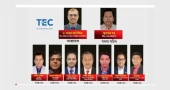
Dr Abdul Hai Siddique, Editor-in-Chief and Head of News of Banglavision, has been nominated as convener, while Syed Jobair Ahmed Babu, CEO of Somoy TV, has been named member secretary of the committee.
Other committee members include Lotan Ekram (Editor, DBC News), Shafiq Ahmed (Head of News and COO, 71 TV), Ziaul Kabir Sumon (Head of News, Boishakhi Television), Mostafa Akmal (Chief News Editor, Independent Television), Md Farhadul Islam Farid (Executive Editor, Channel Nine), Gausul Azam Bipu (Head of News, Gazi TV), and Mohi Uddin (Head of News and Executive Officer, Desh TV).
Speakers at the meeting said a strong and responsible editorial platform in television journalism is the need of the hour, similar to the newspaper sector.
They expressed hope that the Television Editors Council will play an effective role in ensuring professional excellence, independence, ethical journalism and protection of the interests of newsroom professionals in the country.
The meeting also emphasised professional training, research, exchange of views, enhanced international communication, and initiatives to curb fake and misleading information.
It was informed that the convening committee will soon finalise the organisation’s full activities, membership structure and future work plan.
20 days ago

56,659 Bangladeshi Hajj pilgrims reach Saudi Arabia so far
A total of 56,659 Bangladeshi pilgrims have so far arrived in Saudi Arabia to perform Hajj this year, says the Ministry of Religious Affairs.
Of them, 4,444 travelled under the government management, while 52,115 arrived through private Hajj agencies, according to a bulletin issued by the Hajj Management Portal under the ministry at 3:00am on Friday.
So far, a total of 146 flights have transported Bangladeshi pilgrims to Saudi Arabia, including 72 operated by Biman Bangladesh Airlines, 52 by Saudia and 22 by Flynas.
Among the carriers, Biman transported 28,448 pilgrims, Saudia carried 19,352, while Flynas flew 8,859 pilgrims to the kingdom.
Officials said the final flight carrying the Hajj pilgrims under the government management landed safely in Saudi Arabia on Thursday.
The first Hajj flight from Bangladesh departed on April 18, while the final outbound flight is scheduled for May 21.
The return flights of pilgrims are scheduled to begin on May 30 and continue until June 30.
Meanwhile, 14 Bangladeshi pilgrims have died in Saudi Arabia so far. Of them, 10 were men and four were women. Eleven deaths were reported in Makkha and three in Madinah.
The latest death was recorded on May 12 when Nasrin Jahan, 37, from Gazipur, died of natural causes.
Under this year’s arrangement, Bangladesh has a quota of 4,565 pilgrims under government management and 73,935 under private management.
Hajj is scheduled to be held on May 26 subject to the sighting of the moon.
20 days ago

Last survivor dies: N’ganj gas blast claims entire family of five
The last surviving victim of the devastating gas explosion in Narayanganj’s Fatullah has died at a hospital in Dhaka, completing a heartbreaking tragedy that claimed the lives of all five members of a family, including three children.
Sayma Akter, 32, who had been battling severe burn injuries at the National Institute of Burn and Plastic Surgery, died around 8:40am on Friday, hospital sources said.
She was the last survivor among the family members injured in the blast.
Earlier, Sayma’s husband Kalam, 45, son Munna, 12, and daughters Munni, 10, and Kotha, 7, had succumbed to their injuries while undergoing treatment at the institute.
Of them, Munna and Munni died on Thursday, while Kotha on Wednesday and Kalam on Monday.
The explosion occurred around 6:55am on May 10 at a ground-floor flat of an eight-storey building in the Uttar Bhuigar area of Fatullah in Narayanganj Sadar upazila, leaving all five family members critically injured.
According to the Bangladesh Fire Service and Civil Defence, gas had accumulated inside the closed room due to a leak in a gas line adjacent to the kitchen. The explosion is believed to have occurred when a lighter was ignited.
Kalam had suffered burns on 95 percent of his body, Sayma on 60 percent, while their three children sustained burns ranging between 30 and 52 percent.
20 days ago
BNP-backed panel sweeps SCBA polls, wins 13 out of 14 posts
In a near-clean sweep, the BNP-backed panel secured 13 out of 14 posts in the Supreme Court Bar Association (SCBA) election for the 2026-2027 term, while the Jamaat-backed panel won a member post.
AM Mahbub Uddin Khokon of the Jatiyatabadi Ainjibi Panel, also known as Blue Panel, was elected president, while Mohammad Ali from the same panel won the secretary post.
The results were announced around 2:00am on Friday by Justice Miftah Uddin Chowdhury, the convener of the election sub-committee.
A total of 4,048 votes were cast in the two-day election held on May 13 and 14 at the SCBA auditorium. Lawyers backed by the Awami League, which faces a ban on its activities, did not participate in the election.
Apart from the president and secretary posts, Md Magfur Rahman Sheikh and Md Shahjahan were elected vice presidents, while Md Ziaur Rahman won the treasurer post, all from the BNP-supported panel.
Maqsud Ullah and Mohammad Shamsul Islam Mukul were elected assistant secretaries.
Members elected from the BNP-backed panel include HM Sanjid Siddiqui, AKM Azad Hossain, Md Kabir Hossain, Md Tipu Sultan, Md Zia Uddin Mia and Wahid Afroz Chowdhury.
Md Azim Uddin Patwary from the Lawyers’ Unity Panel, or Green Panel, backed by the Bangladesh Jamaat-e-Islami, won one of the seven member posts.
Voting began at 10:00am on both days and continued until 5:00pm with a one-hour lunch break.
20 days ago

Police pose as musicians, arrest 7 in anti-drug drive at Suhrawardy Udyan
Police arrested seven people on Wednesday night for drug use and dealing during an undercover anti-narcotics drive at Suhrawardy Udyan.
According to Dhaka Metropolitan Police, a special team from Shahbagh Police Station carried out the operation around 9pm in the park under the Shahbagh police jurisdiction.
As part of the operation, police officers dressed in plain clothes and posed as a group of musicianss to avoid raising suspicion among drug users and dealers frequenting the area.
When several suspects gathered at the spot, officers moved in and detained them with cannabis, police said.
The arrestees were identified as Mamunur Rahman, 24, Rana, 19, Sajib Adhikari, Shahidul Islam, 42, Rakib Hossain, 19, Al Amin, 19, and Mashum Bhuiyan, 24.
They were later produced before a special metropolitan magistrate's summary court in Dhaka, which sentenced them to different terms of rigorous imprisonment.
Police said such creative and strict anti-drug drives will continue as part of efforts to eliminate narcotics from the capital.
21 days ago

Bangladesh to emerge as leading investment hub by removing market barriers: PM’s Adviser Titumir
Prime Minister’s Adviser on Finance and Planning, Rashed Al Mahmud Titumir, on Thursday vowed to establish Bangladesh as a top global investment destination by ensuring a level playing field for both local and foreign investors.
To achieve this, the government will actively eliminate market irregularities and artificial trade barriers, he said.
The Adviser made the remarks while speaking as the chief guest at the inaugural ceremony of a three-day international exhibition titled “SAFE HVAC-R and Cold Chain 2026,” which commenced Thursday (May 14) at the International Convention City Bashundhara (ICCB) in the capital.
Highlighting upcoming fiscal reforms, Titumir announced that the government will undertake targeted initiatives to simplify tax policies and streamline investment-related regulations to cultivate a highly business-friendly ecosystem.
While acknowledging that countries like Vietnam and Indonesia currently hold a competitive edge as major investment hubs, the Adviser expressed strong optimism that Bangladesh is on track to become one of the world's most attractive investment destinations.
He described Bangladesh as one of the most promising investment landscapes in South Asia, urging international stakeholders to capitalize on the country's potential.
Calling upon foreign entrepreneurs to expand their footprints in Bangladesh, Titumir particularly urged nations like Türkiye to come forward with larger, strategic investment initiatives.
He further emphasized that Bangladesh could successfully transform into a pivotal regional investment hub, provided that policy consistency, institutional transparency, and an enabling business environment are guaranteed.
The inaugural ceremony was also attended by a distinguished panel of special guests, including Bilal Belyurt, Commercial Counsellor at the Embassy of Republic of Türkiye in Dhaka; Li Xiao, Director of the Yunnan Commercial Representative Office in Bangladesh; Lutfar Rahman Talukder, President of Bangladesh Air-Conditioning Equipment Importers Association (BAEIA); and Md Moshiur Rahman, President of the India-Bangladesh Chamber of Commerce and Industry (IBCCI).
Other prominent attendees included Anwar Shahid, President of the Bangladesh Malaysia Chamber of Commerce & Industry (BMCCI); Anwarul Islam, President of the Bangladesh Refrigeration and Air Conditioning Merchants Association (BRAMA); Engr. Al Emran Hossain, President of the ASHRAE Bangladesh Chapter & Bangladesh Green Building Academy; Engr. Md. Hasmotuzzaman, Former President of the ASHRAE Bangladesh Chapter; and Md. Faizul Alam, Managing Director of Savor International Limited.
According to the organizers, the exhibition is designed to showcase cutting-edge technologies, products, and innovations within the HVAC-R (Heating, Ventilation, Air Conditioning, and Refrigeration) and cold chain industries.
The event aims to foster collaboration and facilitate knowledge exchange among local and international investors, entrepreneurs, and policymakers, which is anticipated to drive new capital injections and expand commercial opportunities across the sector.
The exhibition will remain open to all visitors from 10:00 AM to 7:00 PM daily, running from May 14 to May 16.
21 days ago

BRAC ED Asif Saleh named to 2026 TIME100 Philanthropy List
Asif Saleh, Executive Director of BRAC, the world’s largest southern-led non-profit organisation, has been named to the 2026 TIME100 Philanthropy list, which recognises influential figures shaping the future of giving.
BRAC’s initiatives in poverty alleviation, livelihoods, education and microfinance have been transforming the lives of people in Bangladesh as well as across Asia and Africa.
At a time when global patterns of public service and cooperation are evolving, the experiences, voices and approaches of the Global South are gaining increasing prominence.
The recognition highlights Asif Saleh’s leadership in expanding BRAC’s impact and bringing its work to a broader global audience.
“This recognition belongs to the people across Asia and Africa who have partnered with us over the past half a century, and our staff, who work tirelessly to improve the lives of the people in their communities every day,” Saleh says.
21 days ago
5-year strategic economic framework to be a milestone in country's planning history
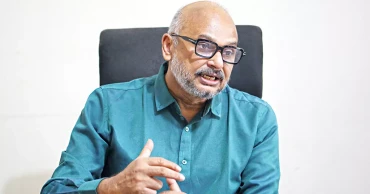
Adviser to the Prime Minister Dr. Rashed Al Mahmud Titumir on Thursday said to establish an accountable, transparent and implementation-oriented development process the government’s proposed Five-Year strategic economic framework would be a milestone in the country’s planning history.
“This is a different and timely initiative. In Bangladesh’s recent history, such an inclusive advisory committee for economic strategy formulation has never been formed before,” he said while Speaking at a press briefing after the second meeting of the Advisory Council on formulation of the strategic economic framework at the NEC Conference Room.
He said the government is determined to move away from the ineffective planning culture of the past, where development plans often remained only on paper.
State Minister for Planning Md. Zonayed Abdur Rahim Saki attended as the Special Guest, while Planning Adviser to the Interim Government Dr. Wahiduddin Mahmud presided over the meeting.
Planning Secretary SM Shakil Akhter and GED Member of the Planning Commission Dr M Monzur Hossain were also present.
The meeting included economists, business leaders, academics, and civil society representatives who reviewed the draft framework.
Titumir noted that participants appreciated the realistic and participatory nature of the strategy.
“They said previous plans effectively became dead documents from the very next day of their approval because the strategies and targets were never implemented,” he said.
Titumir alleged that project selection under the previous administration was influenced by patronage and inflated expenditures, which imposed a significant debt burden. He noted that the current government is already reviewing many such projects.
The proposed framework introduces structural reforms aimed at public accountability, including separate chapters on monitoring, evaluation, and inter-ministerial coordination.
The adviser specifically addressed the “June syndrome” in public spending, where development work is rushed at the end of the fiscal year. He said continuous monitoring mechanisms would be introduced to prevent waste and poor-quality implementation.
He added that the government wants to institutionalise transparency, ensuring researchers and citizens have easier access to official data to verify government claims.
The new framework, set for implementation next fiscal year, will also change the "programming process" for project selection to ensure they reflect economic rationale rather than patronage.
Titumir said the framework aligns with the vision of building a democratic welfare state based on equality and justice. It aims to help Bangladesh become a trillion-dollar economy by 2034 through sector-based strategies and measurable indicators.
In preparing the draft, ministries were instructed to submit a 180-day action plan, plans for the next fiscal year, and a five-year sectoral strategy. These were combined with recommendations from diverse stakeholders.
The draft will now be sent to the National Steering Committee and the National Economic Council for final approval.
Responding to questions, Titumir said the government is working to strengthen the Planning Commission to ensure it functions independently. He also mentioned plans to introduce project dashboards at local levels for real-time monitoring by citizens and to make BBS data more accessible to the public.
21 days ago
Coordinated action urged to reduce lightning deaths
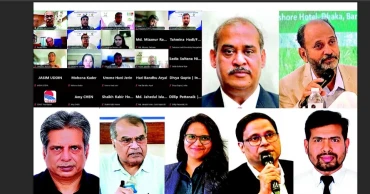
Civil society leaders, humanitarian and lightning experts from different South Asian countries have stressed the critical need to protect human lives from lightning strikes.
Lightning is increasingly becoming a major risk, causing significant loss of lives every year. The incidence of lightning is rapidly increasing due to climate change, yet preparedness to address this risk is inadequate and is rarely incorporated into community-based disaster risk reduction programmes.
In response to this growing concern, Alliance for Empowering Partnership (A4EP), a network of local and national humanitarian actors in the Global South and a Grand Bargain Signatory, in collaboration with COAST Foundation from Bangladesh and National Disaster Management Authority (NDMA), Climate Resilient Observing Systems Promotion Council (CROP C) and Humanitarian Aid International (HAI) from India, jointly organised the international webinar titled Lightning Risk Management on Thursday.
Disaster experts said lightning has emerged as one of the fastest-growing climate-related hazards in South Asia, with Bangladesh and Nepal experiencing the most severe increases in mortality and frequency. India also faces a significant surge in lightning incidents.
They urged for introducing the Standard Operating Procedure (SOP), Early Warning Systems, community-based lightning risk reduction protocols, mass awareness, community participation and GO-NGO coordinated efforts for that.
Md. Iqbal Uddin from COAST Foundation welcomed the participants; Zahabiya Doctor from HAI moderated the webinar.
Sanjay Srivastava, the Chairman of the CROP-C and the Convener of the Lightning Resilient India Campaign, highlighted the importance of early action protocols and community safety measures to reduce lightning-related deaths. He noted that rising global temperatures are increasing lightning strikes, warning that a 1°C rise in temperature can increase lightning incidents by 12%.
Sudhanshu S. Singh, Founder of HAI identified the lack of coordination among institutions and communities as a major challenge and called for stronger local, national, and global collaboration for knowledge sharing, policy development, and implementation of lightning safety protocols.
Gawher Nayeem Wahra of the Disaster Forum of Bangladesh acknowledged Bangladesh government initiatives such as installing lightning arresters and tree plantation programs but stressed that community participation remains limited and must be strengthened for effective risk reduction.
Rezaul Karim Chowdhury, COAST Foundation said the recent deaths of 14 people in eight districts of Bangladesh in a single day due to lightning strikes is alarming and called for coordinated action among government, NGOs, and communities to save lives.
Participants from Nepal, Pakistan, Nigeria, India, Bangladesh, and China also took part and emphasized the importance of public awareness on the Do’s and Don’ts during lightning, identifying high-risk areas, and developing effective response and treatment protocols for lightning-affected people.
21 days ago

No shortage of sacrificial animals for Eid-ul-Azha: Livestock Minister
Fisheries and Livestock Minister Mohammed Aminur Rashid on Thursday said there is no shortage of sacrificial animals in the country.
“So, the sacrifice (Qurbani) will be performed with animals reared by local farmers,” he said while exchanging views with officials at the Bangladesh Livestock Research Institute (BLRI) auditorium in Savar.
The minister said more than one crore sacrificial animals have been prepared to meet the country’s demand.
He said the supply of cattle, goats and sheep is higher than the required number for Eid, meaning there will be no need to import animals from abroad this year.
He also said strict instructions have been issued to law enforcement agencies to prevent the illegal entry of livestock through border.
People in border areas have also been warned to ensure that no animals are smuggled into the country.
Emphasising sustainable livestock development, the minister said efforts are underway to ensure low-cost cattle rearing and to increase the production of improved grass varieties. “I came to BLRI today to review the progress of ongoing research activities,” he said.
Regarding rawhide prices, the minister said new rates have been fixed through discussions with traders, adding that a meeting was held on Wednesday under the chairmanship of the Commerce Minister with stakeholders present.
He said the present government is agriculture-friendly and highlighted recent initiatives including farmer cards, family cards, and Tk 10,000 agricultural loan waivers, calling them farmer-oriented decisions.
21 days ago