Others

BBA signs deal to rehabilitate Jamuna Bridge, activate abandoned rail lane
Bangladesh Bridge Authority (BBA) has signed a contract with China Communications Construction Company (CCCC) and China Road and Bridge Corporation (CRBC) joint venture to rehabilitate the deck of Jamuna Bridge and convert its long-abandoned rail lane into a motorable carriageway.
The agreement was signed Wednesday at the BBA conference room, aiming to significantly ease traffic pressure on one of the country's most critical transport arteries.
BBA Chief Engineer Kazi Md Ferdaus signed the agreement on behalf of the authority while Wang Benqian signed for the CCCC-CRBC JV.
BBA unveils 3 research papers to fast-track cashless toll collection
The project involves deck renovation, widening and structural capacity enhancement of the bridge, with the disused rail lane, rendered idle after rail traffic was separated from the bridge, to be converted for vehicular use.
This will add 3.5 metres to the bridge's existing road width.
Speaking at the signing ceremony, Altaf said higher authorities have directed that the expansion work be completed on time and to standard in order to reduce public suffering.
“Jamuna Bridge is an inseparable part of our national economy,” he said, adding that the project marks a significant milestone in modernising the bridge and ensuring its long-term durability.
He said once the renovation is complete, travel between the northern and southern regions of the country will become smoother and economic activity will gain momentum.
Senior officials from the Bridge Division and BBA, along with senior representatives of the CCCC-CRBC JV, attended the ceremony.
The Jamuna Bridge, which connects Bangladesh's northern and southern regions, has long faced mounting traffic pressure.
Officials and stakeholders at the event expressed confidence that the rehabilitation will make the bridge a more durable and effective transport corridor in the years ahead.
22 days ago

CIS-BCCI signs MoU with Labaid Group for healthcare services
Commonwealth of Independent States-Bangladesh Chamber of Commerce and Industry (CIS-BCCI) on Wednesday signed a memorandum of understanding (MoU) with Labaid Group, Labaid Cancer Hospital and Super Speciality Centre and Lifeplus Bangladesh Limited to provide healthcare benefits to its members.
The agreement was signed at the CIS-BCCI office in Gulshan-1 in the capital, said a press release.
Under the MoU, CIS-BCCI members will receive a 20 percent discount on pathological and biochemistry investigations and a 10 percent discount on CT scans, MRIs, ECGs, ultrasonograms, echocardiograms and ETT services at all branches of Labaid diagnostic centres and hospitals across the country.
Besides, members will receive a 30 percent discount on all pathological and biochemistry investigations, and a 15 percent discount on X-ray, CT scan, MRI, ECG, ultrasonogram, echocardiogram, and ETT services at Labaid Cancer Hospital and Super Speciality Centre.
Members will also enjoy a 10 percent discount on Emergency Telemedicine services and a 5 percent discount on Specialist Telemedicine services offered by Lifeplus Bangladesh Limited.
President of CIS-BCCI, Jadab Debnath and the Managing Director of Labaid Cancer Hospital and Super Speciality Centre, Deputy Managing Director of Labaid Group and Vice President of CIS-BCCI, Sakif Shamim, FLMI, FACHE, signed the MoU.
Among others present at the signing ceremony were CIS-BCCI Senior Vice President Tauhida Sultana, Directors Salma Hossain Ash, Abdul Latif Sarker, Md. Enamul Haque, Md. Khayer Mia, Md. Hasen Ali, Md. Farukul Islam Shova, Khan Md. Iqbal, Helena Jahangir and Md. Kamruzzaman Khan, Advisers Mahbub Islam Runu, Sheikh Fayez Alam and Masud Ahmed, Chief Business Officer, Labaid Cancer Hospital and Super Speciality Centre along with other senior officials from both the organizations were also present at the signing program.
22 days ago

Govt appoints 96 more ‘deprived’ candidates from 27th BCS
The government has appointed 96 more candidates who had long been deprived despite passing the 27th Bangladesh Civil Service (BCS) examination.
The Ministry of Public Administration issued a gazette notification on Wednesday appointing them to different BCS cadres following recommendations by the Bangladesh Public Service Commission (PSC).
Earlier, on December 18 last year, the ministry appointed 673 candidates from the 27th BCS nearly two decades after they won a prolonged legal battle.
The newly appointed officials have been asked to join their respective cadre-controlling ministries or divisions by May 18. If no further instruction is issued by the authorities concerend, they must join on that date.
According to the notification, failure to join within the stipulated time will be considered as unwillingness to accept the appointment and the appointment order will stand cancelled.
The notification also said the appointments will be considered effective retrospectively from the date the first appointment notification for their batch was issued in order to preserve their seniority.
Their notional seniority will remain effective from the joining date mentioned in the original batch notification. However, they will not be entitled to any arrear financial benefits as a result of the retrospective effect.
The results of the first viva voce examination of the 27th BCS were published on January 21, 2007, during the BNP-led government, where 3,567 candidates passed.
Later, on June 30 that year, the then military-backed caretaker government cancelled the viva results over allegations of irregularities and corruption during the state of emergency.
The successful candidates challenged the cancellation in the High Court, but on July 3, 2008, the court upheld the government’s decision.
The petitioners later filed a leave-to-appeal petition with the Appellate Division against the verdict.
22 days ago
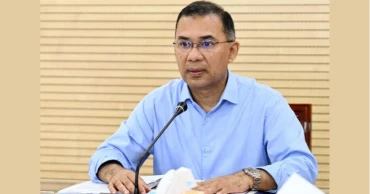
Govt approves Tk 33,474 crore Padma Barrage project to revive rivers, curb salinity
The government on Wednesday approved a Tk 33,474.45 crore project to build the first phase of the Padma Barrage, aiming to revive drying river systems, reduce salinity intrusion and improve irrigation and water management in vast Padma-dependent regions.
The Executive Committee of the National Economic Council (ECNEC) on Wednesday approved the project titled “Padma Barrage (1st Phase)”following endorsement by the Planning Commission.
Prime Minister Tarique Rahman presided over the meeting held at Secretariat.
The project will be implemented by the Bangladesh Water Development Board under the Ministry of Water Resources at an estimated cost of Tk 33,474.45 crore entirely from government funding.
According to project documents, the implementation period has been set from July 2026 to June 2033.
PM chairs ECNEC meeting at secretariat
The project area will cover 19 districts across Khulna, Dhaka, Rajshahi and Barishal divisions, targeting restoration of several major river systems including the Hisna-Mathabhanga, Gorai-Madhumati, Chandana-Barashia, Baral and Ichamati rivers.
Officials concerned said the proposed barrage is expected to play a critical role in addressing long-standing water management challenges in the country’s southwest and northwest regions, where reduced dry-season flow of the Padma River has severely affected agriculture, fisheries, navigation, forestry and biodiversity.
The project is also aimed at reducing salinity intrusion in Satkhira, Khulna and Bagerhat districts, ensuring freshwater supply for the Sundarbans ecosystem and mitigating waterlogging in areas including Bhobodah in Jashore through dredging and drainage improvement works.
According to the proposal, the key objectives of the project include reviving five river systems, restoring ecological balance in the Sundarbans, enhancing groundwater recharge, reducing arsenic contamination, improving irrigation facilities and creating employment opportunities through planned land development activities.
The proposed infrastructure package includes construction of a 2.1-kilometre main Padma Barrage along with associated structures such as 78 sluice gates, 18 undersluices, fish passes, navigation locks, guide embankments and approach embankments.
The project also includes construction of off-take structures at Gorai, Chandana and Hisna rivers, along with spillways, navigation and fish passage facilities.
In addition, two hydropower plants with a combined generation capacity of 113 megawatts are planned under the scheme. Of these, a 76.4MW hydropower plant will be constructed alongside the main barrage, while another 36.6MW plant will be installed at the Gorai off-take point.
Major river restoration works under the project include dredging of 135.60 kilometres of the Gorai-Madhumati river system and re-excavation of 246.46 kilometres within the Hisna river system.
An additional 180 kilometres of afflux embankments are also proposed to support water regulation and flood management.
According to project documents thePadma-dependent area covers nearly 37 percent of Bangladesh and accommodates roughly one-third of the country’s population.
The government linked the region’s deteriorating river flow situation to the diversion of dry-season water upstream through the Farakka Barrage, constructed in India during the 1970s to maintain navigability of the Kolkata port through the Bhagirathi-Hooghly river system.
Officials said reduced flow in the Padma over the decades has caused many distributary rivers in southwest and northwest Bangladesh to dry up during the lean season, leading to declining agricultural productivity, fisheries depletion, ecological stress and increased salinity in coastal districts.
The project proposal stated that freshwater scarcity has also adversely affected the Sundarbans, threatening biodiversity and forest resources in the world’s largest mangrove ecosystem.
The Planning Commission observed that implementation of the project would increase dry-season flow in the Padma River by conserving water through the barrage system, thereby helping revive major river networks and improving irrigation, drainage and flood resilience in the affected regions.
The proposal was reviewed at a Project Evaluation Committee (PEC) meeting held on Jan 15, 2026 under the Agriculture, Water Resources and Rural Institutions Division of the Planning Commission.
Following the review, the commission recommended the project for ECNEC approval with full government financing.
22 days ago

Bangladesh receives over 3,83,000 doses of vaccine from China
Bangladesh has received 3,83,080 doses of polio vaccine from Chinese company Sinovac Biotech, Health and Family Welfare Minister Minister Sardar Md. Sakhawat Husain said on Wednesday.
“We now have sufficient vaccine stock in hand. We will begin administering polio vaccines and there will be no problem in this regard,” he said at a press conference on the current status of government vaccines.
Currently the government is prioritising restoring public confidence in vaccination programmes instead of identifying those responsible for any mismanagement related to measles vaccines, he said.
Many measles patients later develop pneumonia which in some cases becomes life-threatening and requires ventilator support as the final stage of treatment, he said.
“We have ensured adequate ventilator support. As of today, we have received 10 more ventilators donated from the United States by a private pharmaceutical entrepreneur and those will be distributed today,” he added.
The minister said anti-rabies vaccination has already resumed and assured that no patient would remain outside vaccination coverage.
“All vaccination programmes are now continuing,” he said, adding that there is currently a slight shortage of Vitamin A capsules, but sufficient supplies are expected by June.
Vitamin A supplementation campaigns would continue twice a year according to the existing schedule, stressing that no shortage would be allowed in the sector, he said.
Children who are still outside routine immunisation coverage would be identified and vaccinated under the ongoing Expanded Programme on Immunisation (EPI), he said.
Responding to a question on whether the government would investigate alleged mismanagement in vaccination activities, he said the authorities would take a decision after the current crisis subsides.
Responding to a question on whether those responsible for mismanagement in the vaccination programme would face an investigation, the minister said, “I did not say that we would not investigate. We are currently going through a crisis period. Once this crisis ends, we will take a decision centrally.”
22 days ago
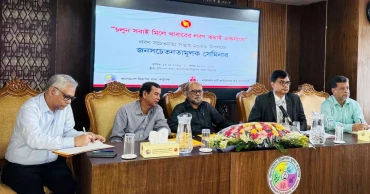
24,000 die annually in Bangladesh due to high-sodium foods
Processed and ultra-processed foods including packaged snacks and processed meat are among the leading contributors to excessive salt intake in Bangladesh, speakers said at an awareness seminar on Wednesday.
According to the World Health Organization (WHO), excessive salt consumption causes nearly 1.7 million deaths globally each year. In Bangladesh, high-sodium foods are linked to around 24,000 deaths annually.
The information was shared at a public awareness seminar organised to mark Salt Awareness Week 2026, being observed globally from May 11 to 17 with the slogan, ‘Let’s reduce salt in our food together.’
The seminar jointly organised by the BFSA and the National Heart Foundation of Bangladesh (NHFB) was held at the conference room of the Bangladesh Food Safety Authority (BFSA).
BFSA Chairman (Additional Secretary) Md Anwarul Islam Sarkar chaired the event. Director General of the Directorate of National Consumer Rights Protection Faruk Ahmed attended as chief guest, while BFSA member Prof Dr Mohammad Shoaib also addressed the programme.
Prof Shoaib said that although salt is essential for the human body many diseases caused by excessive intake can be prevented through simple dietary changes.
He warned that excess sodium raises blood pressure and significantly increases the risk of hypertension, heart disease, stroke, heart attack, heart failure, kidney disease, vascular dementia, osteoporosis, stomach cancer and other non-communicable diseases (NCDs).
“Excessive salt intake can also lead to fluid retention, swelling, a heavy feeling in the body, reduced joint flexibility and unhealthy weight gain,” he said.
Regular consumption of salty foods puts additional pressure on the heart, brain, kidneys and blood vessels, increasing long-term health risks, he added.
Citing the 2023 Global Burden of Disease Study by the Institute for Health Metrics and Evaluation (IHME), Prof Shoaib said around 11 million deaths worldwide in 2023 were linked to high blood pressure, including 1.67 million directly associated with high-sodium diets.
“Excessive salt intake has become one of the leading preventable dietary risk factors driving the global epidemic of non-communicable diseases,” he said.
He noted that NCDs are now the leading cause of death in Bangladesh, accounting for nearly 570,263 deaths annually — around 71 percent of total deaths in the country.
Of these, about 51 percent are premature deaths while heart disease alone accounts for 34 percent of fatalities.
The recommended daily salt intake for an adult is less than five grams, but the average consumption in Bangladesh exceeds nine grams, he added.
Instead of adding extra salt, people can use spices such as garlic, onion and ginger to enhance flavour, he suggested.
NHFB researcher Ahmed Khairul Abrar said many young people mistakenly believe they do not need to reduce salt intake because they currently have no health complications.
“However, reducing salt consumption is important at every stage of life,” he said.
WHO Bangladesh official Dr Samina Israt said non-communicable diseases claim 43 million lives globally every year.
“To prevent premature deaths, we must reduce salt consumption,” she said.
22 days ago
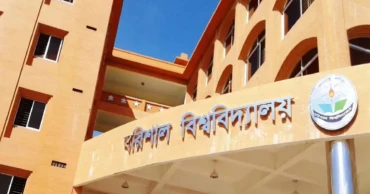
Teachers’ ‘shutdown’ disrupts academic activities at Barishal University
Teachers of Barishal University continued their complete ‘shutdown’ programme for the third consecutive day on Wednesday, demanding the resignation of the Vice-Chancellor and promotion of teachers.
All classes and examinations at the university remained suspended while administrative activities came to a standstill due to ‘shutdown’.
Students said they are suffering due to the suspension of academic activities and expressed hope for a quick resolution to the crisis.
Teachers alleged that recruitment of teachers and promotions at the university have remained stalled for a long time, disrupting academic activities.
Vice-Chancellor Dr Toufik Alam said there was no scope to promote teachers outside the regulations set by the University Grants Commission.
“However, the teachers are not accepting the existing provisions and are demanding promotions under the previous rules. This is not within my jurisdiction,” he said adding that efforts are underway to bring the situation under control.
Meanwhile, the Eid vacation is schedule to begin from Thursday and the campus is expected to reopen in the first week of next month.
The protesting teachers warned that the shutdown would continue even after the holidays if their demands are not met.
22 days ago

Rain or thundershowers likely in parts of Bangladesh
Bangladesh Meteorological Department (BMD) has predicted rains or thundershowers in parts of Bangladesh in 24 hours from 9 am on Wednesday.
“Light to moderate rain or thunder showers accompanied by temporary gusty or squally wind and lightning flashes is likely to occur at many places over Rangpur, Rajshahi, Mymensingh and Sylhet divisions and at a few places over Dhaka and Chattogram divisions and at one or two places over Khulna and Barishal divisions,” said a Met office bulletin.
Moderately heavy to very heavy fall is expected at places over Rangpur, Rajshahi, Mymensingh and Sylhet divisions, it said.
Day and night temperatures may remain nearly unchanged over the country.
The low-pressure area over Southwest Bay and adjoining area now lies over Southwest Bay and adjoining Westcentral Bay.
It is likely to intensify. Another trough lies over west Bengal and adjoining area.
22 days ago

icddr,b mourns ORS pioneer Majid Molla's death
International Centre for Diarrhoeal Disease Research, Bangladesh (icddr,b) has mourned the death of Dr Abdul Majid Molla, one of the pioneering researchers behind Oral Rehydration Solution (ORS) and Rice ORS, and a distinguished figure in paediatrics and global public health.
Majid Molla passed away on May 8, 2026 in Dhaka at the age of 85.
Born in 1941, he devoted his life to improving child health, advancing diarrhoeal disease research, and strengthening medical education across South Asia and beyond.
His long association with icddr,b began in 1965 at the then Pak-SEATO Cholera Research Laboratory (CRL), shortly after completing his MBBS degree from Dhaka Medical College in 1963.
In 1975, Majid Molla completed his PhD at the University of Leuven, Belgium, focusing on celiac disease in children with diarrhoea, while also specialising in paediatrics.
He rejoined icddr,b as a scientist in 1978, continuing his work in clinical research, patient care, and child health.
Majid Molla was widely respected for his devotion to patient care and his commitment to scientific excellence.
His significant contributions to clinical research, especially the development of Rice ORS, remain among the landmark achievements in diarrhoeal disease management.
In the mid-1980s, he joined Aga Khan University as Professor and Chair of the Department of Paediatrics. He later joined Kuwait University as Professor of Paediatrics in 1992, continuing his contributions to medical education and child health internationally.
Majid Molla is survived by his wife, one son, and two daughters. His wife Dr Ayesha Molla was also a valued member of the icddr,b community, serving as an Associate Scientist.
During a defining period in the history of diarrhoeal disease research, Majid Molla became part of a generation of scientists and clinicians whose work contributed to transforming the treatment of dehydration and saving millions of lives worldwide.
His contributions to ORS and Rice ORS helped advance one of the most important public health innovations in modern medicine.
Majid Molla leaves behind a legacy that continues to shape healthcare around the world, and his work stands as part of a scientific journey that has improved and saved countless lives across generations, according to a press release.
22 days ago

Minister rules out possibility of tension in Bangladesh over India’s internal issues
Home Minister Salahuddin Ahmed on Tuesday said Border Guard Bangladesh (BGB) has been kept on maximum alert to prevent any illegal infiltration or push-ins through the borders, ruling out the possibility of any tension in Bangladesh stemming from assembly elections or internal developments in any Indian state.
“Bangladesh maintains relations with friendly countries on the basis of sovereign equality. BGB remains on high alert to prevent any kind of illegal intrusion or push-in through the border,” he said.
Action to be taken if evidence of extortion is provided: Salahuddin
The minister came up with the statement while speaking at a press briefing after a high-level meeting at the Secretariat on law and order, security at sacrificial cattle markets and overall preparations ahead of Eid-ul-Azha.
He said strict security measures will be taken across the country ahead of Eid to maintain public safety and smooth movement of people and sacrificial animals.
A special monitoring cell has been formed at the Police Headquarters to ensure public security before and after Eid, Salahuddin said. “The cell will remain active round the clock for seven days before and seven days after Eid,” he said.
Police, Rapid Action Battalion, Ansar, BGB, Bangladesh Coast Guard and intelligence agencies have been instructed to work in coordination, he said, adding that hotline services of police, Fire Service and Civil Defence, and Bangladesh Inland Water Transport Authority will remain active for emergency support during the Eid period.
A total of 4,259 cattle markets have been leased out across the country this year, including 15 under the Dhaka North City Corporation and 11 under the Dhaka South City Corporation.
Authorities have been instructed to ensure adequate lighting and install CCTV cameras at the markets, while bank booths and counterfeit currency detection machines will also be set up there, the minister said.
Besides, Ansar members will be deployed at the cattle markets based on demand from leaseholders to strengthen security, he said.
Issuing a warning against extortion on roads and waterways involving cattle-carrying vehicles, Salahuddin said law enforcement agencies will use body-worn cameras and maintain intelligence surveillance in plain clothes to prevent such activities.
The BGB has been instructed to remain on highest alert to prevent rawhide smuggling after Eid, he said.
To preserve the quality of sacrificial raw hides, a nationwide campaign will be launched, encouraging people to apply salt within two hours of slaughter of animals, the minister said, adding that Prime Minister Tarique Rahman has approved Tk 20 crore for the free distribution of salt for this purpose.
He said instructions have also been given to ensure the payment of wages and bonuses for garment workers before the Eid holidays.
Meanwhile, measures have been taken to prevent accidents on roads and waterways by stopping unfit vehicles from operating and repairing potholes on highways quickly, Salahuddin said. “Special arrangements will also be made to prevent harassment of passengers and cattle transporters on ferries and launches during the Eid rush.”
Expressing hope for a peaceful celebration of Eid, he said the government’s coordinated measures will help ensure a safe and festive environment across the country.
23 days ago