Others
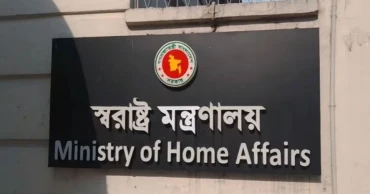
Probe body formed over allegation of torturing Home Ministry staff
The Ministry of Home Affairs has formed a three-member committee to investigate allegations that one of its office assistants was taken to a police station, physically assaulted and threatened with being shot.
The committee was formed to investigate a complaint filed by Md Sarowar Jahan, an office assistant in the office of the senior secretary of the Ministry of Home Affairs.
According to a notification issued on Sunday and signed by Deputy Secretary Mohammad Abdullah Al Jabed, Sarowar submitted a written complaint on May 5.
In the complaint, he alleged that on May 4, Police Sergeant Md Rezaul Haque seized his official identity card, important documents and personal mobile phone without any reason.
He also alleged that he was taken first to the Shahbagh Police Box and later to Shahbagh Police Station, where he was physically tortured and threatened with a pistol.
The investigation committee has been asked to examine the incident and recommend legal action against those found responsible.
Md Jasim Uddin has been made convener of the committee.
The other members are Tawsif Ahmed, who will serve as member secretary, and Farhana Mridha.
The committee has been asked to submit its report within 10 working days.
24 days ago
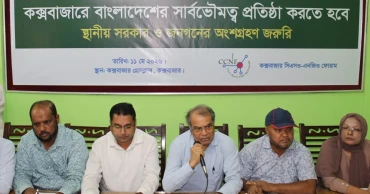
Border security in Cox’s Bazar must be strengthened for national security: CSO-NGO Forum
Local elected representatives and NGOs on Sunday demanded stronger border security in Cox’s Bazar and the formation of a Rohingya Repatriation Commission to accelerate repatriation.
The demand came at a press conference held at Cox's Bazar Press Club on Monday titled “Sovereignty must be upheld in Cox’s Bazar; participation of local government and people in Rohingya relief activities is essential,” organised by the Cox’s Bazar CSO–NGO Forum (CCNF).
Moderating the programme, CCNF Co-Chair Rezaul Karim Chowdhury said further Rohingya entry into Bangladesh must be stopped in the interest of national security.
He called for strengthening Border Guard Bangladesh (BGB) operations, ensuring Army presence at the border and continuing diplomatic efforts on Rohingya repatriation through ASEAN and dialogue with the Arakan Army.
Rezaul alleged there has been no visible progress in repatriation and claimed border security in Ukhia and Teknaf remains weak.
Speakers at the press conference also alleged that UNHCR and several UN agencies are excluding local NGOs from partnerships and instead working with international organisations.
CCNF Member Secretary Zahangir Alam alleged that UNHCR, through BRAC and Infinix, has started constructing permanent shelters in Rohingya camps without consulting local government representatives, creating concern among local residents.
He claimed such infrastructure could encourage further Rohingya influx and raised environmental concerns over the construction materials used.
CCNF member Md Helal Uddin said UNOCHA recently allocated USD 150 million in humanitarian assistance for Rohingya in Cox’s Bazar, but local NGOs are not receiving funds in line with localization commitments.
He demanded legislation requiring UN agencies to implement projects through local NGO partnerships and called for broader local NGO participation in the Joint Response Plan (JRP).
Md Shahinur Islam of COAST Foundation said only 22 percent of recipients of a BRAC-managed pooled fund are local NGOs, while 78 percent are national NGOs.
He also raised concern over the appointment of foreign nationals in senior positions of INGOs and UN agencies in Cox’s Bazar, claiming it may affect repatriation efforts.
Environmental activist Md Ilias Mia said around 8,000 acres of forest land were destroyed for Rohingya camps, causing environmental damage and depletion of groundwater levels.
Tanjir Uddin Roni of COAST Foundation called for representation of local government and communities in Rohingya crisis management structures and demanded a transparent repatriation commission.
Engineer Helal Uddin, a UP member from Rajapalong Ward 9, alleged that camp waste has damaged around 300 acres of farmland and worsened groundwater depletion in the area.
24 days ago
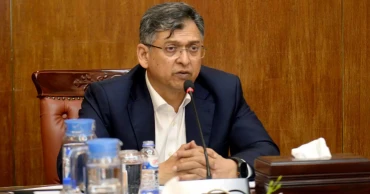
BGB on high alert to prevent border infiltration: Salahuddin
Home Minister Salahuddin Ahmed on Monday said Border Guard Bangladesh (BGB) has been placed on high alert amid developments following the assembly elections in West Bengal, assuring that the force remains fully prepared to prevent border infiltration and maintain law and order.
Briefing reporters at the Secretariat after a meeting on improving the living standards of salt farmers chaired by Prime Minister Tarique Rahman, he said political changes or internal administrative decisions in any Indian state, including erecting barbed-wire fences along the border, are India’s internal matters.
“Bangladesh maintains diplomatic relations with the central government of India based on sovereign equality. The change of political power in any specific state does not affect Bangladesh’s foreign policy or bilateral relations,” the Home Minister said.
He said BGB remains on constant vigilance to prevent any unauthorised border crossings and ensure that the security situation remains stable.
Responding to a question about information spreading on social media claiming atrocities against minorities following the West Bengal polls and their possible impact on Bangladesh, Salahuddin said many misleading posts were being circulated using old videos.
“So far, neither the Home Ministry nor the Foreign Ministry has any information regarding the authenticity of such incidents or any negative impact on Bangladesh,” he said, urging people not to be misled by online propaganda.
Turning to salt farmers, the Home Minister the government has taken initiatives to ensure a fair price for salt in line with production costs to achieve self-sufficiency in the salt industry and protect the interests of local salt farmers.
He said the Ministry of Agriculture is currently reviewing the production costs of salt farmers so that they receive a proper price for their hard work. “The justification for imports is being verified by assessing the domestic demand for both industrial and edible salt.”
Salahuddin stated that, upon the collection of accurate data and in accordance with the directives of the Prime Minister, decisions will be taken in such a manner that the country may achieve complete self-sufficiency in salt production, while ensuring that the farmers do not incur any losses.
24 days ago
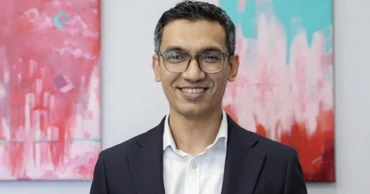
Energy crisis top barrier to investment, says BIDA Chairman
Bangladesh Investment Development Authority (BIDA) Executive Chairman Chowdhury Ashik Mahmud Bin Harun on Monday warned that the country's unresolved energy crisis remains the single biggest obstacle to attracting both local and foreign investment, and that no amount of policy reform will convince investors without a reliable power and gas supply.
“Until we solve the energy problem, we can talk about investment but it's going to be very difficult for local and foreign investors to believe in the Bangladesh story,” Ashij was speaking at a roundtable on ‘Trade Policy, Industrial Protection, Investment Impacts, and Consumer Welfare,’ organised by the Policy Research Institute's (PRI) Center for Trade Policy and Protection Research (CTPPR) with support from the Foreign, Commonwealth and Development Office (FCDO), held at PRI's Banani office.
Ashik said Bangladesh's fundamental investment challenge is not the absence of good policy but the failure to implement it.
He cited the difficulties businesses routinely face in clearing raw materials at Chattogram Port as a case in point, a problem where policies exist on paper but enforcement and execution remain dysfunctional. “At the principal level, there are policies regarding these problems but no execution.”
Ashik added that the government's current priority has shifted from chasing headline growth figures to generating sustained, employment-driven growth, and that BIDA is working to merge and streamline investment promotion institutions to reduce friction for investors.
The BIDA chief disclosed that investment promotion agencies have submitted 46 specific recommendations to the National Board of Revenue (NBR), including 19 proposals on deregulation. Among the key proposals is the introduction of a structured VAT slab system to provide clearer incentives for local value addition and reduce policy uncertainty.
Ashik also pushed back against criticism that BIDA favours foreign investors over domestic businesses, saying the agency advocates for all investors from within the government.
While foreign direct investment brings technology transfer and efficiency gains, he noted that domestic investment remains the backbone of Bangladesh's economy. “Bida's responsibility is to advocate from within the government on behalf of all local and foreign investors.”
In his keynote address, PRI Chairman Dr. Zaidi Sattar painted a stark picture of a trade policy framework that has for decades prioritised protecting domestic producers at an enormous and largely invisible cost to ordinary Bangladeshis.
He said Bangladesh's average tariff burden of 28 percent, against a global average of 6 percent and a lower-middle income country average of 7.2 percent, combined with a web of para-tariffs, has pushed the nominal protection rate to 27.9 percent in FY26, making domestic sales far more profitable than exporting and creating a structural anti-export bias across the economy.
The roundtable was chaired by Dr. Sattar. Panelists included Consumer Association of Bangladesh President AHM Shafiquzzaman, former NBR member Md Farid Uddin, Dhaka Chamber of Commerce and Industry President Taskeen Ahmed and Policy Exchange Bangladesh Chairman and CEO M Masrur Reaz.
24 days ago
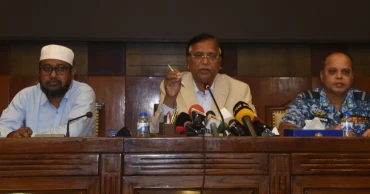
DSCC warns of license cancellation over overcharging, irregular waste collection
Dhaka South City Corporation (DSCC) Administrator Bir Muktijoddha Md Abdus Salam on Monday warned that the licences of Primary Collection Service Providers (PCSPs) would be cancelled if they charge households more than the fixed Tk 100 monthly waste collection fee or fail to remove garbage regularly.
The warning came at a views-exchange meeting with waste collection agencies held at Nagar Bhaban auditorium in the capital.
The meeting focused on ensuring regular waste management services and quick removal of sacrificial waste during the upcoming Eid-ul-Azha.
Expressing dissatisfaction over alleged irregularities and public suffering caused by some service providers, the DSCC administrator said complaints had been received from different areas that some organisations were charging extra money and failing to collect waste daily.
“This will not be tolerated under any circumstances. A maximum of Tk 100 per month can be collected from each flat or household, and the payment must be taken through authorised receipts,” he said.
Among the key decisions and directives adopted at the meeting were immediate administrative action, including licence cancellation, if any organisation is found charging more than the fixed Tk 100 fee; ensuring “same-day removal of same-day waste” so that no garbage remains piled up in any area; special Eid-ul-Azha preparedness, including cancellation of leave for cleanliness workers and relevant officials during the three Eid days until all wards are cleared of waste; mandatory field supervision by PCSP contractors along with adequate deployment of vans and manpower; maintaining courteous behaviour with residents and encouraging cleaners to perform duties in clean attire as much as possible; and launching mobile court drives against households that dump waste on roads or in canals instead of designated collection points.
The DSCC administrator also said waste management is not merely a civic service but a humanitarian and social responsibility.
He warned that strict action would be taken in accordance with DSCC laws if any contractor violates the terms of agreement.
Senior DSCC officials and representatives of primary waste collection agencies attended the meeting.
24 days ago

Intex Bangladesh 2026 to showcase global textile sourcing solutions
Intex Bangladesh 2026, the Bangladesh edition of the Intex South Asia textile sourcing series, is set to return to Dhaka with wider international participation and a stronger focus on sustainable and innovative sourcing solutions.
The exhibition will be held from June 18 to 20 at the International Convention City Bashundhara (ICCB).
“Bangladesh continues to stand at the forefront of global apparel manufacturing, and Intex has been proud to contribute to this growth journey by enabling meaningful sourcing connections and industry collaboration,” said Arti Bhagat, executive director of Worldex India.
The Intex South Asia series has completed 17 editions across Bangladesh, Sri Lanka, and India over the past 11 years, said the organisers.
The event aims to connect global textile suppliers with Bangladesh’s apparel and textile manufacturers, supporting the country’s growing role in global apparel production.
This year’s edition is expected to attract exhibitors and industry stakeholders from countries, including India, China, Thailand, Hong Kong, Taiwan, Uzbekistan, the United Kingdom, Germany, South Korea, Indonesia and Pakistan.
A major highlight of the exhibition will be the participation of more than 100 Indian companies, supported by leading textile export promotion councils such as The Cotton Textiles Export Promotion Council (TEXPROCIL), Powerloom Development & Export Promotion Council (PDEXCIL), Manmade & Technical Textiles Export Promotion Council (MATEXIL), and Federation of Indian Export Organisations (FIEO).
The exhibitors will showcase fibres, yarns, fabrics, and value-added textile products.
The event will also introduce ‘InDyChem,’ a dedicated pavilion for dyes, chemicals, and finishing solutions, organised in collaboration with the Basic Chemicals, Cosmetics & Dyes Export Promotion Council (CHEMEXCIL).
The pavilion will focus on sustainable and high-performance chemical innovations to improve efficiency and support responsible manufacturing practices.
Besides the exhibition, the three-day event will feature business-to-business matchmaking sessions, interactive business forums, and participation from overseas delegations to encourage networking and commercial partnerships. The venue will be divided into four halls featuring international textile pavilions, India’s textile council pavilions, the China pavilion, and premium fibres and yarns.
Intex Bangladesh 2026 is being supported by several industry associations and business chambers, including the Bangladesh Knitwear Manufacturers and Exporters Association (BKMEA), Bangladesh-German Chamber of Commerce & Industry (BGCCI), US-Bangladesh Chamber of Commerce & Industry (USBCCI), Confederation of Indian Textile Industry (CITI), and Tirupur Exporters' Association (TEA), among others.
24 days ago

Jobs alone not enough, industrialisation key for youth employment: Dulu
Disaster Management and Relief Minister Asadul Habib Dulu on Monday said industrialisation is needed alongside the creation of jobs for the employment of the large number of youths in the country.
“Youths constitute a large portion of the country's total population. It is not possible to ensure employment for this vast number of young people only through jobs. Industrialisation is needed,” he said.
The minister made the remarks while inaugurating the PRAN-RFL Job Fair at the Lalmonirhat Stadium as the chief guest, according to a PID handout.
Dulu said industrialisation will not only create earning opportunities for young people but also accelerate the country’s overall progress.
Referring to Lalmonirhat’s agricultural potential, he said the district has highly fertile land where rice, maize and potatoes are produced in abundance.
The minister called upon industrial entrepreneurs to establish agriculture-based industries in Lalmonirhat district.
PRAN-RFL Group organised the job fair on the request from the minister, aiming to provide employment opportunities to 1,000 skilled and unskilled youths from the district.
24 days ago
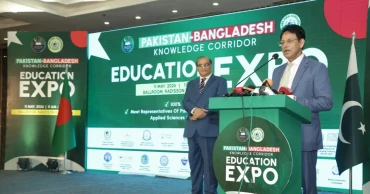
Bangladesh-Pakistan academic ties being strengthened: Milon
Education Minister Dr ANM Ehsanul Hoque Milon on Monday said Bangladesh-Pakistan Knowledge Corridor will open new avenues for educational and research cooperation between the two countries and further strengthen bilateral academic relations.
“The relations between Bangladesh and Pakistan in the education sector are getting stronger day by day. This programme will play an important role in the progress of the relations between the two countries in the future,” he said.
The minister made the remarks while inaugurating the second phase of the Allama Muhammad Iqbal Scholarships under the corridor as well as the Pakistan Education Expo 2026 at a city hotel.
Organised by the Pakistani High Commission in Dhaka in collaboration with the Higher Education Commission of Pakistan, the expo brought together representatives of 20 leading Pakistani universities and institutions to showcase scholarship opportunities and higher education opportunities for students from Bangladesh.
Pakistani High Commissioner to Bangladesh Imran Haider and Secondary and Higher Education Division Secretary Abdul Khaleque were present at the event, said a PID handout.
The Education Minister hoped that cooperation between the two countries in teacher training and research, alongside scholarships for students, will further expand in the future.
Praising the quality of Pakistani universities, he said Bangladeshi students are getting the opportunity to pursue higher education without bearing educational expenses, which is very commendable.
Milon said the monthly scholarships, being given to students for housing and living, will help them focus fully on their studies.
He visited stalls set up by various Pakistani universities and wished success for the second phase of the Allama Muhammad Iqbal Scholarships.
Pakistani envoy Imran described the initiative as a landmark step towards building enduring academic and institutional linkages between Bangladesh and Pakistan.
He noted that Bangladeshi students have already commenced studies at prominent Pakistani universities under the first phase and expressed confidence that enhanced educational exchanges will further strengthen bilateral relations and people-to-people ties.
Following Dhaka, similar Education Expos will also be organised in Barishal (12 May 2026), Rajshahi (14 May 2026), Sylhet (17 May 2026), Chattogram (18 May 2026) and Rangpur (20 May 2026) to facilitate greater outreach to students across Bangladesh, according to the Pakistani High Commission.
Under the scholarship initiative, a plan has been taken to provide opportunities for 500 Bangladeshi students to study in Pakistan over the next five years in phases.
In the first phase, 74 Bangladeshi students were already selected through examinations and awarded scholarships for higher education in Pakistan.
24 days ago
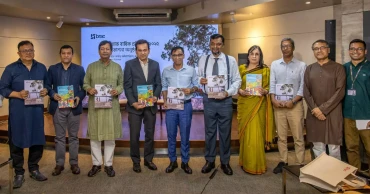
BRAC reaches 26 million people in 2025, unveils new five-year goals
BRAC has said that nearly 26 million people across Bangladesh received services and support through its programmes in 2025, with women accounting for two-thirds of the direct beneficiaries.
The development organisation shared the information while publishing its 2025 Annual Report at a press meet held at BRAC Centre in Mohakhali on Monday, said a press release of BRAC.
According to the report, more than 19 million women and over 2,23,000 persons with disabilities received support through BRAC initiatives covering health, education, financial inclusion, disaster response, water, sanitation and hygiene (WASH), climate adaptation, migration and skills development.
Of the people reached directly by BRAC, two out of every three were women.
Support was provided across a wide range of sectors, including health, education, financial inclusion, disaster and crisis response, water, sanitation and hygiene (WASH), climate change adaptation, migration, and skills development.
Over the next five years, BRAC aims to create employment opportunities for 1 million people, support nearly 1.9 million students in overcoming learning loss, and further expand its ultra-poor graduation programme.
Asif Saleh, Executive Director at BRAC, presented key highlights from the report and responded to questions from journalists.
In his remarks, Asif Saleh outlined BRAC’s future strategic direction, stating that over the next five years, the organisation will operate based on five core principles. These include placing women and young people at the centre of its work, working as part of the community, reaching those at the very margins first, building national capacity in partnership with the government, and harnessing the full strength of the BRAC family across all of its initiatives.
Asif Saleh said that BRAC’s goal is to develop innovative solutions to address evolving social challenges and emerging needs.
He noted that through new initiatives in mental health, day-care services, skills development, and technology-enabled healthcare, BRAC will continue contributing to more integrated and sustainable development in the years ahead. He also said that BRAC is becoming increasingly self-reliant through a combination of its microfinance programme, social enterprises, and limited donor support.
He also said that BRAC has reaffirmed its commitment to working as a self-sustaining, accountable, and forward-looking development organisation under its next five-year strategic plan. The new plan will prioritise women, young people, and the most marginalised communities, while expanding work on employment, education, healthcare, financial inclusion, agriculture, and climate resilience.
In his welcome remarks, KAM Morshed, Senior Director (Advocacy, Communications and Engagement) at BRAC, said that accountability to the people of the country is not merely a slogan for BRAC, but a practice deeply embedded in its work. He noted that during COVID-19, floods, and other natural and human-induced disasters, as well as in moments of national opportunity, BRAC has consistently stood beside communities with commitment and responsiveness. Although BRAC’s presence extends across the globe, he added, people and their participation remain at the heart of its work.
AFM Shahidur Rahman, Director (MEAL, Risk Management, Safeguarding and Social Compliance), presented a summary of the annual report. Senior journalists and senior leadership from BRAC were also present at the event.
Among those who shared their views at the event were Sajjad Sharif, Executive Editor of Prothom Alo; Ayesha Kabir, Head of Prothom Alo English Web; Zahid Newaz Khan, Chief Executive Editor of Channel i; Shahed Mohammad Ali, Editor of Samakal; Reaz Ahmad, Editor of Dhaka Tribune; and Julhas Alam, Bureau Chief of Associated Press (AP).
24 days ago
Govt plans to build 2nd Padma Bridge: Minister
Road Transport and Bridges Minister Shaikh Rabiul Alam on Monday said the government has taken a plan to construct the 2nd Padma Bridge likely to be at the Daulatdia-Paturia point.
“We are going to construct the 2nd Padma Bridge. The feasibility study has already been completed. We are now discussing the financing issue and carrying out other preliminary preparations,” he said.
The minister came up with the remarks after a preparatory meeting at the Secretariat on ensuring safe travel during upcoming Eid-ul-Azha.
He said there are three proposals regarding the bridge, with the Daulatdia-Paturia route topping the list.
24 days ago