Others
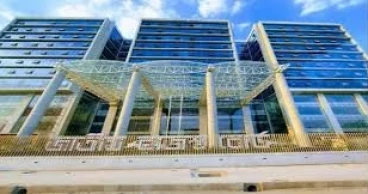
Over 4 million submit tax returns online
More than 4 million taxpayers have submitted their income tax returns online for the 2025–26 tax year so far, reflecting a sharp rise in the use of the electronic filing system, according to the National Board of Revenue (NBR).
In a press release issued on Wednesday, the revenue authority said that nearly 5 million taxpayers have registered in the e-return system since August 4, 2025. Of them, over 4 million have already filed their returns online.
NBR invites budget proposals for FY2026-27
Under a special order, online submission of income tax returns has been made mandatory this year for all individual taxpayers, except senior citizens aged 65 and above, physically challenged or specially-abled individuals, Bangladeshi taxpayers residing abroad, legal representatives filing on behalf of deceased taxpayers, and foreign nationals working in Bangladesh.
The NBR data show a steady rise in monthly e-return submissions. In August 2025, some 251,784 taxpayers filed online, followed by 301,302 in September and 454,076 in October. The number surged to 1,040,472 in November and remained high in December with 978,198 submissions.
In January 2026, 655,363 taxpayers filed their returns electronically, while 294,987 did so in February. In the first four days of March alone, 36,700 returns were submitted online.
NBR suspends eVAT services for system maintenance
By comparison, 1,399,655 taxpayers had filed e-returns within the stipulated time last year, indicating a significant year-on-year increase in digital compliance.
Of the total e-returns submitted so far, 2,866,618 were filed by male taxpayers and 1,136,003 by female taxpayers.
Among them, 1,610,750 men and 478,566 women reported income from salaries. Income from house rent was declared by 187,754 male taxpayers and 84,477 female taxpayers.
A substantial number of taxpayers reported income below the taxable threshold, including 1,435,630 men and 765,197 women.
In the income bracket between Tk 500,000 and Tk 1 million, 534,954 male and 193,837 female taxpayers filed returns. For incomes between Tk 1 million and Tk 2 million, the figures were 164,983 men and 47,532 women.
Meanwhile, 54,212 male and 11,455 female taxpayers declared income between Tk 2 million and Tk 4 million. Income exceeding Tk 4 million was reported by 29,080 men and 5,117 women.
Due to asset levels attracting surcharge, 39,363 male taxpayers and 11,065 female taxpayers paid surcharge along with their returns.
Although online filing is not mandatory for Bangladeshi taxpayers residing abroad, the NBR said they can apply by sending their passport number, national identity number and email address to the designated NBR email. Upon verification, an OTP and registration link are sent to the applicant’s email, enabling them to file returns online from overseas.
Authorised representatives are also allowed to submit e-returns on behalf of taxpayers this year.
The NBR highlighted that taxpayers can complete the entire process without uploading supporting documents.
By entering accurate details of income, expenditure, assets and liabilities in the system, they can file returns and pay taxes from home using debit or credit cards, internet banking or mobile financial services such as bKash and Nagad.
The system instantly generates an acknowledgement slip and income tax certificate after submission.
Taxpayers can also file revised returns through the e-return system within 180 days of submission.
So far, more than 56,000 revised returns have been filed for the 2025–26 tax year.
To assist taxpayers, the NBR has set up a call centre where queries related to e-returns are addressed over the phone.
In addition, written complaints or queries can be submitted through the eTax service option on the official website.
E-return help desks have also been established in all tax zones across the country during office hours.
The revenue authority said SMS notifications have already been sent to individual taxpayers requesting them to submit their e-returns to avoid penalties.
The NBR urged all individual taxpayers to use the e-return system and file their income tax returns for the 2025–26 tax year by March 31, 2026.
2 days ago
4 held over shooting of narcotics inspector in Dhaka
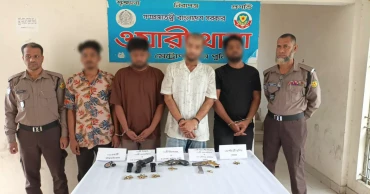
Police have arrested four people from different parts of the capital in connection with the shooting of an inspector of the Department of Narcotics Control (DNC) during an anti-drug drive in the Sayedabad area on March 2.
The arrestees were identified as Syed Jisan Ahmed, Syed Hasibul Hasan alias Piyas, Omar Faruk Sayem and Solaiman Hossain Chowdhury.
Police also recovered three firearms, 23 rounds of bullets, five bullet shells and a motorcycle from their possession during the drive.
Briefing reporters, Deputy Commissioner (DC) of Wari Division, Mallik Ahsan Uddin Sami on Wednesday said Siddiqur Rahman, an inspector of the DNC, was shot and injured during an anti-drug drive near the Saidabad rail gate area on March 2 (Monday).
At one stage, three to four unidentified miscreants opened fire targeting the DNC inspector and fled the scene, he added.
A case was filed with Wari Police Station in this connection.
Being informed, a team of Wari Police chased the attackers, forcing one of them to leave behind a firearm, Sami said.
Based on secret information, police conducted separate drives in the capital and arrested Jisan, Piyas and Faruk.
Following their confessional statements, police recovered one 9mm pistol, two magazines, and 16 rounds of bullets.
Later, police, in another drive, arrested Solaiman along with one 7.65mm pistol and three rounds of bullets.
Two separate cases were filed with Wari Police Station in this connection.
2 days ago
Farmers Card to launch within Pahela Baishakh on pilot basis : Agriculture Minister
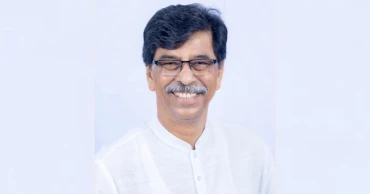
Agriculture Minister Mohammad Amin Ur Rashid said the ‘Farmers Card will be launch by Pahela Baishakh, the Bengali New Year, in eight to nine upazilas on pilot basis.
“We will be able to start the farmers card by Pahela Baishakh,” he said.
The minister came up with the information while talking to reporters on Wednesday after a meeting at the Secretariat, with the Prime Minister in the chair.
Bangladesh cabinet clears waiver of up to Tk 10,000 agricultural loans
When asked whether the program would be launched nationwide or as a pilot, the minister clarified that it will begin in pilot form in 8–9 upazilas.
Regarding the benefits of the card, the minister said, “Marginal farmers will receive certain benefits through a family-card-like system. Eventually, the main purpose of the card is to systematically provide farmers with access to production inputs, consumer goods, agricultural land, crops and seed varieties, while ensuring accurate reporting of information to the government.”
Responding to a question over the possibility of distributing free fertilizer and seeds, the minister said such benefits are likely aimed at marginal or very poor farmers, but the topic was not discussed in detail at today’s meeting.
2 days ago
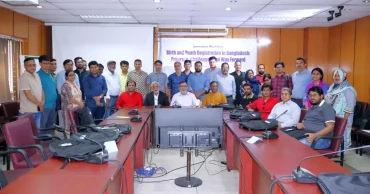
Modernizing birth and death registration 'urgent': Speakers
The low rates of birth and death registration in Bangladesh are significantly hindering the protection of citizens’ rights, public health planning, and effective development management. Reforming the existing Birth and Death Registration Act and making health facility–based registration mandatory is one of the most urgent policy priorities, speakers said at a journalists’ workshop titled “Birth and Death Registration in Bangladesh: Progress, Challenges and Way Forward.”
The workshop was held at the Bangladesh Medical Association (BMA) Bhaban in the capital and was organized by PROGGA (Knowledge for Progress) with support from the Global Health Advocacy Incubator (GHAI). The two-day workshop, held on March 3 and 4, brought together 32 journalists working in print, television, and online media.
Currently, the birth registration rate in Bangladesh stands at only 50 percent, while the death registration rate is 47 percent. This means that although thousands of people are born and die every day, nearly half of these events are not recorded in official state records. As a result, a large number of citizens remain effectively outside the state’s administrative system.
Experts noted that birth and death registration is a fundamental means for ensuring legal identity, access to education and healthcare, inheritance rights, social protection, and voting rights. Citizens without registration effectively become socially and economically invisible, increasing their vulnerability to child labor, child marriage, human trafficking, and discrimination. Furthermore, the absence of reliable birth and death data undermines effective development planning and evidence-based policymaking.
Under the current law, the responsibility for registration largely rests with families, while health facilities are not legally required to ensure registration. However, nearly two-thirds of births in Bangladesh now take place in healthcare facilities. Due to the lack of an automatic registration system, many births remain unregistered. Countries in South Asia such as the Maldives, Bhutan, and Sri Lanka have achieved near-universal registration by introducing health facility–based registration systems. Experts believe that similar reform is urgently needed in Bangladesh.
Nazrul Islam, Country Coordinator, Vital Strategies said, “Alongside reforming the existing law, effective implementation must be ensured to attain universal birth-death registration.”
Muhammad Ruhul Quddus, Bangladesh Country Lead of GHAI, said, “Assigning registration responsibilities to healthcare facilities will help Bangladesh achieve the target of universal registration set by UNESCAP, as well as Sustainable Development Goal (SDG) 16.9, which aims to provide legal identity for all.”
Sajjadur Rahman, Deputy Editor, Business Standard said, “In order to make reform of the birth and death registration law a national priority, media must push policymakers by publishing continuous reports highlighting the multi-faceted need for registration.”
ABM Zubair, Executive Director, PROGGA was also present as a discussant. PROGGA’s Head of Programs, Md. Hasan Shahriar and Coordinator Mashiat Abedin delivered presentations in the workshop.
2 days ago
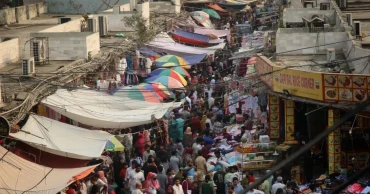
Jaywalking surges near New Market, Chandni Chowk ahead of Eid
With Eid-ul-Fitr drawing near, thousands of shoppers are thronging the capital’s key retail hubs including New Market and Chandni Chowk, turning the areas into a sea of people and vehicles.
Amid the festive rush, many pedestrians were seen crossing busy roads directly, ignoring the foot overbridges built for their safety.
Carrying shopping bags and accompanied by family members, including children, they hurried across traffic lanes, often forcing vehicles to brake suddenly.
The unsafe crossings have increased the risk of accidents, while also disrupting traffic flow in the already congested commercial zone.
2 days ago

MJF urge youth to work to transform social norms around unpaid care norms
Manusher Jonno Foundation (MJF) organized an awareness event titled “Time for Change: Engaging Youth to Transform Unpaid Care Norms” to promote recognition of women’s unpaid household and care work and to ensure a fair distribution of these responsibilities.
The program was held on Tuesday at the Muzaffar Ahmed Chowdhury Auditorium of the Faculty of Social Sciences at the University of Dhaka.
Speakers highlighted that in Bangladesh, women still spend significantly more time than men on unpaid household and care work. This limits their opportunities for education, income-generating activities, and social participation. According to recent statistics, women’s labor force participation stands at around 36 percent, compared to more than 80 percent for men. The speakers emphasized that sustainable economic development will not be possible unless this disparity is addressed.
MJF applauds BBS recognition of women's unpaid work at GDP’s 18.9%
Professor Dr. Atonu Rabbani of the Department of Economics at the University of Dhaka said that there is generally little difference in earnings between men and women in the labor market until marriage or the birth of their first child. However, the situation changes after childbirth.
He noted that in Denmark, five years after the birth of the first child, the income gap between spouses rises to 29 percent. In Sweden, the gap is nearly 20 percent. He believes the problem is even more pronounced in Bangladesh.
Professor Rabbani stated that rather than focusing solely on what kind of country we want to see in 20 years, a more important question is what kind of children we want to raise. Raising the type of children we aspire to have is both costly and time-intensive. When families must decide who will devote more time to childcare, biological and social factors often lead women to withdraw from the labor market for extended periods.
MJF signs partnership with 22 women’s rights groups under renewed project
He further added that in many cases, male employees are required to work more than 12 hours a day, even if they do not wish to. As a result, balanced distribution or specialization of work within the family is disrupted, ultimately forcing women to leave the labor market.
He emphasized that raising awareness or changing mindsets alone will not provide a lasting solution. Structural and systemic economic issues must also be addressed.
Towfiqul Islam Khan, IRBD Coordinator at the Centre for Policy Dialogue (CPD), said that policymakers must first understand what people want before formulating policies. Countries where women’s labor force participation exceeds 70 percent are more advanced in development, whereas Bangladesh stands at only about 35 percent. He stressed that this rate must increase, as economic development is not possible without engaging half of the population.
Mohiuddin Mujahid Mahi, President of the Dhaka University Journalists’ Association (DUJA), highlighted the role of the media in portraying women’s contributions to socio-economic development and the limitations they face. “The notion that men will work outside while women will stay at home is deeply ingrained in our society. The media can play an important role in breaking away from this mindset,” he said.
The program featured creative mime performances, documentary screenings, open dialogue sessions, photography and art exhibitions, and an award ceremony. University students, youth, researchers, teachers, journalists, and artists participated in the event. The organizers stated that the primary goal of the initiative is to establish household and care work as a shared social responsibility through the active engagement of young people- especially young men.
2 days ago
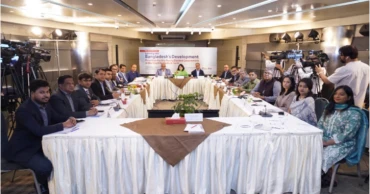
CPD calls for tough macro discipline to steer Bangladesh economy
The Centre for Policy Dialogue (CPD) on Wednesday urged the newly elected government to enforce strict macroeconomic discipline and fast-track structural reforms.
It warned that without decisive policy action the ongoing recovery of Bangladesh’s economy could remain fragile amid persistent inflation, weak private investment and financial sector stress.
Presenting a paper titled “Bangladesh Economy: Trends, Challenges, and Policy Priorities for the Newly Elected Government” at a roundtable held at BRAC Inn Centre in the city, CPD Executive Director Dr Fahmida Khatun said the country stands at a ‘critical juncture’ as it prepares for LDC graduation in November 2026 and navigates a post-election transition.
Improved law and order seen key to cutting business costs: DCCI
The event, titled “Looking into Bangladesh’s Development: Priority for the Newly Elected Government in the Short to Medium Term,” was organised by CPD.
According to the presentation, real GDP growth declined to 3.49 percent in FY2025 from 4.2 percent in FY2024, reflecting macroeconomic pressures and subdued investment.
However, growth rebounded to 4.50 percent in the first quarter of FY2026, up from 2.58 percent in the corresponding period a year earlier, indicating a gradual recovery in economic activity.
Inflationary pressure has eased somewhat.
Inflation fell to 8.66 percent in January 2026 from 9.7 percent in June FY2024, driven mainly by a slowdown in food inflation, which dropped to 7.79 percent.
However, wage growth remained stagnant at 8.12 percent in January 2026, continuing to exert pressure on household purchasing power, it said.
Private sector credit growth dropped to a record low of 6.10 percent in December 2025, underscoring persistent weakness in private investment.
In contrast, net government credit growth surged to 32.19 percent in December 2025, reflecting increased reliance on bank borrowing to finance fiscal needs.
Revenue mobilisation remains a major concern.
In FY2025, the tax-to-GDP ratio fell to 6.78 percent and the revenue-to-GDP ratio to 7.81 percent. At the same time, the total debt-to-GDP ratio increased to 38.61 percent, driven by rises in both domestic and external debt.
Besides, total revenue growth reached 17.74 percent during July-September FY2026, signalling a positive shift compared to the same period of the previous fiscal year.
Operating expenditure growth remained above 11 percent, while development expenditure showed volatility.
The paper highlighted growing stress in the banking sector.
The non-performing loan (NPL) ratio rose sharply from 12.56 percent in June 2024 to 35.73 percent in September 2025, largely due to the adoption of internationally aligned loan classification standards.
Although the NPL ratio declined to 30.60 percent in December 2025 following extensive loan rescheduling, CPD warned that underlying governance weaknesses need urgent attention.
Meanwhile, the advance-deposit ratio declined to 78.3 percent and the liquidity coverage ratio improved to 185.3 percent, indicating improved short-term liquidity conditions.
Export performance weakened during July-January FY2026, recording a negative year-on-year growth of 1.93 percent, mainly due to a slowdown in readymade garment shipments.
Import payments grew by 3.91 percent over the same period, driven primarily by higher imports of intermediate goods.
However, remittance inflows stood at $19.43 billion during July-January FY2026, marking a robust 21.76 percent year-on-year increase. Foreign exchange reserves provided 5.6 months of import cover as of December FY2026, with gross reserves reaching $30.36 billion as of February 26.
Fahmida outlined five broad policy priorities for the short to medium term—
1. Containing inflation: Ensure coordinated monetary and fiscal discipline, stabilise the exchange rate, address supply bottlenecks and expand targeted social protection.
2. Reviving private investment: Improve access to finance for productive sectors, invest in infrastructure and skills, ensure regulatory predictability and strengthen capital markets.
3. Strengthening fiscal discipline: Broaden the tax base, accelerate digitalisation of revenue systems, enhance tax administration and prioritise high-impact development spending.
4. Restoring banking sector confidence: Deepen financial sector reforms, resolve NPLs through time-bound strategies, safeguard the independence of the central bank and strengthen oversight and transparency.
5. Enhancing external resilience: Promote export diversification beyond readymade garments, provide targeted support to emerging sectors and proactively implement a smooth transition strategy ahead of LDC graduation.
CPD said that sustained macroeconomic discipline, institutional reforms and policy consistency will be critical to restoring investor confidence, safeguarding stability and steering Bangladesh towards inclusive and resilient growth in the coming years.
2 days ago

bKash offers up to Tk 10,000 discount, cash back for Ramadan, Eid
Customers can enjoy discounts and cashback of up to Tk 10,000 on payments made through bKash during Ramadan and ahead of Eid, as part of special festive campaigns launched by the mobile financial service provider.
Under the campaign, shoppers will receive a range of benefits on purchases at selected outlets, including clothes, footwear, electronics, groceries, ordering iftar-sehri, ticketing, hotel bookings, etc. with bKash payment.
The offers include instant discounts as well as cashback on payments made using bKash through QR code, app payment and other designated methods, according to the company.
All discount and cashback offer will remain valid until March 21, 2026.
Superstores: Throughout Ramadan and ahead of Eid-ul-Fitr, customers can use the ‘D2’
coupon in the bKash app to get up to Tk 500 discount at various superstores including
Agora, Meena Bazar, Unimart, Prince Bazar, Bengal Meat, Wholesale Club, Khulshi Mart,
Utsab Super Market, and more.
Besides, using coupon ‘D3’, Tk 300 discount can be availed at superstore chains Shwapno and Daily Shopping. Additionally, online grocery platforms- Chaldal,Daily Shopping, Meena Bazar, and Paragon also offer up to Tk 200 cashback.
Lifestyle Brands: Using coupon ‘S3’ in the bKash app, customers can avail Tk 300 discount
at Sailor and Tk 200 discount at Sara Lifestyle.
With coupon ‘D1’, customers can get up to Tk 1,000 discount across a wide range of brands
including MR. DIY, Artisan, Country Boy, Dorji Bari, Ecstasy, Fabrilife, Freeland, Yellow,
Illiyeen, Kay Craft, Bishworang, Anjan’s, Raw Nation, Shoilpik, Smartex, Texmart, Hoor,
Goyna Baksho, Sunvee’s, and many others.
Coupon ‘D5’ offers Tk 200 discount at Takdum, Miniso Bangladesh, and several other
merchants. Meanwhile, using coupon ‘D8’, customers can get Tk 300 discount at Easy
Fashion, Gentle Park, Infinity Mega Mall, Lubnan, Richman, Top Ten Fabrics and Tailors, and
several other outlets. Additionally, customers can enjoy up to Tk 200 cashback at Aarong
when paying through bKash.
Online Marketplaces: This Ramadan, customers can get Tk 60 discount voucher on bKash
payments at Daraz.
Also, Star Tech-Online, Othoba, Robishop, Lubnan, Aromatica, and various other online stores are offering 10% to 20% cashback, up to Tk 300. This cashback is also applicable when ordering pet care items from Amar Pet, Pet Food BD, and Pet Mama.
Restaurants: Customers can enjoy up to Tk 750 discount using the ‘D4’ coupon at more
than 2,000 restaurants nationwide. In Dhaka, discounts are available at outlets including
Galito’s, Burger King, CP Five Star, Chili’s Restaurant, Delhi Darbar, among others.
In Chattogram, customers can enjoy the discount at Pizza Lounge, Secret Recipe, Bay Leaf
Restaurant, Kutum Bari, Papa Chinos, and several more. Besides, Tk 50 cashback can
be availed on bKash payments of at least Tk 600 made at KFC self-checkout.
At outlets of Decent Pastry Shop, Star Bakery, and Star Hotel & Restaurant, customers can
enjoy Tk 1,000 discount throughout Ramadan on iftar purchases.
Moreover, over 250 other food shops and bakeries are offering an additional Tk 500 discount on iftar orders.
Electronics & Furniture: Using coupon ‘D6’, customers can get Tk 200 discount at over
1,200 outlets nationwide, including Walton Plaza, Haier, Singer, Vision Emporium, Apple
Mart BD, and Gadget & Gear.
Meanwhile, furniture brands such as Akhtar Furniture, Brothers Furniture, Hatil, Hi-Tech
Furniture, Nadia Furniture, Navana Furniture, Otobi, and Tanin Bangladesh are offering up
to Tk 600 discount.
Ticketing and Hotel Booking: Ahead of Eid holidays, customers can get Tk 200 cashback
on bus tickets from Imperial Express, Seba Green Line, Shyamoli Paribahan and several
others through bKash payment.
Besides, air tickets from Biman Bangladesh Airlines, US-Bangla, Air Astra, and Novoair
booked with bKash payment offer up to Tk 1,000 cashback.
Customers can also enjoy Tk 600 cashback when booking selected hotels and resorts across the country.
All Ramadan and Eid shopping campaigns with bKash payment can be seen at this link:
https://www.bkash.com/en/campaign/ramadan-offer-payment-hero-2026.
2 days ago
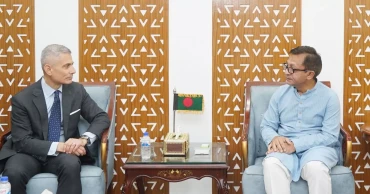
Trade deal with US not irreversible: Commerce Minister
Commerce Minister Khandakar Abdul Muktadir on Wednesday said the recently signed trade agreement between Bangladesh and the United States is not irreversible and there remains scope for amendment, addition or deletion of provisions if necessary.
He said the deal contains elements that could help further strengthen bilateral trade ties in the future and should not be viewed as “wholesale negative” or “wholesale positive.”
The minister made the remarks while talking to reporters after a meeting with US Assistant Secretary of State for South and Central Asian Affairs Paul Kapur at the Commerce Ministry.
He said the agreement was signed with the aim of expanding economic, trade and investment relations between the two countries.
Referring to bilateral trade, the commerce minister said trade volume between Bangladesh and the United States exceeds $8.5 billion while Bangladesh imports goods worth nearly $2.75 billion from the US.
As a single country, the US remains one of Bangladesh’s largest trading partners, he said.
He said discussions also touched investment, digital infrastructure development and future economic cooperation, alongside trade.
Responding to a question about whether the February 9 trade deal was discussed in detail at the meeting, he said it did not come up specifically. “The agreement was signed on the 9th. There was no separate discussion on it today,” he said.
Large portion of workforce remains informal; Commerce Minister urges formalization
Asked whether issues mentioned in a congratulatory letter from US President Donald Trump — including trade and defence-related matters — were discussed, the adviser said the trade deal was not a topic of discussion at the meeting and military issues do not fall under the Commerce Ministry’s jurisdiction.
On allegations that Bangladesh’s interests were not adequately protected in the deal, he said any agreement involves two parties and typically contains provisions favourable to both sides.
Responding to another question he said “If you find any problematic provision, you can raise it with us. No agreement is the end of life. Every agreement contains its own clauses for review and self-correction. If we find that any provision requires amendment or modification, there is always scope for further negotiation,” he said.
He also urged all not to be overly concerned.
2 days ago

Woman’s throat-slit body found at Dhaka’s Shyampur
Police have recovered the body of a woman with her throat slit at a rented house in Mirhazirbagh area in the capital.
The deceased is Lucky Akter,17, of Ratanpur village under Sadar Thana in Bhola district.
Lucky had been living with her husband at a rented house at Mirhazaribagh under Shyampur police station.
Her husband, Sajeeb, is currently on the run.
The body was recovered around 4:30 pm on Tuesday from a tin-shed house and later sent to Dhaka Medical College Hospital (DMCH) for autopsy, said sub-Inspector Md. Shahadat Hossain of Shyampur Police Station.
Police suspect that Sajeeb killed his wife and fled the spot, leaving the body in the house.
2 days ago