Others
Women village police officers to be recruited to make local govt more effective: LGRD Minister
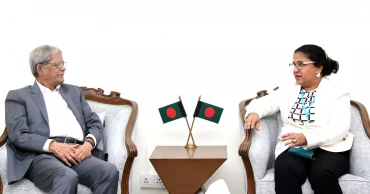
Local government, rural development and co-operatives minister Mirza Fakhrul Islam Alamgir on Monday said the recruitment of women to the village police would make the local government system more people-friendly and effective.
“To ensure justice at the village level, make the local government system more effective, increase women's participation, and strengthen the institutional capacity of village courts, female members will be recruited to the village police,” he said.
The minister said this at a meeting with a delegation of United Nations Development Programme (UNDP) at the Secretariat. The four-member UNDP delegation was led by Deputy Resident Representative in Bangladesh Sonali Dayaratne.
During the meeting, they discussed the ongoing activities, progress and institutional capacity-building of the village court project.
They put emphasis on strengthening the role of village courts to ensure accessible, speedy and low-cost justice for rural people.
The LGRD Minister said village courts have been playing a significant role in resolving rural disputes in the region for more than a century.
He said the quick settlement of minor disputes at the local level would reduce pressure on formal courts and ensure easier access to justice for the general people.
Fakhrul stressed increasing women’s participation in the local government system, saying female member of the village police could play an important role in addressing social issues involving women and children.
He said enhancing the capacity of local government bodies is essential for implementation of various government development and social protection programmes effectively.
In this regard, the minister cited, technical and institutional support from development partners could play an important role in enhancing the capacity of the local government bodies.
Both sides expressed optimism about strengthening cooperation between the Bangladesh government and the UNDP to improve the effectiveness of village courts, ensure justice at the grassroots level and promote women’s empowerment.
High officials of Local government division, including Secretary Md Shahidul Hassan were present, said a PID handout.
24 days ago
Doctors call for higher tobacco prices in 2026–27 budget to reduce NCD burden
Public health experts and physicians on Monday urged the government to increase tobacco product prices effectively in the upcoming FY2026–27 national budget to reduce the growing burden of non-communicable diseases (NCDs) in Bangladesh.
They said around 71 percent of annual deaths in Bangladesh are caused by non-communicable diseases, while tobacco use is responsible for nearly 14 percent of NCD-related deaths in the country.
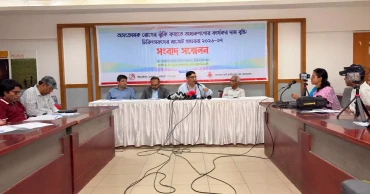
The demand was raised at a press conference titled “Effective Tobacco Price Increase to Reduce the Risk of Non-Communicable Diseases: Physicians’ Budget Proposals for FY2026–27”, organized by United Forum Against Tobacco and National Heart Foundation of Bangladesh at National Press Club.
The program was chaired by Brig Gen (Retd.) Prof. Md. Yunusur Rahman, Director of National Heart Foundation Hospital and Research Institute. Among others, public health expert Dr Mushtaq Hossain, Prof Safiun Nahin Shimul of the Institute of Health Economics at the University of Dhaka, and Dr Muhammad Sakhawat Hossain, Assistant Professor at the National Institute of Diseases of the Chest and Hospital, spoke at the event.
Presenting the keynote paper, Dr Aruna Sarkar, Coordinator of the Tobacco Control Program, said tobacco use remains one of the leading risk factors for cancer, heart disease, stroke, and chronic respiratory diseases in Bangladesh.
She noted that nearly 37.8 million adults in Bangladesh currently use tobacco products and around 200,000 people die every year from tobacco-related diseases. The annual economic loss caused by tobacco-related health and environmental damage is estimated at nearly Tk 87,000 crore, which is more than double the revenue earned from the tobacco sector.
At the press conference, physicians proposed merging the low- and medium-tier cigarette categories and fixing the retail price of a 10-stick cigarette pack at Tk 100. They also proposed imposing a specific supplementary duty of Tk 4 per pack. In addition, they recommended increasing the retail prices of high-tier and premium-tier cigarette packs to Tk 150 and Tk 200 respectively.
Prof Safiun Nahin Shimul said the existing tobacco tax structure in Bangladesh is complex and ineffective from a public health perspective. He explained that the four-tier cigarette pricing system allows smokers to switch to cheaper brands instead of quitting, limiting the effectiveness of tax measures.
He also said the small price difference between low- and medium-tier cigarettes makes tobacco products more affordable for young people and low-income groups.
Dr Mushtaq Hossain said implementing the proposed tax and price measures could both reduce tobacco consumption and generate over Tk 85,000 crore in revenue, which would be around Tk 44,000 crore higher than the previous fiscal year.
He added that the additional revenue could be used to strengthen the healthcare system, improve primary healthcare services, and address the growing burden of non-communicable diseases.
Brig Gen (Retd.) Prof Md Yunusur Rahman said increasing tobacco prices through effective taxation is globally recognized as one of the most effective tobacco control measures.
He said the proposed measures could encourage nearly 500,000 adults to quit smoking and help prevent premature deaths helped prevent the premature deaths of approximately 185,408 adults and 185,335 youths.
Journalists from different media outlets and representatives of anti-tobacco organizations attended the press conference.
24 days ago
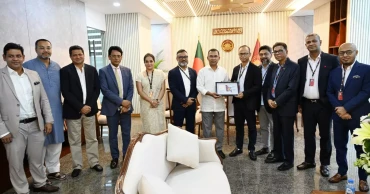
BGMEA, BKMEA leaders meet PM
Leaders of the Bangladesh Garment Manufacturers and Exporters Association (BGMEA) and the Bangladesh Knitwear Manufacturers and Exporters Association (BKMEA) on Monday separately met Prime Minister Tarique Rahman.
The meetings were held at the Prime Minister’s Office in the Secretariat in the afternoon, said his Additional Press Secretary Atikur Rahman Rumon.
He said the delegations from the central committees of BGMEA and BKMEA met Prime Minister Tarique Rahman separately.
“They raised various issues related to their sectors. The Prime Minister listened to their statements with keen interest and also exchanged views with them,” Rumon added.
24 days ago
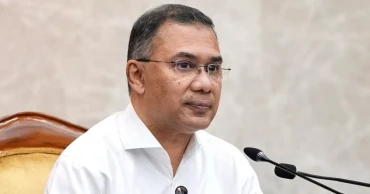
PM says audit findings reveal massive irregularities in mega projects
Prime Minister Tarique Rahman on Monday pointed to alleged inflated spending and corruption in several mega projects, including Rooppur Nuclear Power Plant, Karnaphuli Tunnel and Padma Bridge, based on audit findings that exposed widespread misuse of public funds.
Speaking at a meeting with senior police officials at the Prime Minister’s Office at Tejgaon, he citied findings from some audit reports presented to him by the Comptroller and Auditor General (CAG).
The Prime Minister said the current government inherited a “fragile” state structure and economy after assuming office.
“When the current government took responsibility, we found almost every sector in a very vulnerable condition. We received the country in a situation similar to that of a war-ravaged nation,” he said.
Tarique Rahman said he was not presenting the issues politically but was sharing realities revealed in official audit findings.
“A few days ago, the Auditor General came to me. I am not presenting this politically; I am presenting the reality. I am not blaming anyone politically. We are citizens of this country, and your children are growing up here, which is why I am raising these issues,” he said.
The Prime Minister said the CAG shared several audit observations with him, some of which had also appeared in newspapers.
Referring to the Rooppur Nuclear Power Plant project, he mentioned alleged excessive costs for furnishing residential facilities built for foreign personnel.
“He (CAG) told me that fully furnished quarters were constructed for foreigners there. A pillow was purchased at a cost of Tk 80,000. As an ordinary person, can you imagine a pillow costing Tk 80,000 anywhere in the world?” Tarique Rahman said.
He also alleged that dressing tables worth an estimated Tk 30,000 to Tk 35,000 were shown in audit records as costing Tk 4 lakh to Tk 5 lakh each.
On May 5, Comptroller and Auditor General Md Nurul Islam submitted 38 audit reports for the 2021-22 fiscal year to the Prime Minister.
Comparing the Rooppur project with a similar project in a neighbouring country, Tarique Rahman said, “A similar project in our neighbouring country reportedly cost around Tk 14,000 crore, whereas the cost of Bangladesh’s Rooppur project ultimately stood at nearly Tk 96,000 crore.”
Referring to the Karnaphuli Tunnel project, he alleged that several luxurious buildings or apartments were constructed on the other side of the tunnel despite no apparent necessity.
The Prime Minister also claimed the audit investigation found irregularities in landscaping expenses linked to the project.
“The audit investigation found that trees were supposed to be planted on both sides – before entering and exiting the Karnaphuli Tunnel. But no trees were found there, although Tk 50 crore had been withdrawn in the name of planting them,” he said.
Tarique Rahman also referred to alleged corruption linked to development projects in Pirojpur and Patuakhali districts.
He said lawmakers from the region met him regarding stalled Local Government Engineering Department (LGED) works, particularly road construction projects.
“After making inquiries, I learned that Tk 35,000 crore disappeared from just one ministry — the LGED Ministry — through paperwork alone without any work being completed,” the Prime Minister said.
He also came to know that Tk 6,000 was missing in a single district alone covering several departments. “There are many more such incidents. These incidents happened. Reality is reality, and we cannot avoid it even if we want to,” he added.
Tarique Rahman said he mentioned the audit findings while responding to various demands and proposals raised by police officials regarding accommodation, transport and IT facilities.
“You spoke about housing problems, transportation and proposals for new IT units. All these require funding. We want to address these problems because better facilities will help you provide better public service,” he said.
PM urges police to remain united beyond ideological differences
The Prime Minister said inflated project costs and loans taken for those projects created financial burdens on citizens. “The debt taken for the Rooppur Nuclear Power Plant project at four times the cost has now become a burden on every citizen, including those of you present here,” he said.
Comparing infrastructure costs, he referred to India’s Bhupen Hazarika Bridge, saying it was completed at around Tk 14,000-15,000 crore, while the Padma Bridge cost approximately Tk 54,000-56,000 crore.
“Ultimately, the burden of these loans falls on 20 crore people. Had these unnecessary expenditures not occurred, we could have done much more in sectors like police, Army, Air Force, Navy, education and health,” Tarique Rahman said, adding: “But this is the reality we now have to deal with.”
The Prime Minister delivered a directive speech to police officials at the Shapla Hall of the Prime Minister’s Office as part of Police Week-2026.
Home Minister Salahuddin Ahmed, Senior Secretary of the Home Ministry Manzur Morshed Chowdhury and Inspector General of Police Md Ali Hossain Fakir also addressed the programme.
24 days ago
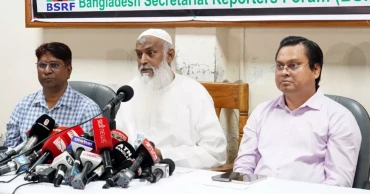
Will quit if needed, but minority persecution won’t be tolerated: Kaikobad
Religious Affairs Minister Kazi Shah Mofazzal Hossain Kaikobad on Monday said the government would not tolerate any oppression, injustice, cruelty or torture against minorities or followers of other religions in the country.
“I would even leave the ministry if necessary, but will not tolerate any oppression or injustice against minorities or people of other faiths,” he said while speaking at the ‘BSRF Dialogue’ organised by the Bangladesh Secretariat Reporters Forum at the Secretariat Media Centre.
Replying to a question on the alleged persecution of minority Muslims in India and whether he would raise the issue with the Indian government, Kaikobad said India is a large democratic country and expressed hope that it would ensure equal rights and security for minorities.
“I respect India because it values democracy. But I will respect it even more if minorities there are accepted as part of the nation and provided with proper security and protection,” he said.
He, however, stressed that incidents occurring in India would not be allowed to happen in Bangladesh.
The programme was chaired by BSRF President Masudul Hoque and moderated by its General Secretary Ubaidullah Badal.
24 days ago
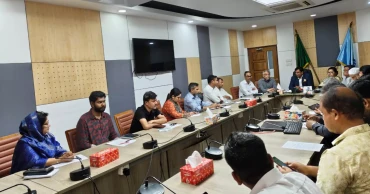
PM to open UGC workshop on higher education at DU Tuesday
The University Grants Commission of Bangladesh (UGC) will organise a national workshop on Tuesday aimed at transforming Bangladesh’s higher education system into a more contemporary, inclusive and sustainable model.
Prime Minister Tarique Rahman will inaugurate the daylong workshop titled “Transforming Higher Education in Bangladesh: Roadmap to Sustainable Excellence,” as the chief guest at the Nabab Nawab Ali Chowdhury Senate Bhaban of Dhaka University in the morning.
This will be his first official programme at Dhaka University since assuming office as Prime Minister through the February 12 national election.
The information was shared at a press conference held at the UGC conference room on Monday afternoon.
UGC Chairman Prof Dr Mamun Ahmed, its members, secretary, directors and members of the workshop organising committee were present at the press conference.
In his speech, Mamun Ahmed said the workshop will play an important role in improving the quality of higher education and developing internationally competent human resources.
“It will also help shape the government’s future plans and policy directions regarding tertiary education,” he said.
The UGS Chairman stressed the importance of ensuring a proper educational environment, saying a conducive atmosphere is essential for effective teaching and learning and for the overall development of students.
He also highlighted the importance of governance and collaboration among government bodies and stakeholders in establishing and maintaining a strong education system.
Policymakers, UGC members, vice-chancellors of different universities, teachers, researchers, representatives from industries and development stakeholders will participate in the workshop.
Education Minister Dr ANM Ehsanul Hoque Milon and Prime Minister’s Adviser Mahdi Amin will attend the opening session as special guests with the UGC Chairman in the chair.
Following the opening ceremony, five technical sessions will be held focusing on graduate employability, soft skills development and demand-driven education; industry-academia collaboration and global competitiveness; digital transformation, digital literacy and integration of artificial intelligence; teachers’ professional development, research excellence and internationalisation; and governance, quality assurance and institutional reforms.
Discussions and recommendations will be formulated during the sessions.
Organisers said a practical policy roadmap for higher education development will be prepared based on the opinions and recommendations of the participants.
The closing session of the workshop will be attended by Dhaka University VC Prof Dr ABM Obaidul Islam as the chief guest.
Among the special guests at the concluding session will be Bangladesh University of Engineering and Technology VC Prof Dr ABM Badruzzaman, North South University VC Prof Dr Abdul Hannan Chowdhury, and State University of Bangladesh VC Pro Dr Md Akhter Hossain Khan.
24 days ago
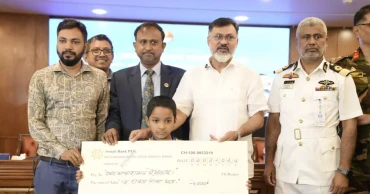
DNCC urges residents to join dengue prevention efforts
Dhaka North City Corporation (DNCC) Administrator Md Safiqul Islam Khan on Monday urged city dwellers to remain vigilant and actively participate in dengue prevention efforts during the monsoon, stressing that it cannot be controlled without public involvement.
“It is not possible to control dengue without the active participation of citizens,” he said, calling on residents to keep their surroundings clean and remove stagnant water from homes, yards, flower pots, buckets and other containers to prevent the breeding of Aedes mosquito.
The DNCC administrator came up with the call while talking to reporters after attending a programme held at the Nagar Bhaban in Gulshan-2.
He also urged people to support the ongoing special campaign titled “Saturday’s commitment – let us clean our own homes.”
Earlier in the day, Safiqul Islam handed over cheques for over Tk 92 lakh to 731 students as educational scholarships under the DNCC's Education and Merit Scholarship Policy-2017.
Speaking at the programme as the chief guest, he said the scholarship programme is being carried out regularly to promote education and nurture students’ talent.
The initiative aims to support meritorious students from low-income families and help them continue their education, he said.
Safiqul Islam also encouraged students to prepare themselves as skilled human resources in different professions.
Presiding over the programme, DNCC Chief Executive Officer Mohamad Ashaduz Zaman said the scholarship programme is running under the 2017 policy guidelines.
He said while 69 students received scholarships last year, the number has increased to 731 this year.
24 days ago
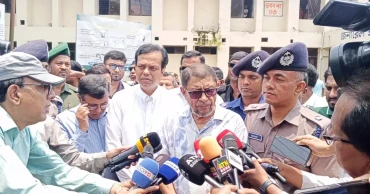
Measles situation likely to improve within 4 weeks: Health Minister
Health Minister Sardar Md. Sakhawat Husain on Monday said the measles situation is expected to come under control within four weeks as vaccinated people will develop immunity during this period.
The number of patients has already started declining, he said while talking to reporters after visiting Barishal Sadar Hospital in the morning.
Measles vaccination was supposed to be administered every four years but the continuity was disrupted after 2020, leading to the current outbreak, he said
The present government initially had no stock of measles vaccines but managed to procure them within a short time, he added.
During his visit to Barishal Sadar Hospital, the minister first inspected the ticket counter and suspended an employee after finding him absent from duty.
Later, he checked the attendance registers of doctors and spoke to patients receiving treatment.
According to the Directorate General of Health Services (DGHS) report, eleven more children died from measles and with measles-like symptoms across the country in 24 hours until 8:00 am Sunday, bringing the total number to 409 since March 15.
24 days ago

Mango harvesting in Natore to begin on May 15
Mango harvesting in Natore will officially begin on May 15 with the collection of Guti variety as the local administration announced the mango calendar on Monday.
The schedule was unveiled at a meeting held with Deputy Commissioner Asma Shaheen in the chair at the conference room of her office.
According to the calendar, harvesting of other mango varieties, including Gopalbhog, Rani Pochondo, Khirsapat, Langra, Amrapali, Fazli, Haribhanga,
Gourmati, Bari-4 and Ashwina, will continue in phases from May 25 to August 10.
Deputy Director of the Natore Department of Agricultural Extension (DAE) Habibul Islam Khan, mango orchard owners and traders from different parts of the district attended the meeting.
Besides, strict instructions were issued against the artificial ripening of mangoes.
The meeting also fixed May 17 for harvesting Muzaffarpuri litchis and May 25 for Bombay and China-3 varieties.
However, litchis have already started appearing in local markets, with Habibul Islam describing those local varieties.
24 days ago
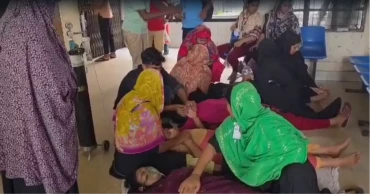
Over 50 RMG factory workers fall ill in Gazipur
At least 50 workers of a garment factory in the Bhogra area of Gazipur city fell ill on Monday, prompting authorities to declare a holiday at the factory.
Sixteen workers were admitted to different hospitals, including Shaheed Tajuddin Ahmad Medical College Hospital, while others took primary treatment.
Witnesses said authorities of Panasia Clothing Ltd arranged a milad mahfil at the factory in the morning where workers participated.
While a mujanat was underway at the end of the religious programme, workers started falling sick one after another, creating panic among fellow workers.
In total, around workers 50 fell ill. They were immediately taken to hospital.
Director of Shaheed Tajuddin Ahmad Medical College Hospital Dr Md Aminul Islam said there was no major concern over the condition of the sick workers.
He termed the incident as a case of mass psychogenic illness and said the patients were expected to recover gradually after treatment.
Following the incident, the authorities declared the factory closed for the day.
24 days ago