Others
DCs directed to ensure safety of tourists, says Tourism Minister
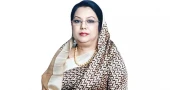
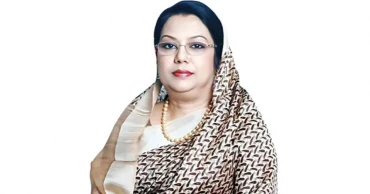
Civil Aviation and Tourism Minister Afroza Khanam Rita on Monday said Deputy Commissioners (DCs) have been instructed to ensure the safety and security of tourists across the country.
She made the remarks while speaking to reporters after the first session of the second day of the DC Conference at Osmani Memorial Auditorium in the capital.
The minister said discussions centered on renovating tourist destinations across districts, identifying measures to attract more visitors and developing facilities in areas such as Monpura and Netrokona along with several other districts.
“If tourism is developed properly, it will attract more visitors and help people learn more about the country,” she said.
Afroza added that the ministry would extend full support in implementing proposals received from field-level administrations.
Responding to a question, she said the issue of tourist safety was given importance during the discussions. “Instructions were also given to maintain cleanliness and improve management at Cox’s Bazar, particularly the beach area.”
Replying to another query about Saint Martin's Island, the minister said the issue of seasonal restrictions on travel to the island was not discussed at the session.
She said Prime Minister Tarique Rahman is keen to transform tourism into a full-fledged industry, adding that both public and private sector participation is being encouraged.
When asked about districts with airports, the minister said DCs highlighted the need for further development of Saidpur airport, noting that work has already begun in this regard.
She added that initiatives have been taken to operationalise several airports including those in Thakurgaon and Bogura.
Afroza Khanam said she is scheduled to visit Bogura on May 7 to assess prospects for establishing an airport and a flying academy there. “We want to set up a flying academy so that aspiring students including those from underprivileged backgrounds can receive training and become pilots,” she said.
1 month ago
OCAB president prevented from travelling to China in dramatic intervention
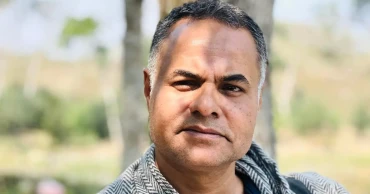
The president of the Overseas Correspondents Association Bangladesh, Nazrul Islam Mithu, has disclosed he was prevented from boarding a flight to China at the airport's immigration area on Sunday for no valid reason, that he said amounts to a violation of his fundamental right to freedom of movement and contravenes Article 13 of the International Human Rights Declaration.
In a Facebook post Sunday, incidentally Press Freedom Day, Mithu declared “Press Freedom Day, minus the freedom!”
Mithu shared his frustrating and harrowing experience at Hazrat Shahjalal International Airport after he was barred from travelling to China on Sunday afternoon.
Mithu wrote that he was among passengers scheduled to travel to China on Sunday after collecting his boarding pass when a uniformed officer called him by name near an immigration counter.
He said he was asked to hand over his passport and boarding pass and was taken to the office of an immigration head, a Superintendent of Police (SP), where he was questioned about his profession and workplace.
“I represent the German News Agency, dpa, in Dhaka,” Mithu said he told the officer, adding that he was also asked whether he was the president of any organisation.
He said several intelligence officials later questioned him about his role as president of OCAB, and whether he was implicated in any case, to which he replied in the negative.
According to Mithu, the SP later told him that police had found nothing against him but that he would need clearance from other “agencies.”
After waiting for nearly an hour, he was informed that he might not be allowed to travel, although no specific reason was given.
Mithu said his passport was eventually returned, his luggage was offloaded, and he was escorted out of the airport.
He noted with irony that the incident occurred as World Press Freedom Day was being observed globally, with calls for greater protection of journalists.
1 month ago
New ‘Britto’ libraries open for special needs children in Dhaka
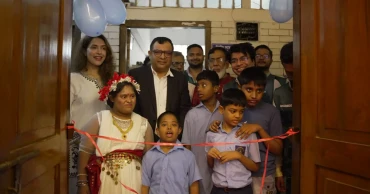
Footsteps Bangladesh, in partnership with Eastern Bank PLC, on Sunday inaugurated two Britto Children’s Libraries at SWID Bangladesh’s Eskaton and Dhanmondi campuses to support children with special needs.
Implemented under Project Britto, the initiative transforms underutilised school spaces into child-friendly libraries with accessible layouts, curated books and creative learning elements.
Speaking at the event, Maskur Reza, Executive Vice President and Head of Business Information Systems and Managing Director’s Secretariat at Eastern Bank PLC, said the initiative is expected to create meaningful impact and expressed hope for continued collaboration.
Shah Rafayat Chowdhury, Co-founder and President of Footsteps Bangladesh, said the project has already received strong recognition within the development sector and among partners. He emphasised the organisation’s vision to expand similar initiatives to schools where library spaces remain underutilised.
Mohammad Taqi Yasir, Co-founder and Vice President of Footsteps Bangladesh, acknowledged Eastern Bank PLC’s support, describing the partnership as impactful. He added that the organisation aims to continue such initiatives to drive positive change nationwide.
The inauguration was attended by celebrities, including Sameer Ahmed, Snigdha Chowdhury, Fahmim Rahman and Sarah Alam, who expressed support for the initiative and stressed the importance of collaboration in advancing inclusive education.
The Britto Children’s Library initiative reflects growing efforts to improve access to quality education and create supportive learning environments for underserved children across Bangladesh.
1 month ago
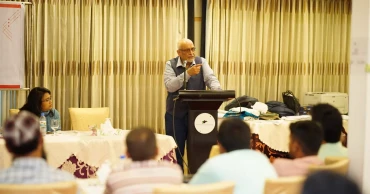
Two-day workshop on election commitments, reforms and fact-checking begins in Dhaka
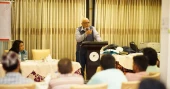
A two-day workshop titled “Election Commitments, Reforms and Fact-checking” began on Sunday in Dhaka.
The event has been organised by the Citizen’s Platform for SDGs in association with the Economic Reporters’ Forum (ERF), with support from the Embassy of Switzerland in Bangladesh and the United Nations Development Programme (UNDP).
The workshop aims to serve as a capacity-building initiative to strengthen reporting on reforms and governance at the grassroots level. Around 35 journalists from television, newspapers and online media from across the country participated in the first day of the programme.
On the opening day, Tarannum Jinan, Network Focal Point of the Citizen’s Platform and Senior Administrative Associate at CPD, welcomed the participants and facilitators.
Introductory remarks were delivered by Doulot Akter Mala, President of the Economic Reporters’ Forum.
Dr Debapriya Bhattacharya, Distinguished Fellow at CPD, outlined the objectives of the workshop, what participants can expect, and the critical role of journalists in covering reform and election commitments.
Professor Mustafizur Rahman, Core Group Member of the Citizen’s Platform and Distinguished Fellow at CPD, along with Md. Rifat Bin Aowlad, Dialogue Associate at CPD, and Zarin Tasnim, Executive Associate to the Distinguished Fellow at CPD, were also present.
Over the two days, participants will be introduced to the Citizen’s Platform’s newly launched “Bangladesh Reform Tracker” and provided with tools to improve reporting on reform-related issues.
1 month ago

Cabinet approves tax relief for brand new electric vehicle imports
The Cabinet has approved a set of tax measures for the import of completely new electric vehicles, including buses and trucks.
The decision was taken at a Cabinet meeting held Sunday at 6:45 pm in the Cabinet Room of the National Parliament, according to a statement from the Cabinet Division.
The meeting was chaired by Prime Minister Tarique Rahman.
Under the decision, a notification will be issued to maintain the Value Added Tax (VAT) at 15 percent for electric buses with a minimum of 17 seats, for use in sectors other than student transportation.
At the same time, these imports will be exempted from customs duty (CD), regulatory duty (RD), supplementary duty (SD), advance tax (AT) and advance income tax (AIT), subject to certain conditions.
The facility will remain in effect till June 30, 2026 - i.e. the end of the current fiscal.
It follows an earlier decision to allow the duty-free import of electric buses for educational institutions to promote safe and environment-friendly transportation for students.
The initiative was proposed by the Internal Resources Division, the statement said.
A similar notification will also be issued for the import of trucks with a capacity of five tons or more, the statement added.
1 month ago
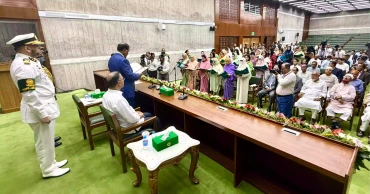
49 reserved seats for women MPs sworn in; NCP's nominee not yet
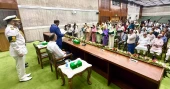
The newly elected women Members of Parliament (MPs) took oath on Sunday to represent their respective parties from the reserved seats.
Speaker Hafiz Uddin Ahmad, Bir Bikram, administered the oath at 9:07pm at the Oath Room of the Jatiya Sangsad Bhaban.
The oath-taking ceremony was conducted by Parliament Secretariat Secretary Golam Sarwar Bhuiyan.
Prime Minister Tarique Rahman, along with cabinet members and senior leaders of the ruling BNP, opposition Jamaat, and NCP, were present on the occasion.
Earlier on April 30, the Election Commission published a gazette declaring 49 lawmakers elected unopposed to the reserved women’s seats in the 13th parliament.
The 36 BNP alliance MPs are Selima Rahman, Shirin Sultana, Rasheda Begum Hira, Rehana Akter Ranu, Newaz Halima Arly, Farida Yasmin, Bilkis Islam, Shakila Farzana, Helen Jerin Khan, Nilufar Chowdhury Moni, Nipun Roy Chowdhury, Zeeba Amina Khan, Mahmuda Habiba, Sabira Sultana, Sunsila Jabrin, Sanjida Islam (Tulee), Sultana Ahmed, Fahmida Haque, Anna Minz, Subarna Shikdar, Shamim Ara Begum Swapna, Shammi Akter, Ferdousi Ahmed, Bithika Binte Hossain, Suraiya Jerin, Mansura Akter, Jahrat Adib Chowdhury, Momtaz Alo, Fahima Nasrin, Arifa Sultana, Sanjida Yasmin, Nadia Pathan Papon, Shawkat Ara Akter, Madhabi Marma, Selina Sultana and Rezeka Sultana.
The 12 Jamaat-e-Islami-led alliance newly elected lawmakers include Nurunnisa Siddika, Marzia Begum, Sabikun Nahar, Nazmun Nahar, Mahfuza Hannan, Sajeda Samad, Shamsunnahar Begum, Marzdia Momtaz, Rokeya Begum (mother of July martyr Jabir Ibrahim), Mahmuda Alam Mitu (NCP), Tasmia Pradhan (Jagpa) and Mahbuba Hakim (Bangladesh Khelafat Majlish).
The independent MP for the lone reserved seat is Sultana Jasmin.
There are 50 reserved seats for women in the Parliament. For the last remaining seat, which is supposed to go to the National Citizen Party, the Election Commission initially rejected the nominations of two NCP aspirants - Monira Sharmin's candidacy was deemed ineligible, while Nusrat Tabassum submitted her paperwork late.
Although the nomination of Nusrat was later declared valid, it came too late for her to be sworn in today alongside the others. Sharmin meanwhile herself has an appeal pending over the matter of her nomination in the High Court.
1 month ago
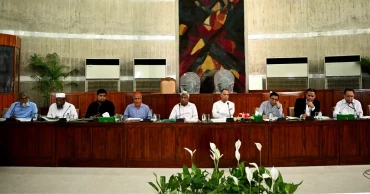
Parliamentary Special Committee holds first meeting on situation in energy sector
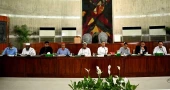
The first meeting of a special committee of the 13th National Parliament on the country’s recent energy situation was held on Sunday at the National Parliament Building.
The meeting was chaired by the committee’s chairman, Minister for Power, Energy and Mineral Resources Iqbal Hassan Mahmood.
Committee members, including State Minister for Power, Energy and Mineral Resources Anindya Islam Amit, Whip A. B. M Ashraf Uddin (Nijan), Whip Mia Nuruddin Ahmed Apu, Moinul Islam Khan, Md. Nurul Islam, Md. Abdul Baten, Md. Abul Hasnat and Mohammad Abul Hasan, attended the meeting.
During the session, the ministry gave a presentation on the country's overall energy situation.
The committee expressed satisfaction with the steps taken so far to address the emerging challenges.
Members reviewed different aspects of the ongoing energy situation and shared their views.
The committee decided to hold further meetings before submitting a report with recommendations to Parliament.
The meeting was also attended by the Secretary of the Energy and Mineral Resources Department, the Secretary of the Bangladesh National Parliament Secretariat, and other concerned officials.
1 month ago
BSTI gets new DG: Kazi Emdadul Hoque appointed on contractual basis
Kazi Emdadul Hoque, a prominent researcher, author, and former tax commissioner, has been appointed as the Director General of the Bangladesh Standards and Testing Institution (BSTI).
A seasoned official of the 7th batch of the BCS (Tax) cadre, Huqe joined his new post on Sunday (May 3). The appointment has been made on a contractual basis with the rank and status of a Senior Secretary to the government.
He succeeds at the helm of the national standards body following a distinguished three-decade career in the country's revenue administration. Huqe previously served as the President of the Taxes Appellate Tribunal and as a Commissioner of Taxes at the National Board of Revenue (NBR), where he played a pivotal role in strengthening the nation’s economic and administrative frameworks.
Since joining the civil service in 1988, he has held various high-level positions, including a significant tenure as Additional Commissioner at the Large Taxpayers Unit (LTU). On the international stage, he has represented Bangladesh in negotiations regarding global tax policies and Double Taxation Avoidance Agreements (DTAA). Additionally, he served as the Private Secretary to the Minister for Posts and Telecommunications from 2001 to 2004.
An accomplished academic, Huqe secured first-class-first honors in his Master’s from the Department of Soil, Water, and Environment at the University of Dhaka. During his university years, he was a two-time champion in literary competitions and a notable participant in national television debates.
Beyond his administrative career, Huqe is a well-known literary figure and researcher. His book 'Kalo Taka' (Black Money) is a widely discussed scholarly work. He has also been a familiar face on television, hosting programs focused on income tax to raise public awareness.
BSTI officials expect that his blend of administrative expertise and creative vision will significantly contribute to the institution's mission of ensuring product quality and national standards.
1 month ago
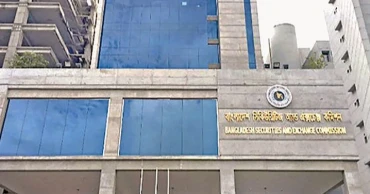
BSEC sets June 30 deadline for 131 listed firms to appoint female independent directors
The Bangladesh Securities and Exchange Commission (BSEC) has issued a final ultimatum to 131 listed companies that have failed to appoint female independent directors to their boards within the stipulated time frame.
The regulator warned that strict legal action will be taken against the non-compliant firms if they fail to meet the requirement by June 30.
The announcement was made in a press release signed by BSEC Director and Spokesperson Md. Abul Kalam on Sunday. This follows a meeting held on April 29 at the commission's office in Agargaon, where secretaries of the defaulting companies were briefed on the mandatory directive. BSEC Executive Director Md. Anwarul Islam presided over the session.
According to the Corporate Governance Code-2018, all listed companies must ensure female representation in independent director positions. The commission has encouraged the recruitment of qualified women from various sectors, including business leaders, corporate executives, academics, lawyers, and both active and retired government officials.
The mandate was reinforced through a gazette notification published on April 29, 2024, which initially provided a one-year window for compliance. Although the deadline was previously extended to December 31, 2025, for certain criteria, the commission is now pushing for immediate implementation regarding these specific vacancies by the end of June.
Data submitted to the commission by the Dhaka Stock Exchange (DSE) reveals that while 163 listed companies have completed the appointments, 131 companies remain non-compliant.
The BSEC emphasized that this initiative is part of a broader effort to strengthen corporate governance and ensure gender diversity within boardrooms. The regulator made it clear that failure to implement the directive within the new deadline will result in punitive measures.
1 month ago
Shortage of storage capacity, disruption to shipment schedules due to Iran War behind fuel crisis
Inadequate fuel storage capacity and irregular shipment schedules caused by global conflicts have been identified as the primary drivers behind the recent energy crisis in Bangladesh.
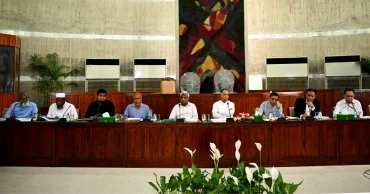
The Ministry of Power, Energy, and Mineral Resources shared these findings on Sunday during a meeting with a special parliamentary committee formed to address the country's ongoing energy situation.
The committee, however, expressed satisfaction with the emergency measures taken by the ministry to stabilize the sector.
The meeting was held at the Parliament with the committee's chairman, Minister for Power, Energy and Mineral Resources Iqbal Hasan Mahmud, in the chair.
Sources within the committee revealed that the ministry presented a detailed report on the fuel sector's current status.
The ministry admitted that Bangladesh currently lacks the infrastructure required to maintain a buffer stock large enough to withstand several months of supply disruptions.
While the fuel import process was intended to be seamless, the ministry explained that global geopolitical tensions and conflicts have caused fuel-carrying vessels to arrive irregularly.
This unpredictability led to a depletion of existing reserves, triggering public panic. The ministry noted that once panic spread, the sudden spike in demand made it nearly impossible to maintain a steady supply with the existing logistics.
The special committee recommended that the ministry take immediate steps to ensure an uninterrupted import chain.
Members also inquired about long-term plans to expand storage facilities to prevent similar "panic-buying" scenarios in the future.
Speaking to reporters after the meeting, committee member Md. Abdul Baten stated that while the initial discussions were productive, the committee has sought a more comprehensive report based on specific queries raised by members.
"We have provided several suggestions and asked tough questions. The ministry is expected to present a follow-up report in the next meeting," Baten said.
He added, "However, we are satisfied with the immediate steps taken to mitigate the current situation. We have been assured that there is no risk of an immediate fuel shortage now, and precautionary measures are in place for the coming months."
The special committee includes State Minister for Power, Energy and Mineral Resources Anindya Islam Amit, Whip A.B.M. Ashraf Uddin (Nizan), Whip Miah Nuruddin Ahammed (Apu), Moinul Islam Khan, Md. Nurul Islam, Md. Abdul Baten, Md. Abul Hasnat (Hasnat Abdullah), and Mohammed Abul Hasan.
A press release from the Parliament Secretariat confirmed that the committee plans to hold further meetings to finalize its recommendations before submitting a formal report to the House.
1 month ago