Others
SSC question paper leak claim baseless, misleading: Education Ministry
The Ministry of Education has dismissed reports circulating on social media and various news portals claiming that question papers of the ongoing SSC examination specifically Bengali First Paper of all education boards been leaked, terming the information as completely false, baseless, and deliberately misleading.
In a notice issued on Saturday, the ministry urged the public not to be misled by such rumours and to remain cautious.
The Bengali First Paper examination was held on 21 April, followed by the Bengali Second Paper on 23 April and no reports of any untoward incidents were received during the examinations, it said.
However, the false report regarding question paper leakage which surfaced a day after the examinations has created unnecessary anxiety among students and guardians, said a PID handout.
The ministry said allegation of question paper leakage is nothing but a rumour being spread with the intent of tarnishing the government’s image.
It further said no officials or employees of the ministry or its subordinate offices are involved in such activities.
People been advised not to engage with or be influenced by such misleading information, and to refrain from any kind of financial transactions in this regard.
The Ministry of Education also requested that anyone coming across such propaganda immediately inform the authorities concerned.
1 month ago

Rationalising SD, VAT critical to ensure fairness, reduce distortions: PRI dialogue
Experts at a policy dialogue on Sunday stressed the need for a simplified, neutral and predictable tax structure to improve revenue mobilisation while reducing market distortions.
The Policy Research Institute of Bangladesh (PRI) organised the closed-door event titled “Rationalising Supplementary Duty and VAT in Bangladesh: Evidence, Challenges, and Reform Pathways.”
Research Director at PRI Dr Bazlul Haque Khondker and Principal at The M Group Hafiz Choudhury made the keynote presentation, outlining global good practices and reform priorities for Bangladesh’s selective taxes – particularly supplementary duty (SD) – within the VAT framework.
They said modern tax systems rely on clearly defined objectives and consistent application, arguing that selective taxes should primarily address negative externalities such as health or environmental harm rather than serve as general revenue tools or trade policy instruments.
The presentation highlighted that good tax policy should follow core principles, including neutrality, efficiency, certainty and simplicity, as well as fairness and flexibility.
It also noted that VAT should function as the main revenue-raising instrument with ideally a single rate, while income tax ensures progressivity and selective taxes address harmful consumption.
According to the presenters, supplementary duties and excise-type taxes should be designed to internalise external costs and must be based on transparent structures, preferably using specific rates rather than ad-valorem systems.
They warned against using these taxes as secondary VAT, trade taxes or primary revenue sources, saying such practices create distortions and undermine policy goals.
PRI also emphasised that tax structures should reflect the degree of harm caused by different products and be calibrated to maintain market stability, while avoiding abrupt changes that may trigger price shocks or encourage illicit trade.
The keynote noted that the VAT and Supplementary Duty Act, 2012 still carries legacy design features, and reforms should aim to simplify the system and align it with global best practices, recommended single-stage taxation at production or import stage to reduce cascading effects and administrative complexity.
The presentation also suggested introducing a “release from bond” approach and an Authorised Economic Operator (AEO) regime to reduce tax evasion and improve compliance. “A separate Excise Act would be ideal, though amendments to the existing 2012 law could also deliver improvements.”
To strengthen enforcement, the speakers recommended digital “track and trace” systems combined with physical monitoring to curb illicit trade and improve transparency across supply chains.
The dialogue highlighted international practices for taxing specific goods. These include specific rates per litre of alcohol, per stick of combustible tobacco, per unit of smokeless tobacco, per millilitre of nicotine, and per litre of fuel depending on type.
For food and beverages, taxation, if applied should be based on sugar content, while telecom and mobile money taxes can be structured as flat rates per transaction. “Such approaches enhance clarity, reduce manipulation, and align tax burdens with policy objectives.”
The keynote also proposed base-broadening measures to strengthen revenue without increasing distortionary rates. These include taxation of smoke-free nicotine products and restructuring food and beverage supplementary duties to apply consistent risk-adjusted taxation across sugary manufactured products.
It noted that staged rate reductions combined with base broadening could increase revenue while improving compliance. Gradual adjustments were recommended to avoid price shocks, with a medium-term transition toward a fully specific tax system.
The dialogue emphasised improved enforcement to reduce illicit trade, including risk-based customs resource allocation and tighter regulatory controls for ingredients and raw materials used by licensed manufacturers.
Digital supply chain monitoring, customs single window systems, and compliance programmes such as “know your supplier” and “know your customer” were also recommended to enhance transparency and reduce tax leakage.
Regional coordination was another key theme, with the presentation suggesting alignment of tax rates on similar goods with neighbouring countries such as India and Myanmar. It also proposed exploring regional cooperation mechanisms, including potential agreements under BIMSTEC or broader tax administration cooperation platforms.
The presenters outlined several guiding principles for reform, including ensuring consistent taxation of similar goods, creating a level playing field for market participants, and aligning tax burdens with the degree of harm associated with products.
They also stressed the need for detailed modelling before structural changes, revenue protection through base broadening, and alignment with global good practices, particularly eliminating cascading effects within the tax system.
Participants at the closed-door session discussed the implications of rationalising supplementary duty and VAT structures for investment, competitiveness and consumer welfare, highlighting that a predictable and transparent tax regime is essential for long-term fiscal sustainability and economic growth.
PRI said the dialogue is part of its ongoing efforts to promote evidence-based policymaking and support reforms aimed at improving efficiency and fairness in Bangladesh’s tax system.
1 month ago

Education Minister warns of action against SSC question leak rumour mongers
Education Minister A N M Ehsanul Hoque Milon on Sunday warned of action against those spreading rumours over question paper leaks during the ongoing Secondary School Certificate (SSC) examinations, urging students and guardians not to pay heed to misinformation.
The government is being embarrassed by such rumours but remains vigilant to ensure that students do not suffer because of misinformation, he told reporters attending a programme organised by the University Grants Commission (UGC) in the capital.
“We request students and guardians not to pay attention to rumours. We are alert. Even after official statements from the authorities, some people are still spreading rumours. Action will be taken against them,” he said.
Referring to reports based on Telegram groups and social media posts, Milon criticised sections of the media for publishing unverified reports.
“Before publishing reports based on Telegram groups, there should have been proper verification. One cannot rely on Facebook posts alone. Instant comments spread on Facebook like instant coffee. The media also has a responsibility,” he said.
The minister said the government is satisfied with the overall environment of the ongoing SSC examinations.
“So far, we are receiving positive feedback. We are satisfied, teachers are satisfied, students and examinees are also satisfied. We hope the remaining exams will also be completed smoothly with everyone’s cooperation,” he said.
Highlighting the government’s education planning, he said the government is planning ti designate December as the month for examinations and begin new academic sessions from January in order to minimise academic delays and session backlogs.
“We believe December should be the examination month and new classes should begin from January so that there is no waiting time,” he said.
Milon said coordination among education boards, universities and curriculum authorities would be strengthened to address the academic gap faced by higher secondary students and reduce session jams in university admissions.
He said the authorities are working on aligning curricula, syllabuses and academic schedules to ensure timely completion of courses and smoother admission processes for students transitioning to higher education.
1 month ago

Teesta Irrigation Project: A lifeline for northern farmers, saves Tk 60cr in diesel costs
The Teesta Irrigation Project has emerged as a blessing for farmers across four northern districts, ensuring uninterrupted irrigation during the ongoing Boro season when many parts of the country are struggling with fuel and electricity disruptions.
Farmers in Rangpur, Nilphamari, Dinajpur and Bogura say the project has brought relief by providing affordable and reliable irrigation water, boosting hopes of higher crop production this season.
Officials say the project has also helped save nearly Tk 60 crore in diesel costs, reducing dependence on fuel-powered irrigation amid the ongoing energy constraints.
According to the Water Development Board, Rangpur zone, about 10 lakh farmers are currently benefiting from the project, which has ensured uninterrupted irrigation across the region without major disruptions.
“Farmers are getting water smoothly through the Teesta project, which has reduced irrigation costs significantly,” said Mizanur Rahman, Superintending Engineer of Bangladesh Water Development Board, Rangpur.
He said the availability of water through the system is also helping improve soil fertility, further encouraging farmers to expand cultivation every year.
Officials said around 88,000 hectares of land across 12 upazilas in four districts have come under irrigation coverage this Boro season.
Under the system, 32,000 hectares in Nilphamari, 6,000 hectares in Dinajpur, 23,000 hectares in Bogura and 27,000 hectares in Rangpur district are being irrigated through canals fed by water from the Teesta River.
Field visits show water from the river is being channelled through a network of canals, including a 10-kilometre canal from Sayrabari to Bakpur in Gangachara upazila, irrigating around 130 acres of farmland.
Currently, around 8,000-9,000 cusecs of water are flowing in the river, compared to only 3,000 cusecs during the same period last year.
Local farmers say the project has drastically reduced irrigation costs. Abdus Salam, a farmer from Gangachara’s Borobil union, said irrigating one acre of land now costs only Tk 1,200-1,500 under the project, compared to nearly Tk 10,000 using other sources.
He also expressed hope for yields of 85-90 maunds per acre this season.
Farmers say the silt carried by Teesta water helps improve soil fertility and reduces the need for chemical fertilisers. Shahjahan Ali, general secretary of a local water management group, said this natural process increases productivity, with yields rising by 3-4 maunds per bigha compared to other irrigation systems.
However, farmers also pointed out several challenges, including delayed water supply before February, forcing them to depend on alternative sources for seedbed preparation.
They also cited issues such as rodent damage in earthen canals and difficulties in supplying water to uneven land.
In Nilphamari’s Kishoreganj upazila, canal renovation work has temporarily disrupted water supply in some areas, prompting locals to demand earlier and uninterrupted distribution from January.
Despite the limitations, farmers and officials remain optimistic. They say if Teesta is properly dredged and canal flow is improved, agricultural output in the region could increase significantly.
Authorities, however, noted that irrigation timing varies due to different crops such as rice, tobacco and maize. They also said ongoing canal maintenance has limited further expansion this season, but water supply is expected to continue for the next two months.
1 month ago
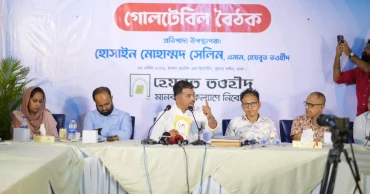
Only Islam can ensure rights and justice, says Hezbut Tawheed leader
Imam Hossain Mohammad Salim, leader of the non-political movement Hezbut Tawheed, has said that only Islam can truly ensure human rights, freedom of speech and justice.
“War is being imposed on one Muslim country after another. International organisations, including the United Nations, have failed to address this injustice,” he said at a roundtable with media personnel in Dhaka.
Highlighting the global situation, he alleged that widespread violations of human rights and freedom of speech are taking place around the world, and claimed that even the basic rights of Muslims in Palestine and Myanmar have not been protected.
Turning to Bangladesh, Salim said hundreds of mob incidents have occurred in the country over the past two years, alleging that radical and sectarian groups are creating unrest.
He proposed a complete overhaul of the existing system, within which Islam is often portrayed as something alarming, whereas it is a balanced way of life.
“Only by establishing this system can ongoing injustice and unrest be ended,” he said.
He also called for the implementation of Islamic principles in state, judicial, military and economic spheres.
In addition, he proposed greater unity among Muslim countries and increased dialogue among different religious communities.
Among others, Hezbut Tawheed Joint General Secretary Rufaydah Panni, Dr Mahbub Alam Mahfuz and SM Sasmul Huda, Dhaka Union of Journalists (DUJ) President Mohammad Shahidul Islam, Daily Kalbela News Department Head Kabir Hossain, NTV Chief News Editor Fakhrul Alam Khan, former Jatiya Press Club joint secretary Md Ashraf Ali, were present.
1 month ago
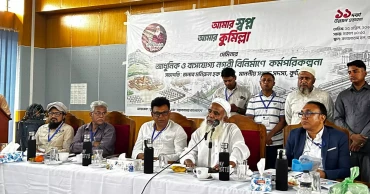
Seminar on urbanisation envisions Cumilla as a modern, livable city
Speakers at a seminar on Saturday urged the government to ensure planned expansion of urban centres, warning that existing city corporations are struggling to deliver proper services due to unplanned urbanisation.
They made the call at a discussion titled “Amar Swapna, Amar Cumilla: Action Plan for Building a Modern, Livable City,” held at the Bangladesh Academy for Rural Development (BARD) in Kotbari. The event was organised by Cumilla Bachao Mancha and Somvabonamoy Bangladesh.
Speakers said redesigning Cumilla as a modern alternative city could be a “game changer” for Bangladesh, given its strategic importance in the country’s economy, transportation, and regional connectivity.
Highlighting longstanding civic challenges including traffic congestion, waterlogging, unplanned urbanisation, environmental pollution, and weak communication systems, they stressed the need for a coordinated and forward-looking development approach.
At the event, Cumilla-6 lawmaker Monirul Haque Chowdhury presented an 11-point long-term development plan aimed at transforming Cumilla into a divisional, commercial, and communication hub.
The keynote presentation was delivered by masterplan development expert and JICA consultant Md Mehedi Hasan. The session was moderated by Prof Dr MM Shariful Karim, while the lawmaker delivered the concluding remarks.
Among others, Asian Development Bank’s Senior Transport Specialist Mohammad Nazrul Islam and architect Muhaimin Shahriar, a member of the environment and urbanisation committee of the Institute of Architects Bangladesh, also spoke at the programme.
The proposed plan includes the development of a “Dr Akhter Hameed Khan Satellite City” centring BARD, Kotbari, and Kalir Bazar areas to ease population pressure on the main city and promote planned urbanisation. It also proposes establishing a modern eco-tourism park in the Lalmai hill area.
To address traffic congestion, the speakers emphasised introducing a modern mass transit system, constructing a direct rail link between Dhaka and Cumilla, building an elevated expressway on the Dhaka–Chattogram highway, and developing flyovers, underpasses, and service lanes at key intersections.
They also proposed constructing a new bridge over the Gomti River and developing alternative road networks to improve connectivity.
As part of broader urban governance reforms, the speakers called for upgrading Cumilla into a full-fledged division, expanding the city corporation area, and establishing a Cumilla Development Authority and WASA serving the municipality.
They further proposed reopening the British-era Cumilla airport with international cargo facilities, which could transform Cumilla into a major commercial hub in the southeastern region.
Environmental protection also featured prominently in the discussion, with calls for effective effluent treatment plants (ETPs) in EPZ areas to control industrial waste and safeguard farmers and aquatic resources.
The speakers expressed optimism that with planned urbanisation, improved transport systems, and environmentally sustainable development, Cumilla could emerge as one of the country’s most modern and economically vibrant metropolitan cities in the future.
Shaikh Muhammad Mehedi Ahsan, Vice President Bangladesh Institute of Planners (BIP), Md. Nurullah, former chief engineer, Dhaka South City Corporation and ABM Sertajur Rahman, Project management expert, Asian Development Bank spoke at the event
1 month ago
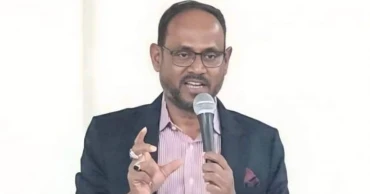
Livestock sector being brought under ‘Farmer Card’ program: State Minister Tuku
State Minister for Fisheries and Livestock Sultan Salauddin Tuku on Saturday said the fisheries and livestock sector is being brought under the ‘Farmer Card’ programme as the current government is working with the utmost importance for the development of the sector.
“The fisheries and livestock sector are coming under the ‘Farmer Card' (programme). So, farmers in the sector will also enjoy benefits similar to crop farmers,” he said.
The state minister made the remarks while speaking as chief guest at a programme marking World Veterinary Day 2026 at the Bangladesh Agricultural Research Council (BARC) auditorium in the city.
This year's day was observed with the theme “Veterinarians: Guardians of Food and Health".
Sultan Salahuddin Tuku said the livestock sector could play a very important role in strengthening the country’s economy. “The government is also giving the utmost importance to the development of this sector. There is no alternative to this sector for attaining self-sufficiency in food and increasing exports,” he said.
Focusing on the importance of veterinary professionals in ensuring safe food, Tuku said food security has become one of the most critical issues globally and veterinarians are playing a significant role in protecting public health through safe food production.
Noting that awareness about food safety has increased over time, he said interest in veterinary education and the profession has also expanded significantly in the country. “Although the veterinary profession was once not given much importance, people's interest in this sector has now increased greatly,” he said.
Describing animal healthcare as a challenging task, the state minister said animals cannot express their problems, making treatment and care difficult, and praised professionals working in the sector as highly skilled and competent.
Tuku also stressed the need for finding effective solutions to the challenges in the animal husbandry through discussion and coordination.
“Animal husbandry and veterinary science are currently going through a complex and challenging situation. We will find effective solutions through mutual discussion and coordination. If we work together, all problems can be solved and everyone will benefit equally,” he said.
The event, chaired by President of Veterinary Association of Bangladesh (VAB) Prof Dr Md Mahbub Alam, was also addressed by Fisheries and Livestock Secretary Delwar Hossain and Director General (In-Charge) of the Department of Livestock Services Agriculturist Md Shahzaman Khan.
Senior officials of the ministry and veterinarians from across the country attended the event.
Earlier, the state minister joined a colourful rally and inaugural activities organised on the occasion of World Veterinary Day, said a PID handout.
1 month ago

Govt wants affordable smartphones for all: PM’s ICT Adviser
The government aims to bring down the price of smartphones to between Tk 2,500 and Tk 3,000, Prime Minister’s Adviser on the Ministry of Posts, Telecommunications and Information Technology Rehan Asif Asad has said.
“The price of our devices should be made affordable and cheap,” he said at a seminar titled “New Telecom Policy: Expectations of Entrepreneurs,” organised by the Telecom and Technology Reporters Network Bangladesh (TRNB) at a hotel in the capital on Saturday.
He noted that even in 2026, around 50 percent of Bangladeshis may still not have access to smartphones, while the current lowest-priced devices cost around Tk 8,999 to Tk 10,000.
The adviser said he has discussed the issue with mobile retailers and manufacturers on how prices can be further reduced.
“I am talking to Bangladesh Bank and mobile operators in this regard,” he said.
He added that the target is to bring down the cost of mobile phones to Tk 2,500–3,000 so that farmers, daily wage workers and rickshaw pullers can also use smartphones.
“We are working so that people in villages can also access affordable smartphones. We are engaging with Bangladesh Bank, the NBR, and local manufacturers to reduce costs,” he said.
On computer prices, the adviser said countries such as India, Pakistan and Sri Lanka have zero percent tax on certain devices, while Bangladesh imposes around 33 percent tax on computer monitors.
He said the government will work on the value chain and tax structure but cautioned that immediate results should not be expected.
“I do not want to give the impression that everything will be solved in the next two months. We will try to do as much as possible within this budget. If not now, this is the beginning of the process,” he added.
1 month ago
Youth demand effective tobacco tax and pricing in upcoming budget
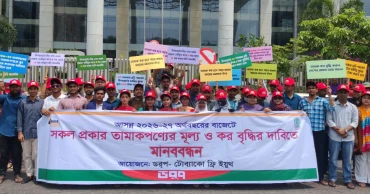
More than one hundred students from various universities, including members of DORP Tobacco-Free Youth, have called for effective taxation and higher prices on tobacco products in the upcoming national budget for fiscal year 2026–27.
The demand was raised during a human chain organized in front of the National Board of Revenue building in Agargaon on Saturday morning, April 25, 2026.
The young participants said that reducing the easy availability of cigarettes and other tobacco products is essential to protect the youth from the harmful effects of tobacco.
During the program, the students expressed concern that the widespread availability of tobacco products in Bangladesh has led to an alarming increase in tobacco use and smoking among young people and low-income groups, posing a serious threat to public health.
They noted that nearly 200,000 people die prematurely each year from tobacco-related diseases, accounting for around 18 percent of all deaths in the country. To stop these preventable deaths, they said tobacco products must be placed beyond the reach and purchasing power of young people, which can only be achieved through effective taxation and price increases.
Saiful, a student of Bangladesh University of Professionals, said that tobacco causes annual health and environmental damage worth Tk 87,000 crore in Bangladesh, while the government earns only Tk 40,000 crore in revenue from the sector. He added that if smokeless tobacco products such as zarda, gul, and sada pata are included, the financial loss would be even greater. He emphasized that tobacco should not be viewed merely as a source of revenue and that there is no alternative to increasing tobacco prices through effective taxation.
Sadia, a student of Dhaka Central University, said tobacco products remain extremely cheap compared to essential commodities in Bangladesh. Since tobacco prices are not adjusted annually in line with inflation and income growth, these products continue to remain affordable for young people. As a result, current pricing policies have had little impact on reducing tobacco use. She warned that unless prices are increased effectively, tobacco products will remain within the reach of youth, exposing them to growing health risks.
Calling on the government to protect future generations from the devastating grip of tobacco, Jeba Afroza, a representative of DORP’s tobacco control project, said that the existing four-tier cigarette price structure is another reason why cigarettes remain cheap and easily accessible, encouraging tobacco use among young people. She proposed that in the 2026–27 budget, the low and medium cigarette tiers should be merged and the retail price for a pack of 10 sticks should be set at Tk 100, while the high tier should be set at Tk 150 and the premium tier at Tk 200. She also urged the government to maintain a 67 percent supplementary duty across all tiers and impose a specific tax of Tk 4 per pack.
1 month ago

Ex-USF student charged in killing of Bangladeshi students in US
A former University of South Florida student has been charged with killing his roommate and the roommate’s girlfriend — two doctoral students from Bangladesh who disappeared earlier this month, authorities said Saturday.
Hisham Abugharbieh, 26, is facing two counts of premeditated murder in the first degree with a weapon in the deaths of Zamil Limon and Nahida Bristy, students at USF, according to the Hillsborough County Sheriff’s Office.
Limon’s remains were found on the Howard Frankland bridge Friday morning, but Bristy is still missing, Hillsborough County Chief Deputy Joseph Maurer said on Friday.
However, Bristy’s brother has claimed that his sister has also died.
“Our sister is no longer with us. Inna lillahi wa inna ilaihi raji’un,” her brother, Zahid Hasan Pranto, said in a Facebook post on Saturday.
Abugharbieh, a native-born U.S. citizen, was initially taken into custody on Friday at his family’s home on preliminary charges that include unlawfully moving a dead body, failure to report a death, tampering with evidence, false imprisonment and battery.
Officers encountered Abugharbieh as they responded to a report of domestic violence at his family’s home, just north of the campus, and were able to move his relatives to safety. But then he barricaded himself inside and refused to come out. A SWAT team responded — along with a drone, a robot and crisis negotiators — before Abugharbieh came out with his hands up, apparently wearing nothing but a blue towel.
Limon and Bristy, both 27, were considering getting married, a relative said. They disappeared from campus on April 16. Limon was last seen at his home in an off-campus apartment complex where he lived with Abugharbieh. Bristy, who lived on campus, was last seen an hour later at a campus science building.
An autopsy is being done on the remains to determine the manner and cause of Limon’s death, and those results are expected Saturday morning, Maurer said Friday.
Abugharbieh had been a USF student but was not currently enrolled. University records showed he had attended the school from Spring 2021 through Spring 2023, and had pursued a BS in Management, a university spokesperson said.
Limon was studying geography, environmental science and policy, and Bristy was studying chemical engineering. She was a graduate of Noakhali Science and Technology University. The school, which spelled her last name as Brishti, said in a statement Saturday that she was a Ph.D. candidate and described her as a talented and promising student.
“Her sudden passing has deeply saddened all of us,” Vice Chancellor Mohammad Ismail said. “The university family pays deep respect to her memory. At the same time, we demand punishment for those involved in her death and compensation for the victim’s family.”
The search for Bristy continues. Anyone with information regarding her disappearance is asked to contact the Hillsborough County Sheriff’s Office.
Abugharbieh had several previous arrests, the sheriff’s office said. He was charged with battery and burglary of an unoccupied dwelling in September 2023, and with battery that May — both classified in court records as misdemeanors.
Court records show Abugharbieh entered into a diversion program for first-time offenders charged with misdemeanors. He completed the program in 2024 and the charges were discontinued. A phone call to his lawyer in that case was not immediately returned.
Hillsborough County Court records also showed two domestic violence petitions filed by a family member in 2023. A judge granted an injunction in one case and denied the other petition. He also was accused of traffic violations.
1 month ago