USA

Trump calls Biden the ‘destroyer’ of democracy
Former President Donald Trump on Saturday attempted to turn the tables on his likely rival in November, President Joe Biden, arguing that the man whose election victory Trump tried to overturn is “the destroyer of American democracy.”
Trump's allegations about Biden, a Democrat, echo the ones that Biden has been making for years against his predecessor. As Trump has dominated the Republican presidential primary and talked about targeting his rivals and the news media if he wins the White House again, Biden has stepped up his own warnings, contending Trump is “ determined to destroy American democracy.”
Read: Ex-officer Derek Chauvin, convicted in George Floyd's killing, stabbed in prison, AP source says
On Saturday, Trump made his most explicit argument to date on why voters should instead see his rival as the bigger democratic threat. Trump repeated his longstanding contention that the four criminal indictments against him show Biden is misusing the federal justice system against his rival.
“He’s been weaponizing government against his political opponents like a Third World political tyrant,” Trump said to a crowd in Cedar Rapids, Iowa. “Biden and his radical left allies like to pose as standing up as allies of democracy,” Trump continued, arguing: “Joe Biden is not the defender of American democracy, Joe Biden is the destroyer of American democracy.”
Ammar Moussa, a Biden campaign spokesman, responded: “Donald Trump’s America in 2025 is one where the government is his personal weapon to lock up his political enemies. You don’t have to take our word for it — Trump has admitted it himself."
Trump has long promised to prosecute Biden in retaliation should he return to the White House. On Saturday, though, the former president extended his arguments about Biden's threat to democracy to lawsuits filed by two liberal organizations seeking to rule him ineligible for office under a rarely used Civil War-era constitutional provision that prohibits those who “engaged in insurrection” from returning to office.
Read: Biden, Xi met for hours and agreed to 'pick up the phone' for any urgent concerns. 'That's progress'
All of the suits to date have failed. Biden has no involvement in them, but Democratic donors who back him also help fund the liberal groups filing the claims. That's led Trump to blame them on the president, whom he contended had “defaced the Constitution” in trying to block him.
And the former president, who has a long history of speaking warmly about authoritarian leaders and sometimes echoing their rhetoric, seemed aware of criticisms against him. “Americans don’t like fascists,” Trump said. He praised Chinese President Xi Jinping and China's criminal justice system for swiftly executing drug dealers, and boasted that North Korean President Kim Jong Un likes him.
But Trump noted he was often attacked for these relationships and tried to defend them. “It’s good to have a good relationship with people who have nuclear weapons,” he said.
Throughout the speech, Trump repeated his arguments the 2020 presidential election that he lost was “stolen” and that U.S. elections in general are “rigged.” There is no evidence that the 2020 election was stolen. Dozens of lawsuits were dismissed by courts and government and independent reviews have not found enough alleged fraud to throw the outcome into question.
Trump supporters would attack the U.S. Capitol on Jan. 6, 2021, to try to stop the certification of Trump's loss to Biden. On Saturday, Trump continued his practice of referring to some of those arrested in connection with the riot as “political prisoners.”
Read: Biden sees hopeful signs for his reelection in Democrats' 2023 wins
Earlier in the day, at a rally in Ankeny, Iowa, Trump returned to allegations of Democratic election fraud, one of his favorite themes on the campaign trail. He told the crowd to “guard the vote" in 2024, and focused on diverse cities he has often denigrated as examples of places where fraud would happen.
"You should go into Detroit and you should go into Philadelphia and you should go into some of these places, Atlanta, and you should go into some of these places and we've got to watch those votes when they come in,” Trump told his supporters.
2 years ago

Ex-officer Derek Chauvin, convicted in George Floyd's killing, stabbed in prison, AP source says
Nov 25 (UNB) - Derek Chauvin, the former Minneapolis police officer convicted of murdering George Floyd, was stabbed by another inmate and seriously injured Friday at a federal prison in Arizona, a person familiar with the matter told The Associated Press.
The attack happened at the Federal Correctional Institution, Tucson, a medium-security prison that has been plagued by security lapses and staffing shortages. The person was not authorized to publicly discuss details of the attack and spoke to the AP on the condition of anonymity.
The Bureau of Prisons confirmed that an incarcerated person was assaulted at FCI Tucson at around 12:30 p.m. local time Friday. In a statement, the agency said responding employees contained the incident and performed "life-saving measures" before the inmate, who it did not name, was taken to a hospital for further treatment and evaluation.
At Black Lives Matter house, families are welcomed into space of freedom and healing
No employees were injured and the FBI was notified, the Bureau of Prisons said. Visiting at the facility, which has about 380 inmates, has been suspended.
Messages seeking comment were left with Chauvin's lawyers and the FBI.
Chauvin's stabbing is the second high-profile attack on a federal prisoner in the last five months. In July, disgraced sports doctor Larry Nassar was stabbed by a fellow inmate at a federal penitentiary in Florida.
It is also the second major incident at the Tucson federal prison in a little over a year. In November 2022, an inmate at the facility's low-security prison camp pulled out a gun and attempted to shoot a visitor in the head. The weapon, which the inmate shouldn't have had, misfired and no one was hurt.
Chauvin, 47, was sent to FCI Tucson from a maximum-security Minnesota state prison in August 2022 to simultaneously serve a 21-year federal sentence for violating Floyd's civil rights and a 22½-year state sentence for second-degree murder.
Chauvin's lawyer, Eric Nelson, had advocated for keeping him out of general population and away from other inmates, anticipating he'd be a target. In Minnesota, Chauvin was mainly kept in solitary confinement "largely for his own protection," Nelson wrote in court papers last year.
US to implement key actions from Presidential memorandum on advancing worker empowerment, rights, high labor standards globally
Last week, the U.S. Supreme Court rejected Chauvin's appeal of his murder conviction. Separately, Chauvin is making a longshot bid to overturn his federal guilty plea, claiming new evidence shows he didn't cause Floyd's death.
Floyd, who was Black, died on May 25, 2020, after Chauvin, who is white, pressed a knee on his neck for 9½ minutes on the street outside a convenience store where Floyd was suspected of trying to pass a counterfeit $20 bill.
Bystander video captured Floyd's fading cries of "I can't breathe." His death touched off protests worldwide, some of which turned violent, and forced a national reckoning with police brutality and racism.
Three other former officers who were at the scene received lesser state and federal sentences for their roles in Floyd's death.
Chauvin's stabbing comes as the federal Bureau of Prisons has faced increased scrutiny in recent years following wealthy financier Jeffrey Epstein's jail suicide in 2019. It's another example of the agency's inability to keep even its highest profile prisoners safe after Nassar's stabbing and "Unabomber" Ted Kaczynski's suicide at a federal medical center in June.
An ongoing AP investigation has uncovered deep, previously unreported flaws within the Bureau of Prisons, the Justice Department's largest law enforcement agency with more than 30,000 employees, 158,000 inmates and an annual budget of about $8 billion.
Biden, Xi met for hours and agreed to 'pick up the phone' for any urgent concerns. 'That's progress'
AP reporting has revealed rampant sexual abuse and other criminal conduct by staff, dozens of escapes, chronic violence, deaths and severe staffing shortages that have hampered responses to emergencies, including inmate assaults and suicides.
Bureau of Prisons Director Colette Peters was brought in last year to reform the crisis-plagued agency. She vowed to change archaic hiring practices and bring new transparency, while emphasizing that the agency's mission is "to make good neighbors, not good inmates."
Testifying before the Senate Judiciary Committee in September, Peters touted steps she'd taken to overhaul problematic prisons and beef up internal affairs investigations. This month, she told a House Judiciary subcommittee that hiring had improved and that new hires were outpacing retirements and other departures.
But Peters has also irritated lawmakers who said she reneged on her promise to be candid and open with them. In September, senators scolded her for forcing them to wait more than a year for answers to written questions and for claiming that she couldn't answer basic questions about agency operations, like how many correctional officers are on staff.
2 years ago
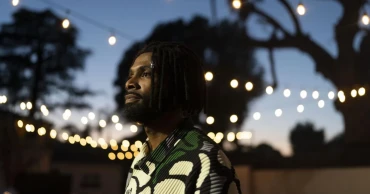
At Black Lives Matter house, families are welcomed into space of freedom and healing
Some of the mystery and controversy shrouding a sprawling Los Angeles-area property owned by a national Black Lives Matter nonprofit have dissipated for dozens of families grieving a loved one killed by police.
The Black Lives Matter Global Network Foundation Inc., which was widely criticized last year for purchasing a $6 million compound with donations that followed racial justice protests in 2020, hosted the families for a dinner at the home this fall. The event coincided with an annual conference in southern California, where hundreds who are affected by police violence meet to find support in their journeys to healing, accountability and justice.
More than 150 dinner guests, including some who previously accused the foundation of using their loved ones’ names to raise tens of millions of dollars over the last decade, were not just fed and sent on their way. They were given tours of the gated property that has six bedrooms and bathrooms, a swimming pool, a soundstage and office space.
“It was laid out, it was beautiful, it was welcoming,” said Beatrice X Johnson, co-founder of Families United 4 Justice Network, the grassroots social justice group that convened the Sept. 28 to Oct. 1 conference.
She is an aunt to Oscar Grant, the young Black man fatally shot while restrained on an Oakland, California, transit station platform in 2009, and is married to fellow Justice Network founder Cephus X Johnson. The two are affectionately known as Uncle Bobby and Auntie Bee within the community of families — and they once counted themselves among the skeptics of the BLM foundation’s decision to purchase the property.
Read: Canada's House of Commons elects first Black speaker
“There’s been a lot of controversy around this spot, even with families,” Auntie Bee said in an interview after the dinner. “The families wanted to see this place. That’s a no brainer. And who else would be invited to dinner there, if not the families impacted by police?”
As many of these families gather nationwide for another holiday season with empty chairs at their dinner tables, the BLM foundation says the Studio City home will continue to be a refuge for those grieving loved ones killed in incidents of police violence. It’ll also continue to serve as a campus for the foundation’s Black artists fellowship.
They officially call it the “Creators House.”
“I personally call it a home for freedom, because it is where Black people’s gifts and talents can be nurtured in order to flourish,” said Shalomyah Bowers, a BLM foundation board member.
“It’s where we’ve kept our activists and organizers safe. It’s where we plan and organize outside of the confines of white supremacy. And it’s where healing happens,” he added.
For nearly two years, Bowers and other board members have faced intense scrutiny over the foundation’s finances — a scrutiny accentuated by revelations that the $6 million property had been purchased with little input from the movement’s grassroots organizers or families of police brutality victims, whose names rallied the larger movement. After revealing in 2021 that more than $90 million in donations poured into the foundation following worldwide protests over the murder of George Floyd, the latest nonprofit tax filings showed the foundation with $30 million in assets.
In recent interviews with The Associated Press, the foundation continued to defend itself against accusations of mismanagement of its funds.
Read: Black Lives Matter movement lost support among Americans after 2020: Report
“I was telling the families that were here, when foundations purchase property, folks laud it as an achievement and a safe investment that builds wealth for the sake of the mission, which is pushing out money to the community,” Bowers said. “But when a Black foundation does it, when we do it, it’s unwise and ill-informed.”
That’s not the crux of the criticism that had come from families, movement supporters and staunch opponents. In 2022, grassroots racial justice activists from all over the U.S. filed a civil lawsuit against the foundation in a California court, alleging leaders had engaged in fraud and broke an agreement to turn over the donated funds to local organizers. In June, a judge dismissed the complaint filed by Black Lives Matter Grassroots Inc., after finding the plaintiffs failed to prove their allegations.
As the dust settled, the foundation sought to reframe the property as part of a larger history of Black activists and artists creating spaces of safety and liberty that are harder to find in white-owned or white-run spaces. Houses of worship and restaurants have featured prominently in historical narratives of Black civil rights leadership and artists movements.
But other kinds of real property, too, served as hubs for organizing resistance and creating art, music, literature and political thought. During the Harlem Renaissance in the 1920s and 1930s, overlapping with iterations of the Black struggle for civil rights, the Harlem YMCA was considered a living room for the Black artists movement. Renowned Black novelists Richard Wright and Ralph Ellison often stayed or worked from the Y. The Black Panther Party purchased buildings and homes that served as safehouses and centers for their community survival programs.
That legacy is not lost on Osayi Endolyn, the inaugural artist-in-residence for the BLM foundation’s Black Joy Creators Fellowship. She curated the families’ dinner at the Studio City house, with the help of Shenarri Freeman, a Black chef and restaurateur known for her vegetarian and vegan cuisine, and Brittney Williams, an accomplished private chef who cooked the protein dishes.
“There have always been, you could call them, third spaces, where folks could gather to plan to organize, to rest, to retreat,” said Endolyn, a James Beard Award-winning writer, editor and producer widely known for her work in Black food traditions.
“When we look at so many different symbols of Black resistance, of civil rights, of liberation movements, there’s always some kind of art story being told,” she said.
Read: Black Americans faced over 1.63 million excess deaths over 2 decades, new study finds
And that’s the story Endolyn wanted to tell at dinner. The menu included jerk pork, scotch bonnet roasted chicken and grilled suya steak, a dish from West Africa. They also provided baked beans, collard greens, mac ’n cheese, potato salad, maple buttermilk cornbread and hibiscus lemonade.
It was all a hit with dinner guests.
“Being here, knowing that someone cares about these families and that the families are not left behind, is a really, really good feeling,” said Yolanda Price, whose stepson Jeffrey Price Jr. was killed in a 2018 crash involving a Metropolitan Police Department vehicle in the nation’s capital.
“It lets people know that they are not left behind,” she added.
By the end of the dinner, guests young and old danced to music curated by DJ Francesca Harding. And a sense of trust was bridged between the movement’s directly impacted families and the foundation that has stewardship over BLM’s multimillion dollar endowment.
“Black Lives Matter was a mystery,” said Uncle Bobby, who helped convene the dinner under the banner of the Justice Network’s “Love Not Blood Campaign.” In 2021, the campaign received a five-year, multimillion dollar grant from the foundation.
“Many said, ‘We deserve this.’ We were able to break bread together with the foundation, to claim it as ours.”
2 years ago

US to implement key actions from Presidential memorandum on advancing worker empowerment, rights, high labor standards globally
The US Department of State will begin implementing key actions from President Biden’s Presidential Memorandum on "Advancing Worker Empowerment, Rights, and High Labor Standards Globally."
"Labor rights are integral to building democracy, achieving economic growth, strengthening supply chain resilience, and leveling the playing field for American workers and companies," said US Secretary of State Antony J. Blinken on Thursday.
Biden, Xi met for hours and agreed to 'pick up the phone' for any urgent concerns. 'That's progress'
This new whole-of-government approach will advance worker empowerment and unions, in line with President Biden’s policies here at home, according to an announcement made by the US Department of State.
The Presidential Memorandum for the first time directs Chiefs of Mission and Department officials to directly engage in labor diplomacy and enhancing programming and public messaging on workers and labor rights.
Biden says his goal for Xi meeting is to get US-China communications back to 'normal'
The Department’s efforts to advance internationally recognized workers’ rights will be carried out alongside interagency partners, including U.S. Department of Labor.
"This Memorandum is intended to raise global labor standards, building on the full range of existing authorities and tools in diplomacy, foreign assistance and programming, law enforcement, and global trade and economic cooperation, consistent with relevant international obligations and commitments," the announcement reads.
Army Special Operations Command mourns 5 US troops killed in helicopter crash
2 years ago

Biden, Xi met for hours and agreed to 'pick up the phone' for any urgent concerns. 'That's progress'
U.S. President Joe Biden and China’s Xi Jinping emerged Wednesday from their first face-to-face meeting in a year vowing to stabilize their fraught relationship and showcasing modest agreements to combat illegal fentanyl and re-establish military communications. But there were still deep differences on economic competition and global security threats.
The most assuring takeaway from the meeting for Biden was that if either man had a concern, “we should pick up the phone and call one another and we'll take the call. That's important progress," he said in a news conference following the talks.
Biden says his goal for Xi meeting is to get US-China communications back to 'normal'
The two leaders spent four hours together at a bucolic Northern California estate – in meetings, a working lunch and a garden stroll – intent on showing the world that while they are global economic competitors they’re not locked in a winner-take-all faceoff.
“Planet Earth is big enough for the two countries to succeed,” Xi told Biden.
The U.S. president told Xi: “I think it’s paramount that you and I understand each other clearly, leader-to-leader, with no misconceptions or miscommunications. We have to ensure competition does not veer into conflict.”
Their meeting, on the sidelines of the annual Asia-Pacific Economic Cooperation conference, has far-reaching implications for a world grappling with economic cross currents, conflicts in the Middle East and Europe, tensions in Taiwan and more
US civil liberties group sues Biden for ‘failure to prevent genocide’ in Gaza
They reached expected agreements to curb illicit fentanyl production and to reopen military ties, Biden said. Many of the chemicals used to make synthetic fentanyl come from China to cartels that traffic the powerful narcotic into the U.S., which is facing an overdose crisis.
Top military leaders will resume talks, Biden said, an increasingly important move particularly as unsafe or unprofessional incidents between the two nations’ ships and aircraft have spiked.
Ultimately, the agreements rely on trust between the two leaders.
White House hoping Biden-Xi meeting brings progress on military communications, fentanyl fight
“I know the man I know his modus operandi,” Biden said of Xi. “We have disagreements but he’s been straight.”
But he still said Xi was a dictator ... “in a sense.”
The two leaders had a significant back and forth over Taiwan, with Biden chiding China over its massive military build-up around Taiwan and Xi telling Biden he had no plans to invade the island, according to a U.S. official who spoke on condition of anonymity to detail the private talks.
Biden, the official said, declared the U.S. was committed to continuing to help Taiwan defend itself and maintain deterrence against a potential Chinese attack, and also called on China to avoid meddling in the island’s elections next year. The official described the Taiwan portion of the talks as “clear-headed” and “not heated.”
Biden also called on Xi to use his influence with Iran to make clear that Tehran, and its proxies, should not take steps that would lead to an expansion of the Israel-Hamas war. Foreign Minister Wang Yi has assured the U.S. that the Chinese have communicated concerns to Iran on the matter. But the official said the U.S. has not been able to ascertain how seriously the Iranians are taking concerns raised by Beijing.
According to a statement released by China Central Television, the state broadcaster, Xi was most focused on Taiwan and the U.S. sanctions and restrictions against Chinese products and businesses.
Xi urged the U.S. to support China’s peaceful unification with the self-governed island, calling Taiwan "the most important and most sensitive issue” in the bilateral relations. He also raised Beijing’s concerns over export controls, investment screenings, and sanctions imposed by the U.S., which he said “have severely harmed China’s legitimate interests."
He said, “We hope the U.S. side can seriously treat China’s concerns and take actions to remove unilateral sanctions and provide a fair, just, non-discriminatory environment for Chinese businesses.”
Xi said he and Biden also agreed to establish dialogues on artificial intelligence and stressed the urgency for the two countries to cope with the climate crisis, the state broadcaster reported.
Both leaders acknowledged the importance of their relationship and the need for better coordination. But their differences shone through: Xi indicated he wants better cooperation — but on China's terms. And he sought to project strength to his domestic audience in the face of U.S. policies restricting imports from China and limiting technology transfers to Beijing.
Biden, meanwhile, will also spend time this week in California working to highlight new alliances in the Indo Pacific and efforts to boost trade with other regional leaders.
They sought to build back to a stable baseline after already tense relations took a nosedive following the U.S. downing of a Chinese spy balloon that had traversed the continental U.S., and amid differences over the self-ruled island of Taiwan, China’s hacking of a Biden official’s emails and other matters.
For Biden, Wednesday's meeting was a chance for the president to do what he believes he does best: in-person diplomacy.
“As always, there's no substitute for face-to-face discussions,” he told Xi. With his characteristic optimism, Biden sketched a vision of leaders who manage competition “responsibly,” adding, "that's what the United States wants and what we intend to do.”
Xi, for his part, was gloomy about the state of the post-pandemic global economy. China’s economy remains in the doldrums, with prices falling due to slack demand from consumers and businesses.
“The global economy is recovering, but its momentum remains sluggish,” Xi said. “Industrial and supply chains are still under the threat of interruption and protectionism is rising. All these are grave problems."
Biden and Xi held their talks at Filoli Estate, a country house and museum about 25 miles (40 kilometers) south of San Francisco. The event was carefully staged, Biden first to arrive at the grand estate.
After a handshake and smiles, the presidents and their respective aides on trade, the economy, national security and regional diplomacy gathered across from one another at a single long table, the culmination of negotiations between the two leaders’ top aides over the past several months. It was Biden and Xi’s first conversation of any kind since they met last November in Bali.
Next came a working lunch with inner-circle members from both administrations. They ate ravioli, chicken and broccolini, with almond meringue cake and praline buttercream for dessert.
Before they parted, the two strolled the property along a red brick path through impressive topiary and knotted gothic trees. Asked by reporters how the meeting went, the president said “well” and flashed a thumbs up.
There were light moments between the two leaders who have logged much time together over the last decade. Biden asked Xi to extend his early birthday wishes to Xi’s wife, who will be celebrating next week. Xi thanked the president for reminding him. The Chinese leader said that he’s been so busy working he had forgotten the big day was nearing.
The relationship between China and the U.S. has never been smooth, Xi said. Still, it has kept moving forward. "For two large countries like China and the United States, turning their back on each other is not an option,” he said.
More pointedly, Xi also suggested it was not up to the U.S. to dictate how the Chinese manage their affairs, saying, “It is unrealistic for one side to remodel the other, and conflict and confrontation has unbearable consequences for both sides.”
Robert Moritz, global chairman for the consulting firm PricewaterhouseCoopers, said business leaders are hoping for signs of more cooperation and a firmer commitment to free trade between the world’s two largest economies following the Biden-Xi talks.
“What we are looking for is a de-escalation and a bringing of the temperature down,” Mortiz said during a CEO summit being held in conjunction with the annual Asia-Pacific Economic Cooperation forum that has brought together leaders from 21 member economies.
“Discussion isn’t good enough, it’s the execution on getting things done” that will matter, he said.
The Biden-Xi meeting and broader summit events attracted protests around San Francisco, but the demonstrations were kept at distance. A large crowd loudly condemning Xi marched from the Chinese Consulate toward the summit venue at the Moscone Center nearly two miles away. Speakers implored the Biden administration to stand up to Xi and China's human rights violations.
Late Wednesday, Xi was to address American business executives at a $2,000-per-plate dinner that will be a rare opportunity for U.S. business leaders to hear directly from the Chinese leader as they seek clarification on Beijing’s expanding security rules that may choke foreign investment.
2 years ago

Biden says his goal for Xi meeting is to get US-China communications back to 'normal'
President Joe Biden and China's Xi Jinping swept into San Francisco on Tuesday as the two leaders made their final preparations for their first engagement in a year at a historic estate outside of the city.
Biden expressed hope that the talks would help put a shaky U.S.-China relationship — marked by sharp differences over the last year — in a better place. The two leaders arrived in the city to be greeted by hundreds of demonstrators who lined up along their motorcade routes, waving Chinese, Taiwanese and Tibetan flags as well as signs in support of and opposition to the Chinese leader.
Biden, before leaving Washington to make his way West on Tuesday to attend this year’s Asia-Pacific Economic Cooperation forum, said his broad goal was to get Washington and Beijing "on a normal course corresponding" once again even as they have sharp differences on no shortage of issues.
“Being able to pick up the phone and talk to one another if there’s a crisis. Being able to make sure our militaries still have contact with one another,” Biden told reporters at the White House. “We’re not trying to decouple from China, but what we’re trying to do is change the relationship for the better.”
The two leaders will meet at Filoli Estate, a country house museum about 25 miles (40 kilometers) south of San Francisco, according to three senior administration officials. The officials requested anonymity to discuss the venue, which has not yet been confirmed by the White House and Chinese government.
Read: Biden sees hopeful signs for his reelection in Democrats' 2023 wins
Separately, a U.S. official confirmed that Biden and Xi are expected to announce an agreement that would restore talks under what's known as the Military Maritime Consultative Agreement. The agreement is used by the U.S. and People's Liberation Army navies and air forces to improve safety in the air and sea. Until 2020, they had been meeting regularly since 1998 for the talks. The official requested anonymity to preview the expected leaders' announcement.
Biden arrived at San Francisco International Airport Tuesday afternoon and Xi landed shortly after. The Chinese president was welcomed on the tarmac by Treasury Secretary Janet Yellen, California Gov. Gavin Newsom and U.S. Ambassador to China Nicholas Burns.
Hundreds of onlookers gathered on the leaders' motorcade route, some holding signs that read “End CCP,” the initials of Chinese Communist Party. Another sign read “Warmly Welcome President Xi Jinping” and was affixed to concrete bollards.
Pro-China and anti-China demonstrators also gathered near the Moscone Center, the venue where many APEC meetings were being held.
Beijing supporters waved U.S. and Chinese flags as they waited for Xi’s motorcade to arrive at the swanky hotel near the convention center where the Chinese delegation is staying. Several supporters used oversized Chinese national flags to obscure the few Xi critics there and used loudspeakers to play the patriotic “Ode to the Motherland.”
Scuffles broke out between the two groups, but police quickly intervened to maintain order. The crowds were kept out of the road by tall, metal barriers.
Read: Trump's business and political ambitions poised to converge as he testifies in New York civil case
Wei Gong, of Charlottesville, Virginia, brought her 9-year-old daughter, Deanna Wei, to welcome Xi. Her child wore a traditional Chinese, horse-face skirt and held U.S. and Chinese flags.
“I have never seen him,” the mother said of Xi. “We just want to see him.”
Later, protesters gathered just blocks from the Moscone Center to call for a cease-fire in the Israel-Hamas war.
Biden, despite his busy diplomatic agenda, took some time Tuesday evening to tend to his 2024 reelection campaign, joining Newsom and Vice President Kamala Harris for a fundraiser at San Francisco's iconic Merchant Exchange Club.
The long complicated U.S.-Chinese relationship has come under heavy strain over the last year, with Beijing bristling over new U.S. export controls on advanced technology; Biden ordering the shooting down of a Chinese spy balloon after it traversed the continental United States; and Chinese anger over a stopover in the U.S. by Taiwanese President Tsai Ing-wen earlier this year, among other issues. China claims the island as its territory.
The talks at Filoli will give the leaders a chance to try to dial back tensions in a picturesque backdrop.
The sprawling estate along Northern California’s coastal range features a Georgian revival-style mansion and English Renaissance gardens. It was built in 1917 as a private residence but was opened to the public in 1975 as a nonprofit and site of the National Trust for Historic Preservation.
Wealthy San Francisco socialite William Bowers Bourn II named Filoli by taking the first two letters of key words of his personal credo, according to the estate’s website: “Fight for a just cause. Love your Fellow Man. Live a Good Life.” The estate's gardens feature in Jennifer Lopez’s film “The Wedding Planner.”
White House National Security Council spokesman John Kirby said Biden is coming to Wednesday's meeting in a strong position.
“He’s not going to be afraid to —- to confront where confrontation is needed on issues where we don’t see eye to eye with President Xi and the PRC,” said Kirby, using the initials for the People's Republic of China.
Biden will also be looking to use this week’s summit of Asia-Pacific leaders to demonstrate that the United States has the gumption, attention span and money to focus on the region even as it grapples with a multitude of foreign and domestic policy crises.
Read: Speaker McCarthy ousted in historic House vote, as scramble begins for a Republican leader
The White House wants to demonstrate that Biden can remain focused on the Pacific while also trying to keep the Israel-Hamas war from exploding into a broader regional conflict and to persuade Republican lawmakers to continue to spend billions more on the costly Ukrainian effort to repel Russia’s nearly 21-month old invasion.
White House officials say they are also cognizant that fellow APEC nations want to see better dialogue between the U.S. and China because it reduces the risk of regional conflict. At the same time, they also know that others in the region are concerned that the Pacific is too often seen through a prism in which the dominant power centers in Washington and Beijing make decisions for the region without engagement from less powerful nations.
Biden enters the Xi meeting feeling buoyed by the U.S. economy’s strong performance. While the majority of U.S. adults believe the economy is weak, Biden has managed to prove wrong a large swath of economists who predicted that millions of layoffs and a recession might be needed to bring down inflation. The Labor Department said Tuesday that consumer prices rose at an annual pace of 3.2% annually, down from a June 2022 peak of 9.1%. Meanwhile, employers keep hiring and the unemployment rate has held below 4% for nearly two years.
Beijing released economic data last month that shows prices falling due to slack demand from consumers and businesses. The International Monetary Fund recently cut growth forecasts for China, predicting economic growth of 5% this year and 4.2% in 2024, down slightly from its forecasts in July.
2 years ago

Army Special Operations Command mourns 5 US troops killed in helicopter crash
The U.S. Army Special Operations Command on Monday identified the five Army aviation special operations forces killed when their helicopter crashed in the Eastern Mediterranean over the weekend, calling each a “national treasure” whose loss cut deeply.
The military’s European Command said the UH-60 helicopter went down during an air refueling mission as part of military training.
The five service members who died were Chief Warrant Officer 3 Stephen R. Dwyer, 38, of Clarksville, Tennessee; Chief Warrant Officer 2 Shane M. Barnes, 34, of Sacramento, California; Staff Sgt. Tanner W. Grone, 26, of Gorham, New Hampshire; Sgt. Andrew P. Southard, 27, of Apache Junction, Arizona; and Sgt. Cade M. Wolfe, 24, of Mankato, Minnesota. They were all part of the Army’s 160th Special Operations Aviation Regiment based at Fort Campbell, Kentucky.
The commander of the Army Special Operations Command, Lt. Gen. Jonathan Braga, said the fallen soldiers “hail from rare patriotic families with deep military service ties that span multiple generations and formations.”
Read: Survivors say trauma from abusive Native American boarding schools stretches across generations
“This is devastating news that reverberates across the entire Special Operations community," Braga said on Monday in a statement. "Every loss is tough, but in this case, service to the Nation is truly a family business and it’s hard to express the amount of sorrow that we all feel right now."
The fallen soldiers were highly decorated, with multiple combat deployments in addition to responding to deployments with no notice, sent overseas to respond quickly to various national security needs.
Dwyer received his commission in 2009 from the U.S. Military Academy in West Point, New York. He served as an MH-60M pilot, mission planner and instructor pilot and deployed to Iraq and Afghanistan. He was called up multiple times on no-notice deployments to support national security objectives, the Army Special Operations Command said. His awards and decorations include the Bronze Star Medal, the Meritorious Service Medal and the Air Medal with Combat device among many others.
Barnes, also an MH-60M pilot, graduated from Gonzaga University in Spokane, Washington, in 2011. He was assigned to Korea and completed deployments to Afghanistan and Iraq. He was awarded the Distinguished Flying Cross with Valor device and the Air Medal with Combat device among other campaign awards.
Grone enlisted in the Army in 2017 as a UH-60 repairer. He served as a flight instructor and and MH-60M crew chief for the 160th. He deployed to Afghanistan and multiple times to Iraq, and he was awarded the Air Medal with Combat device, the Army Commendation Medal and the Army Achievement Medal with combat device among many other awards.
Grone's parents, Steve and Erica Grone, said of their son in a Facebook post that they were "beyond proud of what you became and believed in. Thank you for all these amazing years. Please watch over us. Love you and can’t express how much you will be missed.”
Read: US eases oil, gas and gold sanctions on Venezuela after electoral roadmap signed
Southard enlisted in the Army in 2015 as a UH-60 repairer and served as an MH-60M crew chief. He was first assigned to Fort Bliss, Texas, upon completing advanced individual training, and he completed a 13-month rotation to Task Force Sinai in support of ongoing peacekeeping operations. He deployed to Afghanistan and was awarded two Army Commendation medals and an Army Achievement medal among other citations.
Wolfe enlisted in the Army in 2018 as a UH-60 repairer and served as an MH-60M crew chief. His awards and decorations include two Army Commendation medals and an Army Achievement medal.
This is the second fatal helicopter crash involving a unit based at Fort Campbell this year. In March, two HH-60 Black Hawk helicopters assigned to the 101st Airborne Division collided during a nighttime training flight, killing all nine soldiers aboard.
Read: What to do with 1.1 million bullets seized from Iran? US ships them to Ukraine
Fort Campbell is home to multiple Army aviation units. The 160th group has almost 3,000 soldiers and 200 aircraft assigned to it.
The U.S. has built up its force presence in the Eastern Mediterranean and the broader Middle East in response to Hamas’ Oct. 7 attack on Israel. There are two carrier strike groups operating in the region, U.S. Air Force squadrons have received additional crews and warplanes, and U.S. special operations forces have been added to help Israel in efforts to rescue hostages taken into Gaza.
2 years ago

Biden sees hopeful signs for his reelection in Democrats' 2023 wins
Surrounded by dozens of Democratic donors at a glass art gallery space in Chicago last week, President Joe Biden urged them to look beyond negative poll numbers and feel assured their donations were not being wasted.
Then Biden joked to the crowd: “I could still screw up.”
The attendees at his campaign fundraiser laughed. Yet many Democrats are fearful there is a serious disconnect between the popularity of Biden’s agenda and the man himself, as the president’s approval ratings remain stubbornly low and voters continue to register concerns about his age.
Some of those worries were tempered by the results of Tuesday’s election, when Democrats romped to victory in Kentucky, Virginia, Ohio and Pennsylvania. Inside the White House, the Democrats’ big night was a bright spot in an otherwise dim week as it grapples with the response to two wars and tries to minimize the president’s flagging poll numbers. Just 38% of adults approve of Biden’s job performance, according to a November Associated Press-NORC poll.
But few outsiders are confident that the off-year wins will necessarily lead to Biden’s reelection or broader Democratic success next year.
Nowhere is that disconnect more apparent than Ohio, where a Democrat-backed measure to establish a constitutional right to abortion prevailed by 13% last Tuesday. While it was once the nation’s premier swing state, Ohio was carried easily by Donald Trump in the last two elections. And Ohio Democrats don't expect Biden to compete in the state next year.
Read: After Biden and Blinken push, Netanyahu says Israel open to 'little pauses' in Gaza, no cease-fire
“This ain’t the yellow brick road to the presidency just because Ohio pushed back against Republican overreach,” said Nina Turner, an Ohio-based progressive leader who served as Sen. Bernie Sanders' national campaign co-chair in 2020.
Turner warned that Biden is losing support among young voters, especially from communities of color. The president’s supporters are “delusional,” she said, if they think he’s in a strong position heading into 2024.
“The people in the bubble — I call them the brunch bunch — can continue to spin this. They do that at their own peril,” she said. “What is happening on the streets is a lot different.”
Former Rep. John Yarmuth, D-Ky., said the idea that Tuesday's victories would translate into electoral successes for Biden next year was “wishful thinking.” He said he's worried that Biden is faring far worse than a generic Democrat would against Trump, although major Democrats have so far declined to challenge Biden.
“I think I'd be stupid not to be somewhat concerned,” Yarmuth said. Noting Biden's increasingly aggressive posture against his predecessor, Yarmuth added: “I think that's an indication that he realizes that he's got to knock Trump down, not just tout his own record.”
Still, Biden's team argues that Tuesday’s results only validated the broad popularity of issues that will be core to the president’s reelection campaign, such as abortion rights, democracy and legislative accomplishments including Biden’s nearly two-year-old infrastructure law.
“We’ve heard the press and pundits count Joe Biden out time and time again, but we know that he always proves them wrong,” Julie Chavez Rodriguez, Biden’s campaign manager, told reporters last week. “If we want a real window into where voters actually are, we know the best way to measure that is to see how they’re actually voting.”
Read: Federal judge reimposes limited gag order in Donald Trump's 2020 election interference case
Indeed, that has been the mantra from Biden’s broader orbit since Tuesday night: Polls don’t matter, but voters do.
In the Biden campaign’s view, the off-year election results are more analogous than current polling to the resources, investment and direct communication with voters that will go into the elections next year. To Biden aides, the results validated the strategy of sharpening the contrast with “MAGA Republicans” that helped Democrats outperform expectations in 2022. Biden watched Tuesday's returns with interest and wanted to swiftly call the winning Democrats to congratulate them.
In Kentucky, Democratic Gov. Andy Beshear defeated Republican Daniel Cameron, overcoming the state’s increasingly conservative bent, by highlighting local issues and hammering Cameron on his support of Kentucky’s near-total abortion ban.
Cameron's campaign tried repeatedly to tie Beshear to Biden, focusing heavily on inflation — a vulnerable point for the White House — and running commercials featuring a photo of both Democrats together. Beshear, meanwhile, often talked about the millions of dollars in federal aid that came to Kentucky for infrastructure and for COVID-19 relief. He also has his own political brand in Kentucky and is the son of a former two-term governor.
At the Chicago fundraiser, Biden noted that Beshear won reelection while “running on all the programs that were Biden initiatives.”
Beshear kept some distance from Biden the day after he won. Asked Wednesday in an interview with The Associated Press if he wants Biden to be the Democratic nominee next year, he replied: “I think President Biden is going to be the Democratic nominee in 2024.”
When asked if he is concerned about Biden’s age and poll numbers, Beshear replied: “He’s going to be the nominee. And I’m pretty sure that this is going to be a rematch from before. So it’s just going to be a choice between the two for people.”
In Pennsylvania, Democrat Dan McCaffery won election to the state’s Supreme Court on a campaign centered on abortion and other rights. And Virginia Democrats took full control of the statehouse and dealt Republican Gov. Glenn Youngkin a public setback by making abortion access a focus of legislative campaigns.
Read: US vetoes Security Council resolution calling for ‘humanitarian pauses’ in Gaza
Jim Messina, who managed Barack Obama’s successful reelection against Republican Mitt Romney in 2012, said the Biden campaign does not need to change its tactics. Obama also struggled with low approval ratings the year before he won a second term.
“They need it to become a choice pretty soon between them and Trump,” Messina said. ”Right now, the Republican primary is kind of allowing people to think, ‘Well, it could be Nikki Haley, it could be someone else.’ Our election got much easier once Romney got the nomination.”
For now, the Biden campaign should continue to reinforce the president's record with voters rather than focusing wholly on Trump, Messina said.
“The easiest way to build the poll numbers would be to go kick the hell out of Trump and make it a two-person race. I think that’s sort of sugar candy. It’s a nice rush,” he said. But “you’re supposed to be on a diet. And your diet is telling the economic narrative. And then you get to Trump in the general and then you whale away on him.”
The Biden campaign has already laid that groundwork, particularly with a 16-week, $25 million advertising blitz that began in September in battleground states that seeks to educate voters on Biden’s accomplishments while reinforcing what the Biden campaign calls the “messaging contrast that will be core to this election.”
Rep. Ro Khanna, D-Calif., who co-chaired Bernie Sanders’ presidential campaign in 2020 but now supports Biden, said the president needs a stronger economic message focused on domestic issues — not global affairs — heading into 2024. He noted that many voters are dissatisfied with Biden's leadership on the economy. The November AP-NORC poll found Biden's approval on the economy was just 33%.
“I believe that we should rally around the president for reelection, but we should be clear-eyed that it’s going to be a very hard fight,” Khanna said. “People are anxious about the future.”
In Pennsylvania, where Biden was born and spent part of his childhood, former Gov. Ed Rendell said the persistent concerns about Biden’s age from voters in both parties represent a serious challenge.
Rendell is hopeful, however, that Biden will benefit from a matchup against Trump, who faces four criminal indictments and is also unpopular with much of the American public. He suggested that the president would not fare so well against another Republican nominee.
“He is old, he does stumble a little bit,” Rendell said of Biden. “I pray every night for the health of two people: Joe Biden and Donald Trump.”
2 years ago

After Biden and Blinken push, Netanyahu says Israel open to 'little pauses' in Gaza, no cease-fire
After more than a week of public pressure from the U.S. for “humanitarian pauses” in Gaza, Israeli Prime Minister Benjamin Netanyahu on Monday allowed that his government might be open to only “little pauses” in its assault on Hamas. The Israeli leader sought to play down differences with his country's most vocal backer on the world stage at a time of rising scrutiny of the sharply rising civilian toll of fighting.
Netanyahu spoke after President Joe Biden made a direct appeal to him nearly a month into the war seeking to rally support behind securing even limited relief for civilians in the spiraling conflict. The back-and-forth spotlighted the challenges facing Biden and his administration as they seek to manage what is emerging as one of the defining foreign policy crises of his presidency.
Read: UN Security Council fails to agree on Israel-Hamas war as Gaza death toll passes 10,000
The U.S. thus far remains focused on keeping the fighting from exploding into a wider regional war and pushing for limited steps to alleviate civilian suffering. But it has remained steadfastly behind Israel and Netanyahu's goal of ending Hamas control over Gaza, even as the death toll in Gaza reached 10,000, according to the Hamas-run health ministry.
Biden used his first conversation with Netanyahu in eight days to repeat in private his public calls for lulls in the fighting to allow civilians to flee Israel's campaign to crush Hamas and for humanitarian aid to flow to hundreds of thousands in need.
“We consider ourselves at the beginning of this conversation, not at the end of it,” National Security Council spokesman John Kirby said when describing Biden's conversation with Netanyahu, "so you can expect that we’re going to continue to advocate for temporary, localized pauses in the fighting.”
Hours later, Netanyahu, in an interview with ABC News, ruled out any widespread cease-fire, but suggested an openness to “little pauses" — though it was not clear whether some kind of small stoppage had been agreed to or whether the U.S. was satisfied with the scope of the Israeli commitment.
Read: Jordan airdrops medical supplies to Gaza hospital
“Well, there’ll be no cease-fire, general cease-fire, in Gaza without the release of our hostages,” Netanyahu said when asked about Biden’s call for humanitarian pauses. “As far as tactical little pauses, an hour here, an hour there. We’ve had them before, I suppose, we’ll check the circumstances in order to enable goods, humanitarian goods to come in, or our hostages, individual hostages to leave. But I don’t think there’s going to be a general cease-fire.”
Biden’s engagement with Netanyahu followed Secretary of State Antony Blinken's frantic weekend of travel that took him from Israel to Jordan, the occupied West Bank, Cyprus, Iraq and onto Turkey to build support for the Biden administration’s proposal for the humanitarian initiatives.
“All of this is a work in progress,” Blinken said before leaving Turkey. “We don’t obviously agree on everything, but there are common views on some of the imperatives of the moment that we’re working on together.”
CIA Director William Burns also was in the Middle East meeting with intelligence partners and leaders of several countries, a U.S. official said Monday, speaking on condition of anonymity to discuss Burns’ typically off-the-record travel plans. The U.S. intends for his discussions to reinforce American commitment to intelligence cooperation, especially on terror and security, the official said.
Read: Israeli warplanes hit refugee camps in Gaza while UN agencies call siege an 'outrage'
The flurry of U.S. diplomacy came as Israeli troops surrounded Gaza City and cut off the northern part of the besieged Hamas-ruled territory. Troops were preparing to enter the city, where they were likely to face militants fighting street by street using a vast network of tunnels. Casualties will likely rise on both sides.
Asked whether the toll gave the U.S. pause for its staunch support for Israel, Kirby said, “I think we all need to remember who they’re fighting,” and he referenced Hamas’ Oct. 7 incursion into Israel that killed 1,400 people, mostly civilians, and started the war. He insisted no country would tolerate such an attack “without a swift and aggressive response."
Kirby said the U.S. was having “frank” conversations with Israelis about trying to reduce the civilian death toll, but it was not directly involved in Israel's targeting decisions nor was it helping develop the country's operational plans for its invasion of Gaza, home to 2.3 million people.
Blinken said pauses in the war would allow for a surge of humanitarian aid to Gaza and the release of the more than 200 hostages captured by Hamas while also preventing the conflict from spreading regionally.
Read: Blinken shuttles from the West Bank to Iraq trying to contain the fallout from the Israel-Hamas war
“We’ve engaged the Israelis on steps that they can take to minimize civilian casualties,” Blinken said before leaving Ankara. “We’re working, as I said, very aggressively on getting more humanitarian assistance into Gaza.”
“We are very focused on the hostages held by Hamas, including the Americans, and we are doing everything possible to bring them home,” he added.
As Blinken's meeting with Turkish Foreign Minister Hakan Fidan got underway, dozens of protesters from an Islamist group waved Turkish and Palestinian flags and held up anti-U.S. and anti-Israel placards outside the Foreign Ministry. Police earlier in the day dispersed a group of students marching toward the ministry chanting “murderer Blinken, get out of Turkey!”
Also Monday, about 150 people rallied outside the U.S. Embassy in Ankara, carrying a large banner that read “No to genocide!”
Blinken did not meet with Turkish President Recep Tayyip Erdogan, who has been highly critical of Netanyahu and an outlier among NATO allies in not expressing full support for Israel’s right to defend itself.
Turkish officials, speaking on condition of anonymity to discuss the talks, said Fidan had urged Blinken to prevent the targeting of civilians in Gaza and their forced displacement, and also press for a “full cease-fire.”
Blinken's mission, his second to the region since the war began, has found only tepid, if any, support for his efforts to contain the fallout from the conflict. Israel had rejected the idea of pauses, while Arab nations were demanding an immediate cease-fire as the casualty toll soared among Palestinian civilians.
Arab states are resisting American suggestions that they play a larger role in resolving the crisis, expressing outrage at the civilian toll of the Israeli military operations and believing Gaza to be a problem largely of Israel’s own making.
U.S. officials are seeking to convince Israel of the strategic importance of respecting the laws of war by protecting non-combatants and significantly boosting deliveries of humanitarian aid to Gaza’s beleaguered civilian population.
It remained unclear, however, if Netanyahu would agree to temporary, rolling pauses in the massive operation to eradicate Hamas — or whether outrage among Palestinians and their supporters could be assuaged if he did.
Already Jordan and Turkey have recalled their ambassadors to Israel to protest its tactics, and the tide of international opinion appears to be turning from sympathy toward Israel in the aftermath of Oct. 7 to revulsion as images of death and destruction in Gaza spread around the world.
On Saturday in Amman, Jordan's capital, the Egyptian and Jordanian foreign ministers appeared at a joint news conference with Blinken. The two said Israel’s war had gone beyond self-defense and could no longer be justified as it now amounted to collective punishment of the Palestinian people.
That sentiment was echoed by tens of thousands of demonstrators who marched in the streets of world capitals over the weekend to protest Israel and condemn U.S. support for Israel.
2 years ago

Trump's business and political ambitions poised to converge as he testifies in New York civil case
When Donald Trump takes the stand Monday in a Manhattan courtroom to testify in his civil fraud trial, it will be an undeniable spectacle: A former president and the leading Republican presidential candidate defending himself against allegations that he dramatically inflated his net worth.
The charges cut to the very heart of the brand Trump spent decades carefully crafting and put him at risk of losing control of much of his business empire.
But the appearance may also mark the beginning of what will likely be a defining feature of the 2024 election if Trump becomes his party's nominee: a major candidate, on trial, using the witness stand as a campaign platform as he eyes a return to the White House while facing multiple criminal indictments.
“It’s going to be a stunning moment. This is dramatic enough if he was simply an ex-president facing these charges. But the fact that he is the overwhelming favorite to run the GOP, it makes this a staggering Monday,” said presidential historian Douglas Brinkley.
The courtroom at 60 Centre Street has already become a familiar destination for Trump. He has spent hours over the last month voluntarily seated at the defense table, observing the proceedings. Trump once took the stand — unexpectedly and briefly — after he was accused of violating a partial gag order. Trump denied violating the rules, but Judge Arthur Engoron disagreed and fined him anyway.
Read: Federal judge reimposes limited gag order in Donald Trump's 2020 election interference case
The vast majority of his speaking has happened outside the courtroom, where he has taken full advantage of the bank of assembled media to voice his outrage and spin the days' proceedings in the most favorable way.
He will also be coming face-to-face again Monday with Engoron, whom he has lambasted on his social media site in recent days as a "wacko” and “RADICAL LEFT, DEMOCRAT OPERATIVE JUDGE” who has already “ruled viciously” against him.
Trump will also be joined by his former fixer and attorney-turned witness, Michal Cohen, who said in an interview he was planning to attend Monday's proceedings.
“My intent is to attend Donald’s appearance as he was gracious enough to attend my court appearances,” he said.
Among the topics likely to be covered: Trump’s role in his company's decision making, in its valuing of his properties, and in preparing his annual financial statements. Trump is likely to be asked about loans and other deals that were made using the statements and what intent, if any, he had in portraying his wealth to banks and insurers the way the documents did.
Trump is also likely to be asked about how he views and values his brand – and the economic impact of his fame and time as president -- and may be asked to explain claims that his financial statements actually undervalued his wealth.
Trump has argued that disclaimers on his financial statements should have alerted people relying on the documents to do their own homework and verify the numbers themselves – an answer that he’s likely to repeat on the witness stand. Trump has said the disclaimer absolved him of wrongdoing.
Read: Donald Trump arrives in court for a New York trial scrutinizing his business practices
Eric Trump, the former president's middle son, who testified in the case last week, said his father was eager for his appearance on the stand.
“I know he’s very fired up to be here. And he thinks that this is one of the most incredible injustices that he’s ever seen. And it truly is,” the younger Trump told reporters Friday, insisting his family was winning even though the judge has already ruled mostly against them.
Unlike most Americans, Trump has ample experience fielding questions from lawyers and has a long history of depositions and courtroom testimony that offer insight into how he might respond. But Cohen, who worked for Trump for more than a decade, said nothing in Trump's past has come close to what he's facing now since they were largely civil matters "where even though the dollar amounts were in the millions of dollars, they were never of any real consequence to him or obviously to his freedom.”
“Right now this New York attorney general case is a threat to the extinction of his eponymous company as well as his financial future," he said. Trump's forthcoming criminal cases — accusing him of misclassifying hush money payments, illegally trying to overturn the result of the 2020 election and hoarding documents at his Mar-a-Lago club "have far more significant consequences, most specifically the termination of his freedom.”
Brinkley, the historian, said there was little precedent for Trump's appearance, but said it won't be the first time a past president has taken the stand in a trial accusing him of wrongdoing. He pointed to one case in 1915, when, after unsuccessfully running for a third term as a third-party candidate, former President Theodore Roosevelt was sued for libel for criticizing New York Republican Party boss William Barnes.
Read: Rape lawsuit trial against Donald Trump set to get underway
The judge eventually ruled in Roosevelt's favor after a five week trial, in which the former president spent eight days on the witness stand.
“They were five weeks of great strain," he wrote in a letter to his son. “But the result was a great triumph, and I am bound that there shall be no more libel suits as far as I am concerned, and for the present at least no further active participation in politics for me.”
2 years ago