USA

At least 36 killed on Maui as fires burn through Hawaii and thousands race to escape
Thousands of people raced to escape homes in Maui as blazes swept across the Hawaiian island, destroying parts of a centuries-old town and killing at least 36 people in the deadliest U.S. wildfire in recent years.
The fire took the island by surprise, leaving behind burned-out cars on once busy streets and smoking piles of rubble where historic buildings had stood in Lahaina, which dates to the 1700s and has long been a favorite destination of tourists. Crews battled blazes in several places on the island Wednesday, and the flames forced some adults and children to flee into the ocean.
At least 36 people have died, according to a statement from Maui County late Wednesday that said no other details were available. Officials said earlier that 271 structures were damaged or destroyed and dozens of people injured. It is the deadliest fire since the 2018 Camp Fire in California, which killed at least 85 people and virtually razed the town of Paradise.
Officials warned that the death toll in Hawaii could rise, with the fires still burning and teams spreading out to search charred areas.
Read: Pakistani court seeks 'government response' over Imran Khan's appeal, refuses to release him
Lahaina residents Kamuela Kawaakoa and Iiulia Yasso described a harrowing escape under smoke-filled skies Tuesday afternoon. The couple and their 6-year-old son got back to their apartment after a quick dash to the supermarket for water, and only had time to grab a change of clothes and run as the bushes around them caught fire.
“We barely made it out,” Kawaakoa said at an evacuation shelter on Wednesday, still unsure if anything was left of their apartment.
As the family fled, a senior center across the road erupted in flames. They called 911, but didn't know if the people got out. As they drove away, downed utility poles and others fleeing in cars slowed their progress. “It was so hard to sit there and just watch my town burn to ashes and not be able to do anything," Kawaakoa, 34, said.
As the fires rage, tourists were advised to stay away, and about 11,000 visitors flew out of Maui on Wednesday, with at least another 1,500 expected to leave Thursday, according to Ed Sniffen, state transportation director. Officials prepared the Hawaii Convention Center in Honolulu to take in the thousands who have been displaced.
Read: Ukraine accuses Russia of targeting rescue workers with consecutive missile strikes
Maui County Mayor Richard Bissen Jr. said the island had “been tested like never before in our lifetime.”
“We are grieving with each other during this inconsolable time,” he said in a recorded statement. “In the days ahead, we will be stronger as a ‘kaiaulu,’ or community, as we rebuild with resilience and aloha.”
The fires were whipped by strong winds from Hurricane Dora passing far to the south. It's the latest in a series of disasters caused by extreme weather around the globe this summer. Experts say climate change is increasing the likelihood of such events.
Wildfires aren't unusual in Hawaii, but the weather of the past few weeks created the fuel for a devastating blaze and, once ignited, the high winds created the disaster, said Thomas Smith an associate professor in Environmental Geography at the London School of Economics and Political Science.
Read: Death toll from train derailment in Pakistan rises to 30 with 60 others injured
"The vegetation in the lowland areas of Maui is particularly parched this year, with below-average precipitation in the spring, and hardly any rainfall this summer.
The Big Island is also currently seeing blazes, Mayor Mitch Roth said, although there had been no reports of injuries or destroyed homes there.
As winds eased somewhat on Maui on Wednesday, pilots were able to view the full scope of the devastation. Aerial video from Lahaina showed dozens of homes and businesses razed, including on Front Street, where tourists once gathered to shop and dine. Smoking heaps of rubble lay piled high next to the waterfront, boats in the harbor were scorched, and gray smoke hovered over the leafless skeletons of charred trees.
“It’s horrifying. I’ve flown here 52 years and I’ve never seen anything come close to that,” said Richard Olsten, a helicopter pilot for a tour company. “We had tears in our eyes."
Search-and-rescue teams are fanning out in the devastated areas in the hopes of finding survivors, Adam Weintraub, communication director for the Hawaii Emergency Management Agency, said on ABC’s “Good Morning America.”
Read: Heat, wildfires and floods make summer of 2023 "a summer of extremes"
Addressing the fear that there could be additional deaths, Weintraub acknowledged “these were large and fast-moving fires, and it’s only recently that we’ve started to get our arms around them and contain them. So, we’re hoping for the best, but we’re prepared for the worst.”
About 14,500 customers in Maui were without power early Wednesday. With cell service and phone lines down in some areas, many people were struggling to check in with friends and family members living near the wildfires. Some were posting messages on social media.
Tiare Lawrence was frantically trying to reach her siblings who live near where a gas station exploded in Lahaina.
“There’s no service, so we can’t get ahold of anyone,” she said from the Maui community of Pukalani.
Maj. Gen. Kenneth Hara, from the Hawaii State Department of Defense, told reporters Wednesday night that officials were working to get communications restored, to distribute water, and possibly adding law enforcement personnel. He said National Guard helicopters had dropped 150,000 gallons of water on the Maui fires.
The Coast Guard said it rescued 14 people who jumped into the water to escape flames and smoke, including two children.
Among those injured were three people with critical burns who were flown to Oahu, officials said.
Bissen, the Maui County mayor, said at a Wednesday morning news conference that officials hadn't yet begun investigating the immediate cause of the fires, but officials did point to the combination of dry conditions, low humidity and high winds.
Mauro Farinelli, of Lahaina, said the winds started blowing hard on Tuesday, and then somehow a fire started up on a hillside.
“It just ripped through everything with amazing speed,” he said, adding it was “like a blowtorch.”
The winds were so strong they blew his garage door off its hinges and trapped his car in the garage, Farinelli said. So a friend drove him, along with his wife, Judit, and dog, Susi, to an evacuation shelter. He had no idea what had happened to their home.
“We’re hoping for the best,” he said, “but we’re pretty sure it’s gone.”
President Joe Biden ordered all available federal assets to help with the response. He said the Hawaii National Guard had mobilized helicopters to help with fire suppression as well as search-and-rescue efforts.
“Our prayers are with those who have seen their homes, businesses and communities destroyed," Biden said in a statement.
Gov. Josh Green cut short a trip and planned to return Wednesday evening. In his absence, acting Gov. Sylvia Luke issued an emergency proclamation and urged tourists to stay away.
Alan Dickar, who owns a poster gallery and three houses in Lahaina, bemoaned the loss of so much in the town and to him personally.
“The central two blocks is the economic heart of this island, and I don’t know what’s left,” he said. “Every significant thing I owned burned down today.”
2 years ago

Voters in Ohio reject GOP-backed proposal that would have made it tougher to protect abortion rights
— Ohio voters on Tuesday resoundingly rejected a Republican-backed measure that would have made it more difficult to change the state’s constitution, setting up a fall campaign that will become the nation’s latest referendum on abortion rights since the U.S. Supreme Court overturned nationwide protections last year.
The defeat of Issue 1 keeps in place a simple majority threshold for passing future constitutional amendments. It would have raised that to a 60% supermajority, which supporters said would protect the state’s foundational document from outside interest groups.
Opposition to the proposal was widespread, even spreading into Republican territory. In fact, in early returns, support for the measure fell far short of former President Donald Trump’s performance during the 2020 election in nearly every county.
Dennis Willard, a spokesperson for the opposition campaign One Person One Vote, called Issue 1 a “deceptive power grab” that was intended to diminish the influence of the state’s voters.
“Tonight is a major victory for democracy in Ohio,” Willard told a jubilant crowd at the opposition campaign’s watch party. “The majority still rules in Ohio.”
Read: Investigators say Myanmar's military is committing increasingly brazen war crimes
President Joe Biden hailed Tuesday's result, releasing a statement saying: “This measure was a blatant attempt to weaken voters’ voices and further erode the freedom of women to make their own health care decisions. Ohioans spoke loud and clear, and tonight democracy won.”
A major national group that opposes abortion rights, Susan B. Anthony Pro-Life America, called the result “a sad day for Ohio" while criticizing the outside money that helped the opposition — even though both sides relied on national groups and individuals in their campaigns.
Republican lawmakers who had pushed the measure — and put it before voters during the height of summer vacation season — explained away the defeat as a result of too little time to adequately explain it to voters. A main backer, Republican Senate President Matt Huffman, predicted lawmakers would try again, though probably not as soon as next year.
“Obviously, there are a lot of folks that did not want this to happen — not just because of the November issues, but for all of the other ones that are coming,” he said.
While abortion was not directly on the special election ballot, the result marks the latest setback for Republicans in a conservative-leaning state who favor imposing tough restrictions on the procedure. Ohio Republicans placed the question on the summer ballot in hopes of undercutting a citizen initiative that voters will decide in November that seeks to enshrine abortion rights in the state.
Read: UN chief calls for due process in proceedings against Pakistan's Khan
Other states where voters have considered abortion rights since last year’s Supreme Court ruling have protected them, including in red states such as Kansas and Kentucky.
In trying to explain the defeat the Tuesday evening, state Rep. Jim Hoops, the House GOP whip, said the debate over Issue 1 became overly politicized because of the looming abortion rights question: “It’s just unfortunate that it became political."
Interest in Ohio's special election was intense, even after Republicans ignored their own law that took effect earlier this year to place the question before voters in August. Voters cast nearly 700,000 early in-person and mail ballots ahead of Tuesday’s final day of voting, more than double the number of advance votes in a typical primary election. Early turnout was especially heavy in the Democratic-leaning counties surrounding Cleveland, Columbus and Cincinnati.
One Person One Vote represented a broad, bipartisan coalition of voting rights, labor, faith and community groups. The group also had as allies four living ex-governors of the state and five former state attorneys general of both parties, who called the proposed change bad public policy.
In place since 1912, the simple majority standard is a much more surmountable hurdle for Ohioans for Reproductive Rights, the group advancing November’s abortion rights amendment. It would establish “a fundamental right to reproductive freedom” with “reasonable limits.”
Eric Chon, a Columbus resident who voted against the measure, said there was a clear anti-abortion agenda to the election. Noting that the GOP voted just last year to get rid of August elections entirely due to low turnout for hyperlocal issues, Chon said, “Every time something doesn’t go their way, they change the rules.”
Voters in several states have approved ballot questions protecting access to abortion since the Supreme Court overturned Roe v. Wade, but typically have done so with less than 60% of the vote. AP VoteCast polling last year found that 59% of Ohio voters say abortion should generally be legal.
The result came in the very type of August special election that Republican Secretary of State Frank LaRose, a candidate for U.S. Senate, had previously testified against as undemocratic because of historically low turnout. Republican lawmakers just last year had voted to mostly eliminate such elections, a law they ignored for this year’s election.
Al Daum, of Hilliard, just west of Columbus, said he didn’t feel the rules were being changed to undermine the power of his vote and said he was in favor of the special election measure. Along with increasing the threshold to 60%, it would mandate that any signatures for a constitutional amendment be gathered from all of Ohio’s 88 counties, not just 44.
It’s a change that Daum said would give more Ohio residents a chance to make their voices heard.
GOP lawmakers had cited possible future amendments related to gun control or minimum wage increases as reasons a higher threshold should be required.
Voters’ rejection of the proposal marked a rare rebuke for Ohio Republicans, who have held power across every branch of state government for 12 years.
Ohio Right to Life, the state’s oldest and largest anti-abortion group and a key force behind the special election measure, vowed to continue fighting into the fall.
2 years ago

Biden heads west for a policy victory lap, drawing an implicit contrast with Trump
President Joe Biden set out Monday on a Western swing aimed at showcasing his work on conservation, clean energy and veterans' benefits as he seeks to draw an implicit contrast between his administration's accomplishments and former President Donald Trump's legal troubles.
Biden's first stop will be the Grand Canyon area, where on Tuesday he will announce a new national monument to preserve about 1,562 square miles (4,046 square kilometers) around Grand Canyon National Park and limit uranium mining, White House officials said.
Climate adviser Ali Zaidi told reporters accompanying Biden aboard Air Force One on Monday that the president will designate his fifth national monument during the stop in northern Arizona. He said a dozen tribes had “stepped up” and asked for the monument.
After Arizona, Biden will travel to New Mexico and Utah.
READ: Trump pleads not guilty to federal charges that he tried to overturn the 2020 election
The Democratic president will be in Albuquerque on Wednesday and will talk about how fighting climate change has created new jobs, and he'll visit Salt Lake City on Thursday to mark the first anniversary of the PACT Act, which provides new benefits to veterans who were exposed to toxic substances. He'll also hold a reelection fundraiser in each city.
Biden will use the three-night trip to “continue to highlight the progress he’s making across his agenda," particularly when it comes to climate change, said Natalie Quillian, the White House deputy chief of staff.
"You can expect to us to highlight more groundbreakings of projects, more ribbon cuttings and opportunities to show the American people how these investments and jobs are reaching their communities and their neighborhoods," she said.
The White House has been pushing to demonstrate the impact of Biden's policies, hoping to harness lower inflation numbers and strong employment figures to alleviate the president's sagging poll numbers.
READ: Trump indicted over attempts to overturn 2020 election
Biden is fresh from more than a week of vacation at his homes in Rehoboth Beach and Wilmington, Delaware. On the day that Trump faced a new indictment for attempting to overturn his 2020 election loss, Biden went to a fish restaurant with first lady Jill Biden, saw the movie “Oppenheimer” and took a moonlit walk across the beach.
He hasn't commented about the charges against his Republican predecessor, maintaining the same strategic silence he did regarding the previous two indictments.
The criminal charges appear to have done little to dampen Republican voters' enthusiasm for Trump, who remains the leading candidate for his party's 2024 nomination for president. The situation has also provided a challenge and an opportunity for Biden.
The legal dramas have drawn attention away from the White House, making it harder for Biden to generate public attention for his accomplishments. But it's also created a suitable backdrop for Biden's promise to break with years of Trump-fueled chaos and focus on governing.
Democratic pollster Anna Greenberg said Trump's legal trouble “sucks the oxygen out of everything else” and limits the chances for Republicans to discuss other issues, such as the economy.
“People like to say nothing matters anymore," she said. "But the conversation that you’re not having actually does matter.”
Biden's trip will traverse a varied political landscape.
READ: UFO congressional hearing 'insulting' to US employees, top Pentagon official says
Arizona is a key battleground state that Biden won narrowly in 2020, making him the first Democrat since Bill Clinton in 1996 to carry the state. Arizona also is one of a handful of genuinely competitive states heading into next year's election, making it critical to Biden's reelection bid.
New Mexico is considered safe for Democrats. Utah is a Republican stronghold whose governor, Spencer Cox, has stressed finding common ground across party lines.
It's also a critical region for conversations about climate change. Phoenix saw 31 days in a row of temperatures at least 110 degrees Fahrenheit (43.4 degrees Celsius).
Biden’s senior adviser on clean energy, John Podesta, said the president would talk about “the investments that we need to ensure that we are building a resilient society going forward in the face of what is becoming a challenging situation.”
Trump has denied any wrongdoing and has claimed without evidence that he's being targeted by Democrats trying to keep him from reclaiming the White House.
2 years ago

Social media influencer Kai Cenat faces charges of inciting riot after thousands cause mayhem in NYC
Social media influencer Kai Cenat is facing charges of inciting a riot and promoting an unlawful gathering in New York City, after the online streamer drew thousands of his followers, many of them teenagers, with promises of giving away electronics, including a new PlayStation.
The event produced chaos, with dozens of people arrested — some jumping atop vehicles, hurling bottles and throwing punches.
Cenat was released early Saturday from police custody after being issued a desk appearance ticket, which police issue to require a suspect to appear in court to answer charges. A police spokesperson said he is to appear in court on Aug. 18.
The mayhem in New York City's Union Square Friday afternoon put further focus on the hold social media influencers have on the people who follow and fawn over them.
“Our children cannot be raised by social media," Mayor Eric Adams said Saturday during a press briefing on an unrelated crime.
Read: New York City struggles to accomodate influx of asylum seekers
Police said they arrested 65 people, including 30 juveniles. Several people were injured, including some with bloodied faces. At least four people were taken away in ambulances.
“I don’t think people realize the level of discipline that we showed to take a very dangerous, volatile situation and to be able to bring it to a level of resolve without any loss of life or any substantial damage to property and without young people harming themselves," Adams said.
Cenat, 21, is a video creator with 6.5 million followers on the platform Twitch, where he regularly livestreams. He also boasts 4 million subscribers on YouTube, where he posts daily life and comedy vlogs ranging from “Fake Hibachi Chef Prank!” to his most recent video, “I Rented Us Girlfriends In Japan!”
His 299 YouTube videos have amassed more than 276 million views among them. In December, he was crowned streamer of the year at the 12th annual Streamy Awards.
Read: Trump pleads not guilty to federal charges that he tried to overturn the 2020 election
Media representatives for AMP, which represents Cenat and a small group of other influencers, said in an email Saturday that the Union Square event was intended to show appreciation to fans.
“We've hosted fan meet ups and video shoots in the past, but we've never experienced anything at the scale of what took place yesterday,” AMP said.
“We recognize that our audience and influence is growing, and with that comes greater responsibility,” the statement continued. “We are deeply disheartened by the outbreak of disorderly conduct that affected innocent people and businesses, and do not condone behavior.”
In its apology, the company said it was cooperating with authorities.
Read: Train derailment kills at least 15, injures 50 in Pakistan, officials say
Livestreaming on Twitch from a vehicle as the event gathered steam, Cenat displayed gift cards he planned to give away. Noting the crowd and police presence, he urged, “Everybody who’s out there, make sure y’all safe. ... We’re not gonna do nothin’ until it’s safe.”
Eventually he and an entourage got out of the vehicle and hustled through a crowd, crossed a street and went into the park, where Cenat was surrounded by a cheering, shoving mob.
Chief Jeffrey Maddrey of the New York Police Department said Cenat at some point in the afternoon was removed “for his safety” and police were in contact with him. Videos posted on social media and taken from news helicopters showed Cenat being lifted over a fence and out of the crowd and then placed in a police vehicle.
Aerial TV news footage showed a surging, tightly packed crowd running through the streets, scaling structures in the park and snarling traffic. Shouting teenagers swung objects at car windows, threw paint cans and set off fire extinguishers. Some people climbed on a moving vehicle, falling off as it sped away. Others pounded on or climbed atop city buses.
Skylark Jones, 19, likened the scene to “a movie," as he said police arrived with riot gear and began “charging at people.”
Jones arrived with a friend hoping to get a chance at getting one of the giveaways. When they arrived, the scene was already packed and things became unruly even before Cenat appeared, he said.
Maddrey said three officers were hurt.
“We have encountered things like this before but never to this level of dangerousness,” Maddrey said.
“Listen, we’re not against young people having a good time. We’re not against young people gathering,” Maddrey said. “But it can’t be to this level where it’s dangerous. A lot of people got hurt today.”
2 years ago

New York City struggles to accomodate influx of asylum seekers
Hundreds of asylum seekers are still coming to New York daily though authorities said the city has reached its limit on migrants.
Hundreds of asylum seekers were seen sleeping on the sidewalk outside the Roosevelt Hotel, the city's migrant intake center, since last week, before the area was cleared on Thursday.
NYC converts hotels to shelters as pressure mounts to accommodate asylum seekers
An average of about 500 asylum seekers are coming to the city per day, according to a report by documentedny.com on Friday, citing city officials.
"We continue to respond to the asylum seekers... even as our city is stretched to its breaking point," said Deputy Mayor for Health and Human Services Anne Williams-Isom at a briefing on Wednesday.
US readies second attempt at speedy border asylum screenings
More than 95,000 asylum seekers have arrived in New York since last spring and the city has opened 194 sites, including 13 large-scale humanitarian relief centers, said Williams-Isom.
EU+ saw 1 million asylum applications, including record 34,000 from Bangladeshis, in 2022
2 years ago

Trump pleads not guilty to federal charges that he tried to overturn the 2020 election
Donald Trump pleaded not guilty Thursday to trying to overturn the results of his 2020 election loss, answering for the first time to federal charges that accuse him of orchestrating a brazen and ultimately unsuccessful attempt to block the peaceful transfer of presidential power.
The former president appeared before a magistrate judge in Washington's federal courthouse two days after being indicted by Justice Department special counsel Jack Smith. Of the three criminal cases he's facing, the most recent charges are especially historic since they focus on Trump's efforts as president to subvert the will of voters and obstruct the certification of Democrat Joe Biden's victory. His refusal to accept defeat and his lies about widespread election fraud helped fuel the violent riot on Jan. 6, 2021, when a mob of supporters stormed the U.S. Capitol.
Also read: Trump indicted over attempts to overturn 2020 election
Trump, who is now the early front-runner in the 2024 Republican presidential primary, sat stern-faced with his hands folded, shaking his head at times as he conferred with an attorney and occasionally glancing around the courtroom as his court appearance began. He stood up to enter his "not guilty" plea, answered perfunctory questions from the judge and thanked her at the conclusion of the arraignment.
His appearance Thursday unfolded — as will the rest of the case — in a downtown courthouse between the Capitol and the White House and in a building where more than 1,000 of the Capitol rioters have been charged by the Justice Department, which last November appointed Smith to lead a probe into the role of Trump and his allies in the events of that day.
The indictment charges Trump with four felony counts related to his efforts to undo his presidential election loss, including conspiracy to defraud the U.S. government and conspiracy to obstruct an official proceeding. The charges could lead to a lengthy prison sentence in the event of a conviction, with the most serious counts calling for up to 20 years.
Smith himself attended the arraignment, sitting in the courtroom's front row behind the prosecutors handling the case and about 20 feet away from Trump. He looked at times in Trump's direction, though neither appeared to gesture at or talk to each other.
Also read: Trump pleads not guilty to federal charges that he illegally kept classified documents
U.S. Magistrate Judge Moxila Upadhyaya set the next court date for Aug. 28, when a tentative trial date will be set, and directed Trump not to communicate directly about the facts of case with any individual known to be a witness.
Three police officers who defended the Capitol that day were also seen entering the courthouse. One of them, Aquilino Gonell, who retired from the Capitol Police after suffering injuries, took stock of the location's symbolism, noting that it was "the same court in which hundreds of rioters have been sentenced. It's the same court former President Trump is being arraigned in today for his alleged involvement before, during, and after the siege."
Trump has said he is innocent. His legal team has characterized the latest case as an attack on his right to free speech and his right to challenge an election that he believed had been stolen.
He addressed the proceedings in a brief statement on a drizzly tarmac at Washington's Reagan National Airport before he boarded his plane back to New Jersey.
"This is the persecution of the person that's leading by very, very substantial numbers in the Republican primary and leading Biden by a lot," he said. "So if you can't beat 'em, you persecute 'em or you prosecute 'em. We can't let this happen in America."
Also read: Trump indicted in classified documents case in a historic first for a former president
One early point of contention emerged Thursday when defense lawyers bristled at the idea that a trial could be rapidly scheduled. Prosecutors said they would move quickly to provide Trump's lawyers with the information they'd need to prepare a defense, but defense attorney John Lauro said it was "somewhat absurd" that the case could be ready for trial anytime soon.
"These are weighty issues. Obviously, the U.S. has had three years to investigate this matter," Lauro said.
The election theft case is part of escalating legal troubles for the ex-president, coming nearly two months after Trump pleaded not guilty to dozens of federal felony counts accusing him of hoarding classified documents at his Florida estate and thwarting government efforts to retrieve them. That case is set for trial next May.
He also was charged in New York with falsifying business records in connection with a hush money payment to a porn actor during the 2016 presidential campaign, a case scheduled for trial next March. And prosecutors in Fulton County, Georgia, are expected in the coming weeks to announce charging decisions in an investigation into efforts to subvert election results in that state.
Thursday's arraignment was part of a now-familiar but nonetheless stunning ritual for Trump, requiring him to hit pause on his presidential campaign and play the role of criminal defendant. He was flown by private plane from New Jersey to Washington, where his motorcade with lights and sirens made its way through the nation's capital — a journey documented in wall-to-wall cable coverage once again.
His appearance represented a relatively rare return to Washington since he left the White House. After a trip that took him through a highway tunnel and District streets, Trump lamented what he called the "filth and the decay" of the city, which he claimed was worse than when he ended his term. But that overlooks the fact that when he left office, some businesses were boarded up and military presence in the city was ramped up in the aftermath of the insurrection sparked by his own election lies.
Federal and state election officials and Trump's own attorney general have said there is no credible evidence the election was tainted. The former president's allegations of fraud were also roundly rejected by courts, including by judges Trump appointed.
The courtroom Thursday filled with spectators who included several federal judges, including Chief District Court Judge James Boasberg — presumably there to observe the momentous event.
The indictment chronicles how Trump and his Republican allies, in what Smith described as an attack on a "bedrock function of the U.S. government," repeatedly lied about the results in the two months after he lost the election and pressured his vice president, Mike Pence, and state election officials to take action to help him cling to power.
The former president was the only person charged in the case, though prosecutors referenced six unnamed co-conspirators, mostly lawyers, they say he plotted with, including in a scheme to enlist fake electors in seven battleground states won by Biden to submit false certificates to the federal government.
The indictment also relies on testimony from a broad cross-section of Trump's aides and state election officials, and cites contemporaneous notes that prosecutors say were taken by Pence.
The legal proceedings going forward will be presided over by U.S. District Judge Tanya Chutkan, an appointee of President Barack Obama who has stood out as one of the toughest punishers of rioters.
2 years ago

Woman killed, toddler son among 3 others shot standing on sidewalk on Chicago's South Side
A 23-year-old woman was killed and three other people — including her 2-year-old son — also were shot Wednesday on Chicago's South Side, police said.
The toddler was hospitalized in good condition after being shot in a foot, as were his 29-year-old father, who also was shot in a foot, and a 62-year-old man, who was shot in the back, Chicago Police Department Chief of Patrol Brian McDermott said in a news conference near the scene in the Auburn Gresham neighborhood.
The victims were standing on a sidewalk around 3 p.m. when assailants got out of a vehicle and opened fire before fleeing the scene, McDermott said.
U.S. records over 400 mass shootings so far in 2023
The woman was shot multiple times and died later at a hospital, authorities said.
3 soldiers, 2 insurgents killed in shootout in southwest Pakistan, officials say
The woman and the 29-year-old man were the parents of the toddler, McDermott said.
No one was in custody.
2 years ago
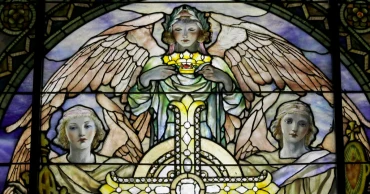
About 7 in 10 adult Americans believe in angels: AP-NORC poll shows
Compared with the devil, angels carry more credence in America.
Angels even get more credence than, well, hell. More than astrology, reincarnation, and the belief that physical things can have spiritual energies.
In fact, about 7 in 10 U.S. adults say they believe in angels, according to a new poll by The Associated Press-NORC Center for Public Affairs Research.
“People are yearning for something greater than themselves — beyond their own understanding,” said Jack Grogger, a chaplain for the Los Angeles Angels and a longtime Southern California fire captain who has aided many people in their gravest moments.
That search for something bigger, he said, can take on many forms, from following a religion to crafting a self-driven purpose to believing in, of course, angels.
“For a lot of people, angels are a lot safer to worship,” said Grogger, who also pastors a nondenominational church in Orange, California, and is a chaplain for the NHL's Anaheim Ducks.
People turn to angels for comfort, he said. They are familiar, regularly showing up in pop culture as well as in the Bible. Comparably, worshipping Jesus is far more involved; when Grogger preaches about angels it is with the context that they are part of God's kingdom.
American's belief in angels (69%) is about on par with belief in heaven and the power of prayer, but bested by belief in God or a higher power (79%). Fewer U.S. adults believe in the devil or Satan (56%), astrology (34%), reincarnation (34%), and that physical things can have spiritual energies, such as plants, rivers or crystals (42%).
The widespread acceptance of angels shown in the AP-NORC poll makes sense to Susan Garrett, an angel expert and New Testament professor at Louisville Presbyterian Theological Seminary in Kentucky. It tracks with historical surveys, she said, adding that the U.S. remains a faith-filled country even as more Americans reject organized religion.
But if the devil is in the details, so are people’s understandings of angels.
“They’re very malleable,” Garrett said of angels. “You can have any one of a number of quite different worldviews in terms of your understanding of how the cosmos is arranged, whether there’s spirit beings, whether there’s life after death, whether there’s a God … and still find a place for angels in that worldview.”
Talk of angels, Garrett said, is often also about something else, like the ways God interacts with the world and other hard-to-articulate ideas.
The large number of U.S. adults who say they believe in angels includes 84% of those with a religious affiliation — 94% of evangelical Protestants, 81% of mainline Protestants and 82% of Catholics — and 33% of those without one. And of those angel-believing religiously unaffiliated, that includes 2% of atheists, 25% of agnostics and 50% of those identified as “nothing in particular.”
The broad acceptance is what fascinates San Francisco-based witch and author Devin Hunter: Angels show up independently in different religions and traditions, making them part of the fabric that unites humanity.
“We’re all getting to the same conclusion,” said Hunter, who spent 16 years as a professional medium, and started communicating as a child with what he believed were angels.
Hunter estimates that a belief in angels applies to about half of those practicing modern witchcraft today, and for some who don't believe, their rejection is often rooted in the religious trauma they experienced growing up.
“Angels become a very big deal" for long-time practitioners who've made occultism their primary focus, said Hunter, an angel-loving occultist. “We cannot escape them in any way, shape or form.”
Jennifer Goodwin of Oviedo, Florida, also is among the roughly seven in 10 U.S. adults who say they believe in angels. She isn’t sure if God exists and rejects the afterlife dichotomy of heaven and hell, but the recent deaths of her parents solidified her views on these celestial beings.
Goodwin believes her parents are still keeping an eye on the family — not in any physical way or as a supernatural apparition, but that they manifest in those moments when she feels a general sense of comfort.
“I think that they are around us, but it’s in a way that we can’t understand,” Goodwin said. “I don’t know what else to call it except an angel.”
Angels mean different things to different people, and the idea of loved ones becoming heavenly angels after death is neither an unusual belief nor a universally held one.
In his reading of Scripture as an evangelical Protestant, Grogger said he believes angels are something else entirely — they have never been human and are on another level in heaven's hierarchy. “We are higher than angels,” he said. “We do not become an angel.”
Angels do interact with humans though, said Grogger, but what "that looks like we’re not 100% sure.” They worship God who created this angelic legion of unknown numbers, he said, adding that evangelicals often attribute the demonic forces in the world to the angels who fell from heaven when the devil rebelled.
The Western ideas about angels can be traced through the Bible — and to the worldviews of its monotheistic authors, Garrett said. Those beliefs have changed and developed for millennia, influenced by cultures, theologians and even the ancient polytheistic beliefs that came before the Hebrew Bible and the New Testament, she said.
“There are sort of lines of continuity from the Bible that you can trace all the way up to the New Age movement,” said Susan Garrett, who wrote “No Ordinary Angel: Celestial Spirits and Christian Claims about Jesus.”
The angels in the Bible do God's bidding, and angelic violence is one part of their job description, said Esther Hamori, author of the upcoming book, “God's Monsters: Vengeful Spirits, Deadly Angels, Hybrid Creatures, and Divine Hitmen of the Bible.”
“The angels of the Bible are just as likely to assassinate individuals and slaughter entire populations as they are to offer help and protect and deliver,” said Hamori. She doesn't believe in these angels, but studies them as a Hebrew Bible professor at Union Theological Seminary in New York where she teaches a popular “Monster Heaven” class.
“They’re just God’s obedient soldiers doing the task at hand, and sometimes that task is in human beings' best interests, and sometimes it’s not," she said.
The perception that angels act angelic and look like the idyllic, winged figurines atop Christmas trees could be attributed to an early centuries belief that people are assigned one good angel and one bad — or have a good and bad spirit to guide them, Garrett said.
This idea shows up on the shoulders of cartoon characters and is likely what Abraham Lincoln was alluding to in his famous appeal for unity when he referenced “the better angels of our nature” in his first inaugural address, she said.
“It’s also tied in with ideas about guardian angels, which again, very ancient views that got developed over the centuries,” Garrett said.
For Sheila Avery of Chicago, angels are protectors, capable of keeping someone from harm. Avery, who belongs to a nondenominational church, credits them with those moments like when a person’s plans fall through, but ultimately it saves them from being in the thick of an unexpected disaster.
“They turn on the news and a terrible tragedy happened at that particular place,” Avery said, suggesting it was an “angel that was probably watching over them.”
2 years ago

UFO congressional hearing 'insulting' to US employees, top Pentagon official says
A top Pentagon official has attacked this week's widely watched congressional hearing on UFOs, calling the claims "insulting" to employees who are investigating sightings and accusing a key witness of not cooperating with the official U.S. government investigation.
Dr. Sean Kirkpatrick's letter, published on his personal LinkedIn page and circulated Friday across social media, criticizes much of the testimony from a retired Air Force intelligence officer that energized believers in extraterrestrial life and produced headlines around the world.
Retired Air Force Maj. David Grusch testified Wednesday that the U.S. has concealed what he called a "multi-decade" program to collect and reverse-engineer "UAPs," or unidentified aerial phenomena, the official government term for UFOs.
Also read: No ET, no answers: Intel report is inconclusive about UFOs
Part of what the U.S. has recovered, Grusch testified, were non-human "biologics," which he said he had not seen but had learned about from "people with direct knowledge of the program."
A career intelligence officer, Kirkpatrick was named a year ago to lead the Pentagon's All-domain Anomaly Resolution Office, or AARO, which was intended to centralize investigations into UAPs. The Pentagon and U.S. intelligence agencies have been pushed by Congress in recent years to better investigate reports of devices flying at unusual speeds or trajectories as a national security concern.
Kirkpatrick wrote the letter Thursday and the Defense Department confirmed Friday that he posted it in a personal capacity. Kirkpatrick declined to comment on the letter Friday.
Also read: There is stuff : Enduring mysteries trail US report on UFOs
He writes in part, "I cannot let yesterday's hearing pass without sharing how insulting it was to the officers of the Department of Defense and Intelligence Community who chose to join AARO, many with not unreasonable anxieties about the career risks this would entail."
"They are truth-seekers, as am I," Kirkpatrick said. "But you certainly would not get that impression from yesterday's hearing."
In a separate statement, Pentagon spokeswoman Sue Gough denied other allegations made by Grusch and other witnesses before a House Oversight subcommittee.
The Pentagon "has no information that any individual has been harmed or killed as a result of providing information" about UFO objects, Gough said. Nor has the Pentagon discovered "any verifiable information to substantiate claims that any programs regarding the possession or reverse-engineering of extraterrestrial materials have existed in the past or exist currently."
Also read: US intel report on UFOs: No evidence of aliens, but ...
Kirkpatrick wrote, "AARO has yet to find any credible evidence to support the allegations of any reverse engineering program for non-human technology."
He had briefed reporters in December that the Pentagon was investigating "several hundreds" of new reports following a push to have pilots and others come forward with any sightings.
Kirkpatrick wrote in his letter that allegations of "retaliation, to include physical assault and hints of murder, are extraordinarily serious, which is why law enforcement is a critical member of the AARO team, specifically to address and take swift action should anyone come forward with such claims."
"Yet, contrary to assertions made in the hearing, the central source of those allegations has refused to speak with AARO," Kirkpatrick said. He did not explicitly name Grusch, who alleged he faced retaliation and declined to answer when a congressman asked him if anyone had been murdered to hide information about UFOs.
Messages left at a phone number and email address for Grusch were not returned Friday.
2 years ago

U.S. records over 400 mass shootings so far in 2023
Nine mass shootings occurred across the United States over the weekend, bringing the total to more than 400 this year, according to a national website that tracks firearm deaths and injuries.
The nine mass shootings led to at least four deaths and 35 injuries as of Sunday, according to the latest data from the Gun Violence Archive, which defines a mass shooting as an event with at least four victims either injured or killed, not including the shooter.
Read: Texas gunman in Walmart shooting gets 90 consecutive life sentences and may still face death penalty
The website recorded 404 mass shootings as of Sunday since the start of 2023, which left at least 453 people dead, according to the data, which are collected or validated from 7,500 sources daily.
Among those killed were some 161 children under age 12, and another nearly 400 children had been injured in mass shootings so far this year, according to the anti-gun violence group.
The number of mass shootings was 9 percent up from a year earlier. As of July 23, 2022, there were 365 mass shootings, and that year saw a total of 647 mass shootings across the country.
Read: 5 dead in Philadelphia shooting in worst violence around US Independence Day
The increase confirmed a rising trend of mass shootings in the United States.
In 2016, the country reported 383 mass shootings. The last three years all surpassed 600, with 2021 registering the largest number -- 690 mass shootings, according to the Gun Violence Archive.
2 years ago