USA

Trump pleads not guilty to 34 charges, admonished by judge
Donald Trump conspired to illegally influence the 2016 election through a series of hush money payments designed to stifle claims that could be harmful to his candidacy, prosecutors said Tuesday in unsealing a historic 34-count felony indictment against the former president.
The payments, said Assistant District Attorney Christopher Conroy, were part of "an unlawful plan to identify and suppress negative information that could have undermined his campaign for president."
Trump, stone-faced and silent as he entered and exited the Manhattan courtroom, said "not guilty" in a firm voice while facing a judge who warned him to refrain from rhetoric that could inflame or cause civil unrest.
The next court date is December 4, though it is not clear if he will be required to appear.
The broad contours of the case have long been known, but indictment contains new details about a scheme that prosecutors say involved payoffs to two women, including a porn star, who said they had extramarital sexual encounters with him years earlier, as well as to a Trump Tower doorman who claimed to have a story about a child he alleged the former president had out of of wedlock.
The arraignment, though largely procedural in nature, amounts to a remarkable reckoning for Trump after years of investigations into his personal, business and political dealings. The case is unfolding against the backdrop not only of his third campaign for the White House but also against other investigations in Washington and Atlanta that might yet produce even more charges.
Trump, his lips pursed in apparent anger, entered the courtroom shortly before 2:30 p.m. He left court about an hour later, also without commenting. All told, the typically verbose Trump spoke only about 10 words during the entire proceeding.
Before the arraignment, he narrated his feelings in real time, describing the experience as "SURREAL" as he traveled from Trump Tower to lower Manhattan to face a judge.
The day's schedule, with its striking blend of legal and political events, represents the new split-screen reality for Trump as he submits to the four demands of the American criminal justice system while projecting an aura of defiance and victimhood at celebratory campaign events.
Wearing his signature dark suit and red tie, Trump turned and waved to crowds outside the building before heading inside to be fingerprinted and processed. He arrived at court in an eight-car motorcade from Trump Tower, communicating in real time his anger at the process.
"Heading to Lower Manhattan, the Courthouse," he posted on his Truth Social platform. "Seems so SURREAL — WOW, they are going to ARREST ME. Can't believe this is happening in America. MAGA!"
Afterward, Trump lawyer Todd Blanche told reporters that it was a "sad day for the country."
"You don't expect this to happen to somebody who was president of the United States," he said.
Trump, who was impeached twice by the U.S. House but was never convicted in the U.S. Senate, is the first former president to face criminal charges. The nation's 45th commander in chief was escorted from Trump Tower to the courthouse by the Secret Service.
"He is strong and ready to go," Trump lawyer Joe Tacopina told The Associated Press. Earlier, Tacopina said in a TV interview that the former president wouldn't plead guilty to lesser charges, even if it might resolve the case. He also said he didn't think the case would make it to a jury.
New York police said they were ready for large protests by Trump supporters, who share the Republican former president's belief that the New York grand jury indictment and three additional pending investigations are politically motivated and intended to weaken his bid to retake the White House in 2024. Journalists often outnumbered protesters, though.
Trump, a former reality TV star, has been hyping that narrative to his political advantage, saying he raised more than $8 million in the days since the indictment on claims of a "witch hunt." His campaign released a fundraising request titled "My last email before arrest" and he has repeatedly assailed Manhattan District Attorney Alvin Bragg, egged on supporters to protest and claimed without evidence that the judge presiding over the case "hates me" — something his own lawyer has said is not true.
Trump was scheduled to return to his Palm Beach, Florida, home, Mar-a-Lago, on Tuesday evening to give remarks. At least 500 prominent supporters have been invited, with some of the most pro-Trump congressional Republicans expected to attend.
A conviction would not prevent Trump from running for or winning the presidency in 2024.
The investigation is scrutinizing six-figure payments made to porn actor Stormy Daniels and former Playboy model Karen McDougal. Both say they had sexual encounters with the married Trump years before he got into politics. Trump denies having sexual liaisons with either woman and has denied any wrongdoing involving payments.
The arraignment unfolded against the backdrop of heavy security in New York, coming more than two years after Trump supporters stormed the U.S. Capitol in a failed bid to halt the congressional certification of Democrat Joe Biden's win.
Trump was defiant ahead of his arraignment. He used his social media network to complain that he was going to court in a heavily Democratic area, declaring, "KANGAROO COURT" and "THIS IS NOT WHAT AMERICA WAS SUPPOSED TO BE!" He and his campaign have repeatedly assailed Bragg and even trained scrutiny on members of Bragg's family.
Despite that, the scenes around Trump Tower and the courthouse where Trump will stand before a judge did not feature major unrest. Police tried to keep apart protesters supporting the former president and those opposing him by confining them to separate sides of a park near the courthouse using metal barricades.
Georgia Republican Rep. Marjorie Taylor Greene, one of Trump's staunchest supporters in Congress, staged a brief rally at the park, but the scene was so chaotic that it was hard to hear her over the crush of reporters and protesters.
"We're the party of peace," Greene said, thanking those Trump supporters present. "Democrats are communists."
Embattled Republican New York Rep. George Santos also showed up in solidarity with Trump, saying, "I want to support the president."
"I think this is unprecedented and it's a bad day for democracy," Santos said, suggesting that future prosecutors could target Biden and other presidents with other cases, which "cheapens the judicial system."
New York's ability to carry out safe and drama-free courthouse proceedings in a case involving a polarizing ex-president could be an important test case as prosecutors in Atlanta and Washington conduct their own investigations of Trump that could also result in charges. Those investigations concern efforts to undo the 2020 election results as well as the possible mishandling of classified documents at Mar-a-Lago.
3 years ago

McDonald's to temporarily close offices ahead of layoffs, says WSJ
A report says McDonald’s has closed its U.S. offices for a few days as the company prepares to inform employees about layoffs.
The Wall Street Journal cited an internal email from the Chicago-based fast-food giant saying U.S. corporate staff and some employees overseas should work from home while the company notifies people of their job status.
McDonald’s did not immediately reply to emailed requests for comment. The report said McDonald’s would inform its employees this week about staffing decisions that are part of a wide restructuring of the company announced earlier.
Though the U.S. labor market remains strong, layoffs have been mounting, mainly in the technology sector, where many companies over-hired after a pandemic boom. IBM, Microsoft, Amazon, Salesforce, Facebook parent Meta, Twitter and DoorDash have all announced layoffs in recent months.
Policymakers at the Federal Reserve have forecast the unemployment rate may rise to 4.6% by the end of this year, a sizable increase historically associated with recessions.
McDonald's has more than 150,000 employees in corporate roles. About 70% of those employees are based outside the United States.
The company reported its global sales rose nearly 11% in 2022, while sales in the U.S. climbed almost 6%. Total restaurant margins rose 5%. In its latest annual report, it cited difficulties in adequately staffing some of its outlets.
In January, McDonald's said its “Accelerating the Arches” program would focus on “deliveries, Drive Thru, digital and development.”
“We’re performing at a high level, but we can do even better," CEO Chris Kempczinski said in a Jan. 6 letter to employees. He said the company was divided into silos and that the approach was “outdated and self-limiting."
As the company reshapes its strategy, he said, “we will evaluate roles and staffing levels in parts of the organization and there will be difficult discussions and decisions ahead.”
3 years ago

New York, city of Trump’s dreams, delivers his comeuppance
His name has been plastered on this city’s tabloids, bolted to its buildings and cemented to a special breed of brash New York confidence. Now, with Donald Trump due to return to the place that put him on the map, the city he loved is poised to deliver his comeuppance.
Rejected by its voters, ostracized by its protesters and now rebuked by its jurors, the people of New York have one more thing on which to splash Trump's name: Indictment No. 71543-23.
“He wanted to be in Manhattan. He loved Manhattan. He had a connection to Manhattan,” says Barbara Res, a longtime employee of the former president who was a vice president at the Trump Organization. “I don't know that he has accepted it and I don't know that he believes it, but New York turned on him.”
None of Trump's romances have lasted longer than his courtship of New York. No place else could match his blend of ostentatious and outlandish. His love of the city going unrequited is Shakespearean enough, but Trump took it a step further, rising to the presidency only to become a hometown antihero.
Trump was born and raised in Queens to a real estate developer father whose projects were largely in Queens and Brooklyn. But the younger Trump ached to cross the East River and make his name in Manhattan. He gained a foothold with his transformation of the rundown Commodore Hotel into a glittering Grand Hyatt and ensured a spotlight on himself by appearing at the side of politicians and celebrities, popping up at Studio 54 and other hot spots and coaxing near-constant media coverage.
By the greed-is-good 1980s, he was a New York fixture. And in a city that prides itself as the center of the world, Trump saw himself as king.
“Trump grew up with a great deal of resentment toward others who he thought had more fame, wealth, or popularity,” says David Greenberg, a Rutgers University professor who wrote “Republic of Spin: An Inside History of the American Presidency.” “Making it in Manhattan — building Trump Tower and becoming a fixture of the Manhattan social scene in the 1980s — meant a lot to him.”
The feeling was never truly mutual, though. Trump left a trail of unpaid bills, jilted workers and everyday New Yorkers who saw through his shameless self-promotion.
He may have been a singular character, but in a city of 8 million stories, his was just another one.
So, for years, Trump's life here continued as the city raced on around him. Marriages came and went. Skyscrapers rose. Bankruptcies were filed. Trump flickered in and out of fame's upper echelon.
He may never have been a common New Yorker, packed in the subway on the morning commute or grabbing a hot dog from a street vendor, but for many he remained a benign, if outsized, presence.
That began changing with years of bizarre, racially-fueled lies about Barack Obama's birthplace, and by the time he descended the golden escalator at Trump Tower on June 16, 2015, to announce his presidential bid, many in his hometown had little patience for the vitriol he spewed.
Rockefeller Center played host to a weekly “Saturday Night Live” that made him a mockery, and at a Waldorf-Astoria gala, he elicited groans. In vast swaths of the city, distaste for Trump turned to hatred.
Even among Republicans, many saw him as believable as a Gucci bag on Canal Street. Trump won the state's Republican primary, but couldn't convince GOP voters in Manhattan.
“He’s no longer just this TV show charlatan. People see this man is actually going to lead the country and the world in the wrong direction,” says Christina Greer, a political scientist at Fordham University.
On Election Night 2016, tears flowed at the Javits Center, where Hillary Clinton's victory party never materialized, while giddy supporters of Trump reveled in his surprise win across town in a Hilton ballroom. New Yorkers' rebuke of their native son meant nothing. His face was projected unto the face of the Empire State Building as locals digested the fact that he would be president.
In the days that followed, a curious parade of politicians and celebrities journeyed to Trump Tower to meet the president-elect and, for weeks after, predictions about his presidency were rampant.
Among the musings of observers was speculation of a commuter president shuttling between New York and Washington. When word emerged that his wife and young son wouldn't immediately move to the White House, it gave credence to the idea that Trump could never fully part with the city that made him.
But Trump continued being Trump, his presidency gave way to one controversy and broken norm after another, and New York become a capital of the resistance, giving birth to persistent mass protests.
The city of his dreams was no longer a place he could call home.
“New York has gone to hell,” he said as Election Day 2020 neared.
When the ballots were counted, Manhattan had seven times as many supporters of Joe Biden than those for Trump, and this time the Electoral College followed. When Trump's presidency ended and he left Washington after the violent insurrection he incited, it was clear New York would be inhospitable.
Like droves of New Yorkers before him, he retired to Florida.
When he returns north now, he spends most of his time at his club in Bedminster, New Jersey. The man who long tried to eschew his bridge-and-tunnel past is again separated from Manhattan by a river.
On his first return to Manhattan after leaving office, the New York Post reported a single person waited outside Trump Tower to catch a glimpse. Even protesters couldn't be bothered with him anymore.
His rebuke came from New Yorkers taking part in a rite-of-passage for city dwellers, jury duty, and if it fit the mold of prior grand juries, it brought together a quintessential Manhattan cross-section, from neighborhoods, incomes and backgrounds different enough to ensure a cast of characters fit for TV.
With word of Trump's indictment now out, the story of his deteriorating romance with New York is gaining a sense of finality. Even the Post, part of the Rupert Murdoch media empire that helped Trump win the White House to begin with, has abandoned him. The paper that once documented his affair with a screaming “Best Sex I've Ever Had” headline beside Trump's smirking face, last week called him “deranged” on a front page on which he was branded “Bat Hit Crazy” in huge letters.
Trump once bragged he could shoot someone in the middle of Fifth Avenue and remain popular. Today, he could hand out fifties in New York and still not win the support of most locals.
He has dismissed the grand jury's actions as a “scam" and a “persecution" and denied he did anything wrong. Democrats, he says, are lying and cheating to hurt his campaign to return to the White House.
Outside the courthouse that awaits him, the spectacle has largely been confined to the hordes of media. Among the few regular New Yorkers to make the trip there was Marni Halasa, a figure skater who showed up in a leopard print leotard, cat ears and wads of fake bills strung into a “hush money” boa. She stood alone outside Friday to celebrate the indictment of one of her city's most famous sons.
“New Yorkers are here in spirit,” she says, “and I feel like I'm representing most of them.”
3 years ago

Trump indictment ends decades of perceived invincibility
When Donald Trump steps before a judge this coming week to be arraigned in a New York courtroom, it will not only mark the first time a former U.S. president has faced criminal charges. It will also be a reckoning for a man long nicknamed “Teflon Don,” who until now has managed to skirt serious legal jeopardy despite 40 years of legal scrutiny.
Trump, who is the early front-runner for the Republican presidential nomination, is expected to turn himself in Tuesday. He faces charges including at least one felony offense related to hush money payments to women during his 2016 campaign. Like any other person facing trial, he will be booked, fingerprinted and photographed before being given the chance to enter a plea.
The spectacle that is sure to unfold will mark an unprecedented moment in American history that will demonstrate once again how dramatically Trump — who already held the distinction of being the first president to be impeached twice — has upended democratic norms. But on a personal level, the indictment pierces the cloak of invincibility that seemed to follow Trump through his decades in business and in politics, as he faced allegations of fraud, collusion and sexual misconduct.
“Boy, after all this time it’s a bit of a shock,” Trump biographer Michael D’Antonio said of the indictment. “You know I always thought of him as the Gingerbread Man, shouting, ‘You can’t catch me!’ as he ran away.”
“Given his track record,” he said, “I had trouble imagining he would ever be held accountable.”
“These are not things that Donald Trump ever thought in his entire life, nor I, for that matter, that he would ever be confronted with,” Michael Cohen, Trump's longtime fixer and a key witness in the case who served jail time for the payments, told CNN.
Of course, some of the celebration by Trump's detractors may be premature. Trump could seek to have a judge quickly dismiss the case. Even if it moves forward, there's no guarantee of conviction. Intensifying investigations in Atlanta and Washington are seen as potentially more serious legal threats.
Still, Trump and his team were caught by surprise when word of the New York indictment broke Thursday evening, following news reports that the grand jury hearing the case was set for a weekslong hiatus. As the deliberations dragged on, some in Trump's orbit had become convinced that the case had stalled and that charges might never be brought. That included Trump lawyer Joe Tacopina, who said Friday morning he had hoped the “rule of law would prevail.”
Trump, he said on the “Today" show, was “initially was shocked” by news of the charges, but quickly pivoted to his usual pushback playbook.
“After he got over that," he said, Trump "put a notch on his belt and he decided we have to fight now. And he got into a typical Donald Trump posture where he’s ready to be combative on something that he believes is an injustice. ... I think he’s now in the posture that he’s ready to fight this.”
In the meantime, Trump and his team have tried to use the news to his advantage, hoping to energize his loyal base by painting the investigation as part of a larger plot to derail his candidacy.
Already, the charges have been a boon to his struggling fundraising. The campaign announced Friday evening that it had raised over $4 million in the 24 hours after the indictment became public, far smashing its previous record after the FBI search of Trump's Mar-a-Lago club.
More than 25% of donations, according to the campaign, came from first-time donors. The average contribution: $34.
His campaign also continued to blast out supportive statements from dozens of top Republicans who have rallied behind Trump, including several of his declared and likely challengers, underscoring his continued hold on the party.
Read more: Trump's potential indictment caps decades of legal scrutiny
Florida Gov. Ron DeSantis, in a speech Saturday to conservatives meeting in Camp Hill, Pennsylvania, accused the Democratic prosecutor in New York, Alvin Bragg, of weaponizing the law “for political purposes” in bringing a case against “a former president.” DeSantis said the district attorney had indicted “a former president on misdemeanor offenses” that he was “straining to try to convert into felonies.”
Trump has been in contact by phone with key congressional allies, including members of House leadership and top committees, according to people familiar with the conversations, who, like others, spoke on condition of anonymity to discuss the response.
Trump ally Rep. Jim Banks, R-Ind., who formally endorsed the former president Friday, said Trump “doesn’t back down" and was going to "fight back," telling a local radio show it was "yet another chapter where Donald Trump is going to come back on top in the end."
The media maelstrom has catapulted Trump back into the spotlight he craves, at least temporarily limiting attention being paid to his rivals, including DeSantis, who is widely expected to challenge Trump for the nomination, and has been holding events across the county to promote his book.
Trump aides have been discussing other ideas to maximize the situation, including the possibility of holding a press event either before or after the arraignment. Trump is expected to travel from Florida to New York on Monday and stay overnight at Trump Tower in midtown Manhattan before heading to the courthouse early Tuesday. He will return to Florida after the arraignment.
Trump has long denied that he had a sexual encounter with the porn actor known as Stormy Daniels and has blasted Bragg for pursuing the years-old case.
Trump is also facing continued investigations in Georgia, over his efforts to overturn the results of the 2020 election, and in Washington, where a special counsel is probing the events of Jan. 6, 2021, as well as Trump's handling of classified documents at Mar-a-Lago and potential obstruction of the investigation.
But Sam Nunberg, a longtime former aide who broke with Trump years ago, said that while he no longer supports Trump, he believes the Manhattan case is “a waste of time," given the allegations, which remain under seal. And he said he was skeptical it would ultimately matter.
“It doesn’t surprise me," he said of the indictment. “What would surprise me is if he actually ended up behind bars in prison and I don’t see that happening.”
D’Antonio said that sentiment — and a continued belief that Trump will somehow prevail and dodge the charges — continues among the many people who have reached out to him in the last 24 hours, despite the charges.
“They're like, he's going to get away with it," he said. "Somehow, he’s going to get it thrown out.”
Read more: Trump indictment and hush money investigation explained
3 years ago
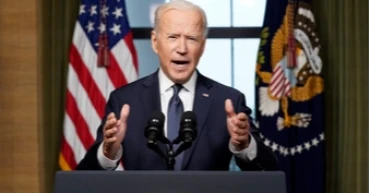
Biden and his 2024 campaign: Waiting for some big decisions
President Joe Biden has all but announced he's running for reelection, but key questions about the 2024 campaign are unresolved: Who will manage it? Where will it be based? When will he finally make it official?
Advisers have long said he planned to wait until after March, when the year's first fundraising period wraps up. That was an effort to help manage expectations because many donors who gave generously to Democratic causes during last fall's elections were looking for a break.
But an announcement isn't imminent even now, aides insist, and probably won't come until at least after Biden returns from an expected trip to Ireland in mid-April.
Working on his own timeline could counter Biden’s low approval ratings and questions about his age — the 80-year-old would turn 86 before the end of a second term. It also means Biden won’t be hurried by pressure from former President Donald Trump, who's already announced his 2024 campaign, or other top Republicans who may enter the race, including Florida Gov. Ron DeSantis or former Vice President Mike Pence.
“He’s earned the luxury of making the timetable,” said Brad Bannon, a Democratic strategist in Washington. “The longer he can keep this thing focused on his duties in the White House, and less about the campaign back-and-forth, the better off he’s going to be.”
That said, Biden aides are mindful that Trump has been indicted for his role in the payment of hush money to a porn actor, and they say Biden will look to time his announcement to a point when he won't share the political spotlight with the man he beat in the 2020 election.
Biden's inner political circle is ready to begin executing on the campaign's strategy from Day One and sees no drawbacks to the president taking his time. Biden faces no significant Democratic challenger for the nomination. The self-help guru Marianne Williamson is the sole contender at this point in the primary race.
It will also be up to Biden to decide where next year's Democratic National Convention is held among the three finalist cities of Atlanta, Chicago and New York. But with the logistical groundwork mostly laid, there is little pressure for that decision until the president is ready to make it, organizers say.
Much of the reelection effort will be run from the White House, where Biden's most senior advisers are expected to remain. Still, the campaign manager and top staff will be responsible for raising vast sums of money, reaching millions of voters and making the case for Biden at Americans’ doors and online while he is still occupied with governing.
One top Biden adviser, who spoke on condition of anonymity to discuss a reelection campaign that hasn't yet been announced, noted that Biden's 2020 bid was a $1.7 billion operation and that the effort this time would be larger. The adviser said a key will be finding “validators,” or non-Washington voices who can spread the campaign's message at a time when many people have lost faith in everything political.
Aides and allies are discussing how to build the appropriate 2024 race infrastructure. The circumstances are different from 2020 for Biden, whose race then was conducted while the country was largely shut down by the COVID-19 pandemic.
Read more: How Biden leaves wiggle room to opt against reelection bid
The political environment is different, too, as technological and cultural shifts have continued to change how people communicate. Biden's advisers are preparing a new model of campaigning fit for the moment to activate his base and identify and woo the persuadable center — essentially a customized communication strategy for each target voter.
Aba Blankson, chief marketing and communications officer for the NAACP, said her organization is nonpartisan but found success mobilizing Black voters — an important part of Biden's base — before last November's elections using similarly targeted political messaging. That included text messages, radio ads and knocking on doors to promote “peer-to-peer” organizing in areas capable of swinging pivotal races.
“I think his timing is what his timing is," Bankson said. "But, for us, it is an every-year reality.”
The choice of Biden's campaign headquarters has been narrowed to Philadelphia, the 2020 location, and Wilmington, Delaware, where his home is and where the president spends many weekends away from the White House. While Biden tends to prefer Delaware on all matters, some top Democrats worry that recruiting top campaign talent to Wilmington will be difficult.
The Biden adviser downplayed the importance of choosing between the two immediately. And Biden waited until weeks after the start of his 2020 campaign to announce that he had settled on Philadelphia, making a commitment to an important battleground state.
More challenging has been filling the job of campaign manager. Some potential candidates view it as a thankless task, with so much of the decision-making confined to the White House, though the adviser said whomever is ultimately chosen will be empowered with wide latitude to run 2024.
Jen O’Malley Dillon, Biden’s 2020 campaign manager, is now a deputy White House chief of staff and plans to remain in her job. Many potential candidates have expressed interest in the campaign manager position, but among those on the short list are Julie Chavez Rodriguez, director of the White House Office of Intergovernmental Affairs and a deputy campaign manager of Biden’s 2020 campaign, and Sam Cornale, executive director of the Democratic National Committee.
Quentin Fulks, campaign manager for Georgia Sen. Raphael Warnock’s reelection victory last fall, has been mentioned.
Biden led Democrats to a stronger than expected midterm performance in 2022 by urging voters to reject “extreme” adherents to Trump’s “Make America Great Again” movement. So bringing in an outsider who ran successful Democratic campaigns last fall is a possibility. But party leaders acknowledge that breaking into Biden’s famously tight inner circle has at times been challenging.
An exception is O’Malley Dillon, who was a late 2020 entrant to Biden’s orbit after leading former Texas Rep. Beto O’Rourke’s failed presidential bid.
Trump hasn’t named a campaign manager despite announcing his candidacy months ago. But others aren't waiting to staff up.
Republican Nikki Haley, Trump's U.N. ambassador and a former South Carolina governor, picked Betsy Ankney, executive director of Haley's Stand for America political action committee, to manager her presidential campaign . The super PAC linked to DeSantis brought on former Trump aide Matt Wolking and strategist Jeff Roe, the architect of Texas Sen. Ted Cruz’s 2016 presidential campaign and Republican Glenn Youngkin winning campaign for Virginia governor in 2021.
Even with the unanswered questions about his campaign structure, the outlines of Biden’s pitch to voters are forming.
Read more: US midterm election: Democrats repel Republicans backed by Trump in several left-leaning states
From the State of the Union address in February to speeches to donors, the president has begun making the case that Americans should let him “finish the job” he started. He's also tried framing the race as a choice between himself and “MAGA Republicans” who, he argues, will undermine the nation's core values.
Biden has spent recent months traveling to promote what he sees as his administration's key policy accomplishments, including a bipartisan public works package, and plans more of the same going forward. That would let him use this year to test political messaging that can best resonate in 2024, aides said.
“He's not going to win reelection or lose reelection based on what happens in his campaign," Bannon predicted. "He's going to win it based on his performance as president and the performance of his opponent, whoever it is.”
3 years ago

After Nashville, Congress confronts limits of new gun law
Nine months ago, President Joe Biden signed a sweeping bipartisan gun law, the most significant legislative response to gun violence in decades.
“Lives will be saved,” he said at the White House.
The law has already prevented some potentially dangerous people from owning guns. Yet since that signing last summer, the tally of mass shootings in the United States has only grown. Five dead at a nightclub in Colorado. Eleven killed at a dance hall in California. And just this past week, three 9-year-olds and three adults were shot and killed at an elementary school in Nashville, Tennessee.
A day after that school shooting, Biden’s tone was markedly less optimistic than it was the signing ceremony.
“What in God’s name are we doing?” he asked in a speech Tuesday, calling for a ban on so-called assault weapons like those that were used to kill at The Covenant School in Nashville. “There’s a moral price to pay for inaction.”
Biden and others had hailed last year's bipartisan gun bill — approved in the weeks after the shooting of 19 children and two adults at a school in Uvalde, Texas — as a new way forward.
Several months in, the law has had some success: Stepped-up FBI background checks have blocked gun sales for 119 buyers under the age of 21, prosecutions have increased for unlicensed gun sellers and new gun trafficking penalties have been charged in at least 30 cases around the country. Millions of new dollars have flowed into mental health services for children and schools.
But the persistence of mass shootings in the United States highlights the limits of congressional action. Because the law was a political compromise, it did not address many Democratic priorities for gun control, including universal background checks or the ban on “assault weapons” for which Biden repeatedly has called.
Now, in the wake of the Nashville shooting, Congress appears to have returned to a familiar impasse. One of the top Republican negotiators on the gun law, Texas Sen. John Cornyn, has said new compromise is unlikely. In the House, the new GOP majority favors fewer restrictions on guns, not more.
Asked Thursday about a way ahead, House Speaker Kevin McCarthy, R-Calif., said legislation alone cannot solve the gun violence problem. He said Americans need to think deeply about mental illness and other factors that drive people to act.
In contrast, House Democratic leader Hakeem Jeffries of New York said Congress should “act with the fierce urgency of now.”
“Our classrooms have become killing fields," he said. “Is that acceptable in America?”
Democratic Sen. Chris Murphy of Connecticut, the lead negotiator on the 2022 bill, says he thinks it represented a paradigm shift in how Congress considers gun legislation. But, he said, “I don’t think that will happen all at once.”
“This is sickening, but the opportunities for legislative change normally come after really terrible mass shootings,” said Murphy, who has been the lead Senate advocate for gun control since the 2012 mass shooting at an elementary school in Newtown, Conn. “I hate that, I wish that wasn’t how it works.”
Tensions were running high on both sides of the Capitol this past week.
On Wednesday, Rep. Jamaal Bowman, D-N.Y., stood outside the House chamber and yelled that Republicans are “cowards” for not doing more on gun control, eventually arguing with Rep. Thomas Massie, R-Ky., who advocated for allowing teachers to carry guns.
“More guns lead to more deaths!” Bowman screamed at Massie. “Children are dying!”
In the Senate, Republican Ted Cruz of Texas tried on Thursday to force a vote on legislation that would boost police presence at schools. He all but blamed Democrats, who had blocked the same legislation last year, for the Nashville shooting and called the 2022 law “meaningless.” Murphy angrily objected to Cruz's bill, arguing that Cruz wasn't serious about compromise and that his move was a stunt for the cameras.
Despite the frustrations, lawmakers who negotiated the compromise last year say they see slivers of hope.
Murphy said the implementation of the new law, and some of its early successes, will ultimately persuade Republicans to get on board with more legislation.
“What happened last year was seismic for Republicans,” Murphy said.
In terms of the bill's success, “People don’t get excited about the mass shootings that didn’t happen,” Murphy said, and that can be a challenge as they talk about it and contemplate what more could be done. But the dynamics can change quickly, he said.
While Republicans in the past might have tried to shy away from gun measures even if they supported them, Cornyn and Sen. Thom Tillis, R-N.C., have been promoting the new law and have discussed it frequently. Late last year, they joined Murphy, Sen. Joe Manchin, D-W.Va., and FBI Director Christopher Wray on a visit to an FBI facility in West Virginia for a briefing on how the background checks were working.
“I am proud to see this commonsense legislation already making a difference,” Tillis said in a statement afterward.
According to recent data obtained by The Associated Press, those who were flagged in the stepped-up background checks and prevented from buying a gun included an 18-year-old in Nebraska who had made terroristic threats and was prone to violent outbursts, a 20-year-old drug dealer in Arizona and an 18-year-old in Arizona who had been previously charged with unlawful possession of weapons and was found carrying fentanyl. All were attempting to purchase long guns.
Tillis said he is aware of a separate case in his home state where a person under 21 who had been charged with assault and battery and assaulting a police officer was flagged and prevented from buying a gun.
"It's just one of those bills that's going to age well," Tillis said, noting that the number of denials of gun sales is a very small fraction of total sales.
Cornyn said that so far, the bill “seems to be working.” But he said he doesn't expect Congress to go any further any time soon. He said would strongly oppose an “assault weapons” ban, as Biden is proposing.
When Biden and other lawmakers talk about “assault weapons,” they are using an inexact term to describe a group of high-powered guns or semi-automatic long rifles, such as an an AR-15, that can fire 30 rounds fast without reloading.
Most Republicans are steadfastly opposed to such a ban, arguing that it would be too complicated, especially as sales and varieties of the firearms have proliferated. There are many more types of these high-powered guns today than in 1994, when the ban was signed into law by President Bill Clinton.
Law- abiding citizens own those guns, Cornyn said, and “no law-abiding citizen is a threat to public safety.”
Despite the current standstill, John Feinblatt, president of Everytown for Gun Safety, a gun control advocacy group, says last year’s bill was proof that they can break gridlock.
“It was never the finish line,” he said.
3 years ago

At least 26 dead after tornadoes rake US Midwest, South
Storms that dropped possibly dozens of tornadoes killed at least 26 people in small towns and big cities across the South and Midwest, tearing a path through the Arkansas capital, collapsing the roof of a packed concert venue in Illinois and stunning people throughout the region Saturday with the damage's scope.
Confirmed or suspected tornadoes in at least eight states destroyed homes and businesses, splintered trees and laid waste to neighborhoods across a broad swath of the country. The dead included at least nine in one Tennessee county, four in the small town of Wynne, Arkansas, three in Sullivan, Indiana, and four in Illinois.
Other deaths from the storms that hit Friday night into Saturday were reported in Alabama and Mississippi, along with one near Little Rock, Arkansas, where city officials said more than 2,600 buildings were in a tornado's path.
Residents of Wynne, a community of about 8,000 people 50 miles (80 kilometers) west of Memphis, Tennessee, woke Saturday to find the high school's roof shredded and its windows blown out. Huge trees lay on the ground, their stumps reduced to nubs. Broken walls, windows and roofs pocked homes and businesses.
Debris lay scattered inside the shells of homes and on lawns: clothing, insulation, toys, splintered furniture, a pickup truck with its windows shattered.
Ashley Macmillan said she, her husband and their children huddled with their dogs in a small bathroom as a tornado passed, "praying and saying goodbye to each other, because we thought we were dead." A falling tree seriously damaged their home, but they were unhurt.
"We could feel the house shaking, we could hear loud noises, dishes rattling. And then it just got calm," she said.
Recovery was already underway, with workers using chainsaws and bulldozers to clear the area and utility crews restoring power.
Nine people died in Tennessee's McNairy County, east of Memphis, according to Patrick Sheehan, director the Tennessee Emergency Management Agency.
"The majority of the damage has been done to homes and residential areas," said David Leckner, the mayor of Adamsville.
Gov. Bill Lee drove to the county Saturday to tour the destruction and comfort residents. He said the storm capped the "worst" week of his time as governor, coming days after a school shooting in Nashville that killed six people including a family friend whose funeral he and his wife, Maria, attended earlier in the day.
"It's terrible what has happened in this community, this county, this state," Lee said. "But it looks like your community has done what Tennessean communities do, and that is rally and respond."
Jeffrey Day said he called his daughter after seeing on the news that their community of Adamsville was being hit. Huddled in a closet with her 2-year-old son as the storm passed over, she answered the phone screaming.
"She kept asking me, 'What do I do, daddy?'" Day said, tearing up. "I didn't know what to say."
After the storm passed, his daughter crawled out of her destroyed home and over barbed wire and drove to nearby family. On Saturday evening, baby clothes were still strewn about the site.
In Memphis, police spokesman Christopher Williams said via email late Saturday that there were three deaths believed to be weather-related: two children and an adult who died when a tree fell on a house.
Tennessee officials warned that the same weather conditions from Friday night are expected to return Tuesday.
In Belvidere, Illinois, part of the roof of the Apollo Theatre collapsed as about 260 people were attending a heavy metal concert. A 50-year-old man was pulled from the rubble.
"I sat with him and I held his hand and I was (telling him), 'It's going to be OK.' I didn't really know much else what to do," concertgoer Gabrielle Lewellyn told WTVO-TV.
The man was dead by the time emergency workers arrived. Officials said 40 others were hurt, including two with life-threatening injuries.
Crews cleaned up around the Apollo on Saturday, with forklifts pulling away loose bricks. Business owners picked up glass shards and covered shattered windows.
In Crawford County, Illinois, three people were killed and eight injured when a tornado hit around New Hebron, said Bill Burke, the county board chair.
Sheriff Bill Rutan said 60 to 100 families were displaced.
"We've had emergency crews digging people out of their basements because the house is collapsed on top of them, but luckily they had that safe space to go to," Rutan said at a news conference.
That tornado was not far from where three people died in Indiana's Sullivan County, about 95 miles (150 kilometers) southwest of Indianapolis.
Sullivan Mayor Clint Lamb said at a news conference that an area south of the county seat of about 4,000 "is essentially unrecognizable right now" and several people were rescued overnight. There were reports of as many as 12 people injured, he said.
"I'm really, really shocked there isn't more as far as human issues," he said, adding that recovery "is going to be a very long process."
In the Little Rock area, at least one person was killed and more than 50 were hurt, some critically.
The National Weather Service said that tornado was a high-end EF3 twister with wind speeds up to 165 mph (265 kph) and a path as long as 25 miles (40 kilometers).
Masoud Shahed-Ghaznavi was lunching at home when it roared through his neighborhood, causing him to hide in the laundry room as sheetrock fell and windows shattered. When he emerged, the house was mostly rubble.
"Everything around me is sky," Shahed-Ghaznavi recalled Saturday. He barely slept Friday night.
"When I closed my eyes, I couldn't sleep, imagined I was here," he said Saturday outside his home.
Arkansas Gov. Sarah Huckabee Sanders declared a state of emergency and activated the National Guard. On Saturday, Sanders requested a major disaster declaration from President Joe Biden to support recovery efforts with federal resources.
Another suspected tornado killed a woman in northern Alabama's Madison County, officials said, and in northern Mississippi's Pontotoc County, authorities confirmed one death and four injuries.
Tornadoes also caused damage in eastern Iowa and broke windows northeast of Peoria, Illinois.
The storms struck just hours after Biden visited Rolling Fork, Mississippi, where tornadoes last week destroyed parts of town.
It could take days to determine the exact number of tornadoes from the latest event, said Bill Bunting, chief of forecast operations at the Storm Prediction Center. There were also hundreds of reports of large hail and damaging winds, he said.
"That's a quite active day," he said. "But that's not unprecedented."
More than 530,000 homes and businesses were without power as of midday Saturday, over 200,000 of them in Ohio, according to PowerOutage.us.
The sprawling storm system also brought wildfires to the southern Plains, with authorities in Oklahoma reporting nearly 100 of them Friday. At least 32 people were said to be injured, and more than 40 homes destroyed.
The storms also caused blizzard conditions in the Upper Midwest.
A threat of tornadoes and hail remained for the Northeast including in parts of Pennsylvania and New York.
3 years ago

Trump indictment ends decades of perceived invincibility
When Donald Trump steps before a judge next week to be arraigned in a New York courtroom, it will not only mark the first time a former U.S. president has faced criminal charges. It will also represent a reckoning for a man long nicknamed “Teflon Don,” who until now has managed to skirt serious legal jeopardy despite 40 years of legal scrutiny.
Trump, who is the early frontrunner for the Republican presidential nomination, is expected to turn himself in Tuesday. He faces charges including at least one felony offense related to hush money payments to women during his 2016 campaign. Like any other person facing trial, he will be booked, fingerprinted and photographed before being given the chance to enter a plea.
The spectacle that is sure to unfold will mark an unprecedented moment in American history that will demonstrate once again how dramatically Trump — who already held the distinction of being the first president to be impeached twice — has upended democratic norms. But on a personal level, the indictment pierces the cloak of invincibility that seemed to follow Trump through his decades in business and in politics, as he faced allegations of fraud, collusion and sexual misconduct.
“Boy, after all this time it’s a bit of a shock,” Trump biographer Michael D’Antonio said of the indictment. “You know I always thought of him as the Gingerbread Man, shouting, ‘You can’t catch me!’ as he ran away.”
“Given his track record,” he said, “I had trouble imagining he would ever be held accountable.”
“These are not things that Donald Trump ever thought in his entire life, nor I, for that matter, that he would ever be confronted with,” Michael Cohen, Trump's longtime fixer and a key witness in the case who served jail time for the payments, told CNN.
Of course, some of the celebration by Trump's detractors may be premature. The former president could seek to have a judge quickly dismiss the case. And even if it moves forward, there's no guarantee of conviction. Intensifying investigations in Atlanta and Washington are seen as potentially more serious legal threats.
Still, Trump and his team were caught by surprise when word of the New York indictment broke Thursday evening, following news reports that the grand jury hearing the case was set for a weeks-long hiatus. As the deliberations dragged on, some in Trump's orbit had become convinced that the case had stalled and that charges might never be brought. That included Trump attorney Joe Tacopina, who said Friday morning he had hoped the “rule of law would prevail.”
Trump, he said on the “Today" show, was “initially was shocked” by news of the charges, but quickly pivoted to his usual pushback playbook.
“After he got over that," he said, Trump "put a notch on his belt and he decided we have to fight now. And he got into a typical Donald Trump posture where he’s ready to be combative on something that he believes is an injustice. ... I think he’s now in the posture that he’s ready to fight this.”
In the meantime, Trump and his team have tried to use the news to his advantage, hoping to energize his loyal base by painting the investigation as part of a larger plot to derail his candidacy.
Already, the charges have been a boon to his struggling fundraising. The campaign announced Friday evening that it had raised over $4 million in the 24 hours after the indictment became public, far smashing its previous record after the FBI search of Trump's Mar-a-Lago club.
More than 25% of donations, according to the campaign, came from first-time donors. The average contribution: $34.
His campaign also continued to blast out supportive statements from dozens of top Republicans who have rallied behind Trump, including several of his declared and likely challengers, underscoring his continued hold on the party. Trump has been in contact by phone with key congressional allies, including members of House leadership and top committees, according to people familiar with the conversations, who, like others, spoke on condition of anonymity to discuss the response.
Trump ally Rep. Jim Banks, R-Ind., who formally endorsed the former president Friday, said Trump “doesn’t back down" and was going to "fight back," telling a local radio show it was "yet another chapter where Donald Trump is going to come back on top in the end."
The media maelstrom has catapulted the former president back into the spotlight he craves, at least temporarily limiting attention being paid to his rivals, including Florida Gov. Ron DeSantis, who is widely expected to challenge Trump for the nomination, and has been holding events across the county to promote his book.
Trump aides have been discussing other ideas to maximize the situation, including the possibility of holding a press event either before or after the arraignment. Trump is expected to travel from Florida to New York on Monday and stay overnight at Trump Tower in midtown Manhattan before heading to the courthouse early Tuesday. He will return to Florida after the arraignment.
Trump has long denied that he had a sexual encounter with the porn actor known as Stormy Daniels and has blasted Manhattan District Attorney Alvin Bragg for pursuing the years-old case.
Trump is also facing continued investigations in Georgia, over his efforts to overturn the results of the 2020 election, and in Washington, where a special counsel is probing the events of Jan. 6, 2021, as well as Trump's handling of classified documents at Mar-a-Lago and potential obstruction of the investigation.
But Sam Nunberg, a longtime former aide who broke with Trump years ago, said that while he no longer supports Trump, he believes the Manhattan case is “a waste of time," given the allegations, which remain under seal. And he said he was skeptical it would ultimately matter.
“It doesn’t surprise me," he said of the indictment. “What would surprise me is if he actually ended up behind bars in prison and I don’t see that happening.”
D’Antonio said that sentiment — and a continued belief that Trump will somehow prevail and dodge the charges — continues among the many people who have reached out to him in the last 24 hours, despite the charges.
“They're like, he's going to get away with it," he said. "Somehow, he’s going to get it thrown out.”
3 years ago

Storms strike Arkansas, Illinois, Indiana; 7 reported dead
A monster storm system tore through the South and Midwest on Friday, spawning deadly weather including tornadoes that shredded homes and shopping centers in Arkansas, collapsed a theater roof during a heavy metal concert in Illinois and made a fatal sweep into rural Indiana.
The storm caused three deaths in Sullivan County, Indiana, Emergency Management Director Jim Pirtle said in an email to The Associated Press early Saturday. The storm damaged homes and some residents were missing in the county seat of Sullivan, located near the Illinois state line about 95 miles (152 kilometers) southwest of Indianapolis.
At least one person was killed and more than two dozen were hurt, some critically, in the Little Rock area, authorities said. The town of Wynne in northeastern Arkansas was also devastated, and officials reported two dead there, along with destroyed homes and people trapped in the debris.
Authorities said a theater roof collapsed during a tornado in Belvidere, Illinois, killing one person and injuring 28, five of them severely. The Belvidere Police Department said the collapse occurred as a heavy storm rolled through the area and that calls began coming from the theater at 7:48 p.m. It said that an initial assessment was that a tornado had caused the damage.
The collapse occurred at the Apollo Theatre during a heavy metal concert in the town located about 70 miles (113 kilometers) northwest of Chicago. The venue's Facebook page said the bands scheduled to perform were Morbid Angel, Crypta, Skeletal Remains and Revocation.
Belvidere Fire Department Chief Shawn Schadle said 260 people were in the venue. He said first responders also rescued someone from an elevator and had to grapple with downed power lines outside the theater.
Belvidere Police Chief Shane Woody described the scene after the collapse as “chaos, absolute chaos.”
Gabrielle Lewellyn had just entered the theater when a portion of the ceiling collapsed.
“I was there within a minute before it came down,” she told WTVO-TV. “The winds, when I was walking up to the building, it went like from zero to a thousand within five seconds.”
Some people rushed to lift the collapsed portion of the ceiling and pull people out of the rubble, said Lewellyn, who wasn’t hurt.
“They dragged someone out from the rubble and I sat with him and I held his hand and I was (telling him) ‘It’s going to be OK.’ I didn’t really know much else what to do.”
There were more confirmed twisters in Iowa and wind-whipped grass fires blazed in Oklahoma, as the storm system threatened a broad swath of the country home to some 85 million people.
The destructive weather came as President Joe Biden toured the aftermath of a deadly tornado that struck in Mississippi one week ago and promised the government would help the area recover.
The Little Rock tornado tore first through neighborhoods in the western part of the city and shredded a small shopping center that included a Kroger grocery store. It then crossed the Arkansas River into North Little Rock and surrounding cities, where widespread damage was reported to homes, businesses and vehicles.
In the evening, officials in Pulaski County announced a confirmed fatality in North Little Rock but did not immediately give details.
Baptist Health Medical Center-Little Rock officials told KATV in the afternoon that 21 people had checked in there with tornado-caused injuries, including five in critical condition.
Mayor Frank Scott Jr., who announced that he was requesting assistance from the National Guard, tweeted in the evening that property damage was extensive and “we are still responding.”
Gov. Sarah Huckabee Sanders activated 100 members of the Arkansas National Guard to help local authorities respond to the damage throughout the state.
In Little Rock, resident Niki Scott took cover in the bathroom after her husband called to say a tornado was headed her way. She could hear glass shattering as the tornado roared past, and emerged afterward to find that her house was one of the few on her street that didn’t have a tree fall on it.
“It’s just like everyone says. It got really quiet, then it got really loud,” Scott said afterward, as chainsaws roared and sirens blared in the area.
At Clinton National Airport, passengers and workers sheltered temporarily in bathrooms.
“Praying for all those who were and remain in the path of this storm,” Sanders, who declared a state of emergency, said on Twitter.
About 50 miles (80 kilometers) west of Memphis, Tennessee, the small city of Wynne, Arkansas, saw widespread tornado damage, Sanders confirmed.
St. Francis County Coroner Miles J. Kimble told the AP by phone Friday night that he was assisting the Cross County coroner in Wynne and that two people died there in the tornado.
The governor at a briefing with Little Rock officials Friday night said it was possible the number of deaths could rise.
City Councilmember Lisa Powell Carter told AP that the town Wynne was without power and roads were full of debris.
“I’m in a panic trying to get home, but we can’t get home,” she said. “Wynne is so demolished. ... There’s houses destroyed, trees down on streets.”
The unrelenting tornadoes continued spawning and touching down in the area into the night.
The police department in Covington, Tennessee, said on Facebook that the west Tennessee city was impassable after power lines and trees fell on roads when the storm passed through Friday evening. Authorities in Tipton County, north of Memphis, said a tornado appeared to have touched down near the middle school in Covington and in other locations in the rural county.
Tipton County Sheriff Shannon Beasley said on Facebook that homes and structures were severely damaged.
Tornadoes moved through parts of eastern Iowa, with sporadic damage.
One tornado veered just west of Iowa City, home to the University of Iowa. Video from KCRG-TV showed toppled power poles and roofs ripped off an apartment building in the suburb of Coralville and significantly damaged homes in the city of Hills.
Nearly 90,000 customers in Arkansas lost power, according to poweroutage.us, which tracks outages.
In neighboring Oklahoma, wind gusts of up to 60 mph (96 kph) fueled fast-moving grass fires. People were urged to evacuate homes in far northeast Oklahoma City, and troopers shut down portions of Interstate 35.
In Illinois, Ben Wagner, chief radar operator for the Woodford County Emergency Management Agency, said hail broke windows on cars and buildings in the area of Roanoke, northeast of Peoria. More than 109,000 customers had lost power in the state as of Friday night.
More outages were reported in Iowa, Missouri, Tennessee, Wisconsin, Indiana and Texas.
Fire crews battled several blazes near El Dorado, Kansas, and some residents were asked to evacuate, including about 250 elementary school children who were relocated to a high school.
At Chicago’s O’Hare International Airport, a traffic management program was put into effect that caused arriving planes to be delayed by nearly two hours on average, WFLD-TV reported.
The National Weather Service’s Storm Prediction Center had forecast an unusually large outbreak of thunderstorms with the potential to cause hail, damaging wind gusts and strong tornadoes that could move for long distances over the ground.
Such “intense supercell thunderstorms ” are only expected to become more common, especially in Southern states, as temperatures rise around the world.
The weather service is forecasting another batch of intense storms next Tuesday in the same general area as last week.
3 years ago
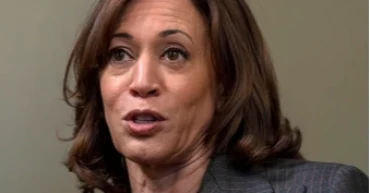
Vice President Harris' trip aims to deepen US ties in Africa
Vice President Kamala Harris will try to deepen and reframe U.S. relationships in Africa during a weeklong trip that is the latest and highest profile outreach by the Biden administration as it moves to counter China's growing influence.
Harris plans to visit Ghana, Tanzania and Zambia, focusing on economic development, climate change, food security and a rising youth population. She is scheduled to arrive in Accra, Ghana’s capital, on Sunday. Her husband, Doug Emhoff, is traveling with her.
“For too long, the U.S. foreign policy establishment has treated Africa like some kind of extra credit project and not part of the core curriculum," said Michelle Gavin, an Africa expect at the Council on Foreign Relations and a former U.S. ambassador to Botswana. "I see a big effort to change that thinking now. But it takes time.”
In Africa, Harris will be closely watched as the first person of color and first woman to serve as America's vice president. Her mother was born in India and her father was born in Jamaica; Harris was raised in California.
“Everybody is excited about Kamala Harris,” said Idayat Hassan, director of the Centre for Democracy and Development in Abuja, Nigeria. “You can be anything that you can think of — that’s what she represents to many of us.”
A centerpiece of Harris' trip will be a speech in Accra and a visit to Cape Coast Castle, where enslaved Africans were once loaded onto ships for America. Harris also plans to meet with leaders of each country she visits and lay a wreath to commemorate the 1998 bombing of the U.S. Embassy in Dar es Salaam, Tanzania.
Her itinerary also includes several less traditional stops intended to highlight the dynamic future of a continent where the median age is just 19.
Harris plans to visit a recording studio and meet with female entrepreneurs in Accra and stop by a tech incubator in Dar es Salaam. In Lusaka, Zambia’s capital, Harris is expected to meet with business and philanthropic leaders to talk about expanding access to digital and financial systems.
Emhoff has a similar focus for his events. While in Ghana, he plans a town hall meeting with actors from a local television show, will attend a girls basketball clinic and tour a chocolate company owned by women.
Read more: Vice President Harris: A new chapter opens in US politics
The hope, administration officials said, is to portray Africa as a place for investment, not just aid packages, a theme that Harris emphasized in December during a U.S.-Africa summit in Washington.
“I am an optimist about what lies ahead for Africa and, by extension, for the world because of you — because of your energy, your ambition, and your ability to transform seemingly intractable problems into opportunities," she said. "Simply put: your ability to see what can be, unburdened by what has been.”
The trip includes three nights in Ghana, two nights in Tanzania and one in Zambia, before Harris returns to Washington on April 2.
“It’s a trip about supporting reformers,” said Vanda Felbab-Brown, co-director of the Africa Security Initiative at the Brookings Institution. “All three countries have been going through significant challenges and significant changes.”
Ghana faces a debt crisis and high inflation, dragging down an economy that was once among the region’s strongest. It’s also wary about instability from Islamist militants and Russian mercenaries who operate in nations north of Ghana.
Tanzania has its first female president, and she’s lifted bans on opposition parties and rallies. Zambia has made its own changes, such as decriminalizing defamation of the president. However, democratic progress is believed to be fragile in both places.
Treasury Secretary Janet Yellen, Secretary of State Antony Blinken and first lady Jill Biden have already been to Africa on their own trips. President Joe Biden is expected to go later this year.
Harris will be returning to Zambia for the first time since she visited as a young girl when her maternal grandfather worked there. He was an Indian civil servant who helped with refugee resettlement after Zambia achieved independence from Britain.
Harris writes in her book that “grandpa was one of my favorite people in the world and one of the earliest and most lasting influences in my life.”
The U.S.-Africa summit held in December was the only one since 2014, which was hosted by President Barack Obama. Although Washington's approach to Africa has featured some historic success — for example, President George W. Bush's initiative to fight HIV/AIDS has saved millions of lives — there's also been periods of neglect.
Read more: Vice President Harris: A new chapter opens in US politics
“There’s huge doubt and skepticism about American staying power," said Daniel Russel, a former State Department official who is now at the Asia Society Policy Institute. “They’re very familiar with American promises that peter out and don’t amount to much.”
It's a sharp contrast with China, which has led far-reaching infrastructure projects and expanded telecommunications operations there as well.
John Kirby, a White House national security spokesman, said this past week that African leaders are “beginning to realize that China is not really their friend.”
“China’s interests in the region are purely selfish, as opposed to the United States," he said. "We are truly committed to trying to help our African friends deal with a spate of challenges.”
Senior administration officials have been careful not to portray Harris’ trip as another move in a geopolitical rivalry, an approach that could alienate African leaders who are wary of taking sides between global superpowers.
Now they wait to see what Harris and the United States can offer over the next week.
“She has a very good reputation in Africa, because of her profile," said Rama Yade, senior director of the Atlantic Council’s Africa Center. "But beyond that, very quickly, the public opinion in the three countries will have expectations.”
3 years ago