USA

China balloon: Many questions about suspected spy in the sky
What in the world is that thing?
A massive white orb sweeping across U.S. airspace has triggered a diplomatic maelstrom and is blowing up on social media.
China insists it’s just an errant civilian airship used mainly for meteorological research that went off course due to winds. With only limited “self-steering” capabilities.
However, the U.S. says it’s a Chinese spy balloon without a doubt. And its presence prompted Secretary of State Antony Blinken to cancel a weekend trip to China that was aimed at dialing down tensions that were already high between the countries.
The Pentagon says the balloon, which is carrying sensors and surveillance equipment, is maneuverable and has shown it can change course. It has loitered over sensitive areas of Montana where nuclear warheads are siloed, prompting the military to take actions to prevent it from collecting intelligence.
A Pentagon spokesman said it could remain aloft over the U.S. for “a few days,” extending uncertainty about where it will go or if the U.S. will try to safely take it down.
A look at what’s known about the balloon — and what isn’t.
IT'S A BIRD, IT'S A PLANE, IT'S A ... SPY BALLOON
The Pentagon and other U.S. officials say it's a Chinese spy balloon — about the size of three school buses — moving east over America at an altitude of about 60,000 feet (18,600 meters). The U.S. says it was being used for surveillance and intelligence collection, but officials have provided few details.
U.S. officials says the Biden administration was aware of it even before it crossed into American airspace in Alaska early this week. A number of officials spoke on condition of anonymity to discuss the sensitive topic.
The White House said that President Joe Biden was first briefed on the balloon on Tuesday. And the State Department said Blinken and Deputy Secretary Wendy Sherman spoke with China's senior Washington-based official on Wednesday evening about the matter.
In the first public U.S. statement, Brig. Gen. Pat Ryder, Pentagon press secretary, said Thursday evening that the balloon was not a military or physical threat — an acknowledgement that it was not carrying weapons. And he said that "once the balloon was detected, the U.S. government acted immediately to protect against the collection of sensitive information.”
Even if it's not armed, the balloon poses a risk to the U.S., says retired Army Gen. John Ferrari, a visiting fellow at the American Enterprise Institute. The flight itself, he said, can be used to test America's ability to detect incoming threats and to find holes in the country's air defense warning system. It may also allow the Chinese to sense electromagnetic emissions that higher-altitude satellites can't detect, such as low-power radio frequencies that could help them understand how different U.S. weapons systems communicate.
He also said the Chinese may have sent the balloon “to show us that they can do it, and maybe next time it could have a weapon. So now we have to spend money and time on it” developing defenses.
LET IT FLY? SHOOT IT DOWN?
According to senior administration officials, President Joe Biden initially wanted to shoot the balloon down. And some members of Congress have echoed that sentiment.
But top Pentagon leaders strongly advised Biden against that move because of risks to the safety of people on the ground, and Biden agreed.
One official said the sensor package the balloon is carrying weighs as much as 1,000 pounds. And the balloon is large enough and high enough in the air that the potential debris field could stretch for miles, with no control over where it would eventually land.
For now, officials said the U.S. will monitor it, using “a variety of methods” including aircraft. The Pentagon also has said the balloon isn't a military threat and doesn't give China any surveillance capabilities it doesn't already have with spy satellites.
But the U.S. is keeping its options open and will continue to monitor the flight.
Rep. Jim Himes, the top Democrat on the House Intelligence Committee, suggested that it could be valuable to try and capture the balloon to study it. “I would much rather own a Chinese surveillance balloon than be cleaning one up over a 100-square-mile debris field,” Himes said.
HOW DID IT GET HERE?
Deliberate or an accident? There’s also disagreement.
As far as wind patterns go, China’s account that global air currents — winds known as the Westerlies — carried the balloon from its territory to the western United States is plausible, said Dan Jaffe, a professor of atmospheric chemistry at the University of Washington. Jaffe has studied the role those same wind patterns play in carrying air pollution from Chinese cities, wildfire smoke from Siberia and dust from Gobi Desert sand storms to the U.S. for two decades.
“It’s entirely consistent with everything we know about the winds,” Jaffe said. “Transit time from China to the United States would be about a week.” “The higher it goes, the faster it goes,” Jaffe said. He said that weather and research balloons typically have a range of steering capability depending on their sophistication, from no steering at all to limited steering ability.
The U.S. is largely mum on this issue, but insists the balloon is maneuverable, suggesting that China in some way deliberately moved the balloon toward or into U.S. airspace.
Read more: Chinese balloon crosses the US; Blinken cancels trip to Beijing
SPY BALLOONS HAVE A HISTORY
Spy balloons aren't new — primitive ones date back centuries, but they came into greater use in World War II. Administration officials said Friday that there have been other similar incidents of Chinese spy balloons, with one saying it happened twice during the Trump administration but was never made public.
At the Pentagon, Ryder confirmed there have been other incidents where balloons came close to or crossed over the U.S. border, but he and others agree that what makes this different is the length of time it's been over U.S. territory and how far into the country it penetrated.
Craig Singleton, a senior fellow at the Foundation for the Defense of Democracies, said Chinese surveillance balloons have been sighted on numerous occasions over the past five years in different parts of the Pacific, including near sensitive U.S. military installations in Hawaii. The high altitude inflatables, he said, serve as low-cost platforms to collect intelligence and some can reportedly be used to detect hypersonic missiles.
During World War II, Japan launched thousands of hydrogen balloons carrying bombs, and hundreds ended up in the U.S. and Canada. Most were ineffective, but one was lethal. In May 1945, six civilians died when they found one of the balloons on the ground in Oregon, and it exploded.
In the aftermath of the war, America's own balloon effort ignited the alien stories and lore linked to Roswell, New Mexico.
According to military research documents and studies, the U.S. began using giant trains of balloons and sensors that were strung together and stretching more than 600 feet as part of an early effort to detect Soviet missile launches during the post-World War II era. They called it Project Mogul.
One of the balloon trains crash-landed at the Roswell Army Airfield in 1947, and Air Force personnel who were not aware of the program found debris. The unusual experimental equipment made it difficult to identify, leaving the airmen with unanswered questions that over time —aided by UFO enthusiasts — took on a life of their own. The simple answer, according to the military reports, was just over the Sacramento Mountains at the Project Mogul launch site in Alamogordo.
In 2015, an unmanned Army surveillance blimp broke loose from its mooring at Aberdeen Proving Ground in Maryland and floated over Pennsylvania for hours with two fighter jets on its tail, triggering blackouts as it dragged its tether across power lines. As residents gawked, the 240-foot blimp came down in pieces in the Muncy, Pennsylvania, countryside. It still had helium in its nose when it fell, and state police used shotguns — about 100 shots — to deflate it.
3 years ago

Chinese balloon crosses the US; Blinken cancels trip to Beijing
A huge, high-altitude Chinese balloon sailed across the U.S. on Friday, drawing severe Pentagon accusations of spying on sensitive military sites despite China's firm denials. Secretary of State Antony Blinken abruptly canceled a high-stakes Beijing trip aimed at easing U.S.-China tensions.
Aside from the government response, fuzzy videos dotted social media as people with binoculars and telephoto lenses tried to find the “spy balloon” in the sky as it headed southeastward over Kansas and Missouri at 60,000 feet (18,300 meters).
It was spotted earlier over Montana, which is home to one of America’s three nuclear missile silo fields at Malmstrom Air Force Base, defense officials said.
Later Friday, the Pentagon acknowledged reports of a second balloon flying over Latin America. "We now assess it is another Chinese surveillance balloon,” Brig. Gen. Pat Ryder, Pentagon press secretary, said in a statement, declining to offer further information such as where it was spotted.
The U.S. actually had been tracking the initial balloon since at least Tuesday, when President Joe Biden was first briefed, White House press secretary Karine Jean-Pierre told reporters. According to three U.S. officials, Biden was initially inclined to order the surveillance balloon to be blown out of the sky, and a senior defense official said the U.S. had prepared fighter jets, including F-22s, to shoot it down if ordered.
The officials, who spoke on the condition of anonymity to discuss internal deliberations, said Defense Secretary Lloyd Austin and Gen. Mark Milley, chairman of the Joint Chiefs of Staff, strongly advised Biden against shooting down the balloon, warning that its size — as big as three school buses — and considerable weight could create a debris field large enough to endanger Americans on the ground. The Pentagon also assessed that after unspecified U.S. measures, the possibility of the balloon uncovering important information was not great.
It was not the first time Chinese surveillance balloons have been tracked over U.S. territory, including at least once during former President Donald Trump’s administration, officials said.
Blinken's trip cancellation came despite China’s claim that the balloon was merely a weather research “airship” that had blown off course. The Pentagon rejected that out of hand — as well as China's contention that the balloon was not being used for surveillance and had only limited navigational ability.
Blinken, who had been due to depart Washington for Beijing late Friday, said he had told senior Chinese diplomat Wang Yi in a phone call that sending the balloon over the U.S. was “an irresponsible act and that (China's) decision to take this action on the eve of my visit is detrimental to the substantive discussions that we were prepared to have.”
China’s Ministry of Foreign Affairs said in a statement Saturday morning: “In actuality, the U.S. and China have never announced any visit. The U.S. making any such announcement is their own business, and we respect that.”
It again emphasized that the incident was out of China's control, saying, “This was completely an accident.”
After passing the sensitive military sites in Montana, the balloon was moving southeastward over the heartland of the central United States during the day and was expected to remain in U.S. airspace for several days, officials said.
The development dealt a new blow to already strained U.S.-Chinese relations that have been in a downward spiral for years over numerous issues. Still, U.S. officials maintained that diplomatic channels remain open and Blinken said he remained willing to travel to China “when conditions allow.”
“We continue to believe that having open lines of communication is important," he said.
Biden declined to comment on the matter when questioned at an economic event. Two likely 2024 reelection challengers, Trump, and Nikki Haley, the former South Carolina governor and U.N. ambassador, said the U.S. should immediately shoot down the balloon.
Several Republican congressmen said the same, and a number blasted the administration for “allowing” the balloon intrusion.
“The idea that Communist China has a spy balloon headed towards Whiteman Air Force Base in Missouri right now — the home of the Stealth Bomber — is absolutely unbelievable,” said Sen. Eric Schmitt, R-Mo. “No American should accept this. I don’t.”
Jean-Pierre did not shed light on why the administration waited until Thursday to make its concerns public.
Ryder, the Pentagon press secretary, refused to say Friday whether there was any new consideration of shooting the balloon down. He said it currently was posing no threat.
Ryder said it was maneuverable, not just at the mercy of the wind, and had changed course.
Still, weather experts said China’s claim that the balloon had gone off course was not unfeasible. China’s account of wind patterns known as the Westerlies carrying a balloon to the western United States was “absolutely possible — not possible, likely,” said Dan Jaffe, a professor of atmospheric chemistry at the University of Washington.
As for Blinken's trip, Jean-Pierre said a diplomatic visit to China was not appropriate at such a time. She said that "the presence of this balloon in our airspace ... is a clear violation of our sovereignty as well as international law and it is unacceptable this occurred.”
A State Department official said Blinken and Deputy Secretary of State Wendy Sherman had both protested to the top official at the Chinese Embassy on Wednesday, a day before the Pentagon announced the discovery of the balloon.
Blinken’s long-anticipated meetings with senior Chinese officials had been seen in both countries as a possible way to find some areas of common ground at a time of major disagreements over Taiwan, human rights, China’s claims in the South China Sea, North Korea, Russia’s war in Ukraine, trade policy and climate change.
Read more: Big China spy balloon moving east over US, Pentagon says
Although the trip, which was agreed to in November by Biden and Chinese President Xi Jinping at a summit in Indonesia, had not been formally announced, officials in both Beijing and Washington had spoken in recent days about Blinken’s imminent arrival for meetings on Sunday and Monday.
China, which angrily denounces surveillance attempts by the U.S. and others over areas it considers to be its territory and once forced down an American spy plane and held its crew captive on Hainan Island, was relatively conciliatory in its response to the U.S. complaints.
In a statement that approached an apology, the Chinese foreign ministry said the balloon was a civilian airship used mainly for meteorological research. It said said the airship had limited “self-steering” capabilities and had “deviated far from its planned course” because of winds.
“The Chinese side regrets the unintended entry of the airship into U.S. airspace due to force majeure,” the statement said, citing a legal term used to refer to events beyond one’s control.
3 years ago

Big China spy balloon moving east over US, Pentagon says
The Pentagon said at midday Friday that a Chinese spy balloon had moved eastward and was over the central United States, and that the U.S. rejected China’s claims that it was not being used for surveillance.
Brig. Gen. Pat Ryder, Pentagon press secretary, refused to provide details on exactly where the balloon was or whether there was any new consideration of shooting it down. The military had ruled that option out, officials had said, due to potential risks to people on the ground.
Ryder said it was at an altitude of about 60,000 feet, was maneuverable and had changed course. He said it currently was posing no threat. He said there was only one balloon being tracked.
Earlier, the U.S. announced that Secretary of State Antony Blinken had postponed a planned high-stakes weekend diplomatic trip to China as the Biden administration weighed a broader response to the discovery of a high-altitude Chinese balloon flying over sensitive sites in the western United States.
That abrupt decision came despite China’s claim that the balloon was a weather research “airship” that had blown off course. The U.S. has described it as a surveillance vehicle.
The development came just before Blinken had been due to depart Washington for Beijing and marked a new blow to already strained U.S.-Chinese relations.
President Joe Biden declined to comment when questioned at an economic event. Two 2024 reelection challengers, former President Donald Trump, and Nikki Haley, the former South Carolina governor and U.N. ambassador, said the U.S. should immediately shoot down the balloon.
Discovery of the balloon was announced by Pentagon officials who said one of the places it was spotted was over the state of Montana, which is home to one of America’s three nuclear missile silo fields at Malmstrom Air Force Base.
A senior defense official said the U.S. prepared fighter jets, including F-22s, to shoot down the balloon if ordered. The Pentagon ultimately recommended against it, noting that even as the balloon was over a sparsely populated area of Montana, its size would create a debris field large enough that it could have put people at risk.
The official said the balloon was headed over the Montana missile fields, but the U.S. has assessed that it had only “limited” value in terms of providing intelligence China couldn’t obtain by other technologies, such as spy satellites.
The discovery alarmed many in Washington across the country and, besides the U.S. protests lodged with Chinese officials, it attracted strong criticism of the administration from Republican members of Congress who have advocated taking a tougher stance with China.
China, which angrily denounces surveillance attempts by the U.S. and others over areas it considers to be its territory and once forced down an American spy plane, offered a generally muted reaction to the Pentagon announcement.
In a relatively conciliatory statement, the Chinese foreign ministry said late Friday that the balloon was a civilian airship used mainly for meteorological research. The ministry said the airship has limited “self-steering” capabilities and “deviated far from its planned course” because of winds.
“The Chinese side regrets the unintended entry of the airship into U.S. airspace due to force majeure,” the statement said, citing a legal term used to refer to events beyond one’s control.
Blinken had been prepared as late as Thursday to travel to Beijing this weekend but the administration had begun to reconsider the trip following the discovery of the balloon on Wednesday, even before its presence was made public, an official said.
The official, who spoke to reporters on condition of anonymity due to the sensitivity of the matter, said the administration had “ noted” China’s expression of regret.
Blinken’s long-anticipated meetings with senior Chinese officials had been seen in both countries as a way to find some areas of common ground at a time of major disagreements over Taiwan, human rights, China’s claims in the South China Sea, North Korea, Russia’s war in Ukraine, trade policy and climate change.
Although the trip, which was agreed to in November by President Biden and Chinese President Xi Jinping at a summit in Indonesia, had not been formally announced, officials in both Beijing and Washington had been talking in recent days about Blinken’s imminent arrival.
The meetings were to begin on Sunday and go through Monday.
3 years ago

Frustrated Texans endure winter storm with no power, heat
Thousands of frustrated Texans shivered in homes without power for a second day Thursday, most of them around booming Austin, and fading hopes of a quick fix stirred grim memories of a deadly 2021 blackout after an icy winter storm across the southern U.S.
The freeze has been blamed for at least 10 traffic deaths on slick roads this week in Texas, Arkansas and Oklahoma. And even as Texas finally began thawing Thursday, a new Artic front from Canada was headed toward the northern U.S. and threatening New England with potentially the coldest weather in decades. Wind chills could dive below minus 50 (minus 45 Celsius).
In Austin, city officials compared the damage from fallen trees and iced-over power lines to tornadoes as they came under mounting criticism for slow repairs and shifting timelines to restore power.
“We had hoped to make more progress today,“ said Jackie Sargent, general manager of Austin Energy. ”And that simply has not happened."
Across Texas more than 280,000 customers were without power Thursday night, down from 430,000 earlier in the day, according to PowerOutage.us. The failures were most widespread in Austin, where impatience was rising among 150,000 customers nearly two days after the electricity first went out, which for many also means no heat. Power failures have affected about 30% of customers in the city of nearly a million at any given time since Wednesday.
By Thursday night, Austin officials backtracked on early estimates that power would be fully restored by Friday evening, saying the extent of the damage was worse than originally calculated and that they could no longer predict when all the lights may come back on.
Allison Rizzolo, who lost power in Austin, told KEYE-TV that she wished there were more clarity from the city on what to do or expect.
“I get that there’s a fine line between preparedness and panic, but I wish they’d been more aggressive in their communications,” Rizzolo said.
For many Texans, it was the second time in three years that a February freeze — temperatures were in the 30s Thursday with wind chills below freezing — caused prolonged outages and uncertainty over when the lights would come back on.
Unlike the 2021 blackouts in Texas, when hundreds of people died after the state’s grid was pushed to the brink of total failure because of a lack of generation, the outages in Austin this time were largely the result of frozen equipment and ice-burdened trees and limbs falling on power lines. But the differences were little comfort to Austin residents and businesses that also lost power for days two years ago.
Read more: Flights canceled, at least 2 dead as ice storm freezes US
Among those still without power Thursday was the Central Texas Food Bank, according to Travis County Judge Andy Brown, the county's top elected official.
“They have 21 counties to serve. They've been down for at least three days now. There's a lot of need that they have,” Brown said.
School systems in the Dallas and Austin area, plus many in Oklahoma, Arkansas and Memphis, Tennessee, closed Thursday as snow, sleet and freezing rain continued to push through. In Austin, schools will not open until next week at the earliest.
Hundreds more flights were canceled again in Texas, although not as many as in previous days.
Airport crews battled ice to keep runways open. By Thursday morning, airlines had canceled more than 500 flights at Dallas-Fort Worth International Airport — more than a quarter of all flights scheduled for the day. Still, that was down from about 1,300 cancellations on Wednesday and more than 1,000 on Tuesday, according to FlightAware.com.
Dozens more flights were canceled at Dallas Love Field and Austin-Bergstrom International Airport.
Another wave of frigid weather in the U.S. is on the horizon, with an Arctic cold front expected to move from Canada into the northern Plains and Upper Midwest and sweep into the Northeast by Friday.
In a briefing Thursday with the federal Weather Prediction Center, New Englanders were warned that wind chills — the combined effect of wind and cold air on exposed skin — in the minus 50s “could be the coldest felt in decades.”
The strong winds and cold air will create wind chills “rarely seen in northern and eastern Maine,” according to an advisory from the National Weather Service office in Caribou, Maine.
Jay Broccolo, director of weather operations at an observatory on New Hampshire’s Mount Washington — which for decades held the world record for the fastest wind gust — said Thursday that wind speeds could top 100 mph (160 kph).
“We take safety really seriously in the higher summits," Broccolo said, “and this weekend’s forecast is looking pretty gnarly, even for our standards.”
3 years ago

Pentagon: Chinese spy balloon spotted over Western US
The U.S. is tracking a suspected Chinese surveillance balloon that has been spotted over U.S. airspace for a couple days, but the Pentagon decided not to shoot it down over concerns of hurting people on the ground, officials said Thursday. The discovery of the balloon puts a further strain on U.S.-China relations at a time of heightened tensions.
A senior defense official told Pentagon reporters that the U.S. has “very high confidence” it is a Chinese high-altitude balloon and it was flying over sensitive sites to collect information. One of the places the balloon was spotted was Montana, which is home to one of the nation’s three nuclear missile silo fields at Malmstrom Air Force Base. The official spoke on condition of anonymity to discuss sensitive information.
Brig. Gen. Patrick Ryder, Pentagon press secretary, provided a brief statement on the issue, saying the government continues to track the balloon. He said it is “currently traveling at an altitude well above commercial air traffic and does not present a military or physical threat to people on the ground.”
He said similar balloon activity has been seen in the past several years. He added that the U.S. took steps to ensure it did not collect sensitive information.
A senior administration official, who was also not authorized to publicly discuss sensitive information, said President Joe Biden was briefed and asked the military to present options. Defense Secretary Lloyd Austin and Army Gen. Mark Milley, chairman of the Joint Chiefs of Staff, advised against taking “kinetic action” because of risks to the safety of people on the ground. Biden accepted that recommendation.
The defense official said the U.S. has “engaged” Chinese officials through multiple channels and communicated the seriousness of the matter.
The incident comes as Secretary of State Antony Blinken was supposed to make his first trip to Beijing, expected this weekend, to try to find some common ground. Although the trip has not been formally announced, both Beijing and Washington have been talking about his imminent arrival.
It was not immediately clear if the discovery of the balloon would impact Blinken’s travel plans.
The senior defense official said the U.S. did get fighter jets, including F-22s, ready to shoot down the balloon if ordered to by the White House. The Pentagon ultimately recommended against it, noting that even as the balloon was over a sparsely populated area of Montana, its size would create a debris field large enough that it could have put people at risk.
It was not clear what the military was doing to prevent it from collecting sensitive information or what will happen with the balloon if it isn’t shot down.
In a letter sent Thursday to Austin, Sen. Steve Daines, R-Mont., wrote: “The fact that this balloon was occupying Montana airspace creates significant concern that Malmstrom Air Force Base and the United States’ intercontinental ballistic missile fields are the target of this intelligence gathering mission. ... It is vital to establish the flight path of this balloon, any compromised U.S. national security assets, and all telecom or IT infrastructure on the ground within the U.S. that this spy balloon was utilizing.”
Read more: With Philippine pact, US steps up efforts to counter China
The defense official said the spy balloon was trying to fly over the Montana missile fields, but the U.S. has assessed that it has “limited” value in terms of providing China intelligence it couldn’t already collect by other means, such through spy satellites.
The official would not specify the size of the balloon, but said it was large enough that despite its high altitude, commercial pilots could see it. All air traffic was halted at Montana's Billings Logan International Airport from 1:30 p.m. to 3:30 p.m. Wednesday, as the military provided options to the White House.
A photograph of a large white balloon lingering over the area was captured by The Billings Gazette, but the Pentagon would not confirm if that was the surveillance balloon. The balloon could be seen drifting in and out of clouds and had what appeared to be a solar array hanging from the bottom, said Gazette photographer Larry Mayer.
The defense official said what concerned them about this launch was the altitude the balloon was flying at and the length of time it lingered over a location, without providing specifics.
Montana Gov. Greg Gianforte said he was briefed Wednesday about the situation after the Montana National Guard was notified of an ongoing military operation taking place in Montana airspace, according to a statement from the Republican governor and spokesperson Brooke Stroyke.
“From the spy balloon to the Chinese Communist Party spying on Americans through TikTok to CCP-linked companies buying American farmland, I’m deeply troubled by the constant stream of alarming developments for our national security,” Gianforte said in a statement.
The administration official said congressional leaders' staffs were briefed on the matter Thursday afternoon. House Speaker Kevin McCarthy, R-Calif., tweeted, “China’s brazen disregard for U.S. sovereignty is a destabilizing action that must be addressed.”
Tensions with China are particularly high on numerous issues, ranging from Taiwan and the South China Sea to human rights in China’s western Xinjiang region and the clampdown on democracy activists in Hong Kong. Not least on that list of irritants are China’s tacit support for Russia’s invasion of Ukraine, its refusal to rein in North Korea’s expanding ballistic missile program and ongoing disputes over trade and technology.
On Tuesday, Taiwan scrambled fighter jets, put its navy on alert and activated missile systems in response to nearby operations by 34 Chinese military aircraft and nine warships that are part Beijing’s strategy to unsettle and intimidate the self-governing island democracy.
Twenty of those aircraft crossed the central line in the Taiwan Strait that has long been an unofficial buffer zone between the two sides, which separated during a civil war in 1949.
Beijing has also increased preparations for a potential blockade or military action against Taiwan, which has stirred increasing concern among military leaders, diplomats and elected officials in the U.S., Taiwan’s key ally.
The surveillance balloon was first reported by NBC News.
Some Montana residents reported seeing an unusual object in the sky around the time of the airport shutdown Wednesday, but it’s not clear that what they were seeing was the balloon.
From an office window in Billings, Chase Doak said he saw a “big white circle in the sky” that he said was too small to be the moon.
He took some photos, then ran home to get a camera with a stronger lens and took more photos and video. He could see it for about 45 minutes and it appeared stationary, but Doak said the video suggested it was slowly moving.
“I thought maybe it was a legitimate UFO,” he said. “So I wanted to make sure I documented it and took as many photos as I could."
3 years ago
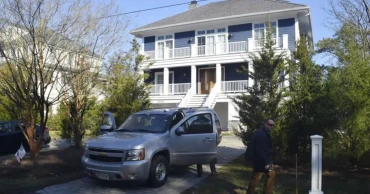
Biden lawyer: FBI searching Biden’s Rehoboth Beach, home
The FBI was conducting a planned search Wednesday of President Joe Biden’s Rehoboth Beach, Delaware home as part of its investigation into the potential mishandling of classified documents, the president’s personal lawyer said.
The search follows a 13-hour, top-to-bottom review of his Wilmington, Delaware home on Jan. 20, when agents located additional documents with classified markings and also took possession of some of his handwritten notes.
The president has been voluntarily allowing the Justice Department into his residences as investigators seek to determine how classified documents from Biden’s time as vice president and a senator wound up in his home and office. The probe followed the Nov. 2 discovery of documents with classified markings by Biden’s lawyers as they closed up an office at the Penn Biden Center, a think tank affiliated with the Ivy League school.
Also Read: FBI searched Biden home, found documents marked classified
Documents were also found at his Wilmington home by his personal lawyers, who initiated a search after the Penn Biden center documents were discovered. The FBI also searched the Penn Biden Center in November following the initial discovery of documents there, a person familiar with the matter told The Associated Press on Tuesday.
Also read: Biden should be 'embarrassed' by classified docs case: Democrats
“Under DOJ’s standard procedures, in the interests of operational security and integrity, it sought to do this work without advance public notice, and we agreed to cooperate,” said the statement from Biden’s lawyer, Bob Bauer. “The search today is a further step in a thorough and timely DOJ process we will continue to fully support and facilitate. We will have further information at the conclusion of today’s search.”
An FBI spokeswoman referred comment to the Justice Department. A spokesman there did not immediately return a message seeking comment. It was not immediately clear whether any additional classified documents were found.
The Biden documents probe is being handled by a special counsel, Robert Hur, the former top federal prosecutor in Baltimore. He is starting his work this week, inheriting a months-long investigation already undertaken by FBI agents and Justice Department prosecutors.
The Bidens purchased the home, which overlooks a state park adjacent to the beach, in June 2017, months after he left the vice presidency.
3 years ago

US accuses Russia of endangering nuclear arms control treaty
Russia's refusal to allow on-the-ground inspections to resume is endangering the New START nuclear treaty and U.S.-Russian arms control overall, the Biden administration charged on Tuesday.
The finding was delivered to Congress and summarized in a statement by the State Department. It follows months of more hopeful U.S. assessments that the two countries would be able to salvage cooperation on limiting strategic nuclear weapons despite high tensions over Russia's war on Ukraine.
Inspections of U.S. and Russian military sites under the New START treaty were paused by both sides because of the spread of the coronavirus in March 2020. The U.S.-Russia committee overseeing implementation of the treaty last met in October 2021, but Russia then unilaterally suspended its cooperation with the treaty’s inspection provisions in August 2022 to protest U.S. support for Ukraine.
“Russia’s refusal to facilitate inspection activities prevents the United States from exercising important rights under the treaty and threatens the viability of U.S.-Russian nuclear arms control,” the State Department said Tuesday.
The administration also blamed Russia for the two country's failure to resume talks required under the New START treaty.
Russia's Foreign Ministry said last August that it had told the U.S. it was temporarily suspending on-site inspections required under the treaty. It said U.S. sanctions imposed over Russia's February 2022 invasion of Ukraine had changed conditions between the two countries and claimed that the U.S. was blocking Russians from carrying out their own inspections at U.S. sites.
The State Department on Tuesday denied that the U.S. was blocking inspections by the Russians.
It insisted the U.S.-Russia nuclear arms control efforts were essential to the security of the U.S., its allies and the world at large.
“It is all the more important during times of tension when guardrails and clarity matter most,” the State Department said.
3 years ago

Flights canceled, at least 2 dead as ice storm freezes US
Winter weather brought ice to a wide swath of the United States on Tuesday, canceling more than 1,700 flights nationwide and snarling highways. At least two people died on slick roads in Texas and two law officers in the state were seriously injured, including a deputy who was pinned under a truck, authorities said.
As the ice storm advanced eastward on Tuesday, watches and warnings stretched from the western heel of Texas all the way to West Virginia. Several rounds of mixed precipitation — including freezing rain and sleet — were in store for many areas through Wednesday, meaning some regions could be hit multiple times, the federal Weather Prediction Center warned.
Emergency responders rushed to hundreds of auto collisions across Texas and Republican Gov. Greg Abbott urged people to stay off the roads.
Authorities said one person in Austin was killed in a predawn pileup Tuesday. A 45-year-old man also died Monday night after his SUV slid into a highway guardrail near Dallas in slick conditions and rolled down an embankment, according to the Arlington Police Department.
More than 900 flights to or from major U.S. airport hub Dallas-Fort Worth International Airport and more than 250 to or from Dallas Love Field were canceled or delayed Tuesday, according to the tracking service FlightAware. At Dallas-Fort Worth, more than 50% of Tuesday’s scheduled flights had been canceled by Tuesday afternoon.
Dallas-based Southwest Airlines canceled more than 560 flights Tuesday and delayed more than 350 more, FlightAware reported.
Read: Blinken Mideast visit highlights US limitations in region
About 7,000 power outages in Texas were reported as of late Tuesday morning, Republican Gov. Greg Abbott said following a briefing in Austin on the worsening conditions. He emphasized the outages were due to factors such as ice on power lines or downed trees, and not the performance of the Texas power grid that buckled for days during a deadly winter storm in 2021.
Fleets of emergency vehicles were fanned out among 1,600 roads impacted by the freeze.
In Texas, a sheriff’s deputy who stopped to help the driver of an 18-wheeler that went off an icy highway on Tuesday was hit by a second truck that pinned him beneath one of its tires, according to the Travis County Sheriff’s Office. About 45 minutes after the crash on State Highway 130, the deputy was freed from the wreckage and taken to a hospital, where he was in surgery Tuesday afternoon, officials said. The deputy is expected to survive, officials said.
In another wreck, a Texas state trooper was hospitalized with serious injuries after being struck by a driver who lost control of their vehicle, said Steve McCraw, director of the Texas Department of Public Safety.
“The roadways are very hazardous right now. We cannot overemphasize that,” Abbott said.
As the ice and sleet enveloped Memphis, Tennessee, Memphis-Shelby County Schools announced that it will cancel classes Wednesday due to freezing rain and hazardous road conditions. The school system has about 100,000 students. The University of Memphis said it would announce plans for Wednesday classes by 6 a.m. tomorrow.
In Arkansas, Republican Gov. Sarah Huckabee Sanders declared a state of emergency Tuesday because of the ice storm. In her declaration, Sanders cited the “likelihood of numerous downed power lines” and said road conditions have created a backlog of deliveries by commercial drivers.
One of the main thoroughfares through Arkansas — Interstate 40 — was ice-coated and “extremely hazardous” in the Forrest City area on Tuesday, according to the city’s fire department.
The department responded to two bad wrecks and about 15 other crashes Tuesday morning, Division Chief Jeremy Sharp said by telephone. In many of the crashes, the drivers pick up speed on the highway but run into trouble when they reach a bridge, he said.
“They hit the ice and they start wrecking,” he said.
Read: US to increase weapons deployment to counter North Korea
“When I-40 shuts down like that, that can be hours of waiting,” said John Gadberry, who lives in Colt, Arkansas, not far from the highway. “I-40 is usually one of the first things that freezes over due to its slight elevation.”
By late Tuesday morning, I-40 was cleared and traffic had resumed, the Arkansas Department of Transportation announced. The interstate connects Little Rock, Arkansas, to Memphis, Tennessee.
The storm began Monday as part of an expected “several rounds” of wintry precipitation through Wednesday across Texas, Oklahoma, Arkansas and Tennessee, according to National Weather Service meteorologist Marc Chenard.
“Generally light to moderate freezing rain resulting in some pretty significant ice amounts,” Chenard said.
“We’re expecting ice accumulations potentially a quarter inch or higher as far south as Austin, Texas, up to Dallas over to Little Rock, Arkansas, towards Memphis, Tennessee, and even getting close to Nashville, Tennessee,” according to Chenard.
The flight disruptions follow Southwest’s meltdown in December that began with a winter storm but continued after most other airlines had recovered. Southwest canceled about 16,700 flights over the last 10 days of the year, and the U.S. Transportation Department is investigating.
The weather service has issued a winter storm warning for a large swath of Texas and parts of southeastern Oklahoma and an ice storm warning across the midsection of Arkansas into western Tennessee.
A winter weather advisory is in place in much of the remainder of Arkansas and Tennessee and into much of Kentucky, West Virginia and southern parts of Indiana and Ohio.
Schools and colleges in Texas, Oklahoma and Arkansas planned to close or go to virtual learning Tuesday.
3 years ago

US to increase weapons deployment to counter North Korea
U.S. Defense Secretary Lloyd Austin on Tuesday said the United States will increase its deployment of advanced weapons such as fighter jets and bombers to the Korean Peninsula as it strengthens joint training and operational planning with South Korea in response to a growing North Korean nuclear threat.
Austin made the comments in Seoul after he and South Korean Defense Minister Lee Jong-Sup agreed to further expand their combined military exercises, including a resumption of live-fire demonstrations, and continue a “timely and coordinated” deployment of U.S. strategic assets to the region, according to their offices.
Austin and Lee also discussed preparations for a simulated exercise between the allies in February aimed at sharpening their response if North Korea uses nuclear weapons.
Austin’s trip comes as South Korea seeks stronger assurances that the United States will swiftly and decisively use its nuclear capabilities to protect its ally in face of a North Korean nuclear attack.
South Korea’s security jitters have risen since North Korea test-fired dozens of missiles in 2022, including potentially nuclear-capable ones designed to strike targets in South Korea and the U.S. mainland.
South Korea and the United States have also been strengthening their security cooperation with Japan, which has included trilateral missile defense and anti-submarine warfare exercises in past months amid the provocative run in North Korean weapons tests.
In a joint news conference following their meeting, Austin and Lee said they agreed that their countries' resumption of large-scale military drills last year, including an aerial exercise involving U.S. strategic bombers in November, effectively demonstrated their combined capabilities to deter North Korean aggression.
The allies had downsized their training in recent years to create room for diplomacy with North Korea during the Trump administration and because of the COVID-19 pandemic.
“We deployed fifth-generation aircraft, F-22s and F-35s, we deployed a carrier strike group to visit the peninsula, you can look for more of that kind of activity going forward,” Austin said.
He said the U.S. commitment to protecting its allies with its full range of military capabilities, including nuclear ones, remains “ironclad.”
North Korea’s ramped-up missile tests have been punctuated by threats to preemptively use its nuclear weapons in a broad range of scenarios in which it perceives its leadership to be under threat, including conventional clashes or non-war situations.
Tensions could further rise in coming months with North Korean leader Kim Jong Un doubling down on his nuclear ambitions.
During a political conference in December, Kim called for an “exponential increase” in nuclear warheads, mass production of battlefield tactical nuclear weapons targeting South Korea, and development of more powerful long-range missiles designed to reach the U.S. mainland.
Experts say Kim’s nuclear push is aimed at forcing the United States to accept the idea of North Korea as a nuclear power and negotiating badly needed economic concessions from a position of strength.
Nuclear negotiations between the U.S. and North Korea have been derailed since 2019 because of disagreements over a relaxation of U.S.-led economic sanctions against the North in exchange for steps by North Korea to wind down its nuclear weapons and missiles programs.
North Korea’s growing nuclear arsenal and provocations have raised the urgency for South Korea and Japan to strengthen their defense postures in line with their alliances with the United States.
In an interview with The Associated Press this month, South Korean President Yoon Suk Yeol said his government was discussing with the Biden administration joint military planning potentially involving U.S. nuclear assets.
In December, Japan made a major break from its strictly self-defense-only post-World War II principle, adopting a new national security strategy that includes the goals of acquiring preemptive strike capabilities and cruise missiles to counter growing threats from North Korea, China and Russia.
3 years ago

Blinken in Mideast renews appeal for Israel-Palestinian calm
U.S. Secretary of State Antony Blinken is wrapping up a two-day visit to Israel and the occupied West Bank on Tuesday with renewed appeals for Israeli-Palestinian calm amid an alarming spike of violence.
Blinken was meeting Palestinian leader Mahmoud Abbas in the West Bank town of Ramallah on Tuesday, a day after seeing Israeli Prime Minister Benjamin Netanyahu. Standing alongside the Israeli leader, Blinken stressed the importance the Biden administration places on resolving the long-running conflict with a two-state solution.
However, beyond urging a de-escalation of tensions Blinken offered no new U.S. initiative to do so. There were no signs that Blinken was making progress on even the modest goal of halting the latest wave of violence, much less of addressing the broader issues surrounding peace talks.
Netanyahu’s far-right government is dominated by hard-liners who oppose Palestinian statehood and are unlikely to make even minimal concessions.
Blinken’s visit comes amid one of the deadliest periods of fighting in years in the occupied West Bank and east Jerusalem. The violence has further complicated the administration's already difficult attempts to find common ground with Netanyahu's government.
In Ramallah, Blinken was expected to discuss the Palestinian Authority's decision to halt security coordination with Israel. The security ties, which in the past are believed to have helped contain violence, are deeply unpopular among everyday Palestinians, who accuse Abbas of acting as a subcontractor for the Israeli military.
Before heading to the West Bank, Blinken met with Israel's opposition leader, former Prime Minister Yair Lapid.
"The secretary conveyed his concern over the deteriorating security situation in the West Bank and the need for urgent action to prevent greater loss of life. Secretary Blinken reiterated that Israelis and Palestinians deserve to have equal measures of security, prosperity and freedom,” his office said.
Following a meeting with Blinken on Monday, Netanyahu made only passing reference to the Palestinians and focused instead on Iran, which he believes is his most urgent security priority.
Netanyahu's coalition partners also gave a cool reception to Blinken's comments.
National Security Minister Itamar Ben-Gvir, leader of the ultranationalist Jewish Power party, vowed to push forward with punitive measures against the Palestinians in response to a pair of shootings in east Jerusalem over the weekend. Ben-Gvir has pledged to demolish Palestinian homes and hand out more weapons to Israeli civilians.
Cabinet Minister Orit Strock, another ultranationalist, objected to comments by Blinken that were seen as criticizing the Israeli government's plan to overhaul the country's judicial system and weaken the Supreme Court.
During his appearance with Netanyahu, Blinken voiced “support for core democratic principles and institutions," including “the equal administration of justice for all, the equal rights of minority groups, the rule of law.” Critics say Netanyahu's plan will weaken the country's judicial system and destroy its democratic system of checks and balances.
Speaking to the Kan public broadcaster, Strok accused Blinken of meddling in internal Israeli affairs.
“We’re not the 51st or 52nd state of the U.S., and he didn’t need to interfere in internal disputes in the state of Israel,” she said. "It’s not his job.”
Before leaving Jerusalem for Ramallah, Blinken met with Israeli Defense Minister Yoav Gallant who repeated the prime minister's concern about Iran.
“Your visit comes at a critical time,” Gallant said. “It sends a clear message to the region: the United States and Israel are united facing Iran or anyone threatening peace and stability in the region.”
Blinken agreed about unity when confronting Iran and preventing it from acquiring nuclear weapons. He said the U.S. commitment to Israel's security remains ‘ironclad’ but suggested there was more on his agenda. “We have a lot on our hands in this moment and so I couldn’t see you at a better time,” he said.
January is shaping up to be the deadliest month in the West Bank and east Jerusalem in years. Some 35 Palestinians have been killed in fighting, including 10 who were killed in an Israeli military raid in the flashpoint town of Jenin last Thursday.
On Friday, a Palestinian gunman killed seven people outside a synagogue in an east Jerusalem settlement on Friday. The next morning, a 13-year-old Palestinian boy shot and wounded two Israelis elsewhere in east Jerusalem.
Israel’s options may be limited. Both shooters are believed to have acted individually and were not part of organized militant groups, and punitive steps against the broader population such as those promoted by Ben-Gvir could risk triggering even more violence. Israel has also pledged to “strengthen” West Bank settlements.
The U.S., like most of the international community, considers Israeli settlements on lands claimed by the Palestinians for their state as obstacles to peace. However, the Biden administration has yet to restore a decades-old legal opinion that the settlements are “illegitimate” that had been rescinded under former President Donald Trump.
Nor has it made any progress on its stated intent to re-open the U.S. consulate in Jerusalem, which had been the main conduit for engagement with the Palestinians before Trump closed it. The closure was part of his decision to move the U.S. Embassy from Tel Aviv to the contested city of Jerusalem, a step that infuriated the Palestinians.
The violence comes after months of Israeli arrest raids in the West Bank, which were launched after a wave of Palestinian attacks against Israelis in the spring of 2022 that killed 19 people.
But it has spiked this month during the first weeks of Netanyahu’s new far-right government, which has promised to take a tough stance against the Palestinians and ramp up settlement construction.
3 years ago