USA

6 killed after vintage aircraft collide at Dallas air show
Six people were killed after two historic military planes collided and crashed to the ground Saturday afternoon during a Dallas air show, officials said.
“According to our Dallas County Medical Examiner, there are a total of 6 fatalities from yesterday’s Wings over Dallas air show incident,” Dallas County Judge Clay Jenkins tweeted Sunday. He said authorities are continuing to work to identify the victims.
Emergency crews raced to the crash scene at the Dallas Executive Airport, about 10 miles (16 kilometers) from the city’s downtown. News footage from the scene showed crumpled wreckage of the planes in a grassy area inside the airport perimeter. Dallas Fire-Rescue told The Dallas Morning News that there were no reported injuries among people on the ground.
Anthony Montoya saw the two planes collide.
“I just stood there. I was in complete shock and disbelief,” said Montoya, 27, who attended the air show with a friend. “Everybody around was gasping. Everybody was bursting into tears. Everybody was in shock.”
Officials did not specify how many people were inside each plane, but Hank Coates, president of the company that put on the airshow, said one of the planes, a B-17 Flying Fortress bomber, typically has a crew of four to five people. The other, a P-63 Kingcobra fighter plane, has a single pilot.
No paying customers were on the aircraft, said Coates, of Commemorative Air Force, which also owned the planes. Their aircraft are flown by highly trained volunteers, often retired pilots, he said.
Dallas Mayor Eric Johnson said the National Transportation Safety Board had taken control of the crash scene, with local police and fire providing support.
“The videos are heartbreaking,” Johnson said on Twitter.
The planes collided and crashed around 1:20 p.m., the Federal Aviation Administration said in a statement. The collision occurred during the Commemorative Air Force Wings Over Dallas show.
Victoria Yeager, the widow of famed Air Force test pilot Chuck Yeager and herself a pilot, was also at the show. She didn’t see the collision, but did see the burning wreckage.
“It was pulverized,” said Yeager, 64, who lives in Fort Worth.
“We were just hoping they had all gotten out, but we knew they didn’t,” she said of those on board.
The B-17, a cornerstone of U.S. air power during World War II, is an immense four-engine bomber used in daylight raids against Germany. The Kingcobra, a U.S. fighter plane, was used mostly by Soviet forces during the war. Most B-17s were scrapped at the end of World War II and only a handful remain today, largely featured at museums and air shows, according to Boeing.
Several videos posted on social media showed the fighter plane appearing to fly into the bomber, causing them to quickly crash to the ground and setting off a large ball of fire and smoke.
“It was really horrific to see,” Aubrey Anne Young, 37, of Leander. Texas, who saw the crash. Her children were inside the hangar with their father when it occurred. “I’m still trying to make sense of it.”
A woman next to Young can be heard crying and screaming hysterically on a video that Young uploaded to her Facebook page.
Air show safety — particularly with older military aircraft — has been a concern for years. In 2011, 11 people were killed in Reno, Nevada, when a P-51 Mustang crashed into spectators. In 2019, a bomber crashed in Hartford, Connecticut, killing seven people. The NTSB said then that it had investigated 21 accidents since 1982 involving World War II-era bombers, resulting in 23 deaths.
Wings Over Dallas bills itself as “America’s Premier World War II Airshow,” according to a website advertising the event. The show was scheduled for Nov. 11-13, Veterans Day weekend, and guests were to see more than 40 World War II-era aircraft. Its Saturday afternoon schedule of flying demonstrations included the “bomber parade” and “fighter escorts” that featured the B-17 and P-63.
Arthur Alan Wolk is a Philadelphia aviation attorney who flew in air shows for 12 years. After watching the air show video and hearing the maneuvers described as “bombers on parade,” Wolk told The Associated Press Sunday that the P-63 pilot violated the basic rule of formation flying.
“He went belly up to the leader,” Wolk said. “That prevents him from gauging distance and position. The risk of collision is very high when you cannot see who you are supposed to be in formation with and that kind of join up is not permitted.”
He added, “I am not blaming anyone and to the greatest extent possible air shows, the pilots and the aircraft that fly in them are safe. Air shows are one of the largest spectator events in America and it is rare that a tragedy like this occurs.”
Wolk said it takes extensive training and discipline to fly in an air show setting. The air show qualifications of the P-63 pilot are not known.
The FAA was also launching an investigation, officials said.
3 years ago

Biden to meet China's Xi on Monday for Taiwan, Russia talks
President Joe Biden will meet Monday with President Xi Jinping on the sidelines of next week’s Group of 20 Summit in Bali, Indonesia, a face-to-face meeting that comes amid increasingly strained U.S.-China relations, the White House announced Thursday.
It will be the first in-person meeting between the leaders of the world’s two biggest economies since Biden became president in January 2021 and comes weeks after Xi was awarded a norm-breaking third, five-year term as the Chinese Communist Party leader during the party’s national congress.
White House press secretary Karine Jean-Pierre said in a statement the leaders will meet to “discuss efforts to maintain and deepen lines of communication between” the two countries and to "responsibly manage competition and work together where our interests align, especially on transnational challenges that affect the international community.”
The White House has been working with Chinese officials over the last several weeks to arrange the meeting. Biden on Wednesday told reporters that he intended to discuss with Xi growing tensions between Washington and Beijing over the self-ruled island of Taiwan, trade policies, Beijing’s relationship with Russia and more.
“What I want to do with him when we talk is lay out what each of our red lines are and understand what he believes to be in the critical national interests of China, what I know to be the critical interests of the United States,” Biden said. “And determine whether or not they conflict with one another.”
Read more: Biden, Trump to make final appeals ahead of crucial midterms
The White House sought to downplay expectations for the meeting, telling reporters there was no joint communique or deliverables anticipated from the sit-down.
“I don’t think you should look at this meeting as one in which there’s going to be specific deliverables announced," White House national security adviser Jake Sullivan said. "Rather the two leaders are going to give direction to their teams to work on a number of areas, both areas where we have differences and areas where we can work together.”
Biden and Xi traveled together in the U.S. and China in 2011 and 2012 when both leaders were serving as their respective countries' vice presidents, and they have held five phone or video calls since Biden became president in January 2021. But the U.S.-China relationship has become far more complicated since those getting-to-know-you talks in Washington and on the Tibetan plateau a decade ago.
As president, Biden has repeatedly taken China to task for human rights abuses against the Uyghur people and other ethnic minorities, Beijing’s crackdowns on democracy activists in Hong Kong, coercive trade practices, military provocations against self-ruled Taiwan and differences over Russia’s prosecution of its war against Ukraine.
Weeks before Vladimir Putin launched his invasion of Ukraine, the Russian president met with Xi in Beijing and the two issued a memorandum expressing hopes of a “no limits” relationship for their nations.
China has largely refrained from criticizing Russia’s war but thus far has held off on supplying Moscow with arms.
Read more: Amidst recession fears, Biden has to convince Americans job gains mean better days ahead
“I don’t think there’s a lot of respect that China has for Russia or Putin,” Biden said Wednesday. “And in fact, they’ve been sort of keeping the distance a little bit.”
The leaders were also expected to address U.S. frustrations that Beijing has not used its influence to press North Korea to pull back from conducting provocative missile tests and to abandon its nuclear weapons program. Biden was set to discuss threats from North Korea with the leaders of South Korea and Japan a day before sitting down with Xi.
Sullivan said Biden would meet with Japanese Prime Minister Fumio Kishida and South Korean President Yoon Seok Yeol on Sunday on the margins of the East Asia Summit in Cambodia, where North Korea's saber rattling is expected to be the focus of talks.
Xi’s government has criticized the Biden administration’s posture toward Taiwan — which Beijing looks eventually to unify with the communist mainland — as undermining China’s sovereignty and territorial integrity. The Chinese president also has suggested that Washington wants to stifle Beijing’s growing clout as it tries to overtake the U.S. as the world’s largest economy.
Tensions over Taiwan have grown since House Speaker Nancy Pelosi visited Taiwan in August.
Biden said that he’s “not willing to make any fundamental concessions” about the United States’ Taiwan doctrine.
Under its “One China” policy, the United States recognizes the government in Beijing while allowing for informal relations and defense ties with Taipei. It takes a stance of “strategic ambiguity” toward the defense of Taiwan — leaving open the question of whether it would respond militarily were the island attacked.
Asked about the anticipated meeting, China’s foreign ministry spokesperson Zhao Lijian said at a Thursday news briefing that China was looking for “win-win cooperation with the U.S.” while reiterating Beijing’s concerns about the U.S. stance on Taiwan.
“The U.S. needs to stop obscuring, hollowing out and distorting the One China principle, abide by the basic norms in international relations, including respecting other countries’ sovereignty, territorial integrity and noninterference in other countries’ internal affairs,” he said.
Biden caused a stir in Asia in May when at a news conference in Tokyo, said “yes” when asked if he was willing to get involved militarily to defend Taiwan if China invaded. The White House and Defense Secretary Lloyd Austin were quick to clarify that there was no change in U.S. policy.
Beijing sees official American contact with Taiwan as encouragement to make the island’s decades-old de facto independence permanent, a step U.S. leaders say they don’t support. Pelosi is the highest-ranking elected American official to visit since then-Speaker Newt Gingrich in 1997.
Xi has stayed close to home throughout the global COVID-19 pandemic, where he has enforced a “zero-COVID” policy that has resulted in mass lockdowns that have roiled the global supply chains.
He made his first trip outside China since start of the pandemic in September with a stop in Kazakhstan and then onto Uzbekistan to take part in the eight-nation Shanghai Cooperation Organization with Putin and other leaders of the Central Asian security group.
U.S. officials were eager to see how Xi approaches the meeting after being newly empowered with a third term and consolidating his position as the unquestioned leader of the state, saying they would wait to assess whether that made him more or less likely to seek out areas of cooperation with the U.S.
They emphasized that party congress results reinforced the importance of direct engagement with Xi, rather than lower level officials whom they’ve found unable or unwilling to speak for the Chinese leader.
Sullivan says it “remains to be seen” what impact Xi's cementing another five years as Communist Party leader will have on his approach to the U.S.-China relationship.
3 years ago

Democrats hold small but shrinking lead in key Arizona races
Arizona Democrats maintained small but dwindling leads over their Republican rivals in the races for U.S. Senate and governor, contests that could determine control of the Senate and the rules for the 2024 election in a crucial battleground state.
The races remained too early to call two days after the election, with some 600,000 ballots left to count, about a quarter of the total cast.
Protracted vote counts have for years been a staple of elections in Arizona, where the overwhelming majority of votes are cast by mail and many people wait until the last minute to return them. But as Arizona has morphed from a GOP stronghold to a competitive battleground, the delays have increasingly become a source of national anxiety for partisans on both sides.
Read more: GOP moves closer to winning the House; the Senate's fate may depend on a runoff
After opening big leads early on election night, when only mail ballots returned early were reported, Democrats have seen their leads dwindled as more Republican ballots have been counted. On Thursday morning, Democrats led in the races of Senate, governor and secretary of state, while the race for attorney general was essentially tied. It could take several days before it's clear who won some of the closer contests.
With Republicans still in the hunt, it remained unclear whether the stronger-than-expected showing for Democrats in much of the U.S. would extend to Arizona, a longtime Republican stronghold that became a battleground during Donald Trump's presidency.
The GOP nominated a slate of candidates who earned Trump's endorsement after falsely claiming his loss to President Joe Biden was tainted.
Among them former television news anchor Kari Lake was about half a point behind Democratic Secretary of State Katie Hobbs in the race for governor, a contest that centered heavily on Lake's baseless claims of fraud in the 2020 election. The Republican candidate for attorney general also trailed narrowly.
Democrats had more comfortable 5-point margins in the races for U.S. Senate and secretary of state, but with so many ballots outstanding, the races were too early to call.
In the race for attorney general, Republican Abraham Hamadeh took the lead from Democrat Kris Mayes.
Officials in Maricopa County, the state's most populous, said about 17,000 ballots were affected by a printing mishap that prevented vote-counters from reading some ballots, a problem that slowed voting in some locations and infuriated Republicans who were counting on strong Election Day turnout. County officials said all ballots will be counted but gave no timeline for doing so.
The cause remains a mystery. The two top officials on the county board of supervisors, both Republicans, said in a statement Wednesday night that they used the same printers, settings and paper thickness during the August primary and pre-election testing, when there were no widespread issues.
Read more: Election takeaways: No sweep for the Republicans after all
“There is no perfect election. Yesterday was not a perfect election,” said Bill Gates, chairman of the board of supervisors, told reporters earlier in the day. “We will learn from it and do better.”
Lake repeated her pledge to immediately call lawmakers into special session upon being sworn in to make massive changes to Arizona election laws. She wants to significantly reduce early and mail voting, options chosen by at least 8 in 10 Arizona voters, and to count all ballots by hand, which election administrators say would be extremely time consuming.
Ballots can have dozens of races on them. Maricopa County has more than 50 judges on the ballot, on top of state and local races and 10 ballot measures.
“We’re going to go back to small precincts where it’s easier to detect problems and easier to fix them and it’ll be easier to hand count votes as well,” Lake told Fox News host Tucker Carlson Wednesday night. “These are some of the things I’d like to see happen. I’ll work with the Legislature.”
A political urban-rural divide was evident among Arizona voters.
Democrats Katie Hobbs and Sen. Mark Kelly each drew support from nearly two-thirds of urban voters, according to AP VoteCast, an expansive survey of more than 3,200 voters in Arizona.
Suburban voters split about evenly between the two Democratic candidates and their GOP rivals, Kari Lake and Blake Masters. Small town and rural voters were more likely to favor Lake and Masters.
In the Senate race, suburban men and women were divided in their candidate preferences. Suburban men clearly favored Masters, suburban women Kelly.
In the race for governor, suburban men overwhelmingly backed Lake, while suburban women slightly favored Hobbs.
Meanwhile, Republicans who control the three-member board of supervisors in southeastern Arizona’s GOP-heavy Cochise County voted Wednesday to appeal a judge’s decision that blocked them from hand-counting all the ballots, which are also being tabulated by machines.
The efforts to hand-count ballots in the county and elsewhere across the nation are driven by unfounded concerns among some Republicans that problems with vote-counting machines or voter fraud led to Trump’s 2020 defeat.
A judge said the plan ran afoul of state election law that limits hand counts to a small sample of ballots, a process meant to confirm the machine count was accurate.
3 years ago

GOP moves closer to winning the House; the Senate's fate may depend on a runoff
Republicans inched closer to a narrow House majority Wednesday, while control of the Senate hinged on a few tight races in a midterm election that defied expectations of sweeping conservative victories driven by frustration over inflation and President Joe Biden’s leadership.
Either party could secure a Senate majority with wins in both Nevada and Arizona — where the races were too early to call. But there was a strong possibility that, for the second time in two years, the Senate majority could come down to a runoff in Georgia next month, with Democratic Sen. Raphael Warnock and Herschel Walker failing to earn enough votes to win outright.
In the House, Republicans on Wednesday night were within a dozen seats of the 218 needed to take control, while Democrats kept seats in districts from Virginia to Pennsylvania to Kansas and many West Coast contests were still too early to call. In a particularly symbolic victory for the GOP, Sean Patrick Maloney of New York, the House Democratic campaign chief, lost his bid for a sixth term.
Control of Congress will decide how the next two years of Biden’s term play out, and whether he is able to achieve more of his agenda or will see it blocked by a new GOP majority. Republicans are likely to launch a spate of investigations into Biden, his family and his administration if they take power, while a GOP takeover of the Senate would hobble the president’s ability to appoint judges.
“Regardless of what the final tally of these elections show, and there’s still some counting going on, I’m prepared to work with my Republican colleagues,” Biden said Wednesday in his first public remarks since the polls closed. “The American people have made clear, I think, that they expect Republicans to be prepared to work with me as well.”
Also read: GOP, Democrats notch victories in competitive midterm races
Democrats did better than history suggested they would. The party in power almost always suffers losses in the president’s first midterm elections, though even if the GOP ultimately wins the House, it won’t be by a margin as large as during other midterm cycles. Democrats gained a net of 41 House seats under then-President Donald Trump in 2018, President Barack Obama saw the GOP gain 63 in 2010 and Republicans gained 54 seats during President Bill Clinton’s first midterm.
A small majority in the House would pose a great challenge for the GOP and especially California Rep. Kevin McCarthy, who is in line to be House speaker and would have little room for error in navigating a chamber of members eager to leverage their votes to advance their own agenda.
In the fight for Senate control, Pennsylvania was a bright spot for Democrats. Lt. Gov. John Fetterman, who suffered a stroke five months ago, flipped a Republican-controlled Senate seat, topping Trump-endorsed Republican Dr. Mehmet Oz.
Georgia, meanwhile, was set for yet another runoff on Dec. 6. In 2021, Warnock used a runoff to win his seat, as did Democratic Sen. Jon Ossoff — which gave Democrats control of the Senate. Both Warnock and Walker were already fundraising off the race stretching into a second round.
Also read: US midterm election: Democrats repel Republicans backed by Trump in several left-leaning states
Both Republican and Democratic incumbents maintained key Senate seats. In Wisconsin, Republican Sen. Ron Johnson prevailed over Democratic Lt. Gov. Mandela Barnes, while in New Hampshire, Democratic Sen. Maggie Hassan beat Don Bolduc, a retired Army general who had initially promoted Trump’s lies about the 2020 election but tried to shift away those views closer to Election Day.
AP VoteCast, a broad survey of the national electorate, showed that high inflation and concerns about the fragility of democracy were heavily influencing voters. Half of voters said inflation factored significantly, with groceries, gasoline, housing and other costs that have shot up in the past year. Slightly fewer — 44% — said the future of democracy was their primary consideration.
Biden didn’t entirely shoulder the blame for inflation, with close to half of voters saying the higher-than-usual prices were more because of factors outside of his control. And despite the president bearing criticism from a pessimistic electorate, some of those voters backed Democratic candidates.
Democrats counted on a midterm boost from the Supreme Court’s decision to gut abortion rights, which they thought might energize their voters, and the bet paid off. In four states where the issue was on the ballot, voters backed abortion rights. VoteCast showed that 7 in 10 national voters said overturning the 1973 Roe v. Wade decision was an important factor in their midterm decisions. It also showed the reversal was broadly unpopular. And roughly 6 in 10 said they favor a law guaranteeing access to legal abortion nationwide.
In the first national election since the Jan. 6 insurrection, some who participated in or were in the vicinity of the attack on the U.S. Capitol were poised to win elected office. One of those Republican candidates, Derrick Van Orden in Wisconsin — who was outside the Capitol during the deadly riot — won a House seat. Another, J.R. Majewski, lost to Ohio Democratic Rep. Marcy Kaptur.
Republicans had sought to make inroads in liberal New England but were shut out of House contests, with one Maine race still set to be determined by ranked choice voting.
Governors’ races took on outsized significance this year, particularly in battleground states that could help decide the results of the 2024 presidential election. Democrats held on to governors’ mansions in Wisconsin, Michigan and Pennsylvania, defeating Republicans who promoted Trump’s lies about a stolen 2020 election. Republicans held on to governors’ mansions in Florida, Texas and Georgia, another battleground state Biden narrowly won two years ago.
Trump found some success as well. He lifted Republican Senate candidates to victory in Ohio and North Carolina. JD Vance, the bestselling author of “Hillbilly Elegy,” defeated 10-term congressman Tim Ryan, while Rep. Ted Budd beat Cheri Beasley, the former chief justice of the state Supreme Court.
Trump had endorsed more than 300 candidates across the country, hoping the night would end in a red wave he could ride to the 2024 Republican presidential nomination. After summoning reporters and his most loyal supporters to a watch party at his Mar-a-Lago club in Florida on Tuesday, he ended the night without a triumphant speech.
Still, the former president insisted on social media that he’d had “A GREAT EVENING.” Hours later, Palm Beach County issued an evacuation order for an area that included Trump’s club with Hurricane Nicole approaching.
3 years ago

Election takeaways: No sweep for the Republicans after all
For weeks, Republicans predicted a “red wave” would carry them to power in Congress, as voters repudiated majority Democrats for failing to tame skyrocketing inflation and address worries about rising crime.
The reality appeared far different early Wednesday.
Rather than a wholesale rejection of President Joe Biden and his party, the results were far more mixed as returns from Tuesday’s midterms trickled in .
Many Democratic incumbents proved surprisingly resilient, outperforming their party’s own expectations. Meanwhile, Democrat John Fetterman won an open Senate seat currently held by the GOP, while other key races that will determine control of the chamber remain too early to call.
“When you wake up tomorrow, we will be in the majority and Nancy Pelosi will be in the minority,” House Minority Leader Kevin McCarthy predicted early Wednesday.
He may be right. But it appeared that likely Republican gains would come on far less favorable terms than anticipated.
Here are some takeaways from this year’s election:
Republicans hoped for a wipeout. They didn’t get it. After Democrats racked up several hard-fought wins in swing districts, like Rep. Abigail Spanberger’s Virginia seat, the sweeping wins many Republicans predicted had yet to materialize early Wednesday.
Meanwhile, the fate of Democrats narrow hold on the Senate was unclear.
Fetterman defeated Dr. Mehmet Oz for a crucial Pennsylvania Senate seat vacated by retiring Republican Sen. Pat Toomey. Democratic Sen. Raphael Warnock and former NFL star Herschel Walker, a Republican, were locked in a close contest in Georgia. The Wisconsin race between Republican Sen. Ron Johnson and Democrat Mandela Barnes was too close to call.
And the outcome of the two remaining two seats that will determine which party will hold a Senate majority — Arizona and Nevada — may not be known for days because both states conduct elections in part by mail ballots, which take a long time to count.
HISTORY LESSON
It’s called history for a reason. The party that celebrates winning the White House is usually mourning a loss in the midterms two years later.
Add to that historical pattern an economy battered by inflation and teetering on recession, throw in fears about crime, and the outcome is close to certain.
For Biden and House Democrats, the likelihood of keeping power in the lower chamber of Congress was always slight. Republicans have expected to gain enough seats to retake the majority. If successful, which was not immediately clear Wednesday morning, they also have plans to neuter Biden’s agenda for the next two years.
Since 1906, there have been only three midterms in which the party of the president in power gained House seats: 1934, when the country was struggling with a Depression, 1998 when the U.S. was buoyed by a soaring economy, and 2002, when President George W. Bush had a sky-high approval rating amid the national feeling of unity after the Sept. 11 attacks.
IS FLORIDA STILL A SWING STATE?
Gov. Ron DeSantis and Sen. Marco Rubio, both Republicans, offer the latest evidence that Florida is becoming increasingly red. The two soared to early reelection victories Tuesday, both winning Miami-Dade County, which Democrat Hillary Clinton carried by 29 percentage points in 2016.
Florida has been a classic battleground. It twice helped propel Barack Obama to the White House. But the state, where the number of registered Democrats exceeded Republicans in 2020, has shifted increasingly to the right. That’s thanks to GOP inroads with Hispanic voters, as well as an influx of new residents, including many retirees, drawn to its lack of an income tax as well as its sunny weather.
“Democrats really have to think about how they are going to rebuild there. The Obama coalition no longer exists,” said Carlos Curbelo, a Republican former member of Congress, who called Florida ”off the map for the foreseeable future” to Democrats.
DeSantis won the governor’s office in 2018 by only about 30,000 votes. On Tuesday, he flipped at least six counties that he lost that year. Those same counties were carried by Biden just two years ago.
Some Democrats blame some of Tuesday’s blowout losses to a lack of investment by their party.
“This is what happens when national Democrats decide to not spend money in the state,” said Greg Goddard, a Democratic fundraising consultant from Florida who raised money for Rep. Val Demings’ losing challenge of Rubio. “The pathway to Democrats winning future presidential elections is very thin if you do not plan to spend in Florida
WAS IT A ‘RED WAVE’ OR A RIPPLE?
Whether a red ripple will carry Republicans won’t likely be known for days or weeks as states that conduct their elections largely by mail, such a California, continue counting votes.
One thing is certain: It’s unlikely to match 2010′s tea party wave, which netted 63 seats, or the Newt Gingrich-led House takeover of 1994, which ousted 54 Democrats and flipped the chamber to GOP control for the first time since the presidency of Dwight Eisenhower.
One reason that won’t happen? There just aren’t that many competitive seats.
The end result? Far less interest in compromise and more gridlock in the halls of Congress.
Gingrich’s “Contract with America” was celebrated as a cornerstone of the Republicans’ 1994 House takeover for offering a concrete list of policies the GOP would pursue if put in power.
Now Republicans are far more circumspect about their aims.
“That’s a very good question. And I’ll let you know when we take it back,” Senate Minority Leader Mitch McConnell he told reporters in January.
McCarthy has offered up a “Commitment to America,” a list of priorities that fits on a pocket-sized card he carries with him that is heavy on slogans and light on detail.
Both may be attempting to avoid the plight of Gingrich whose “Contract with America” became a liability when Republicans failed to enact it.
House Republicans have said they intend to investigate Biden and his administration. They have also called for a renewed focus on fiscal restraint, a crackdown on illegal immigration at the southern border and increased domestic energy production.
Much of it may not matter. Biden, after all, has a veto pen
MOST EXPENSIVE MIDTERMS
The 2022 elections are on track to cost $16.7 billion at the state and federal level, making them the most expensive midterms ever, according to the nonpartisan OpenSecrets.
For perspective: The contests will nearly double the cost of the 2010 midterm elections, more than double the 2014 midterms and are on pace to roughly equal the 2022 gross domestic product of Mongolia.
At least $1.1 billion given at the federal level so far this election season has come from a small coterie of donors, many of whom have favored conservative causes.
“When you look at the top 25 individual donors, conservativedonors heavily outweigh liberal donors by $200 million,” said Brendan Glavin, a senior data analyst for OpenSecrets. “There’s a big skew.”
Tech billionaire Peter Thiel ($32.6 million), shipping goods magnate Richard Uihlein ($80.7 million), hedge fund manager Ken Griffin (68.5 million) and Timothy Mellon, an heir to to a Gilded Age Fortune who gave $40 million, are among the top conservative donors.
On the liberal side, hedge fund founder George Soros gave the most ($128 million), though much of it has yet to be spent. Sam Bankman Fried, a liberal 30-year-old cryptocurrency billionaire, gave $39.8 million.
3 years ago
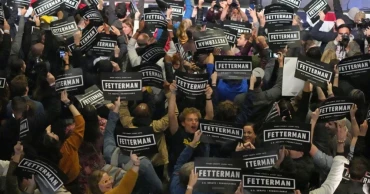
US midterm election: No sweep for Republicans after all
For weeks, Republicans predicted a “red wave” would carry them to power in Congress, as voters repudiated majority Democrats for failing to tame skyrocketing inflation and address worries about rising crime.
The reality appeared far different early Wednesday.
Rather than a wholesale rejection of President Joe Biden and his party, the results were far more mixed as returns from Tuesday’s midterms trickled in .
Many Democratic incumbents proved surprisingly resilient, outperforming their party’s own expectations. Meanwhile, Democrat John Fetterman won an open Senate seat currently held by the GOP, while other key races that will determine control of the chamber remain too early to call.
“When you wake up tomorrow, we will be in the majority and Nancy Pelosi will be in the minority,” House Minority Leader Kevin McCarthy predicted early Wednesday.
He may be right. But it appeared that likely Republican gains would come on far less favorable terms than anticipated.
Here are some takeaways from this year’s election:
TO BE CONTINUED ...
Republicans hoped for a wipeout. They didn’t get it. After Democrats racked up several hard-fought wins in swing districts, like Rep. Abigail Spanberger’s Virginia seat, the sweeping wins many Republicans predicted had yet to materialize early Wednesday.
Meanwhile, the fate of Democrats narrow hold on the Senate was unclear.
Also read: GOP, Democrats notch victories in competitive midterm races
Fetterman defeated Dr. Mehmet Oz for a crucial Pennsylvania Senate seat vacated by retiring Republican Sen. Pat Toomey. Democratic Sen. Raphael Warnock and former NFL star Herschel Walker, a Republican, were locked in a close contest in Georgia. The Wisconsin race between Republican Sen. Ron Johnson and Democrat Mandela Barnes was too close to call.
And the outcome of the two remaining two seats that will determine which party will hold a Senate majority — Arizona and Nevada — may not be known for days because both states conduct elections in part by mail ballots, which take a long time to count.
Stay tuned.
HISTORY LESSONIt’s called history for a reason. The party that celebrates winning the White House is usually mourning a loss in the midterms two years later.
Add to that historical pattern an economy battered by inflation and teetering on recession, throw in fears about crime, and the outcome is close to certain.
Also read: US midterm election: Democrats repel Republicans backed by Trump in several left-leaning states
For Biden and House Democrats, the likelihood of keeping power in the lower chamber of Congress was always slight. Republicans have expected to gain enough seats to retake the majority. If successful, which was not immediately clear Wednesday morning, they also have plans to neuter Biden’s agenda for the next two years.
Since 1906, there have been only three midterms in which the party of the president in power gained House seats: 1934, when the country was struggling with a Depression, 1998 when the U.S. was buoyed by a soaring economy, and 2002, when President George W. Bush had a sky-high approval rating amid the national feeling of unity after the Sept. 11 attacks.
IS FLORIDA STILL A SWING STATE?
Gov. Ron DeSantis and Sen. Marco Rubio, both Republicans, offer the latest evidence that Florida is becoming increasingly red. The two soared to early reelection victories Tuesday, both winning Miami-Dade County, which Democrat Hillary Clinton carried by 29 percentage points in 2016.
Florida has been a classic battleground. It twice helped propel Barack Obama to the White House. But the state, where the number of registered Democrats exceeded Republicans in 2020, has shifted increasingly to the right. That’s thanks to GOP inroads with Hispanic voters, as well as an influx of new residents, including many retirees, drawn to its lack of an income tax as well as its sunny weather.
“Democrats really have to think about how they are going to rebuild there. The Obama coalition no longer exists,” said Carlos Curbelo, a Republican former member of Congress, who called Florida ”off the map for the foreseeable future” to Democrats.
DeSantis won the governor’s office in 2018 by only about 30,000 votes. On Tuesday, he flipped at least six counties that he lost that year. Those same counties were carried by Biden just two years ago.
Some Democrats blame some of Tuesday’s blowout losses to a lack of investment by their party.
“This is what happens when national Democrats decide to not spend money in the state,” said Greg Goddard, a Democratic fundraising consultant from Florida who raised money for Rep. Val Demings’ losing challenge of Rubio. “The pathway to Democrats winning future presidential elections is very thin if you do not plan to spend in Florida
WAS IT A ‘RED WAVE’ OR A RIPPLE?Whether a red ripple will carry Republicans won’t likely be known for days or weeks as states that conduct their elections largely by mail, such a California, continue counting votes.
One thing is certain: It’s unlikely to match 2010′s tea party wave, which netted 63 seats, or the Newt Gingrich-led House takeover of 1994, which ousted 54 Democrats and flipped the chamber to GOP control for the first time since the presidency of Dwight Eisenhower.
One reason that won’t happen? There just aren’t that many competitive seats.
The end result? Far less interest in compromise and more gridlock in the halls of Congress.
WHAT DO REPUBLICANS WANT?
Gingrich’s “Contract with America” was celebrated as a cornerstone of the Republicans’ 1994 House takeover for offering a concrete list of policies the GOP would pursue if put in power.
Now Republicans are far more circumspect about their aims.
“That’s a very good question. And I’ll let you know when we take it back,” Senate Minority Leader Mitch McConnell he told reporters in January.
McCarthy has offered up a “Commitment to America,” a list of priorities that fits on a pocket-sized card he carries with him that is heavy on slogans and light on detail.
Both may be attempting to avoid the plight of Gingrich whose “Contract with America” became a liability when Republicans failed to enact it.
House Republicans have said they intend to investigate Biden and his administration. They have also called for a renewed focus on fiscal restraint, a crackdown on illegal immigration at the southern border and increased domestic energy production.
Much of it may not matter. Biden, after all, has a veto pen.
MOST EXPENSIVE MIDTERMS
The 2022 elections are on track to cost $16.7 billion at the state and federal level, making them the most expensive midterms ever, according to the nonpartisan OpenSecrets.
For perspective: The contests will nearly double the cost of the 2010 midterm elections, more than double the 2014 midterms and are on pace to roughly equal the 2022 gross domestic product of Mongolia.
At least $1.1 billion given at the federal level so far this election season has come from a small coterie of donors, many of whom have favored conservative causes.
3 years ago

GOP, Democrats notch victories in competitive midterm races
Control of Congress hung in the balance early Tuesday, with both parties notching victories in some of the most competitive races in a midterm election that centered on voter frustration over high inflation and the sudden rollback of abortion rights.
Democrats held a crucial Senate seat in New Hampshire, where Democratic Sen. Sen. Maggie Hassan defeated Republican Don Bolduc, a retired Army general who had initially promoted former President Donald Trump’s lies about the 2020 election but tried to shift away from some of the more extreme positions he took during the GOP primary. Republicans held Senate seats in Ohio and North Carolina.
A district-by-district fight was underway for control of the House, where Democrats held closely watched seats in moderate suburban districts from Virginia to Kansas and Rhode Island. Rep. Elaine Luria, a Navy veteran who serves on the House committee investigating the Jan. 6 insurrection, was the first Democratic incumbent to lose a highly competitive House district. Many of the districts that could determine House control in states like New York and California had not been called.
The outcome of races for House and Senate will determine the future of President Joe Biden’s agenda and serve as a referendum on his administration as the nation reels from record-high inflation and concerns over the direction of the country. Republican control of the House would likely trigger a round of investigations into Biden and his family, while a GOP Senate takeover would hobble Biden’s ability to make judicial appointments.
Democrats were facing historic headwinds. The party in power almost always suffers losses in the president’s first midterm elections, but Democrats had been hoping that anger from the Supreme Court’s decision to gut abortion rights might energize their voters to buck historical trends.
READ: US midterm election: Democrats repel Republicans backed by Trump in several left-leaning states
Florida Gov. Ron DeSantis and Texas Gov. Greg Abbott, two future possible Republican presidential contenders, beat back Democratic challengers to win reelection in the nation’s two largest red states. For Democrat Beto O’Rourke, who lost to Abbott, it was his third failed campaign since 2018.
In Georgia, Democratic Sen. Raphael Warnock and Republican challenger Herschel Walker were vying for a seat that could determine control of the Senate.
Republicans are betting that messaging focused on the economy, gas prices and crime will resonate with voters at a time of soaring inflation and rising violence.
AP VoteCast, a broad survey of the national electorate, showed that high inflation and concerns about the fragility of democracy were heavily influencing voters.
Half of voters said inflation factored significantly, with groceries, gasoline, housing, food and other costs that have shot up in the past year. Slightly fewer — 44% — said the future of democracy was their primary consideration.
Overall, 7 in 10 voters said the ruling overturning the 1973 decision enshrining abortion rights was an important factor in their midterm decisions.
VoteCast also shows the reversal was broadly unpopular. About 6 in 10 say they are angry or dissatisfied by it, while about 4 in 10 were pleased. And roughly 6 in 10 say they favor a law guaranteeing access to legal abortion nationwide.
There were no widespread problems with ballots or voter intimidation reported around the country, though there were hiccups typical of most Election Days.
3 years ago

US midterm election: Democrats repel Republicans backed by Trump in several left-leaning states
Democrats easily repelled Republicans backed by former President Donald Trump in several left-leaning states Tuesday, while tougher tests that could decide control of Congress and the future of Joe Biden’s presidency awaited in more competitive territory.
Despite their liberal history, states like Massachusetts, Maryland and Illinois have elected moderate Republican governors in the past. But the Republicans this year appeared to be too conservative in these states, handing Democrats easy victories in midterm elections that could otherwise prove difficult for the party.
Massachusetts and Maryland also saw historic firsts: Democrat Maura Healey became the first woman elected as Massachusetts governor, as well as the first openly lesbian governor of any state, and Wes Moore became the first Black governor of Maryland.
READ: Biden, Trump to make final appeals ahead of crucial midterms
In Florida, a one-time battleground that has become increasingly Republican, Gov. Ron DeSantis won a second term, defeating Democratic challenger Charlie Crist, a former congressman. DeSantis won Miami-Dade County, once a Democratic stronghold, in a victory that continues his rise as a national Republican star as he eyes a possible 2024 White House run. Florida Sen. Marco Rubio also won reelection, fending off a challenge from Democrat Val Demings and further illustrating the state’s rightward shift.
The outcome of races for House and Senate will determine the future of Biden’s agenda and serve as a referendum on his administration as the nation reels from record-high inflation and concerns over the direction of the country. Republican control of the House would likely trigger a round of investigations into Biden and his family, while a GOP Senate takeover would hobble Biden’s ability to make judicial appointments.
Democrats were facing historic headwinds. The party in power almost always suffers losses in the president’s first midterm elections, but Democrats had been hoping that anger from the Supreme Court’s decision to gut abortion rights might energize their voters to buck historical trends.
Keep Track: Election race callsEven Biden, who planned to watch the evening’s election returns at the White House, said late Monday night that he thought his party would keep the Senate but “the House is tougher.” Asked how that would make governing, his assessment was stark: “More difficult.”
READ: Biden slams GOP, Trump warns of 'tyranny' ahead of midterms
In Georgia, Democratic Sen. Raphael Warnock and Republican challenger Herschel Walker were vying for a seat that could determine control of the Senate. In Virginia, Democratic Reps. Abigail Spanberger and Elaine Luria were fending off spirited Republican opponents in what could serve as early signals of where the House majority is heading as Republicans hope to reclaim suburban districts that shifted to Democrats during Donald Trump’s tumultuous presidency.
Republicans are betting that messaging focused on the economy, gas prices and crime will resonate with voters at a time of soaring inflation and rising violence.
AP VoteCast, a broad survey of the national electorate, showed that high inflation and concerns about the fragility of democracy were heavily influencing voters.
3 years ago

Biden, Trump to make final appeals ahead of crucial midterms
An election year that unfolded against the backdrop of economic turmoil, the elimination of federal abortion rights and broad concerns about the future of democracy is concluding with a final full day of campaigning in which leaders of both parties will issue urgent appeals to their supporters.
President Joe Biden is holding a Monday evening rally in Maryland, where Democrats have one of their best opportunities to reclaim a Republican-held governor's seat. The appearance is in line with Biden's late-campaign strategy of sticking largely to Democratic strongholds rather than stumping in more competitive territory, where control of Congress may ultimately be decided.
His predecessor, former President Donald Trump, will hold his final rally of the campaign in Ohio. As he readies another run for the White House, Ohio holds special meaning for the former president because it was one of the first places where he was able to prove his enduring power among Republican voters. His backing of JD Vance was crucial in helping the author and venture capitalist — and onetime Trump critic — secure the GOP's nomination for a Senate seat.
Read more: Biden slams GOP, Trump warns of 'tyranny' ahead of midterms
With more than 41 million ballots already cast, Monday's focus will be ensuring that supporters either meet early voting deadlines or make plans to show up in person on Tuesday. The results will have a powerful impact on the final two years of Biden's presidency, shaping policy on everything from government spending to military support for Ukraine.
In the first national election since the violent Jan. 6 insurrection, the final days of the campaign focused on fundamental questions about the nation's political values.
Campaigning in New York for Gov. Kathy Hochul on Sunday, Biden said Republicans were willing to condone last year’s mob attack at the Capitol and that, after the recent assault of Paul Pelosi, husband of House Speaker Nancy Pelosi, some in that party made “light of it” or were “making excuses.”
“There’s never been a time in my career where we’ve glorified violence based on a political preference,” the president said.
Meanwhile, a Sunday evening Trump rally in Miami, a reference to Nancy Pelosi prompted changes of “Lock her up!" — a stark reminder of the nation's deep divide.
Trump was campaigning for Florida Sen. Marco Rubio's reelection, but also focused on his own political future. After telling a crowd in Iowa last week that he's “very, very, very probably” going to run for president again, he again teased the possibility on Sunday and encouraged supporters to watch his Ohio rally.
“I will probably have to do it again, but stay tuned,” Trump said, teasing the Monday event. “We have a big, big rally. Stay tuned for tomorrow night.”
Read more: Amidst recession fears, Biden has to convince Americans job gains mean better days ahead
Not attending the Miami event was Florida’s Republican governor, Ron DeSantis, who is running for reelection against Democrat Charlie Crist and is widely considered Trump’s most formidable challenger if he also were to get into the White House race.
DeSantis held his own, separate events Sunday in other parts of the state where he stuck to the centerpieces of his reelection campaign, including railing against COVID-19 vaccine mandates. The governor’s counter political programing avoided antagonizing Trump — meaning it didn’t deliver the dueling 2024 events that could be in his and Trump’s near future.
Trump said Sunday that Florida would “reelect Ron DeSantis as your governor.” But he was more confrontational during a Pennsylvania rally on Saturday, referring to Florida’s governor as “Ron DeSanctimonious.”
It’s a rivalry that’s been simmering for more than a year as DeSantis has taken increasingly bold steps to boost his national profile and build a deep fundraising network — even as Trump remains unquestionably the party's most popular leader.
For national Democrats, meanwhile, the focus is on their narrow control of the House and Senate, which could evaporate after Tuesday.
Voters may rebuke the party controlling the White House and Congress amid surging inflation, concerns about crime and pessimism about the direction of the country. History suggests the party in power will suffer significant losses in the midterms.
Biden has made the case that the nation's very democracy is on the ballot and the first lady went to Texas on Sunday to sound a similar alarm.
“So much is at stake in this election,” Jill Biden said in Houston. “We must speak up on justice and democracy.”
Traveling in Chicago Vice President Kamala Harris said, “These attacks on our democracy will not only directly impact the people around our country, but arguably around the world.”
Trump has long falsely claimed he lost the 2020 election only because Democrats cheated and has even begun raising the possibility of election fraud this year. Federal intelligence agencies are warning of the possibility of political violence from far-right extremists.
Ronna McDaniel, the Republican National Committee chairwoman, said Democrats were “inflation deniers,” trying to deflect the other side’s branding of her party as anti-democracy for rejecting the results of 2020’s free and fair presidential election simply because Trump lost it.
“If we win back the House and the Senate, it’s the American people saying to Joe Biden, we want you to work on behalf of us and we want you to work across the aisle to solve the problems that we are dealing with,” McDaniel told CNN.
3 years ago

Biden slams GOP, Trump warns of 'tyranny' ahead of midterms
President Joe Biden pilloried Republicans up and down ballots across the nation as election deniers who reveled in political violence, while his predecessor, Donald Trump, urged voters to oppose “growing left-wing tyranny" on the final Sunday before midterm elections that could reshape Washington's balance of power.
Wrapping up a five-state, four-day campaign swing with an evening rally at Sarah Lawrence College in Yonkers, New York, Biden championed Democratic Gov. Kathy Hochul. She's locked in a tight race with Rep. Lee Zeldin, who is looking to become the state's first GOP governor since George Pataki left office in 2006.
The president said hundreds of Republican candidates for state, federal and local office are "election deniers, who say that I did not win the election, even though hundreds of attempts to challenge that have all failed, even in Republican courts.”
Biden said that for the deniers, “There are only two outcomes for any election: either they win or they were cheated.”
Biden said Republicans were willing to condone last year's insurrection at the U.S. Capitol and that, after the recent attack on Paul Pelosi, husband of House Speaker Nancy Pelosi, some in that party made “light of it” or were “making excuses.”
“There's never been a time in my career where we've glorified violence based on a political preference," the president said.
Read more: Amidst recession fears, Biden has to convince Americans job gains mean better days ahead
More than 39 million people have voted early in Tuesday's races, which will decide control of Congress and key governorships — the first national election since a mob overran the Capitol. Earlier Sunday, as Trump addressed supporters in Miami, a reference to the House speaker prompted chants of “Lock her up!" — a stark reminder of just how far apart each side is.
Trump is hoping that a strong GOP showing on Election Day will generate momentum for the 2024 run that he is expected to launch this month.
“I will probably have to do it again, but stay tuned,” Trump said, teasing an event he has with Republican Senate candidate in Ohio, JD Vance, for Monday. "We have a big, big rally. Stay tuned for tomorrow night.”
Trump also told the crowd that "every free and loving American needs to understand that the time to stand up to this growing left-wing tyranny is right now,” while calling on his supporters to reject the “radical left-wing maniacs” and adding that Hispanics would show up strong for GOP candidates.
Sen. Marco Rubio joined Trump at the rally as he seeks reelection. Not attending the Miami event was Florida's Republican governor, Ron DeSantis, who is running for reelection against Democrat Charlie Crist and is widely considered Trump’s most formidable challenger if he also were to get into the White House race.
Instead, DeSantis held his own, separate events Sunday in another part of the state where he stuck to the centerpieces of his reelection campaign, including railing against COVID-19 vaccine mandates and “wokeness” in schools and other parts of society. The governor's counter political programing avoided antagonizing Trump — meaning it didn't deliver the dueling 2024 events that could be in his and Trump's near future.
Trump said Sunday that Florida would “reelect Ron DeSantis as your governor.” But he was more confrontational during a Pennsylvania rally on Saturday night, referring to Florida's governor as “Ron DeSanctimonious.”
It's a rivalry that's been simmering for more than a year as DeSantis has taken increasingly bold steps to boost his national profile and build a deep fundraising network.
Trump remains the most popular figure in the Republican Party. Still, many of his supporters are eager for the prospect that DeSantis might run, seeing him as a natural successor to Trump, without the former president's considerable political negatives.
Read more: G-20 summit could put Biden in the same room with Putin and MBS
For national Democrats, meanwhile, the focus is on the fate of their narrow control of the House and Senate, which could evaporate after Tuesday.
New York Rep. Sean Patrick Maloney, head of the Democrats’ House campaign arm, is in a tough contest for his seat. But he insisted Sunday that Democrats are “going to do better than people think on Tuesday,” adding that his party is “not perfect” but “we are responsible adults who believe in this democracy.”
“I think this race is razor-close and I think everybody who cares about the extremism in this ‘MAGA’ movement — the racism, the antisemitism, the violence — needs to get out and vote and that’s not just Democrats, it’s independents and fair-minded Republicans,” Maloney told NBC’s “Meet the Press,” referring to former President Donald Trump’s “Make America Great Again” slogan.
Voters may rebuke the party controlling the White House and Congress amid surging inflation, concerns about crime and pessimism about the direction of the country. History suggests the party in power will suffer significant losses in the midterms.
On a weekend that also featured Democratic rallies by former Presidents Barack Obama and Bill Clinton, first lady Jill Biden attended church services while campaigning in Houston on Sunday. Like her husband and his presidential predecessors, she argued that democracy itself was on the ballot.
"So much is at stake in this election," she said. "We must speak up on justice and democracy.”
Traveling in Chicago Vice President Kamala Harris struck a similar tone, saying, “These attacks on our democracy will not only directly impact the people around our country, but arguably around the world.”
Trump has long falsely claimed he lost the 2020 election only because Democrats cheated and has even begun raising the possibility of election fraud this year. Federal intelligence agencies are warning of the possibility of political violence from far-right extremists.
Ronna McDaniel, the Republican National Committee chairwoman, said Democrats were “inflation deniers,” trying to deflect the other side's branding of her party as anti-democracy for rejecting the results of 2020's free and fair presidential election simply because Trump lost it.
“If we win back the House and the Senate, it’s the American people saying to Joe Biden, we want you to work on behalf of us and we want you to work across the aisle to solve the problems that we are dealing with," McDaniel told CNN's “State of the Union."
Lee Saunders, president of the American Federation of State, County, and Municipal Employees, the nation’s largest union of public employees, has been traveling the country rallying for Democrats. He said, “It’s going to be hard, it’s going to be tough, but we aren’t giving up hope."
“Clearly people are concerned about the economy," Saunders said. But he added that voters also are “concerned about the freedoms being taken away from them, whether you’re talking about voting rights or whether your talking about a women’s right to choose.”
3 years ago