USA

Biden faced a low bar in his first post-debate interview. It's not certain he cleared it
With the survival of his candidacy in question, Joe Biden sat down with ABC's George Stephanopoulos on Friday for one of the most important interviews of the Democratic president's decades-long political career.
The 22-minute sit-down came a full eight days after Biden's disastrous debate performance, in which more than 50 million people watched the 81-year-old struggle to complete sentences or respond to basic questions about his campaign. Far fewer people watched the ABC interview, of course, but the audience included many of the elected officials, donors and political strategists who are actively deciding whether to help rescue — or end — Biden's candidacy in the coming days. Top Biden aides have been pressing elected Democrats not to go public with their concerns.
The president and his team were hopeful that this first interview would help rally his party and generate momentum for the long road ahead. It's unclear if he was successful.
House Republicans unite on spending cuts to non-defense programs, but Senate roadblock awaits
Here are some key takeaways:
Biden faced a low bar after his debate
At this point, every Biden answer, interview and speech will serve as a Rorschach test of sorts to voters, who consistently tell pollsters that they're worried about his age. And if people were looking for further signs of trouble, they were easy to find.
Biden performed better than he did on the debate stage. There were also flashes of strength as the president talked up his record, vowed not to leave the race and took shots at Donald Trump, whom he repeatedly described as a "pathological liar." Biden also referred to Trump at one point as a "congenital liar."
But he needed to do much more than clear the incredibly low bar he set on national television last week. And the ABC interview had several examples of awkward pauses, garbled words and moments where he meandered.
In one of the opening answers of the interview, Biden struggled to explain clearly whether he was aware of how bad his debate performance was as it was happening in real time. He jumped from his preparation to polling to Trump's lies during the debate to not blaming anyone.
Trump allies seized on another Biden response suggesting he wasn't sure if he rewatched his debate performance. "I don't think so," Biden said.
Biden at 81: Often sharp and focused but sometimes confused and forgetful
He said only 'the Almighty' could talk him out of running
Pressed over and over on whether he would step aside, Biden didn't offer the slightest hint that he might bow to pressure within his party and leave the presidential race.
He refused even to entertain the possibility. Actually, he offered only one exception: "If the Lord Almighty comes down and tells me that, I might do that."
That's even as Stephanopoulos presented him with various data points and shared "the prevailing sentiment" from his conversations with party officials. "They are worried about you and the country. And they don't think you can win. They want you to go with grace," the journalist said.
Biden pushed back.
"The vast majority are not where those folks are," he said. "Have you ever seen a time when elected officials running for office aren't a little worried?"
He took the blame — and dismissed questions about his health
The bottom line is that Biden does not have a good explanation for his dismal debate performance.
In the interview, he called it "a bad episode," but said there was no indication of a "more serious condition." Instead, he said he simply had "a really bad cold." When pressed again, he said, "I just had a bad night."
Democrats in Congress are torn between backing Biden for president and sounding the alarm
He also didn't blame anyone but himself, even as whispers have surfaced in recent days about his staff and those who coordinated his preparations.
Such an answer, of course, may do little to win over those who are deeply concerned about his physical and mental competence. He also refused to agree to undergo any medical testing that might further assuage such concerns.
Specifically, Stephanopoulos asked whether Biden would agree to an "independent medical evaluation that included neurological and cognitive tests." He asked more than once when Biden didn't answer directly.
"Look, I have a cognitive test every single day. Every day I have that test," Biden said. "Everything I do. Not only am I campaigning, but I'm running the world."
It was not an easy interview
If Biden's aides picked Stephanopoulos for the president's first major post-debate interview hoping he might go easy on him, they were wrong.
Stephanopoulos, who worked as an aide to former President Bill Clinton decades ago, peppered the Democratic president with tough questions and blunt truths, albeit with a soft tone.
When Biden suggested he had recently drawn big crowds, Stephanopoulos retorted: "I don't think you want to play the crowd game. Donald Trump can draw big crowds."
Biden appeared flustered at times.
The president paused for an extra beat when Stephanopoulos asked whether he knew "how badly it was going" during the debate. Later, he paused again when Stephanopoulos asked whether he was acting like Trump by "putting his personal interests ahead of the national interest" by staying in the race.
In another exchange, Biden asked Stephanopoulos whether polling is accurate as it used to be.
It was meant to be a rhetorical question. But the interviewer quickly answered.
"I don't think so, but I think when you look at all the polling data right now, it shows that he's certainly ahead in the popular vote, probably even more ahead in the battleground states," Stephanopoulos said of Trump. "And one of the other key factors there is, it shows that in many of the battleground states, the Democrats who are running for Senate and the House are doing better than you are."
Biden didn't ask many other rhetorical questions.
One interview won't fix the damage
Even before the interview was over, it was clear it would take much more to win over a party that is suddenly open to Biden alternatives just four months before Election Day.
At roughly the same time ABC released the first interview clip, Rep. Mike Quigley, D-Ill., became the fourth Democratic member of Congress to call on Biden to leave the race.
"To prevent utter catastrophe," Quigley said on MSNBC, "step down and let someone else do this."
Democrats are being encouraged by the White House and the president's campaign not to go public with their concerns about Biden's viability or electability, according to a Democrat granted anonymity to discuss the matter.
Another Democrat who watched said they found Biden to be shaky and predicted more will call on him to leave the race.
Biden, for his part, refused to entertain the possibility that congressional leaders might confront him in the coming days and ask him to step aside. But as Stephanopoulos said repeatedly, that is indeed a very real possibility. Earlier this week, Sen. Mark Warner of Virginia reached out to fellow senators to discuss whether to ask Biden to exit the race.
Biden said Warner "is a good man" but brought up the Virginian's own previous considerations for a presidential run.
Asked how he would feel come next January if he ultimately lost the race, Biden's answer may not inspire confidence.
"As long as I gave it my all and I did the goodest job as I know I can do, that's what this is about," he said.
1 year ago

House Republicans unite on spending cuts to non-defense programs, but Senate roadblock awaits
House Republicans are off to a quicker, more united start this year when it comes to funding the federal government, passing four of 12 annual appropriations bills before the end of June compared to zero at this time last year when the new majority got off to a rocky start.
But there is no denying the spending fights to come.
All four bills that passed the House so far generated veto threats from President Joe Biden 's administration and drew widespread Democratic opposition and they have no chance of passing the Senate in their current form. That means a protracted, months-long battle that will likely require one or more stopgap spending bills to keep the federal government fully open when the new fiscal year begins Oct. 1.
Here's a snapshot of where things stand in the appropriations process and the likely flashpoints.
Plowing ahead
House Republicans are intent on passing the dozen appropriations bills one at a time rather than combining them into one, massive catchall bill known as an omnibus, which they say leads to excessive spending and faulty government policies because such massive bills are harder to amend or stop without risking a government shutdown.
Earlier this year, Speaker Mike Johnson broke up the discretionary spending into two bills. Congress ended up passing them in March nearly halfway through the fiscal year. Now, House Republicans are intent on moving more quickly for the fiscal year 2025 spending bills. Johnson bragged that the House has passed four of next year's spending bills compared to zero in the Senate.
“House Republicans have committed to building that muscle memory back and go through with regular order,” Johnson said.
Non-defense spending cuts
The House GOP's momentum is likely temporary. They decided to go their own way rather than work with Democrats in crafting the bills. GOP leadership jettisoned key aspects of an agreement then-Speaker Kevin McCarthy worked out with Biden that put in place strict spending limits as part of a deal to avoid a crippling default.
The agreement called for defense and non-defense spending to increase 1% during the next fiscal year beginning Oct. 1. But House Republicans have decided that they'll pursue a course where only defense will go up that amount. Non-defense spending will be cut by about 6%, spurning adjustments McCarthy and the White House agreed to that would allow for more non-defense spending than was specified in the debt ceiling legislation.
The difference between the two paths is significant. If House Republicans stayed with the McCarthy-Biden agreement, non-defense spending would rise from nearly $773 billion this year to more than $780 billion in the next fiscal year. Instead, they are working toward roughly $725 billion in non-defense spending.
Rep. Tom Cole, the Republican chairman of the House Appropriations Committee, argued that House Republicans are going by what was in the debt ceiling bill. Not all of the Biden-McCarthy agreement was in it. The negotiators had agreed to claw back funding approved outside the appropriations process to shore up non-defense spending and keep it relatively flat. For example, negotiators agreed to trim $20 billion from the IRS and apply that money elsewhere.
The White House says that “rather than respecting their agreement” and engaging in a bipartisan process, “House Republicans are again wasting time with partisan bills that would result in deep cuts" to law enforcement, education, housing and other programs.
Cole argues that Democrats have brought the GOP's course of action on by voting with eight Republicans to oust McCarthy.
“Democrats need to understand that they participated in getting rid of the speaker. It was their choice. They had every right to do it. But if you think you can get rid of the person you cut the deal with, and the deal's going to stay the same, maybe you need to rethink it," Cole said.
Meanwhile, House Republicans are adding scores of policy mandates to the spending bills that are dead on arrival with a Democratic-led Senate and White House. For example, the House defense spending bill would not allow the Pentagon to reimburse servicemembers for travel expenses related to getting an abortion. Many troops and their dependents are based in states where abortion is now illegal so they must travel to get abortion care.
Democrats see the House GOP's action as failing to learn the lessons of last year. Any spending bills passed into law will need bipartisan support. They described the House floor action on the spending bills as a waste of time since the bills have no chance in the Senate.
“Extreme MAGA Republicans are marching us toward a government shutdown,” warned Democratic leader Hakeem Jeffries.
Where things stand in the Senate
Senate Appropriations Committee Chair Patty Murray and the committee's lead Republican, Sen. Susan Collins, have been in talks behind the scenes negotiating topline spending totals for defense and non-defense programs.
Both are looking to go above the 1% increase slated for defense and non-defense under the agreement that Biden and McCarthy reached.
Boosting the defense budget is a top priority of some Republicans, but Murray is insisting on parity.
“Parity is the order of the day,” she said. “Because investments in our families, in our economy, in communities’ safety and success are no less important than investments at the Pentagon.”
The committee is scheduled to take up its first three spending bills on Thursday and the topline amount of money to be allocated for each of the 12 spending bills.
If the Senate goes beyond the 1% increase, that could complicate passage in the House, where many Republicans viewed the spending caps as too generous. A few months after those caps were approved as part of the debt ceiling bill, eight Republicans sided with Democrats to oust then-Speaker McCarthy from his job.
Lame-duck or wait until next president is sworn into office?
Nobody expects Congress to finish its work on spending before the new fiscal year begins Oct. 1, meaning that lawmakers in both chambers will have to agree to a stopgap spending bill to keep government agencies operating for a few more weeks while they work out their differences.
Congress is not expected to be in session in October, so lawmakers can be at home on the campaign trail. That means spending legislation will be pushed into November and possibly December or it will be pushed off for a new president and Congress to handle. Some Republicans believe they have a good chance of winning the Senate and the White House, so they should wait until next year to pass the spending bills.
But leadership is pushing to deal with spending this year, saying that if Republicans do take the Senate and the White House, they'll want to focus on other priorities, including tax policy and the border.
“Whether we win the Senate or not, the filibuster is still there, and that's the real leverage for either side in the Senate,” Cole said. “So why stick a new president, who hasn't even gotten his people into place, with dealing with it?”
1 year ago

Biden at 81: Often sharp and focused but sometimes confused and forgetful
President Joe Biden's conduct behind closed doors, in the Oval Office, on Air Force One and in meetings around the world is described in the same dual way by those who regularly see him in action.
He is often sharp and focused. But he also has moments, particularly later in the evening, when his thoughts seem jumbled and he trails off mid-sentence or seems confused. Sometimes he doesn't grasp the finer points of policy details. He occasionally forgets people's names, stares blankly and moves slowly around the room.
Biden’s occasional struggles with focus may not be unusual for someone his age. But at 81 years old and seeking another four years in the White House, the moments when he’s off his game have taken on a fresh resonance following his disastrous debate performance against Republican Donald Trump. The president appeared pale, gave nonsensical answers, stared blankly and lost his train of thought.
The June 27 faceoff alarmed Democrats and his financial backers, in part, because Biden seemed so much worse than during the almost routine moments when he’s less sharp. And that has raised questions about whether he’s up for a campaign that’s only going to get nastier and whether he can effectively govern for another four years if he wins.
“We understand the concerns. We get it,” White House press secretary Karine Jean-Pierre said this week. But she insisted Biden has no intention of stepping away from the campaign. “The president is clear-eyed and he is staying in the race.”
But there have been other notable signs in recent weeks, from Biden’s constrained itinerary during a recent visit to France to his flat demeanor during a big-dollar Hollywood fundraiser with top stars.
This story is based on interviews with two dozen people who have spent time with the president privately, some of whom were granted anonymity to discuss interactions that were not intended to be public.
How he is in private is how he often is in public — uneven
The way Biden acts in private, according to regular observers, often tracks how he comes off publicly. In both settings, he can be commanding one day and halting another.
A day after his debate blunder, Biden's voice at a North Carolina rally was forceful, his eyes alert, his delivery confident. As he spoke, cheers filled the room.
“I give you my word as a Biden. I would not be running again if I didn’t believe with all my heart and soul I can do this job,” he told supporters. “Because, quite frankly, the stakes are too high.”
But sometimes, Biden speaks so softly that it is difficult to make out his words even with a microphone. He'll stop mid-sentence and trail off during speeches. At other times he runs the room, leading the audience, joking and shaking hands with thrilled supporters, in clear command of the moment. His gait is often stiff, but sometimes he jogs.
Democrats in Congress are torn between backing Biden for president and sounding the alarm
His State of the Union speech earlier this year was widely seen as a confident and fiery speech that showed he was ready to take on Trump.
Through it all, public concern about Biden's fitness for another four years has been persistent. In an August 2023 poll from The Associated Press-NORC Center for Public Affairs Research, fully 77% of U.S. adults said Biden was too old to be effective for four more years. Not only did 89% of Republicans say that, but so did 69% of Democrats.
Missed opportunities to manage the issue
One person who spends time with Biden regularly said there have been visible signs of his aging over the past year that the president's team has failed to fully address. The debate performance accelerated concerns about what was already a slow-moving problem, even if Biden has offered assurances that he can still effectively govern.
Biden’s advisers have long been aggressively dismissive of questions about his age. But now they're acknowledging that Biden’s slowdown is undeniable. The debate has forced the president to more frontally acknowledge the limitations of his age, when before he largely made light of it. But they've taken only largely cosmetic steps to minimize its prominence in the public eye.
They’ve reduced his use of a long staircase to board Air Force One in favor of a shorter one, and aides often accompany him when he walks in public to make his stiff gait less noticeable. While his schedule remains busy, aides have built-in recovery stretches — long weekends or extended stays in Delaware at his Wilmington and Rehoboth Beach homes or at Camp David, the presidential retreat in Maryland — to rest up after a grueling period of travel.
Three French officials who helped organize Biden’s visit to France earlier this month said their U.S. counterparts' reactions to options offered for a state visit in Paris and D-Day commemorations in Normandy made them think the president’s health must be fragile.
They were told the U.S. president needed some time to rest and they felt Biden’s entourage was very protective of him.
Biden's public interactions — with journalists especially — have been greatly limited under a mandate led by one of his top advisers, Anita Dunn. Even during major events with Democrats or other supporters, the White House sometimes limits how much time Biden spends with the audience, two people said. At best, it is a protective reflex meant to shield their longtime boss — many at the White House have been with Biden for decades. But it also can look like an effort to hide something.
A shift in strategy to get Biden out there more
That strategy is shifting in the aftermath of the debate flop. After internal discussion within the campaign, the White House on Tuesday announced a public blitz: Biden will sit for an interview Friday with ABC’s George Stephanopoulos. The president added a trip to Wisconsin on Friday, and will head to Philadelphia on Sunday. And he will hold a press conference during the NATO summit in Washington next week.
Biden's allies worry that the next inevitable misstep — even if it’s not of the magnitude of his debate disaster — will resurrect voter concerns about the president’s fitness for office. That no matter how hard he tries, Biden may never be able to fully get past it.
US Supreme Court rules ex-presidents have broad immunity, dimming chance of a pre-election Trump trial
A growing body of misleading online videos isn't helping matters. In one clip, Biden stands very still during a Juneteenth musical performance at the White House, leading to talk he had “frozen.” But Philonise Floyd, George Floyd's brother, was standing next to the president for the performance and disputed the tenor of the clip. "Joe was just standing there having fun,” he told the AP. Floyd put his arm around Biden during the performance and said the two chatted a bit before the music started and had a great conversation.
One clip, from France, made it seem like he tried to sit down when there wasn't a chair, but there was.
In another widely circulated clip, Biden appears to wander off on a hilltop golf course outside Bari, Italy, during the Group of Seven summit earlier this month, his back turned to leaders who had begun to gather for a group photo.
In reality, he'd turned around to talk to skydivers who had landed behind the leaders, giving them a thumbs up and praising their feats. The entire scene was chaotic, with skydivers landing all around the leaders and hundreds of staff members standing on the other side of a rope.
Grueling foreign tripsThose foreign trips can be grueling, even for the youngest and healthiest of leaders. And Biden did back-to-back trips in quick succession, first to France and then the G7 visit to Italy.
French officials involved in organizing the first trip said his schedule appeared lighter compared with most world leaders’ state visits to the country.
After the G7, where Biden appeared pale and his movements slow, he flew across nine time zones to Los Angeles for a glitzy Hollywood fundraiser. One person who spoke with Biden at the event was struck by how tired the president had seemed during backstage conversations, and grew more concerned when Biden seemed unable to turn it on for his 30-minute onstage conversation with late-night talk show host Jimmy Kimmel and former President Barack Obama.
The same person said that during a fundraiser in March, the president came off as vibrant and engaging and displayed the kind of charm that the person was accustomed to seeing over years of interactions.
During his debate prep sessions at Camp David, Biden seemed to be doing well — ready to take on Trump. So his actual performance came as a shock even to those who were working with him, two of the people said. At a fundraiser this week, Biden offered up that he had still been recovering from the grueling travel 12 days earlier.
“I wasn’t very smart. I decided to travel around the world a couple of times,” Biden said. The president added that he “didn’t listen to my staff” about travel and joked that he “fell asleep on stage” during the debate.
How Biden is on the job
Many in the White House say the president is in command across both domestic issues and critical foreign policy problems, like the war in Ukraine and the Israel-Hamas conflict.
“I have been with the president a number of times over the last 3 1/2 years on some of the most consequential kind of life, death or peace-type decisions, and also very high-stakes engagements with senior leaders,” said Brett McGurk, a senior National Security Council official who coordinates the Middle East and North Africa. McGurk has worked for both Republican and Democratic administrations.
“And what I have seen time and again — repeatedly and consistently — from the first week of the administration until now — is a president who prepares for those engagements, who has very detailed and comprehensive briefs for those engagements, and then does the engagement, and then has very active follow-up.”
One senior administration official described tense moments with Biden inside the Situation Room, including one on April 13, where over four intense hours Biden and others worked through reports of an imminent attack by Iran on Israel. Biden gamed out how to respond, and led complicated discussions with Prime Minister Benjamin Netanyahu and other G7 leaders, working to ensure there was no broader regional conflict.
Domestic policy adviser Neera Tanden said in recent weeks she has been in private meetings with Biden and in larger group settings on major policy issues, including potential citizenship for more migrants, new healthcare data and the FBI's crime statistics. She said the president was engaged, thorough and fully in command of the policies.
“I take him very complicated issues, and he handles them,” she said. "He understands how programs are complicated and interconnected, and he can connect things to experiences he’s had a long time ago, or experiences they’ve had a few months ago.”
New Jersey Gov. Phil Murphy described a weekend fundraiser that raised millions for Biden. It included a sit-down meal where the president, first lady and governor chatted with supporters and took a round of unscripted questions.
“He weighed in on all of the above, substantively — I’ll give you a smattering, universal pre-K, free community college, the Ukraine war, Middle East war, Federal Reserve, general economy, wage growth, job growth.”
Unsatisfied with the explanationsDemocrats, so far, have been largely unsatisfied with the explanations for Biden’s debate performance from White House staff, his campaign and the president himself. And there is a deeper frustration among some who feel like the president should have handled this much sooner, and he has put them in a difficult position by staying in the race.
Biden could decide to drop out of the race, but he can't be removed. So far only two active members of Congress have called for him to step aside, but there is growing anxiety on Capitol Hill about his ability to do the job and many are anxiously awaiting post-debate polling and waiting to see how he handles his Friday interview on ABC.
Another problem for Democrats: With the focus so squarely on Biden, there has been less attention paid to Trump, whose debate performance was riddled with falsehoods about the Jan. 6, 2021, Capitol riot, Democrats’ views on abortion rights and his own revisionist comments about his response on a 2017 neo-Nazi rally.
One Democratic ally expressed frustration that Biden’s family members have not called on him to step aside for the sake of the top priority: Keeping Trump out of the White House. Instead, they're encouraging him to stay in the race.
Only Biden's doctors can really answer
Really, only Biden’s personal physician can answer questions about the president’s cognitive fitness — and given the level of public concern, he should do so, said well-known aging researcher S. Jay Olshansky of the University of Illinois at Chicago.
One bad appearance on TV isn’t enough to assess anyone’s cognitive ability, Olshansky stressed, “even for those of us that study aging for a living.” Without more insight, there’s no way to know if the jet lag Biden has cited, or other factors, explain the performance, he said.
“I certainly know how it looks, and it did not look good. But can we attribute it to cognitive decline? Look, an hour after he was participating in that debate, and the day after, he looked back to his old self,” Olshansky said. “But the fact that we don’t know for sure is the problem.”
“The only person that’s ever examined the president from a medical perspective is his personal physician,” he added. “The important message is that we don’t know and we haven’t heard from his physician. And until those issues are resolved it just seems to be a festering wound.”
Biden’s physician, Dr. Kevin O’Connor, deemed the president fit for duty after a February checkup that included a neurologic assessment. White House officials at the time said Biden wasn’t given a specific cognitive test because O’Connor and the neurologist decided he didn’t need one.
“His doctor’s a very good one and he doesn’t do unnecessary tests,” Olshansky said. “So when he made the decision not to do it, that told us a compelling story about what he saw and what he didn’t see — which is no evidence of cognitive decline” at that time.
1 year ago
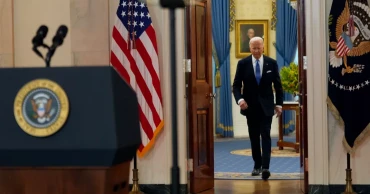
Democrats in Congress are torn between backing Biden for president and sounding the alarm
President Joe Biden's disastrous debate performance has reverberated across the Democratic Party, forcing lawmakers to grapple with a crisis that could upend the presidential election and change the course of American history.
The Democratic president has signaled he has no intention of dropping out of the race against Donald Trump despite the halting and uneven debate delivery that threw a spotlight on questions about Biden's age and capacity to be president. But as Democrats make the case the stakes of the election are momentous — challenging no less than the foundations of American democracy — they're wrestling with how to approach the 81-year-old who's supposed to be leading the charge for their party.
Here's how Democrats are handling the debate aftermath:
Raising alarm
Rep. Lloyd Doggett, of Texas, on Tuesday became the first sitting Democrat in Congress to call for Biden to withdraw from the race. He praised Biden but said he “has the opportunity to encourage a new generation of leaders from whom a nominee can be chosen to unite our country through an open, democratic process.”
“Recognizing that, unlike Trump, President Biden’s first commitment has always been to our country, not himself, I am hopeful that he will make the painful and difficult decision to withdraw. I respectfully call on him to do so,” said Doggett, who's 77.
Some other congressional Democrats have moved in recent days to outspoken concern not just over Biden’s performance during the 90-minute debate last week but also the level of transparency Biden’s team has offered about his mental fitness. They've tiptoed toward embracing the idea Biden should withdraw.
“Everybody is asking one question within the Democratic Party ... which is how do we defeat Donald Trump and how are we going to defeat the threat of authoritarianism,” Rep. Jamie Raskin, a prominent Democrat from Maryland, said on MSNBC late Tuesday.
He added that the question of whether Biden stays as the presidential candidate or Democrats select someone else “is a moving target. It has to happen quickly.”
Sen. Sheldon Whitehouse, D-R.I., told a local CBS-affiliated television station he was “horrified” by both Biden’s performance and Trump’s falsehoods during the debate.
“People want to make sure that this is a campaign that’s ready to go and win,” Whitehouse said. “That the president and his team are being candid with us about his condition — that this was a real anomaly.”
Some are concerned Biden’s weaknesses could tamp down potential voters’ enthusiasm, creating a ripple effect that hurts Democrats as they try to maintain a narrow Senate majority and take back control of the House. Down-ballot Democrats are already confident they can outperform Biden in swing races, but if large numbers of voters reject Biden, it could impact them.
While several vulnerable Democrats have stopped short of calling for Biden to withdraw, they've also cast the situation in stark terms: If Biden continues, he'll lose.
“The truth, I think, is that Biden is going to lose to Trump,” Rep. Marie Gluesenkamp Perez, a Washington Democrat, told an ABC-affiliated television station. "I know that's difficult, but I think the damage has been done by that debate."
Backing Biden
With Biden’s family urging him to stay in the race, attention has turned to senior Democratic lawmakers who could potentially persuade the president to withdraw his nomination. So far, top Democratic leaders have mostly stood behind Biden in public statements.
“There have not been discussions among senior leadership about anything other than making sure we continue to articulate a compelling vision for the future to the American people related to the issues of importance around the economy,” House Democratic leader Hakeem Jeffries told reporters Monday in Pittsburgh.
Senate Majority Leader Chuck Schumer, a New York Democrat, posted on X, the platform formerly known as Twitter, after the debate that it showed voters there was a choice between “four more years of progress, or four more years of attacks on our fundamental rights and our democracy.”
Biden was speaking with congressional leaders this week, the White House said Tuesday. White House press secretary Karine Jean-Pierre said they respected the opinions and thoughts of concerned party members, adding, “that’s what makes this party different than the other side.”
Many of Biden's allies have chided the news media for being fixated on Biden's mental capacities, arguing that instead the focus should be put on Trump's record of refusing to accept the results of the 2020 election he lost to Biden and repeatedly lying.
Rep. Veronica Escobar, a Texas Democrat who's part of Biden's campaign committee, conceded the debate wasn't what she hoped for but added, “I think there needs to be a real conversation about the things that Donald Trump said. It is beyond vile.”
Rep. Robert Garcia, D-Calif., who was among Biden’s surrogates at the debate, dismissed concerns.
“We are 100% behind Joe Biden," he said Friday. "Crystal clear, end of story. He’s our nominee. So anything else outside of that is just political chatter.”
Feeling it out
The June 27 debate infused a new dynamic into an election contest that had been marked by few surprises. Voters were familiar with Biden and Trump and had previously decided between the two in 2020.
Still, many House Democrats were caught in a state of uncertainty as they faced a barrage of questions on the morning after the debate. Some chalked it up as little more than a bad night for Biden, but others are watching closely to see how voters react and whether Biden can execute a quick political recovery.
Rep. James Clyburn, a South Carolina Democrat who helped Biden win the Democratic nomination in 2020, urged his party last week to “stay the course.”
By Tuesday, Clyburn was still supporting Biden for president, but he also told MSNBC that “Biden may decide otherwise.” Clyburn added that he would support Vice President Kamala Harris if Biden withdrew.
Clyburn and others like former House Speaker Nancy Pelosi, D-Calif., are recommending that Biden prove to the American people that he's ready for another four years in office by going out and taking tough interviews — something he has rarely done in recent years. Biden will sit for an interview with ABC, his first since the debate, later in the week.
Both Clyburn and Pelosi told MSNBC at midday Tuesday that they had not spoken directly with Biden since the debate. But Pelosi still emphasized that the president is on “top of his game, in terms of knowing the issues and what is at stake.”
She called on both Biden and Trump, who's 78, to face tests for their health and mental acuity.
“I think it is a legitimate question to say is this an episode or is this a condition. So when people ask that question, it’s legitimate — of both candidates,” said Pelosi, who's 84.
Meanwhile, rank-and-file lawmakers are watching to see how voter polls register the impact and whether it spills into down-ballot races. For months, vulnerable House Democrats have been distancing themselves from some of Biden’s policies. That phenomenon could become more pronounced after the debate.
Rep. Jared Golden, a moderate Democrat from Maine, was already looking for ways to convince potential Trump voters to support him.
“While I don’t plan to vote for him, Donald Trump is going to win,” Golden said in a Bangor Daily News op-ed. "And I’m OK with that.”
1 year ago
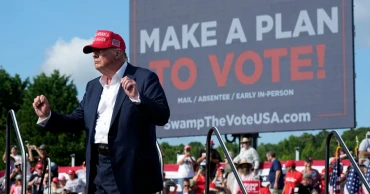
Trump revels in legal and political wins while Biden's campaign reels from their debate
Donald Trump likes to be the one in the spotlight.
But in the days since President Joe Biden's disastrous debate performance, the presumptive Republican nominee has kept a low profile, leaving the focus on the drama engulfing the Democratic Party as he and his campaign revel in a series of legal and political victories heading into the Republican National Convention this month.
Trump's run began last week during the first debate, when Biden delivered a performance so dismal that he has spent the days since fending off calls from alarmed Democrats to step aside to save the party from losses up and down the ballot.
On Monday, the U.S. Supreme Court ruled that former presidents have broad immunity from prosecution, limiting the indictment against Trump for his efforts to overturn his 2020 election loss to Biden. It's all but certain he won't face trial before Election Day.
And on Tuesday, the judge in Trump's New York criminal hush money trial postponed his sentencing to weigh the impact of the Supreme Court decision.
The flood of good news — along with a major fundraising haul that has eliminated what had been Biden’s substantial cash advantage — has given Trump and his team cause for celebration as they head into the convention this month. And it has frustrated Biden supporters who would prefer to focus on Trump's sweeping second-term agenda and comments he made during the debate minimizing the Capitol riot and suggesting he might not accept the results of this election, either.
Instead of taking a victory lap, Trump has been lying low. While he sat for several radio interviews over the weekend and has been active on his Truth Social site, he has no public events on his schedule this week.
That’s partially a function of the calendar with the Fourth of July on Thursday. But Trump’s team, recognizing that Biden’s campaign faces intense pressure, is perfectly happy to keep the focus on the incumbent, according to people familiar with the strategy who spoke on condition of anonymity to discuss the campaign’s thinking.
Brendan Buck, a Republican strategist who's not a Trump supporter, credited the ex-president for what he called an “uncharacteristically disciplined” response to the debate and for “letting Biden sort of twist in the wind.”
But he said challenges remain for the former president as he seeks a second term.
“Trump still remains an incredibly vulnerable, bad candidate. And that’s what makes all of this so much worse,” he said of the debate debacle. “I think Donald Trump is still very capable of blowing this.”
In a statement, Trump campaign spokesperson Karoline Leavitt said, “In a few weeks, a unified and enthusiastic Republican Party will formally nominate President Trump and by that time, he will select America’s next Vice President from an impressive field of elected officials and business leaders, any of whom will represent a major upgrade to the current VP."
“Team Trump will continue to build off the momentum earned by President Trump to grow our movement, raise the money we need to win, and head into the fall poised for a historic victory," she added.
The recent events could also impact the timing of Trump's vice presidential rollout — an announcement certain to garner a flurry of attention and a flood of stories about his chosen candidate's record and past statements.
Campaign officials have repeatedly said Trump will announce his pick when he’s ready and still caution that an announcement could come anytime.
But some allies said they think he's now more likely to wait.
“Donald Trump has a hot hand. He’s playing his hand perfectly,” said Corey Lewandowski, Trump’s 2016 campaign manager, who traveled with him to the debate June 27 and is now a senior adviser to the convention. Given the current situation, Lewandowski said, there's “no reason to announce anything and take the media attention away from Joe Biden."
While the election remains months away, Lewandowski argued Trump is in a stronger position now than he was at this point during his previous campaigns.
“All of these things are indications that the campaign is looking to keep their foot on the gas and keep the pressure on the Biden campaign," he said.
In the meantime, aides have been exulting in the Biden campaign's troubles. Steven Cheung, Trump’s chief spokesperson, dialed into a Biden campaign media call held Monday to respond to the Supreme Court’s ruling and mocked the campaign on social media for letting him join.
On Tuesday, Cheung joked about crashing an upcoming White House staff call.
Biden and his allies, meanwhile, have tried to return the focus to Trump. They’ve noted that Trump again minimized the violence of the Jan. 6, 2021, attack on the U.S. Capitol during the debate and refused to denounce those who attacked police officers and stormed the building by breaking doors and windows.
Trump also repeatedly declined to state unequivocally that he would accept the results of this November’s election, saying he would do so only “If it’s a fair and legal and good election.” There is no reason to think it won’t be, even as Trump for years has spread false fears about election fraud.
Democrats have also called attention to Trump’s mention of migrants entering the U.S. illegally taking “Black jobs” and “Hispanic jobs,” arguing Trump was insulting people of color.
And Biden and his allies have warned about the implications of the Supreme Court ruling declaring Trump immune from prosecution for key moments listed in the Jan. 6 indictment. They have cited previous Trump comments that he would be a “dictator” on his first day in office and his threats to prosecute political enemies.
Over the weekend, Trump shared several posts on his Truth Social network reflecting his long-simmering grievances and threats of political retribution. One of the posts suggested former Wyoming Rep. Liz Cheney, a Republican critic, was “guilty of treason” and asked supporters to share it if they wanted “televised military tribunals.” Another post featured photos of Biden and other senior Democratic and Republican officials and suggested they should be jailed.
“Trump now has the cover he needs to jail and assassinate his opponents, direct the military to overturn a free and fair election, and take cash in bribes for pardons — with full immunity,” Biden campaign spokesperson Ammar Moussa charged in a statement. “This November, the voters must stop Trump from turning the Oval Office into his throne room.”
Trump has a long history of turning what would be devastating, career-ending episodes for anyone else into campaign fuel.
Though he has been indicted four times and was convicted on 34 felony counts of falsifying business records, his criminal trial and conviction appear to have done little to damage his standing in the polls and instead helped him raise millions of dollars.
His campaign announced Tuesday that it had outraised Biden in the year’s second quarter, with a reported haul of $331 million.
In a sign of how Trump's opponents feel about the state of the race, Buck, the Republican strategist, warned the former president could be in trouble if the debate fallout does somehow push Biden out of the race, even though that currently seems unlikely. Trump could then face a fresher face who is potentially more energetic and a better campaigner than Biden.
“This lucky week could turn unlucky," Buck said, “if it means Biden drops out.”
1 year ago
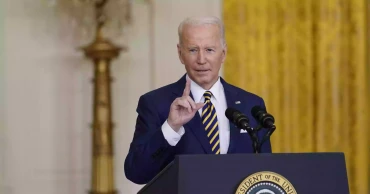
Biden plans public events blitz as White House pushes back on pressure to leave the race
The White House announced Tuesday that President Joe Biden will meet with congressional leaders and Democratic governors, sit for a network TV interview and hold a press conference in the coming days, a blitz designed to push back against growing pressure for the 81-year-old president to step aside in the 2024 race after his disastrous performance in last week’s debate with Republican Donald Trump.
“We really want to turn the page on this,” White House press secretary Karine Jean-Pierre said of the intensifying calls for Biden to bow out of the race. She added that the president had no intention of stepping aside, characterizing his debate failings as simply evidence of “a bad night” when he had a cold.
During a campaign event later Tuesday, Biden blamed it on jet lag after two back-to-back European trips. “I wasn’t very smart. I decided to travel around the world a couple of times," he said. The president added that he “didn’t listen to my staff” about travel and joked that he “fell asleep on stage” during the debate.
But Democratic leaders were increasingly signaling that they were not buying White House attempts to brush off Biden's performance in the face-off as a momentary lapse, after he gave halting and nonsensical answers and trailed off at times.
There's growing anxiety among donors and on Capitol Hill about the president's ability to win come November, according to people who spoke to The Associated Press on condition of anonymity to discuss internal conversations. And it's not helping that Biden has yet to reach out to legislators, who are growing increasingly frustrated that the White House has not satisfactorily explained how such a seasoned politician could have performed so badly.
Questions swirled about whether this was an isolated incident or part of a pattern. Two people who spend time with Biden behind closed doors described him similarly: He was often very sharp and focused. But he also had moments, particularly later in the evening, when his thoughts seemed jumbled and he'd trail off mid-sentence or seem confused. Those people spoke to The Associated Press on condition of anonymity to discuss the president's interactions behind closed doors.
Here's a look at some of the false claims made during Biden and Trump's first debate
Former House Speaker Nancy Pelosi told MSNBC that she believes “it is a legitimate question” whether Biden’s performance was just “an episode or is this a condition.”
“When people ask that question, it’s legitimate — of both candidates,” Pelosi said.
But she did not go so far as to ask him to step aside. Pelosi said she had not spoken with Biden since the debate, but she emphasized that the president is on “top of his game, in terms of knowing the issues and what is at stake.” And a spokesperson later said Pelosi had full confidence in Biden and "looks forward to attending his inauguration on January 20, 2025.”
Rep. Lloyd Doggett of Texas became the first Democratic member of Congress to publicly call for Biden to step down. Doggett, who is 77 and has been a fixture on Capitol Hill since the mid-1990s, said Biden should “make the painful and difficult decision” to withdraw, citing the president's inability to “effectively defend his many accomplishments” in the debate.
Rep. Jared Golden, a moderate Democrat from Maine, said in a local newspaper column Tuesday that the debate “didn’t rattle me as it has others, because the outcome of this election has been clear to me for months: While I don’t plan to vote for him, Donald Trump is going to win. And I’m OK with that.”
Biden has acknowledged that he had performed poorly, telling supporters he was not as young as he once was, but that he knew how to deliver doing the job. But allies worry that the next inevitable misstep by Biden — even if it’s not at the magnitude of his debate disaster — will resurrect voter concerns about the president’s fitness for office.
The president has been encouraged by his family to stay in the race. The two people who carry the most weight — first lady Jill Biden and his son Hunter — have said he should keep fighting. Hunter Biden is in Washington to celebrate the July 4th holiday and stopped by at least one meeting with his father briefly, according to two people with direct knowledge of the events who spoke to the AP on condition of anonymity to discuss a private meeting.
Jean-Pierre said Biden, who has not taken questions from reporters since Thursday night’s debate, would meet with top congressional leaders, and on Wednesday would host a meeting with Democratic governors. White House Chief of Staff Jeff Zeints was set to speak again with Senate Majority Leader Chuck Schumer Tuesday afternoon, one of the people said.
Biden also agreed to sit for an interview Friday with ABC’s George Stephanopoulos that will air at least in part later that day. He has planned trips to Wisconsin on Friday and Philadelphia on Sunday. And he will hold a press conference during the NATO summit in Washington next week.
The White House was also holding an all-staff meeting on Wednesday, billed as a morale-booster following the debate and a chance for the senior team to keep the staff focused around governing, according to three people familiar with the details who spoke to The Associated Press on condition of anonymity to discuss a private meeting.
US Supreme Court rules ex-presidents have broad immunity, dimming chance of a pre-election Trump trial
The president's stepped-up schedule comes after a private discussion within Biden’s campaign about what can be done to counteract the damaging impression left by last week’s debate. On Monday, Biden met with emergency management workers in Washington, jauntily walking the room and smiling and joking as he thanked the teams for their work.
“We’re going to get out there, across the country. Americans are going to see him for themselves," Jean-Pierre said at a White House briefing, rejecting any suggestion that the president undergo cognitive testing or provide additional information on his medical condition.
When asked whether the president had a degenerative illness or dementia, Jean-Pierre said: “No. And I hope you’re asking the other guy the same question,” she said, referring to Trump, who is 78 and once challenged Biden to a cognitive test, only to confuse who administered the test to him in the next sentence.
Biden is trying to keep the focus on Trump, as he has throughout the campaign. In remarks Monday, he drew a sharp contrast with the presumptive Republican nominee on obeying the rule of law. He said the Supreme Court ruling that granted Trump and other presidents broad immunity would make an unchecked Trump “more emboldened to do whatever he wants” if he regains the White House.
Part of the anxiety for Democrats right now, some of the people said, is that with the focus so squarely on Biden, there has been less attention paid to Trump, whose debate performance was riddled with falsehoods about the Jan. 6, 2021 Capitol riot, Democrats’ views on abortion rights and a 2017 neo-Nazi rally in which he said, “You had some very bad people in that group, but you also had people that were very fine people, on both sides.”
1 year ago

US Supreme Court rules ex-presidents have broad immunity, dimming chance of a pre-election Trump trial
The Supreme Court on Monday ruled for the first time that former presidents have broad immunity from prosecution, extending the delay in the Washington criminal case against Donald Trump on charges he plotted to overturn his 2020 presidential election loss and all but ending prospects the former president could be tried before the November election.
In a historic 6-3 ruling, the court’s conservative majority, including the three justices appointed by Trump, narrowed the case against him and returned it to the trial court to determine what is left of special counsel Jack Smith’s indictment.
Trump celebrated a “BIG WIN” on X. President Joe Biden said the justices set “a dangerous precedent (that) undermines the rule of this nation.”
The ruling reflected a muscular view of presidential power, and left dissenting judges to criticize it as undermining a core democratic principle that no person is above the law.
The court’s decision highlighted how the justices have been thrust into an impactful role in the November presidential election. Earlier, they had rejected efforts to bar him from the ballot because of his actions following the 2020 election. The court last week also limited an obstruction charge faced by Trump and used against hundreds of his supporters who stormed the Capitol on Jan. 6, 2021. The split among the justices also in many ways mirrored the political divide in the country.
Here's a look at some of the false claims made during Biden and Trump's first debate
“Under our constitutional structure of separated powers, the nature of presidential power entitles a former president to absolute immunity from criminal prosecution for actions within his conclusive and preclusive constitutional authority,” Chief Justice John Roberts wrote for the court. “And he is entitled to at least presumptive immunity from prosecution for all his official acts. There is no immunity for unofficial acts.”
The chief justice insisted that the president “is not above the law.” But in a fiery dissent for the court’s three liberals, Justice Sonia Sotomayor wrote, “In every use of official power, the President is now a king above the law.”
Reading from her opinion in the courtroom, Sotomayor said, “Because our Constitution does not shield a former president from answering for criminal and treasonous acts, I dissent.” Sotomayor said the decision “makes a mockery of the principle, foundational to our Constitution and system of government, that no man is above the law.”
The protection afforded presidents by the court, she said, “is just as bad as it sounds, and it is baseless.”
Trump posted in all capital letters on his social media network shortly after the decision was released: “BIG WIN FOR OUR CONSTITUTION AND DEMOCRACY. PROUD TO BE AN AMERICAN!”
Biden, in evening remarks from the White House, cited accepted restraints on presidential power all the way back to George Washington and bemoaned that “for all practical purposes, today’s decision almost certainly means that there are virtually no limits on what a president can do.”
Smith’s office declined to comment on the ruling.
Senate Majority Leader Chuck Schumer denounced the ruling as “a disgraceful decision,” made with the help of the three justices that Trump appointed.
“It undermines SCOTUS’s credibility and suggests political influence trumps all in our courts today,” the New York Democrat said on X.
The justices knocked out one aspect of the indictment. The opinion found Trump is “absolutely immune” from prosecution for alleged conduct involving discussions with the Justice Department.
Trump is also “at least presumptively immune” from allegations that he tried to pressure Vice President Mike Pence to reject certification of Democrat Joe Biden’s electoral vote win on Jan. 6, 2021. Prosecutors can try to make the case that Trump’s pressure on Pence still can be part of the case against him, Roberts wrote.
The court directed a fact-finding analysis on one of the more striking allegations in the indictment -- that Trump participated in a scheme to enlist fake electors in battleground states won by Biden who would falsely assert that Trump had won. Both sides had dramatically different interpretations as to whether that effort could be construed as official, and the conservative justices said determining which side is correct would require additional analysis at the trial court level.
Supreme Court makes it harder to charge Capitol riot defendants with obstruction, charge Trump faces
Roberts’ opinion further restricted prosecutors by prohibiting them from using any official acts as evidence in trying to prove a president’s unofficial actions violated the law. One example not relevant to this case but which came up in arguments was the hypothetical payment of a bribe in return for an ambassadorial appointment.
Under Monday’s decision, a former president could be prosecuted for accepting a bribe, but prosecutors could not mention the official act, the appointment, in their case.
Justice Amy Coney Barrett, who joined the rest of Roberts’ opinion, parted company on this point. “The Constitution does not require blinding juries to the circumstances surrounding conduct for which Presidents can be held liable,” Barrett wrote.
She also described as unnecessary the analysis of the fake electors claim. “I see no plausible argument for barring prosecution of that alleged conduct,” Barrett wrote.
The work of figuring out how to proceed will fall to U.S. District Judge Tanya Chutkan, who would preside over Trump’s trial.
Trump still could face a trial, said Notre Dame law professor Derek Muller. “But the fact remains that it is almost impossible to happen before the election.”
David Becker, an election law expert and the executive director of the nonprofit Center for Election Innovation and Research, called the breadth of immunity granted to Trump “incredibly broad” and “deeply disturbing.”
“Almost anything that a president does with the executive branch is characterized as an official act,” he said on a call with reporters following the ruling. He said that “for any unscrupulous individual holding the seat of the Oval Office who might lose an election, the way I read this opinion is it could be a roadmap for them seeking to stay in power.”
The ruling was the last of the term, and it came more than two months after the court heard arguments, far slower than in other epic high court cases involving the presidency, including the Watergate tapes case.
The Republican former president has denied doing anything wrong and has said this prosecution and three others are politically motivated to try to keep him from returning to the White House.
In May, Trump became the first former president to be convicted of a felony, in a New York court. He was found guilty of falsifying business records to cover up a hush money payment made during the 2016 presidential election to a porn actor who says she had sex with him, which he denies. After Monday’s ruling, Trump’s lawyers asked the New York judge who presided over that trial to set aside his conviction and delay his sentencing. He still faces three other indictments.
Smith is leading the two federal inquiries of the former president, both of which have led to criminal charges. The Washington case focuses on Trump’s alleged efforts to overturn the 2020 election after he lost to Biden. The case in Florida revolves around the mishandling of classified documents. A separate case, in Georgia, also turns on Trump’s actions after his defeat in 2020.
If Trump’s Washington trial does not take place before the 2024 election and he is not given another four years in the White House, he presumably would stand trial soon thereafter.
But if he wins, he could appoint an attorney general who would seek the dismissal of this case and the other federal prosecution he faces. He could also attempt to pardon himself if he reclaims the White House. He could not pardon himself for the conviction in state court in New York.
The Supreme Court that heard the case included three justices appointed by Trump — Neil Gorsuch, Brett Kavanaugh and Barrett — and two justices who opted not to step aside after questions were raised about their impartiality.
Thomas’ wife, Ginni, attended the rally near the White House where Trump spoke on Jan. 6, 2021, though she did not go the Capitol when a mob of Trump supporters attacked it soon after. Following the 2020 election, she called the outcome a “heist” and exchanged messages with White House chief of staff Mark Meadows, urging him to stand firm with Trump as he falsely claimed that there was widespread election fraud.
Justice Samuel Alito said there was no reason for him to step aside from the cases following reports by The New York Times that said flags similar to those carried by the Jan. 6 rioters flew above his homes in Virginia and on the New Jersey shore. His wife, Martha-Ann Alito, was responsible for flying both the inverted American flag in January 2021 and the “Appeal to Heaven” banner in the summer of 2023, he said in letters to Democratic lawmakers responding to their recusal demands.
Before the Supreme Court got involved, a trial judge and a three-judge appellate panel had ruled unanimously that Trump could be prosecuted for actions undertaken while in the White House and in the run-up to Jan. 6.
Chutkan ruled against Trump’s immunity claim in December. In her ruling, Chutkan said the office of the president “does not confer a lifelong ‘get-out-of-jail-free’ pass.”
1 year ago
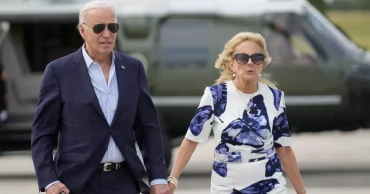
Gathered at Camp David, Biden’s family tells him to stay in the presidential race and keep fighting
President Joe Biden's family used a gathering at Camp David to urge him to stay in the race and keep fighting despite his dreadful debate performance, and some members criticized how his staff prepared him for the faceoff, according to four people familiar with the discussions.
Biden spent Sunday sequestered with first lady Jill Biden, his children and his grandchildren. It was a previously scheduled trip to the presidential retreat in Maryland for a photo shoot with Annie Leibovitz for the upcoming Democratic National Convention.
But the gathering was also an exercise in trying to figure out how to quell Democratic anxiety that has exploded following Thursday's performance.
Here's a look at some of the false claims made during Biden and Trump's first debate
While his family was aware of how poorly he performed against Donald Trump, they also continue to think he's the best person to beat the Republican presumptive nominee. They also believe he is capable of doing the job of president for another four years, according to the people who were not authorized to speak publicly about internal discussions and spoke to The Associated Press on condition of anonymity.
Among the most vocal: Jill Biden and son Hunter, whom the president has long gone to for counsel and advice. Both believe the president shouldn't bow out when he's down, and believe that he can come back from what they see as one subpar performance. The family questioned how he was prepared for the debate by staff and wondered if they could have done something better, the people said.
US and Europe warn Lebanon's Hezbollah to ease strikes on Israel and back off from wider Mideast war
Biden's campaign has spent the days since the debate — where he appeared raspy, trailed off, and at times gave convoluted answers — working to keep donors and surrogates on board as Democrats increasingly questioned whether he should stay in the race.
At this point in the delegate process, Biden would likely have to decide to drop out for there to be a new nominee. And the people he listens to most in the world — his wife and son — are telling him to stay in.
Even before the debate, the age of the 81-year-old Democratic president had been a liability with voters, and the prime-time faceoff appeared to reinforce the public's deep-seated concerns before perhaps the largest audience he will have in the four months until Election Day. CNN said more than 51 million people watched the debate.
While the president was huddled with his family, prominent Democrats rallied to deliver a public show of support for his campaign on Sunday.
"I do not believe that Joe Biden has a problem leading for the next four years," said one close ally, Democratic Rep. James Clyburn of South Carolina. "Joe Biden should continue to run on his record."
Biden concedes debate fumbles but declares he will defend democracy. Dems stick by him — for now
Sen. Raphael Warnock, a Georgia Democrat and Baptist minister, said there had been "more than a few Sundays when I wish I had preached a better sermon," relating the experience to Biden's debate performance.
"But after the sermon was over, it was my job to embody the message, to show up for the people that I serve. And that's what Joe Biden has been doing his entire life," Warnock said. It was an echo of the message from other supporters that Biden had a bad debate, but a lifetime of good governance.
Warnock, like Clyburn and others, pivoted to Trump's many falsehoods during the debate — lapses that Biden and the debate moderators often failed to fact check from the stage — including about the Jan. 6, 2021, attack on the Capitol by Trump supporters, immigration and the outcome of the 2020 election.
"Whenever his mouth was moving, he was lying," Warnock said of Trump.
But concern simmered among some Democrats that Biden's campaign and the Democratic National Committee were not taking seriously enough the impact of the debate.
Former Iowa Sen. Tom Harkin, who served for more than two decades with Biden in the Senate, called the debate "a disaster from which Biden cannot recover."
Harkin suggested that Democratic senators in pivotal races and "maybe all incumbent Democratic Senators should pen a letter to Biden asking him to release his delegates and step aside so the convention can choose a new candidate," according to an email to supporters that was obtained by The Associated Press. It was first referenced in Iowa journalist Julie Gammack's column on Saturday, Iowa Potluck.
"This is a perilous time, and is more important than the ego or desires of Joe Biden to stay as President," Harkin concluded.
Rep. Jamie Raskin, D-Md., described "very honest, serious and rigorous conversations taking place at every level of our party ... about what to do."
But DNC Chairman Jaime Harrison and Biden's campaign manager, Julie Chavez Rodriguez, held a Saturday afternoon call with dozens of committee members across the country — a group of some of the most influential members of the party — where they offered a rosy assessment of the path forward and gave no opportunity for others on the call to respond with questions.
Multiple committee members on the call, most granted anonymity to talk about the private discussion, described feeling like they were being asked to ignore a serious predicament.
"There were a number of things that could have been said in addressing the situation. But we didn't get that. We were being gaslit," said Joe Salazar, an elected DNC member from Colorado, who was on the call.
1 year ago
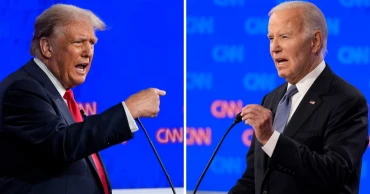
Here's a look at some of the false claims made during Biden and Trump's first debate
President Joe Biden and former President Donald Trump traded barbs and a variety of false and misleading information as they faced off in their first debate of the 2024 election.
Trump falsely represented the Jan. 6 attack on the U.S. Capitol as a relatively small number of people who were ushered in by police and misstated the strength of the economy during his administration.
Biden, who tends to lean more on exaggerations and embellishments rather than outright lies, misrepresented the cost of insulin and overstated what Trump said about using disinfectant to address COVID. Here’s a look at the false and misleading claims on Thursday night by the two candidates.
JAN. 6
TRUMP: “They talk about a relatively small number of people that went to the Capitol and in many cases were ushered in by the police.”
THE FACTS: That's false. The attack on the U.S. Capitol was the deadliest assault on the seat of American power in over 200 years. As thoroughly documented by video, photographs and people who were there, thousands of people descended on Capitol Hill in what became a brutal scene of hand-to-hand combat with police.
In an internal memo on March 7, 2023, U.S. Capitol Police Chief J. Thomas Manger said that the allegation that “our officers helped the rioters and acted as ‘tour guides’” is “outrageous and false.” A Capitol Police spokesperson confirmed the memo’s authenticity to The Associated Press. More than 1,400 people have been charged with federal crimes stemming from the riot. More than 850 people have pleaded guilty to crimes, and 200 others have been convicted at trial.
TRUMP, on then-House Speaker Nancy Pelosi’s actions on Jan. 6: “Because I offered her 10,000 soldiers or National Guard and she turned them down."
THE FACTS: Pelosi did not direct the National Guard. Further, as the Capitol came under attack, she and then-Senate Majority leader Mitch McConnell called for military assistance, including from the National Guard.
The Capitol Police Board makes the decision on whether to call National Guard troops to the Capitol. It is made up of the House Sergeant at Arms, the Senate Sergeant at Arms and the Architect of the Capitol. The board decided not to call the guard ahead of the insurrection but did eventually request assistance after the rioting had already begun, and the troops arrived several hours later.
The House Sergeant at Arms reported to Pelosi and the Senate Sergeant at Arms reported to McConnell. There is no evidence that either Pelosi or McConnell directed the security officials not to call the guard beforehand. Drew Hammill, a then-spokesperson for Pelosi, said after the insurrection that Pelosi was never informed of such a request.
TAXES AND REGULATIONS
TRUMP, on Biden: “He wants to raise your taxes by four times.”
THE FACTS: That’s not accurate.
Trump has used that line at rallies, but it has no basis in fact. Biden actually wants to prevent tax increases on anyone making less than $400,000, which is the vast majority of taxpayers.
More importantly, Biden’s budget proposal does not increase taxes as much as Trump claims, though the increases are focused on corporations and the wealthy. Trump’s 2017 tax cuts for individuals are set to expire after 2025, because they were not fully funded when they became law.
TRUMP, referring to Jan. 6, 2021, the day a mob of his supporters stormed the Capitol in an effort to stop the certification of Biden’s victory: “On January 6th we had the lowest taxes ever. We had the lowest regulations ever on January 6th.”
THE FACTS: The current federal income tax was only instituted in 1913, and tax rates have fluctuated significantly in the decades since. Rates were lower in the 1920s, just prior to the Great Depression. Trump did cut taxes during his time in the White House, but the rates weren't the lowest in history.
Government regulations have also ebbed and flowed in the country’s history, but there’s been an overall increase in regulations as the country modernized and its population grew. There are now many more regulations covering the environment, employment, financial transactions and other aspects of daily life. While Trump slashed some regulations, he didn’t take the country back to the less regulated days of its past.
INSULIN
BIDEN: “It’s $15 for an insulin shot, as opposed to $400.”
THE FACTS: No, that’s not exactly right. Out-of-pocket insulin costs for older Americans on Medicare were capped at $35 in the 2022 Inflation Reduction Act that President Joe Biden signed into law. The cap took effect last year, when many drugmakers announced they would lower the price of the drug to $35 for most users on private insurance. But Biden regularly overstates that many people used to pay up to $400 monthly. People with diabetes who have Medicare or private insurance paid about $450 yearly prior to the law, a Department of Health and Human Services study released in December 2022 found.
CLIMATE CHANGE
TRUMP, touting his environmental record, said that “during my four years, I had the best environmental numbers ever” and that he supports “immaculate” air and water.
THE FACTS: That’s far from the whole story. During his presidency, Trump rolled back some provisions of the Clean Water Act, eased regulations on coal, oil and gas companies and pulled the U.S. out of the Paris climate accord. When wildfires struck California in 2020, Trump dismissed the scientific consensus that climate change had played a role. Trump also dismissed scientists’ warnings about climate change and routinely proposed deep cuts to the Environmental Protection Agency. Those reductions were blocked by Democratic and Republican lawmakers.
ABORTION
TRUMP: “The problem they have is they’re radical because they will take the life of a child in the eighth month, the ninth month, and even after birth, after birth.”
THE FACTS: Trump inaccurately referred to abortions after birth. Infanticide is criminalized in every state, and no state has passed a law that allows killing a baby after birth.
Abortion rights advocates say terms like this and “late-term abortions” attempt to stigmatize abortions later in pregnancy. Abortions later in pregnancy are exceedingly rare. In 2020, less than 1% of abortions in the United States were performed at or after 21 weeks, according to the Centers for Disease Control and Prevention.
Abortions later in pregnancy also are usually the result of serious complications, such as fetal anomalies, that put the life of the woman or fetus at risk, medical experts say. In most cases, these are also wanted pregnancies, experts say.
RUSSIA
TRUMP on Wall Street Journal reporter Evan Gershkovich, who was detained in Russia: “He should have had him out a long time ago, but Putin’s probably asking for billions and billions of dollars because this guy pays it every time.”
THE FACTS: Trump is wrong to say that Biden pays any sort of fee “every time” to secure the release of hostages and wrongfully detained Americans. There’s also zero evidence that Putin is asking for any money in order to free Gershkovich. Just like in the Trump administration, the deals during the Biden administration that have brought home hostages and detainees involved prisoner swaps -- not money transfers.
Trump’s reference to money appeared to be about the 2023 deal in which the U.S. secured the release of five detained Americans in Iran after billions of dollars in frozen Iranian assets were transferred from banks in South Korea to Qatar. The U.S. has said that that the money would be held in restricted accounts and will only be able to be used for humanitarian goods, such as medicine and food.
COVID-19
BIDEN: Trump told Americans to “inject bleach” into their arms to treat COVID-19.
THE FACTS: That’s overstating it. Rather, Trump asked whether it would be possible to inject disinfectant into the lungs.
“And then I see the disinfectant, where it knocks it out in one minute,” he said at an April 2020 press conference. “And is there a way we can do something like that, by injection inside or almost a cleaning, because you see it gets in the lungs and it does a tremendous number on the lungs, so it’d be interesting to check that, so that you’re going to have to use medical doctors with, but it sounds interesting to me. So, we’ll see, but the whole concept of the light, the way it kills it in one minute. That’s pretty powerful.”
SUPER PREDATORS
TRUMP: “What he’s done to the Black population is horrible, including the fact that for 10 years he called them ‘super predators.’ … We can’t forget that - super predators … And they’ve taken great offense at it.”
THE FACTS: This oft-repeated claim by Trump dating back to the 2020 campaign is untrue. It was Hillary Clinton, then the first lady, who used the term “super predator” to advocate for the 1994 crime bill that Biden co-authored more than thirty years ago. Biden did warn of “predators” in a floor speech in support of his bill.
MIGRANTS
TRUMP, referring to Biden: “He’s the one that killed people with a bad border and flooding hundreds of thousands of people dying and also killing our citizens when they come in.”
THE FACTS: A mass influx of migrants coming into the U.S. illegally across the southern border has led to a number of false and misleading claims by Trump. For example, he regularly claims other countries are emptying their prisons and mental institutions to send to the U.S. There is no evidence to support that.
Trump has also argued the influx of immigrants is causing a crime surge in the U.S., although statistics actually show violent crime is on the way down.
There have been recent high-profile and heinous crimes allegedly committed by people in the country illegally. But FBI statistics do not separate out crimes by the immigration status of the assailant, nor is there any evidence of a spike in crime perpetrated by migrants, either along the U.S.-Mexico border or in cities seeing the greatest influx of migrants, like New York. Studies have found that people living in the country illegally are less likely than native-born Americans to have been arrested for violent, drug and property crimes. For more than a century, critics of immigration have sought to link new arrivals to crime. In 1931, the Wickersham Commission did not find any evidence supporting a connection between immigration and increased crime, and many studies since then have reached similar conclusions.
Texas is the only state that tracks crimes by immigration status. A 2020 study published by the National Academy of Sciences found “considerably lower felony arrest rates” among people in the United States illegally than legal immigrants or native-born.
Some crime is expected given the large population of immigrants. There were an estimated 10.5 million people in the country illegally in 2021, according to the latest estimate by Pew Research Center, a figure that has almost certainly risen with large influxes at the border. In 2022, the Census Bureau estimated the foreign-born population at 46.2 million, or nearly 14% of the total, with most states seeing double-digit percentage increases in the last dozen years.
CHARLOTTESVILLE
BIDEN, referring to Trump after the deadly white nationalist rally in Charlottesville, Virginia, in 2017: “The one who said I think they’re fine people on both sides."
THE FACTS: Trump did use those words to describe attendees of the deadly rally, which was planned by white nationalists. But as Trump supporters have pointed out, he also said that day that he wasn’t talking about the neo-Nazis and white nationalists in attendance.
“You had some very bad people in that group,” Trump said during a news conference a few days after the rally, “But you also had people that were very fine people, on both sides.”
He then added that he wasn’t talking about “the neo-Nazis and the white nationalists, because they should be condemned totally.” Instead, he said, the press had been unfair in its treatment of protesters who were there to innocently and legally protest the removal of a statue of Confederate Gen. Robert E. Lee.
The gathering planned by white nationalists shocked the nation when it exploded into chaos: violent brawling in the streets, racist and antisemitic chants, smoke bombs, and finally, a car speeding into a crowd of counter-protesters, killing one and injuring dozens more.
ECONOMY
TRUMP: We had the greatest economy in history.”
THE FACTS: That’s not accurate. First of all, the pandemic triggered a massive recession during his presidency. The government borrowed $3.1 trillion in 2020 to stabilize the economy. Trump had the ignominy of leaving the White House with fewer jobs than when he entered.
But even if you take out issues caused by the pandemic, economic growth averaged 2.67% during Trump’s first three years. That’s pretty solid. But it’s nowhere near the 4% averaged during Bill Clinton’s two terms from 1993 to 2001, according to the Bureau of Economic Analysis. In fact, growth has been stronger so far under Biden than under Trump.
Trump did have the unemployment rate get as low as 3.5% before the pandemic. But again, the labor force participation rate for people 25 to 54 — the core of the U.S. working population — was higher under Clinton. The participation rate has also been higher under Biden than Trump.
Trump also likes to talk about how low inflation was under him. Gasoline fell as low as $1.77 a gallon. But, of course, that price dip happened during pandemic lockdowns when few people were driving. The low prices were due to a global health crisis, not Trump’s policies.
Similarly, average 30-year mortgage rates dipped to 2.65% during the pandemic. Those low rates were a byproduct of Federal Reserve efforts to prop up a weak economy, rather than the sign of strength that Trump now suggests it was.
MILITARY DEATHS
BIDEN: “The truth is, I’m the only president this century that doesn’t have any — this decade — any troops dying anywhere in the world like he did."
”THE FACTS: At least 16 service members have been killed in hostile action since Biden took office in January 2021. On Aug. 26, 2021, 13 died during a suicide bombing at Hamid Karzai International Airport in Kabul, Afghanistan, as U.S. troops withdrew from the country. An enemy drone killed three U.S. service members at a desert base in Jordan on Jan. 28 of this year.
PRESIDENTIAL RECORD
BIDEN: “159, or 58, don’t know an exact number, presidential historians, they’ve had meetings and they voted, who is the worst president in American history … They said he was the worst in all American history. That’s a fact. That’s not conjecture."
THE FACTS: That’s almost right, but not quite. The survey in question, a project from professors at the University of Houston and Coastal Carolina University, included 154 usable responses, from 525 respondents invited to participate.
GEORGE FLOYD PROTESTS
TRUMP, on Minneapolis protests after the killing of George Floyd: “If I didn’t bring in the National Guard, that city would have been destroyed.”
THE FACTS: Trump didn’t call the National Guard into Minneapolis during the unrest following the death of George Floyd. Minnesota Gov. Tim Walz deployed the National Guard to the city.
1 year ago

US and Europe warn Lebanon's Hezbollah to ease strikes on Israel and back off from wider Mideast war
U.S., European and Arab mediators are pressing to keep stepped-up cross-border attacks between Israel and Lebanon's Hezbollah militants from spiraling into a wider Middle East war that the world has feared for months.
Hopes are lagging for a cease-fire anytime soon in Israel's conflict with Hamas in Gaza that would calm attacks by Hezbollah and other Iranian-allied militias. With that in mind, American and European officials are delivering warnings to Hezbollah, which is far stronger than Hamas but seen as overconfident, about taking on the military might of Israel, current and former diplomats say.
They are warning that the group should not count on the United States or anyone else being able to hold off Israeli leaders if they decide to execute battle-ready plans for an offensive into Lebanon. And Hezbollah should not count on its fighters' ability to handle whatever would come next.
On both sides of the Lebanese border, escalating strikes between Israel and Hezbollah, one of the region's best-armed fighting forces, appeared at least to level off this past week. While daily strikes still pound the border area, the slight shift offered hope of easing immediate fears, which had prompted the U.S. to send an amphibious assault ship with a Marine expeditionary force to join other warships in the area in hopes of deterring a wider conflict.
It's not clear whether Israel or Hezbollah has decided to ratchet down attacks to avoid triggering an Israeli invasion into Lebanon, said Gerald Feierstein, a former senior U.S. diplomat in the Middle East. Despite this past week's plateauing of hostilities, “it certainly seems the Israelis are still ... arranging themselves in the expectation that there will be some kind of conflict ... an entirely different magnitude of conflict," he said.
The message being delivered to Hezbollah is “don't think that you're as capable as you think you are,” he said.
Beginning the day after Hamas' Oct. 7 attacks on Israel triggered the war in Gaza, Hezbollah has launched rockets into northern Israel and vowed to continue until a cease-fire takes hold. Israel has hit back, with the violence forcing tens of thousands of civilians from the border in both countries. Attacks intensified this month after Israel killed a top Hezbollah commander and Hezbollah responded with some of its biggest missile barrages.
Thousands of Iran-backed fighters offer to join Hezbollah in its fight against Israel
U.N. humanitarian chief Martin Griffiths used the word “apocalyptic” to describe a war that could result. Both Israel and Hezbollah, the dominant force in politically fractured Lebanon, have the power to cause heavy casualties.
“Such a war would be a catastrophe for Lebanon," Defense Secretary Lloyd Austin said as he met recently with Israeli Defense Minister Yoav Gallant at the Pentagon. “Another war between Israel and Hezbollah could easily become a regional war, with terrible consequences for the Middle East.”
Gallant, in response, said, “We are working closely together to achieve an agreement, but we must also discuss readiness on every possible scenario.”
Analysts expect other Iran-allied militias in the region would respond far more forcefully than they have for Hamas, and some experts warn of ideologically motivated militants streaming into the region to join in. Europeans fear destabilizing refugee flows.
While Iran, which is preoccupied with a political transition at home, shows no sign of wanting a war now, it sees Hezbollah as its strategically vital partner in the region — much more so than Hamas — and could be drawn in.
"Obviously if it does look like things are going seriously south for the Israelis, the U.S. will intervene,” Feierstein said. “I don't think that they would see any alternative to that.”
While the U.S. helped Israel knock down a barrage of Iranian missiles and drones in April, the U.S. likely would not do as well assisting Israel's defense against any broader Hezbollah attacks, said Gen. CQ Brown, chairman of the Joint Chiefs of Staff. It is harder to fend off the shorter-range rockets that Hezbollah fires routinely across the border, he said.
The leader of Lebanon's Hezbollah militant group warns archenemy Israel against wider war
The Israeli army is stretched after a nearly 9-month war in Gaza, and Hezbollah holds an estimated arsenal of some 150,000 rockets and missiles capable of striking anywhere in Israel. Israeli leaders, meanwhile, have pledged to unleash Gaza-like scenes of devastation on Lebanon if a full-blown war erupts.
White House senior adviser Amos Hochstein, President Joe Biden's point person on Israel-Hezbollah tensions, has not been successful so far in getting the two sides to dial back the attacks.
The French, who have ties as Lebanon's former colonial power, and other Europeans also are mediating, along with the Qataris and Egyptians.
White House officials have blamed Hezbollah for escalating tensions and said it backs Israel’s right to defend itself. The Biden administration also has told the Israelis that opening a second front is not in their interest. That was a point hammered home to Gallant during his latest talks in Washington with Secretary of State Antony Blinken, Austin, CIA Director William Burns, national security adviser Jake Sullivan, Hochstein and others.
“We’re going to continue to help Israel defend itself; that’s not going to change,” White House national security spokesman John Kirby said. “But as for a hypothetical — specifically with respect to the northern border line ... — again, we want to see no second front opened, and we want to see if we can’t resolve the tensions out there through diplomatic processes.”
White House officials, however, are not discounting the real possibility that a second front in the Mideast conflict could open.
In conversations with Israeli and Lebanese officials and other regional stakeholders, there is agreement that “a major escalation is not in anybody’s interest,” a senior Biden administration official said.
Hezbollah fires heavy rockets at northern Israel after deadliest day of Israeli strikes on Lebanon
The official, who was not authorized to comment publicly about White House deliberations and spoke on condition of anonymity, bristled at the “purported logic” of Hezbollah leader Hassan Nasrallah arguing that Israel would see an end to Hezbollah attacks by reaching a cease-fire agreement with Hamas in Gaza.
But the official also acknowledged that an elusive cease-fire deal in Gaza would go a long way in quieting tensions on the Israel-Lebanon border.
Biden introduced a three-phase deal four weeks ago that would lead to an extended truce and the release of Israeli hostages and Palestinian prisoners, but negotiations between Israel and Hamas appear to have stalled. A senior Biden administration official said Saturday that the U.S. has presented new language to Egypt and Qatar intermediaries aimed at trying to jumpstart the negotiations. The official spoke on condition of anonymity to discuss an effort that the White House has yet to publicly unveil.
Without a cease-fire, there's still hope that talked-of Israeli plans to wind down major combat in the southern city of Rafah and elsewhere in Gaza could lead Hezbollah to temper its firing of rockets into Israel, said Randa Slim, a senior fellow at the Middle East Institute.
But without a cease-fire in Gaza, any temporary calm on the Lebanon-Israeli border “is not enough," Slim said.
1 year ago