USA

Supreme Court makes it harder to charge Capitol riot defendants with obstruction, charge Trump faces
The Supreme Court on Friday made it harder to charge Capitol riot defendants with obstruction, a charge that also has been brought against former President Donald Trump.
The justices ruled 6-3 that the charge of obstructing an official proceeding, enacted in 2002 in response to the financial scandal that brought down Enron Corp., must include proof that defendants tried to tamper with or destroy documents. Only some of the people who violently attacked the Capitol on Jan. 6, 2021, fall into that category.
The decision could be used as fodder for claims by Trump and his Republican allies that the Justice Department has treated the Capitol riot defendants unfairly.
It's unclear how the court's decision will affect the case against Trump in Washington, although special counsel Jack Smith has said the charges faced by the former president would not be affected.
The high court returned the case of former Pennsylvania police officer Joseph Fischer to a lower court to determine if Fischer can be charged with obstruction. Fischer has been indicted for his role in disrupting Congress’ certification of Democrat Joe Biden’s 2020 presidential election victory over Trump.
Fischer is among about 350 people who have been charged with obstruction. Some pleaded guilty to or were convicted of lesser charges.
Chief Justice John Roberts wrote the court's opinion, joined by conservative Justices Samuel Alito, Neil Gorsuch, Brett Kavanaugh and Clarence Thomas, and by liberal Justice Ketanji Brown Jackson.
Reading the obstruction statute broadly "would also criminalize a broad swath of prosaic conduct, exposing activists and lobbyists to decades in prison,” Roberts wrote.
Justice Amy Coney Barrett dissented, along with Justices Elena Kagan and Sonia Sotomayor.
Roughly 170 Capitol insurrection defendants have been convicted of obstructing or conspiring to obstruct the Jan. 6 joint session of Congress, including the leaders of two far-right extremist groups, the Proud Boys and the Oath Keepers. A number of defendants have had their sentencings delayed until after the justices rule on the matter.
Some rioters have even won early release from prison while the appeal was pending over concerns that they might end up serving longer than they should have if the Supreme Court ruled against the Justice Department. They include Kevin Seefried, a Delaware man who threatened a Black police officer with a pole attached to a Confederate battle flag as he stormed the Capitol. Seefried was sentenced last year to three years behind bars, but a judge recently ordered that he be released one year into his prison term while awaiting the Supreme Court’s ruling.
Most lower court judges who have weighed in have allowed the charge to stand. Among them, U.S. District Judge Dabney Friedrich, a Trump appointee, wrote that “statutes often reach beyond the principal evil that animated them.”
But U.S. District Judge Carl Nichols, another Trump appointee, dismissed the charge against Fischer and two other defendants, writing that prosecutors went too far. A divided panel of the federal appeals court in Washington reinstated the charge before the Supreme Court agreed to take up the case.
More than 1,400 people have been charged with Capitol riot-related federal crimes. Approximately 1,000 of them have pleaded guilty or been convicted by a jury or a judge after a trial.
The U.S. attorney’s office in Washington, which has handled Jan. 6 prosecutions, said no one who has been convicted of or charged with obstruction will be completely cleared because of the ruling. Every defendant also has other felony or misdemeanor charges, or both, prosecutors said.
For around 50 people who were convicted, obstruction was the only felony count, prosecutors said. Of those, roughly two dozen who still are serving their sentence are most likely to be affected by the ruling.
1 year ago
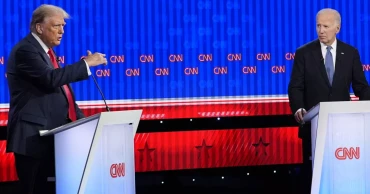
A halting Biden tries to confront Trump at debate but stirs Democratic panic about his candidacy
A raspy and sometimes halting President Joe Biden tried repeatedly to confront Donald Trump in their first debate ahead of the November election, as his Republican rival countered Biden's criticism by leaning into falsehoods about the economy, illegal immigration and his role in the Jan. 6, 2021, Capitol insurrection.
Biden’s uneven performance, particularly early in the debate, crystallized the concerns of many Americans that, at 81, he is too old to serve as president. It sparked a fresh round of calls for the Democrat to consider stepping aside as the party's nominee amid fears of a return of Trump to the White House.
Biden repeatedly tore into Trump in an apparent effort to provoke him, bringing up everything from the former president's recent felony conviction to his alleged insult of World War I veterans to his weight. The 78-year-old Trump declined to clearly state he would accept the results of the November election, four years after he promoted conspiracy theories about his loss that culminated in the Jan. 6 insurrection, and repeatedly misstated the record from his time in his office.
But Biden's delivery from the beginning of the debate drew the most attention afterward. Trump's allies immediately declared victory while prominent Democrats publicly questioned whether Biden could move forward.
“I think there was a sense of shock, actually, of how he came out at the beginning of this debate, how his voice sounded. He seemed a little disoriented. He did get stronger as the debate went on but by that time, I think the panic had set in,” said David Axelrod, a longtime advisor to former President Barack Obama, said on CNN immediately after. “And I think you’re going to hear discussions that, I don’t know will lead to anything, but there are going to be discussions about whether he should continue.”
Said Van Jones, another Democratic strategist, on CNN: “He did not do well at all.”
Rosemarie DeAngelis, a Democrat who watched the debate at a party in South Portland, Maine, said she felt Biden gave the right answers to Trump but “didn’t have the spark that we needed tonight.”
“That’s going to be the challenge going forward. This is only June, this is the first, but can he sustain?” she said. "That is going to be the challenge.”
Vice President Kamala Harris, speaking on CNN afterward, sought to defend the president's performance while acknowledging the criticism.
UNGA’s annual debate ends with call for just and equitable system to overcome hurdles
“There was a slow start, but there was a strong finish,” she said.
Biden repeatedly lost his train of thought
Biden began the night with a hoarse voice as he tried to defend his economic record and criticize Trump. A person familiar with the matter said Biden was suffering from a cold during the debate, adding that he tested negative for COVID-19.
Biden appeared to lose his train of thought while giving one answer, drifting from an answer on tax policy to health policy, at one point using the word “COVID,” and then saying, “excuse me, with, dealing with,” and he trailed off again.
“Look, we finally beat Medicare,” Biden said, as his time ran out on his answer.
He also fumbled on abortion rights, one of the most important issues for Democrats in this year’s election. He was unable to explain Roe v. Wade, the landmark Supreme Court ruling that legalized abortion nationwide. A conservative Supreme Court with three justices nominated by Trump overturned Roe two years ago.
When asked if he supports some restrictions on abortion, Biden said he “supports Roe v. Wade, which had three trimesters. The first time is between a woman and a doctor. Second time is between a doctor and an extreme situation. A third time is between the doctor, I mean, between the women and the state.”
He added that he thought doctors, not politicians, should make decisions about “women’s health.”
Biden began to give clearer answers as the debate progressed, still with a rasp, and attacked Trump’s record on issues like fighting climate change.
“The only existential threat to humanity is climate change, and he didn’t do a damn thing about it,” he said.
Trump sought to deflect blame for Jan. 6
The current president and his predecessor hadn’t spoken since their last debate weeks before the 2020 presidential election. Trump skipped Biden’s inauguration after leading an unprecedented and unsuccessful effort to overturn his loss that culminated in the Capitol riot by his supporters.
Trump equivocated on whether he would accept the results of the November election, saying he would accept them if the vote was “fair” and “legal,” repeating his baseless claims of widespread fraud and misconduct in his 2020 loss to Biden that he still denies.
Pressed on his actions on Jan. 6, 2021, Trump was unapologetic.
“On Jan. 6, we were respected all over the world, all over the world we were respected. And then he comes in and we’re now laughed at,” Trump said.
After he was prompted by a moderator to answer whether he violated his oath of office that day by rallying his supporters seeking to block the certification of Biden's Electoral College victory and not acting for hours to call them off as they raided the Capitol, Trump sought to blame then-House Speaker Nancy Pelo.
Debate Triumph: Anwar Girls College, Rangpur Cantonment excelsi.
Biden said Trump encouraged the supporters to go to the Capitol and sat in the White House without taking action as they fought with police officers.
“He didn’t do a damn thing and these people should be in jail,” Biden said. “They should be the ones that are being held accountable. And he wants to let them all out. And now he says that if he loses again, such a whiner that he is, that this could be a ‘bloodbath’?”
Trump then defended the people convicted and imprisoned for their role in the insurrection, saying to Biden, “What they’ve done to some people that are so innocent, you ought to be ashamed of yourself.”
Trump and Biden entered the night facing stiff headwinds, including a public weary of the tumult of partisan politics and broadly dissatisfied with both, according to polling. But the debate was highlighting how they have sharply different visions on virtually every core issue — abortion, the economy and foreign policy — and deep hostility toward each other.
Their personal animus quickly came to the surface. Biden got personal in evoking his son, Beau, who served in Iraq before dying of brain cancer. The president criticized Trump for reportedly calling Americans killed in battle “suckers and losers.” Biden told Trump, “My son was not a loser, was not a sucker. You’re the sucker. You’re the loser.”
Trump said he never said that — a line attributed to Trump by his former chief of staff — and slammed Biden for the chaotic withdrawal of U.S. forces from Afghanistan, calling it “the most embarrassing day in the history of our country’s life.”
Trump himself agreed to the withdrawal with the Taliban a year before he left office.
Trump says he will skip GOP presidential primary debates
Biden directly mentioned Trump’s conviction in the New York hush money trial, saying, “You have the morals of an alley cat," and referencing the allegations in the case that Trump had sex with a porn actress.
“I did not have sex with a porn star," replied Trump, who chose not to testify at his trial.
Pressed to defend rising inflation since he took office, Biden pinned it on the situation he inherited from Trump amid the COVID-19 pandemic.
Biden said that when Trump left office, “things were in chaos.” Trump disagreed, declaring that during his term in the White House, “Everything was rocking good.”
By the time Trump left office, America was still grappling with the pandemic and during his final hours in office, the death toll eclipsed 400,000. The virus continued to ravage the country and the death toll hit 1 million over a year later.
Trump was asked what he would do to make childcare more affordable. He used his answer to instead boast about how many people he fired during his term, including former FBI Director James Comey and criticized Biden for not firing people from his administration.
The age question roars back
Prior to the debate, about 6 in 10 U.S. adults (59%) say they were “very concerned” that Biden is too old to be president, according to Gallup data collected in June. Only 18% had the same level of concern about Trump. The poll found Biden’s age was also causing alarm among some Democrats: 31% said they were very concerned.
But Trump allies would enter the post-debate spin room triumphant. Trump senior adviser Chris LaCivita called it “the most lopsided win in debate history” and mocked the Biden campaign for saying the president had a cold.
California Gov. Gavin Newsom, a high-profile Democratic supporter of Biden, was pressed on whether he would consider stepping in for Biden. He dismissed the questions, saying, “I will never turn my back on him.”
He said he knows Biden and what he’s capable of and said, “I have no trepidation.”
Biden spent nearly a week at the Camp David presidential retreat preparing for the debate. Shortly before the debate, Biden started selling cans of water labeled, “Dark Brandon’s Secret Sauce,” on his campaign website, mocking the suggestions from Trump and his advisors that he would use drugs to enhance his performance.
Addressing supporters briefly at a watch party near the debate venue, Biden didn’t address his performance directly, but said, “let’s keep going,” and indicated he has no plans to leave the race.
“See you at the next one,” he said.
1 year ago
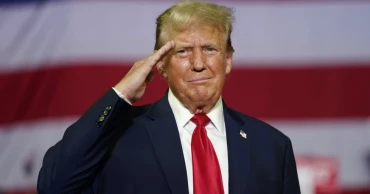
Judge alters Trump’s gag order, letting him talk about witnesses, jury after hush money conviction
A judge on Tuesday modified Donald Trump's gag order, freeing the former president to comment publicly about witnesses and jurors in the hush money criminal trial that led to his felony conviction, but keeping others connected to the former president’s case off limits at least until he is sentenced July 11.
Judge Juan M. Merchan’s ruling — just days before Trump’s debate Thursday with President Joe Biden — clears the presumptive Republican nominee to again go on the attack against his former lawyer Michael Cohen, porn actor Stormy Daniels and other witnesses. Trump was convicted May 30 of falsifying records to cover up a potential sex scandal, making him the first ex-president convicted of a crime.
Trump’s lawyers had urged Merchan to lift the gag order completely, arguing there was nothing to justify continued restrictions on Trump’s First Amendment rights after the trial’s conclusion. Trump has said that the gag order has prevented him from defending himself while Cohen and Daniels continue to pillory him.
The Manhattan district attorney’s office asked Merchan to keep the gag order’s ban on comments about jurors, court staffers and the prosecution team in place at least until Trump is sentenced on July 11, but said last week they would be OK with allowing Trump to comment about witnesses now that the trial is over. Prosecutors had opposed lifting the ban on comments about the jury.
Trump was convicted on 34 counts of falsifying business records arising from what prosecutors said was an attempt to cover up a hush money payment to Daniels just before the 2016 presidential election. She claims she had a sexual encounter with Trump a decade earlier, which he denies.
The crime is punishable by up to four years behind bars, but prosecutors have not said if they would seek incarceration and it’s unclear if Merchan would impose such a sentence. Other options include a fine or probation.
Following his conviction, Trump complained that he was under a “nasty gag order,” while also testing its limits. In remarks a day after his conviction, Trump referred to Cohen, as “a sleazebag,” though not by name.
In a subsequent Newsmax interview, Trump took issue with jury and its makeup, complaining about Manhattan, “It’s a very, very liberal democrat area so I knew we were in deep trouble,” and claiming: “I never saw a glimmer of a smile from the jury. No, this was a venue that was very unfair. A tiny fraction of the people are Republicans.”
Trump’s lawyers, who said they were under the impression the gag order would end with a verdict, wrote a letter to Merchan on June 4 asking him to lift the order.
Prosecutors urged Merchan to keep the gag order’s ban on comments about jurors and trial staff in place “at least through the sentencing hearing and the resolution of any post-trial motions.” They argued that the judge had “an obligation to protect the integrity of these proceedings and the fair administration of justice.”
Merchan issued Trump’s gag order on March 26, a few weeks before the start of the trial, after prosecutors raised concerns about the presumptive Republican presidential nominee’s propensity to assail people involved in his cases.
Merchan later expanded it to prohibit comments about his own family after Trump made social media posts attacking the judge’s daughter, a Democratic political consultant. The order did not prohibit comments about Merchan or District Attorney Alvin Bragg, whose office prosecuted the case.
During the trial, Merchan held Trump in contempt of court, fined him $10,000 for violating the gag order and threatened to put him in jail if he did it again.
In seeking to lift the gag order, Trump lawyers Todd Blanche and Emil Bove argued that Trump was entitled to “unrestrained campaign advocacy” in light of Biden’s public comments about the verdict, and Cohen and Daniels ′ continued public criticism.
1 year ago

Prosecutors drop most charges against student protesters who occupied Columbia University building
Dozens of Columbia University students who were arrested for occupying a campus building as part of a pro-Palestinian protest will have their criminal charges dropped, prosecutors said.
At a court hearing Thursday, the Manhattan district attorney's office said it would not pursue criminal charges for 31 of the 46 people initially arrested on trespassing charges inside the administration building.
Students and their allies seized the building, known as Hamilton Hall, on April 30, barricading themselves inside with furniture and padlocks in a major escalation of campus protests against the Israel-Hamas war.
At the request of university leaders, hundreds of officers with the New York Police Department stormed onto campus the following night, gaining access to the building through a second-story window and making dozens of arrests.
At Thursday’s hearing, prosecutors said they were dismissing charges against most of those arrested inside the building due in part to a lack of evidence tying them to specific acts of property damage and the fact that none of the students had criminal histories.
Stephen Millan, an assistant district attorney, noted that the protesters wore masks and blocked surveillance cameras in the building, making it difficult to “prove that they participated in damaging any Columbia University property or causing harm to anyone.”
All of those students are still facing disciplinary hearings and possible expulsion from the university.
Prosecutors said they would move forward with charges against one person involved in the building occupation, who is also accused of breaking an NYPD camera in a holding cell and burning an Israeli flag during a protest.
Thirteen others arrested in the building were offered deals that would have eventually led to the dismissal of their charges, but they refused them “in a show of solidarity with those facing the most extreme repression,” according to a statement by Columbia University Apartheid Divest, a coalition group representing protesters. Of that group of arrestees, most were alumni, prosecutors said, though two were students.
Nine other defendants who were arrested for occupying another building at City College of New York have also rejected proposed deals with prosecutors, according to the group. Prosecutors said Thursday that they would drop charges against nine others who were involved in the City College occupation.
Inquiries to an attorney representing many of the arrested protesters were not returned.
The building occupations came on the heels of a tent encampment at Columbia University that inspired a wave of similar demonstrations at college campuses across the country.
At Columbia, the group representing protesters have called on the administration cut ties with Israel and to grant amnesty to protesters, vowing that demonstrations would continue to “throughout the summer and beyond.”
1 year ago
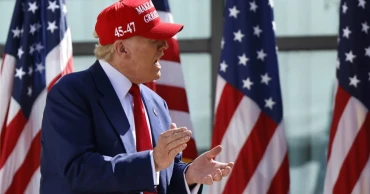
Trump proposes green cards for foreign grads of US colleges, departing from anti-immigrant rhetoric
Former President Donald Trump said in an interview posted Thursday he wants to give automatic green cards to foreign students who graduate from U.S. colleges, a sharp departure from the anti-immigrant rhetoric he typically uses on the campaign trail.
Trump was asked about plans for companies to be able to import the “best and brightest” in a podcast taped Wednesday with venture capitalists and tech investors called the “All-In.”
“What I want to do and what I will do is you graduate from a college, I think you should get automatically as part of your diploma a green card to be able to stay in this country. And that includes junior colleges too, anybody graduates from a college. You go there for two years or four years,” he said, vowing to address this concern on day one.
Immigration has been Trump’s signature issue during his 2024 bid to return to the White House. His suggestion that he would offer green cards — documents that confer a pathway to U.S. citizenship — to potentially hundreds of thousands of foreign graduates would represent a sweeping expansion of America’s immigration system that sharply diverges from his most common messages on foreigners.
Trump often says during his rallies that immigrants who are in the country illegally endanger public safety, and steal jobs and government resources, and once suggested that they are “poisoning the blood of our country.” He has promised to carry out the largest deportation operation in U.S. history if elected.
Trump and his allies often say they distinguish between people entering illegally versus legally. But during his administration, Trump also proposed curbs on legal immigration such as family-based visas and the visa lottery program.
Right after taking office in 2017, he issued his “Buy American and Hire American” executive order, directing Cabinet members to suggest reforms to ensure that business visas were only awarded to the highest-paid or most-skilled applicants to protect American workers.
He has previously said the H1-B program commonly used by companies to hire foreign workers temporarily — a program he has used in the past — was “very bad” and used by tech companies to get foreign workers for lower pay.
During the conversation with “All-In,” Trump blamed the coronavirus pandemic for being unable to implement these measures while he was president. He said he knows of stories of people who graduate from top colleges and want to stay in the U.S. but can’t secure visas to do so, forcing them to return to their native countries, specifically naming India and China. He said they go on and become multibillionaires, employing thousands of workers.
“You need a pool of people to work for your company,” Trump said. “And they have to be smart people. Not everybody can be less than smart. You need brilliant people.”
In a statement released hours after the podcast was posted, campaign press secretary Karoline Leavitt said: “President Trump has outlined the most aggressive vetting process in U.S. history, to exclude all communists, radical Islamists, Hamas supporters, America haters and public charges. He believes, only after such vetting has taken place, we ought to keep the most skilled graduates who can make significant contributions to America. This would only apply to the most thoroughly vetted college graduates who would never undercut American wages or workers.”
1 year ago

500,000 immigrants could eventually get US citizenship under Biden’s new plan
President Joe Biden is taking an expansive election year step to offer relief to potentially hundreds of thousands of immigrants without legal status in the U.S., aiming to balance his own aggressive crackdown on the southern border earlier this month that enraged advocates and many Democratic lawmakers.
The White House announced Tuesday that the Biden administration will, in the coming months, allow certain spouses of U.S. citizens without legal status to apply for permanent residency and eventually citizenship. The move could affect upwards of half a million immigrants, according to senior administration officials.
Biden calls Japan and India ‘xenophobic’ nations that do not welcome immigrants
To qualify, an immigrant must have lived in the United States for 10 years as of Monday and be married to a U.S. citizen. If a qualifying immigrant’s application is approved, he or she would have three years to apply for a green card and receive a temporary work permit and be shielded from deportation in the meantime.
About 50,000 noncitizen children with a parent who is married to a U.S. citizen could also potentially qualify for the same process, according to senior administration officials who briefed reporters on the proposal on the condition of anonymity. There is no requirement on how long the couple must have been married, and no one becomes eligible after Monday. That means immigrants who reach that 10-year mark after Monday will not qualify for the program, according to the officials.
Immigrants who are permanent residents can now enlist in Canadian army
Senior administration officials said they anticipate the process will be open for applications by the end of the summer, and fees to apply have yet to be determined.
Biden will speak about his plans at a Tuesday event at the White House, which will also mark the 12th anniversary of the Deferred Action for Childhood Arrivals program, a popular Obama-era directive that offered deportation protections and temporary work permits for young immigrants who lack legal status.
White House officials privately encouraged Democrats in the House, which is in recess this week, to travel back to Washington to attend the announcement.
Friendly conditions to be created for Bangladeshi immigrants in Portugal: Francisco Andre
The Democratic president will also announce new regulations that will allow certain DACA beneficiaries and other young immigrants to more easily qualify for long-established work visas. That would allow qualifying immigrants to have protection that is sturdier than the work permits offered by DACA, which is currently facing legal challenges and is no longer taking new applications.
The power that Biden is invoking with his Tuesday announcement for spouses is not a novel one. The policy would expand on authority used by Presidents George W. Bush and Barack Obama to allow “parole in place” for family members of military members, said Andrea Flores, a former policy adviser in the Obama and Biden administrations who is now a vice president at FWD.us, an immigration advocacy organization.
The parole-in-place process allows qualifying immigrants to get on the path to U.S. permanent residency without leaving the country, removing a common barrier for those without legal status but married to Americans. Flores said it “fulfills President Biden’s Day 1 promise to protect undocumented immigrants and their American families.”
People in the country illegally who marry U.S. citizens have to leave for years to get legal status. Claudia Zúniga, of Houston, married a man who was in the United States since 2007 but left for Ciudad Juarez, Mexico, after they wed in 2017 to bide time until he could return legally.
Zúniga, 35, said her family’s life “did a 180-degree turn” when her husband moved to Mexico. Reuniting with her husband “would be a dream come true.”
“My husband could be with us,” she said. “We could focus on the well-being of our children.”
Tuesday’s announcement comes two weeks after Biden unveiled a sweeping crackdown at the U.S.-Mexico border that effectively halted asylum claims for those arriving between officially designated ports of entry. Immigrant-rights groups have sued the Biden administration over that directive, which a senior administration official said Monday had led to fewer border encounters between ports.
1 year ago

Biden will announce deportation protection and work permits for spouses of US citizens
President Joe Biden is planning to announce a sweeping new policy Tuesday that would lift the threat of deportation for hundreds of thousands of people married to U.S. citizens, an aggressive election-year action on immigration that had been sought by many Democrats.
Biden will announce the new program at a White House event to celebrate the Obama-era “dreamers” directive that offered deportation protections for young undocumented immigrants, according to three people briefed on the White House plans.
The policy will allow roughly 490,000 spouses of U.S. citizens an opportunity to apply for a “parole in place” program, which would shield them from deportations and offer them work permits if they have lived in the country for at least 10 years, according to two of the people briefed. They all spoke on the condition of anonymity because they were not authorized to discuss the announcement publicly.
The White House on Monday declined to comment on the announcement.
The announcement will be a significant marker for Biden. He opened his presidency with promises to fight for widespread relief for the millions of immigrants who live in the country without permanent legal status. But as the number of migrants reached historic levels and he prepares for a reelection contest against Donald Trump, Biden earlier this month enacted a border clampdown that critics say is similar to those pursued by his predecessor.
The White House’s decision earlier this month to implement a restrictive proposal that essentially halted asylum processing at the U.S.-Mexico border angered many of Biden’s political allies.
However, Rep. Nanette Barragán, D-Calif., who chairs a Democratic group of lawmakers called the Congressional Hispanic Caucus, said she expected the policy announcement Tuesday would cause “tears of joy paired with some sighs of relief” from the families of those who stand to benefit.
Families who would potentially benefit from Biden’s actions were expected to attend the White House event Tuesday afternoon.
For some time, administration officials have been deliberating various options to offer protections for immigrants who lack legal status in the U.S. but have longstanding ties. The authority Biden is invoking not only gives deportation protections and work permits, but removes a legal barrier to allow qualifying immigrants to apply for permanent residency and, eventually, U.S. citizenship. It’s a power that’s already been used for other categories of immigrants, such as members of the U.S. military or their family members who lack legal status.
“Today, I have spoken about what we need to do to secure the border,” Biden said at a June 4 event at the White House, when he rolled out his order to suspend asylum processing for many migrants arriving now to the U.S. “In the weeks ahead — and I mean the weeks ahead — I will speak to how we can make our immigration system more fair and more just.”
Biden was also expected to announce a policy of making recipients of the Deferred Action for Childhood Arrivals program eligible for visas, rather than the temporary work authorization they currently receive, according to two of the people briefed.
Immigration advocates praised the policy expected to benefit the spouses of U.S. citizens, saying on a conference call Monday that it is often impossible for the spouses to gain legal status even though they have deep ties in the country.
“This is a defining moment in history, and we need to meet this moment,” said Ashley DeAzevedo, the president of American Families United, which advocates for U.S. citizens married to foreign nationals.
Still, Biden’s use of the authority could come under legal challenge, just as the Deferred Action for Childhood Arrivals program has faced. The White House on Tuesday afternoon is marking the 12th anniversary of that program, which was created by then-President Barack Obama to protect young immigrants who lacked legal status, often known as “dreamers.”
In recent weeks, the Congressional Hispanic Caucus has called on Biden to act to shield the spouses of U.S. citizens from deportation as well as to consider a policy making work visas available to graduates of U.S. colleges who came to the country without authorization as children.
Biden’s announcement was expected to receive a warm reception from Democrats, and several House lawmakers were traveling back to Washington for the announcement.
Sen. Alex Padilla, D-Calif., called Biden’s action “justice” that “was long overdue for the people who have been waiting but are key to so many thriving families and communities.”
Advocates also argued that the policy made political sense for Biden.
“We anticipate that immigrant and Latino voters will express their gratitude at the ballot box in November,” said Gustavo Torres, the president of CASA in Action.
Trump, meanwhile, has said he will deport millions of migrants across the country if he’s reelected, doubling down on anti-immigration rhetoric that fueled his previous rise to power.
Biden’s policy would only apply to longtime U.S. residents, but Republicans were nonetheless critical. Sen. John Cornyn, R-Texas, called it a “huge magnet” for would-be immigrants, saying it was “going to attract even more people” to the border.
1 year ago

2 killed, several wounded in shooting during Juneteenth celebration in Texas park
A shooting in a Texas park left two people dead and several wounded on Saturday, authorities said.
The victims were shot shortly before 11 p.m. Saturday during a Juneteenth celebration at Old Settlers Park in Round Rock, about 19 miles (30.5 kilometers) north of Austin.
An altercation began between two groups during a concert at the event and someone started shooting, Round Rock Police Chief Allen Banks said during a news conference at the scene.
The two victims who were pronounced dead at the scene were not involved in the altercation, Allen said.
The shooting occurred near a vendor area away from the stage set up for the concert, Allen said.
Police officers and fire department personnel who were attending the event immediately began providing emergency medical care to multiple wounded victims, who were then transported to local hospitals, Allen said.
Police do not have a suspect in custody and investigators do not know how many shooters were involved. The investigation is ongoing, he said.
“It breaks your heart for a family that was coming out to enjoy their evening and now their life is forever changed as a result of somebody who could care less about somebody else's life,” Allen said.
1 year ago

The US pier in Gaza is facing its latest challenge — whether the UN will keep delivering the aid
The U.S.-built pier to bring food to Gaza is facing one of its most serious challenges yet — its humanitarian partner is deciding if it's safe to keep delivering supplies arriving by sea to starving Palestinians.
The United Nations, the player with the widest reach delivering aid within Gaza, has paused its work with the pier after a June 8 operation by Israeli security forces that rescued four Israeli hostages and killed more than 270 Palestinians.
Rushing out a mortally wounded Israeli commando after the raid, Israeli rescuers opted against returning the way they came, across a land border, Rear Admiral Daniel Hagari, an Israeli military spokesman, told reporters. Instead, they sped toward the beach and the site of the U.S. aid hub on Gaza’s coast, he said. An Israeli helicopter touched down near the U.S.-built pier and helped whisk away hostages, according to the U.S. and Israeli militaries.
For the U.N. and independent humanitarian groups, the event made real one of their main doubts about the U.S. sea route: Whether aid workers could cooperate with the U.S. military-backed, Israeli military-secured project without violating core humanitarian principles of neutrality and independence and without risking aid workers becoming seen as U.S. and Israeli allies — and in turn, targets in their own right.
Israel and the U.S. deny that any aspect of the month-old U.S. pier was used in the Israeli raid.
The U.N. World Food Program, which works with the U.S. to transfer aid from the $230 million pier to warehouses and local aid teams for distribution within Gaza, suspended cooperation as it conducts a security review. Aid has been piling up on the beach since.
“You can be damn sure we are going to be very careful about what we assess and what we conclude,” U.N. humanitarian chief Martin Griffiths said.
Griffiths told reporters at an aid conference in Jordan this week that determining whether the Israeli raid improperly used either the beach or roads around the pier “would put at risk any future humanitarian engagement in that operation.”
What does Israel's rescue of 4 captives, and the killing of 274 Palestinians, mean for truce talks?
The U.N. has to look at the facts as well as what the Palestinian public and militants believe about any U.S., pier or aid worker involvement in the raid, spokesman Farhan Haq told reporters in New York.
“Humanitarian aid must not be used and must not be perceived as taking any side in a conflict,” Haq said. “The safety of our humanitarian workers depends on all sides and the communities on the ground trusting their impartiality.”
Rumors have swirled on social media, deepening the danger to aid workers, humanitarian groups say.
“Whether or not we've seen the pier used for military purposes is almost irrelevant. Because the perception of people in Gaza, civilians and armed groups, is that humanitarian aid has been instrumentalized" by parties in the conflict, said Suze van Meegen, head of operations in Gaza for the Norwegian Refugee Council.
Oxfam International and some other aid organizations said they are waiting for answers from the U.S. government because it's responsible for the agreements with the U.N. and other humanitarian groups on how the pier and aid deliveries would function.
Questions include whether the Israeli helicopters and security forces used what the U.S. had promised aid groups would be a no-go area for the Israeli military around the pier, said Scott Paul, an associate director at Oxfam.
UN Security Council adopts a cease-fire resolution aimed at ending Israel-Hamas war in Gaza
The suspension of deliveries is only one of the problems that have hindered the pier, which President Joe Biden announced in March as an additional way to get aid to Palestinians. The U.S. has said the project was never a solution and have urged Israel to lift restrictions on aid shipments through land crossings as famine looms.
The first aid from the sea route rolled onto shore May 17, and work has been up and down since:
— May 18: Crowds overwhelmed aid trucks coming from the pier, stripping some of the trucks of their cargo. The WFP suspended deliveries from the pier for at least two days while it worked out alternate routes with the U.S. and Israel.
— May 24: A bit more than 1,000 metric tons of aid had been delivered to Gaza from the pier, and the U.S. Agency for International Development later said all of it was distributed within Gaza.
— May 25: High winds and heavy seas damaged the pier and four U.S. Army vessels ran aground, injuring three service members, one critically. Crews towed away part of the floating dock in what became a two-week pause in operations.
— June 8: The U.S. military announced that deliveries resumed off the repaired and reinstalled project. The Israeli military operation unfolded the same day.
— Sunday: World Food Program chief Cindy McCain announced a “pause” in cooperation with the U.S. pier, citing the previous day's “incident” and the rocketing of two WFP warehouses that injured a staffer.
“The WFP, of course, is taking the security measures that they need to do, and the reviews that they need to do, in order to feel safe and secure and to operate within Gaza,” Pentagon spokeswoman Sabrina Singh said this week.
The pier has brought to Gaza more than 2,500 metric tons (about 5.6 million pounds) of aid, Singh said. About 1,000 metric tons of that was brought by ship Tuesday and Wednesday — after the WFP pause — and is being stored on the beach awaiting distribution.
Now, the question is whether the U.N. will rejoin the effort.
For aid workers who generally work without weapons or armed guards, and for those they serve, “the best guarantee of our security is the acceptance of communities” that aid workers are neutral, said Paul, the Oxfam official.
Palestinians already harbored deep doubts about the pier given the lead role of the U.S., which sends weapons and other support to its ally Israel, said Yousef Munayyer, a senior fellow at Washington's Arab Center, an independent organization researching Israeli-Arab issues.
Gaza's Health Ministry says 274 Palestinians were killed in Israeli raid that rescued 4 hostages
Distrustful Palestinians suffering in the Israel-Hamas war are being asked to take America at its word, and that’s a hard sell, said Munayyer, an American of Palestinian heritage.
“So you know, perception matters a lot,” he said. “And for the people who are literally putting their lives on the line to get humanitarian aid moving around a war zone, perception gets you in danger.”
1 year ago

Biden says no Gaza cease-fire deal soon, as mediators work to bridge gaps
U.S. President Joe Biden said Thursday he doesn’t expect to seal a Gaza cease-fire deal in the near future, as an American-backed proposal with global support has not been fully embraced by Israel or Hamas.
Biden said international leaders had discussed the cease-fire at the Group of Seven summit in Italy, but when asked by reporters if a truce deal wound be reached soon, Biden replied simply, “No,” adding, “I haven’t lost hope.”
The Palestinian militant group responded to the proposal this week by offering changes, which it said aim to guarantee a permanent cease-fire and complete Israeli troop withdrawal from Gaza. The proposal announced by Biden includes those provisions, but Hamas has expressed wariness whether Israel will implement the terms.
Earlier Thursday, U.S. national security adviser Jake Sullivan pushed back against assertions that Israel isn’t fully committed to the cease-fire plan. Sullivan said the goal is “to figure out how we work to bridge the remaining gaps and get to a deal.”
And on the Israel-Lebanon border, Hezbollah militants launched rockets and explosive drones against Israeli military posts for a second day in retaliation for the killing of a senior commander. The escalation comes as some Israeli leaders have threatened all-out war to silence Hezbollah’s rocket fire, and as the militant group seeks to pressure Israel during the cease-fire negotiations in support of its ally Hamas.
Blinken welcomes UN vote in favor of Gaza cease-fire plan and again calls on Hamas to accept it
Israel’s war against Hamas in Gaza has killed more than 37,100 people, according to Gaza’s Health Ministry, which does not distinguish between combatants and civilians in its count. Palestinians are facing widespread hunger because the war has largely cut off the flow of food, medicine and other supplies. U.N. agencies say over 1 million in Gaza could experience the highest level of starvation by mid-July.
Israel launched the war after Hamas’ Oct. 7 attack, in which militants stormed into southern Israel, killed some 1,200 people — mostly civilians — and abducted about 250.
Israeli strike on house kills a woman in southern Lebanon
A woman was fatally wounded by an Israeli strike on a house in southern Lebanon late Thursday between the towns of Jannata and Deir Qanoun al-Nahar, the state-run National News Agency reported.
Local media reported the strike hit a three-story residential building and that a number of wounded people, including women and children, were transported to local hospitals, which put out a call for blood donations.
It was not immediately clear who the target of the strike was. The Lebanese militant group Hezbollah and Israeli forces have clashed almost daily for more than eight months against the backdrop of the war in Gaza.
The clashes have escalated in recent days. On Tuesday, Israel killed the highest-ranking Hezbollah commander in the conflict to date. The militant group has responded by intensifying its barrages of missiles fired into northern Israel.
Al Jazeera will remain shut down in Israel for 45 more days, court says
Qatar's Al Jazeera satellite news network will remain closed in Israel — its reporting operations frozen, website blocked and offices shuttered — until late July and possibly longer, an Israeli court said Thursday.
The court said the news outlet must remain shut down for 45 more days starting Thursday because letting it operate could pose a threat to Israel’s security interests, alleging a connection between the Qatari-owned network and the Hamas militant group. The Associated Press could not independently verify the claim.
The court's decision was denounced by an Israeli rights group that is mounting a legal challenge to the new wartime law that shuttered Al Jazeera. The Association for Civil Rights in Israel said Thursday that the order “violates freedom of expression and freedom of the press” and threatened to appeal to Israel’s highest court.
Israel shut down the network's local operations last month. Al Jazeera has maintained 24-hour coverage in Gaza during the war, and Israel’s military operations have killed and wounded members of its staff.
While including on-the-ground reporting of the war’s devastating toll, Al Jazeera's Arabic-language arm often publishes verbatim video statements from Hamas and other regional militant groups.
Israeli forces kill at least one Palestinian during raid in northern West Bank
Israeli forces killed at least one Palestinian in a daylong raid Thursday into the northern West Bank, according to the military and Palestinian health officials.
During what Israel’s military described as an operation targeting militancy in a flashpoint area of the occupied territory, troops encircled a home in the town of Qabatiya looking for what the army said were “two senior wanted suspects.” Israeli soldiers exchanged fire with the suspects and hit the home with shoulder-fired missiles, and the two were killed, the military statement said.
As of Thursday night, Palestinian health officials had only confirmed the death of one man, 21-year-old Qais Mohammed Zakarneh.
Israel’s military said it also arrested several Palestinians suspected of militancy and dug up explosives planted in the ground.
Since the start of the Israel-Hamas war Oct. 7, over 530 Palestinians have been killed by Israeli fire in the West Bank.
Biden says no Gaza cease-fire deal soon, as mediators work to bridge gaps between Israel and Hamas
UN demand for Gaza cease-fire provokes strongest clash between US and Israel since war began
U.S. President Joe Biden said Thursday he doesn’t expect to reach a cease-fire deal for Gaza in the near future, as Israel and Hamas have not fully embraced an American-backed proposal with global support.
Biden said international leaders at the Group of Seven summit in Italy had discussed the cease-fire, but when asked by reporters if a truce deal wound be reached soon, Biden replied simply, “No,” adding, “I haven’t lost hope.”
Earlier Thursday, U.S. national security adviser Jake Sullivan pushed back against assertions that Israel isn’t fully committed to the cease-fire proposal with Hamas.
“Israel has supplied this proposal. It has been sitting on the table for some time. Israel has not contradicted or walked that back,” Sullivan said. Hamas responded to the plan by offering amendments, and Sullivan said the goal is “to figure out how we work to bridge the remaining gaps and get to a deal.”
Hamas says the requested changes aim to guarantee a permanent cease-fire and complete Israeli troop withdrawal from Gaza. The cease-fire proposal announced by Biden includes those provisions, but Hamas has expressed wariness whether Israel will implement the terms.
At a news conference later Thursday, Biden said, “The biggest hang-up so far is Hamas refusing to sign on, even though they have submitted something similar.”
He said it remains to be seen whether a deal comes “to fruition.” But he said he remains committed to pushing for the two sides to come together on the three-phase deal he publicly outlined late last month.
Spain and Turkey urge international community to act to stop the war in Gaza
Spain and Turkey called on the international community to take action to end the eight-month war between Israel and Hamas in Gaza.
At a bilateral trade summit in Madrid on Thursday, the two NATO members reiterated calls to halt the fighting and deliver more aid to Palestinians enduring a humanitarian crisis in the war-ravaged territory.
“For too long the international community has looked the other way,” Spanish Prime Minister Pedro Sánchez said at a news conference. “It has thought that without resolving this conflict we could live in peace and stability. What has happened during these eight months has opened the eyes of the world.”
Sánchez also demanded the release of hostages held by Hamas.
Turkish President Recep Tayyip Erdogan urged the United States and the other U.N. Security Council members to lobby Israel. On Monday, the Security Council overwhelmingly approved its first resolution endorsing a cease-fire plan, but neither Israel nor Hamas has fully embraced it.
Spain, Ireland and Norway formally recognized a Palestinian state on May 28. Turkey did so in 1988. Sánchez urged other countries to follow in their footsteps.
Hezbollah attacks Israeli bases with rockets and drones in second day of retaliation for killing militant commander
The Lebanese militant group Hezbollah attacked at least six Israeli military posts and bases on Thursday with rockets and explosive drones, in a second day of attacks on northern Israel in retaliation for killing one of the group’s top commanders.
‘Immediate Gaza cease-fire’: US calls for vote Friday on UN resolution
Cross-border attacks by Israel and Hezbollah have been taking place almost daily since the war in Gaza began in October. This week’s escalation comes as some Israeli leaders have threatened all-out war to silence Hezbollah’s rocket fire, which has displaced tens of thousands of Israelis, and as Iran-backed Hezbollah seeks to exert pressure in support of its Palestinian ally Hamas during back-and-forth negotiations over a cease-fire in Gaza.
Hezbollah said in a statement it fired rockets at the six Israeli posts Thursday and simultaneously launched explosive drones at three other posts, including a main intelligence division in northern Israel.
The Israeli military said approximately 45 projectiles, including rockets and drones, were launched toward the Galilee and Golan Heights areas.
Israel’s Magen David Adom rescue service said two people were lightly injured from shrapnel in the Golan Heights.
The military said many of the projectiles were successfully intercepted by the Aerial Defense Array, without giving an exact breakdown, while others hit and caused brush fires. The military said it identified at least eight aerial targets — referring to drones — and six were intercepted.
Israel said its warplanes bombed infrastructure used by Hezbollah in several locations in southern Lebanon on Thursday.
Hezbollah fired more than 200 projectiles into Israel on Wednesday, according to the army, hours after an Israeli strike in southern Lebanon killed Taleb Sami Abdullah, the commander of the group’s Nasr Unit in charge of parts of south Lebanon close to the Israeli border.
Hezbollah says it won't stop the attacks until there is a cease-fire in the Gaza Strip. The Arab world’s most powerful paramilitary force has been striking deeper inside Israel in recent weeks, introducing new and more advanced weaponry.
Israeli airstrikes on Lebanon have killed over 400 people in the current round of fighting, most of them Hezbollah members, but the dead also include more than 70 civilians and non-combatants, and tens of thousands have been displaced from communities in the south. On the Israeli side, 15 soldiers and 10 civilians have been killed.
Iraq's top diplomat says he is concerned Israel might escalate military action in Lebanon
Iraq’s top diplomat expressed concerns Thursday that Israel might escalate its military operations in Lebanon with ripple effects that could reach his country.
“There are dangerous signs that there may be an attack on southern Lebanon and if this attack happens, it will affect the region and not just Lebanon,” Iraqi Foreign Minister Fuad Hussein said after a meeting with acting Iranian Foreign Minister Ali Bagheri Kani in his first visit to Baghdad since taking the post. The two officials called for a cease-fire in Gaza.
Israel and Hamas indicate no deal is imminent after Biden signals Gaza cease-fire could be close
Kani replaced former Foreign Minister Hossein Amirabdollahian, who died in a helicopter crash on May 19 along with Iranian President Ebrahim Raisi and a delegation of other officials.
Iranian-backed militias in Iraq have launched drone attacks on targets in Israel and on bases in Iraq and Syria housing U.S. troops since the outbreak of the war in Gaza, where Israeli forces are fighting against the Palestinian militant group Hamas. However, the most intense fighting outside of Gaza has been on the Lebanon-Israel border, where the Iranian-backed Lebanese militant group Hezbollah has been clashing with Israeli forces almost daily for more than eight months.
In recent weeks, those clashes have intensified, with fears of a further escalation. Israeli Prime Minister Benjamin Netanyahu said earlier this month that Israel is “prepared for very intense action” along its northern border with Lebanon. Should a wider conflict break out in Lebanon, the Iraqi militias are widely expected to join their ally, Hezbollah, in the fight.
US national security adviser says Israel stands behind cease-fire proposal
U.S. national security adviser Jake Sullivan on Thursday pushed back against assertions that Israel isn’t fully committed to the cease-fire proposal with Hamas that President Joe Biden outlined in late May at the White House.
“Israel has supplied this proposal. It has been sitting on the table for some time. Israel has not contradicted or walked that back,” Sullivan said Thursday in Italy, where Biden was set to attend the annual Group of Seven leaders’ summit. “To this day they stand behind the proposal.”
“I don’t think that there is a contradiction in the Israeli position,” Sullivan added.
Sullivan reiterated that Hamas had responded by offering an amended proposal and he said the goal is “to figure out how we work to bridge the remaining gaps and get to a deal.”
“The goal is to try to bring this to a conclusion as rapidly as possible,” he told reporters.
Voices of displaced Palestinians in Gaza: jaded hopes for a cease-fire despite war's bloody toll
Weary after eight months of war, frustrated Palestinians displaced from their homes in Gaza said Wednesday they are cautiously hoping for a cease-fire.
Some are more skeptical than others, as previous moments of optimism have been dashed by differences between Israel and Hamas.
“We are psychologically tired," said Etaf Abdel Bari, a displaced woman living in central Gaza's Deir al-Balah. “They negotiated a lot, to no avail? We are not a toy in their hands. Our sons, daughters, and families killed without a reason. For what?”
More than 1 million people have fled Israel's invasion of the southern Gaza city Rafah, scattering across southern and central Gaza into new tent camps or crowding into schools and homes.
“Every day there is a truce, there is no truce. We want a solution. We want to return to our homes,” said a displaced man, Salama Abu al-Qumbuz. “We are tired of this life, sleeping in the street, transporting water. Our lives have become very boring.”
The United Nations says over one million people in Gaza face desperate hunger and don’t have enough clean drinking water.
Other residents of Deir al-Balah took a more cynical view of the back-and-forth truce talks.
“I expect the war to continue. There are no negotiations,” said Abu Jamil al-Maqadma. “The negotiations are false.”
Blinken says some of Hamas’ proposed changes to a cease-fire plan in Gaza are workable and some not
U.S. Secretary of State Antony Blinken said Wednesday that mediators would keep trying to close an elusive cease-fire deal after Hamas proposed numerous changes to a U.S.-backed plan, some of which he said were “workable” and some not.
The back-and-forth laid bare frustration over the difficulty of reaching an accord that can bring an end to eight months of war that has decimated Gaza, killed tens of thousands of Palestinians and left scores of Israeli hostages still languishing in militant captivity. Previous moments of optimism have been repeatedly dashed by the differences between the two sides.
The cease-fire proposal has global support but has not been fully embraced by Israel or Hamas. Blinken did not spell out what changes Hamas was seeking but he said the mediators — Qatar, Egypt and the U.S. — will keep trying to “close this deal.” He put the onus on Hamas, accusing it of changing its demands.
“Hamas has proposed numerous changes to the proposal that was on the table. ... Some of the changes are workable. Some are not,” Blinken told reporters in Qatar. “I believe that they (the differences) are bridgeable, but that doesn’t mean they will be bridged because ultimately Hamas has to decide.”
The Palestinian militant group says the “amendments” aim to guarantee a permanent cease-fire and complete Israeli troop withdrawal from Gaza.
Those provisions are included in the proposal announced by U.S. President Joe Biden, but Hamas has expressed wariness whether Israel will implement the terms. And although the U.S. says Israel has accepted the proposal, Israeli Prime Minister Benjamin Netanyahu has given conflicting statements, saying Israel is still intent on its goal of destroying Hamas.
The proposal’s three-phase plan would begin with a six-week cease-fire and the release of some hostages in exchange for Palestinian prisoners. Israeli forces would withdraw from populated areas and Palestinian civilians would be allowed to return to their homes. Aid distribution would also increase.
At the same time, negotiations would start over the second phase, which is to bring “a permanent end to hostilities” and “full withdrawal” of Israeli troops from Gaza in exchange for the release of all remaining hostages.
A major hitch for both sides appears to be the negotiations for the second phase. Phase three would see the launch of a reconstruction plan for Gaza and the return of remains of deceased hostagaes.
1 year ago