usa
US conducts another strike on alleged drug-smuggling boat in eastern Pacific
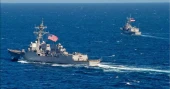
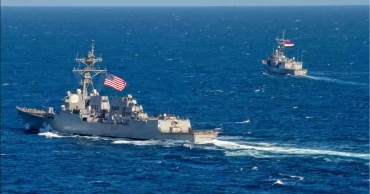
The U.S. military carried out another strike Monday against a vessel it said was involved in drug-smuggling operations in the eastern Pacific Ocean, killing one person, according to U.S. Southern Command.
In a social media post, Southern Command said intelligence indicated the “low-profile vessel” was traveling along known narcotics trafficking routes and engaged in illegal operations. The command provided no evidence confirming drug smuggling. A video released shows the boat’s rear catching fire after a salvo, with the vessel later drifting while burning. Previous strike videos have depicted sudden explosions, suggesting missile attacks.
The Trump administration has framed the strikes as efforts to curb the flow of drugs into the United States and increase pressure on Venezuelan President Nicolás Maduro. Since early September, at least 105 people have been killed in 29 known strikes. The operations have drawn scrutiny from lawmakers and human rights groups, who argue the administration has offered little proof that targeted vessels were smuggling drugs, raising concerns of extrajudicial killings.
Meanwhile, the U.S. Coast Guard has intensified operations to intercept oil tankers in the Caribbean Sea as part of the administration’s broader campaign against Maduro. The strikes, conducted in the eastern Pacific and Caribbean, highlight the continued militarized approach to combating drug trafficking and exerting pressure on Venezuela.
2 months ago
US lawmakers warn of legal steps over Epstein files
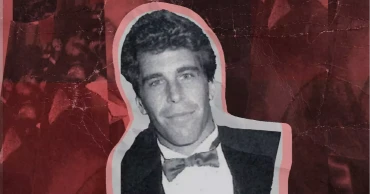
Two US lawmakers have warned of possible legal action against Attorney General Pam Bondi after the Justice Department released only part of the government files related to late convicted sex offender Jeffrey Epstein, missing a legal deadline for full disclosure.
The release of the long-anticipated documents drew criticism from both Republicans and Democrats, who said large portions were redacted or withheld despite a law requiring full publication.
Republican Congressman Thomas Massie said he may seek contempt proceedings against Bondi, accusing the Justice Department of failing to follow both the spirit and the letter of the law. He said such action could be taken directly by the House of Representatives without going through the courts.
At the same time, Senate Minority Leader Chuck Schumer announced plans to introduce a resolution to pressure the Justice Department and hold it accountable for not releasing the files in full. He urged bipartisan support, noting that the disclosure law was passed with backing from both parties.
The law compelling the release of the Epstein files was signed by US President Donald Trump in November, following pressure from lawmakers and supporters. Friday marked the deadline for the full release.
The Justice Department has said it is complying with its legal obligations and that more material will be released in the coming weeks. Bondi has said the administration is committed to transparency.
Massie, along with Democratic Congressman Ro Khanna, said they are drafting a bipartisan effort that could impose daily fines until the remaining documents are released.
Justice Department officials have defended the delay, citing the large volume of documents and the need to protect sensitive information related to victims. Deputy Attorney General Todd Blanche said many files contain victim details and releasing them in stages still meets legal requirements.
Some Democratic lawmakers, including Senator Tim Kaine, said contempt or impeachment moves may be premature, suggesting Congress has other tools to ensure compliance.
With inputs from BBC
2 months ago
New Trump envoy says he will work to make Greenland part of US
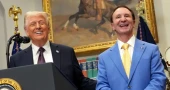
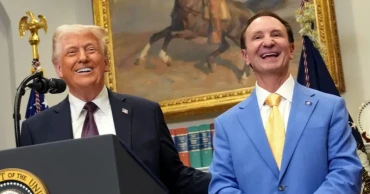
US President Donald Trump has triggered fresh tensions with Denmark after appointing Louisiana Governor Jeff Landry as special envoy to Greenland, with Landry saying he will serve to help make the Arctic island part of the United States.
Trump announced the appointment on Sunday, reviving his long-standing interest in Greenland, a semi-autonomous territory of Denmark. In a post on X, Landry said it was an honour to serve in a voluntary role to make Greenland part of the US.
The move drew sharp reactions from Denmark and Greenland. Danish Foreign Minister Lars Lokke Rasmussen said Copenhagen would summon the US ambassador for an explanation, warning that Denmark cannot accept actions that undermine its territorial integrity.
Greenland Prime Minister Jens-Frederik Nielsen said the island decides its own future and stressed that Greenland belongs to its people. He added that while Greenland is open to cooperation with the US and others, this must be based on mutual respect.
Trump has repeatedly pointed to Greenland’s strategic location and mineral wealth and has not ruled out using force to gain control, a position that has alarmed Denmark, a Nato ally. Greenland has extensive self-rule, though defence and foreign policy remain under Danish authority. Opinion polls show strong opposition among Greenlanders to joining the US.
EU Commission President Ursula von der Leyen said the European Union stands in full solidarity with Denmark and the people of Greenland.
Trump said Landry understands how important Greenland is to US national security and will advance American interests. Envoys are informal appointments and do not require approval from the host country.
Landry, a former congressman, attorney general and military veteran, has previously expressed support for Greenland joining the US. He said his envoy role would not affect his duties as Louisiana governor.
The dispute comes amid growing strategic competition in the Arctic, where melting ice is opening new shipping routes and access to valuable resources. The US has maintained a military presence in Greenland since World War Two and reopened its consulate in the capital Nuuk in 2020.
With inputs from BBC
2 months ago
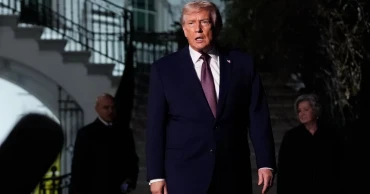
US forces stop oil tanker off Venezuela amid Trump’s pressure
U.S. forces on Saturday intercepted an oil tanker off the coast of Venezuela for the second time in less than two weeks, as President Donald Trump intensifies pressure on Venezuelan President Nicolás Maduro.
The operation, conducted in the early hours, follows Trump’s recent announcement of a “blockade” on all sanctioned Venezuelan oil tankers and comes after the December 10 seizure of another tanker, the Skipper. Homeland Security Secretary Kristi Noem confirmed that the U.S. Coast Guard, assisted by the Defense Department, stopped the Panama-flagged vessel Centuries, which had recently been docked in Venezuela. An unclassified video showed U.S. personnel boarding the tanker via helicopter.
Officials described the boarding as “consented,” with the vessel stopping voluntarily. White House Deputy Press Secretary Anna Kelly said Centuries was part of Venezuela’s shadow fleet, transporting stolen, sanctioned oil. However, maritime expert Dr. Salvatore Mercogliano noted that shipping databases suggest the tanker is properly registered, though it likely carried sanctioned oil.
Venezuela condemned the action, calling it “criminal” and vowing legal action, including complaints to the UN Security Council.
Trump has linked the blockade to U.S. oil investments seized by Venezuela in past decades and accused Maduro of drug trafficking, while U.S. forces have also targeted vessels alleged to smuggle fentanyl into the Americas. At least 104 people have been killed in 28 such strikes since September.
The Trump administration has deployed a significant naval presence to the Caribbean and eastern Pacific, warning of potential further actions to pressure Maduro, who has dismissed U.S. operations as an attempt to force him from power.
Source: AP
2 months ago
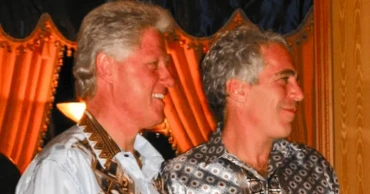
Bill Clinton appears in first batch of newly released Epstein files
Former U.S. President Bill Clinton featured prominently in the first set of documents released Friday by the Justice Department from its investigation into convicted sex offender Jeffrey Epstein.
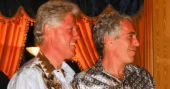
The files include several photos of Clinton, some showing him on a private plane with a woman whose face was redacted, and others depicting him in a pool and a hot tub with Epstein associate Ghislaine Maxwell and unidentified individuals. The timing and location of the images remain unclear.
Clinton, 79, has never been accused of wrongdoing in connection with Epstein. His spokesman, Angel Ureña, said the White House was attempting to deflect attention and stressed that the issue “is not about Bill Clinton.”
Republicans have seized on Clinton’s association with Epstein. The House Oversight Committee had subpoenaed Bill and Hillary Clinton earlier this year, seeking depositions, but the couple offered written statements instead. Committee Chair Rep. James Comer has threatened contempt proceedings if they fail to testify in person.
Clinton’s connections with Epstein, including multiple flights on Epstein’s private jet and White House visits during his presidency, have long been documented. The newly released files, part of hundreds of thousands tied to the investigation, underscore the complex network surrounding Epstein and Maxwell, complicating both Democratic and Republican narratives in the ongoing political debate.
2 months ago
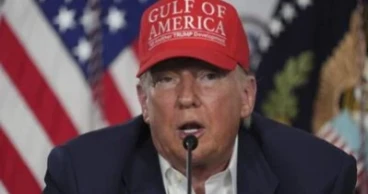
Trump’s blockade of Venezuelan oil sparks legal questions and tensions
President Donald Trump’s blockade of sanctioned Venezuelan oil tankers off the country’s coast is raising new concerns about the legality of U.S. military operations in Latin America and fears that the United States could be edging closer to war.
The administration insists the measure targets only sanctioned vessels and not civilians, but legal experts warn that such actions without congressional approval may breach international law and risk provoking a Venezuelan military response. “The concern is that we are bootstrapping our way into armed conflict,” said Claire Finkelstein, a national security law professor at the University of Pennsylvania.
Trump’s campaign against Venezuela is part of a broader effort to pressure President Nicolás Maduro, accused of narcoterrorism and using oil revenue to fund drug trafficking. U.S. forces have attacked 28 suspected drug-smuggling boats since September, killing over 100 people, and the president has threatened land strikes.
Venezuelan authorities condemned the blockade. Maduro’s son, Nicolás Maduro Guerra, called for dialogue while warning of the threat posed by the world’s most powerful military.
The Pentagon prefers to describe the operation as a “quarantine” rather than a blockade, noting that an international law blockade constitutes an act of war. Critics argue the selective targeting of oil shipments resembles a wartime maneuver without formal authorization, leaving questions about the legal and strategic implications of Trump’s campaign.
Source: AP
2 months ago
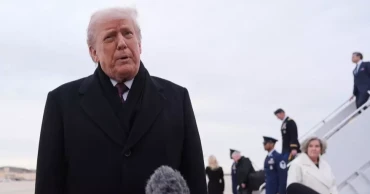
Trump’s expanded travel ban impacts Africa most, response remains low-key
Africa has been hit hardest by the Trump administration’s decision to widen U.S. travel restrictions, but reactions across the continent remained largely muted on Wednesday as governments and citizens assessed the impact.
The new move adds 20 countries to the U.S. travel ban list, expanding measures first announced in June. The restrictions are broader and tougher than those imposed during President Donald Trump’s first term, which mainly targeted Muslim-majority nations and were lifted in 2021.
Of the five countries newly placed under a full ban, four are in Africa: Burkina Faso, Mali, Niger, and South Sudan. Syria and holders of travel documents issued by the Palestinian Authority were also included. Several other African countries, including Sierra Leone, were shifted from partial to full restrictions.
Twelve of the 15 countries facing partial limits are African nations, among them Nigeria, Senegal, Tanzania, Zambia, Zimbabwe, and Angola. The measures link entry limits to concerns over security, documentation, and visa overstays.
The African Union urged the United States to enforce border controls in a balanced and evidence-based way that respects long-standing ties with Africa. The bloc warned the restrictions could harm education, trade, people-to-people contacts, and diplomatic relations built over decades.
Some affected governments said it was too early to react. Sierra Leone said it hopes to engage Washington to seek a review, while Mali’s foreign ministry declined immediate comment.
Analysts and citizens in several countries described the move as unfair and warned it could weaken U.S.–Africa relations while opening space for other global powers to deepen ties on the continent. Others expressed concern over business, education, and travel plans, including possible impacts on fans hoping to attend the 2026 football World Cup in the United States.
In South Sudan, rights activists said the ban reflects Washington’s growing frustration with the government over delays in implementing a peace deal signed in 2018.
2 months ago
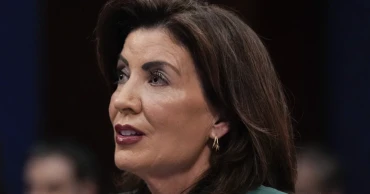
New York moves to legalize assisted dying with safeguards
New York is set to legalize medically assisted suicide for terminally ill patients under an agreement reached between Governor Kathy Hochul and state legislative leaders, the governor announced on Wednesday.
Hochul said she plans to sign the bill next year after securing added safeguards, or “guardrails,” to ensure the law is applied carefully. Writing in an op-ed, the Democratic governor said her decision followed conversations with patients enduring severe pain, their families, and people of faith who oppose ending life on moral grounds.
The proposed Medical Aid in Dying Act would allow patients expected to die within six months to request life-ending medication. The request must be made in writing, signed by two witnesses to rule out coercion, and approved by both an attending physician and a consulting doctor. Additional provisions will require confirmation from a medical doctor of the patient’s prognosis and an evaluation by a psychologist or psychiatrist to ensure the decision is voluntary and informed.
The bill also includes a mandatory five-day waiting period and both written and recorded oral requests to confirm free will. Facilities tied to religious hospitals may opt out, and the measure will apply only to New York residents. The law would take effect six months after being signed.
Hochul described backing the bill as one of the most difficult decisions of her tenure, saying she could no longer deny terminally ill patients a choice they are pleading for at the end of life.
The legislation, first introduced in 2016, faced years of opposition from religious groups, including the New York State Catholic Conference, which argues it undermines the sanctity of life and the role of physicians. Church leaders renewed their criticism after the announcement, warning it could endanger vulnerable people.
Supporters say the law will ease suffering and allow terminally ill individuals to die with dignity. About a dozen other states and the District of Columbia have already enacted similar measures.
2 months ago
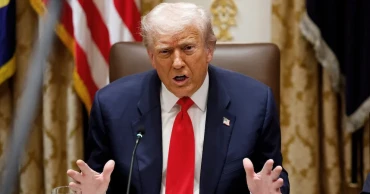
Trump expands US travel ban to 20 more countries
The Trump administration on Tuesday expanded US travel restrictions to cover 20 additional countries and the Palestinian Authority, doubling the scope of sweeping limits announced earlier this year on who can travel to or immigrate to the United States.
Under the new decision, five more countries have been added to the list facing a full ban on entry to the US, while 15 others will be subject to partial restrictions. People travelling on documents issued by the Palestinian Authority are also now fully barred. The measures are set to take effect on Jan 1.
The administration said the move is part of broader efforts to tighten US travel and immigration standards, citing national security, immigration enforcement and foreign policy concerns. Officials pointed to problems such as corruption, unreliable civil documents, high visa overstay rates and refusals by some governments to accept deported nationals.
Those exempted from the restrictions include lawful permanent US residents, people who already hold valid visas, diplomats, athletes and others whose entry is deemed to be in the US national interest.
In June, President Donald Trump announced a ban on travellers from 12 countries and partial restrictions on seven others, reviving a signature policy from his first term. Countries already under a full ban included Afghanistan, Myanmar, Chad, the Republic of Congo, Equatorial Guinea, Eritrea, Haiti, Iran, Libya, Somalia, Sudan and Yemen, while partial restrictions applied to Burundi, Cuba, Laos, Sierra Leone, Togo, Turkmenistan and Venezuela.
The administration said the full ban list has now been expanded to include Burkina Faso, Mali, Niger, South Sudan and Syria. South Sudan had already been subject to significant travel limits. Partial restrictions have been imposed on Angola, Antigua and Barbuda, Benin, Ivory Coast, Dominica, Gabon, Gambia, Malawi, Mauritania, Nigeria, Senegal, Tanzania, Tonga, Zambia and Zimbabwe.
The restrictions apply to both visitors and those seeking to immigrate to the US.
The decision follows the arrest of an Afghan national accused of shooting two National Guard troops near the White House over the Thanksgiving weekend. In the aftermath, the administration announced a series of new immigration measures, including tougher rules for people from countries already under restrictions.
Critics said the expanded ban unfairly targets people based on nationality rather than individual risk. Advocacy groups also warned that the updated policy no longer includes an exemption for Afghans eligible for Special Immigrant Visas, which are granted to those who assisted US forces during the war in Afghanistan.
Several governments affected by the new measures said they were seeking clarification from US officials. Dominica said it was treating the issue with urgency, while Antigua and Barbuda’s ambassador to Washington described the matter as serious.
The administration also adjusted earlier restrictions, tightening rules for Laos and Sierra Leone while easing some limits on travellers from Turkmenistan. Other measures announced in June remain unchanged.
The new restrictions on Palestinians expand earlier limits that had already made it difficult for holders of Palestinian Authority passports to travel to the US, and now also block them from immigrating. The administration said the decision was based on security concerns, citing the presence of US designated terrorist groups in the West Bank and Gaza and challenges in vetting amid ongoing conflict.
2 months ago
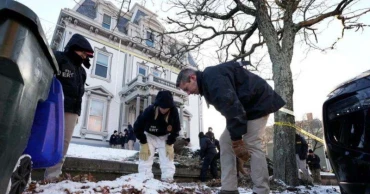
Search continues for Brown University gunman as security questions mount
Authorities intensified their search Monday for the gunman who killed two students and wounded nine others in a shooting at Brown University, as concerns grew over campus security and how the attacker managed to flee.
Police and federal agents went door to door in nearby neighborhoods, checking yards and asking residents for surveillance footage that could help identify the suspect. Investigators released new videos showing a masked man in a dark, two-tone jacket before and after Saturday’s attack, but his face remains obscured. The FBI described the suspect as about 5 feet 8 inches tall with a stocky build and announced a $50,000 reward for information leading to an arrest and conviction.
The search gained urgency after police acknowledged they had released a person of interest on Sunday, saying evidence no longer supported his involvement. The reversal raised public frustration and questions about whether the shift allowed the real suspect more time to escape.
The shooting occurred in an auditorium-style classroom where students were studying for finals. Among those killed was Ella Cook, a 19-year-old sophomore active in campus politics and church life, and MukhammadAziz Umurzokov, an 18-year-old freshman who had overcome significant childhood health challenges after immigrating from Uzbekistan.
As of Sunday, only one of the wounded had been released from the hospital. Several others remained in critical but stable condition, including students from outside Rhode Island.
Brown lifted its lockdown, but unease lingered among students, parents and prospective applicants. Some nearby universities and Ivy League schools announced heightened security, particularly around religious events.
Investigators said they are still working to trace the suspect’s movements and determine how he entered the classroom, noting limited camera coverage in the area. The attack, which unfolded during finals week, triggered hours of chaos on campus and renewed debate about safety at open university campuses.
2 months ago