usa

Biden to end COVID-19 emergencies on May 11
President Joe Biden informed Congress on Monday that he will end the twin national emergencies for addressing COVID-19 on May 11, as most of the world has returned closer to normalcy nearly three years after they were first declared.
The move to end the national emergency and public health emergency declarations would formally restructure the federal coronavirus response to treat the virus as an endemic threat to public health that can be managed through agencies’ normal authorities.
It comes as lawmakers have already ended elements of the emergencies that kept millions of Americans insured during the pandemic. Combined with the drawdown of most federal COVID-19 relief money, it would also shift the development of vaccines and treatments away from the direct management of the federal government.
Biden’s announcement comes in a statement opposing resolutions being brought to the floor this week by House Republicans to bring the emergency to an immediate end. House Republicans are also gearing up to launch investigations on the federal government’s response to COVID-19.
Then-President Donald Trump’s Health and Human Services Secretary Alex Azar first declared a public health emergency on Jan. 31, 2020, and Trump later declared the COVID-19 pandemic a national emergenc y that March. The emergencies have been repeatedly extended by Biden since he took office in January 2021, and are set to expire in the coming months. The White House said Biden plans to extend them both briefly to end on May 11.
“An abrupt end to the emergency declarations would create wide-ranging chaos and uncertainty throughout the health care system — for states, for hospitals and doctors’ offices, and, most importantly, for tens of millions of Americans,” the Office of Management and Budget wrote in a Statement of Administration Policy.
Read: France, Australia to supply Ukraine with artillery shells
More than 1.1 million people in the U.S. have died from COVID-19 since 2020, according to the Centers for Disease Control and Prevention, including about 3,700 last week.
Congress has already blunted the reach of the public health emergency that had the most direct impact on Americans, as political calls to end the declaration intensified. Lawmakers have refused for months to fulfill the Biden administration’s request for billions more dollars to extend free COVID vaccines and testing. And the $1.7 trillion spending package passed last year and signed into law by Biden put an end to a rule that barred states from kicking people off Medicaid, a move that is expected to see millions of people lose their coverage after April 1.
“In some respects, the Biden administration is catching up to what a lot of people in the country have been experiencing,” said Larry Levitt, the executive vice president for health policy at Kaiser Family Foundation. “That said, hundreds of people a day are still dying from COVID.”
Still, some things will change for Americans once the emergency expires, Levitt pointed out.
The costs of COVID-19 vaccines are also expected to skyrocket once the government stops buying them, with Pfizer saying it will charge as much as $130 per dose. Only 15% of Americans have received the recommended, updated booster that has been offered since last fall.
People with private insurance could have some out-of-pocket costs for vaccines, especially if they go to an out-of-network provider, Levitt said. Free at-home COVID tests will also come to an end. And hospitals will not get extra payments for treating COVID patients.
Legislators did extend for another two years telehealth flexibilities that were introduced as COVID-19 hit, leading health care systems around the country to regularly deliver care by smartphone or computer.
The Biden administration had previously considered ending the emergency last year, but held off amid concerns about a potential “winter surge” in cases and to provide adequate time for providers, insurers and patients to prepare for its end.
Officials said the administration would use the next three months to transition the response to conventional methods, warning that an immediate end to the emergency authorities “would sow confusion and chaos into this critical wind-down.”
Read: China accuses Washington of abusing export controls
“To be clear, continuation of these emergency declarations until May 11 does not impose any restriction at all on individual conduct with regard to COVID-19,” the administration said. “They do not impose mask mandates or vaccine mandates. They do not restrict school or business operations. They do not require the use of any medicines or tests in response to cases of COVID-19.”
Case counts have trended downward after a slight bump over the winter holidays, and are significantly below levels seen over the last two winters — though the number of tests performed for the virus and reported to public health officials has sharply decreased.
On Monday, the World Health Organization said the coronavirus remains a global health emergency, even as a key advisory panel for the group found the pandemic may be nearing an “inflexion point” where higher levels of immunity can lower virus-related deaths. China, for example, reported an unprecedented surge in December after lifting most of its COVID-19 restrictions.
Moments before the White House’s announcement, Rep. Tom Cole, R-Okla., accused the president of unnecessarily extending the public health emergency to take action on issues like forgiving some federal student loan debts.
“The country has largely returned to normal,” Cole said Monday, introducing a Republican-backed bill calling for an end to the health emergency. “Everyday Americans have returned to work and to school with no restrictions on their activities. It is time that the government acknowledges this reality: the pandemic is over.”
The House was scheduled to vote Tuesday on legislation that would terminate the public health emergency.
The bill’s author, Rep. Brett Guthrie, R-Ky., said he still hopes the House will proceed with a vote. He said he was surprised by the White House move, but thinks the legislation may have played a role in prompting the administration to act.
“I think we should go forward,” he said late Monday as lawmakers returned to the Capitol. “If for some reason they don’t do it on May the 11th, the vehicle is still there for Congress to take back its authority.”
3 years ago

Police say 3 dead, 4 hurt in latest California shooting
At least three people were killed and four others were wounded in a shooting in Los Angeles early Saturday morning,
This was at least the sixth mass shooting in California this month.
Sgt. Frank Preciado of the Los Angeles Police Department confirmed the shooting happened just after 2:30 a.m. in Beverly Crest, an upscale Los Angeles neighborhood.
Of the seven people who were shot, four were standing outside. The three who were killed were in a vehicle.
Their identities were not released. Those who were injured were taken to a hospital and are in critical condition.
Preciado said he did not have information on what led up to the shooting, or if it occurred at a residence.
It's unclear if the suspect or suspects are in custody.
Read more: ‘It’s insane’: California copes with 3rd massacre in 8 days
The early Saturday morning shooting comes on top a massacre at a dance hall in a Los Angeles suburb last week that left 11 dead and nine wounded and shootings at two Half Moon Bay farms that left seven dead and one wounded.
The killings have dealt a blow to the state, which has some of the nation’s toughest firearm laws and lowest rates of gun deaths.
For the third straight year, the U.S. in 2022 recorded over 600 mass shootings
3 years ago

House GOP seeks new restrictions on use of US oil stockpile
For the second time this month, House Republicans are seeking to restrict presidential use of the nation’s emergency oil stockpile — a proposal that has already drawn a White House veto threat.
A GOP bill set for a vote Friday would require the government to offset any non-emergency withdrawals from the Strategic Petroleum Reserve with new drilling on public lands and oceans. Republicans accuse President Joe Biden of abusing the reserve for political reasons to keep gas prices low, while Biden says tapping the reserve was needed last year in response to a ban on Russian oil imports following President Vladimir Putin’s invasion of Ukraine.
Biden withdrew 180 million barrels from the strategic reserve over several months, bringing the stockpile to its lowest level since the 1980s. The administration said last month it will start to replenish the reserve now that oil prices have gone down.
Read more: 5% cut in VAT on imported edible oil extended till April 30
White House press secretary Karine Jean-Pierre attacked the latest GOP proposal, which follows a bill approved two weeks ago that would prohibit the Energy Department from selling oil from the strategic reserve to companies owned or influenced by the Chinese Communist Party.
“House Republicans will vote to raise gas prices on American families ... and help Putin's war aims by interfering with our ability to release oil,'' Jean-Pierre said, referring to the current GOP bill. "These extreme policies would subject working families to immense financial pain and balloon our deficit, all just to benefit the wealthiest taxpayers and big corporations.''
Energy Secretary Jennifer Granholm, appearing with Jean-Pierre at the White House, said the bill would make it ”harder to offer Americans relief in the future" from oil disruptions that could raise prices.
Republican Rep. Cathy McMorris Rodgers, who chairs the House Energy and Commerce Committee and sponsored the GOP bill, accused Granholm and the White House of multiple misleading claims, including an erroneous assertion that the bill could affect use of the reserve during a presidentially declared emergency.
“At a time when gas prices are on the rise, Secretary Granholm and the Biden administration need to be transparent with the American people about their efforts to cover up how they’ve abused the Strategic Petroleum Reserve as an election-year gimmick,'' McMorris Rodgers said.
"Republicans want durable, long-lasting relief at the pump. The best way to do this is by unleashing American energy,'' which her legislation helps accomplish, added McMorris Rodgers, of Washington state.
The heated rhetoric is part of a larger fight over oil drilling and climate change. Republicans say restrictions on oil leasing imposed by the Biden administration hamper U.S. energy production and harm the economy, while Democrats tout a sweeping climate law approved last year as a crucial step to wean the nation off fossil fuels such as oil, coal and natural gas. The measure authorizes billions in spending to boost renewable energy such as wind and solar power and includes incentives for Americans to buy millions of electric cars, heat pumps, solar panels and more efficient appliances.
Biden, citing the dangers of climate change, canceled the controversial Keystone XL oil pipeline in his first days in office and suspended new oil and gas leases on federal lands. The moratorium has since been lifted, under court order, but Republicans complain that lease sales for new drilling rights are still limited.
Biden campaigned on pledges to end new drilling on public lands, and climate activists have pushed him to move faster to shut down oil leasing. Fossil fuels extracted from public lands account for about 20% of energy-related U.S. greenhouse gas emissions, making them a prime target for emissions reductions intended to slow global warming.
Read more: Bangladesh to explore all options to import fuel: FS
“Whether on land or at sea, oil drilling poses an unacceptable risk for our wildlife, wild places and waterways,'' said Lisa Frank of Environment America, an advocacy group. “When we drill, we spill. At a time when we should be moving away from this destructive, dangerous practice — and expanding use of renewable power — this bill doubles down on the outmoded energy of the past.''
Frank urged lawmakers to reject the GOP bill and instead move to permanently ban new drilling off U.S. coasts and in Alaska's Arctic National Wildlife Refuge.
Conservative and industry groups support the bill.
“We can continue making the Strategic Petroleum Reserve the nation’s sole response to future disruptions, or we can also utilize more of the vast oil supplies sitting beneath the lands and offshore areas currently kept off limits by the president,'' the Competitive Enterprise Institute and other conservative groups said in a letter to Congress.
The Treasury Department estimates that release of oil from the emergency stockpile lowered prices at the pump by up to 40 cents per gallon. Gasoline prices averaged about $3.50 per gallon on Thursday, down from just over $5 per gallon at their peak in June, according to the AAA auto club.
Morris Rodgers accused Biden of using the reserve to “cover up his failed policies" that she said are driving up energy prices and inflation. Average gas prices are up more than 30 cents from a month ago and are higher than when Biden took office in January 2021, she and other Republicans noted.
“Millions of Americans are paying more at the pump as a result of the Biden administration’s radical ‘rush-to-green’ agenda that has shut down American energy,'' McMorris Rodgers said.
Granholm, citing thousands of unused leases by oil companies, said GOP claims of obstructionism on drilling were off-base. "There's nothing standing in the way of domestic oil and gas production,'' she said, a claim McMorris Rodgers disputed.
"There are plenty of barriers to unleashing domestic oil and gas production, including burdensome regulations and this administration’s discouragement of financial investment in domestic oil and gas industries,'' she said, noting that U.S. oil production is well below its 2019 peak of 13 million barrels of oil a day.
3 years ago

Despite concerns, US to send 31 Abrams tanks to Ukraine
The U.S. will send 31 M1 Abrams battle tanks to Ukraine, senior administration officials said Wednesday, reversing months of persistent arguments by the Biden administration that the tanks were too difficult for Ukrainian troops to operate and maintain.
The U.S. decision came on the heels of Germany agreeing to send 14 Leopard 2 A6 tanks from its own stocks. Germany had said the Leopards would not be sent unless the U.S. put its Abrams on the table, not wanting to incur Russia's wrath without the U.S. similarly committing its own tanks.
Since then, both sides had participated in "good diplomatic conversations” that had made the difference and were part of the “extraordinary shift in Germany’s security policy" over providing weapons to Ukraine since Russia invaded 11 months ago, said a senior administration official, who briefed reporters Wednesday on the condition of anonymity to describe the new tank package in advance of the announcement.
The $400 million package announced Wednesday also includes eight M88 recovery vehicles — tank-like tracked vehicles that can tow the Abrams if it gets stuck.
Altogether, France, the U.K., the U.S., Poland, Germany, the Netherlands and Sweden will send hundreds of tanks and heavy armored vehicles to fortify Ukraine as it enters a new phase of the war and attempts to break through entrenched Russian lines.
But there were few answers about what U.S. tanks would be sent — whether they would be pulled from the existing stockpile of more than 4,000 Abrams and retrofitted, or whether the U.S. would use the Ukraine Security Assistance Initiative to buy new systems to possibly backfill allies who send their own or buy new systems outright for Ukraine.
Read more: In reversal, US poised to approve Abrams tanks for Ukraine
Either way, using the assistance initiative funding route means that while Abrams have now been promised to Ukraine, it will likely be many months before the tanks are actually on the battlefield, and not in time for Russia's anticipated spring offensive.
Russian Ambassador to Germany Sergey Nechayev on Wednesday called Berlin’s decision to send Leopard 2 tanks to Ukraine “extremely dangerous.”
Nechayev said in an online statement that the move “shifts the conflict to a new level of confrontation and contradicts the statements of German politicians about their reluctance to get involved in it.”
“We’re seeing yet again that Germany, as well as its closest allies, is not interested in a diplomatic resolution of the Ukraine crisis, it is determined to permanently escalate it and to indefinitely pump the Kyiv regime full of new lethal weapons,” the statement read.
Until now, the U.S. has resisted providing its own M1 Abrams tanks to Ukraine, citing extensive and complex maintenance and logistical challenges with the high-tech vehicles. Washington believes it would be more productive to send German Leopards since many allies have them and Ukrainian troops would need less training than on the more difficult Abrams.
Just last week, Under Secretary of Defense for Policy Colin Kahl told reporters that the Abrams is a complicated, expensive, difficult to maintain and hard to train on piece of equipment. One thing Defense Secretary Lloyd Austin has been very focused on, he said, “is that we should not be providing the Ukrainians systems they can’t repair, they can’t sustain, and that they, over the long term, can’t afford, because it’s not helpful.”
Read more: Germany says it won't block Poland giving Ukraine tanks
For the Abrams to be effective in Ukraine, its forces will require extensive training on combined arms manuevuer — how the tanks operate together on the battlefield, and on how to maintain and support the complex, 70-ton weapon. The Abrams tanks use a turbine jet engine to propel themselves that burns through at least two gallons a mile regardless of whether they are moving or idling, which means that a network of fuel trucks is needed to keep the line moving.
3 years ago

In reversal, US poised to approve Abrams tanks for Ukraine
In what would be a reversal, the Biden administration is poised to approve sending M1 Abrams tanks to Ukraine, U.S. officials said Tuesday, as international reluctance to send tanks to the battlefront against the Russians begins to erode. The decision could be announced as soon as Wednesday, though it could take months or years for the tanks to be delivered.
U.S. officials said details are still being worked out. One official said the tanks would be bought under an upcoming Ukraine Security Assistance Initiative package, which provides longer-range funding for weapons and equipment to be purchased from commercial vendors.
The U.S. announcement is expected to come on Wednesday in coordination with an announcement by Germany that it will approve Poland’s request to transfer German-made Leopard 2 tanks to Ukraine, according to one official. The officials spoke on condition of anonymity because the decision has not yet been made public.
By agreeing to send the Abrams at an as-yet unspecified time under the assistance initiative, the administration is able to meet German Chancellor Olaf Scholz's demand for an American commitment without having to send the tanks immediately.
Weapons provided through the assistance initiative can take many months to several years to reach the battlefield. Much of the aid sent so far in the 11-month-old war has been through a separate program drawing on Pentagon stocks to get weapons more quickly to Ukraine. But even under that program, it would take months to get tanks to Ukraine and to get Ukrainian forces trained on them.
It's unknown how many tanks would be approved.
Until now, the U.S. has resisted providing its own M1 Abrams tanks to Ukraine, citing extensive and complex maintenance and logistical challenges with the high-tech vehicles. Washington believes it would be more productive to send German Leopards since many allies have them and Ukrainian troops would need less training than on the more difficult Abrams.
A U.S. official familiar with White House thinking said the administration’s initial hesitancy was based on concerns about the requisite training and the sustainment of the tanks. The official added that the administration believes that such plans are now in place, but it could take time to implement them.
Read more: Defense leaders meet amid dissent over tanks for Ukraine
At the Pentagon, spokesman Brig. Gen. Pat Ryder said he had nothing to announce on any U.S. decision regarding Abrams tanks. But he said, “anytime that we’ve provided Ukraine with a type of system, we’ve provided the training and sustainment capabilities with that.”
The administration's reversal comes just days after a coalition of more than 50 senior defense officials from Europe and beyond met in Germany to discuss Ukraine’s war needs, and battle tanks were a prime topic.
Ukrainian leaders have been urgently requesting tanks, but Germany had resisted mounting pressure either to supply its own tanks or clear the way for other countries, such as Poland, to send the German-made tanks from their own stocks. Kremlin spokesman Dmitry Peskov said the deployment of Western tanks would trigger “unambiguously negative” consequences.
Defense leaders from the countries that have Leopard 2 tanks met with the Germans during the Friday conference at Ramstein Air Base in an effort to hammer out an agreement.
On Sunday, Berlin indicated it wouldn’t stand in the way if other countries wanted to send the Leopard 2 tanks to Kyiv. Germany needs to agree for the tanks to be given to Ukraine, which is not a member of NATO.
U.S. and German officials have given mixed signals about whether the U.S. and German decisions are linked, and whether Berlin was hesitant to send its tanks unless the U.S. sent Abrams.
Polish Defense Minister Mariusz Błaszczak said Tuesday that Poland has officially requested permission from Germany to transfer its Leopard 2 battle tanks to Ukraine.
Read more: Poland asks Berlin to OK Ukraine tanks; Kyiv targets graft
German officials confirmed to the dpa news agency they had received the application and said it would be assessed “with due urgency.” German Foreign Minister Annalena Baerbock said Sunday that Berlin wouldn’t seek to stop Poland from providing the high-tech armor to Kyiv.
Lawmakers in Congress have also been pushing the U.S. to beef up its aid to Ukraine.
Senate Republican leader Mitch McConnell said Tuesday “it’s time, past time” for the Biden administration and allies to send more military aid to Ukraine, and that the U.S. must provide more tanks and weapons to help Ukraine “win this war.”
“It’s time, past time, for the Biden administration and our allies to get serious about helping Ukraine finish the job and retake their country.”
The likely plans to send the Abrams were first reported by The Wall Street Journal.
3 years ago

Justice Dept. sues Google over digital advertising dominance
The Justice Department and eight states sued Google on Tuesday, alleging that its dominance in digital advertising harms competition.
The government alleges that Google’s plan to assert dominance has been to “neutralize or eliminate” rivals through acquisitions and to force advertisers to use its products by making it difficult to use competitors’ products.
The antitrust suit was filed in federal court in Alexandria, Virginia. Attorney General Merrick Garland was expected to discuss it at a news conference later Tuesday.
The department's suit accuses Google of unlawfully monopolizing the way ads are served online by excluding competitors. This includes its 2008 acquisition of DoubleClick, a dominant ad server, and subsequent rollout of technology that locks in the split-second bidding process for ads that get served on Web pages.
At minimum, the lawsuit wants Google to split off its advertising business — its ad manager suite and ad exchange — as well as “any additional structural relief as needed to cure any anticompetitive harm."
Read more: Elon Musk: Tweets about taking Tesla private weren't fraud
Google's ad manager lets large publishers who have significant direct sales manage their advertisements. The ad exchange is a real-time marketplace to buy and sell online display ads.
Representatives for Alphabet Inc., Google’s parent company, said the suit “doubles down on a flawed argument that would slow innovation, raise advertising fees, and make it harder for thousands of small businesses and publishers to grow.”
Dina Srinivasan, a Yale University fellow and adtech expert, said the lawsuit is “huge” because it aligns the entire nation — state and federal governments — in a bipartisan legal offensive against Google.
This is the latest legal action taken against Google by either the Justice Department or local state governments. In October 2020, for instance, the Trump administration and eleven state attorneys general sued Google for violating antitrust laws, alleging anticompetitive practices in the search and search advertising markets.
The lawsuit in essence aligns the Biden administration and new states with the 35 states and District of Colombia that sued Google in December 2020 over the exact same issues.
Read more: Elon Musk depicted as liar, visionary in Tesla tweet trial
The states taking part in the suit include California, Virginia, Connecticut, Colorado, New Jersey, New York, Rhode Island and Tennessee.
3 years ago
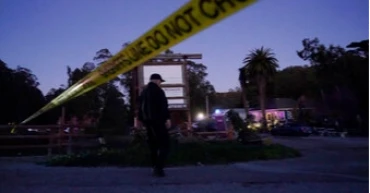
7 dead as California mourns 3rd mass killing in 8 days
A gunman killed seven people at two agricultural businesses in Northern California, plunging the state into mourning again in the wake of its third mass killing in eight days.
Officers arrested a suspect in Monday’s shootings, 67-year-old Chunli Zhao, after they found him in his car in the parking lot of a sheriff’s substation, San Mateo County Sheriff Christina Corpus said.
Seven people were found dead and an eighth injured at a farm and another location several miles away, the Sheriff’s Office said. Officials believe Zhao worked at one of the facilities and that the victims were workers as well, Corpus said. Officials haven’t determined a motive for the shooting.
California is still reeling from an attack on a Lunar New Year celebration in Monterey Park that killed 11 and cast a shadow over an important holiday for many Asian-American communities. Authorities are still seeking a motive for the Saturday shooting.
The new year has brought a shocking string of mass killings in the U.S. — six in less than three weeks, accounting for 39 deaths. Three have occurred in California since Jan. 16, according to a database compiled by The Associated Press, USA Today and Northeastern University. The database tracks every mass killing — defined as four dead not including the offender — committed in the U.S. since 2006.
The killings occurred on the outskirts of Half Moon Bay, a city about 30 miles (48 kilometers) south of San Francisco.
Read more: LA mass shooting suspect kills 10 near Lunar New Year fest
Half Moon Bay Vice Mayor Joaquin Jimenez said the victims included Chinese and Latino farmworkers. Some workers lived at one of the facilities and children may have witnessed the shooting, she said. Corpus said it wasn’t immediately clear how the two locations were connected.
The Sheriff’s Office first received reports of a shooting in the afternoon and found four people dead and a fifth wounded at the first scene. Officers then found three more people fatally shot nearby, Capt. Eamonn Allen said in a news release.
About two hours later, a sheriff’s deputy spotted Zhao’s car parked outside a sheriff’s substation in a strip mall and arrested him.
A video of the arrest showed three officers approaching a parked car with drawn weapons. Zhao got out of the car, and the officers pulled him to the ground, put him in handcuffs, and led him away. A weapon was found in his vehicle, officials said. The video was captured by Kati McHugh, a Half Moon Bay resident who witnessed the arrest.
The sheriff’s department believes Zhao acted alone.
“We’re still trying to understand exactly what happened and why, but it’s just incredibly, incredibly tragic,” said state Sen. Josh Becker, who represents the area and called it “a very close-knit” agricultural community.
Aerial television images showed police officers collecting evidence from a farm with dozens of greenhouses.
Half Moon Bay is a small coastal city with agricultural roots, home to about 12,000 people. The city and surrounding San Mateo County area is known for producing flowers as well as vegetables like brussels sprouts. The county allows cannabis farming in some areas.
Read more: 9 killed in Walmart shooting in Virginia
It’s a majority white community and about 5% of the population is Asian, according to Census data
“We are sickened by today’s tragedy in Half Moon Bay," Pine said. “We have not even had time to grieve for those lost in the terrible shooting in Monterey Park. Gun violence must stop.”
California Gov. Gavin Newsom tweeted that he was "at the hospital meeting with victims of a mass shooting when I get pulled away to be briefed about another shooting. This time in Half Moon Bay. Tragedy upon tragedy."
On Jan. 16, a teenage mother and her baby were among six people killed in a shooting at a home in California's Central Valley.
3 years ago

US proposes once-a-year COVID shots for most Americans
U.S. health officials want to make COVID-19 vaccinations more like the annual flu shot.
The Food and Drug Administration on Monday proposed a simplified approach for future vaccination efforts, allowing most adults and children to get a once-a-year shot to protect against the mutating virus.
This means Americans would no longer have to keep track of how many shots they’ve received or how many months it’s been since their last booster.
The proposal comes as boosters have become a hard sell. While more than 80% of the U.S. population has had at least one vaccine dose, only 16% of those eligible have received the latest boosters authorized in August.
The FDA will ask its panel of outside vaccine experts to weigh in at a meeting Thursday. The agency is expected to take their advice into consideration while deciding future vaccine requirements for manufacturers.
In documents posted online, FDA scientists say many Americans now have “sufficient preexisting immunity” against the coronavirus because of vaccination, infection or a combination of the two. That baseline of protection should be enough to move to an annual booster against the latest strains in circulation and make COVID-19 vaccinations more like the yearly flu shot, according to the agency.
For adults with weakened immune systems and very small children, a two-dose combination may be needed for protection. FDA scientists and vaccine companies would study vaccination, infection rates and other data to decide who should receive a single shot versus a two-dose series.
FDA will also ask its panel to vote on whether all vaccines should target the same strains. That step would be needed to make the shots interchangeable, doing away with the current complicated system of primary vaccinations and boosters.
The initial shots from Pfizer and Moderna — called the primary series — target the strain of the virus that first emerged in 2020 and quickly swept across the world. The updated boosters launched last fall were also tweaked to target omicron relatives that had been dominant.
Under FDA's proposal, the agency, independent experts and manufacturers would decide annually on which strains to target by the early summer, allowing several months to produce and launch updated shots before the fall. That’s roughly the same approach long used to select the strains for the annual flu shot.
Read more: Covid-19 vaccine consignment for kids arrive in Dhaka
Ultimately, FDA officials say moving to an annual schedule would make it easier to promote future vaccination campaigns, which could ultimately boost vaccination rates nationwide.
The original two-dose COVID shots have offered strong protection against severe disease and death no matter the variant, but protection against mild infection wanes. Experts continue to debate whether the latest round of boosters significantly enhanced protection, particularly for younger, healthy Americans.
3 years ago

7 killed in two shootings in California community
Seven people were killed in two related shootings Monday at a mushroom farm and a trucking firm in a coastal community south of San Francisco, and a suspect was in custody, officials said.
San Mateo County Board of Supervisors President Dave Pine says four people were killed at the farm and three at the trucking business on the outskirts of Half Moon Bay, a city about 30 miles (48 kilometers) south of San Francisco.
It wasn’t immediately clear how the locations were connected.
Read: California shooter kills 10 at dance club; motive unclear
California state Sen. Josh Becker, who represents the area, said people were killed in separate shootings. San Mateo County Supervisor David Canepa tweeted that one shooting happened at a mushroom farm.
The San Mateo County Sheriff’s Office tweeted just before 5 p.m. that a suspect was in custody.
“There is no ongoing threat to the community at this time,” the sheriff’s office said.
Television footage from the area showed officers taking a man into custody without incident.
Aerial television images also showed police officers collecting evidence from a farm with dozens of greenhouses.
Read: 12 people injured in shooting at Louisiana nightclub
The shooting followed the killing of 11 people late Saturday at a ballroom dance hall in Southern California.
“We are sickened by today’s tragedy in Half Moon Bay,” Dave Pine, president of the San Mateo County Board of Supervisors, said in a statement. “We have not even had time to grieve for those lost in the terrible shooting in Monterey Park. Gun violence must stop.”
3 years ago

California shooter kills 10 at dance club; motive unclear
Authorities searched for a motive for the gunman who killed 10 people at a Los Angeles-area ballroom dance club during Lunar New Year celebrations, slayings that sent a wave of fear through Asian American communities in the region and cast a shadow over festivities nationwide.
The suspect was found Sunday, dead of a self-inflicted gunshot wound in a van in which authorities say he fled after people thwarted his attempt at a second shooting Saturday night.
The massacre was the nation’s fifth mass killing this month. It was also the deadliest attack since May 24, when 21 people were killed in an elementary school in Uvalde, Texas.
Los Angeles County Sheriff Robert Luna identified the man as 72-year-old Huu Can Tran and said no other suspects were at large. Luna said the motive remained unclear for the attack, which wounded 10 people, seven of whom were still hospitalized. Speaking at a Sunday evening news conference, the sheriff said he didn't have their exact ages but that all of the people killed appeared to be over 50.
The suspect was carrying what Luna described as a semi-automatic pistol with an extended magazine, and a second handgun was discovered in the van where Tran died.
Monterey Park Police Chief Scott Wiese said Sunday evening that within three minutes of receiving the call, officers arrived at the Star Ballroom Dance Studio in Monterey Park. There, they found carnage inside and people trying to flee through all the doors.
“When they came into the parking lot it, was chaos,” Wiese said.
Read more: LA mass shooting suspect kills 10 near Lunar New Year fest
About 20 to 30 minutes after the first attack, the gunman entered the Lai Lai Ballroom in the nearby city of Alhambra. But people wrested the weapon away from him and witnesses said he fled in a white van, according to Luna.
The van was found in Torrance, another community home to many Asian Americans, about 22 miles (34.5 kilometers) from that second location.
After surrounding the van for hours, law enforcement officials swarmed and entered the vehicle. A person’s body appeared to be slumped over the wheel and was later removed. Members of a SWAT team looked through the van’s contents before walking away.
The sheriff’s department earlier released photos of an Asian man believed to be the suspect, apparently taken from a security camera.
Congresswoman Judy Chu said she still has questions about the attack but hopes residents now feel safe.
“The community was in fear thinking that they should not go to any events because there was an active shooter,” Chu said, speaking at Sunday's news conference.
“What was the motive for this shooter?” she said. "Did he have a mental illness? Was he a domestic violence abuser? How did he gets these guns and was it through legal means or not?”
Monterey Park is a city of about 60,000 people on the eastern edge of Los Angeles and is composed mostly of Asian immigrants from China or first-generation Asian Americans. The shooting happened in the heart of its downtown where red lanterns decorated the streets for the Lunar New Year festivities. A police car was parked near a large banner that proclaimed “Happy Year of the Rabbit!”
The celebration in Monterey Park is one of California’s largest. Two days of festivities, which have been attended by as many as 100,000 people in past years, were planned. But officials canceled Sunday’s events following the shooting.
Tony Lai, 35, of Monterey Park was stunned when he came out for his early morning walk to learn that the noises he heard in the night were gunshots.
Read more: 12 people injured in shooting at Louisiana nightclub
“I thought maybe it was fireworks. I thought maybe it had something to do with Lunar New Year,” he said. “And we don’t even get a lot of fireworks here. It’s weird to see this. It’s really safe here. We’re right in the middle of the city, but it’s really safe.”
An Associated Press/USA Today database on mass killings in the U.S. shows that 2022 was one of the nation's worst years with 42 such attacks — the second-highest number since the creation of the tracker in 2006. The database defines a mass killing as four people killed, not including the perpetrator.
President Joe Biden and Attorney General Merrick Garland were briefed on the situation, aides said. Biden said he and first lady Jill Biden were thinking of those killed and wounded, and he directed federal authorities to support the investigation.
The Star Ballroom Dance Studio's website said it was hosting an event Saturay called “Star Night” from 8 p.m. to 11:30 p.m. The studio is a few blocks from city hall on Monterey Park's main thoroughfare of Garvey Avenue, which is dotted with strip malls of small businesses whose signs are in both English and Chinese. Cantonese and Mandarin are both widely spoken, Chinese holidays are celebrated and Chinese films are screened regularly in the city.
Wynn Liaw, 57, who lives about two blocks from the Monterey Park studio, said she was shocked that such a crime would happen, especially during Lunar New Year’s celebrations.
“Chinese people, they consider Chinese New Year very, very special” — a time when “you don’t do anything that will bring bad luck the entire year,” she said.
3 years ago