usa

New US border enforcement actions pose risk to fundamental human rights: Türk
New border enforcement measures recently announced by the US administration risk undermining the basic foundations of international human rights and refugee law, UN High Commissioner for Human Rights Volker Türk said Wednesday.
“The right to seek asylum is a human right, no matter a person’s origin, immigration status, nor how they arrived at an international border,” said Türk.
“These measures appear to be at variance with the prohibition of collective expulsion and the principle of non-refoulement,” the UN human rights chief said.
The announced changes include increased use of expedited removals and expansion of the use of the Title 42 public health order to permit the fast-track expulsion to Mexico of some 30,000 Venezuelans, Haitians, Cubans and Nicaraguans each month.
Read more: US border cities strained ahead of expected migrant surge
Title 42 has already been used by US immigration officials some 2.5 million times at the southern border to expel people to Mexico or their home country without an individualised assessment of all their protection needs accompanied by due process and procedural safeguards.
At the same time, a “humanitarian parole” programme, which was previously extended to Venezuelans, would be expanded to include nationals of Cuba, Haiti and Nicaragua, allowing some 30,000 individuals per month from these four countries to come to the US for a limited period of two years with strict conditions for eligibility.
“While I welcome measures to create and expand safe and regular pathways, such initiatives should not come at the expense of fundamental human rights, including the right to seek asylum and the right to an individual assessment of protection needs. Limited access to humanitarian parole for some cannot be a replacement for upholding the rights of all to seek the protection of their human rights,” Türk said.
The high commissioner also said those most in need of asylum and those in vulnerable situations are unlikely to meet the restrictive requirements to be granted humanitarian parole, including having a financial sponsor in the US.
“We hear a great deal of talk about migration crises, but in reality, it is those migrating who often are the ones truly in crisis. Rather than vilifying them and stripping them of long-recognised rights, we should be seeking to govern migration humanely and safely with full respect for the human rights of every individual,” he added.
Read more: Illegal border crossings to US from Mexico reach annual high
3 years ago

Flight disruptions cascade across US after computer outage
Thousands of flight delays and cancellations rippled across the U.S. early Wednesday after computer outage led to a grounding order for all departing aircraft by the Federal Aviation Administration.
The FAA is working to restore what is known as the Notice to Air Missions System.
Before commencing a flight, pilots are required to consult NOTAMs, or Notices to Air Missions, which list potential adverse impacts on flights, from runway construction to the potential for icing. The system used to be telephone-based, with pilots calling dedicated flight service stations for the information, but has now moved online.
While the White House initially said that there is no evidence of a cyberattack, President Joe Biden said “we don’t know” and told reporters that he’s directed the Department of Transportation to investigate the cause of the disruption.
The FBI did not immediately respond to a request seeking comment.
The stop order was lifted just before 9 a.m., but delays and cancellations are expected to snowball. Departure gates at major airports are filled with aircraft that had been ordered grounded for hours. More than 21,000 flights were scheduled to take off in the U.S. today, mostly domestic trips, and about 1,840 international flights expected to fly to the U.S., according to aviation data firm Cirium.
Read more: Number of flights canceled by Southwest Airlines is growing
More than 4,300 flights were delayed and more than 800 were cancelled by around 9:30 a.m.
The stop order by the FAA impacted almost all flights of shippers and passenger airlines.
Some medical flights could get clearance and the outage did not impact any military operations or the mobility of U.S. defense forces.
Biden addressed the FAA issue Wednesday before leaving the White House to accompany his wife to a medical procedure at Walter Reed National Military Medical Center outside of Washington. He said he had just been briefed by Transportation Secretary Pete Buttigieg, who told him they still had not identified what went wrong.
“I just spoke to Buttigieg. They don’t know what the cause is. But I was on the phone with him about 10 minutes," Biden said. "I told him to report directly to me when they find out. Air traffic can still land safely, just not take off right now. We don’t know what the cause of it is.”
Buttigieg said in a tweet that he is in touch with the FAA and monitoring the situation.
Delays and cancellations that began on East Coast quickly spread west, with disruptions at almost all major U.S. airports.
The FAA said it was working on restoring its Notice to Air Missions System.
“We are performing final validation checks and reloading the system now,” the FAA said. “Operations across the National Airspace System are affected.”
Julia Macpherson was on a United Airlines flight from Sydney to Los Angeles on Wednesday when she learned of possible delays.
“As I was up in the air I got news from my friend who was also traveling overseas that there was a power outage,” said Macpherson, who was returning to Florida from Hobart, Tasmania. Once she lands in Los Angeles, she still has a connection in Denver on her flight to Jacksonville, Florida.
She said there have been no announcements on the flight about the FAA issue.
Macpherson said she had already experienced a delay in her travels because her original flight from Melbourne to San Francisco was canceled and she rebooked a flight from Sydney to Los Angeles.
Breakdowns in the NOTAM system appear to be rare.
John Cox, a former airline pilot and aviation safety expert, said there has been talk in the aviation industry for years about trying to modernize the NOTAM system, but he did not know the age of the servers that the FAA uses.
He couldn’t say whether a cyberattack was possible.
“I’ve been flying 53 years. I’ve never heard the system go down like this," Cox said. "So something unusual happened.”
Read more: Taiwan cancels flights as China holds military drills
According FAA advisories, the NOTAM system failed at 8:28 p.m. Eastern on Tuesday preventing new or amended notices from being distributed to pilots. The FAA resorted to a telephone hotline in an effort to keep departures flying overnight, but as daytime traffic picked up it overwhelmed the telephone backup system.
Air Force spokeswoman Ann Stefanek said the U.S. military flights were not impacted because the military has its own NOTAMS system separate from the FAA system and the military’s system was not affected by the outage.
European flights into the U.S. appeared to be largely unaffected.
Irish carrier Aer Lingus said services to the U.S. continue, and Dublin Airport’s website showed that its flights to Newark, Boston, Chicago and Los Angeles were running on schedule.
“Aer Lingus plan to operate all transatlantic flights as scheduled today,” the carrier said in a prepared statement. “We will continue to monitor but we do not anticipate any disruption to our services arising from the technical issue in the United States.”
This is just the latest headache for travelers in the U.S. who faced flight cancellations over the holidays amid winter storms and a breakdown with staffing technology at Southwest Airlines. They also ran into long lines, lost baggage, and cancellations and delays over the summer as travel demand roared back from the COVID-19 pandemic and ran into staffing cutbacks at airports and airlines in the U.S. and Europe.
The FAA said that it would provide frequent updates as it made progress.
3 years ago
U.S. president declares emergency in California as winter storms continue
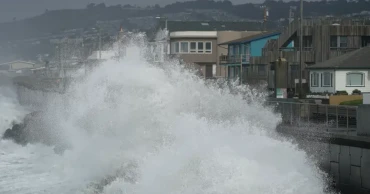
U.S. President Joe Biden has declared an emergency in California as winter storms continue to pummel the most populous state in the country on Monday.
According to a statement released by the White House on Monday, Biden has ordered federal assistance to supplement State of California, tribal and local response efforts due to the emergency conditions resulting from successive and severe winter storms, flooding and mudslides.
The federal emergency declaration will authorize the U.S. Department of Homeland Security and Federal Emergency Management Agency to coordinate all disaster relief efforts.
California Governor Gavin Newsom proclaimed last Wednesday a state of emergency throughout the western U.S. state, home to around 40 million residents, due to the severe winter storms. He submitted a request on Sunday to the White House for a presidential emergency declaration to support ongoing storm response and recovery efforts in the state.
Since late December, 12 Californians have died from storm-related impacts, including flooding, more than the number of civilians who lost their lives to wildfires in the past two years combined, according to a statement released by the governor's office.
READ: 'Bomb cyclone' brings damaging winds, drenches California
"We are in the middle of a deadly barrage of winter storms -- and California is using every resource at its disposal to protect lives and limit damage," said Newsom in the statement.
"We are taking the threat from these storms seriously, and want to make sure that Californians stay vigilant as more storms head our way," the governor added.
Winter storms continued to hit California with heavy rains, causing flooding, road closures and power outages in many regions across the state.
"California is expecting a stronger and more widespread atmospheric river that will bring strong winds, heavy rain, and thunderstorms," the governor's office tweeted, adding that "this is serious -- stay safe, make the necessary preparations, and limit non-essential travel."
Nearly 100,000 homes and businesses in California were still without power as of Monday afternoon, according to PowerOutage.us, a website which collects live power outage data from utilities all over the country.
Tens of thousands of people across Northern California are dealing with continued power outages on Monday, as heavy rain and strong winds caused issues on roadways but spared the region from widespread devastation, reported KCRA-TV, a television station in Sacramento, the capital of the state.
Many school districts across the region and some individual schools facing power outages have canceled classes for Monday, the news outlet added.
No significant letup is expected in the recent very wet weather pattern that has been plaguing much of California and the ongoing heavy rains Monday afternoon across central California will be dropping into Southern California Monday night into early Tuesday, said the U.S. National Weather Service in a weather forecast on Monday.
The U.S. National Weather Service noted that nearly all of California has seen much above average rainfall totals over the past several weeks, with totals 400-600 percent above average values.
"This has resulted in nearly saturated soils and increasingly high river levels. Additional heavy rains on Tuesday will exacerbate ongoing flooding and continue the risk of flash flooding and mudslides, especially across recent burn scar regions," said the agency.
"Dangerous life-threatening flash flooding across southern Santa Barbara county and central Ventura county through this evening as additional heavy rain moves into the area. Follow orders from emergency officials," the U.S. National Weather Service tweeted Monday afternoon.
Thousands of people were ordered to immediately evacuate Southern California's Montecito on Monday.
All residents in the community in Santa Barbara County were urged to "leave now" by local officials as "the heaviest rain is yet to come this afternoon and evening."
A total of 23 people were killed in January 2018 when a massive mudslide caused by heavy rains swept through the coastal community and destroyed 130 homes.
3 years ago
Georgia grand jury ends probe of Trump, 2020 election
The special grand jury in Atlanta that has been investigating whether then-President Donald Trump and his allies committed any crimes while trying to overturn his 2020 election loss in Georgia has finished its work, bringing the case closer to possible criminal charges against Trump and others.
Fulton County Superior Court Judge Robert McBurney, who was overseeing the panel, issued a two-page order Monday dissolving the special grand jury, saying it had completed its work and submitted a final report. The lengthy investigation has been one of several around the country that threaten legal peril for Trump as he mounts a third bid for the White House.
The decision whether to seek an indictment from a regular grand jury will be up to Fulton County District Attorney Fani Willis. Willis spokesperson Jeff DiSantis said the office had no comment on the completion of the panel's work.
McBurney wrote in his order that the special grand jury recommended that its report be made public. He scheduled a hearing for Jan. 24 to determine whether all or part of the report should be released and said the district attorney’s office and news outlets would be given an opportunity to make arguments at that hearing.
Since June, the special grand jury has heard testimony from dozens of witnesses, including numerous close Trump associates such as the former New York mayor and Trump attorney Rudy Giuliani andSen. Lindsey Graham of South Carolina. Assorted high-ranking Georgia officials have also testified, among them Gov. Brian Kemp and Secretary of State Brad Raffensperger.
Last month, the House committee investigating the Jan. 6, 2021, insurrection asserted in its final report that Trump criminally engaged in a “multi-part conspiracy” to overturn the lawful results of the 2020 presidential election and failed to act to stop his supporters from attacking the Capitol. The report concluded an extraordinary 18-month investigation into the former president and the violent attack.
Special grand juries in Georgia cannot issue indictments but instead can issue a final report recommending actions to be taken.
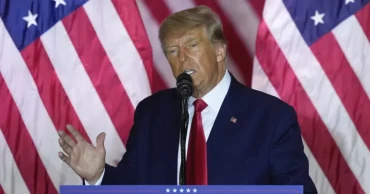
Willis opened the investigation in early 2021, shortly after a recording surfaced of a Jan. 2, 2021, phone call between Trump and Raffensperger. During that call, the president suggested the state's top elections official could “find” the votes needed to overturn his loss in the state.
“I just want to find 11,780 votes, which is one more than we have," Trump had said. “Because we won the state.”
Since then it has become clear that Willis has been focusing on several different areas: phone calls made to Georgia officials by Trump and his allies; false statements made by Trump associates before Georgia legislative committees; a panel of 16 Republicans who signed a certificate falsely stating that Trump had won the state and that they were the state’s “duly elected and qualified” electors; the abrupt resignation of the U.S. attorney in Atlanta in January 2021; alleged attempts to pressure a Fulton County election worker; and a breach of election equipment in a rural south Georgia county.
Lawyers for Giuliani confirmed in August that prosecutors told them he could possibly face criminal charges in the case. The 16 Republican fake electors have also been told they are targets of the investigation, according to public court filings. It is possible that others have also been notified they are targets of the investigation.
Trump and his allies have consistently denied any wrongdoing, with the former president repeatedly describing his call with Raffensperger as “perfect” and dismissing Willis' investigation as a “strictly political Witch Hunt!”
Willis took the unusual step in January 2022 of requesting that a special grand jury be seated to aid the investigation. She noted that a special grand jury would have subpoena power which would help compel testimony from witnesses who were otherwise unwilling to participate in the investigation.
In a letter asking the court to impanel the special grand jury, Willis wrote that her office had received information indicating a “reasonable probability” that Georgia’s 2020 election, including the presidential race, “was subject to possible criminal disruptions.” Her request was granted and the special grand jury was seated in May.
The Justice Department has also been conducting a wide-ranging investigation into efforts to undo the results of the 2020 election, as well as into the fundraising practices of Trump's political action committee.
On Monday, a person familiar with the matter who insisted on anonymity to discuss an ongoing investigation, said Giuliani had received a subpoena weeks ago that sought, among other things, information about possible retainer agreements with Trump and sources of money he had received. As a lawyer for Trump, Giuliani was involved in post-election efforts to challenge the results of the presidential contest.
3 years ago
Chief: 6-year-old shot Virginia teacher during class lesson
In the moments before a 6-year-old Virginia boy shot his teacher, there was no fight, no physical struggle and no warning, authorities said Monday.
“What we know today is that she was providing instruction. He displayed a firearm, he pointed it and he fired one round,” Newport News police Chief Steve Drew said.
Drew, who spoke during a news conference, offered the first detailed description of a shooting that shocked the city and was notable even in a country like the United States that seems inured to constant gun violence. Drew had previously said that the shooting was not accidental and had declined to elaborate.
Drew said he wanted to clarify remarks he made just after the shooting on Friday, when he said there was an “altercation” before the shooting. He said it was more like an “interaction” between the boy and his first-grade teacher at Richneck Elementary School, 25-year-old Abby Zwerner.
But Drew also reiterated that the shooting was “not accidental.”
“It was intentional,” he said.
Drew also revealed that the 9mm handgun used by the boy was legally purchased by his mother and was in the family’s home. He said the boy brought it to school in his backpack the day of the shooting.
Zwerner put up her hand in a defensive position when the gun fired, and the bullet went through her hand and into her upper chest, Drew said. Although her injuries were initially considered life-threatening, she has improved and is currently listed in stable condition at a hospital.
Read: 8 found fatally shot in Utah home, including 5 children
Drew hailed Zwerner as a hero for quickly hustling her students out of the classroom after she was shot. He said surveillance video shows she was the last person to leave her classroom.
“She made a right turn and started down the hallway, and then she stopped. ... She turned around and make sure every one of those students was safe,” Drew said.
Drew said a school employee rushed into the classroom and physically restrained the boy after hearing the gunshot. He said the boy became “a little combative” and struck the employee. Police officers arrived and escorted him out of the building and into a police car.
The boy has been held at a medical facility since an emergency custody order and temporary detention order were issued Friday, Drew said. He said it will be up to a judge to determine what the next steps are for the boy. He also said the boy’s mother has been interviewed by police, but it is unclear whether she could potentially face any charges.
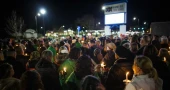
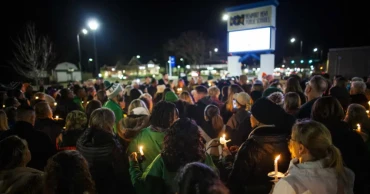
As questions loomed about the boy and his mother, Zwerner’s friend told a crowd gathered at a Monday night vigil that the first-grade teacher has shown “dedication and love for what she does day in and day out.”
“Abby is a warrior and she demonstrates mental and physical strength every day,” said Rosalie List, a 2nd grade teacher at Richneck. “I’m so proud of her.”
Lauren Palladini, Richneck’s school counselor, told the crowd that Zwerner is “sweet. She’s thoughtful. She’s caring. And she’s been one of the most amazing teachers that I’ve been blessed to interact with.”
Amanda Bartley, who teaches at another elementary school in the city, asked everyone to pray for Zwerner and to “pray for the young man who did this.”
As she passed out candles before the vigil, Bartley told The Associated Press that she organized the event to support Zwerner and to uplift others. But, she said, many questions remain unanswered.
Among them: “How did he get the gun? Why wasn’t it locked up? A good gun owner knows that you lock up your weapon. You have a safety on. You keep the ammunition separate from the weapon itself.”
Read: Pennsylvania officer killed, 2nd wounded; suspect shot dead
Gun owners can be prosecuted under a Virginia law that prohibits anyone from recklessly leaving a loaded, unsecured gun in a manner that endangers the life or limb of children under 14. A violation of that law is a misdemeanor, punishable by a maximum jail sentence of one year and a maximum fine of $2,500.
Virginia does not have a law that requires unattended guns to be stored in a particular way or a law that requires gun owners to affirmatively lock their weapons.
“Virginia definitely has a weaker law than many other states that have child access prevention laws,” said Allison Anderman, senior counsel and director of local policy at Giffords Law Center to Prevent Gun Violence.
Legal experts said even though it is theoretically possible under Virginia law to criminally charge a 6-year-old child, there are numerous obstacles to doing so and it’s highly unlikely that any prosecutor would even try.
To be tried as an adult in Virginia, a juvenile must be at least 14. A 6-year-old is also too young to be committed to the custody of the Department of Juvenile Justice if found guilty. In addition, a common law doctrine known as the “infancy defense” holds that children under 7 cannot be prosecuted for a crime because they are so young that they are incapable of forming criminal intent.
A judge would also have to find that the child was competent to stand trial, meaning that he could understand the legal proceedings against him and assist in his own defense, said Andrew Block, a professor and the University of Virginia School of Law who was the director of Virginia’s Department of Juvenile Justice from 2014 to 2019.
“It’s virtually impossible to imagine a 6-year-old being found competent to stand trial,” Block said.
Julie E. McConnell, a law professor at the University of Richmond who has worked on youth justice cases for more than 25 years, said prosecutors can file what’s known as a “Child in Need of Services” petition in cases in which a child’s behavior or condition presents or results in a serious threat to the child’s well-being and physical safety.
A judge would then have an array of options, including: ordering services such as counseling or anger management; allowing the child to remain with his parents, subject to conditions; ordering the parents to participate in programs or cooperate in treatment; or transferring custody of the child to a relative, child welfare agency or a local social services agency.
3 years ago

On eve of Biden's border visit, migrants fear new rules
Several hundred people marched through the streets of El Paso Saturday afternoon, and when they arrived at a group of migrants huddling outside a church, they sang to them “no estan solos” — “you are not alone.”
Around 300 migrants have taken refuge on sidewalks outside Sacred Heart Church, some of them afraid to seek more formal shelters, advocates say, amid new restrictions meant to crack down on illegal border crossings.
This is the scene that will greet President Joe Biden on his first, politically thorny visit to the southern border Sunday.
The president announced last week that Cubans, Nicaraguans, Haitians and Venezuelans will be expelled to Mexico if they enter the U.S. illegally — an expansion of a pandemic-era immigration policy called Title 42. The new rules will also include offering humanitarian parole for up to 30,000 people a month from those four countries if they apply online and find a financial sponsor.
Biden is scheduled to arrive in El Paso Sunday afternoon before traveling on to Mexico City to meet with North American leaders on Monday and Tuesday.
Read more: Biden agenda, lithium mine, tribes, greens collide in Nevada
Dylan Corbett, who runs the nonprofit Hope Border Institute, said the city is experiencing an increasing “climate of fear.”
He said immigration enforcement agencies have already started ratcheting up deportations to Mexico, and he senses a rising level of tension and confusion.
The president’s new policy expands on an existing effort to stop Venezuelans attempting to enter the U.S., which began in October.
Corbett said many Venezuelans have since been left in limbo, putting a strain on local resources. He said expanding those policies to other migrants will only worsen the circumstances for them on the ground.
“It’s a very difficult situation because they can’t go forward and they can’t go back,” he said. People who aren’t processed can’t leave El Paso because of U.S. law enforcement checkpoints; most have traveled thousands of miles from their homelands and refuse to give up and turn around.
“There will be people in need of protection who will be left behind,” Corbett said.
The new restrictions represent a major change to immigration rules that will stand even if the U.S. Supreme Court ends a Trump-era public health law that allows U.S. authorities to turn away asylum-seekers.
El Paso has swiftly become the busiest of the Border Patrol’s nine sectors along the U.S. border with Mexico, occupying the top slots in October and November. Large numbers of Venezuelans began showing up in September, drawn to the relative ease of crossing, robust shelter networks and bus service on both sides of the border, and a major airport to destinations across the United States.
Venezuelans ceased to be a major presence almost overnight after Mexico, under Title 42 authority, agreed on Oct. 12 to accept those who crossed the border illegally into the United States. Nicaraguans have since filled that void. Title 42 restrictions have been applied 2.5 million times to deny migrants a right to seek asylum under U.S. and international law on grounds of preventing the spread of COVID-19.
Read more: Biden intends to make his first visit to US-Mexico border
U.S. authorities stopped migrants 53,247 times in November in the El Paso sector, which stretches across 264 miles of desert in West Texas and New Mexico but sees much of its activity in the city of El Paso and suburban Sunland Park, New Mexico. The most recent monthly tally for the sector was more than triple the same period of 2021, with Nicaraguans the top nationality by far, followed by Mexicans, Ecuadoreans, Guatemalans and Cubans.
Many gathered under blankets outside Sacred Heart Church. The church opens its doors at night to families and women, so not all of the hundreds caught in this limbo must sleep outside in the dropping temperatures. Two buses were available for people to warm up and charge their phones. Volunteers come with food and other supplies.
Juan Tovar held a Bible in his hands, his 7-year-old daughter hoisted onto his shoulders. The 32-year-old was a bus driver in Venezuela before he fled with his wife and two daughters because of the political and financial chaos that has consumed their home country.
He has friends in San Antonio prepared to take them in, he said. He’s here to work and provide an education for his daughters, but he’s stuck in El Paso without a permit.
“Everything is in the hands of God,” he said. “We are all humans and we want to stay.”
Another Venezuelan, 22-year-old Jeremy Mejia, overheard and said he had a message he’d like to send to the president.
“President Biden, I ask God to touch your heart so we can stay in this country,” Mejia said. “I ask you to please touch your heart and help us migrants have a better future in the U.S.”
3 years ago

6-year-old shoots teacher in Virginia classroom: Police
A 6-year-old student shot and wounded a teacher at his school in Virginia during an altercation inside a first-grade classroom Friday, police and school officials in the city of Newport News said.
Experts said a school shooting involving a 6-year-old is extremely rare, although not unheard of, while Virginia law limits the ways in which a child that age can be punished for such a crime.
No students were injured in the shooting at Richneck Elementary School, police said. The teacher — a woman in her 30s — suffered life-threatening injuries. Her condition had improved somewhat by late afternoon, Newport News Police Chief Steve Drew said.
“We did not have a situation where someone was going around the school shooting,” Drew told reporters, later adding that the gunshot was not an accident.
Drew said the student and teacher had known each other in a classroom setting.
He said the boy had a handgun in the classroom, and investigators were trying to figure out where he obtained it. The police chief did not provide further details about the shooting, the altercation or what happened inside the school.
Joselin Glover, whose son is in fourth grade, told The Virginian-Pilot newspaper she got a text from the school stating that one person was shot and another was in custody.
“My heart stopped,” she said. “I was freaking out, very nervous. Just wondering if that one person was my son.”
Also Read: 8 found fatally shot in Utah home, including 5 children
Carlos, her 9-year-old, was at recess. But he said he and his classmates were soon holed up in the back of a classroom.
“Most of the whole class was crying,” Carlos told the newspaper.
Parents and students were reunited at a gymnasium door, Newport News Public Schools said via Facebook.
The police chief did not specifically address questions about whether authorities were in touch with the boy’s parents, but said members of the police department were handling that investigation.
“We have been in contact with our commonwealth’s attorney (local prosecutor) and some other entities to help us best get services to this young man,” Drew said.
Newport News is a city of about 185,000 people in southeastern Virginia known for its shipyard, which builds the nation’s aircraft carriers and other U.S. Navy vessels.
Richneck has about 550 students who are in kindergarten through fifth grade, according to the Virginia Department of Education’s website. School officials have already said that there will be no classes at the school on Monday.
“Today our students got a lesson in gun violence,” said George Parker III, Newport News schools superintendent, “and what guns can do to disrupt, not only an educational environment, but also a family, a community.”
Virginia law does not allow 6-year-olds to be tried as adults
In addition, a 6-year-old is too young to be committed to the custody of the Department of Juvenile Justice if found guilty.
A juvenile judge would have authority, though, to revoke a parent’s custody and place a child under the purview of the Department of Social Services.
A school shooting involving a 6-year-old is extremely rare, said James Alan Fox, a criminologist at Boston’s Northeastern University.
Fox told The Associated Press Friday evening that he could think of one previous incident involving a child that age.
In 2000, a 6-year-old boy fired a bullet from a .32-caliber gun inside Buell Elementary near Flint, Michigan, 60 miles (96 kilometers) from Detroit, striking 6-year-old Kayla Rolland in the neck, according to an AP article from the time. She died a half-hour later.
Fox analyzed school shooting data sets going back to 1970 from the Center for Homeland Defense and Security, which is located at the Naval Postgraduate School in Monterey, California. He said the data listed school shootings involving children ages 7, 8, 9 and older, but not 6-year-olds.
Another factor that stands out about the Virginia shooting is that it occurred in a classroom, Fox said. Many occur outside a school building where students are unsupervised.
From 2010 through 2021, there were more than 800 school-related shootings in K-12 schools that involved 1,149 victims. Thirty percent of those occurred in the school building, said Fox, who published the 2010 book, “Violence and Security on Campus: From Preschool Through College.”
“There are students who killed teachers, more typically high school students,” Fox said. “I don’t know of other cases where a 6-year-old shot a teacher.”
___
Barakat reported from Falls Church, Virginia.
3 years ago

McCarthy elected House speaker in rowdy post-midnight vote
Republican Kevin McCarthy was elected House speaker on a historic post-midnight 15th ballot early Saturday, overcoming holdouts from his own ranks and floor tensions that boiled over after a chaotic week that tested the new GOP majority’s ability to govern.
“My father always told me, it’s not how you start, it’s how you finish,” McCarthy told cheering fellow Republicans.
Eager to confront President Joe Biden and the Democrats, he promised subpoenas and investigations. “Now the hard work begins," the California Republican declared. He credited former President Donald Trump for standing with him and for making late calls “helping get those final votes.”
Republicans roared in celebration when his victory was announced, chanting “USA! USA!”
Finally elected, McCarthy took the oath of office, and the House was finally able to swear in newly elected lawmakers who had been waiting all week for the chamber to formally open and the 2023-24 session to begin.
After four days of grueling ballots, McCarthy flipped more than a dozen conservative holdouts to become supporters, including the chairman of the chamber’s Freedom Caucus.
Read more: GOP's McCarthy voted down time after time for House speaker
He fell one vote short on the 14th ballot, and the chamber became raucous, unruly.
McCarthy strode to the back of the chamber to confront Republican Matt Gaetz, sitting with Lauren Boebert and other holdouts. Fingers were pointed, words exchanged and violence apparently just averted.
At one point, Republican Mike Rogers of Alabama, shouting, approached Gaetz before another Republican, Richard Hudson, physically pulled him back.
“Stay civil!” someone shouted.
Order restored, the Republicans fell in line to give McCarthy the post he had fought so hard to gain, House speaker, second in the line of succession to the presidency.
The few remaining Republican holdouts began voting present, dropping the tally he needed. It was the end of a bitter standoff that had shown the strengths and fragility of American democracy.
The tally was 216-212 with Democrats voting for leader Hakeem Jeffries, and six Republican holdouts to McCarthy simply voting present.
The night's stunning turn of events came after McCarthy agreed to many of the detractors’ demands — including the reinstatement of a longstanding House rule that would allow any single member to call a vote to oust him from office.
Even as McCarthy secured the votes he needs, he will emerge as a weakened speaker, having given away some powers and constantly under the threat of being booted by his detractors.
But he could also be emboldened as a survivor of one of the more brutal fights for the gavel in U.S. history. Not since the Civil War era has a speaker's vote dragged through so many rounds of voting.
The showdown that has stymied the new Congress came against the backdrop of the second anniversary of the Jan. 6, 2021, attack on the Capitol, which shook the country when a mob of Trump’s supporters tried to stop Congress from certifying the Republican’s 2020 election defeat to Biden.
At a Capitol event Friday, some lawmakers, all but one of them Democrats, observed a moment of silence and praised officers who helped protect Congress on that day. And at the White House, Biden handed out medals to officers and others who fought the attackers.
“America is a land of laws, not chaos,” he said.
At the afternoon speaker's vote, a number of Republicans tiring of the spectacle temporarily walked out when one of McCarthy's most ardent challengers, Gaetz, railed against the GOP leader.
Contours of a deal with conservative holdouts who had been blocking McCarthy's rise had emerged the night before, and took hold after four dismal days and 14 failed votes in an intraparty standoff unseen in modern times.
One significant former holdout — Republican Scott Perry, chairman of the conservative Freedom Caucus, who had been a leader of Trump's efforts to challenge the 2020 election — tweeted after his switched vote for McCarthy, “We're at a turning point.”
Another Republican holdout, Byron Donalds of Florida, who was repeatedly nominated as an alternative candidate for speaker, switched Friday too, voting for McCarthy.
Trump may have played a role in swaying some holdouts — calling into a meeting of Republican freshmen the night before, and calling other members ahead of voting. He had urged Republicans to wrap up their public dispute.
Read more: McCarthy fails on 14th ballot for speaker, tensions boil
As Republican Mike Garcia nominated McCarthy on Friday, he also thanked the U.S. Capitol Police who were given a standing ovation for protecting lawmakers and the legislative seat of democracy on Jan. 6.
But in nominating the Democratic leader Jeffries, Democrat Jim Clyburn recalled the horror of that day and told his colleagues, “The eyes of the country are on us today.”
Electing a speaker is normally an easy, joyous task for a party that has just won majority control. But not this time: About 200 Republicans were stymied by 20 far-right colleagues who said McCarthy was not conservative enough.
The House adjourned Friday until late in the night, giving time for last-minute negotiations and allowing two absent Republican colleagues to return to Washington.
Newly elected Wesley Hunt of Texas arrived to vote for McCarthy — to applause, days after his wife had given birth — as did Ken Buck of Colorado.
The disorganized start to the new Congress pointed to difficulties ahead with Republicans now in control of the House, much the way that some past Republican speakers, including John Boehner, had trouble leading a rebellious right flank. The result: government shutdowns, standoffs and Boehner’s early retirement when conservatives threatened to oust him.
The agreement McCarthy presented to the holdouts from the Freedom Caucus and others centers around rules changes they have been seeking for months. Those changes would shrink the power of the speaker’s office and give rank-and-file lawmakers more influence in drafting and passing legislation.
At the core of the emerging deal was the reinstatement of a House rule that would allow a single lawmaker to make a motion to “vacate the chair,” essentially calling a vote to oust the speaker. McCarthy had resisted allowing a return to the longstanding rule that former Speaker Nancy Pelosi had done away with, because it had been held over the head of Boehner. But it appears McCarthy had no other choice.
Other wins for the holdouts are more obscure and include provisions in the proposed deal to expand the number of seats available on the House Rules Committee; to mandate 72 hours for bills to be posted before votes; and to promise to try for a constitutional amendment that would impose federal limits on the number of terms a person could serve in the House and Senate.
Before Friday's ballots, Democratic leader Jeffries of New York had won the most votes on every ballot but also remained short of a majority. McCarthy had run second, gaining no ground.
The longest fight for the gavel started in late 1855 and dragged on for two months, with 133 ballots, during debates over slavery in the run-up to the Civil War.
3 years ago

McCarthy fails on 14th ballot for speaker, tensions boil
Republican Kevin McCarthy failed to win the House speakership on a 14th ballot late Friday, falling one vote short as tensions boiled over in a chaotic scene on the House floor.
Even after two key Republican holdouts voted present to lower the tally he would need, it was not enough. McCarthy strode to the back of the chamber to confront Matt Gaetz, sitting with Lauren Boebert and other holdouts. Fingers were pointed, words exchanged, one lawmaker was restrained as colleagues stared in disbelief.
“Stay civil!” someone shouted.
Still, McCarthy was on the cusp of becoming House speaker as the chamber convened for a fourth historic day after he made extraordinary gains in a grueling standoff that has tested American democracy and the GOP majority’s ability to govern.
Before the vote, McCarthy had flipped 15 conservative holdouts to become supporters, including the chairman of the chamber's Freedom Caucus, leaving him just a few shy of seizing the gavel for the new Congress.
The House gaveled in late in the night, giving time for last-minute negotiations and for absent Republican colleagues time to return to Washington if their votes were needed. But the chamber drew tense and still as the roll call fell short.
McCarthy had declared to reporters earlier in the day that he believed “we’ll have the votes to finish this once and for all.”
The day's stunning turn of events came after McCarthy agreed to many of the detractors' demands -- including the reinstatement of a longstanding House rule that would allow any single member to call a vote to oust him from office.
Even if McCarthy is able to secure the votes he needs, he will emerge as a weakened speaker, having given away some powers and constantly under the threat of being booted by his detractors.
But he could also be emboldened as a survivor of one of the more brutal fights for the gavel in U.S. history. Not since the Civil War era has a speaker's vote dragged through so many rounds of voting.
The showdown that has stymied the new Congress came against the backdrop of the second anniversary of the Jan. 6, 2021, attack on the Capitol, which shook the country when a mob of then-President Donald Trump’s supporters tried to stop Congress from certifying the Republican’s 2020 election defeat to Democrat Joe Biden.
At a Capitol event on Friday, some lawmakers, mostly Democrats, observed a moment of silence and praised officers who helped protect Congress on that day. And at the White House, Biden handed out medals to officers and others who fought the attackers.
“America is a land of laws, not chaos,” he said.
Read more: GOP's McCarthy voted down time after time for House speaker
At the afternoon speaker's vote, a number of Republicans tiring of the spectacle temporarily walked out when one of McCarthy's most ardent challengers railed against the GOP leader.
Contours of a deal with conservative holdouts who have been blocking McCarthy's rise emerged after three dismal days and 11 failed votes in an intraparty standoff unseen in modern times.
And an upbeat McCarthy told reporters as he arrived at the Capitol, “We’re going to make progress. We’re going to shock you.”
One significant former holdout, Republican Scott Perry, chairman of the conservative Freedom Caucus who had been a leader of Trump's efforts to challenge the 2020 election, tweeted after his switched vote for McCarthy: “We're at a turning point.”
Another Republican holdout, Byron Donalds of Florida, who was repeatedly nominated as an alternative candidate for speaker, switched on Friday, too, voting for McCarthy.
Trump may have played a role in swaying the holdouts. Donalds said he had spoken to the former president who had been urging Republicans to wrap up their public dispute the day before.
On the 12th ballot, McCarthy won the most votes for the first time 213. A 13th was swiftly launched, this time, just between McCarthy and the Democratic leader, and he picked up one more detractor, to 214.
With 432 members now voting — including the dramatic return of Democrat David Trone who had been out for surgery — McCarthy still fell short of the majority. Six Republicans cast their ballots for a Republican colleague. McCarthy allies were counting on the return of two absent colleagues to push him even closer to the majority in nighttime voting.
As Rep. Mike Garcia nominated McCarthy for Friday, he also thanked the U.S. Capitol Police who were given a standing ovation for protecting lawmakers and the legislative seat of democracy on Jan. 6.
But in nominating the Democratic leader Hakeem Jeffries, Democrat Jim Clyburn recalled the horror of that day and told his colleagues: “The eyes of the country are on us today,” he said.
Without a speaker, the chamber is unable swear in members and begin its 2023-24 session, a sign of the difficulty ahead for the new Republican majority as it tries to govern.
Electing a speaker is normally an easy, joyous task for a party that has just won majority control. But not this time: About 200 Republicans have been stymied by 20 far-right colleagues who said he’s not conservative enough.
The disorganized start to the new Congress pointed to difficulties ahead with Republicans now in control of the House, much the way that some past Republican speakers, including John Boehner, had trouble leading a rebellious right flank. The result: government shutdowns, standoffs and Boehner’s early retirement when conservatives threatened to oust him.
The agreement McCarthy presented to the holdouts from the Freedom Caucus and others centers around rules changes they have been seeking for months. Those changes would shrink the power of the speaker’s office and give rank-and-file lawmakers more influence in drafting and passing legislation.
At the core of the emerging deal is the reinstatement of a House rule that would allow a single lawmaker to make a motion to “vacate the chair,” essentially calling a vote to oust the speaker. McCarthy had resisted allowing a return to the longstanding rule that former Speaker Nancy Pelosi had done away with, because it had been held over the head of past Republican Speaker Boehner. But it appears McCarthy had no other choice.
Other wins for the holdouts are more obscure and include provisions in the proposed deal to expand the number of seats available on the House Rules Committee, to mandate 72 hours for bills to be posted before votes and to promise to try for a constitutional amendment that would impose federal limits on the number of terms a person could serve in the House and Senate.
What started as a political novelty, the first time since 1923 a nominee had not won the gavel on the first vote, has devolved into a bitter Republican Party feud and deepening potential crisis.
Read more: Houses of Speaker, Dy Speaker on Parliament premises are legal: SC
Before Friday's ballots, Democratic leader Jeffries of New York had won the most votes on every ballot but also remained short of a majority. McCarthy ran second, gaining no ground.
Pressure has grown with each passing day for McCarthy to somehow find the votes he needs or step aside. Congress cannot fully function, the incoming Republican chairmen of the House's Foreign Affairs, Armed Services and Intelligence committees all said national security was at risk, staff risk not getting paychecks.
The longest fight for the gavel started in late 1855 and dragged on for two months, with 133 ballots, during debates over slavery in the run-up to the Civil War.
3 years ago

Biden agenda, lithium mine, tribes, greens collide in Nevada
Opponents of the largest lithium mine planned in the U.S. urged a federal judge in Nevada on Thursday to vacate the U.S. government's approval of the project until it completes additional environmental reviews and complies with all state and federal laws.
U.S. District Judge Miranda Du said after a three-hour hearing in Reno that she hoped to make a decision “in the next couple months” on how to proceed in the nearly two-year-old legal battle over the Bureau of Land Management's approval of the mine Lithium Nevada Corp. plans near the Nevada-Oregon line.
Lawyers for the company and the Bureau of Land Management insisted the project complies with U.S. laws and regulations. But they said that if Du determines it does not, she should stop short of vacating the agency's approval and allow initial work at the site to begin as further reviews are initiated.
Lawyers for a Nevada rancher, conservation groups and Native American tribes suing to block the mine said that should not occur because any environmental damage would be irreversible.
Dozens of tribe members and other protesters rallied outside the downtown courthouse during the hearing, beating drums and waving signs at passing motorists.
Du has refused twice over the past year to grant temporary injunctions sought by tribal leaders who say the mine site is on sacred land where their ancestors were massacred by the U.S. Cavalry in 1865.
Read more: Biden intends to make his first visit to US-Mexico border
Lithium Nevada and the Bureau of Land Management say the project atop an ancient volcano is critical to meeting the growing demand for lithium to make electric vehicle batteries — a key part of President Joe Biden’s push to expedite a transition from fossil fuels to renewable energy through a reduction in greenhouse gas emissions.
“It is the largest known lithium deposit of its kind,” Laura Granier, a lawyer representing the company, told Du Thursday. “Our nation and the world will suffer if this project is delayed further.”
Opponents say it will destroy dwindling habitat for sage grouse, Lahontan cutthroat trout, pronghorn antelope and golden eagles, pollute the air and create a plume of toxic water beneath the open-pit mine deeper than the length of a football field.
“We need a smart energy future that transitions our economy from fossil fuels to renewables without sacrificing rare species in the process,” said Greta Anderson, deputy director of the Western Watersheds Project, which also petitioned in September for protection of a tiny nearby snail under the Endangered Species Act.
The Bureau of Land Management fast-tracked the project’s approval during the final days of the Trump administration. The Biden administration continues to embrace it as part of the president’s clean energy agenda.
Demand for lithium is expected to triple by 2030 from 2020. Lithium Nevada says its project is the only one on the drawing board that can help meet the demand.
Will Falk, a lawyer for the Reno-Sparks Indian Colony, said that “in this rush for lithium in Nevada, the BLM went way too fast in permitting this mine.”
Roger Flynn, a lawyer for the Western Mining Action Project representing several environmental groups, said the agency wants the project to move forward even though it botched the environmental reviews it was determined to complete before ex-President Donald Trump left office.
“Meanwhile, there will be this immediate, permanent massive environmental damage,” Flynn said.
Read more: Biden signs gay marriage law, calls it ‘a blow against hate’
Thursday's hearing marked the first on the actual merits of the lawsuit filed in February 2021. It will set the legal landscape going forward after the 9th U.S. Circuit Court of Appeals upheld a ruling in Arizona that voided federal approval of a copper mine.
That potentially precedent-setting decision raises questions about the reach of the Mining Law of 1872 and could have a bearing on disposal of waste rock at the lithium mine in the high desert about 200 miles (321 kilometers) northeast of Reno.
In addition to the cultural and environmental concerns about the potential effects, the new 9th Circuit ruling halting the Arizona mine in July was a focus of Thursday's hearing. Du told lawyers on both sides she was interested in "the extent to which (that case) controls the outcome of this case.”
The San Francisco-based appellate court upheld the Arizona ruling that the Forest Service lacked authority to approve Rosemont Copper's plans to dispose of waste rock on land adjacent to the mine it wanted to dig on a national forest southeast of Tucson.
The service and the Bureau of Land Management long have interpreted the Mining Law of 1872 to convey the same mineral rights to such lands.
The 9th Circuit agreed with U.S. Judge James Soto, who determined the Forest Service approved Rosemont's plans in 2019 without considering whether the company had any mining rights on the neighboring lands. He concluded the agency assumed under mining law that Rosemont had “valid mining claims on the 2,447 acres it proposed to occupy with its waste rock.”
Leilani Doktor, a Justice Department lawyer for the Bureau of Land Management, said the Forest Service and the BLM are under “different regulatory schemes.”
“Each step of the way, BLM followed its own regulations,” she said.
3 years ago