usa

US commemorates 21st anniversary of 9/11 terror attacks
Americans are remembering 9/11 with moments of silence, readings of victims' names, volunteer work and other tributes 21 years after the deadliest terror attack on U.S. soil.
Victims’ relatives and dignitaries will convene Sunday at the places where hijacked jets crashed on Sept. 11, 2001 — the World Trade Center in New York, the Pentagon and a field in Pennsylvania.
Other communities around the country are marking the day with candlelight vigils, interfaith services and other commemorations. Some Americans are joining in volunteer projects on a day that is federally recognized as both Patriot Day and a National Day of Service and Remembrance.
The observances follow a fraught milestone anniversary last year. It came weeks after the chaotic and humbling end of the Afghanistan war that the U.S. launched in response to the attacks.
Read: Afghans protest US order to give $3.5B to 9/11 victims
But if this Sept. 11 may be less of an inflection point, it remains a point for reflection on the attack that killed nearly 3,000 people, spurred a U.S. “war on terror” worldwide and reconfigured national security policy.
It also stirred — for a time — a sense of national pride and unity for many, while subjecting Muslim Americans to years of suspicion and bigotry and engendering debate over the balance between safety and civil liberties. In ways both subtle and plain, the aftermath of 9/11 ripples through American politics and public life to this day.
And the attacks have cast a long shadow into the personal lives of thousands of people who survived, responded or lost loved ones, friends and colleagues.
More than 70 of Sekou Siby's co-workers perished at Windows on the World, the restaurant atop the trade center's north tower. Siby had been scheduled to work that morning until another cook asked him to switch shifts.
Siby never took a restaurant job again; it would have brought back too many memories. The Ivorian immigrant wrestled with how to comprehend such horror in a country where he'd come looking for a better life.
He found it difficult to form the type of close, family-like friendships he and his Windows on the World co-workers had shared. It was too painful, he had learned, to become attached to people when “you have no control over what’s going to happen to them next.”
Read: 9/11 : Did Al-Qaeda accelerate the West's decline?
“Every 9/11 is a reminder of what I lost that I can never recover,” says Siby, who is now president and CEO of ROC United. The restaurant workers' advocacy group evolved from a relief center for Windows on the World workers who lost their jobs when the twin towers fell.
On Sunday, President Joe Biden plans to speak and lay a wreath at the Pentagon, while first lady Jill Biden is scheduled to speak in Shanksville, Pennsylvania, where one of the hijacked planes went down after passengers and crew members tried to storm the cockpit as the hijackers headed for Washington. Al-Qaida conspirators had seized control of the jets to use them as passenger-filled missiles.
Vice President Kamala Harris and husband Doug Emhoff are due at the National Sept. 11 Memorial in New York, but by tradition, no political figures speak at the ground zero ceremony. It centers instead on victims' relatives reading aloud the names of the dead.
Readers often add personal remarks that form an alloy of American sentiments about Sept. 11 — grief, anger, toughness, appreciation for first responders and the military, appeals to patriotism, hopes for peace, occasional political barbs, and a poignant accounting of the graduations, weddings, births and daily lives that victims have missed.
Some relatives also lament that a nation which came together — to some extent — after the attacks has since splintered apart. So much so that federal law enforcement and intelligence agencies, which were reshaped to focus on international terrorism after 9/11, now see the threat of domestic violent extremism as equally urgent.
3 years ago
Storm’s fierce winds complicate California wildfire fight
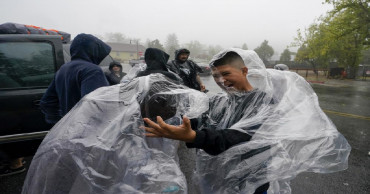
A tropical storm nearing Southern California on Friday brought fierce mountain winds, high humidity, rain and the threat of flooding to a region already dealing with wildfires and an extraordinary heat wave that has stressed the electrical grid.
In a mix of bad and good, firefighters feared powerful winds could expand the massive Fairview Fire 70 miles (113 kilometers) north of San Diego, while forecasters said the change in weather would finally end the state’s heat wave.
Tropical Storm Kay, downgraded from hurricane status, was starting to sputter as it moved northward off Mexico’s Baja California peninsula and was expected to keep losing steam overnight and head farther out to sea without making landfall in Southern California, according to the National Hurricane Center. But it was still having an impact there. The National Weather Service warned of a threat of flash floods for much of Southern California, Arizona and southern Nevada.
The moisture was forecast to then surge farther north into the Central Valley and the Sierra Nevada, where the dangerous Mosquito Fire is burning, bringing both significant cooling and the possibility of thunderstorms during the weekend.
The tropical conditions added a swelter to the heat wave, which offered little overnight relief. The San Diego airport was 89 degrees (31.6 degrees Celsius) with rain at 5 a.m. Friday.
“Living in San Diego, it’s odd to see skies overcast and rain and go outside into a wall of humidity as if it were South Carolina,” said city spokesperson Anthony Santacroce.
Officials from San Diego to Long Beach were posting warning signs in low-lying coastal areas and making sandbags available to the public. Crews were on standby to deal with any flooding, while the forecast of rough seas prompted the cancellation of afternoon and evening ferry services Friday to Catalina Island, off the coast of Los Angeles.
By late morning a steady rain pelted downtown San Diego as Charles Jenkins swept the accumulating puddles away from the tarps of his makeshift home.
“The heat was killer so for now this feels good,” Jenkins said. “I just hope the water doesn’t get too high. But I will rough it. I’ve got pallets I can put underneath to keep out the rain.”
Around 1 p.m. as the rain continued, a Navy contracted, twin-engine plane carrying two civilian pilots slid off the end of a runway after it touched down at Naval Air Station North Island in Coronado and parked in a spit of sand. The plane’s nose was damaged but the pilots were able to depart on their own and were taken to a hospital for observation, Naval Base Coronado spokesperson Kevin Dixon said. The cause of the crash was under investigation and it was unknown if weather was a factor.
To the east in the agricultural region of California’s Imperial Valley near the Mexican border, there was some scattered flooding of roads and fields and power outages, officials said.
Windspeeds reached 109 mph (175 kph) on San Diego County’s Cuyamaca Peak, the National Weather Service said. Several small school districts in the mountainous region called off classes to keep people from having to travel in the blustery weather.
The gusts made driving to work difficult for Rhonda Young, office manager of the Julian Pie Company in Julian, a mountain town 60 miles (100 kilometers) northeast of San Diego that is known for its apple orchards.
“It’s pretty crazy out there,” she said. “There are definitely a lot of trees down.”
The winds added a major concern on the fire lines.
The Fairview Fire covered about 43 square miles (111 square kilometers) of Riverside County and was just 5% contained. Two people died while fleeing on Monday and at least 12 structures have been destroyed. More than 18,000 homes were threatened.
To the north in the Sierra Nevada, the fast-moving Mosquito Fire doubled in size Friday to at least 46 square miles (119 square kilometers) and threatened 3,600 homes in Placer and El Dorado counties, while blanketing the region in smoke.
Flames jumped the American River, burning structures in the mountain hamlet of Volcanoville and moving closer to the towns of Foresthill, home to about 1,500 people, and Georgetown, population 3,000. More than 5,700 people in the area have been evacuated, said Placer County Sheriff’s Office Lt. Josh Barnhart.
David Hance slept on the porch of his mother’s Foresthill mobile home when he woke up to a glowing red sky early Wednesday morning and was ordered to evacuate.
“It was actually fricking terrifying, cause they say, ‘Oh yeah, it’s coming closer,’” he said. “It was like sunset in the middle of the night.”
Hance left behind most of his electronic gear, all his clothing and family photos and fled to Auburn, where he found his mother, Linda Hance, who said the biggest stress is wondering: “Is my house still there?”
Also read; Tropical Storm Colin threatens a wet weekend for Carolinas
Organizers of the Tour de Tahoe announced Friday they were canceling the annual 72-mile (115-km) bicycle ride scheduled Sunday around Lake Tahoe because of the heavy smoke from the blaze — more than 50 miles (80 km) away — and noted that cycling is a “heavy cardio activity that does not pair well with terrible air quality.” Last year’s ride was canceled due to smoke from another big fire south of Tahoe.
The Mosquito Fire’s cause remained under investigation. Pacific Gas & Electric said unspecified “electrical activity” occurred close in time to the report of the fire on Sept. 6.
Positive news was reported from the Radford Fire near the Big Bear Lake resort area in the San Bernardino Mountains east of Los Angeles. Evacuation orders were reduced to warnings as containment grew to 59% with just under 2 square miles (5 square kilometers) burned.
While rain could help quell the fires, the storm raised new risks.
Riverside County officials warned that some areas including wildfire burn scars could get up to 7 inches (17.7 centimeters) of rain, bringing the threat of flash flooding and mud and debris flows.
Southern California Edison advised that it was considering cutting power to some areas due to the weather. Public safety power shutoffs are used to prevent fires from igniting if winds bring down or damage power lines and electrical equipment.
Up the West Coast, Oregon utilities began shutting down power to thousands of customers on Friday as dry easterly winds swept into the region, raising the risk of wildfire danger.
3 years ago

US may expand monkeypox vaccine eligibility to men with HIV
U.S. officials are considering broadening recommendations for who gets vaccinated against monkeypox, possibly to include many men with HIV or those recently diagnosed with other sexually transmitted diseases.
Driving the discussion is a study released Thursday showing that a higher-than-expected share of monkeypox infections are in people with other sexually transmitted infections.
Dr. John T. Brooks, chief medical officer for the Centers for Disease Control and Prevention's monkeypox outbreak response, said the report represents a “call to action.”
Brooks told The Associated Press on Thursday that he expected vaccine recommendations to expand and that "the White House, together with CDC, are working on a plan for what that will look like.”
Also read: WHO: Monkeypox cases drop 21%, reversing month-long increase
Currently, the CDC recommends the vaccine to people who are a close contact of someone who has monkeypox; people who know a sexual partner was diagnosed in the past two weeks; and gay or bisexual men who had multiple sexual partners in the last two weeks in an area with known virus spread.
Shots are also recommended for health care workers at high risk of exposure.
The vast majority of monkeypox cases are in men who have sex with men who reported close contact with an infected person during sex. But the new CDC report suggested infections in people with HIV and other STDs may be a bigger issue then previously realized.
The report looked at about 2,000 monkeypox cases from four states and four cities from mid-May to late July.
It found 38% of those with monkeypox infections had been diagnosed with HIV, far higher than their share of the population among men who have sex with men.
Also read: Public health emergency declared over monkeypox in WA county
The study also found that 41% of monkeypox patients had been diagnosed with an STD in the preceding year. And about 10% of those patients had been diagnosed with three or more different STDs in the prior year.
There were racial differences. More than 60% of Black Americans with monkeypox had HIV, compared with 41% of Hispanic people, 28% of whites and 22% of Asians.
Jason Farley, an infectious disease expert at the Johns Hopkins School of Nursing, said men of color who have sex with men should be at the front of the line for monkeypox vaccine doses. Within those racial and ethnic groups, the next priority should be anyone living with HIV or was recently diagnosed with a STD, he said.
The study has several limitations, including that the data may not be nationally representative, the authors said.
Brooks said the findings could lead to vaccines being recommended for people with recent STD infections, people with HIV, people taking pre-exposure prophylaxis (PrEP) medications to prevent HIV infection and, possibly, prostitutes.
Discussions of expanding eligibility will have to take into account supply of the two-dose vaccine. And any substantial expansion of monkeypox vaccination recommendations may also be subject to review by CDC’s outside vaccine advisers, health officials say.
Also on Thursday, the CDC sent a letter to state and local health departments that said federal funds for HIV and STD prevention can also now be used against monkeypox. Cases in the U.S. seem to be declining, officials say.
3 years ago

Police say Memphis shooting suspect killed 4 during rampage
Police in Memphis, Tennessee, said a man who drove around the city shooting at people, killing four, during an hours-long rampage that forced frightened people to shelter in place Wednesday, has been arrested.
Ezekiel Kelly, 19, who was charged as an adult with attempted first-degree murder in 2020, was taken into custody at around 9 p.m. in the Memphis neighborhood of Whitehaven, police spokeswoman Karen Rudolph said. Memphis Police Director Cerelyn “CJ” Davis said charges were pending during a news conference early Thursday.
Four people were killed and three others were wounded in seven shootings across Memphis, Davis said. The rampage began at 12:56 a.m. Wednesday and continued to about 8:30 p.m.
There was at least eight crime scenes: the seven shootings and the carjacking of a Dodge Challenger in Southaven, Mississippi, Davis said. Kelly was arrested when he crashed during a high speed chase after the carjacking in Southaven, which is located south of Memphis.
That was about two hours after police sent out an alert saying a man driving a light blue Infiniti was responsible for multiple shootings in the city. Police said he later killed a woman in Memphis and took her grey Toyota SUV, which he left behind when the carjacked the Dodge Challenger in Southaven. Police said he recorded his actions on Facebook.
As the shooter terrorized Memphis, public bus service was suspended and a downtown stadium where a minor-league baseball game was underway was placed on lockdown. Friends and relatives frantically called and texted each other to check on each others’ safety. TV stations cut into regular coverage to keep viewers updated.
Police received “numerous tips” from the public during the ordeal, Davis said.
Read: Texas elementary school shooting: What do we know so far?
The University of Memphis sent a message to students saying a shooting had been reported near the campus. Rhodes College, which is about 4 miles away from the university, advised students on and off campus to shelter in place.
The area where Kelly was arrested was about 11 miles from the University of Memphis and about 12 miles from Rhodes College.
“If you do not have to be out, stay indoors until this is resolved,” Memphis police said on Twitter, before the arrest.
Police did not discuss a motive or release the identities of those who were killed or wounded. It was too early in the investigation to discuss how the suspect got the gun or guns used in the shootings, said Ali Roberts, acting assistant special agent in charge for the Bureau of Alcohol, Tobacco, Firearms and Explosives in Memphis.
Memphis has been shaken by several high-profile killings in recent weeks, including the shooting of a pastor during a daylight carjacking in her driveway, the shooting of an activist during an argument over money, and the slaying of a woman who was abducted while she was on a pre-dawn run.
“I understand it feels like so much violence and evil to experience in such a short time,” Memphis City Council member Chase Carlisle said on Twitter. “We are SO much more than this.”
In February of 2020, Kelly, then 17, was charged as an adult with attempted first-degree murder, aggravated assault, using a firearm to commit a dangerous felony and reckless endangerment with a deadly weapon, court records showed. Circumstances of the case were not immediately known.
Records show he pleaded guilty to aggravated assault and was sentenced in April 2021 to three years. Kelly was released from prison in March, 11 months after he was sentenced, Memphis Mayor Jim Strickland said.
3 years ago

Uvalde students go back to school for 1st time since attack
Gilbert Mata woke up excited Tuesday for the first day of school since a gunman’s bullet tore through his leg three months ago in a fourth grade classroom in Uvalde.
The 10-year-old has healed from his physical wounds, but burning smells still remind him of gunfire and the sight of many police officers recalls the day in May that an assailant killed 19 of his classmates and two teachers.
On a morning that many Uvalde families had dreaded, a new school year began in the small South Texas town with big hugs on sidewalks, patrol cars parked at every corner and mothers wiping away tears while pulling away from the curb in the drop-off line.
Mata was ready to return, this time with his own cellphone. His mother, Corina Comacho, had a tougher time letting her child go back to class.
“There’s a certain time he can get his phone out and text us he’s OK,” she said after walking him into a new school, Flores Elementary, and dropping him off behind doors with new locks. “That’s like, ‘OK, that’s good. Now I feel better.’”
Outside Uvalde Elementary, teachers in matching turquoise shirts emblazoned with “Together We Rise & Together We Are Better” gently led students through a newly installed 8-foot (2.4-meter) fence and past a state trooper standing outside the front entrance.
“Good morning, sunshine!” greeted one teacher. “You ready to have a good school year?”
Robb Elementary, where the attack unfolded on May 24, is permanently closed and will eventually be demolished.
A large memorial of stuffed animals, victims’ photographs and crosses remains outside the scene of one of the deadliest mass shootings in U.S. history.
Outside the other schools in Uvalde — which are only a short drive away — some added safety measures that the district rushed to implement after the attack were incomplete.
Security cameras are still in the works. New metal fencing surrounds some campuses, partially encloses others and isn’t up at all at Flores Elementary, where many Robb students are enrolled this year.
The attack lasted more than 70 minutes before police finally confronted the gunman and killed him. The delay infuriated parents and led to a damning report by state lawmakers. Now more police are on patrol, but distrust is rampant.
Youtube video thumbnail“There’s a big ol’ gap right here. Anyone can walk through,” said Celeste Ibarra, 30, pointing to the new barrier around Uvalde Elementary while standing in her front yard across the street.
Ibarra’s older daughter, 9-year-old Aubriella Melchor, was in Robb Elementary during the shooting and seemed to drag out Tuesday morning as long as possible, taking longer than usual to get dressed and poking at her breakfast. When back-to-school shopping rolled around, she didn’t want to go to Walmart, and the glittery pencils Ibarra bought to get her daughter excited didn’t work.
“She kind of just played with her cereal,” Ibarra said after dropping her off. “She was thinking. I know she was scared.”
3 years ago

2 killed in Northern California wildfire: Sheriff
Two people have died in a blaze that ripped through a Northern California town, said Siskiyou County Sheriff Jeremiah LaRue.
LaRue shared the news of the fatalities Sunday afternoon during a community meeting held at an elementary school north of Weed, the rural Northern California community charred by one of California's latest wildfires. He did not immediately provide names or other details including age or gender of the two people who died.
“There’s no easy way of putting it,” he said before calling for a moment of silence.
Both LaRue and other officials acknowledged uncertainties facing the community, such as when people would be allowed back into their homes and power would be restored. About 1,000 people were still under evacuation orders Sunday as firefighters worked to contain the blaze that had sparked out of control Friday at the start of the holiday weekend.
The blaze, known as the Mill Fire, hadn’t expanded since Saturday morning, covering about 6.6 square miles (17 square kilometers) with 25% containment, according to Cal Fire. But the nearby Mountain Fire grew in size on Sunday, officials said. It also started Friday, though in a less populated area. More than 300 people were under evacuation orders.
Read: California wildfires prompt evacuations amid heat wave
Power outages, smoky skies and uncertainty about what the day would bring left a feeling of emptiness around the town of Weed the morning after evacuation orders were lifted for thousands of other residents.
“It's eerily quiet," said Susan Tavalero, a city councilor who was driving to a meeting with fire officials.
She was joined by Mayor Kim Greene, and the two hoped to get more details on how many homes had been lost. A total of 132 structures were destroyed or damaged, fire officials said Sunday, though it wasn't clear whether they were homes, businesses, or other buildings.
Three people were injured, according to Cal Fire, but no other details were available. Two people were brought to Mercy Medical Center Mount Shasta, Cal Fire Siskiyou Unit Chief Phil Anzo said Saturday. One was in stable condition and the other was transferred to UC Davis Medical Center, which has a burn unit. It's unclear if these injuries were related to the deaths reported Sunday.
Weed, home to fewer than 3,000 people about 280 miles (451 kilometers) northeast of San Francisco, has long been seen by passersby as a whimsical spot to stop along Interstate 5. But the town, nestled in the shadow of Mt. Shasta, is no stranger to wildfires.
Phil Anzo, Cal Fire’s Siskiyou Unit Chief, acknowledged the toll fires have taken on the rural region in recent years.
“Unfortunately, we’ve seen lots of fires in this community, we’ve seen lots of fires in this county, and we’ve suffered lots of devastation," Anzo said.
Dominique Mathes, 37, said he’s had some close calls with wildfires since he has lived in Weed. Though fire dangers are becoming more frequent, he’s not interested in leaving.
“It’s a beautiful place,” he said. “Everybody has risks everywhere, like Florida’s got hurricanes and floods, Louisiana has got tornadoes and all that stuff. So, it happens everywhere. Unfortunately here, it’s fires.”
Read: Spain: 10 injured while leaving stopped train near wildfire
The winds make Weed and the surrounding area a perilous place for wildfires, whipping small flames into a frenzy. Weed has seen three major fires since 2014, a period of extreme drought that has prompted the largest and most destructive fires in California history.
That drought persists as California heads into what traditionally is the worst of the fire season. Scientists say climate change has made the West warmer and drier over the last three decades and will continue to make weather more extreme and wildfires more frequent and destructive.
Crews battled flames while much of the state baked in a Labor Day weekend heat wave, with temperatures expected to top 100 degrees Fahrenheit (38 degrees Celsius) in Los Angeles, exceptionally warm weather for Southern California. Temperatures were expected to be even hotter through the Central Valley up to the capital of Sacramento.
The California Independent System Operator issued its fifth “flex alert,” a plea for people to use their air conditioners and other appliances sparingly from 4 to 9 p.m. to protect the power grid.
3 years ago

Power outages likely in California as heat wave worsens
California's chance of power outages will grow in the coming days, as the state prepares to enter the most brutal stretch yet of an ongoing heat wave, officials said Sunday.
Energy demand is expected to outpace supply starting Monday evening, and predictions for Tuesday show the state rivaling its all-time high for electricity demand, said Elliot Mainzer, president and chief executive officer of the California Independent System Operator.
“This is about to get significantly more intense,” Mainzer told reporters.
The system operator is in charge of managing and maintaining reliability on the electric grid, a challenging job during hot weather when energy demand soars as people crank up their air conditioners.
Read: California wildfires prompt evacuations amid heat wave
Grid managers have several options available before power outages, like tapping backup generators, buying more power from other states and using so-called demand response programs, where people are paid to use less energy. But keeping the lights on will also require Californians to continue conserving as they have been, even as temperatures rise.
Most of California’s 39 million people are facing extremely hot weather. Temperatures in the Central Valley are expected to be as high as 115 degrees Fahrenheit (46 degrees Celsius) for several days. In Los Angeles, meanwhile, temperatures topped 100 degrees Fahrenheit (38 degrees Celsius), unusually warm temperatures for September.
Energy officials and power companies have been urging people since Wednesday to use less power from 4 p.m. to 9 p.m. by keeping air conditioners at 78 degrees Fahrenheit (25.5 degrees Celsius) or higher and avoiding using major appliances like ovens and dishwashers. Those so-called flex alerts have allowed the grid operator to keep the lights on so far.
On Saturday night, the state used about 44,000 megawatts of electricity, Mainzer said. By Tuesday, that's supposed to ramp up to more than 50,000 megawatts, nearing record levels of energy use set in 2006. But the state would rather curb demand to avoid that number than test the power grid's capability to respond.
“Our goal is to make sure that we do not reach that number," Mainzer said.
During the day, California's energy grid runs on a mix of mostly solar and natural gas, as well as some imports of power from other states. But solar power begins to fall off during the late afternoon and into the evening, which is the hottest time of day in some parts of the state.
Read: Spain: 10 injured while leaving stopped train near wildfire
Meanwhile, some of the aging natural gas plants that California relies on for backup power aren't as reliable in hot weather. As of Sunday afternoon, three of the state's coastal power plants were experiencing partial outages, though they make up just a small fraction of the state's supply, officials said.
At the same time, some hydropower resources are limited due to drought. Dry conditions and heat are hitting California as the state heads into what traditionally is the worst of the fire season, with large fires already burning and turning deadly. Scientists say climate change has made the West warmer and drier over the last three decades and will continue to make weather more extreme and wildfires more frequent and destructive.
Several hundred thousand Californians lost power in rolling blackouts in August 2020 amid hot weather. The state avoided a similar scenario last summer. Newsom on Friday signed legislation potentially allowing the state's last remaining nuclear plant to stay open beyond its planned 2025 closure in order to ensure more power for the energy grid.
On Sunday evening, nuclear power accounted for about 5% of California's energy supply.
3 years ago
.jpg)
Crash threat over Mississippi skies ends with pilot's arrest
An airport worker who knew how to take off but not land stole a small airplane Saturday and threatened to crash it into a Walmart, circling for five hours over unnerved Mississippians before ending the flight safely in a soybean field where police arrested him.
Cory Wayne Patterson, 29, was uninjured after the rough landing shortly after posting a goodbye message to his parents and sister on Facebook, authorities said at a news conference. The message said he “never actually wanted to hurt anyone."
After an anxious morning of watching the plane's meandering path overhead, Tupelo Mayor Todd Jordan called the resolution “the best case scenario.”
No one was injured.
Patterson was employed fueling planes at the Tupelo Regional Airport, giving him access to the twin-engine Beechcraft King Air C90A, police Chief John Quaka said.
It was not immediately known why, shortly after 5 a.m., the 10-year Tupelo Aviation employee took off in the fully fueled plane. Fifteen minutes later, Patterson called a Lee County 911 dispatcher to say he planned to crash the plane into a Tupelo Walmart, Quaka said. Officers evacuated people from the Walmart and a nearby convenience store.
Read: Officials: At least 2 die after planes collide in California
“This is more likely a crime of opportunity,” said Quaka, adding that the airport's tower is not staffed until 6 a.m.
Police negotiators were able to make contact during the flight and convince Patterson to land, but he didn't know how. He was coached by a private pilot into nearly landing at the Tupelo airport but he aborted the attempt at the last minute and resumed the flight, authorities said.
A negotiator re-established contact around 10 a.m., and learned Patterson had landed in a field and was uninjured, Quaka said. The plane landed near Ripley, Mississippi, about about 85 miles (140 kilometers) southeast of Memphis, Tennessee, and about 45 miles (70 kilometers) northwest of Tupelo.
“There’s damage but believe it or not, the aircraft is intact,” the chief told reporters.
Patterson, whose Facebook page said he is from Shannon, was charged with grand larceny and making terroristic threats. Quaka said federal authorities also could bring charges. Police said Patterson is not believed to be a licensed pilot but has some flight instruction.
Jordan said Patterson contacted family members during the flight. The mayor said he hopes Patterson “will get the help he needs.”
“Sorry everyone. Never wanted to actually hurt anyone. I love my parents and sister this isn’t your fault. Goodbye,” read Patterson's Facebook message posted at about 9:30 a.m.
Peter Goelz, former managing director at the National Transportation Safety Board, said the vulnerability of small airports, which cater to small planes and corporate jets, has worried security experts for years.
“If you’ve got a trained pilot who can get in and grab a business jet, you’ve got a pretty lethal weapon there,” he said.
Read: Plane catches fire after landing at Miami airport, 3 injured
Ripley resident Roxanne Ward told The Associated Press she had been tracking the plane online and went to her father-in-law’s house with plans to go into the basement for safety. She said she heard the thud as the plane hit the ground on her father-in-law’s property.
She and others got onto four-wheelers to ride over.
“As soon as it crashed, police were there and waiting,” said Ward, who watched from a distance. “Police coaxed him out. They yelled at him, ‘Arms in the air.’” She said the pilot got out of the plane without resisting police.
Michael Canders, director of the Aviation Center at Farmingdale State College in New York, called the incident “a wake-up call” for general aviation airports and their staff.
The Transportation Security Administration requires annual training emphasizing a “see something, say something” approach to try and prevent a scenario like what police believe occurred in Tupelo — an employee with access to aircraft, Canders said.
“This very thing is discussed in the course, the potential for somebody gaining access and intent on damage,” he said. “It’s dependent on all of those who work at an airport. If you see someone you don't recognize or some unusual activity, you’re supposed to report that.”
An online flight tracking service showed the plane's swirling path through the sky early Saturday.
Leslie Criss, a magazine editor who lives in Tupelo, woke up early and was watching the situation on TV and social media. Several of her friends were outside watching the plane circle overhead.
“I've never seen anything like this in this town,” Criss told AP. “It's a scary way to wake up on a Saturday morning."
Goelz said the FAA and Department of Homeland Security would likely examine the incident and issue guidance focused on tightening up security, a potentially costly prospect.
“For an airport like Tupelo, for them to crank up security for Saturday morning at 5 a.m., when their tower doesn’t open until 6 — that’s expensive,’’ Goelz said. “They’re not going to have the funds unless the feds are going to provide it.’’
The airplane drama unfolded as tens of thousands of college football fans were headed to north Mississippi for Saturday football games at the University of Mississippi in Oxford and Mississippi State University in Starkville. Tupelo is between those two cities.
Jane and Daniel Alsup stood out in their front yard near where the plane landed and watched it circle low over the pine and oak trees.
“He left for a while, then we heard him come back. Just a few seconds later, we heard a big old ‘flump’ and he landed out in the soybean field,” Jane Alsup said.
Daniel Alsup said the plane landed on the other side of some trees, so they did not see it hit the ground.
“This was the best place it could have happened,” he said of the rural landing site.
3 years ago
.jpg)
Border patrol: 9 migrants die crossing swift Texas river
Officials on both sides of the U.S.-Mexico border searched for more victims Saturday after at least nine migrants died while trying to cross the rain-swollen Rio Grande, a dangerous border-crossing attempt in an area where the river level had risen by more than 2 feet in a single day.
U.S. Customs and Border Protection and Mexican officials discovered the victims near Eagle Pass, Texas, on Thursday, following days of heavy rains. U.S. officials recovered six bodies, while Mexican teams recovered three, according to a CBP statement. It is one of the deadliest drownings on the U.S.-Mexico border in recent history.
The river, which was a little more than 3 feet (90 centimeters) deep at the start of the week, reached more than 5 feet (1.5 meters) on Thursday, and the water was flowing five times faster than usual, according to the National Weather Service.
The CBP said U.S. crews rescued 37 others from the river and detained 16 more, while Mexican officials took 39 migrants into custody.
CBP did not say what country or countries the migrants were from and did not provide any additional information on rescue and search operations. Local agencies in Texas that were involved have not responded to requests for information.
Read: Boat carrying Haitian migrants sinks off Bahamas, killing 17
Among the bodies recovered from the river by Mexican authorities was a man and a pregnant woman, although their nationalities were unknown, said Francisco Contreras, a member of Civil Protection in the Mexican border state of Coahuila. No details were released about the third body found.
The Border Patrol’s Del Rio sector, which includes Eagle Pass, is fast becoming the busiest corridor for illegal crossings. Agents stopped migrants nearly 50,000 times in the sector in July, with Rio Grande Valley a distant second at about 35,000. Eagle Pass is about 140 miles (225 kilometers) southwest of San Antonio.
Chief Patrol Agent Jason Owens of the Del Rio sector said that despite dangerous currents from recent rainfall, Border Patrol agents in the sector continue to encounter groups as large as 100 or 200 people trying to cross the Rio Grande each day.
“In an effort to prevent further loss of life, we are asking everyone to please avoid crossing illegally,” Owens said in a statement.
Among the reasons the area has become popular for migrants in recent years is that it is not as strongly controlled by cartels and is perceived to be somewhat safer, said Stephanie Leutert, director of Central America and Mexico Policy Initiative at the University of Texas' Center for International Security and Law.
“It might be a different price. It might be seen as safer. It might keep you out of cities that are notoriously dangerous," Leutert said. “Those cities (in the Del Rio sector) definitely have had a reputation as being safer than say, Nueva Laredo."
The area draws migrants from dozens of countries, many of them families with young children. About six of 10 stops in the Del Rio sector in July were migrants from Venezuela, Cuba or Nicaragua. The region also has been a popular crossing point for migrants from Haiti, thousands of whom have been stuck in border towns since 2016, when the Obama administration abruptly halted a policy that initially allowed them in on humanitarian grounds.
The sector, which extends 245 miles (395 kilometers) along the Río Grande, has been especially dangerous because river currents can be deceptively fast and change quickly. Crossing the river can be challenging even for strong swimmers.
“There are places when the water levels are down where you could wade across, but when the river is up it's extremely dangerous, especially if you're carrying kids or trying to help someone who is not a strong swimmer," Leutert said.
In a news release last month, CBP said it had discovered bodies of more than 200 dead migrants in the sector from October through July.
Read: 51 migrants die after trailer abandoned in San Antonio heat
This year is on track to break last year’s record for the most deaths on the U.S.-Mexico border since 2014, when the U.N. International Organization for Migration began keeping record. The organization has tallied more than 4,000 deaths on the border since 2014, based on news reports and other sources, including 728 last year and 412 during the first seven months of this year, often from dehydration or drowning. June was the fourth-deadliest month on record, with 138 fatalities.
The Border Patrol has not released official tallies since 2020.
In June, 53 migrants were found dead or dying in a tractor-trailer on a back road in San Antonio in the deadliest documented tragedy to claim the lives of migrants smuggled across the border from Mexico.
“The whole journey speaks to the desperation of people," Leutert said. “They know that crossing the river is dangerous. They know that hiking through ranchland is dangerous. They know that crossing Mexico as a foreigner is dangerous. But they’re willing to do this because what they’re leaving behind is, to them, a worse possibility than facing risk and trying for a better opportunity in the U.S."
Some of the busiest crossings on the border — including Eagle Pass and Yuma, Arizona — were relatively quiet two years ago and now largely draw migrants from outside Mexico and Central America’s ‘Northern Triangle’ countries of Guatemala, Honduras and El Salvador. Mexico has agreed to take migrants from the ‘Northern Triangle’ countries, as well as its own nationals, if they are expelled from the United States under Title 42, the pandemic rule in effect since March 2020 that denies rights to seek asylum on grounds of preventing the spread of COVID-19.
People from other countries are likely to be released into the United States on humanitarian parole or with notices to appear in immigration court because the U.S. has difficulty flying them home due to costs, strained diplomatic relations or other considerations. In the Border Patrol’s Del Rio sector, which includes Eagle Pass, only one of every four stops in July were processed under the pandemic rule, compared to about half across the rest of the border, according to government figures.
Venezuelans were by far the most common nationality encountered by Border Patrol agents in the Del Rio sector in July, accounting for 14,120 of 49,563 stops, or nearly three in 10. They were followed by Cubans, who were stopped 10,275 times, and then by Mexicans, Hondurans, Nicaraguans and Colombians, in that order.
As more people crossed into South Texas in the 2010s, Brooks County became a death trap for many migrants who tried walking around a Border Patrol highway checkpoint in the town of Falfurrias, about 70 miles (110 kilometers) north of the border. Smugglers dropped them off before the checkpoint and made arrangements to pick them up on the other side, but some perished on the way from dehydration.
The Baboquivari Mountains in Arizona and ranches in Texas’ Brooks County still draw Border Patrol agents and grief-stricken families hoping to rescue migrants or, if not, find corpses, but the deceptively strong currents around the Texas towns of Eagle Pass and Del Rio have become increasingly dangerous as the area has become one of the most popular spots to enter the United States illegally.
Not all victims are migrants. In April this year, the body of a Texas guardsman was recovered from the Rio Grande. He had jumped in to try to help a migrant who was struggling in the water.
3 years ago
.jpg)
Hawaii quits coal in bid to fight climate change
The last bits of ash and greenhouse gases from Hawaii’s only remaining coal-fired power plant slipped into the environment this week when the state’s dirtiest source of electricity burned its final pieces of fuel.
The last coal shipment arrived in the islands at the end of July, and the AES Corporation coal plant closed Thursday after 30 years in operation. The facility produced up to one-fifth of the electricity on Oahu — the most populous island in a state of nearly 1.5 million people.
“It really is about reducing greenhouse gases,” Hawaii Gov. David Ige said in an interview with The Associated Press. "And this coal facility is one of the largest emitters. Taking it offline means that we'll stop the 1.5 million metric tons of greenhouse gases that were emitted annually.”
Also read: China promotes coal in setback for efforts to cut emissions
Like other Pacific islands, the Hawaiian chain has suffered the cascading impacts of climate change. The state is experiencing the destruction of coral reefs from bleaching associated with increased ocean temperatures, rapid sea level rise, more intense storms and drought that is increasing the state's wildfire risk.
In 2020, Hawaii’s Legislature passed a law banning the use of coal for energy production at the start of 2023. Hawaii has mandated a transition to 100% renewable energy by 2045, and was the first state to set such a goal.
But critics say that while ending the state's dirtiest source of energy is ultimately a good move, doing so now is not. Renewable sources meant to replace coal energy are not yet on line because of permitting delays, contract issues and pandemic-related supply-chain problems. So the state will instead burn more costly oil that is only slightly less polluting than coal.
“If you are a believer that climate change is going to end because we shut down this coal plant, this is a great day for you," said Democratic state Sen. Glenn Wakai, chair of the Committee on Economic Development, Tourism and Technology. “But if you pay an electricity bill, this is a disastrous day for you.”
Also read: Climate consensus appears near; India objects to coal plans
The end of coal and the additional cost of oil will translate to an increase in electricity bills for consumers who already face the nation's highest energy and living costs. Hawaiian Electric Company had projected ratepayers would see a 7% spike in their bills, but Thursday revised that to 4% because of a drop in oil prices.
“What we’re doing ... is transitioning from the cheapest fossil fuel to the most expensive fossil fuel,” Wakai said. "And we’re going to be subjected to geopolitical issues on pricing for oil as well as access to oil. ”
The AES coal plant closure means Hawaii joins 10 other states with no major coal-fired power facilities, according to data from Global Energy Monitor, a nonprofit advocating for a global transition to clean energy. Rhode Island and Vermont never had any coal-fired power plants.
While Hawaii is the first state to fully implement a ban on coal, a handful of others previously passed laws. The 2015 law in Oregon, the first state to pass a ban, isn't effective until 2035. Washington state's 2020 coal ban starts in 2025. California, Maine and Texas are among states that have restricted construction of new coal-fired plants.
The number of coal-burning units in the United States peaked in 2001 at about 1,100. More than half have stopped operating since then, with most switching to more cost-effective natural gas.
U.S. Energy Information Administration data shows oil generated about two-thirds of Hawaii's electricity in 2021. That makes Hawaii the most petroleum-dependent state, even as it tries to make a rapid transition to renewables.
Hawaii already gets about 40% of its power from sustainable sources including wind, solar, hydroelectric and geothermal.
State Sen. Kurt Fevella, a Republican and the Senate Minority Leader, suggested that Hawaiian Electric Company and other energy corporations should absorb the additional cost of shifting to renewables.
“The fact that Hawaii’s families are already doing what is necessary to reduce their energy uses while still paying the most in the nation for household electricity is unsustainable,” said Fevella. “While I believe utility companies like HECO can do more to reduce the energy burden passed on to Hawaii’s ratepayers, I also believe developers of renewal energy projects should also bear a greater portion of the transmission costs."
Hawaiian Electric Company, the primary distributor of electricity for the state, said it can do little to change the prices to consumers.
“We’re a regulated monopoly,” said Vice President of Government and Community Relations and Corporate Communications Jim Kelly. ”So we don’t set the prices. We don’t make any money on the fuels that we use to generate electricity.”
AES, the operator of Hawaii's last coal plant, has transitioned to creating clean energy and is working on large solar farms across the state, including one in West Oahu that will replace some lost coal energy when completed next year.
“Renewables are getting cheaper by the day," said Leonardo Moreno, president of AES Corporation's clean energy division. “I envision a future where energy is very, very cheap, abundant and renewable."
Sustainable energy experts say getting rid of coal is critical in curbing climate change. While the current renewable landscape is not perfect, they say technologies are improving.
“This is the decade of climate action that we really need to be moving on right now,” said Makena Coffman, University of Hawaii professor and director for the Institute for Sustainability and Resilience. “And so these are available technologies and they might get incrementally better, but let’s not wait 10 years to do it.”
Profits from the increased electricity costs to Hawaii consumers will go mostly to overseas oil producers, said Hawaii's Chief Energy Officer Scott Glenn.
Hawaii’s petroleum is distributed by Par Pacific, a Houston-based company which has traditionally sourced the state's oil from Libya and Russia. But after the invasion of Ukraine, Hawaii halted oil shipments from Russia and replaced it with products from Argentina.
Extending the coal plant's operation would be complicated and costly, Glenn said, noting that the plant has been planning decommissioning for years and would now have to buy coal at market price.
“Coal is going up. It’s getting more expensive,” he said of the supply Hawaii gets from clearcut rainforests in Indonesia. "If we were using U.S. coal, it would not be the cheapest energy source on the grid.”
Why would Hawaii, a small U.S. state in the middle of the Pacific, try to lead the way in moving to sustainable energy?
“We are already feeling the effects of climate change,'" Glenn said. “It’s not fair or right to ask other nations or states to act on our behalf if we are not willing and able to do it ourselves. If we don’t, we drown.”
3 years ago