usa
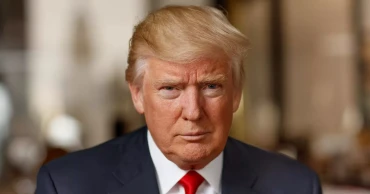
Supreme Court considers Trump’s birthright citizenship order
The U.S. Supreme Court met in private Friday to consider President Donald Trump’s executive order restricting birthright citizenship for children born in the United States to parents who are in the country illegally or temporarily.
The justices could decide as early as Monday whether to hear the administration’s appeal of lower court rulings that blocked the order nationwide. The order has not taken effect anywhere in the country. If accepted, the case could be argued in the spring, with a final decision expected by early summer.
Signed on the first day of Trump’s second term, the order is part of a broader immigration crackdown, which also includes expanded enforcement operations and the first peacetime use of the 18th-century Alien Enemies Act.
Lower courts have uniformly ruled that the order likely violates the 14th Amendment, which grants citizenship to anyone born on U.S. soil, except for children of foreign diplomats or occupying forces. The administration argues that children of noncitizens are not “subject to the jurisdiction” of the United States.
The Supreme Court has already issued mixed rulings on related immigration policies. It blocked rapid deportations of Venezuelan gang members under the Alien Enemies Act but allowed enforcement actions in Los Angeles to resume after a lower court limited stops based on race, language, or occupation. The court is also reviewing an emergency appeal to deploy National Guard troops in Chicago for immigration enforcement, which was blocked by a lower court.
Trump’s birthright citizenship order is the first major immigration policy from his administration to reach the high court for a final ruling. Legal challenges include a nationwide injunction by the U.S. Court of Appeals for the 9th Circuit in San Francisco and a class-action lawsuit in New Hampshire covering all affected children.
The American Civil Liberties Union, representing the New Hampshire plaintiffs, called the administration’s arguments “flimsy” and said it is ready to defend the constitutional right to citizenship.
6 months ago
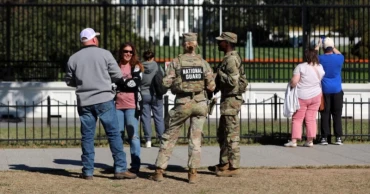
Judge orders shuts down extended guard patrols in DC
A federal judge on Thursday ordered the Trump administration to end its monthslong deployment of National Guard troops to help police the nation’s capital.
U.S. District Judge Jia Cobb concluded that President Donald Trump’s military takeover in Washington, D.C., illegally intrudes on local officials’ authority to direct law enforcement in the district. She put her order on hold for 21 days to allow for an appeal, however.
District of Columbia Attorney General Brian Schwalb sued to challenge the Guard deployments. He asked the judge to bar the White House from deploying Guard troops without the mayor’s consent while the lawsuit plays out.
Dozens of states took sides in Schwalb’s lawsuit, with their support falling along party lines.
Cobb found that while the president does have authority to protect federal functioning and property, he can’t unilaterally deploy the D.C. National Guard to help with crime control as he sees fit or call in troops from other states.
After her ruling, Schwalb called for troops to be sent home. “Normalizing the use of military troops for domestic law enforcement sets a dangerous precedent, where the President can disregard states’ independence and deploy troops wherever and whenever he wants — with no check on his military power,” Schwalb said.
The White House, though, stood by the deployment.
“President Trump is well within his lawful authority to deploy the National Guard in Washington, D.C., to protect federal assets and assist law enforcement with specific tasks,” said spokeswoman Abigail Jackson. “This lawsuit is nothing more than another attempt — at the detriment of DC residents — to undermine the President’s highly successful operations to stop violent crime in DC.”
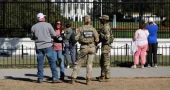
In August, President Donald Trump issued an executive order declaring a crime emergency in Washington. Within a month, more than 2,300 National Guard troops from eight states and the district were patrolling the city under the command of the Secretary of the Army. Trump also deployed hundreds of federal agents to assist in patrols.
The administration has also deployed Guard troops to Los Angeles and tried to send troops into Chicago and Portland, Oregon, prompting other court challenges. A federal appeals court allowed the Los Angeles deployment, and the administration is appealing a judge’s decision in Portland that found the president did not have the authority to call up or deploy National Guard troops there.
The Supreme Court is weighing the administration’s emergency appeal to be allowed to deploy National Guard troops in the Chicago area in support of an immigration crackdown. A lower court has indefinitely prevented the deployment.
In Washington, It’s unclear how long the deployments will last, but attorneys from Schwalb’s office said Guard troops are likely to remain in the city through at least next summer.
“Our constitutional democracy will never be the same if these occupations are permitted to stand,” they wrote.
Government lawyers have said Congress empowered the president to control the D.C. National Guard’s operation. “There is no sensible reason for an injunction unwinding this arrangement now, particularly since the District’s claims have no merit,” Justice Department attorneys wrote.
The Trump administration has deputized the Guard troops in Washington to serve as special U.S. Marshal Service deputies. Schwalb’s office said out-of-state troops are impermissibly operating as a federal military police force in D.C., inflaming tensions with residents and diverting local police resources.
“Every day that this lawless incursion continues, the District suffers harm to its sovereign authority to conduct local law enforcement as it chooses,” his office’s attorneys wrote.
6 months ago
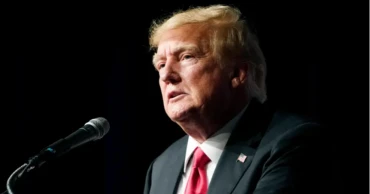
Trump orders release of Epstein case files after months of resistance
President Donald Trump on Wednesday signed a bill directing his administration to release all federal files related to convicted sex offender Jeffrey Epstein, ending months of pushback despite mounting pressure from within his own party.
Trump had long resisted calls to make the files public, even though he could have ordered their release earlier. Announcing his decision on social media, he accused Democrats of using the Epstein issue “to distract” from Republican achievements.
Under the new law, the Justice Department must disclose all documents and communications tied to Epstein — including details surrounding his 2019 death in federal custody — within 30 days. Redactions will only be allowed to protect victims or avoid compromising ongoing federal investigations. The department cannot withhold information over concerns of “embarrassment” or “political sensitivity.”
The legislation’s passage marks a dramatic shift. What began as a fringe push by an unusual coalition of Democrats, a Trump critic and a small group of former Trump allies steadily gained traction. As recently as last week, the administration tried to dissuade one supporter of the bill, Republican Rep. Lauren Boebert, by calling her to the Situation Room. She held firm.
Facing overwhelming bipartisan support in Congress, Trump reversed course over the weekend, saying the controversy had become a distraction from the GOP agenda.
“I just don’t want Republicans to take their eyes off all of the victories that we’ve had,” he posted on Tuesday.
The House overwhelmingly approved the bill 427-1, with only Rep. Clay Higgins of Louisiana voting against it. He argued the measure risked exposing information about individuals not accused of wrongdoing. The Senate later passed the measure unanimously by skipping a formal vote.
Trump had been socially acquainted with Epstein years earlier, but has long insisted he knew nothing of Epstein’s criminal activities and cut ties with him before his arrest.
During Trump’s first term, several of his allies promoted conspiracy theories claiming federal authorities were hiding key information about Epstein’s death and potential connections to powerful individuals.
6 months ago
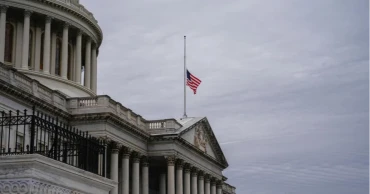
US House of Representatives mired in member censures, legislative work stalls
The U.S. House of Representatives returned to session this week after a multi-week hiatus, only to be quickly consumed by a series of censures, reprimands, and investigations of its own members, leaving little time for legislative business.
Lawmakers have focused on punishing colleagues for political and personal transgressions rather than addressing pressing issues such as rising health insurance costs. Del. Stacey Plaskett, a Democrat from the U.S. Virgin Islands, survived a failed attempt by Republicans to censure her and remove her from the House Intelligence Committee over past communications with Jeffrey Epstein.
Rep. Cory Mills, R-Fla., faced a new House Ethics Committee investigation following allegations of threatening behavior against a former partner. Other lawmakers, including Rep. Sheila Cherfilus-McCormick, D-Fla., and Rep. Jesus “Chuy” Garcia, D-Ill., have also faced censure or reprimand efforts this week.
House Democrats criticized the GOP majority for prioritizing political punishments over urgent legislation. Democratic Leader Hakeem Jeffries said, “It’s time for the House to actually do things that matter for the American people,” noting that Republicans have yet to bring bills addressing the high cost of living to the floor.
Speaker Mike Johnson has struggled to maintain control as rank-and-file lawmakers use discharge petitions and procedural maneuvers to push controversial issues, including the release of the Jeffrey Epstein files, ahead of the leadership’s schedule.
Observers say the cycle of investigations and public punishments has become the new normal in the House, leaving critical legislation, including health care funding and government appropriations, at risk as the year-end approaches.
6 months ago

Pope backs US bishops, urges humane treatment of migrants
Pope Leo XIV on Tuesday expressed strong support for U.S. bishops who criticized the Trump administration’s immigration crackdown, urging Americans to listen to the church leaders and treat migrants with dignity.
The pope, the first American to lead the Catholic Church, was asked about the “special message” released last week by the U.S. Conference of Catholic Bishops during their general assembly. The statement condemned mass deportations and the “vilification” of migrants, highlighting the fear and anxiety immigration raids have caused and the lack of pastoral care for those in detention centers.
Leo praised the bishops’ message and said it is important for Catholics and all people of goodwill to heed their guidance. “I think we have to look for ways of treating people humanely, treating people with the dignity that they have,” he said. “If people are in the United States illegally, there are ways to treat that. There are courts, there’s a system of justice.”
Acknowledging flaws in the U.S. migration system, Leo stressed that advocating for humane treatment does not mean advocating open borders. “But when people are living good lives, and many of them for 10, 15, 20 years, to treat them in a way that is extremely disrespectful to say the least — and there’s been some violence unfortunately — I think that the bishops have been very clear in what they said,” he added.
The bishops’ statement marked a rare single-issue message, the first since 2013, and was accompanied by an Instagram video of bishops reading the text to emphasize its message.
Leo also discussed upcoming travel plans for 2026, including possible visits to Peru, Portugal, Mexico, Argentina, and Uruguay, following the end of the Holy Year. Next week, he will undertake his first foreign trip as pope to Turkey and Lebanon.
6 months ago
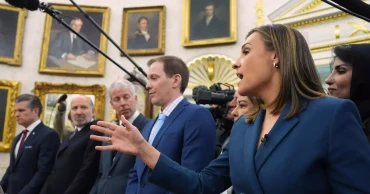
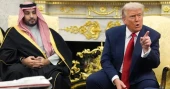
Trump attacks ABC reporter over Khashoggi questions, threatens network license
Former President Donald Trump on Tuesday denounced ABC News correspondent Mary Bruce as a “terrible reporter” and suggested revoking the network’s broadcast license after she posed pointed questions to him and Saudi Crown Prince Mohammed bin Salman in the Oval Office.
Bruce asked Trump about the appropriateness of his family’s business dealings in Saudi Arabia while he was president and questioned the Saudi leader regarding the 2018 murder of journalist Jamal Khashoggi. U.S. intelligence has concluded that the crown prince likely played a role in the killing. Trump dismissed the findings, claiming “a lot of people didn’t like” Khashoggi, while the prince called the journalist’s death “a huge mistake.”
Trump repeatedly criticized Bruce’s tone, calling her questions “horrible, insubordinate and just a terrible question.” He also addressed her inquiry about the White House’s delay in releasing correspondence related to convicted sex offender Jeffrey Epstein.
“People are wise to your hoax,” Trump said, adding that ABC News broadcasts “97% negative” coverage of him and questioning the credibility of the network and its reporter. He cited FCC Chairman Brendan Carr, suggesting that the commission should consider revoking ABC’s license.
ABC News declined to comment on Trump’s remarks. Bloomberg News also responded to Trump’s earlier criticism of its reporter, Catherine Lucey, affirming the importance of journalists performing their duties without fear or favor.
6 months ago

Texas governor labels CAIR and Muslim Brotherhood as terrorist groups
Texas Governor Greg Abbott on Tuesday declared one of the country’s largest Muslim civil rights organizations, the Council on American-Islamic Relations (CAIR), as a “foreign terrorist organization” and a “transnational criminal organization,” citing a state law he signed this year aimed at blocking “foreign adversaries” from acquiring land.
Abbott’s proclamation also included the Muslim Brotherhood. He said the move allows Texas to take steps to shut down the groups and prevent them from buying land in the state. The U.S. government, however, does not recognize either CAIR or the Muslim Brotherhood as terrorist organizations.
CAIR strongly rejected the designation, calling Abbott’s announcement baseless and accusing the governor of fueling “anti-Muslim hysteria.” Robert S. McCaw, CAIR’s government affairs director, said in a letter to Abbott that the governor has no legal authority to unilaterally label Americans or U.S.-based institutions as terrorists.
Earlier this year, Texas Republicans had opposed a Muslim-centered planned community near Dallas’ East Plano Islamic Center, claiming it would impose Islamic law. EPIC City, representing the community, dismissed these claims as false and dangerous. A federal civil rights investigation into the project was closed earlier in 2025 without charges.
The Muslim Brotherhood, founded in Egypt nearly a century ago, has branches worldwide and claims to pursue Islamic governance through peaceful means and elections. Critics, including several governments in the Middle East, consider it a threat.
6 months ago

Zohran Mamdani faces conservative media backlash before taking office
Even before taking office, New York City Mayor-elect Zohran Mamdani has emerged as a prime target for conservative media, facing intense criticism over his political views and background.
Conservative outlets and commentators have labelled Mamdani with terms ranging from “Marxist” and “commie” to “jihadist sympathizer” and “seething leftist,” portraying him as a threat to American values. A post-election New York Post cover showing Mamdani holding the Soviet hammer and sickle symbol sold out quickly and was even listed on eBay.
Experts say Mamdani’s appeal to working-class voters has made him a focus for conservative criticism, similar to previous targets like Alexandria Ocasio-Cortez and Nancy Pelosi. “He’s colorful, controversial and not afraid of a fight,” said Howard Polskin, publisher of the Righting newsletter.
Media outlets including Fox News, Newsmax, and the Washington Examiner have highlighted Mamdani’s election night speech and his membership in the Democratic Socialists of America, as well as his Muslim background, to question his suitability for office. Some commentators have wrongly conflated socialism with communism to amplify the criticism.
Mamdani, however, has repeatedly denied being a communist and emphasized that his focus remains on addressing city issues. He has also condemned antisemitism and rejected extremist violence, while supporting human rights causes.
The conservative backlash reflects a broader trend in which media portray prominent political figures as representative of their party’s perceived extremes. Analysts say Mamdani’s visibility among young and working-class voters may be fueling the attention from right-wing outlets, who see him as a potential influence on future elections.
Despite the criticism, Mamdani continues preparations to assume office, while his team addresses the misinformation circulating in media and online platforms.
6 months ago

Trump lashes out at ABC reporter over Khashoggi question
President Donald Trump on Tuesday harshly criticized ABC News’ chief White House correspondent Mary Bruce, calling her a “terrible reporter” and suggesting the network’s broadcast license should be revoked, after she asked pointed questions during a White House session with Saudi Crown Prince Mohammed bin Salman.
Bruce was among the reporters allowed into the Oval Office to pose questions to both leaders. She first asked Trump about the appropriateness of his family’s business dealings in Saudi Arabia while he was president. She then addressed the crown prince: “Your Royal Highness, U.S. intelligence concluded that you orchestrated the brutal murder of a journalist. 9/11 families are furious that you are here in the Oval Office. Why should Americans trust you? And the same to you, Mr. President.”
Khashoggi murder: US court dismisses lawsuit against Saudi crown prince MBS
Trump immediately questioned which network she represented, labeled ABC “fake news,” and defended his family’s business activities. He dismissed intelligence findings suggesting the crown prince’s likely involvement in the 2018 killing of Washington Post journalist Jamal Khashoggi, describing the journalist as “extremely controversial” and noting that many people disliked him. Prince Mohammed, for his part, called Khashoggi’s death “painful” and “a huge mistake.”
Trump continued to criticize Bruce after she asked about the delayed release of correspondence from sex offender Jeffrey Epstein. He said, “It’s not the question that I mind. It’s your attitude. I think you are a terrible reporter. It’s the way you ask these questions,” adding, “people are wise to your hoax” and suggesting that ABC’s FCC license should be reviewed.
ABC News had no comment on the president’s remarks. Separately, Bloomberg News responded after Trump previously called one of its reporters, Catherine Lucey, “piggy” during a Q&A last Friday, reaffirming that its journalists perform “a vital public service” by asking questions without fear or favor.
Source: AP
6 months ago
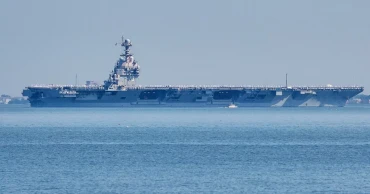
US aircraft carrier reaches Caribbean near Venezuela
The nation's most advanced aircraft carrier arrived in the Caribbean Sea on Sunday in a display of U.S. military power, raising questions about what the new influx of troops and weaponry could signal for the Trump administration's intentions in South America as it conducts military strikes against vessels suspected of transporting drugs.
The arrival of the USS Gerald R. Ford and other warships, announced by the Navy in a statement, marks a major moment in what the administration insists is a counterdrug operation but has been seen as an escalating pressure tactic against Venezuelan President Nicolás Maduro. Since early September, U.S. strikes have killed at least 80 people in 20 attacks on small boats accused of transporting drugs in the Caribbean and eastern Pacific Ocean.
The Ford rounds off the largest buildup of U.S. firepower in the region in generations. With its arrival, the “Operation Southern Spear" mission includes nearly a dozen Navy ships and about 12,000 sailors and Marines.
The carrier strike group, which includes squadrons of fighter jets and guided-missile destroyers, transited the Anegada Passage near the British Virgin Islands on Sunday morning, the Navy said.
Rear Adm. Paul Lanzilotta, who commands the strike group, said it will bolster an already large force of American warships to "protect our nation’s security and prosperity against narco-terrorism in the Western Hemisphere.”
Adm. Alvin Holsey, the commander who oversees the Caribbean and Latin America, said in a statement that the American forces “stand ready to combat the transnational threats that seek to destabilize our region.”
Holsey, who will retire next month after just a year on the job, said the strike group's deployment is "a critical step in reinforcing our resolve to protect the security of the Western Hemisphere and the safety of the American Homeland.”
In Trinidad and Tobago, which is only 7 miles from Venezuela at its closest point, government officials said troops have begun “training exercises” with the U.S. military that will run through much of the week.
Minister of Foreign Affairs Sean Sobers described the joint exercises as the second in less than a month and said they are aimed at tackling violent crime on the island nation, which has become a stopover point for drug shipments headed to Europe and North America. The prime minister has been a vocal supporter of the U.S. military strikes.
The exercises will include Marines from the 22nd Expeditionary Unit who have been stationed aboard the Navy ships that have been looming off Venezuela's coast for months.
Venezuela’s government has described the training exercises as an act of aggression. It had no immediate comment Sunday on the arrival of the aircraft carrier.
The administration has insisted that the buildup is focused on stopping the flow of drugs into the U.S., but it has released no evidence to support its assertions that those killed in the boats were “narcoterrorists.” Trump has indicated military action would expand beyond strikes by sea, saying the U.S. would "stop the drugs coming in by land.”
The U.S. has long used aircraft carriers to pressure and deter aggression by other nations because their warplanes can strike targets deep inside another country. Some experts say the Ford is ill-suited to fighting cartels, but it could be an effective instrument of intimidation for Maduro in a push to get him to step down.
Secretary of State Marco Rubio says the United States does not recognize Maduro, who was widely accused of stealing last year’s election, as Venezuela’s legitimate leader. Rubio has called Venezuela's government a “transshipment organization” that openly cooperates with those trafficking drugs.
Maduro, who faces charges of narcoterrorism in the U.S., has said the U.S. government is “fabricating” a war against him. Venezuela’s government recently touted a “massive” mobilization of troops and civilians to defend against possible U.S. attacks.
Trump has justified the attacks on drug boats by saying the U.S. is in “armed conflict” with drug cartels while claiming the boats are operated by foreign terror organizations.
He has faced pushback from leaders in the region, the U.N. human rights chief and U.S. lawmakers, including Republicans, who have pressed for more information on who is being targeted and the legal justification for the boat strikes.
Senate Republicans, however, recently voted to reject legislation that would have put a check on Trump’s ability to launch an attack against Venezuela without congressional authorization.
Experts disagree on whether or not American warplanes may be used to strike land targets inside Venezuela. Either way, the 100,000-ton warship is sending a message.
“This is the anchor of what it means to have U.S. military power once again in Latin America,” said Elizabeth Dickinson, the International Crisis Group’s senior analyst for the Andes region. “And it has raised a lot of anxieties in Venezuela but also throughout the region. I think everyone is watching this with sort of bated breath to see just how willing the U.S. is to really use military force.”
6 months ago