usa
Trump says US, Iran to talk next week with war over
President Donald Trump announced Wednesday that US and Iranian officials will talk next week, continuing a dialogue that was interrupted by the recent war between Israel and Tehran, while a fragile ceasefire appeared to be holding.
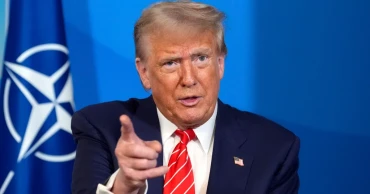
“I’ll tell you what, we’re going to talk with them next week, with Iran. We may sign an agreement, I don’t know," Trump told a press conference during the NATO summit in the Netherlands.
Trump said he wasn't particularly interested in restarting negotiations with Iran, insisting that US strikes had destroyed its nuclear program, reports AP.
“The way I look at it, they fought, the war is done,” he said.
Iran has not acknowledged any talks taking place next week, though US Mideast envoy Steve Witkoff has said there has been direct and indirect communication between the countries.
The fragile ceasefire gave rise to cautious hope for longer-term peace even as Tehran insisted it will not give up its nuclear program.
Trump, who helped negotiate the ceasefire that took hold on Tuesday, the 12th day of the war, earlier told reporters at a NATO summit it was going “very well," adding that Iran was "not going to have a bomb and they’re not going to enrich."
Iran has insisted, however, that it will not give up its nuclear program. In a vote underscoring the tough path ahead, its parliament agreed to fast-track a proposal that would effectively stop the country’s cooperation with the International Atomic Energy Agency, the UN watchdog that has monitored the program for years.
'Daddy has to sometimes use strong language': Nato chief on Trump expletive
Ahead of the vote, Parliament Speaker Mohammad Bagher Qalibaf criticized the IAEA for having “refused to even pretend to condemn the attack on Iran's nuclear facilities” that the United States carried out on Sunday.
“For this reason, the Atomic Energy Organization of Iran will suspend cooperation with the IAEA until security of nuclear facilities is ensured, and Iran’s peaceful nuclear program will move forward at a faster pace," Qalibaf told lawmakers.
IAEA Director General Rafael Mariano Grossi said he had already written to Iran to discuss resuming inspections of their nuclear facilities.
Among other things, Iran claims to have moved its highly enriched uranium ahead of the US strikes, and Grossi said his inspectors need to re-assess the country’s stockpiles.
“We need to return,” he said. “We need to engage.”
French President Emmanuel Macron, whose country was part of the 2015 deal with Iran that restricted its nuclear program but began unraveling after Trump pulled the US out in his first term, said he hoped Tehran would come back to the table.
Iran has long maintained that its nuclear program was peaceful, and US intelligence agencies have assessed that Tehran is not actively pursuing a bomb. However, Israeli leaders have argued that Iran could quickly assemble a nuclear weapon.
Israel is widely believed to be the only Middle Eastern country with nuclear weapons, which it has never acknowledged.
11 months ago
NATO leaders agree to boost military spending
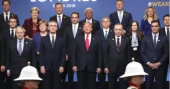
NATO leaders on Wednesday committed to a significant increase in defense spending following pressure from U.S. President Donald Trump while reiterating their “ironclad commitment” to defend one another if attacked.
In a joint statement, all 32 members pledged to invest 5% of their GDP annually in core defense and security-related expenditures by 2035 to fulfill both national and collective defense responsibilities.
Spain has already confirmed it will not be able to meet this target, calling it unrealistic, and several others have voiced doubts.
However, the agreement includes a review in 2029 to assess progress and reevaluate the security situation regarding Russia.
The leaders also reaffirmed NATO’s collective defense principle, stating “an attack on one is an attack on all.” The declaration came after Trump reignited uncertainty over whether the United States would stand by its allies.
Despite underlying divisions, the unified statement reflects what NATO Secretary-General Mark Rutte described as a “transformational” summit. However, the defense spending commitment places considerable financial demands on European allies and Canada.
The increased military spending comes as the United States — NATO’s largest contributor — begins to shift its focus away from Europe to other regions, notably the Middle East and Indo-Pacific.
Spain preemptively declared it would miss the 2035 goal, calling it “unreasonable.” Belgium and Slovakia have also expressed reservations, with Slovakia insisting it will determine its own defense budget independently.
Economic struggles in many European countries, combined with Trump’s global tariff policies, may make it harder for allies to meet their new military obligations. Some nations are already cutting welfare programs and foreign aid to divert more funds to defense.
On Tuesday, Trump criticized Spain for not committing to the spending targets, stating, “there’s a problem with Spain. Spain is not agreeing, which is very unfair to the rest of them, frankly.” He also took aim at Canada, calling it “a low payer.” During Trump’s first term in 2018, a NATO summit nearly collapsed over a similar defense spending dispute.
Acknowledging the financial and political challenges, Rutte admitted, “these are difficult decisions. Let’s be honest. I mean, politicians have to make choices in scarcity. And this is not easy.” But he added, “given the threat from the Russians, given the international security situation, there is no alternative.”
Iranian parliament back move to halt cooperation with IAEA
Nations Near Russia Lead the Push
Countries bordering Russia and Ukraine — including Poland, the Baltic States, and the Nordic nations — have pledged to meet the goal, along with major European powers like Britain, France, Germany, and the Netherlands.
“This is a big win, I think, for both President Trump and I think it’s also a big win for Europe,” said Finnish President Alexander Stubb. “We’re witnessing the birth of a new NATO, which means a more balanced NATO.”
Stubb noted that the new spending levels would mirror Cold War-era defense budgets. NATO allies began cutting military spending after the fall of the Berlin Wall in 1989, assuming a more peaceful era.
In a nod to Trump’s political slogan, Lithuanian President Gitanas Nausėda remarked, “We should choose a motto, ‘make NATO great again.’”
Following Russia’s full-scale invasion of Ukraine in 2022, NATO set 2% of GDP as the minimum defense spending target. Last year, 22 allies were expected to meet that benchmark, a sharp rise from just three nations a decade ago.
At the summit in The Hague, members endorsed an overhaul of defense spending. They raised the target for “core defense spending” to 3.5% of GDP and broadened the criteria to include military support to Ukraine.
To meet Trump’s 5% expectation, allies also committed 1.5% of GDP to other defense-related areas, such as upgrading infrastructure to support troop movements, enhancing cyber defenses, countering hybrid threats, and bolstering societal resilience to future conflicts.
Progress will be assessed in 2029, after the next U.S. presidential election.
Norwegian Prime Minister Jonas Gahr Støre described the agreement as a milestone. “This declaration is historic. We are 32 allies supporting that ambition, which is huge,” he said. “We have been struggling to get above 2% and now we said 3.5%, which is necessary in order to reach our capabilities.”
Earlier this month, NATO set procurement targets for allies to stockpile weapons and military supplies to better defend Europe, the Arctic, and the North Atlantic — a reflection of Washington’s pressure to boost defense readiness.
Seven Israeli soldiers killed in Gaza as Iran-Israel Ceasefire holds steady
Uncertainty Over U.S. Troop Presence in Europe
If the Trump administration proceeds with plans to reduce the roughly 84,000 U.S. troops stationed in Europe, additional funding will be needed for European allies to cover security gaps. The Pentagon is expected to clarify its position in the coming months.
Beyond Trump's demands, European allies and Canada have already increased defense spending amid rising fears of Russian aggression. Some NATO countries believe Russia could launch an attack on alliance territory before the decade ends — Hungary, however, disagrees.
“I think Russia is not strong enough to represent a real threat to us. We are far stronger,” said Hungarian Prime Minister Viktor Orbán, who is regarded as Russian President Vladimir Putin’s closest ally in Europe, while speaking to reporters with his hands in his pockets.
11 months ago
Trump nominated for Nobel Peace Prize over Israel-Iran ceasefire
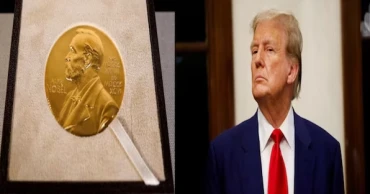
US President Donald Trump has been formally nominated for the Nobel Peace Prize for his role in securing the ceasefire between Israel and Iran.
The nomination came from Republican Congressman Buddy Carter of Georgia, who submitted a letter to the Norwegian Nobel Committee praising Trump’s “extraordinary and historic role” in ending the armed conflict and preventing Iran—described as the world’s leading state sponsor of terrorism—from acquiring nuclear weapons.
“President Trump’s influence was key to forging a swift agreement that many thought impossible,” said Carter, who has represented Georgia’s 1st District since 2015. He said Trump’s actions reflect the Nobel Prize’s core principles: promoting peace, preventing war, and fostering global harmony.
Carter also acknowledged the complexity of the Middle East, saying Trump displayed both courage and clarity in achieving the breakthrough.
Israel holds back on further Iran strikes after Trump call
Trump announced the Israel-Iran ceasefire on Monday night, suggesting the conflict be named the “12 Day War.” This announcement came just two days after Trump ordered unprecedented US strikes on three Iranian nuclear facilities to support Israeli military actions.
Under Nobel rules, national lawmakers, university professors, and other qualified individuals can nominate candidates for the prestigious prize. However, Trump himself expressed doubt over winning, citing previous peace efforts that went unrecognized.
“I won’t get a Nobel Peace Prize no matter what I do,” Trump posted on Truth Social last Friday, following his administration’s role in brokering peace between Rwanda and the Democratic Republic of Congo.
He added, “I won’t get a Nobel Peace Prize for this, I won’t get one for stopping the war between India and Pakistan, I won’t get one for stopping the war between Serbia and Kosovo.”
#With inputs from New York Post
11 months ago
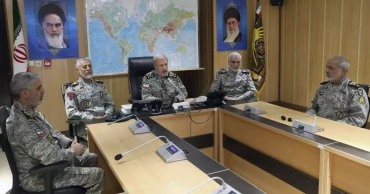
3 dead in Iranian missile attack after Trump’s ceasefire announcement
Israel reported three fatalities on Tuesday morning following a wave of Iranian missile attacks, just hours after U.S. President Donald Trump declared that both countries had agreed to a "complete and total ceasefire."
Israel’s Magen David Adom emergency services confirmed that at least three people were killed and eight others injured in the early morning barrage. A residential building in southern Israel suffered severe damage, according to first responders.
Despite Trump’s announcement of a ceasefire, the situation remained uncertain as hostilities continued into Tuesday. His statement followed Iran's limited missile strike on a U.S. military base in Qatar on Monday, carried out in retaliation for American airstrikes targeting Iranian nuclear sites.
Iranian Foreign Minister Abbas Araghchi stated that Iran would cease its attacks provided Israel halted its military operations by 4 a.m. local time Tuesday. However, shortly after that deadline, the Israeli military warned that Iran had launched missiles towards Israeli territory, triggering sirens across several areas.
Eyewitnesses reported seeing at least one missile intercepted over Jerusalem's skies, with additional warnings of further incoming attacks as daylight approached.
An image released by Israel’s Fire and Rescue Services showed significant damage to what appeared to be a seven-story residential building in southern Israel, its facade completely destroyed.
Iran denies any ceasefire agreement with Israel at present
It remains unclear how the ongoing missile launches will affect the ceasefire timeline. Trump’s statement on his Truth Social platform said the ceasefire was set to take effect around midnight Tuesday U.S. Eastern time, claiming it would mark an “Official END” to the war.
Israel has yet to officially acknowledge any ceasefire agreement but appeared to pause its strikes on Iranian territory after 4 a.m. local time. Prior to that, heavy Israeli attacks had been reported in Tehran and other cities, with military activity tapering off shortly before the deadline. Israel has previously escalated its offensives just ahead of ceasefire deals.
Iranian Foreign Minister Araghchi emphasized that there was no formal ceasefire agreement at present, writing on X, “As of now, there is NO ‘agreement’ on any ceasefire or cessation of military operations.” He reiterated that Iran would not continue its military response if Israel stopped its “illegal aggression” by the stated deadline.
His statement, posted at 4:16 a.m. Tehran time, added, “The final decision on the cessation of our military operations will be made later.”
Brent crude dips below $70 amid Iran-Israel tensions
The Israeli military declined to comment on Trump’s ceasefire declaration, and Prime Minister Benjamin Netanyahu’s office has not responded to media inquiries.
Source: agency
11 months ago

US confirms Iran missile attack on Qatar air base
A Defense Department official is confirming a missile attack from Iran on a U.S. military base in Qatar but says no casualties have been reported.
The official said Monday that Al Udeid Air Base was attacked by short-range and medium-range ballistic missiles. The U.S. is continuing to monitor the situation, said the official.
The confirmation came soon after Iran acknowledged the missile attacks, saying the attack in Qatar matched the number of bombs dropped by the United States on its nuclear sites over the weekend, signaling its likely desire to de-escalate.
Iran launched attacks Monday, retaliating for the American bombing of its nuclear sites and escalating tensions in the volatile region.
Shortly after the attack, the Gulf nation of Bahrain that is home to the U.S. 5th Fleet headquarters temporarily suspended flights in its airspace, which is similar to what Qatar did shortly before it was hit.
Meanwhile, Qatar condemned the attack on Al Udeid Air Base attack, but said it successfully intercepted the missiles and no casualties were reported.
It said its airspace is now safe.
11 months ago
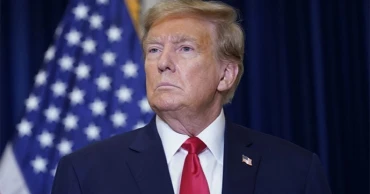
White House defends its massive bombing campaign against Iran
White House Press Secretary Karoline Leavitt told ABC News on Monday that Iran poses an “imminent threat” and praised President Donald Trump as the “first president with the courage to take decisive action.” She claimed that recent U.S. military strikes have effectively “eliminated Iran’s ability to develop a nuclear bomb.”
Over the weekend, American stealth bombers, fighter jets, and a submarine carried out coordinated strikes on Iran, in what appeared to be a joint effort with Israel to dismantle Tehran’s nuclear program.
US signals willingness to renew talks with Iran and avoid prolonged war
Trump ‘just raising a question’ on regime change
Leavitt clarified that U.S. policy in the Middle East remains unchanged, despite Trump recently suggesting the possibility of overthrowing Iran’s theocratic leadership.
“The president was merely raising a question that many around the world are asking,” she told reporters.
Leavitt also remarked, “If Iran refuses to engage in diplomacy, why shouldn’t the Iranian people rise up against this oppressive, terrorist regime?”
Trump keeps Iran strike decision unclear as tensions escalate
Leavitt says Democrats were notified about U.S. attack on Iran
President Trump’s airstrikes on three locations in Iran have quickly ignited a political debate in Washington over whether he had the authority to carry out the attacks without congressional approval. While Republicans largely applauded Trump’s decisive action, many Democrats argued that he should have consulted Congress beforehand.
White House Press Secretary Karoline Leavitt dismissed claims that Democrats were kept in the dark regarding the operation.
“We did make bipartisan calls,” Leavitt said during an interview with Fox News, adding that House Minority Leader Hakeem Jeffries “couldn’t be reached.”
Typically, congressional leaders from both parties receive briefings in advance of significant or classified military operations. However, Leavitt emphasized that the administration had no formal obligation to inform anyone, stating, “We made these calls as a courtesy, not because we were required to.”
Pakistan condemns Trump shortly after nominating him for Nobel
Pakistan strongly criticized U.S. President Donald Trump for launching airstrikes on Iran, just a day after praising him as a deserving candidate for the Nobel Peace Prize for his role in easing recent tensions between Pakistan and India.
Ties between the two South Asian neighbors deteriorated sharply following the massacre of tourists in Indian-administered Kashmir in April. The situation escalated into cross-border attacks, bringing the nuclear-armed countries to the brink of war. However, diplomatic intervention—primarily led by the United States—helped broker a ceasefire, an achievement Trump claimed as his own.
11 months ago
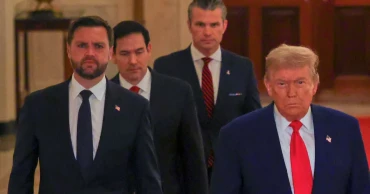
US signals willingness to renew talks with Iran and avoid prolonged war
The Trump administration on Sunday signalled a willingness to renew talks with Iran and avoid a prolonged war in the aftermath of a surprise attack on three of the country’s nuclear sites as US officials assessed Tehran's nuclear ambitions and the threat of retaliation against American interests.
President Donald Trump, who had addressed the nation from the White House on Saturday night, allowed his national security team to speak for him the next morning, staying quiet on social media and scheduling no public appearances.
According to AP, the coordinated messaging by his vice president, Pentagon chief, top military adviser and secretary of state suggested a confidence that any fallout from the attack would be manageable and that Iran’s lack of military capabilities would ultimately force it back to the bargaining table.
Defense Secretary Pete Hegseth said at a news conference that America “does not seek war” with Iran while Vice President JD Vance said the strikes have given Tehran the possibility of returning to negotiate with Washington.
“Operation Midnight Hammer, involved decoys and deception, and met with no Iranian resistance, according to Hegseth and Air Force Gen. Dan Caine, chairman of the Joint Chiefs of Staff.
“This mission was not and has not been about regime change,” Hegseth added. Caine said the goal of the operation — destroying nuclear sites in Fordo, Natanz and Isfahan — had been achieved.
“Final battle damage will take some time, but initial battle damage assessments indicate that all three sites sustained extremely severe damage and destruction,” Caine said.
Vance said in a television interview that while he would not discuss “sensitive intelligence about what we’ve seen on the ground,” he felt “very confident that we’ve substantially delayed their development of a nuclear weapon.”
Iranian parliament votes to close Strait of Hormuz following US strikes
Pressed further, he told NBC's “Meet the Press” that “I think that we have really pushed their program back by a very long time. I think that it’s going to be many many years before the Iranians are able to develop a nuclear weapon.”
The vice president said the U.S. had “negotiated aggressively’ with Iran to try to find a peaceful settlement and that Trump made his decision after assessing the Iranians were not acting “in good faith.”
"I actually think it provides an opportunity to reset this relationship, reset these negotiations and get us in a place where Iran can decide not to be a threat to its neighbors, not to a threat to the United States and if they’re willing to do that, the United States is all ears,” Vance said.
Secretary of State Marco Rubio said on CBS's “Face the Nation” that "there are no planned military operations right now against Iran, unless, unless they mess around and they attack" US interests.
Trump has previously threatened other countries, but often backed down or failed to follow through, given his promises to his coalition of voters not to entangle the United States in an extended war.
It was not immediately clear whether Iran saw the avoidance of a wider conflict as in its best interests.
Much of the world is absorbing the consequences of the strikes and the risk that they could lead to more fighting across the Middle East after the US inserted itself into the war between Israel and Iran.
Airstrikes starting on June 12 by Israel that targeted Iran's nuclear facilities and generals prompted retaliation from Iran, creating a series of events that contributed to the US attack.
11 months ago
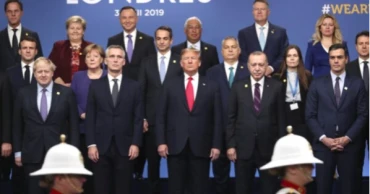
Nato summit overshadowed by Trump as leaders focus on defence spending
Nato summits typically aim to present a united front, and next week's gathering in The Hague will be no different—though behind the scenes, the spotlight is firmly on one man: Donald Trump.
Newly appointed Secretary General Mark Rutte has carefully orchestrated the two-day event to ensure there are no confrontations with the alliance’s most influential member, the United States.
A key focus will be a renewed pledge from European members to boost defence spending, aligning with President Trump’s longstanding demand—a message he has delivered consistently since his first term, when he publicly chastised allies for falling short and claimed they owed the US “massive amounts of money.”
Geneva hosts talks on Iran-Israel conflict
Though Trump is only one of 32 leaders attending, his presence has shaped the entire agenda. The main deliberations have been condensed to just three hours, and the final summit declaration trimmed to five paragraphs—reportedly due to Trump’s preferences.
The Netherlands is hosting what will be the most expensive Nato summit to date, with Dutch authorities deploying an unprecedented security operation costing €183.4 million.
Trump’s scepticism of multilateral organisations, including Nato, remains unchanged. His America First policy continues to clash with many European leaders on key issues such as trade, Russia, and the conflict in the Middle East.
Rutte, known for his good rapport with Trump, has worked behind the scenes to offer the US president a policy win. The summit’s streamlined format, some say, is partly designed to suit Trump’s aversion to lengthy meetings. But the real benefit, analysts argue, is that it limits opportunities for divisions to become visible.
“Trump likes to be the star of the show,” says Ed Arnold of the defence think tank Rusi, who expects the former president to take credit for pushing European allies to act.
While several US presidents have urged Nato countries to contribute more to defence, Trump has arguably been more effective than most. Kurt Volker, a former US ambassador to Nato, acknowledges that not all European governments appreciated Trump’s confrontational approach—especially his demand that allies raise defence spending to 5% of GDP. Nonetheless, some have conceded that the pressure had a necessary impact. “We needed to do this, even if it’s unfortunate that it took such a kick in the pants,” Volker says.
A few countries, particularly those close to Russia like Poland, Estonia and Lithuania, are now aiming for that 5% mark. But for others, even the previously agreed 2% remains out of reach. To reconcile these gaps, Rutte has proposed a compromise: increasing core defence spending to 3.5% of GDP, with an additional 1.5% earmarked for defence-related expenditures.
However, critics warn the broad definition of “defence-related” spending—potentially including infrastructure like bridges and roads—opens the door to “creative accounting.” Arnold notes that the flexibility could dilute the seriousness of the target.
Even if the new spending goals are adopted, many nations may not have the political will or resources to meet them by 2032 or 2035. Spain’s prime minister has already pushed back, calling the targets unrealistic and counterproductive. In the UK, Labour leader Sir Keir Starmer has not committed to a timeline, though the British government’s Nato-centric defence stance means he will likely support the framework.
Israel and Iran exchange new strikes as US weighs military role, diplomatic efforts intensify
The pressure for higher defence spending isn't just about appeasing the US—it aligns with Nato’s classified war plans, which outline responses to a potential Russian attack. Rutte has warned that Moscow could strike a Nato member within five years. In a recent speech, he detailed the alliance’s urgent needs: a 400% increase in air and missile defences, thousands more tanks and vehicles, and millions of artillery shells.
Many member states, including the UK, fall short of these capability commitments. Sweden is doubling its army, and Germany plans to increase its military personnel by 60,000. US Army Europe head General Christopher Donahue recently stressed the need to reinforce Poland and Lithuania near Russia’s Kaliningrad enclave, admitting Nato’s current defences are insufficient.
Despite the focus on Russia, the summit is expected to sidestep direct debate on the Ukraine war—reflecting deep transatlantic differences. “Under Trump, the US does not see Ukrainian security as essential to European security but our European allies do,” says Volker.
Trump has previously undermined Nato unity by engaging with Vladimir Putin and delaying military aid to Ukraine. According to Arnold, potentially divisive issues have been stripped from the agenda, including a much-anticipated review of Nato’s Russia strategy.
Ukrainian President Volodymyr Zelensky will attend the summit dinner but has not been invited to participate in the main North Atlantic Council sessions.
As Rutte prepares to chair his first summit as secretary general, he hopes for a smooth event. But with Trump’s views diverging from much of the alliance—especially on Russia—the outcome remains uncertain.
#Source: BBC
11 months ago
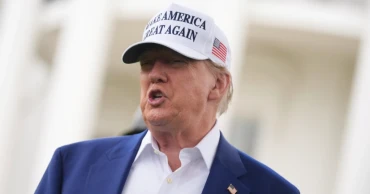
Trump keeps Iran strike decision unclear as tensions escalate
President Donald Trump would not say Wednesday whether he has decided to order a US strike on Iran, a move that Tehran warned anew would be greeted with stiff retaliation if it happens.
“I may do it, I may not do it," Trump said in an exchange with reporters at the White House . “I mean, nobody knows what I’m going to do.
Trump added that it’s not “too late” for Iran to give up its nuclear program as he continues to weigh direct US involvement in Israel's military operations aimed at crushing Tehran's nuclear program.
“Nothing’s too late,” Trump said. “I can tell you this. Iran’s got a lot of trouble."
“Nothing is finished until it is finished,” Trump added. But “the next week is going to be very big— maybe less than a week."
US intelligence says Iran isn’t building nuclear weapons, but Trump rejects their assessment
According to AP, Trump also offered a terse response to Iran Supreme Leader Ayatollah Ali Khamenei's refusal to heed to his call for Iran to submit to an unconditional surrender.
“I say good luck,” Trump said.
Khamenei earlier Wednesday warned that any United States strikes targeting the Islamic Republic will “result in irreparable damage for them” and that his country would not bow to Trump’s call for surrender.
Meanwhile, Defense Secretary Pete Hegseth told lawmakers Wednesday that the Pentagon was providing possible options to Trump as he decides next steps on Iran.
Earlier this week, the US president said that Russian President Vladimir Putin offered to serve as a mediator with Iran. But Trump said he told Putin to keep focused on finding an endgame to his own conflict with Ukraine.
“I said, ‘Do me a favour, mediate your own,’” Trump said he told Putin. “I said, ‘Vladimir, let’s mediate Russia first. You can worry about this later.’”
The comments were a shift from Trump who earlier this week said he was “open” to Putin's offer to mediate.
Russia’s Deputy Foreign Minister Sergei Ryabkov said earlier Wednesday that Moscow has cautioned Washington against offering direct military assistance to Israel.
“We are warning Washington against even speculative, hypothetical considerations of the sort,” Ryabkov said, according to the Interfax news agency. “That would be a step drastically destabilising the situation as a whole.”
11 months ago
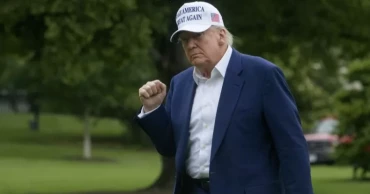
Trump considers joining Israel on Iran strikes as IDF targets nuclear sites
Donald Trump is reportedly considering joining Israel’s military strikes against Iran’s underground nuclear facilities, according to CBS News, the BBC’s US partner. The escalation comes as the two countries exchange fire for a sixth consecutive day.
Earlier, President Trump called for Iran’s “unconditional surrender” and revealed that he knows the whereabouts of Iran’s leader but has chosen not to take lethal action “for now.”
In response, Iran’s Supreme Leader Ayatollah Ali Khamenei declared that he will never compromise with Israel and vowed to show “no mercy.”
Trump demands Iran’s ‘unconditional surrender’ as strikes continue, supreme leader is safe 'for now'
Israel confirmed it had struck a centrifuge site in Tehran, along with other weapons facilities, as part of its overnight barrage.
Meanwhile, Iran launched attacks on Israel, triggering sirens twice during the night. However, reports indicate that the scale of Tehran’s attacks has diminished, according to journalist Hugo Bachega.
Source: With inputs from BBC
11 months ago